

10 Best Barbell Decline Pullover Alternatives for Shoulder Pain
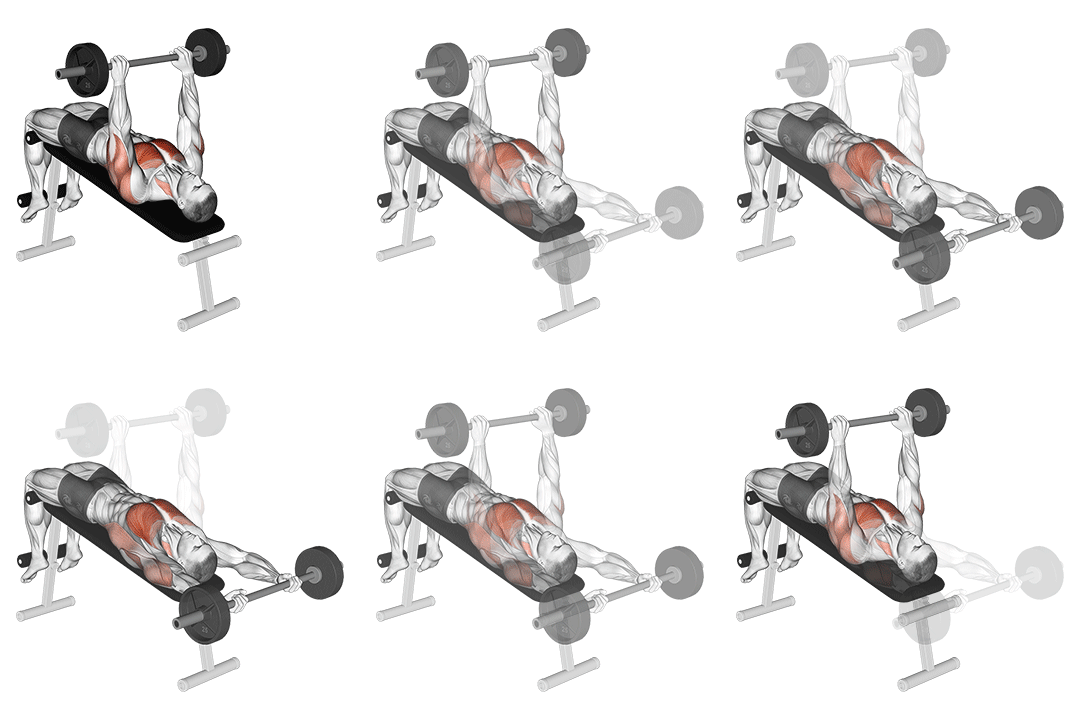
The Barbell Decline Pullover is done lying on your back with a barbell. Ranked closest by our scoring: the Wide-grip Decline Barbell Pullover, the Reverse Band Bench Press and the Barbell Bench Press - Medium Grip. Two harder versions, the Bench Press With Chains and the Bench Press - Powerlifting, are listed below as progressions rather than swaps.
Updated Ranked by our 12-factor similarity model How it works
Original Exercise: Barbell Decline Pullover
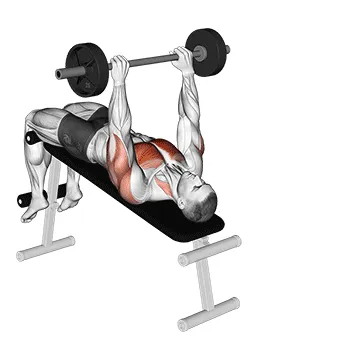
- Primary muscle
- Pectorals
- Equipment
- Barbell
- Difficulty
- Intermediate
- Type
- Compound
Secondary muscles: Triceps, Shoulders
How to perform Barbell Decline Pullover
- Lie down on a decline bench with your head lower than your hips and your feet secured.
- Hold the barbell with a pronated grip (palms facing away from you) and your hands slightly wider than shoulder-width apart.
- Extend your arms above your chest, keeping a slight bend in your elbows.
- Lower the barbell in an arc motion behind your head, feeling a stretch in your chest and shoulders.
- Pause for a moment, then return the barbell to the starting position by reversing the motion.
- Repeat for the desired number of repetitions.
Ranked Barbell Decline Pullover Alternatives
10 substitutes, ranked by how closely each one matches the Barbell Decline Pullover on movement pattern, muscles worked, equipment and body position. The higher the score, the less you change. Open "How to perform this exercise" on a card for the steps; every card title links to that exercise's own alternatives page. Harder versions are tagged as progressions and kept out of the top spot even when they score higher.
Best match 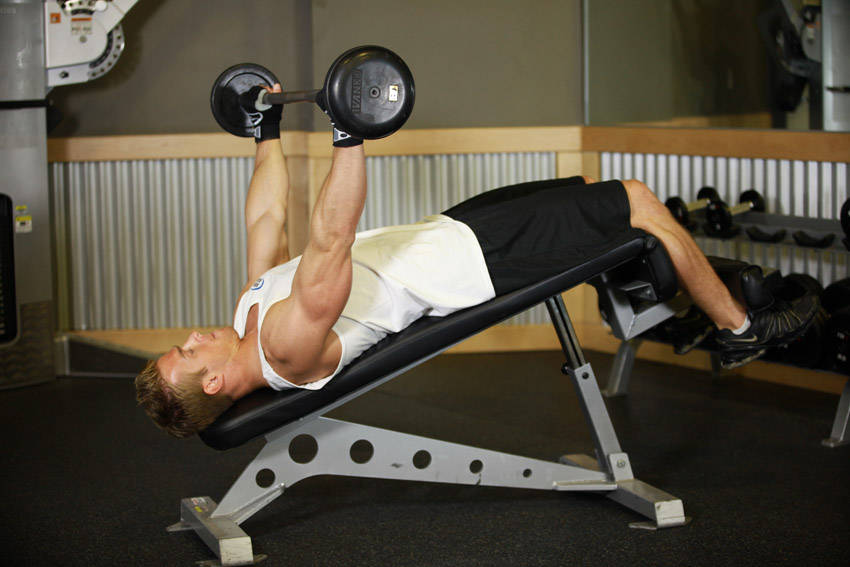
- Pectorals
- Barbell
- Intermediate
- Isolation
The same equipment, taken with a wide grip.
How to perform this exercise
- Lie down on a decline bench with both legs securely locked in position. Reach for the barbell behind the head using a pronated grip (palms facing out). Make sure to grab the barbell wider than shoulder width apart for this exercise. Slowly lift the barbell up from the floor by using your arms.
- When positioned properly, your arms should be fully extended and perpendicular to the floor. This is the starting position.
- Begin by moving the barbell back down in a semicircular motion as if you were going to place it on the floor, but instead, stop when the arms are parallel to the floor. Tip: Keep the arms fully extended at all times. The movement should only happen at the shoulder joint. Inhale as you perform this portion of the movement.
- Now bring the barbell up while exhaling until you are back at the starting position. Remember to keep full control of the barbell at all times.
- Repeat the movement for the prescribed amount of repetitions of your training program.
- When finished with your set, slowly lower the barbell back down until it is level with your head and release it.
Sets and reps: 3 sets of 10 to 15 reps.
Why this matches
- Primary muscle: pectorals, the same as the Barbell Decline Pullover
- Equipment: free weights, the same as the Barbell Decline Pullover
- Body position: lying on your back, the same as the Barbell Decline Pullover
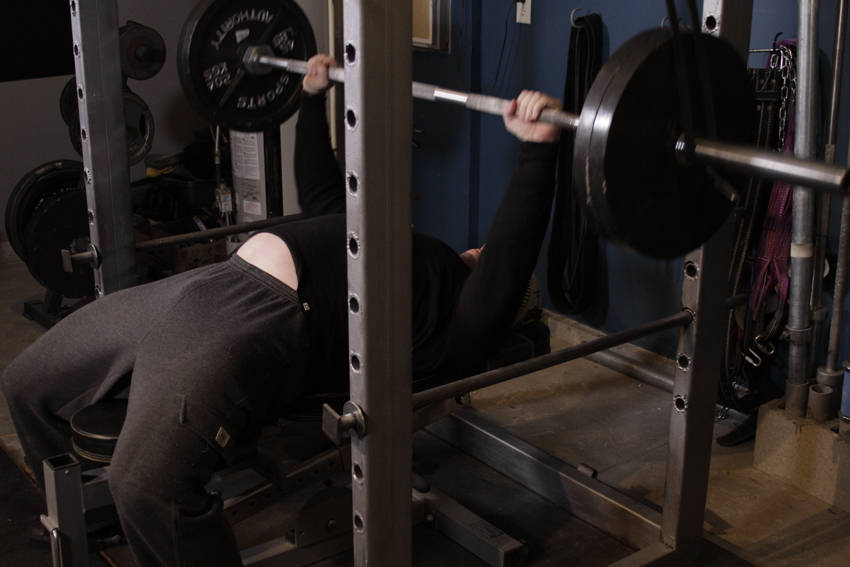
2. Reverse Band Bench Press
90% match- Pectorals
- Barbell
- Intermediate
- Compound
It uses the same equipment and still works the pectorals.
How to perform this exercise
- Position a bench inside a power rack, with the bar set to the correct height. Begin by anchoring bands either to band pegs or to the top of the rack. Ensure that you will be position properly under the bands. Attach the other end to the barbell.
- Lie on the bench, tuck your feet underneath you and arch your back. Using the bar to help support your weight, lift your shoulder off the bench and retract them, squeezing the shoulder blades together. Use your feet to drive your traps into the bench. Maintain this tight body position throughout the movement. However wide your grip, it should cover the ring on the bar.
- Pull the bar out of the rack without protracting your shoulders. Focus on squeezing the bar and trying to pull it apart. Lower the bar to your lower chest or upper stomach. The bar, wrist, and elbow should stay in line at all times.
- Pause when the barbell touches your torso, and then drive the bar up with as much force as possible. The elbows should be tucked in until lockout.
Sets and reps: 3 or 4 sets of 6 to 10 reps.
Why this matches
- Primary muscle: pectorals, the same as the Barbell Decline Pullover
- Equipment: free weights, the same as the Barbell Decline Pullover
- Body position: lying on your back, the same as the Barbell Decline Pullover
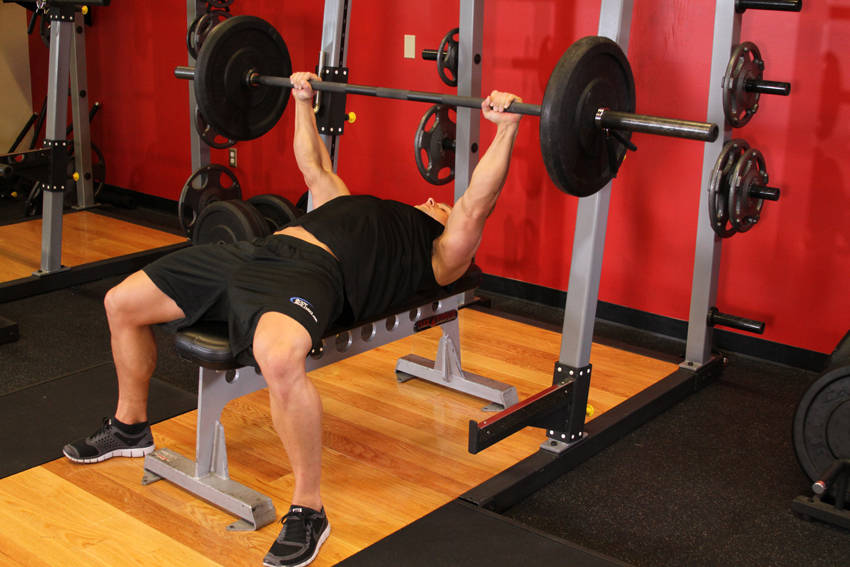
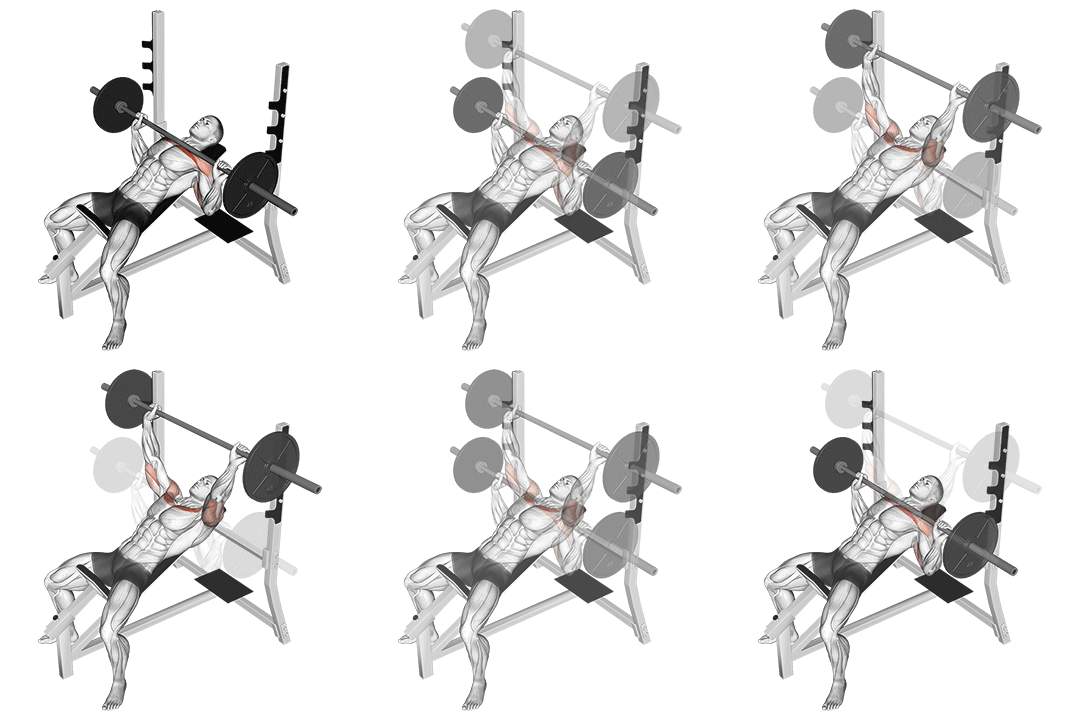
3. Barbell Bench Press - Medium Grip
89% match- Pectorals
- Barbell
- Intermediate
- Compound
How to perform this exercise
- Lie back on a flat bench. Using a medium width grip (a grip that creates a 90-degree angle in the middle of the movement between the forearms and the upper arms), lift the bar from the rack and hold it straight over you with your arms locked. This will be your starting position.
- From the starting position, breathe in and begin coming down slowly until the bar touches your middle chest.
- After a brief pause, push the bar back to the starting position as you breathe out. Focus on pushing the bar using your chest muscles. Lock your arms and squeeze your chest in the contracted position at the top of the motion, hold for a second and then start coming down slowly again. Tip: Ideally, lowering the weight should take about twice as long as raising it.
- Repeat the movement for the prescribed amount of repetitions.
- When you are done, place the bar back in the rack.
Sets and reps: 3 or 4 sets of 6 to 10 reps.
Why this matches
- Primary muscle: pectorals, the same as the Barbell Decline Pullover
- Equipment: free weights, the same as the Barbell Decline Pullover
- Body position: lying on your back, the same as the Barbell Decline Pullover
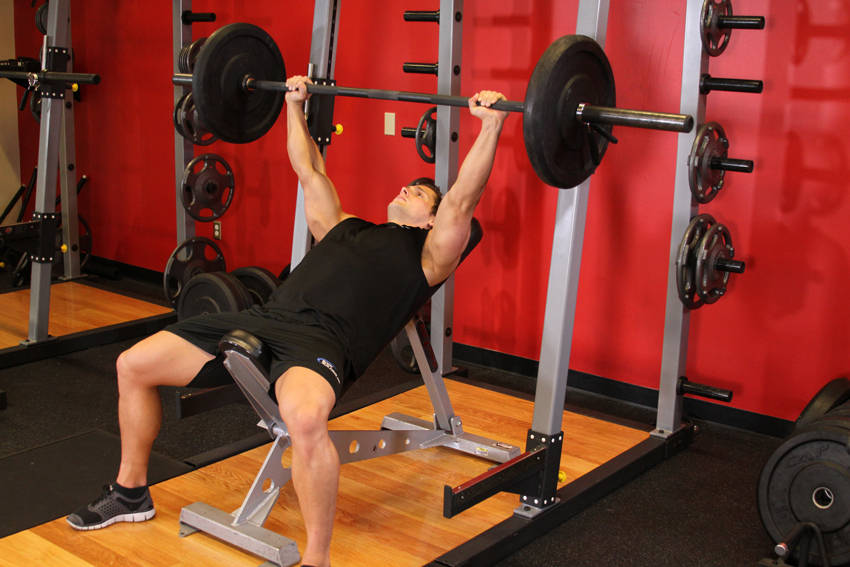
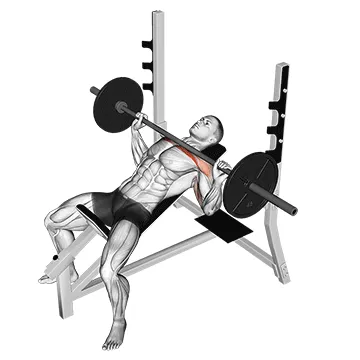
4. Barbell Incline Bench Press
89% match- Pectorals
- Barbell
- Intermediate
- Compound
How to perform this exercise
- Set up an incline bench at a 45-degree angle.
- Lie down on the bench with your feet flat on the ground.
- Grasp the barbell with an overhand grip, slightly wider than shoulder-width apart.
- Unrack the barbell and lower it slowly towards your chest, keeping your elbows at a 45-degree angle.
- Pause for a moment at the bottom, then push the barbell back up to the starting position.
- Repeat for the desired number of repetitions.
Sets and reps: 3 or 4 sets of 6 to 10 reps.
Why this matches
- Primary muscle: pectorals, the same as the Barbell Decline Pullover
- Equipment: free weights, the same as the Barbell Decline Pullover
- Body position: lying on your back, the same as the Barbell Decline Pullover
- Pectorals
- Barbell
- Intermediate
- Compound
How to perform this exercise
- Lie back on an incline bench. Using a medium-width grip (a grip that creates a 90-degree angle in the middle of the movement between the forearms and the upper arms), lift the bar from the rack and hold it straight over you with your arms locked. This will be your starting position.
- As you breathe in, come down slowly until you feel the bar on you upper chest.
- After a second pause, bring the bar back to the starting position as you breathe out and push the bar using your chest muscles. Lock your arms in the contracted position, squeeze your chest, hold for a second and then start coming down slowly again. Tip: it should take at least twice as long to go down than to come up.
- Repeat the movement for the prescribed amount of repetitions.
- When you are done, place the bar back in the rack.
Sets and reps: 3 or 4 sets of 6 to 10 reps.
Why this matches
- Primary muscle: pectorals, the same as the Barbell Decline Pullover
- Equipment: free weights, the same as the Barbell Decline Pullover
- Body position: lying on your back, the same as the Barbell Decline Pullover
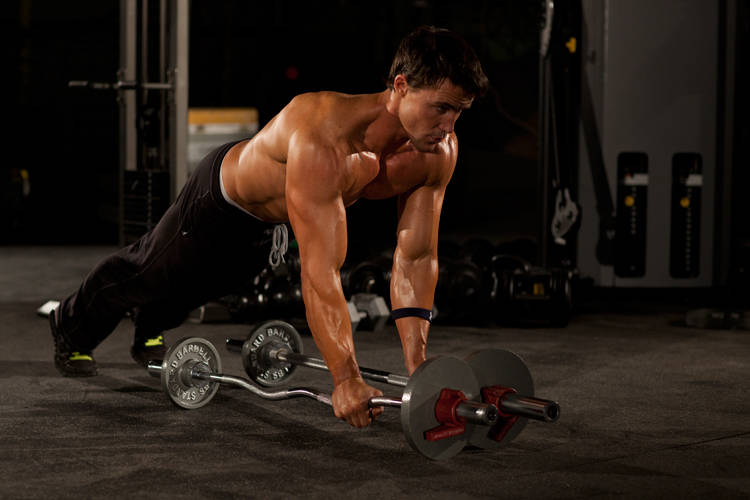
6. Bodyweight Flyes
89% match- Pectorals
- Ez-barbell
- Intermediate
- Isolation
A good swap when you have an EZ bar to work with, and it still works the pectorals.
How to perform this exercise
- Position two equally loaded EZ bars on the ground next to each other. Ensure they are able to roll.
- Assume a push-up position over the bars, supporting your weight on your toes and hands with your arms extended and body straight.
- Place your hands on the bars. This will be your starting position.
- Using a slow and controlled motion, move your hands away from the midline of your body, rolling the bars apart. Inhale during this portion of the motion.
- After moving the bars as far apart as you can, return to the starting position by pulling them back together. Exhale as you perform this movement.
Sets and reps: 3 sets of 10 to 15 reps.
Why this matches
- Primary muscle: pectorals, the same as the Barbell Decline Pullover
- Equipment: free weights, the same as the Barbell Decline Pullover
- Body position: lying on your back, the same as the Barbell Decline Pullover
Progression
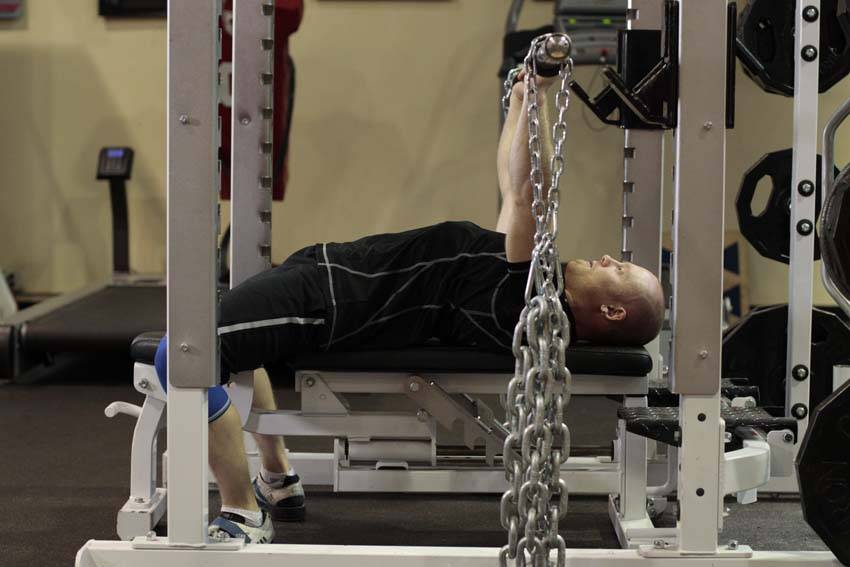
7. Bench Press With Chains
89% match- Pectorals
- Barbell
- Advanced
- Compound
Pick this when you want a harder version that still works the pectorals.
How to perform this exercise
- Adjust the leader chain, shortening it to the desired length.Place the chains on the sleeves of the bar.
- Lying on the bench, get your head beyond the bar if possible. Tuck your feet underneath you and arch your back. Using the bar to help support your weight, lift your shoulder off the bench and retract them, squeezing the shoulder blades together. Use your feet to drive your traps into the bench. Maintain this tight body position throughout the movement. However wide your grip, it should cover the ring on the bar.
- Pull the bar out of the rack without protracting your shoulders. Focus on squeezing the bar and trying to pull it apart. Lower the bar to your lower chest or upper stomach. The bar, wrist, and elbow should stay in line at all times.
- Pause when the barbell touches your torso, and then drive the bar up with as much force as possible. The elbows should be tucked in until lockout.
Sets and reps: 3 to 5 sets of 5 to 8 reps.
Why this matches
- Primary muscle: pectorals, the same as the Barbell Decline Pullover
- Equipment: free weights, the same as the Barbell Decline Pullover
- Body position: lying on your back, the same as the Barbell Decline Pullover
Progression
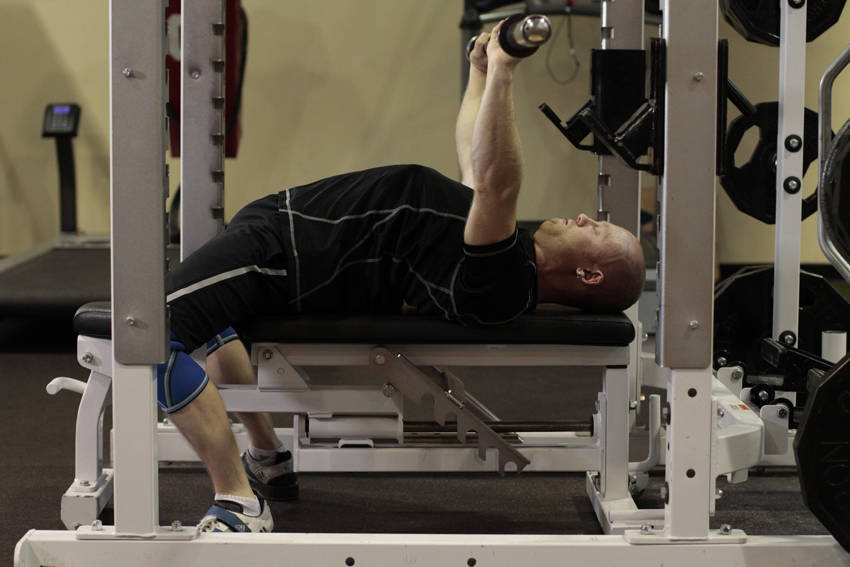
8. Bench Press - Powerlifting
89% match- Pectorals
- Barbell
- Advanced
- Compound
How to perform this exercise
- Begin by lying on the bench, getting your head beyond the bar if possible. Tuck your feet underneath you and arch your back. Using the bar to help support your weight, lift your shoulder off the bench and retract them, squeezing the shoulder blades together. Use your feet to drive your traps into the bench. Maintain this tight body position throughout the movement.
- However wide your grip, it should cover the ring on the bar. Pull the bar out of the rack without protracting your shoulders. Focus on squeezing the bar and trying to pull it apart.
- Lower the bar to your lower chest or upper stomach. The bar, wrist, and elbow should stay in line at all times.
- Pause when the barbell touches your torso, and then drive the bar up with as much force as possible. The elbows should be tucked in until lockout.
Sets and reps: 3 to 5 sets of 5 to 8 reps.
Why this matches
- Primary muscle: pectorals, the same as the Barbell Decline Pullover
- Equipment: free weights, the same as the Barbell Decline Pullover
- Body position: lying on your back, the same as the Barbell Decline Pullover
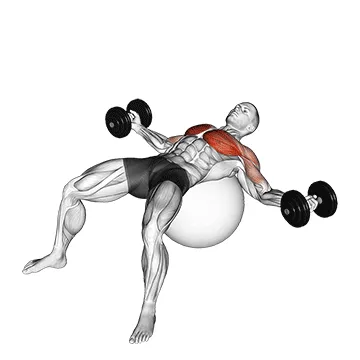
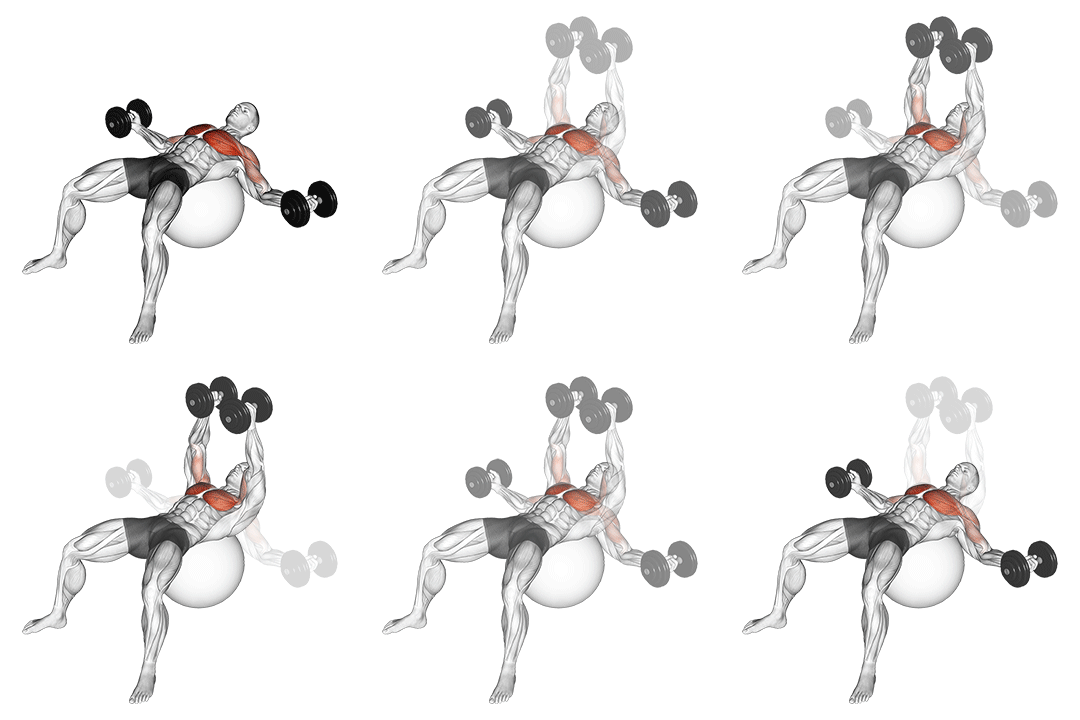
9. Dumbbell Fly On Exercise Ball
88% match- Pectorals
- Stability-ball
- Intermediate
- Isolation
How to perform this exercise
- Sit on an exercise ball and hold a dumbbell in each hand.
- Walk your feet forward and roll your body down until your head, neck, and upper back are supported by the ball.
- Extend your arms straight up above your chest, palms facing each other.
- Bend your elbows slightly and lower your arms out to the sides in a wide arc until you feel a stretch in your chest.
- Pause for a moment, then reverse the movement and squeeze your chest muscles as you bring the dumbbells back to the starting position.
- Repeat for the desired number of repetitions.
Sets and reps: 3 sets of 10 to 15 reps.
Why this matches
- Primary muscle: pectorals, the same as the Barbell Decline Pullover
- Body position: lying on your back, the same as the Barbell Decline Pullover
- Balance: harder to stay steady on than the Barbell Decline Pullover
- Pectorals
- Stability-ball
- Intermediate
- Isolation
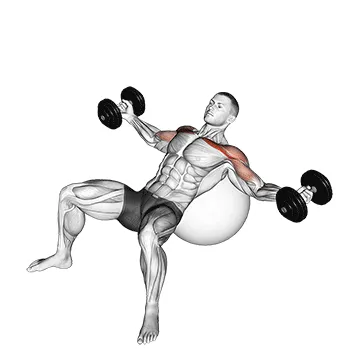
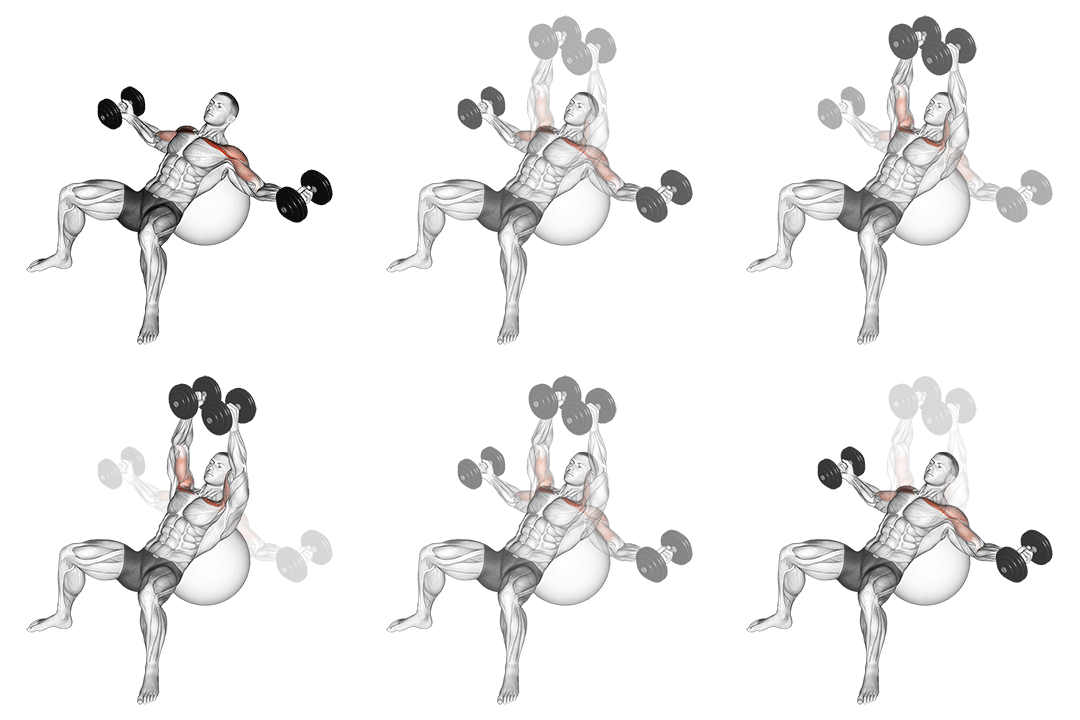
How to perform this exercise
- Set up an incline bench at a 45-degree angle.
- Sit on an exercise ball and roll forward until your upper back is resting on the incline bench.
- Hold a dumbbell in each hand with your palms facing each other and your arms extended above your chest.
- Lower the dumbbells out to the sides in a wide arc until you feel a stretch in your chest.
- Pause for a moment, then squeeze your chest muscles to bring the dumbbells back to the starting position.
- Repeat for the desired number of repetitions.
Sets and reps: 3 sets of 10 to 15 reps.
Why this matches
- Primary muscle: pectorals, the same as the Barbell Decline Pullover
- Body position: lying on your back, the same as the Barbell Decline Pullover
- Balance: harder to stay steady on than the Barbell Decline Pullover
Why You Might Need a Barbell Decline Pullover Alternative
You might substitute the Barbell Decline Pullover because of shoulder irritation from a long lever, lack of a decline bench, or weak scapular control that increases impingement risk. The barbell can force a fixed grip and limit scapular motion, increasing stress on the anterior shoulder. Alternatives let you control elbow angle, vary load paths (cable vs free weight) and attack the lower pecs or serratus with safer mechanics. Cue: maintain scapular retraction on the descent and a controlled eccentric to protect the rotator cuff while still biasing pectoral fibers.
Barbell Decline Pullover FAQ
What muscles does Barbell Decline Pullover work?
The Barbell Decline Pullover primarily loads the pectoralis major (lower fibers) while also engaging the latissimus dorsi and serratus anterior. It uses shoulder extension and a long-lever eccentric, so the triceps long head and scapular stabilizers assist during the movement.
Find Alternatives for Any Exercise
Search the exercise database and filter the ranked substitutes by the equipment you own.
Similarity scores compare exercise metadata such as movement pattern, muscles, equipment and body position. They are not a safety rating or a check that you own the equipment. Learn about our methodology