

10 Best Bent-arm Barbell Pullover Alternatives for Lats Development
If you can't perform the Bent-arm Barbell Pullover, use movements that lengthen the lats and control humeral extension. Effective swaps include the dumbbell pullover, straight-arm cable pulldown, and lat pulldown. Cue a long spine and controlled eccentric, and keep elbows slightly bent to focus load on the latissimus dorsi rather than the triceps.
Original Exercise: Bent-arm Barbell Pullover
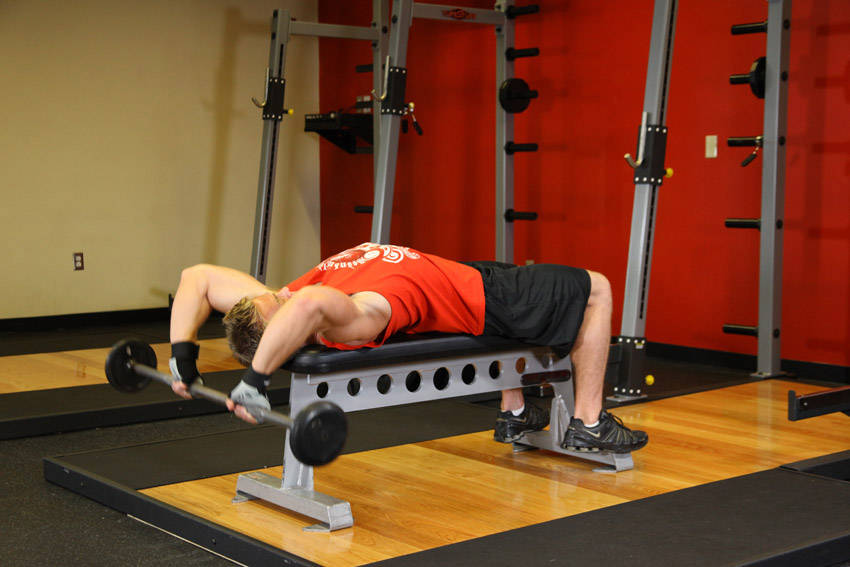
How to Perform Bent-arm Barbell Pullover
- Lie on a flat bench with a barbell using a shoulder grip width.
- Hold the bar straight over your chest with a bend in your arms. This will be your starting position.
- While keeping your arms in the bent arm position, lower the weight slowly in an arc behind your head while breathing in until you feel a stretch on the chest.
- At that point, bring the barbell back to the starting position using the arc through which the weight was lowered and exhale as you perform this movement.
- Hold the weight on the initial position for a second and repeat the motion for the prescribed number of repetitions.
Pro Tips
- Category: Strength
- Force: Pull
- Movement type: Compound
Ranked Bent-arm Barbell Pullover Alternatives
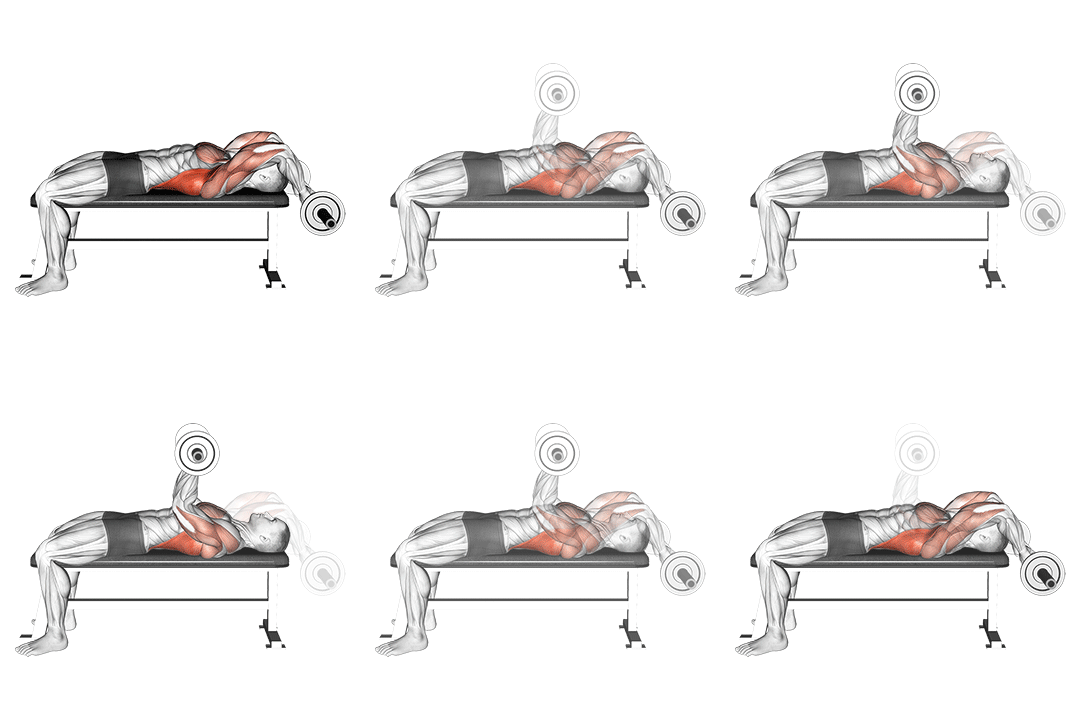
1. Ez Bar Lying Bent Arms Pullover
99.9% MatchHow to perform this exercise
- Lie flat on a bench with your head at one end and your feet on the floor.
- Hold the EZ barbell with a pronated grip (palms facing away from you) and your hands shoulder-width apart.
- Extend your arms straight above your chest, keeping a slight bend in your elbows.
- Lower the barbell in an arc motion behind your head, maintaining the slight bend in your elbows.
- Pause for a moment, then return the barbell to the starting position by reversing the arc motion.
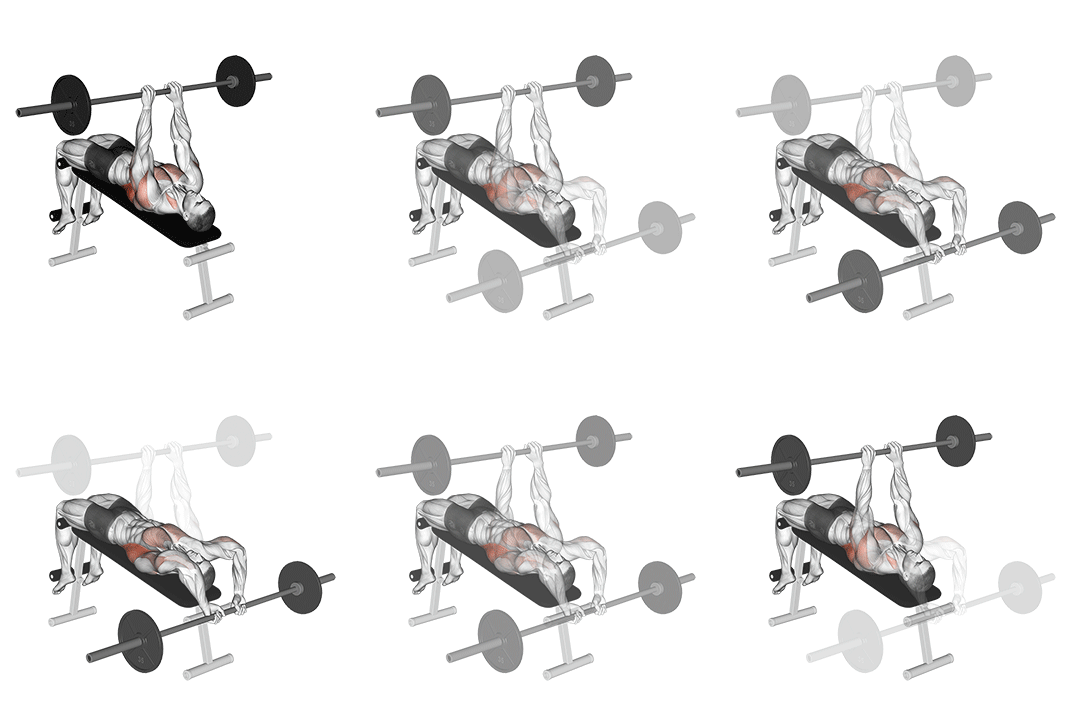
2. Barbell Decline Bent Arm Pullover
95% MatchHow to perform this exercise
- Lie down on a decline bench with your head lower than your hips and your feet secured.
- Hold a barbell with a pronated grip (palms facing away from you) and extend your arms straight above your chest.
- Lower the barbell behind your head in a controlled manner, keeping your arms slightly bent.
- Pause for a moment, then raise the barbell back to the starting position by contracting your lats.
- Repeat for the desired number of repetitions.
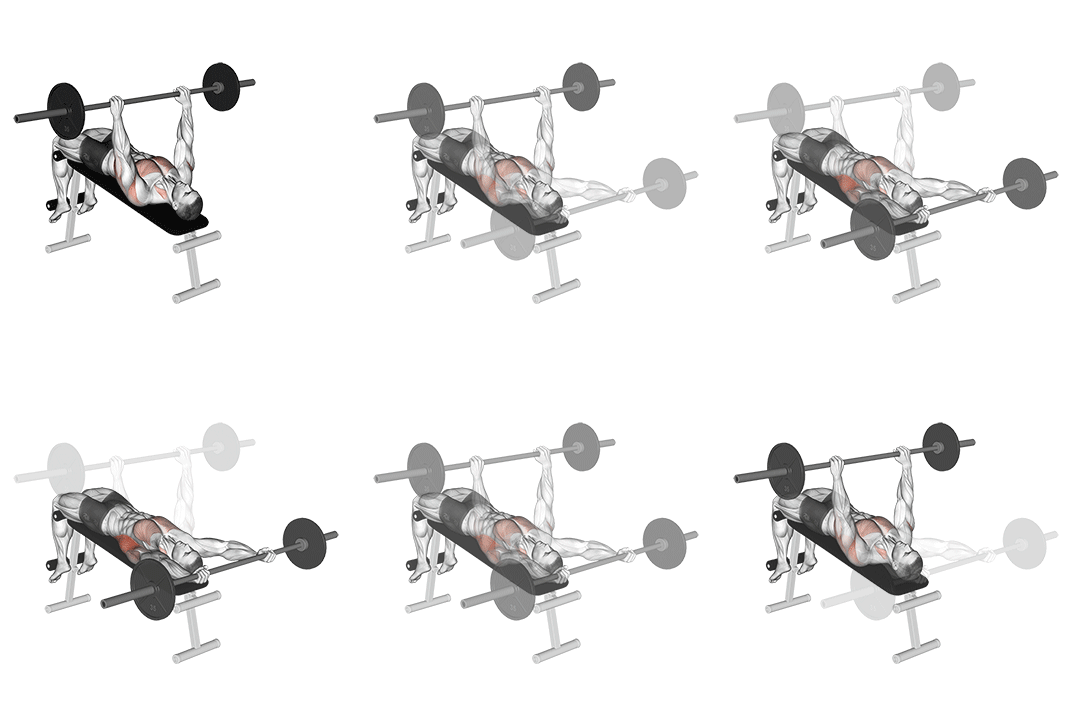
3. Barbell Decline Wide-grip Pullover
93% MatchHow to perform this exercise
- Lie on a decline bench with your head lower than your hips and your feet secured.
- Hold a barbell with a wide grip and extend your arms straight above your chest.
- Lower the barbell behind your head in a controlled manner, keeping your arms straight.
- Pause for a moment, then raise the barbell back to the starting position.
- Repeat for the desired number of repetitions.
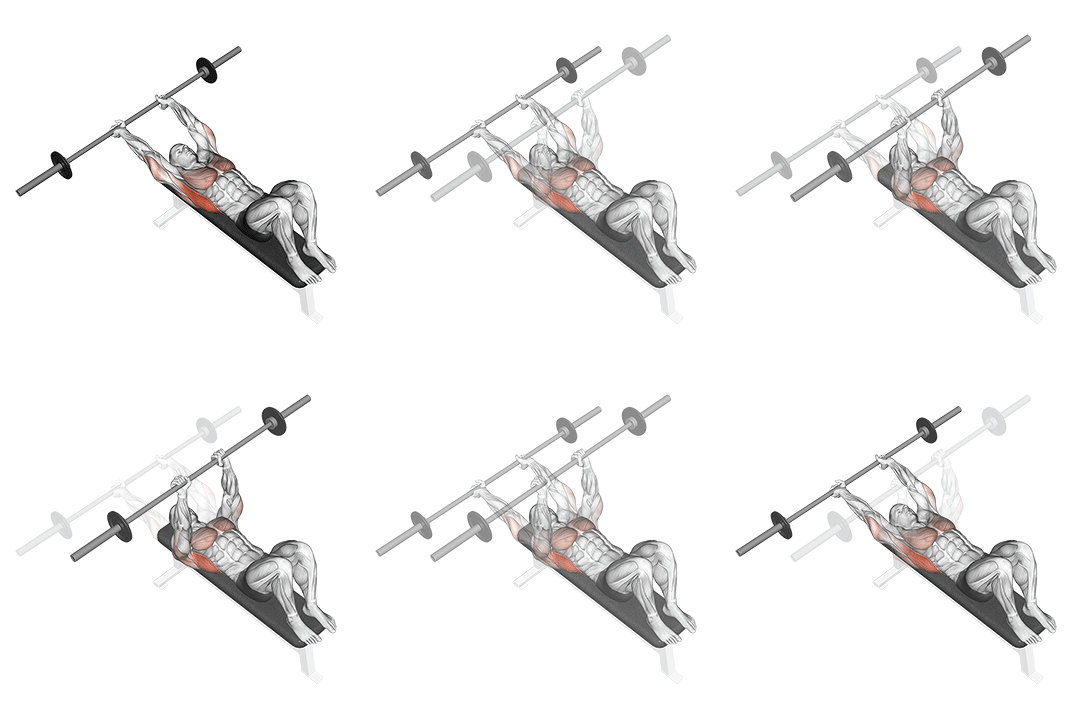
4. Barbell Pullover
83.7% MatchHow to perform this exercise
- Lie flat on a bench with your head at one end and your feet on the floor.
- Hold a barbell with a shoulder-width grip and extend your arms straight above your chest.
- Keeping your arms straight, lower the barbell behind your head in a controlled manner until you feel a stretch in your lats.
- Pause for a moment, then raise the barbell back to the starting position.
- Repeat for the desired number of repetitions.
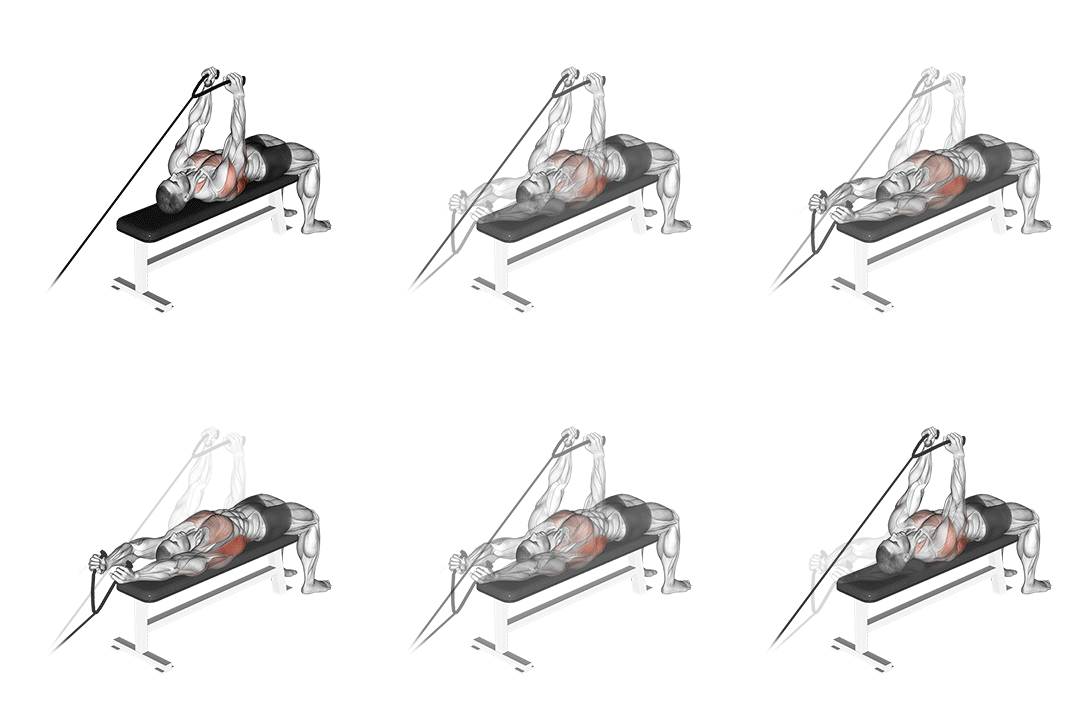
5. Cable Lying Extension Pullover (with Rope Attachment)
81% MatchHow to perform this exercise
- Attach a rope to a cable machine and set the pulley at the highest position.
- Lie down on a bench with your head towards the cable machine.
- Hold the rope with both hands and extend your arms straight up above your chest.
- Keeping your arms straight, slowly lower the rope behind your head while maintaining control.
- Pause for a moment at the bottom, then slowly raise the rope back to the starting position.
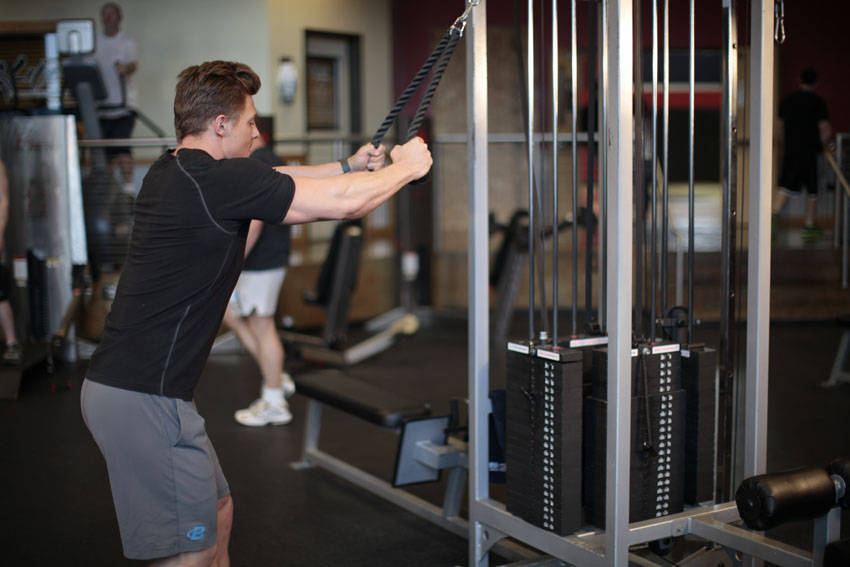
6. Rope Straight-Arm Pulldown
78% MatchHow to perform this exercise
- Attach a rope to a high pulley and make your weight selection. Stand a couple feet back from the pulley with your feet staggered and take the rope with both hands. Lean forward from the hip, keeping your back straight, with your arms extended up in front of you. This will be your starting position.
- Keeping your arms straight, extend the shoulder to pull the rope down to your thighs.
- Pause at the bottom of the motion, squeezing your lats.
- Return to the starting position without allowing the weight to fully rest on the stack.
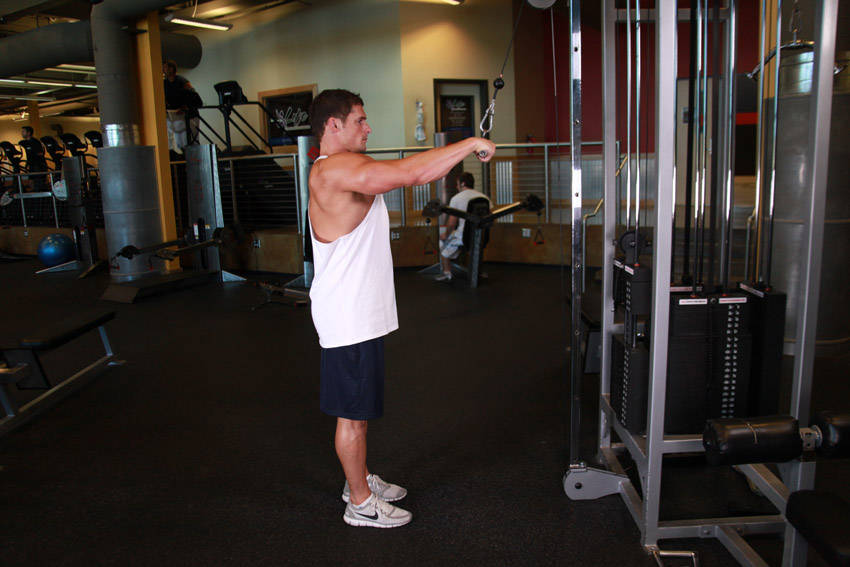
7. Straight-Arm Pulldown
77% MatchHow to perform this exercise
- You will start by grabbing the wide bar from the top pulley of a pulldown machine and using a wider than shoulder-width pronated (palms down) grip. Step backwards two feet or so.
- Bend your torso forward at the waist by around 30-degrees with your arms fully extended in front of you and a slight bend at the elbows. If your arms are not fully extended then you need to step a bit more backwards until they are. Once your arms are fully extended and your torso is slightly bent at the waist, tighten the lats and then you are ready to begin.
- While keeping the arms straight, pull the bar down by contracting the lats until your hands are next to the side of the thighs. Breathe out as you perform this step.
- While keeping the arms straight, go back to the starting position while breathing in.
- Repeat for the recommended amount of repetitions.
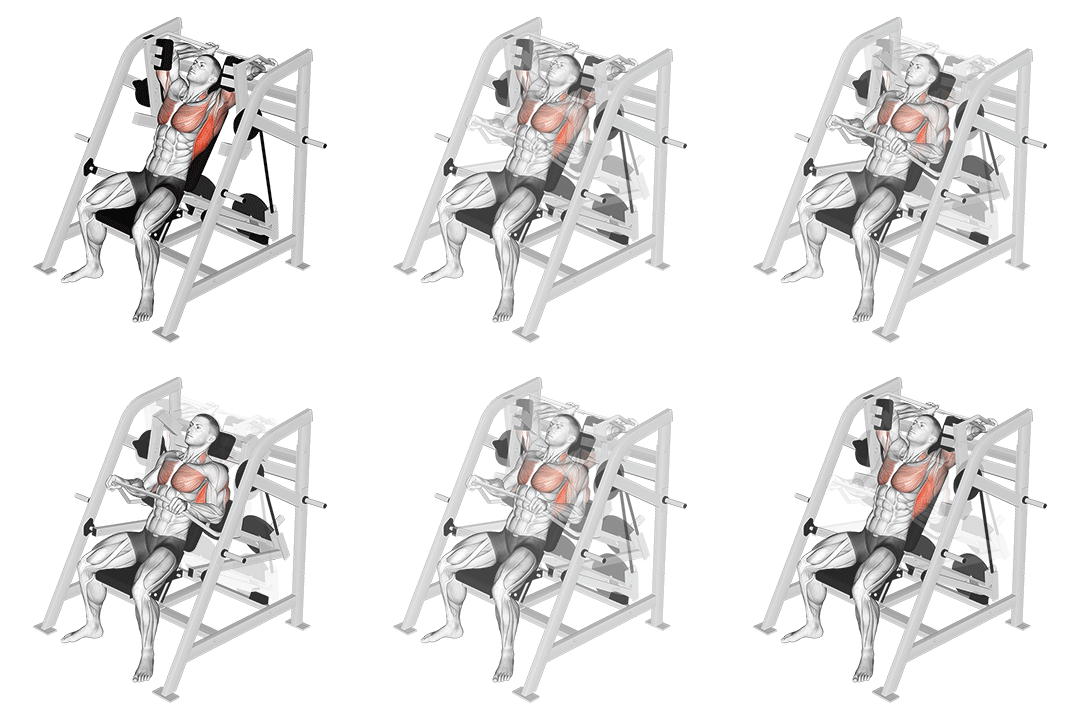
8. Lever Pullover
75.7% MatchHow to perform this exercise
- Adjust the seat and handles of the leverage machine to a comfortable position.
- Sit on the machine with your back against the pad and grasp the handles with an overhand grip.
- Keep your arms slightly bent and your core engaged.
- Slowly pull the handles towards your chest, squeezing your lats.
- Pause for a moment at the peak contraction, then slowly return to the starting position.
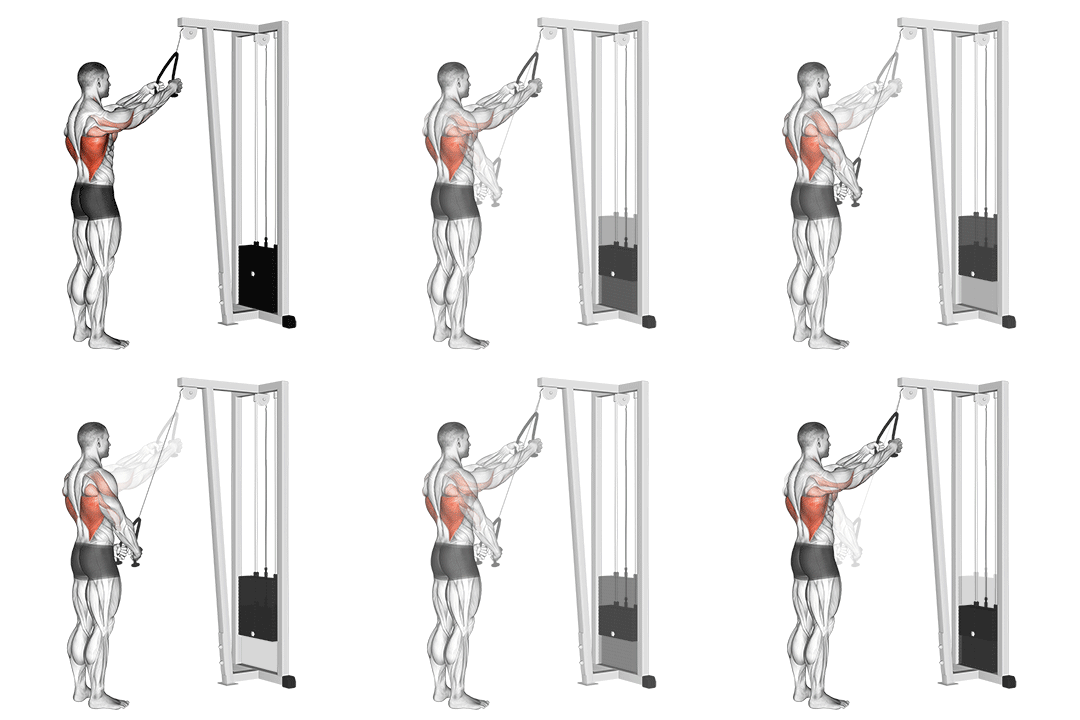
9. Cable Straight Arm Pulldown (with Rope)
72.2% MatchHow to perform this exercise
- Attach a rope to the cable machine at the highest setting.
- Stand facing the machine with your feet shoulder-width apart.
- Grasp the rope with both hands, palms facing down.
- Extend your arms fully in front of you, keeping your elbows slightly bent.
- Engage your lats and slowly pull the rope down towards your thighs, keeping your arms straight.
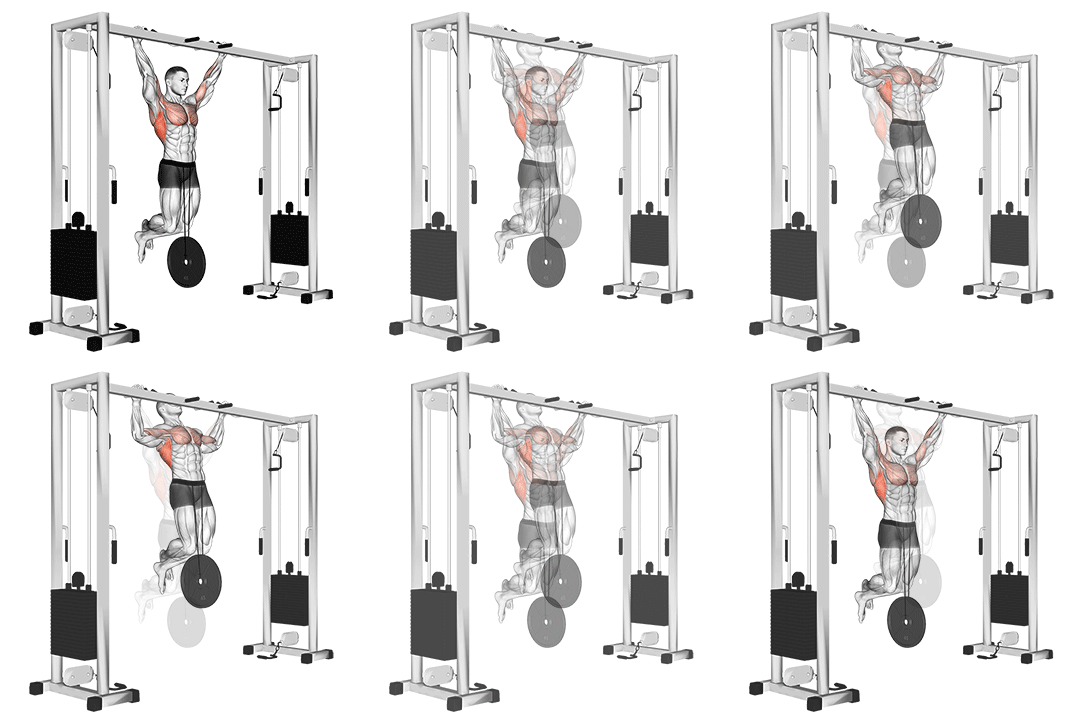
10. Weighted Pull-up
72.2% MatchHow to perform this exercise
- Grab the pull-up bar with an overhand grip, slightly wider than shoulder-width apart.
- Hang from the bar with your arms fully extended and your body straight.
- Engage your back muscles and pull your body up towards the bar, keeping your elbows close to your body.
- Continue pulling until your chin is above the bar.
- Pause for a moment at the top, then slowly lower your body back down to the starting position.
Why You Might Need a Bent-arm Barbell Pullover Alternative
You may need substitutes because of shoulder pain, lack of a barbell, or a goal shift toward safer lat isolation. The bent-arm barbell pullover demands thoracic mobility and rotator cuff stability; if either is limited, stress shifts to the glenohumeral joint. Choose exercises that maintain scapular depression and humeral extension while reducing shoulder shear. For example, a straight-arm cable pulldown keeps the torso upright and lets you control the eccentric, preserving lat stretch without extreme shoulder elevation. Using a dumbbell instead of a barbell can also reduce abnormal torque by allowing independent arm paths and a slight elbow bend to limit triceps involvement.
How to Choose the Right Substitute
Pick a substitute based on equipment, mobility, and desired training effect. If you want the same length-tension on the lats, choose a pullover variation that permits a long lever and controlled eccentric (cue a slow 3–4 second descent). If you lack thoracic extension, favor vertical pulls like the lat pulldown that allow scapular depression. For maximal isolation, use cables or machines to keep consistent tension and cue scapular retraction throughout the set. Prioritize options where you can maintain a packed shoulder, slight elbow bend, and full lat engagement without compensatory shoulder elevation.
Frequently Asked Questions
What muscles does Bent-arm Barbell Pullover work?
The exercise primarily targets the latissimus dorsi through humeral extension and adduction while secondarily loading the chest and serratus anterior. Maintain scapular depression and a slight elbow bend to maximize lat activation and reduce triceps or anterior deltoid takeover.
What is the best bodyweight alternative to Bent-arm Barbell Pullover?
A straight-arm plank-to-row progression or towel-assisted pull-up emphasizes lat length and shoulder extension with no barbell. Cue a braced core and long lever (arms extended) to increase lat loading while keeping the scapula depressed and retracted.
Can I build muscle without doing Bent-arm Barbell Pullover?
Yes, you can achieve equal or greater lat hypertrophy with alternatives like dumbbell pullovers, straight-arm cable pulldowns, and weighted pull-ups. Focus on progressive overload, full range of motion, and cues that maintain scapular control and slow eccentrics for consistent lat activation.
More Exercise Alternatives
Find Alternatives for Any Exercise
Use the exercise substitution finder to compare ranked alternatives for your available equipment and training preference.
Try the Exercise Substitution Finder →