

10 Best Decline Close-grip Bench To Skull Crusher Alternatives for Triceps
The Decline Close-grip Bench To Skull Crusher is done lying on your back with a barbell. Ranked closest by our scoring: the Body-up, the Bench Dip (Knees Bent) and the Bench Dip On Floor.
Updated Ranked by our 12-factor similarity model How it works
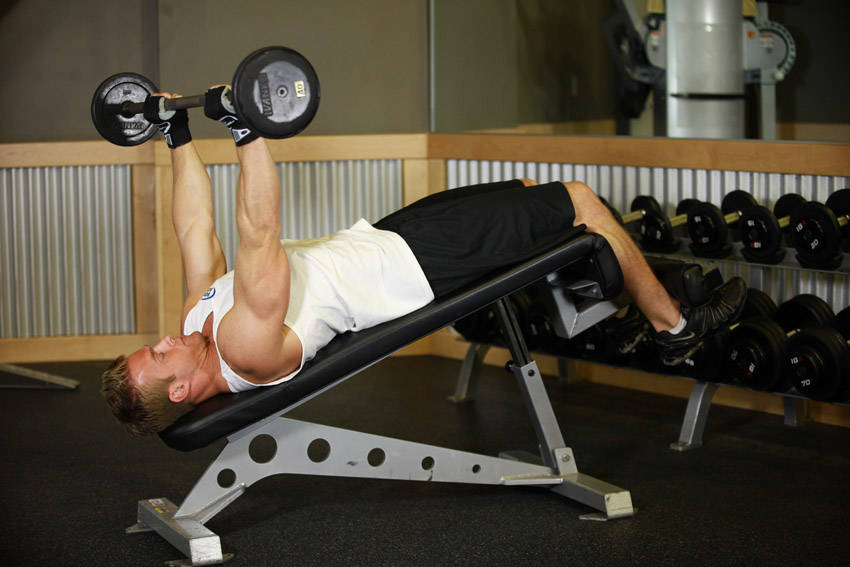
Original Exercise: Decline Close-grip Bench To Skull Crusher
- Primary muscle
- Triceps
- Equipment
- Barbell
- Difficulty
- Advanced
- Type
- Compound
Secondary muscles: Chest, Shoulders
How to perform Decline Close-grip Bench To Skull Crusher
- Secure your legs at the end of the decline bench and slowly lay down on the bench.
- Using a close grip (a grip that is slightly less than shoulder width), lift the bar from the rack and hold it straight over you with your arms locked and elbows in. The arms should be perpendicular to the floor. This will be your starting position. Tip: In order to protect your rotator cuff, it is best if you have a spotter help you lift the barbell off the rack.
- Now lower the bar down to your lower chest as you breathe in. Keep the elbows in as you perform this movement.
- Using the triceps to push the bar back up, press it back to the starting position as you exhale.
- As you breathe in and you keep the upper arms stationary, bring the bar down slowly by moving your forearms in a semicircular motion towards you until you feel the bar slightly touch your forehead. Breathe in as you perform this portion of the movement.
- Lift the bar back to the starting position by contracting the triceps and exhaling.
- Repeat steps 3-6 until the recommended amount of repetitions is performed.
Ranked Decline Close-grip Bench To Skull Crusher Alternatives
10 substitutes, ranked by how closely each one matches the Decline Close-grip Bench To Skull Crusher on movement pattern, muscles worked, equipment and body position. The higher the score, the less you change. Open "How to perform this exercise" on a card for the steps; every card title links to that exercise's own alternatives page.
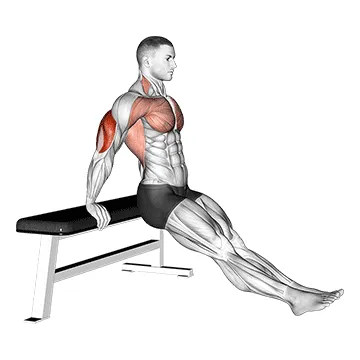
Best match 1. Body-up
69% match- Triceps
- Bodyweight
- Intermediate
- Compound
Use this when you have nothing to train with, because it works the triceps with bodyweight alone.
How to perform this exercise
- Start by placing your hands on a raised surface, such as a bench or parallel bars, with your palms facing down and fingers pointing forward.
- Extend your legs out in front of you, keeping your heels on the ground and your body straight.
- Lower your body by bending your elbows, keeping them close to your sides, until your upper arms are parallel to the ground.
- Pause for a moment, then push through your palms to straighten your arms and lift your body back up to the starting position.
- Repeat for the desired number of repetitions.
Sets and reps: 3 or 4 sets of 6 to 10 reps.
Why this matches
- Primary muscle: triceps, the same as the Decline Close-grip Bench To Skull Crusher
- Equipment: bodyweight only, not free weights
- Body position: lying face down, not lying on your back
- Balance: harder to stay steady on than the Decline Close-grip Bench To Skull Crusher
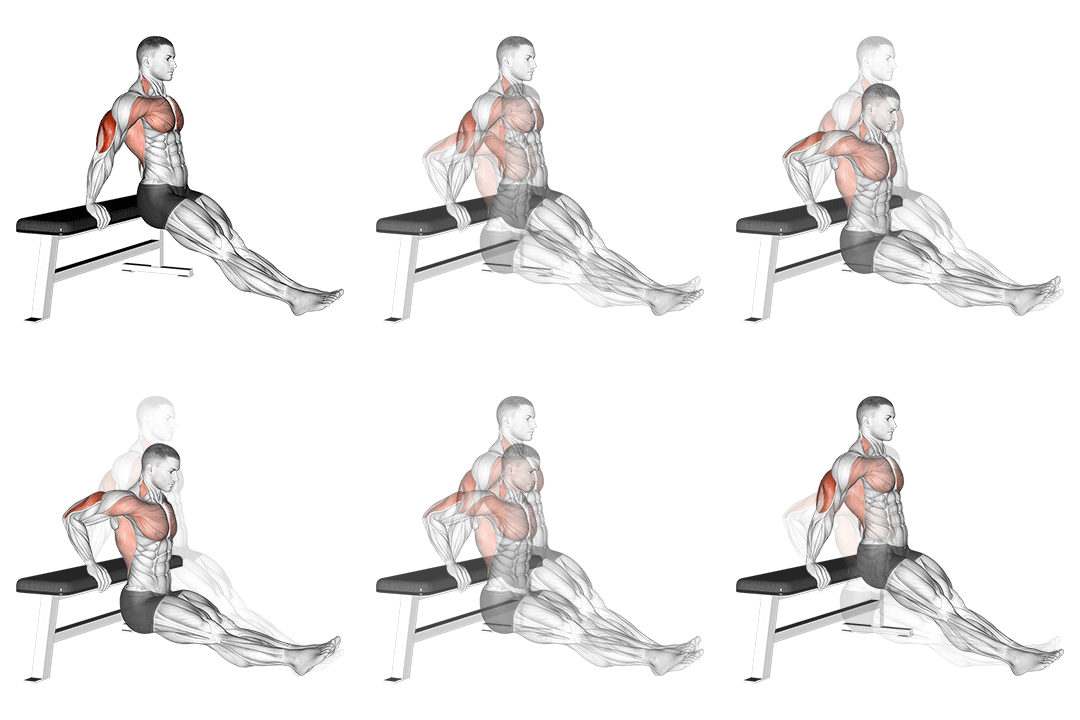
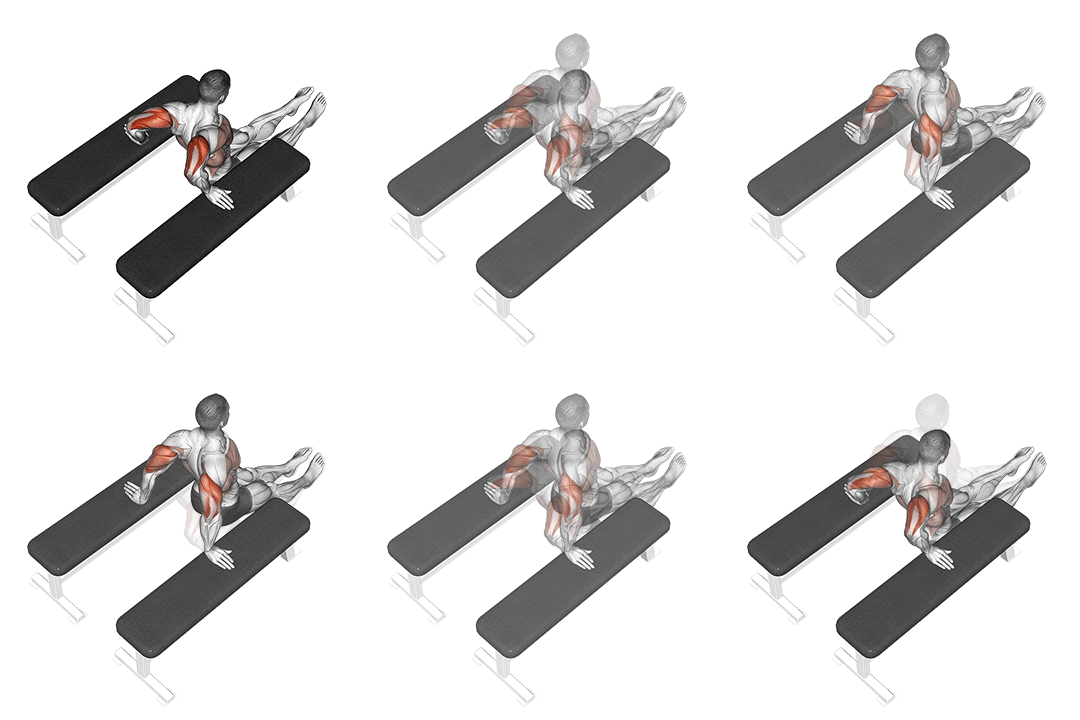
2. Bench Dip (Knees Bent)
69% match- Triceps
- Bodyweight
- Beginner
- Compound
How to perform this exercise
- Sit on the edge of a bench or chair with your hands gripping the edge next to your hips.
- Slide your butt off the bench and straighten your legs in front of you, keeping your heels on the ground.
- Bend your elbows and lower your body towards the ground, keeping your back close to the bench.
- Pause for a moment at the bottom, then push yourself back up to the starting position.
- Repeat for the desired number of repetitions.
Sets and reps: 3 sets of 8 to 12 reps, and add reps before you add load.
Why this matches
- Primary muscle: triceps, the same as the Decline Close-grip Bench To Skull Crusher
- Equipment: bodyweight only, not free weights
- Body position: seated, not lying on your back
- Balance: harder to stay steady on than the Decline Close-grip Bench To Skull Crusher
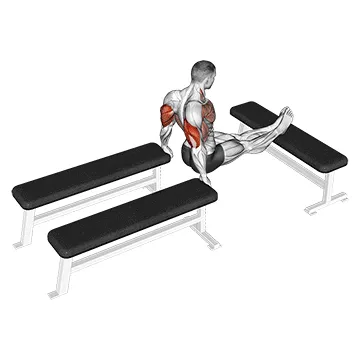
3. Bench Dip On Floor
68% match- Triceps
- Bodyweight
- Intermediate
- Compound
How to perform this exercise
- Sit on the edge of a bench or chair with your hands gripping the edge, fingers pointing forward.
- Slide your butt off the bench, supporting your weight with your hands.
- Lower your body by bending your elbows until your upper arms are parallel to the floor.
- Push yourself back up to the starting position by straightening your arms.
- Repeat for the desired number of repetitions.
Sets and reps: 3 or 4 sets of 6 to 10 reps.
Why this matches
- Primary muscle: triceps, the same as the Decline Close-grip Bench To Skull Crusher
- Equipment: bodyweight only, not free weights
- Body position: seated, not lying on your back
- Balance: harder to stay steady on than the Decline Close-grip Bench To Skull Crusher
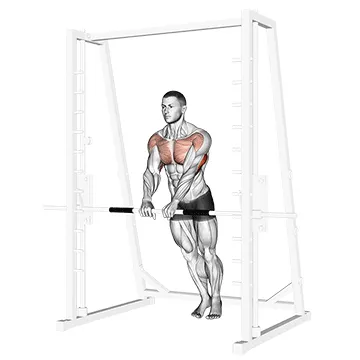
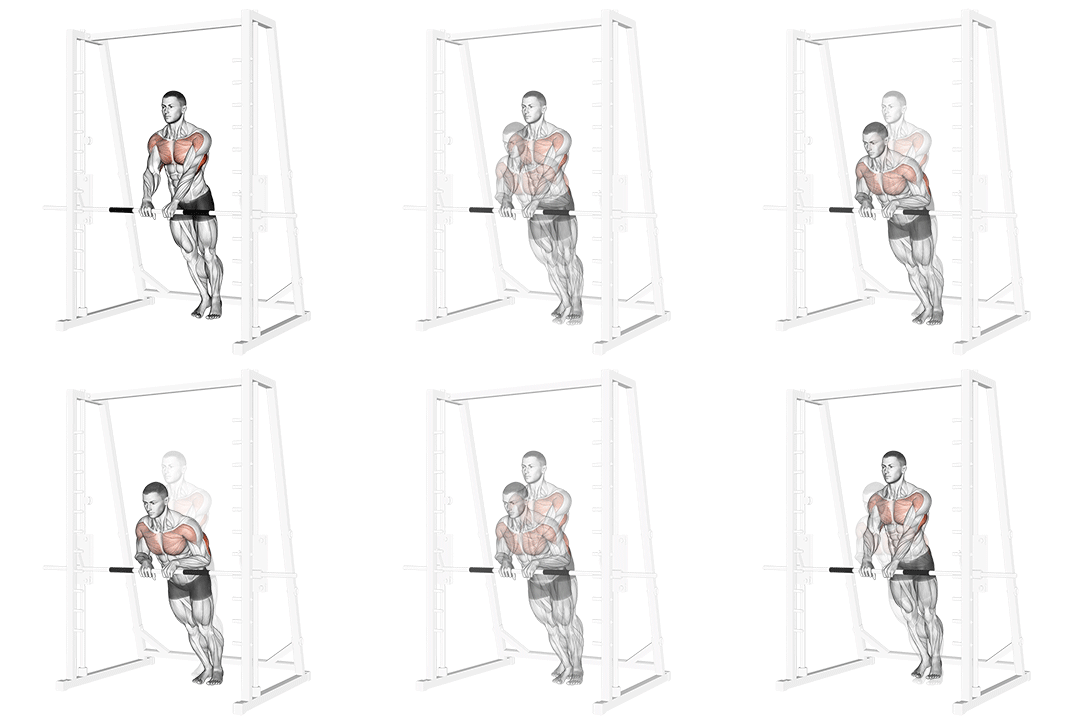
4. Incline Close-grip Push-up
66% match- Triceps
- Bodyweight
- Beginner
- Compound
How to perform this exercise
- Place your hands on an elevated surface, such as a bench or step, slightly wider than shoulder-width apart.
- Extend your legs behind you, resting on the balls of your feet, with your body forming a straight line from head to heels.
- Lower your chest towards the elevated surface by bending your elbows, keeping them close to your sides.
- Pause for a moment at the bottom, then push yourself back up to the starting position by straightening your arms.
- Repeat for the desired number of repetitions.
Sets and reps: 3 sets of 8 to 12 reps, and add reps before you add load.
Why this matches
- Primary muscle: triceps, the same as the Decline Close-grip Bench To Skull Crusher
- Equipment: bodyweight only, not free weights
- Body position: lying face down, not lying on your back
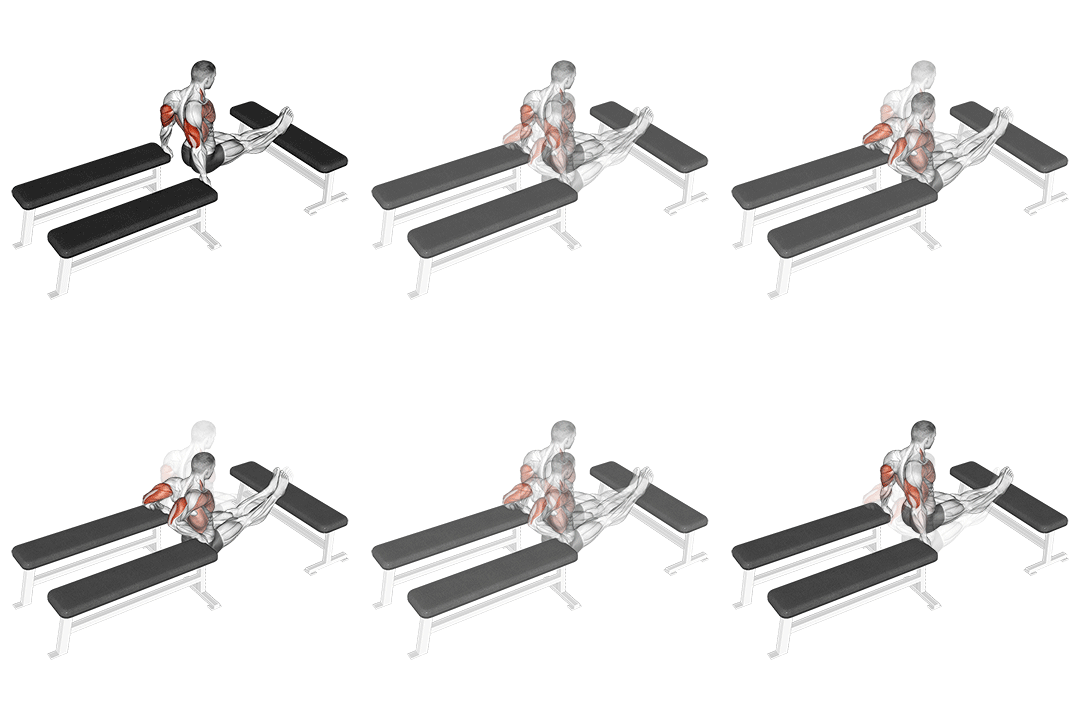
5. Three Bench Dip
66% match- Triceps
- Bodyweight
- Intermediate
- Compound
How to perform this exercise
- Sit on a bench with your hands gripping the edge, fingers pointing forward.
- Slide your butt off the bench, supporting your weight with your hands.
- Bend your elbows and lower your body until your upper arms are parallel to the ground.
- Push yourself back up to the starting position.
- Repeat for the desired number of repetitions.
Sets and reps: 3 or 4 sets of 6 to 10 reps.
Why this matches
- Primary muscle: triceps, the same as the Decline Close-grip Bench To Skull Crusher
- Equipment: bodyweight only, not free weights
- Body position: seated, not lying on your back
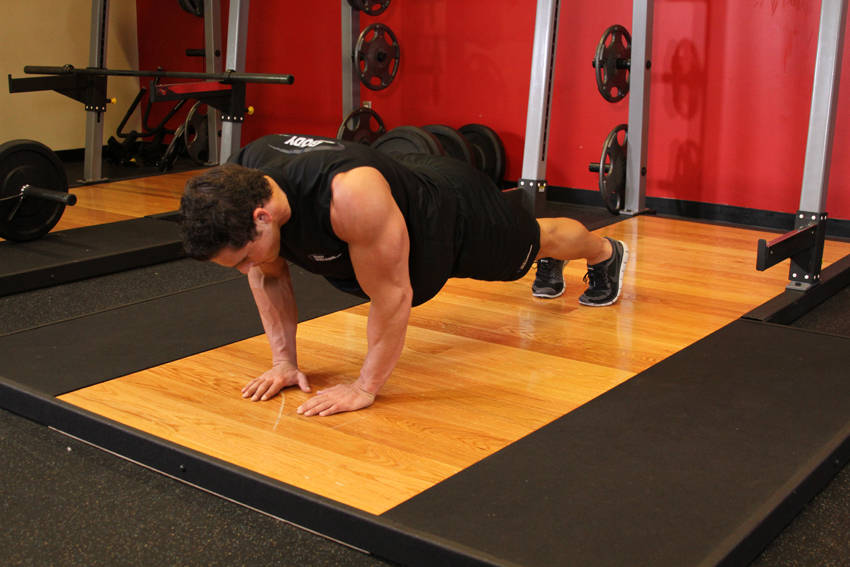
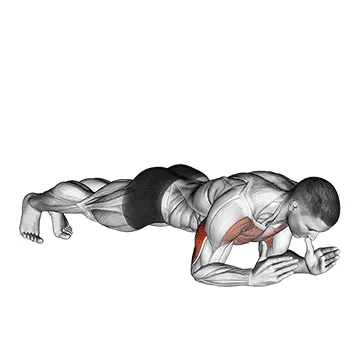
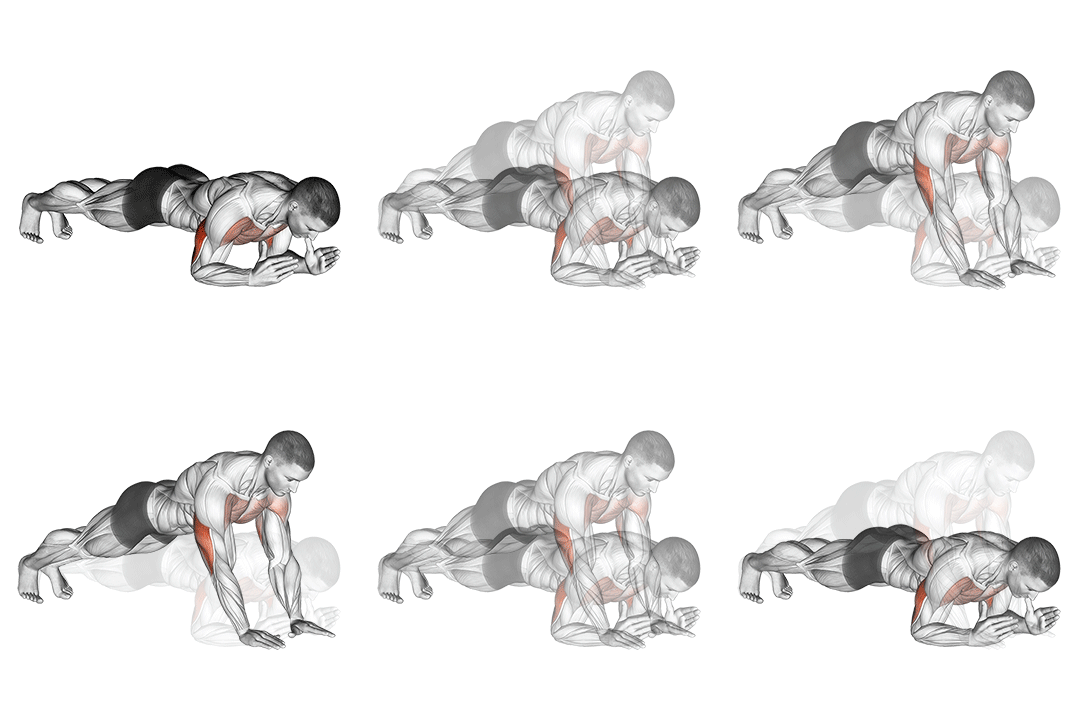
6. Push-ups - Close Triceps Position
65% match- Triceps
- Bodyweight
- Intermediate
- Compound
How to perform this exercise
- Lie on the floor face down and place your hands closer than shoulder width for a close hand position. Make sure that you are holding your torso up at arms' length.
- Lower yourself until your chest almost touches the floor as you inhale.
- Using your triceps and some of your pectoral muscles, press your upper body back up to the starting position and squeeze your chest. Breathe out as you perform this step.
- After a second pause at the contracted position, repeat the movement for the prescribed amount of repetitions.
Sets and reps: 3 or 4 sets of 6 to 10 reps.
Why this matches
- Primary muscle: triceps, the same as the Decline Close-grip Bench To Skull Crusher
- Equipment: bodyweight only, not free weights
- Body position: lying face down, not lying on your back
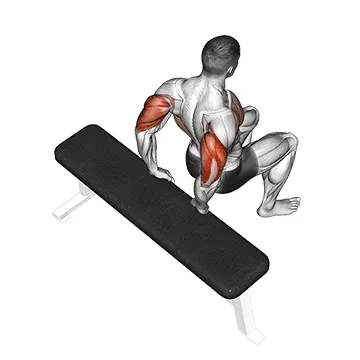
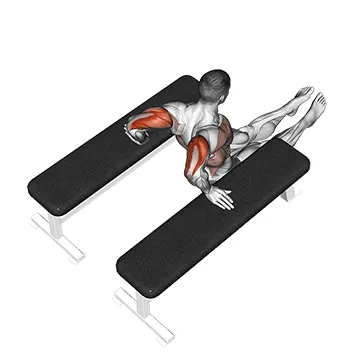
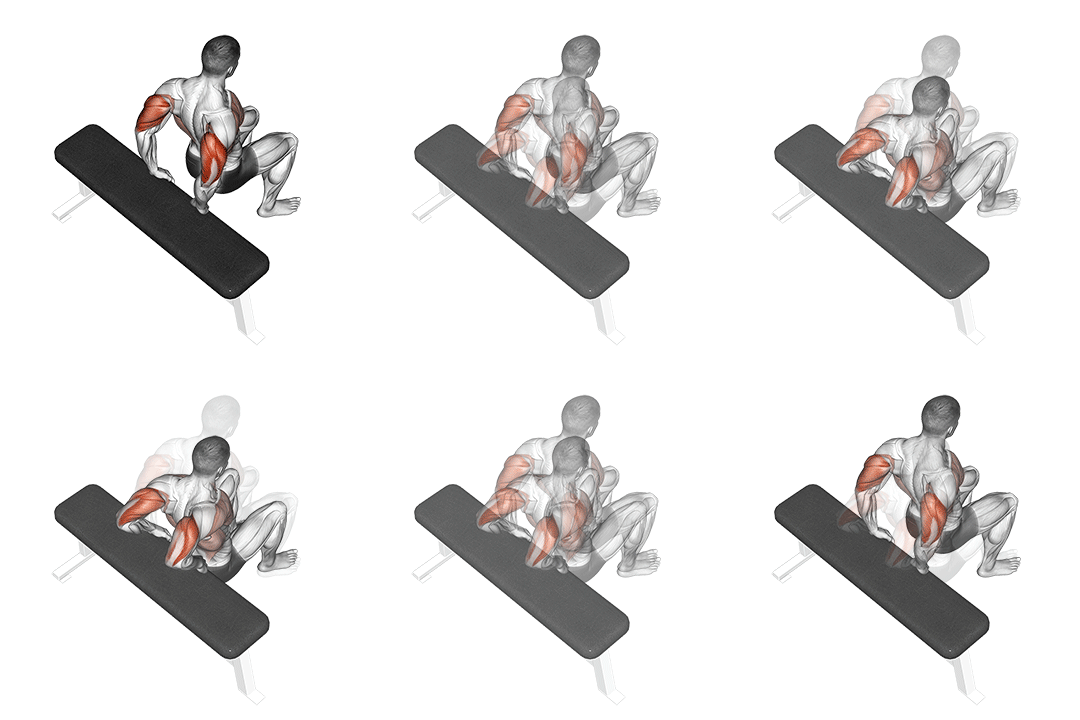
7. Triceps Dip (Between Benches)
65% match- Triceps
- Bodyweight
- Intermediate
- Compound
How to perform this exercise
- Sit on a bench with your hands gripping the edge of the bench, fingers pointing forward.
- Slide your butt off the bench, supporting your weight with your hands.
- Bend your elbows and lower your body towards the ground, keeping your back close to the bench.
- Pause for a moment at the bottom, then push yourself back up to the starting position.
- Repeat for the desired number of repetitions.
Sets and reps: 3 or 4 sets of 6 to 10 reps.
Why this matches
- Primary muscle: triceps, the same as the Decline Close-grip Bench To Skull Crusher
- Equipment: bodyweight only, not free weights
- Body position: standing, not lying on your back
- Balance: harder to stay steady on than the Decline Close-grip Bench To Skull Crusher
- Triceps
- Bodyweight
- Intermediate
- Compound
How to perform this exercise
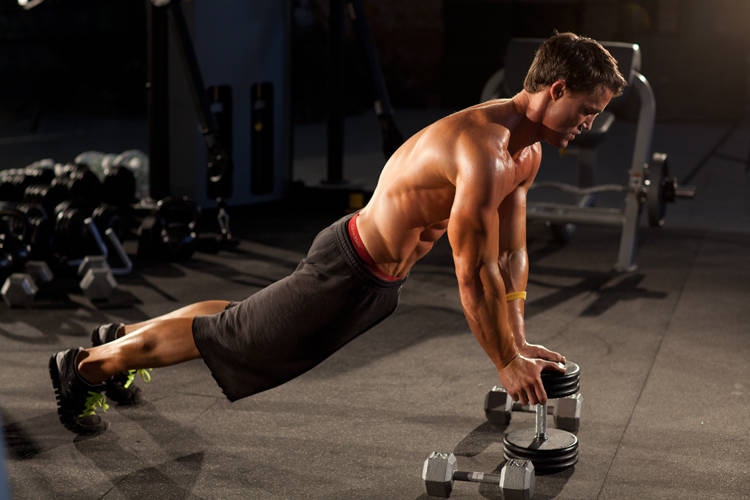
- Lie on the floor and place your hands on an upright dumbbell. Supporting your weight on your toes and hands, keep your torso rigid and your elbows in with your arms straight. This will be your starting position.
- Lower your body, allowing the elbows to flex while you inhale. Keep your body straight, not allowing your hips to rise or sag.
- Press yourself back up to the starting position by extending the elbows. Breathe out as you perform this step.
- After a pause at the contracted position, repeat the movement for the prescribed amount of repetitions.
Sets and reps: 3 or 4 sets of 6 to 10 reps.
Why this matches
- Primary muscle: triceps, the same as the Decline Close-grip Bench To Skull Crusher
- Equipment: bodyweight only, not free weights
- Body position: lying face down, not lying on your back
- Balance: harder to stay steady on than the Decline Close-grip Bench To Skull Crusher
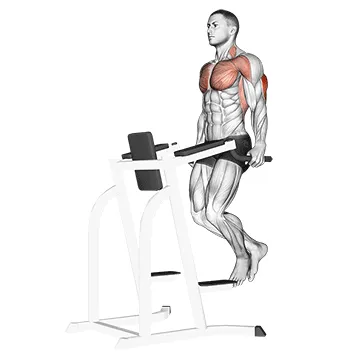
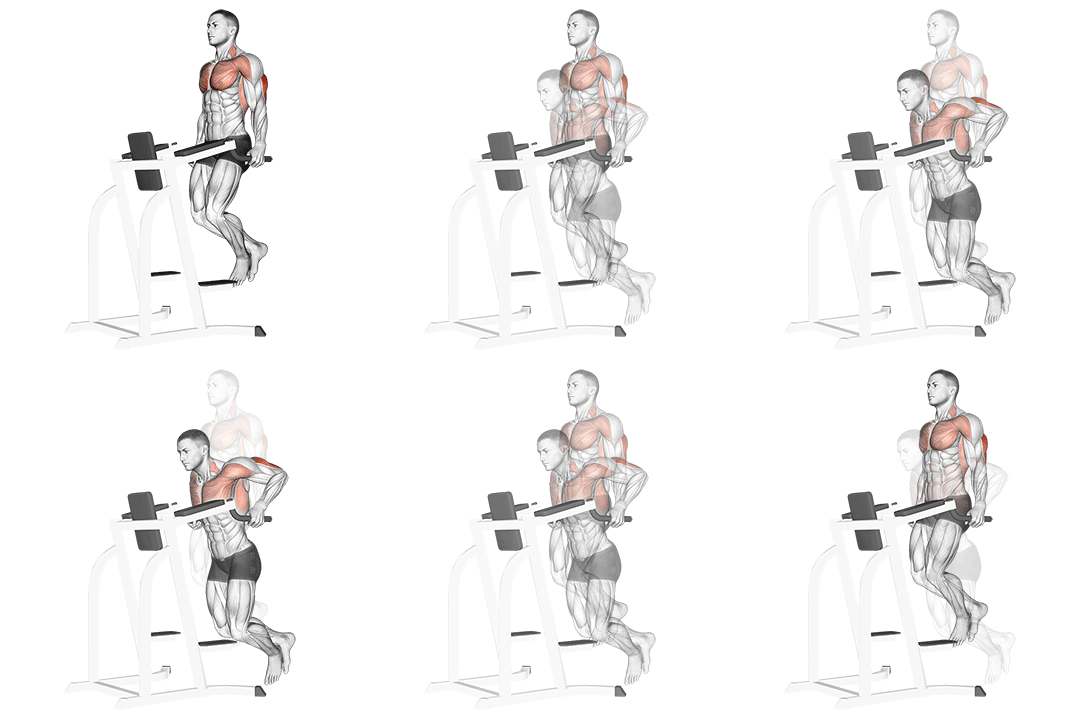
9. Triceps Dip
64% match- Triceps
- Bodyweight
- Intermediate
- Compound
How to perform this exercise
- Sit on the edge of a bench or chair with your hands gripping the edge, fingers pointing forward.
- Slide your butt off the bench, supporting your weight with your hands.
- Bend your elbows and lower your body towards the ground, keeping your back close to the bench.
- Pause for a moment at the bottom, then push yourself back up to the starting position.
- Repeat for the desired number of repetitions.
Sets and reps: 3 or 4 sets of 6 to 10 reps.
Why this matches
- Primary muscle: triceps, the same as the Decline Close-grip Bench To Skull Crusher
- Equipment: bodyweight only, not free weights
- Body position: hanging, not lying on your back
- Balance: harder to stay steady on than the Decline Close-grip Bench To Skull Crusher
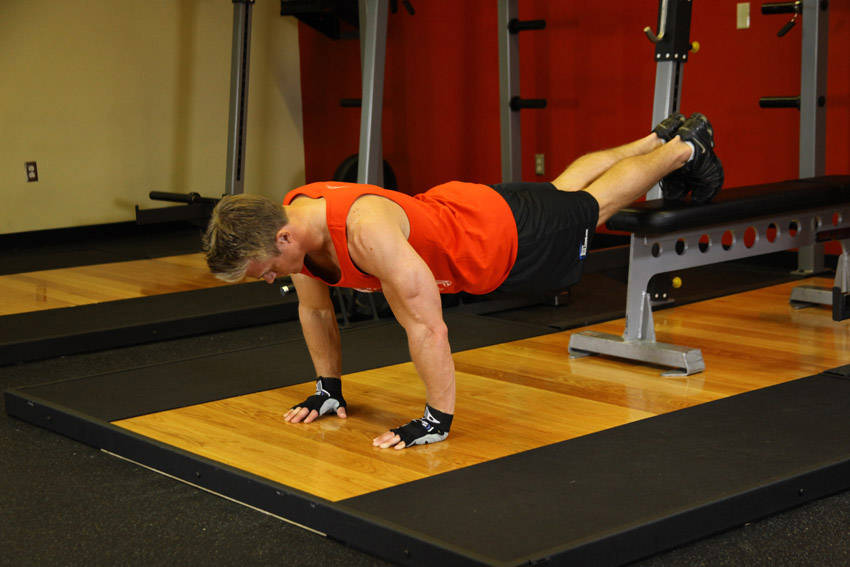
10. Push-ups With Feet Elevated
64% match- Pectorals
- Bodyweight
- Intermediate
- Compound
How to perform this exercise
- Lie on the floor face down and place your hands about 36 inches apart from each other holding your torso up at arms length.
- Place your toes on top of a flat bench. This will allow your body to be elevated. Note: The higher the elevation of the flat bench, the higher the resistance of the exercise is.
- Lower yourself until your chest almost touches the floor as you inhale.
- Using your pectoral muscles, press your upper body back up to the starting position and squeeze your chest. Breathe out as you perform this step.
- After a second pause at the contracted position, repeat the movement for the prescribed amount of repetitions.
Sets and reps: 3 or 4 sets of 6 to 10 reps.
Why this matches
- Primary muscle: pectorals, not triceps
- Equipment: bodyweight only, not free weights
- Body position: lying face down, not lying on your back
Why You Might Need a Decline Close-grip Bench To Skull Crusher Alternative
You might substitute the Decline Close-grip Bench To Skull Crusher for several reasons: lack of a decline bench or barbell, chronic elbow or shoulder pain, or a desire to change loading angles and hypertrophy stimulus. Heavy decline skull-crusher variations can place high shear on the elbow joint and stress the long head when shoulder angle is altered. Selecting a substitute lets you manage pain, reduce peak tendon stress, or focus on a different triceps head. For example, using a cable overhead extension shifts tension to the long head with constant load, while a close-grip bench press emphasizes the medial and lateral heads through a pressing pattern. Cue: limit elbow flare to maximize triceps activation.
Decline Close-grip Bench To Skull Crusher FAQ
What muscles does Decline Close-grip Bench To Skull Crusher work?
The exercise primarily targets the triceps, lateral, medial, and long heads, by combining a narrow press and an extended-elbow extension. Supporting muscles include the anterior deltoids and upper chest that stabilize shoulder position; keep elbows close to maintain triceps-dominant mechanics.
Find Alternatives for Any Exercise
Search the exercise database and filter the ranked substitutes by the equipment you own.
Similarity scores compare exercise metadata such as movement pattern, muscles, equipment and body position. They are not a safety rating or a check that you own the equipment. Learn about our methodology