

10 Best Double Kettlebell Snatch Alternatives for Shoulder Training
The Double Kettlebell Snatch is done standing with a kettlebell. Ranked closest by our scoring: the Double Kettlebell Jerk, the Jerk Balance and the Clean And Jerk.
Updated Ranked by our 12-factor similarity model How it works
Original Exercise: Double Kettlebell Snatch
- Primary muscle
- Delts
- Equipment
- Kettlebell
- Difficulty
- Advanced
- Type
- Compound
Secondary muscles: Glutes, Hamstrings, Quadriceps
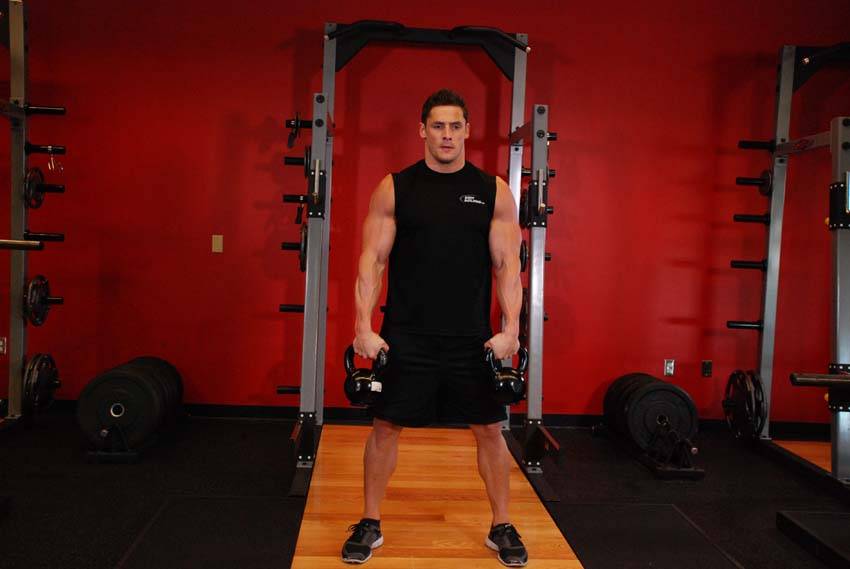
How to perform Double Kettlebell Snatch
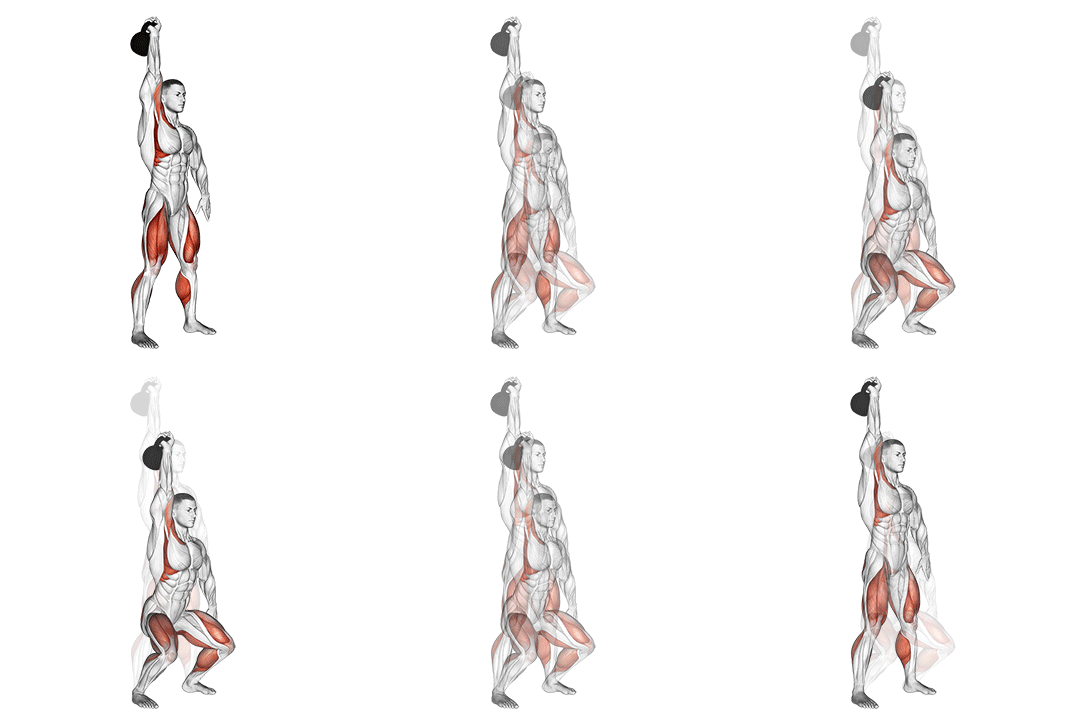
- Place two kettlebells behind your feet. Bend your knees and sit back to pick up the kettlebells.
- Swing the kettlebells between your legs forcefully and reverse the direction.
- Drive through with your hips and lock the ketttlebells overhead in one uninterrupted motion.
Ranked Double Kettlebell Snatch Alternatives
10 substitutes, ranked by how closely each one matches the Double Kettlebell Snatch on movement pattern, muscles worked, equipment and body position. The higher the score, the less you change. Open "How to perform this exercise" on a card for the steps; every card title links to that exercise's own alternatives page.
Best match 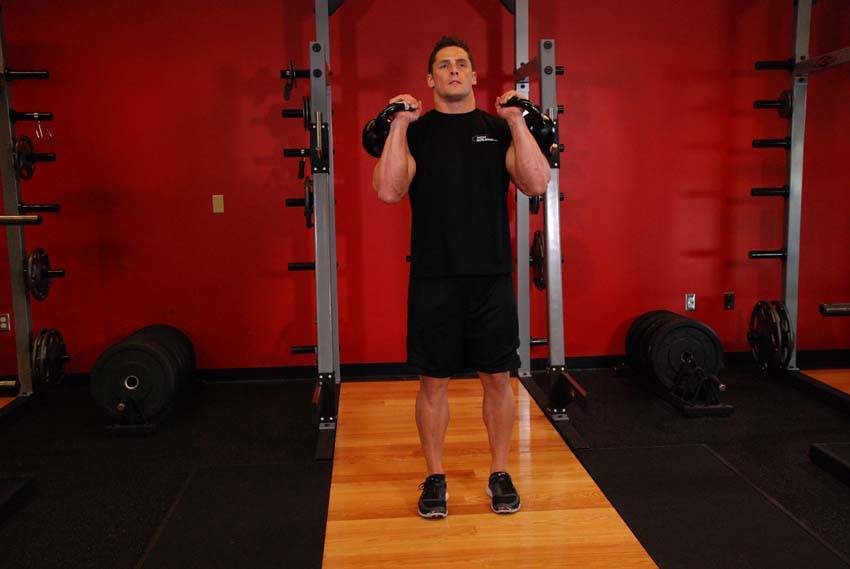
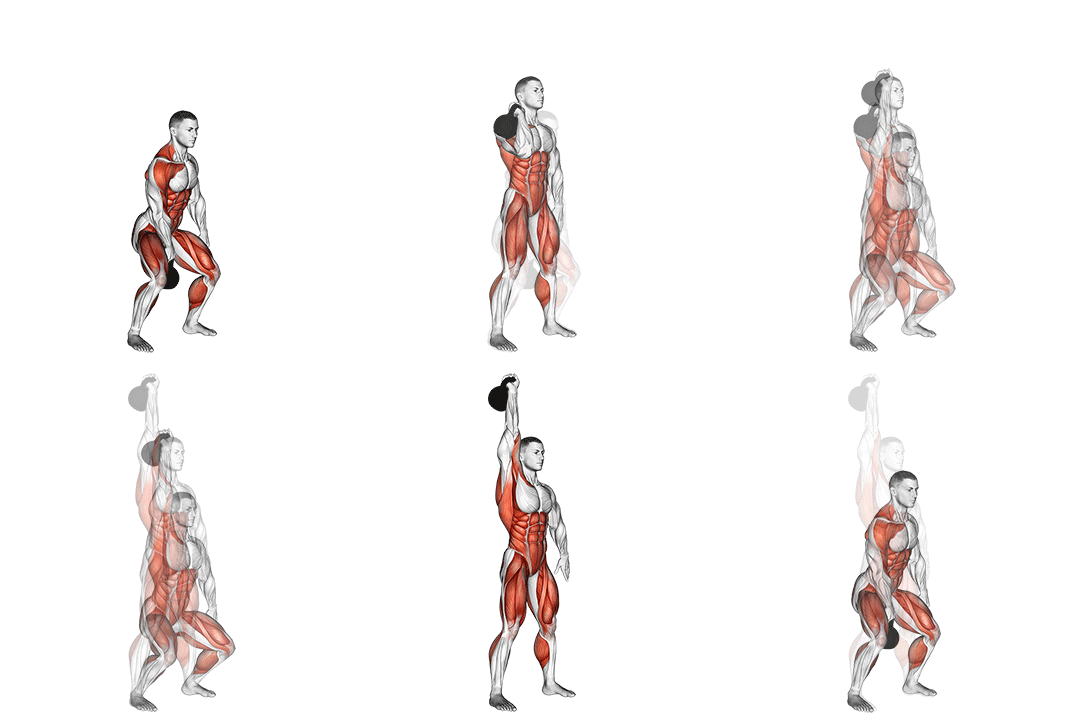
1. Double Kettlebell Jerk
98% match- Delts
- Kettlebell
- Advanced
- Compound
Pick this when you want to work the delts with less balance to manage.
How to perform this exercise
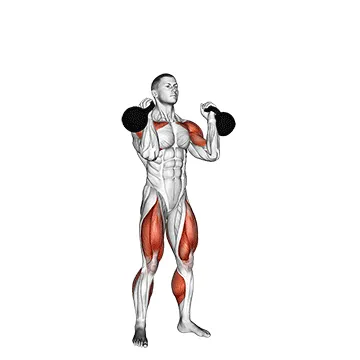
- Hold a kettlebell by the handle in each hand.
- Clean the kettlebells to your shoulders by extending through the legs and hips as you pull the kettlebells towards your shoulders. Rotate your wrists as you do so, so that the palms face forward. This will be your starting position.
- Dip your body by bending the knees, keeping your torso upright.
- Immediately reverse direction, driving through the heels, in essence jumping to create momentum.
- As you do so, press the kettlebells overhead to lockout by extending the arms, using your body's momentum to move the weights.
- Return your feet to the ground in a split fashion, with one foot forward and one foot back.
- Keeping the weights overhead, return to a standing position, bringing your feet together. Lower the weights to perform the next repetition.
Sets and reps: 3 to 5 sets of 5 to 8 reps.
Why this matches
- Primary muscle: delts, the same as the Double Kettlebell Snatch
- Equipment: free weights, the same as the Double Kettlebell Snatch
- Body position: standing, the same as the Double Kettlebell Snatch
- Balance: easier to stay steady on than the Double Kettlebell Snatch
2. Jerk Balance
96% match- Delts
- Barbell
- Advanced
- Compound
A good swap when you have a barbell to work with, and it still works the delts.
How to perform this exercise
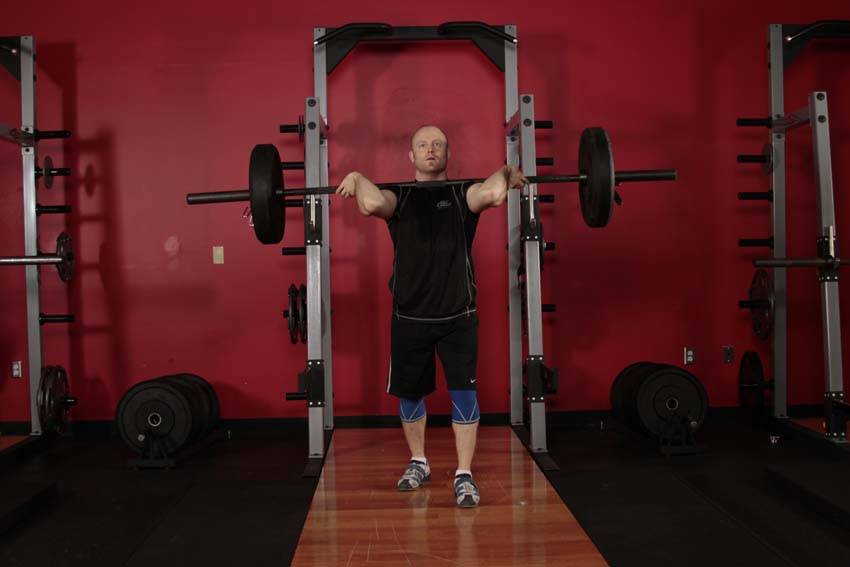
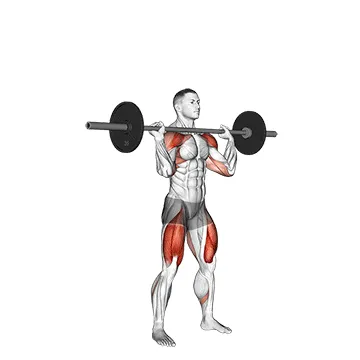
- This drill helps you learn to drive yourself low enough during the jerk and corrects those who move backward during the movement. Begin with the bar racked in the jerk position, with the shoulders forward, torso upright, and the feet split slightly apart.
- Initiate the movement as you would a normal jerk, dipping at the knees while keeping your torso vertical, and driving back up forcefully, using momentum and not your arms to elevate the weight.
- Keep the rear foot in place, using it to drive your body forward into a full split as you jerk the weight. Recover by standing up with the weight overhead.
Sets and reps: 3 to 5 sets of 5 to 8 reps.
Why this matches
- Primary muscle: delts, the same as the Double Kettlebell Snatch
- Equipment: free weights, the same as the Double Kettlebell Snatch
- Body position: standing, the same as the Double Kettlebell Snatch
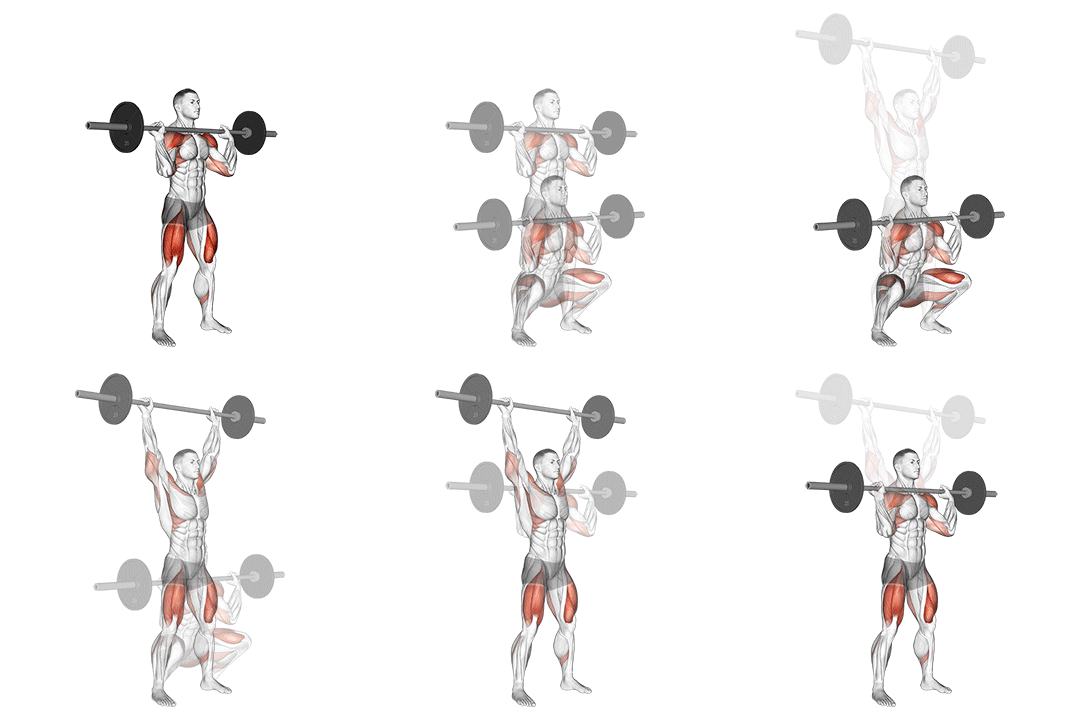
3. Clean And Jerk
95% match- Delts
- Barbell
- Advanced
- Compound
How to perform this exercise
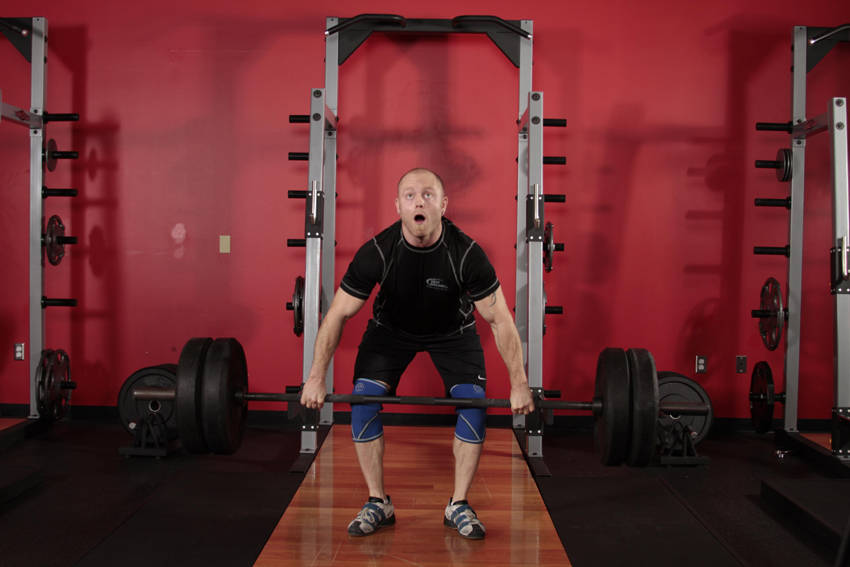
- With a barbell on the floor close to the shins, take an overhand or hook grip just outside the legs. Lower your hips with the weight focused on the heels, back straight, head facing forward, chest up, with your shoulders just in front of the bar. This will be your starting position.
- Begin the first pull by driving through the heels, extending your knees. Your back angle should stay the same, and your arms should remain straight. Move the weight with control as you continue to above the knees.
- Next comes the second pull, the main source of acceleration for the clean. As the bar approaches the mid-thigh position, begin extending through the hips. In a jumping motion, accelerate by extending the hips, knees, and ankles, using speed to move the bar upward. There should be no need to actively pull through the arms to accelerate the weight; at the end of the second pull, the body should be fully extended, leaning slightly back, with the arms still extended.
- As full extension is achieved, transition into the third pull by aggressively shrugging and flexing the arms with the elbows up and out. At peak extension, aggressively pull yourself down, rotating your elbows under the bar as you do so. Receive the bar in a front squat position, the depth of which is dependent upon the height of the bar at the end of the third pull. The bar should be racked onto the protracted shoulders, lightly touching the throat with the hands relaxed. Continue to descend to the bottom squat position, which will help in the recovery.
- Immediately recover by driving through the heels, keeping the torso upright and elbows up. Continue until you have risen to a standing position.
- The second phase is the jerk, which raises the weight overhead. Standing with the weight racked on the front of the shoulders, begin with the dip. With your feet directly under your hips, flex the knees without moving the hips backward. Go down only slightly, and reverse direction as powerfully as possible.
- Drive through the heels create as much speed and force as possible, and be sure to move your head out of the way as the bar leaves the shoulders.
- At this moment as the feet leave the floor, the feet must be placed into the receiving position as quickly as possible. In the brief moment the feet are not actively driving against the platform, the athletes effort to push the bar up will drive them down. The feet should be split, with one foot forward, and one foot back. Receive the bar with the arms locked out overhead. Return to a standing position.
Sets and reps: 3 to 5 sets of 5 to 8 reps.
Why this matches
- Primary muscle: delts, the same as the Double Kettlebell Snatch
- Equipment: free weights, the same as the Double Kettlebell Snatch
4. Kettlebell One Arm Jerk
93% match- Delts
- Kettlebell
- Advanced
- Compound
Pick this when you want to work the delts one side at a time.
How to perform this exercise
- Stand with your feet shoulder-width apart, holding a kettlebell in one hand at shoulder height.
- Bend your knees slightly and engage your core.
- Press the kettlebell overhead in a straight line, fully extending your arm.
- As you press the kettlebell overhead, simultaneously dip your knees and quickly straighten them to generate momentum.
- As the kettlebell reaches its highest point, quickly drop underneath it by bending your knees and hips.
- Catch the kettlebell with a slight bend in your knees and hips, and your arm fully extended overhead.
- Stand up straight, fully extending your knees and hips, and stabilize the kettlebell overhead.
- Lower the kettlebell back to the starting position by bending your knees and hips, and repeat for the desired number of repetitions.
Sets and reps: 3 to 5 sets of 5 to 8 reps on each side.
Why this matches
- Primary muscle: delts, the same as the Double Kettlebell Snatch
- Equipment: free weights, the same as the Double Kettlebell Snatch
- Body position: standing, the same as the Double Kettlebell Snatch
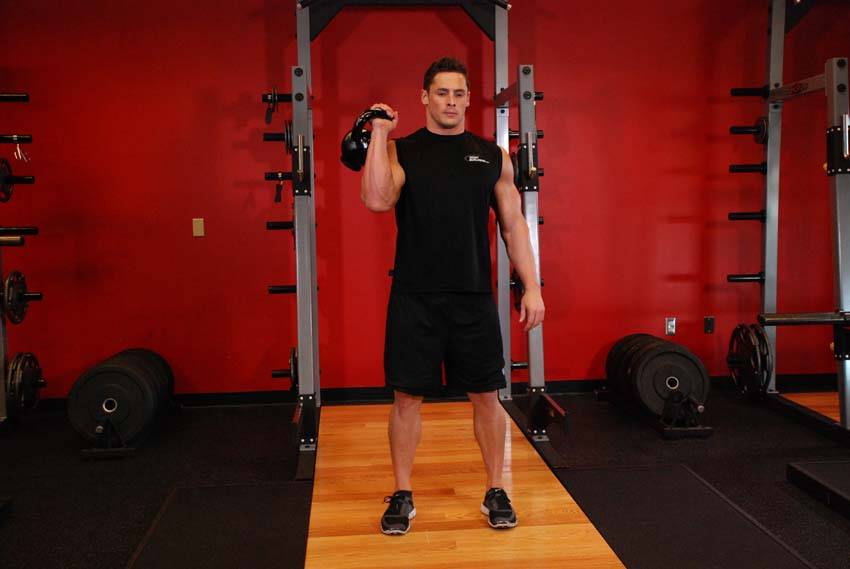
5. One-arm Kettlebell Split Jerk
93% match- Delts
- Kettlebell
- Advanced
- Compound
How to perform this exercise
- Hold a kettlebell by the handle. Clean the kettlebell to your shoulder by extending through the legs and hips as you pull the kettlebell towards your shoulder. Rotate your wrist as you do so, so that the palm faces forward. This will be your starting position.
- Dip your body by bending the knees, keeping your torso upright.
- Immediately reverse direction, driving through the heels, in essence jumping to create momentum. As you do so, press the kettlebell overhead to lockout by extending the arms, using your body's momentum to move the weight.
- Receive the weight overhead by returning to a squat position underneath the weight, positioning one leg in front of you and one leg behind you.
- Keeping the weight overhead, return to a standing position and bring your feet together. Lower the weight to perform the next repetition.
Sets and reps: 3 to 5 sets of 5 to 8 reps on each side.
Why this matches
- Primary muscle: delts, the same as the Double Kettlebell Snatch
- Equipment: free weights, the same as the Double Kettlebell Snatch
- Body position: standing, the same as the Double Kettlebell Snatch
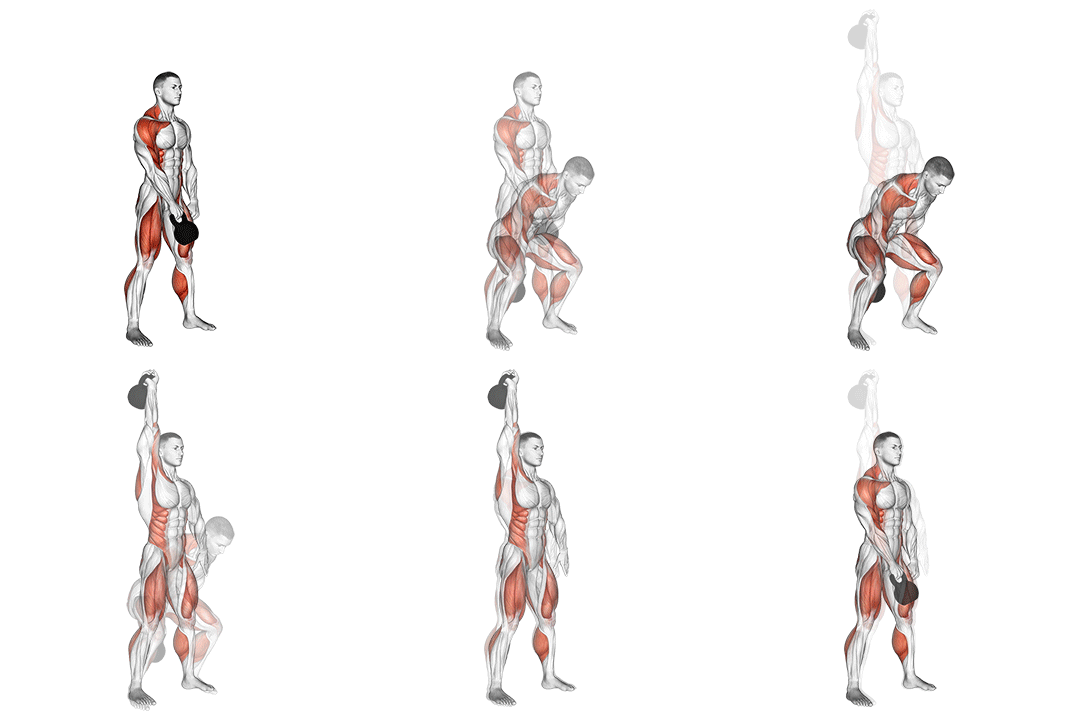
6. Kettlebell One Arm Clean And Jerk
92% match- Delts
- Kettlebell
- Advanced
- Compound
How to perform this exercise
- Stand with your feet shoulder-width apart, holding a kettlebell in one hand with an overhand grip.
- Bend your knees slightly and hinge at the hips, lowering the kettlebell between your legs.
- Explosively extend your hips, knees, and ankles, using the momentum to swing the kettlebell up to shoulder height.
- As the kettlebell reaches shoulder height, rotate your wrist and punch your hand straight up, locking out your arm overhead.
- Lower the kettlebell back down to the starting position and repeat for the desired number of repetitions.
Sets and reps: 3 to 5 sets of 5 to 8 reps on each side.
Why this matches
- Primary muscle: delts, the same as the Double Kettlebell Snatch
- Equipment: free weights, the same as the Double Kettlebell Snatch
- Body position: standing, the same as the Double Kettlebell Snatch
7. Kettlebell One Arm Snatch
92% match- Delts
- Kettlebell
- Advanced
- Compound
How to perform this exercise
- Stand with your feet shoulder-width apart, holding a kettlebell in one hand between your legs.
- Bend your knees slightly and hinge at the hips, lowering the kettlebell towards the ground.
- Explosively extend your hips and knees, using the momentum to swing the kettlebell up towards your shoulder.
- As the kettlebell reaches shoulder height, rotate your hand and punch it straight up overhead, fully extending your arm.
- Lower the kettlebell back down between your legs and repeat for the desired number of repetitions.
Sets and reps: 3 to 5 sets of 5 to 8 reps on each side.
Why this matches
- Primary muscle: delts, the same as the Double Kettlebell Snatch
- Equipment: free weights, the same as the Double Kettlebell Snatch
- Body position: standing, the same as the Double Kettlebell Snatch
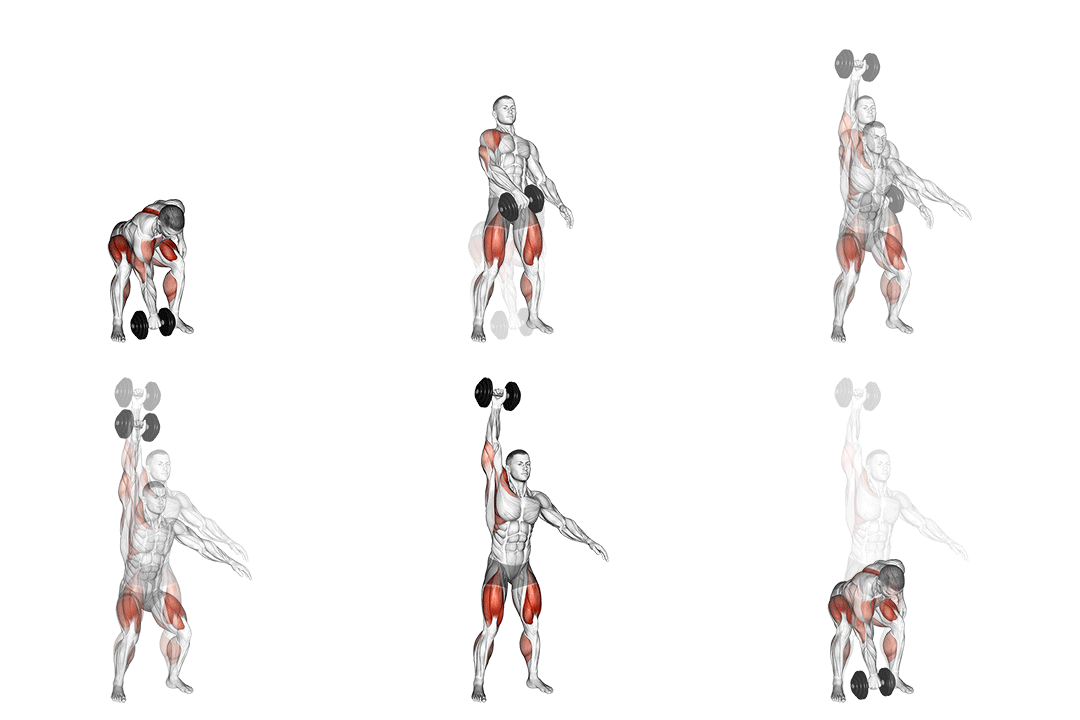
8. Dumbbell One Arm Snatch
92% match- Delts
- Dumbbell
- Advanced
- Compound
How to perform this exercise
- Stand with your feet shoulder-width apart, holding a dumbbell in one hand with an overhand grip.
- Bend your knees slightly and hinge forward at the hips, keeping your back straight and chest up.
- Lower the dumbbell towards the ground, keeping it close to your body.
- Explosively extend your hips, knees, and ankles, driving the dumbbell upwards in a straight line.
- As the dumbbell reaches shoulder height, quickly rotate your hand and punch it overhead, fully extending your arm.
- Catch the dumbbell overhead with a slight bend in your knees and hips.
- Lower the dumbbell back down to the starting position in a controlled manner.
- Repeat for the desired number of repetitions, then switch to the other arm.
Sets and reps: 3 to 5 sets of 5 to 8 reps on each side.
Why this matches
- Primary muscle: delts, the same as the Double Kettlebell Snatch
- Equipment: free weights, the same as the Double Kettlebell Snatch
- Body position: standing, the same as the Double Kettlebell Snatch
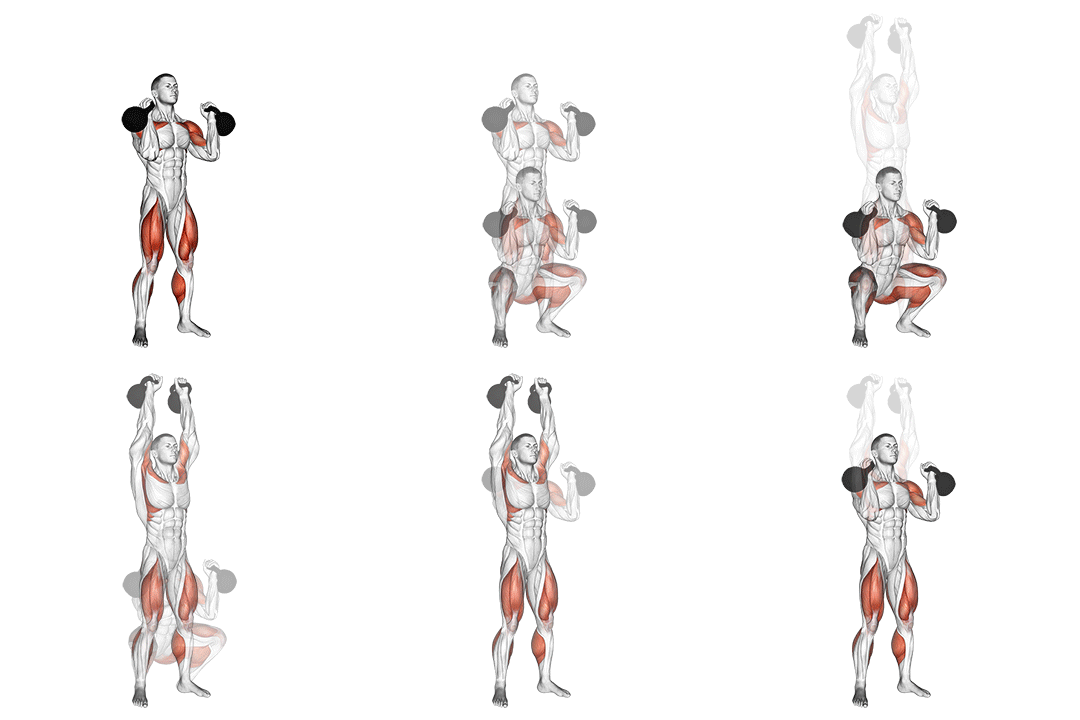
9. Kettlebell Thruster
88% match- Delts
- Kettlebell
- Intermediate
- Compound
How to perform this exercise
- Start by standing with your feet shoulder-width apart, holding a kettlebell in front of your chest with both hands, palms facing each other.
- Lower into a squat position by bending your knees and pushing your hips back, keeping your chest up and your back straight.
- As you reach the bottom of the squat, explosively drive through your heels to stand up, simultaneously pressing the kettlebell overhead.
- Lock out your arms at the top of the movement, fully extending your elbows.
- Lower the kettlebell back to the starting position by reversing the movement, bending your elbows and lowering the weight back to your chest.
- Repeat for the desired number of repetitions.
Sets and reps: 3 or 4 sets of 6 to 10 reps.
Why this matches
- Primary muscle: delts, the same as the Double Kettlebell Snatch
- Equipment: free weights, the same as the Double Kettlebell Snatch
- Body position: standing, the same as the Double Kettlebell Snatch
- Balance: easier to stay steady on than the Double Kettlebell Snatch
10. Barbell Thruster
83% match- Delts
- Barbell
- Intermediate
- Compound
How to perform this exercise
- Start by standing with your feet shoulder-width apart, holding a barbell at shoulder height with an overhand grip.
- Lower into a squat position by bending your knees and pushing your hips back.
- As you reach the bottom of the squat, explosively drive through your heels to stand up, simultaneously pressing the barbell overhead.
- Lower the barbell back to shoulder height as you lower back into the squat position.
- Repeat for the desired number of repetitions.
Sets and reps: 3 or 4 sets of 6 to 10 reps.
Why this matches
- Primary muscle: delts, the same as the Double Kettlebell Snatch
- Equipment: free weights, the same as the Double Kettlebell Snatch
- Body position: standing, the same as the Double Kettlebell Snatch
- Balance: easier to stay steady on than the Double Kettlebell Snatch
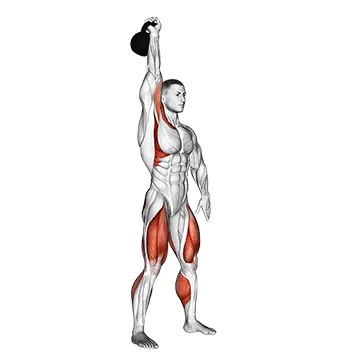
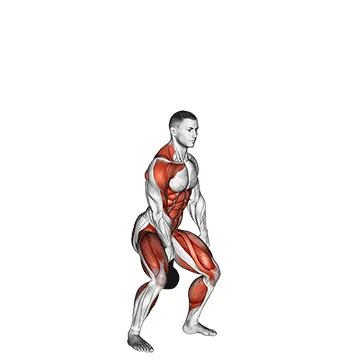
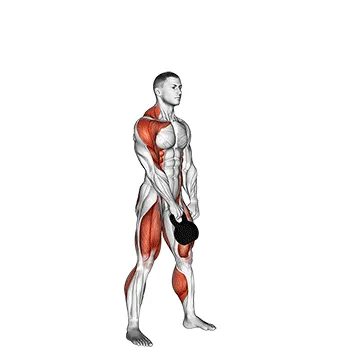
Why You Might Need a Double Kettlebell Snatch Alternative
You may substitute the Double Kettlebell Snatch for several reasons: shoulder pain, limited equipment, coordination demands, or programming needs. Injured athletes often favor single-arm or controlled pressing variations to reduce shear at the glenohumeral joint; cue: keep the scapula stable and avoid excessive internal rotation. Beginners benefit from simpler hip-hinge and press drills to teach force transfer from the posterior chain into an overhead lockout. Coaches choose alternatives to target deltoid amplitude or to emphasize eccentric control and tempo without the ballistic component of the snatch.
Double Kettlebell Snatch FAQ
What muscles does Double Kettlebell Snatch work?
The Double Kettlebell Snatch targets the deltoids (primarily the anterior and lateral heads), upper traps, lats, glutes, hamstrings, and core. Biomechanically it relies on hip extension to generate upward momentum, then the shoulder and scapular stabilizers complete the overhead lockout; cue: finish with the elbow extended and the scapula upwardly rotated.
Can I build muscle without doing Double Kettlebell Snatch?
Yes, you can build shoulder muscle with progressive overload using presses, pulls, and loaded carries instead of ballistic snatches. Use tempo-controlled dumbbell or barbell overhead presses and increase load or reps over time; cue: slow the eccentric and add a 1–2 second pause at the midpoint to raise time under tension.
Find Alternatives for Any Exercise
Search the exercise database and filter the ranked substitutes by the equipment you own.
Similarity scores compare exercise metadata such as movement pattern, muscles, equipment and body position. They are not a safety rating or a check that you own the equipment. Learn about our methodology