

10 Best Double Leg Butt Kick Alternatives for Home and Gym
The Double Leg Butt Kick is done standing. Ranked closest by our scoring: the Prowler Sprint. Five harder versions, among them the Linear 3-part Start Technique and the High Knee Against Wall, are listed below as progressions rather than swaps.
Updated Ranked by our 12-factor similarity model How it works
Original Exercise: Double Leg Butt Kick
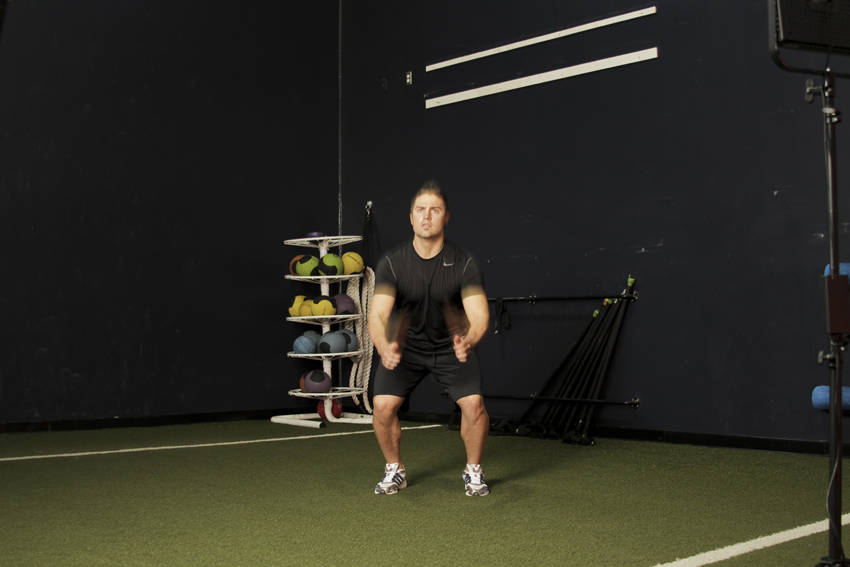
- Primary muscle
- Hamstrings
- Equipment
- Bodyweight
- Difficulty
- Beginner
- Type
- Isolation
Secondary muscles: Abductors, Adductors, Calves, Glutes, Hamstrings
How to perform Double Leg Butt Kick
- Begin standing with your knees slightly bent.
- Quickly squat a short distance, flexing the hips and knees, and immediately extend to jump for maximum vertical height.
- As you go up, tuck your heels by flexing the knees, attempting to touch the buttocks.
- Finish the motion by landing with the knees only partially bent, using your legs to absorb the impact.
Ranked Double Leg Butt Kick Alternatives
10 substitutes, ranked by how closely each one matches the Double Leg Butt Kick on movement pattern, muscles worked, equipment and body position. The higher the score, the less you change. Open "How to perform this exercise" on a card for the steps; every card title links to that exercise's own alternatives page. Harder versions are tagged as progressions and kept out of the top spot even when they score higher.
Best match 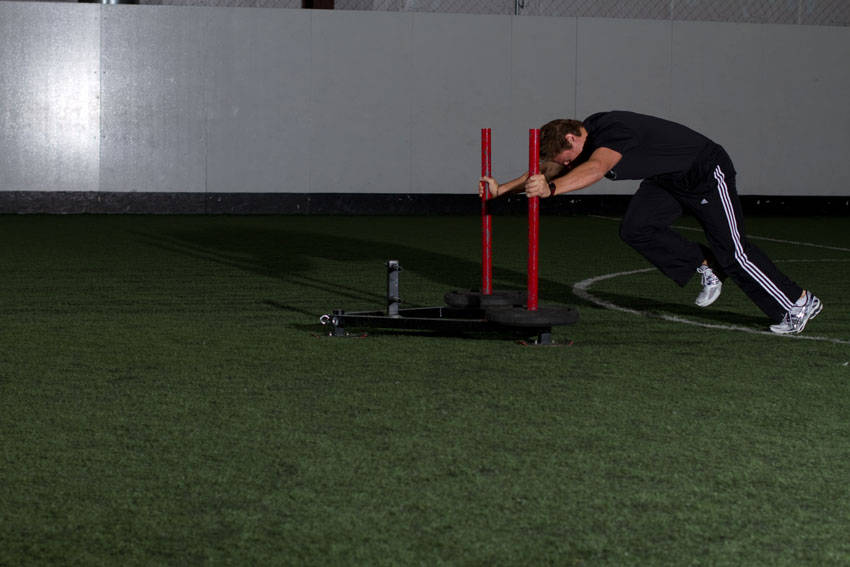
1. Prowler Sprint
75% match- Hamstrings
- Other
- Intermediate
- Compound
Pick this when you want a harder version that still works the hamstrings.
How to perform this exercise
- Place your sled on an appropriate surface, loaded to a suitable weight. The sled should provide enough resistance to require effort, but not so heavy that you are significantly slowed down.
- You may use the upright or the low handles for this exercise. Place your hands on the handles with your arms extended, leaning into the implement.
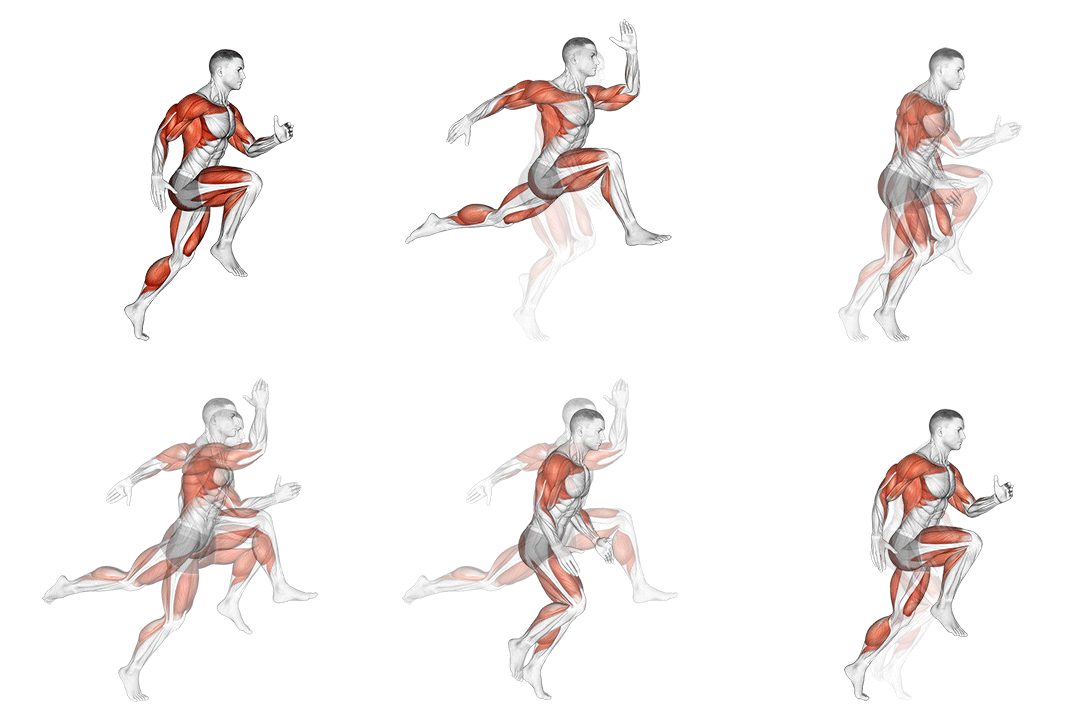
- With good posture, drive through the ground with alternating, short steps. Move as fast as you can for a short distance.
Sets and reps: Work for 30 to 60 seconds, rest as long as you worked, and repeat 6 to 10 times.
Why this matches
- Primary muscle: hamstrings, the same as the Double Leg Butt Kick
- Body position: standing, the same as the Double Leg Butt Kick
- Balance: harder to stay steady on than the Double Leg Butt Kick
Progression
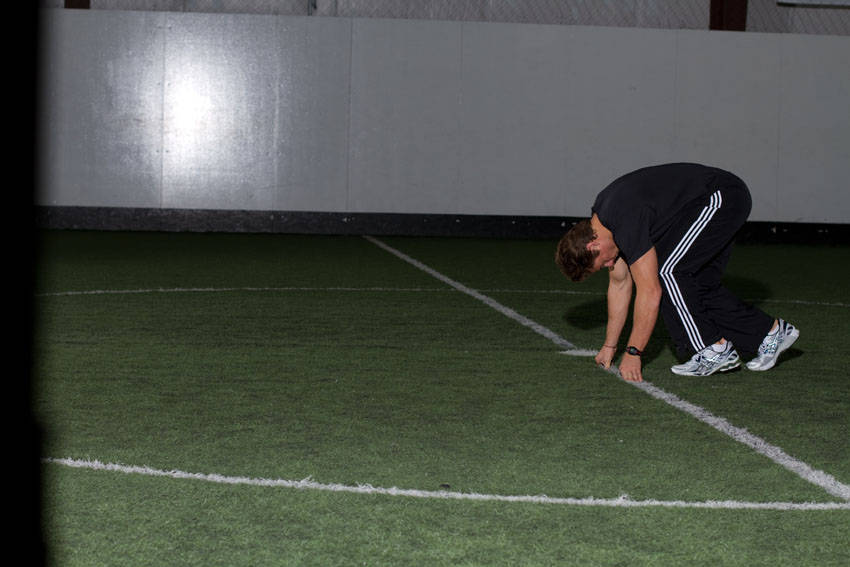
2. Linear 3-part Start Technique
88% match- Hamstrings
- Bodyweight
- Intermediate
- Compound
How to perform this exercise
- This drill helps you accelerate as quickly as possible into a sprint from a dead stop. It helps to use a line to start from. Begin with two feet on the line. Place your left foot with the toe next to your right ankle. Place your right foot 4-6 inches behind the left.
- Place your right hand onto the line, and thing bring your nose close to your left knee.
- Squat down as you lean foward, your head being lower than your hips and your weight loaded onto the left leg. This will be your starting position.
- Take your left hand up so that it is parallel to the ground, pointing behind you, and explode out when ready.
Sets and reps: Work for 30 to 60 seconds, rest as long as you worked, and repeat 6 to 10 times.
Why this matches
- Primary muscle: hamstrings, the same as the Double Leg Butt Kick
- Equipment: bodyweight only, the same as the Double Leg Butt Kick
- Body position: standing, the same as the Double Leg Butt Kick
- Balance: harder to stay steady on than the Double Leg Butt Kick
Progression
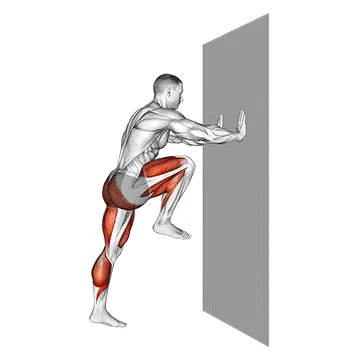
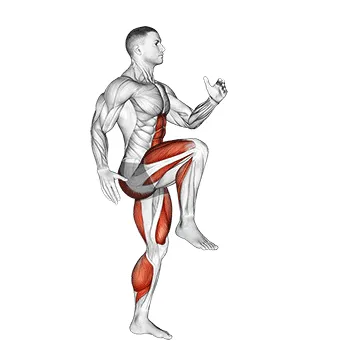
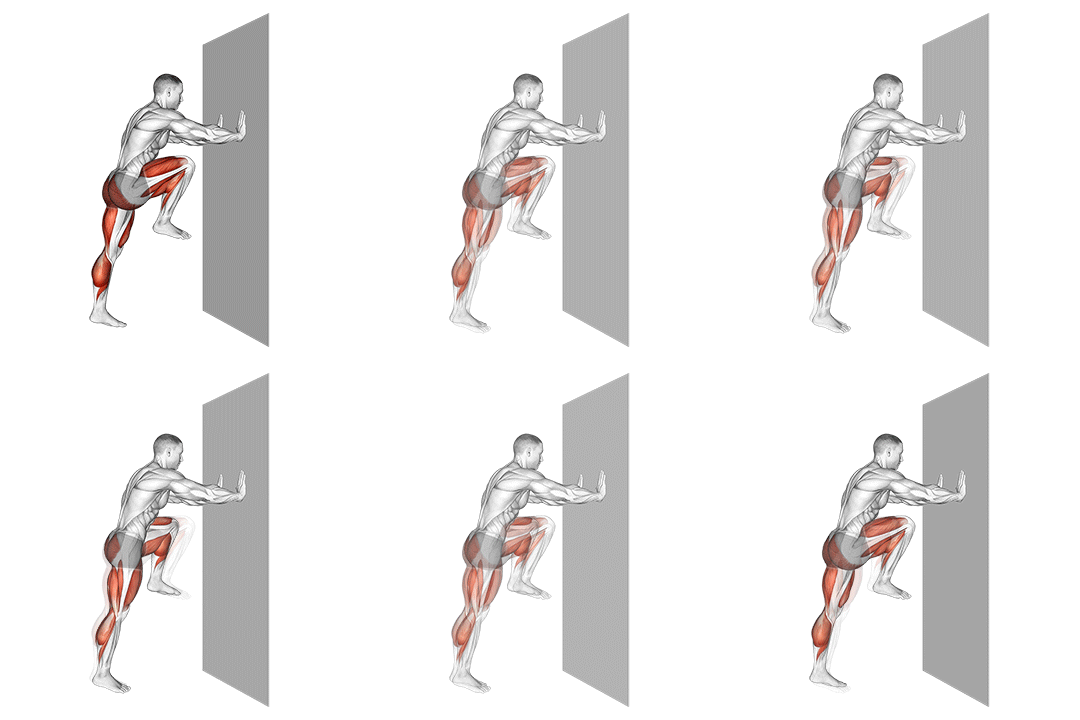
3. High Knee Against Wall
74% match- Cardio
- Bodyweight
- Beginner
- Compound
A looser match: it uses the same equipment, but it works the heart and lungs rather than the hamstrings.
How to perform this exercise
- Stand facing a wall with your feet hip-width apart.
- Place your hands on the wall for support.
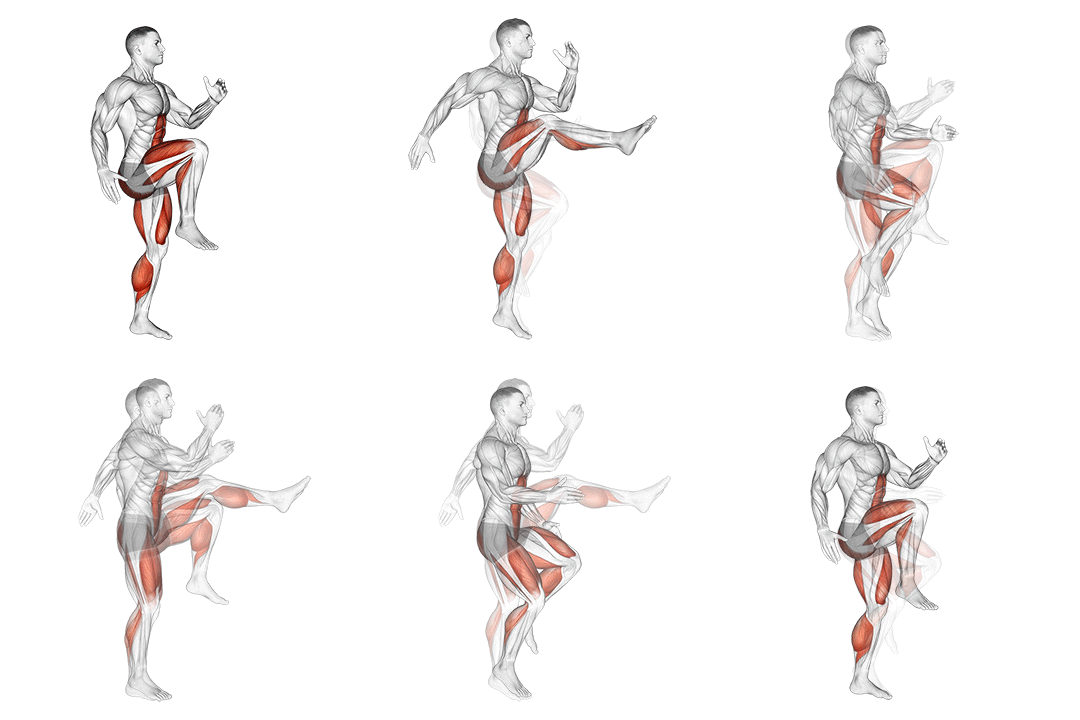
- Engage your core and lift your right knee up towards your chest, while keeping your left foot on the ground.
- Quickly switch legs, bringing your left knee up towards your chest and lowering your right foot back down.
- Continue alternating legs in a running motion, bringing your knees up as high as possible.
- Maintain a fast pace and keep your upper body stable throughout the exercise.
- Repeat for the desired duration or number of repetitions.
Sets and reps: Work for 30 to 60 seconds, rest as long as you worked, and repeat 6 to 10 times.
Why this matches
- Primary muscle: your heart and lungs, not hamstrings
- Equipment: bodyweight only, the same as the Double Leg Butt Kick
- Body position: standing, the same as the Double Leg Butt Kick
Progression
4. Wheel Run
74% match- Cardio
- Bodyweight
- Intermediate
- Compound
How to perform this exercise
- Start in a plank position with your hands on the wheel and your body straight.
- Engage your core and start rolling the wheel forward by extending your arms.
- Continue rolling until your body is fully extended and your arms are overhead.
- Reverse the movement by pulling the wheel back towards your body, using your core and arms.
- Repeat for the desired number of repetitions.
Sets and reps: Work for 30 to 60 seconds, rest as long as you worked, and repeat 6 to 10 times.
Why this matches
- Primary muscle: your heart and lungs, not hamstrings
- Equipment: bodyweight only, the same as the Double Leg Butt Kick
- Body position: standing, the same as the Double Leg Butt Kick
Progression
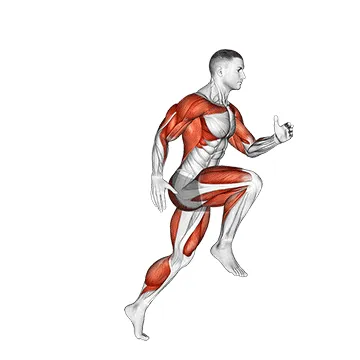
5. Push To Run
73% match- Cardio
- Bodyweight
- Intermediate
- Compound
How to perform this exercise
- Start in a push-up position with your hands shoulder-width apart and your body in a straight line.
- Lower your chest towards the ground by bending your elbows, keeping your body straight.
- Push through your hands to extend your arms and return to the starting position.
- Quickly bring one knee towards your chest, then quickly switch and bring the other knee towards your chest.
- Continue alternating knees as fast as you can while maintaining good form.
- Continue for the desired duration or number of repetitions.
Sets and reps: Work for 30 to 60 seconds, rest as long as you worked, and repeat 6 to 10 times.
Why this matches
- Primary muscle: your heart and lungs, not hamstrings
- Equipment: bodyweight only, the same as the Double Leg Butt Kick
- Body position: standing, the same as the Double Leg Butt Kick
- Balance: harder to stay steady on than the Double Leg Butt Kick
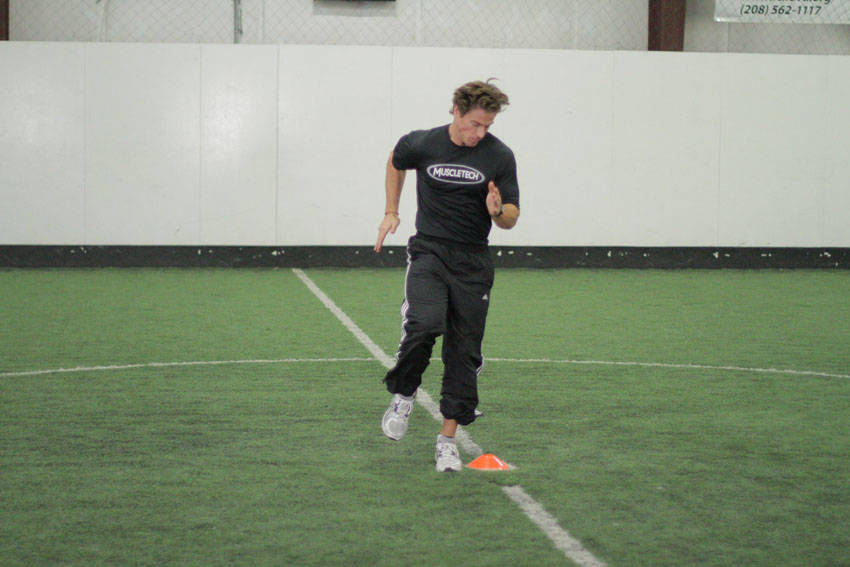
6. Single-cone Sprint Drill
73% match- Quadriceps
- Other
- Intermediate
- Compound
A looser match: it works the quadriceps rather than the hamstrings.
How to perform this exercise
- This drill teaches quick foot action. You need a single cone. Begin standing next to the cone with one arm back and one arm forward.
- Chop the feet as quickly as possible, blocking with the arms. Circle the cone, keep your knees up, with violent foot action.
- Rest after three trips around the cone.
Sets and reps: Work for 30 to 60 seconds, rest as long as you worked, and repeat 6 to 10 times.
Why this matches
- Primary muscle: quadriceps, not hamstrings
- Equipment: bodyweight only, the same as the Double Leg Butt Kick
- Body position: standing, the same as the Double Leg Butt Kick
- Balance: harder to stay steady on than the Double Leg Butt Kick
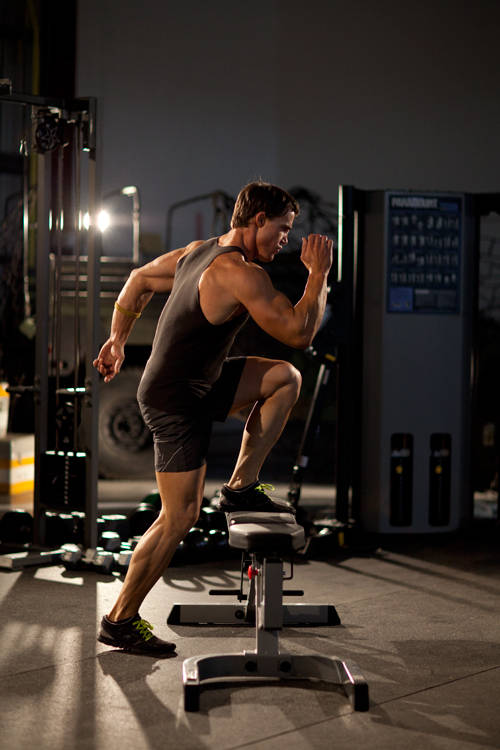
7. Bench Sprint
71% match- Glutes
- Other
- Intermediate
- Compound
A looser match: it works the glutes rather than the hamstrings.
How to perform this exercise
- Stand on the ground with one foot resting on a bench or box with your heel close to the edge.
- Push off with your foot on top of the bench, extending through the hip and knee.
- Land with the opposite foot on top of the box, returning your other foot back to the start position.
- Continue alternating from one foot to another to complete the set.
Sets and reps: Work for 30 to 60 seconds, rest as long as you worked, and repeat 6 to 10 times.
Why this matches
- Primary muscle: glutes, not hamstrings
- Equipment: bodyweight only, the same as the Double Leg Butt Kick
- Body position: standing, the same as the Double Leg Butt Kick
- Balance: harder to stay steady on than the Double Leg Butt Kick
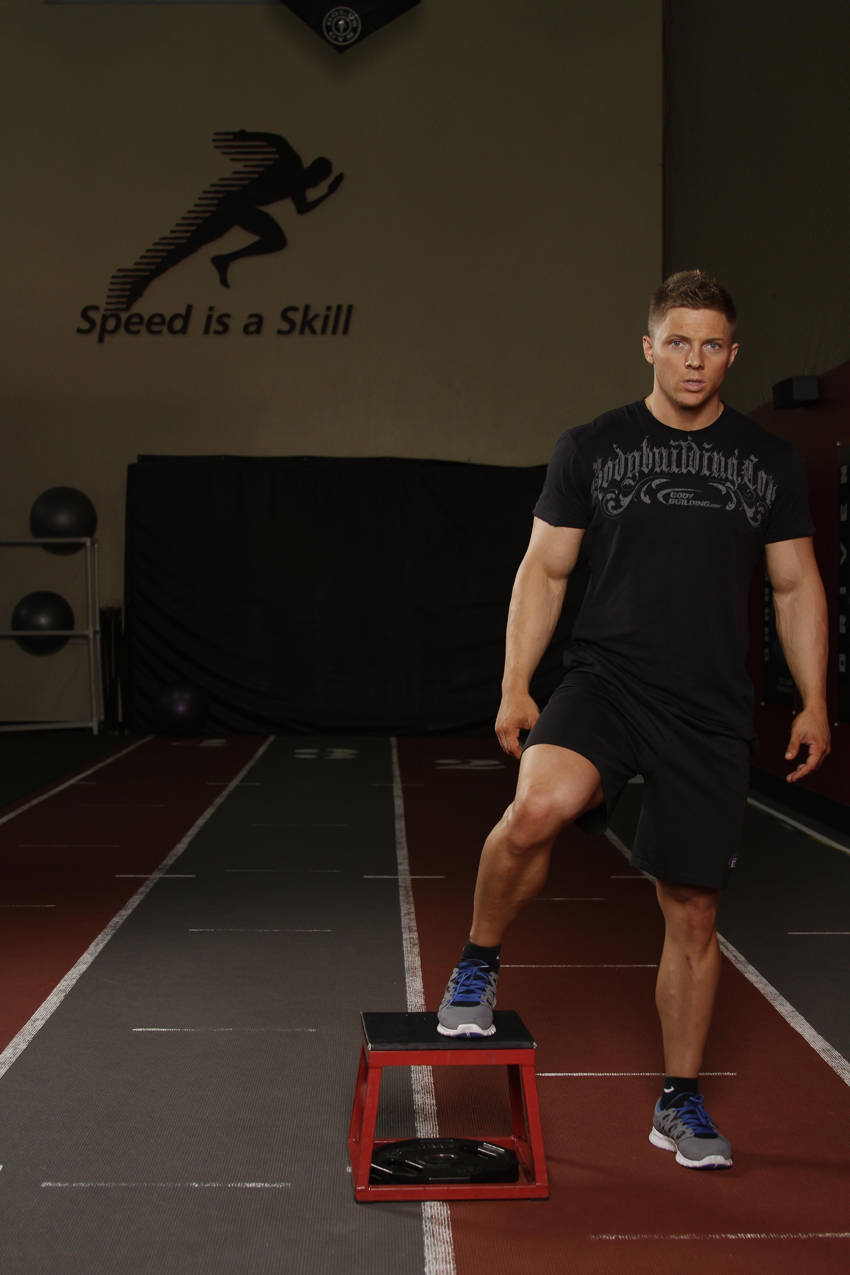
8. Side To Side Box Shuffle
69% match- Quadriceps
- Other
- Intermediate
- Compound
How to perform this exercise
- Stand to one side of the box with your left foot resting on the middle of it.
- To begin, jump up and over to the other side of the box, landing with your right foot on top of the box and your left foot on the floor. Swing your arms to aid your movement.
- Continue shuffling back and forth across the box.
Sets and reps: Work for 30 to 60 seconds, rest as long as you worked, and repeat 6 to 10 times.
Why this matches
- Primary muscle: quadriceps, not hamstrings
- Equipment: bodyweight only, the same as the Double Leg Butt Kick
- Balance: harder to stay steady on than the Double Leg Butt Kick
Progression
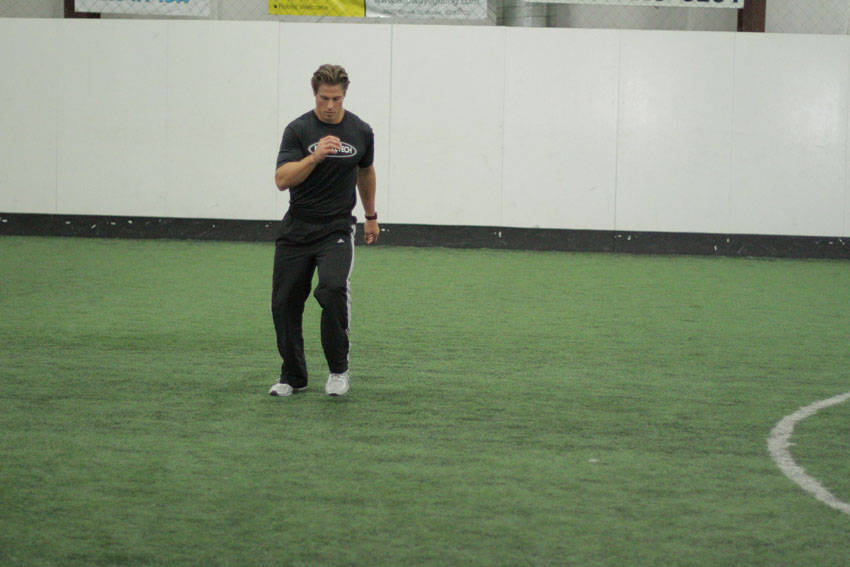
9. Carioca Quick Step
68% match- Adductors
- Bodyweight
- Intermediate
- Compound
How to perform this exercise
- Begin with your feet a few inches apart and your left arm up in a relaxed, athletic position.
- With your right foot, quick step behind and pull the knee up.
- Fire your arms back up when you pull the right knee, being sure that your knee goes straight up and down. Avoid turning your feet as you move and continue to look forward as you move to the side.
Sets and reps: Work for 30 to 60 seconds, rest as long as you worked, and repeat 6 to 10 times.
Why this matches
- Primary muscle: adductors, not hamstrings
- Equipment: bodyweight only, the same as the Double Leg Butt Kick
- Body position: standing, the same as the Double Leg Butt Kick
- Balance: harder to stay steady on than the Double Leg Butt Kick
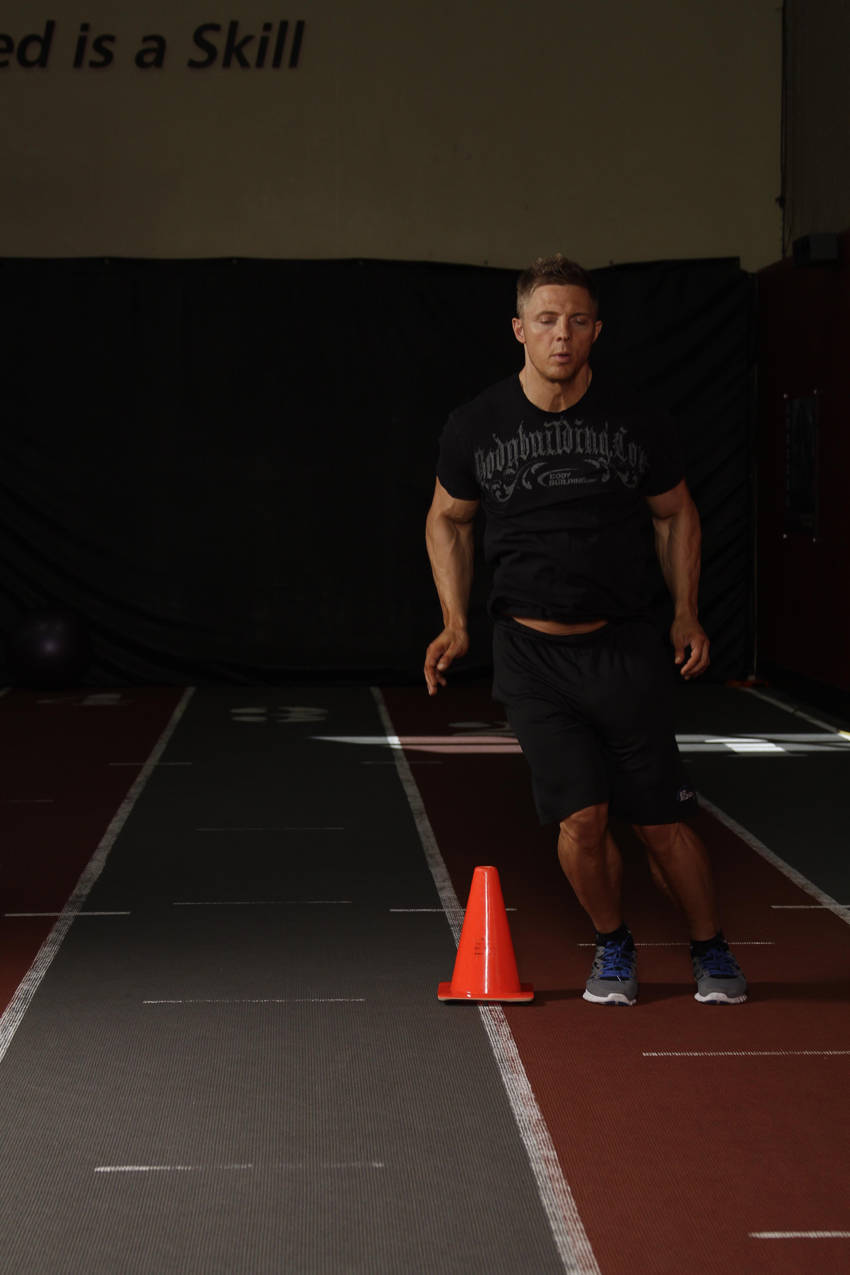
10. Side Hop-sprint
65% match- Quadriceps
- Other
- Intermediate
- Compound
How to perform this exercise
- Stand to the side of a cone or hurdle.
- Begin this drill by hopping sideways over the obstacle, rebounding out of your landing to hop back to where you started.
- Hop for a prescribed number or repetitions as quickly as possible, and finish this drill by sprinting a short distance upon landing the last hop.
Sets and reps: Work for 30 to 60 seconds, rest as long as you worked, and repeat 6 to 10 times.
Why this matches
- Primary muscle: quadriceps, not hamstrings
- Equipment: bodyweight only, the same as the Double Leg Butt Kick
- Body position: standing, the same as the Double Leg Butt Kick
- Balance: harder to stay steady on than the Double Leg Butt Kick
How to Choose the Right Double Leg Butt Kick Substitute
Select a substitute based on your goal, pain history, and available equipment. For strength and hypertrophy prioritize eccentrically loaded moves like Nordic curls or slow single‑leg RDLs with controlled descents; cue: lower on a 3–4 second tempo. For knee sensitivity pick supine glute bridges or prone hamstring curls to activate the hamstrings with less knee compression; cue: press through the heels and squeeze the hamstrings at peak contraction. For sport transfer favor unilateral hip hinges to improve force transfer and pelvic stability, then progress range of motion or reduce assistance as control improves.
Double Leg Butt Kick FAQ
What muscles does Double Leg Butt Kick work?
The Double Leg Butt Kick primarily targets the hamstrings by driving rapid knee flexion and training eccentric control; it also engages the glutes for hip extension and the calves for ankle stabilization. Cue: pull the heels toward the glutes while keeping a neutral spine to focus hamstring activation.
Can I build muscle without doing Double Leg Butt Kick?
Yes, you can build hamstring muscle with other focused, progressive exercises that increase eccentric load and time under tension. Use movements like Nordic curls, single‑leg RDLs, and slow‑tempo glute bridges while increasing reps, range of motion, or reducing assistance; cue: control the descent and squeeze the hamstrings at the top of each rep.
Find Alternatives for Any Exercise
Search the exercise database and filter the ranked substitutes by the equipment you own.
Similarity scores compare exercise metadata such as movement pattern, muscles, equipment and body position. They are not a safety rating or a check that you own the equipment. Learn about our methodology