

10 Best Side Hop-sprint Alternatives for Quad Strength
The Side Hop-sprint is done standing. Ranked closest by our scoring: the Side To Side Box Shuffle, the Single-cone Sprint Drill and the Trail Running/walking.
Updated Ranked by our 12-factor similarity model How it works
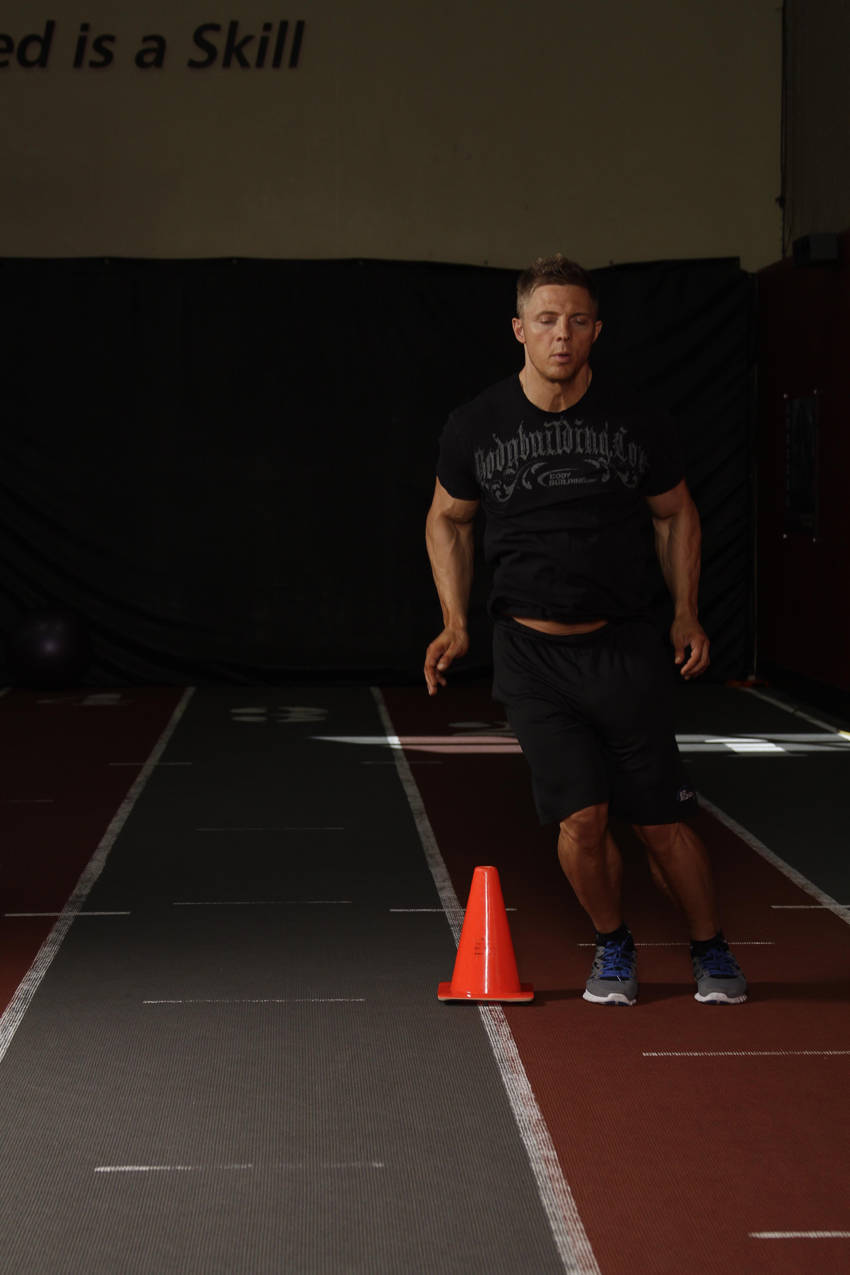
Original Exercise: Side Hop-sprint
- Primary muscle
- Quadriceps
- Equipment
- Other
- Difficulty
- Intermediate
- Type
- Compound
Secondary muscles: Abductors, Adductors, Calves, Hamstrings
How to perform Side Hop-sprint
- Stand to the side of a cone or hurdle.
- Begin this drill by hopping sideways over the obstacle, rebounding out of your landing to hop back to where you started.
- Hop for a prescribed number or repetitions as quickly as possible, and finish this drill by sprinting a short distance upon landing the last hop.
Ranked Side Hop-sprint Alternatives
10 substitutes, ranked by how closely each one matches the Side Hop-sprint on movement pattern, muscles worked, equipment and body position. The higher the score, the less you change. Open "How to perform this exercise" on a card for the steps; every card title links to that exercise's own alternatives page.
Best match 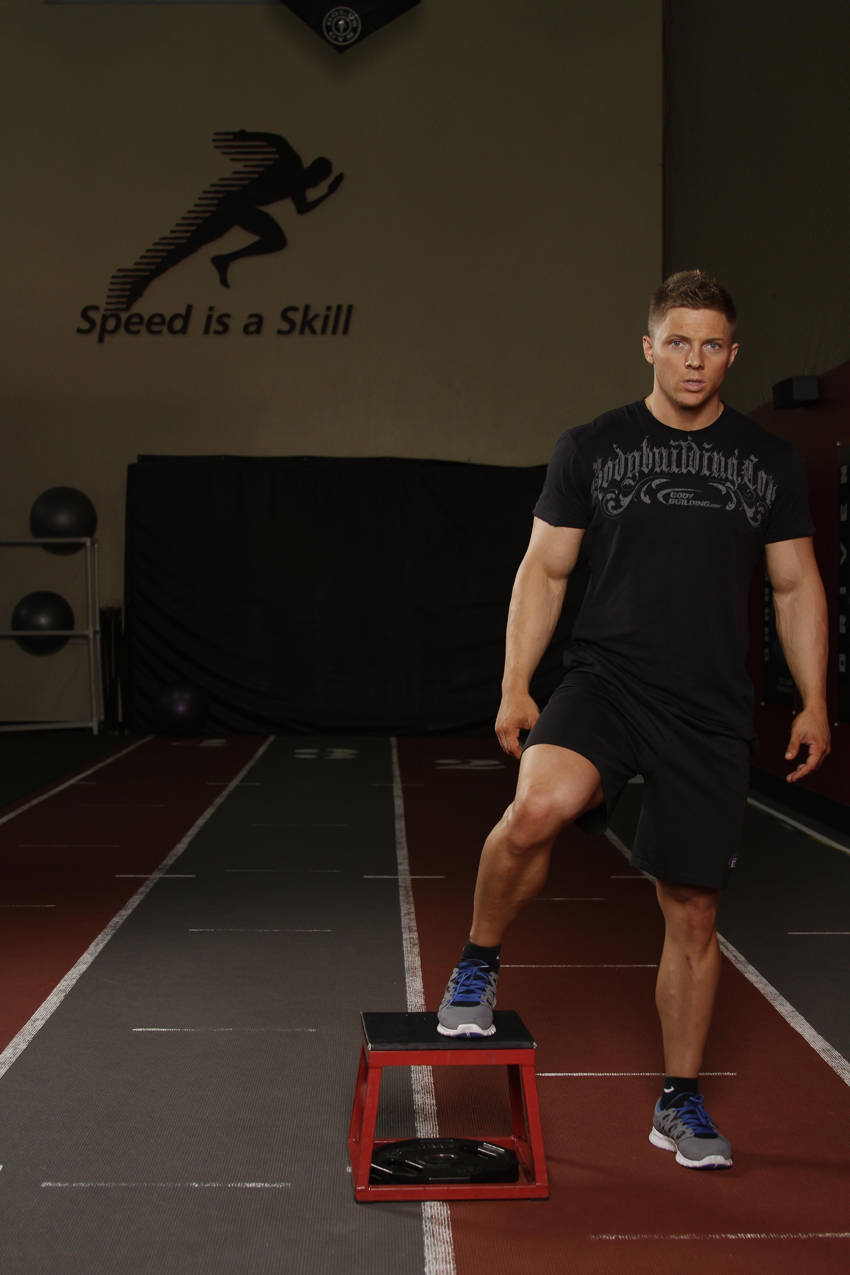
1. Side To Side Box Shuffle
97% match- Quadriceps
- Other
- Intermediate
- Compound
Pick this when you want an easier version that still works the quadriceps.
How to perform this exercise
- Stand to one side of the box with your left foot resting on the middle of it.
- To begin, jump up and over to the other side of the box, landing with your right foot on top of the box and your left foot on the floor. Swing your arms to aid your movement.
- Continue shuffling back and forth across the box.
Sets and reps: Work for 30 to 60 seconds, rest as long as you worked, and repeat 6 to 10 times.
Why this matches
- Primary muscle: quadriceps, the same as the Side Hop-sprint
- Equipment: bodyweight only, the same as the Side Hop-sprint
- Balance: easier to stay steady on than the Side Hop-sprint
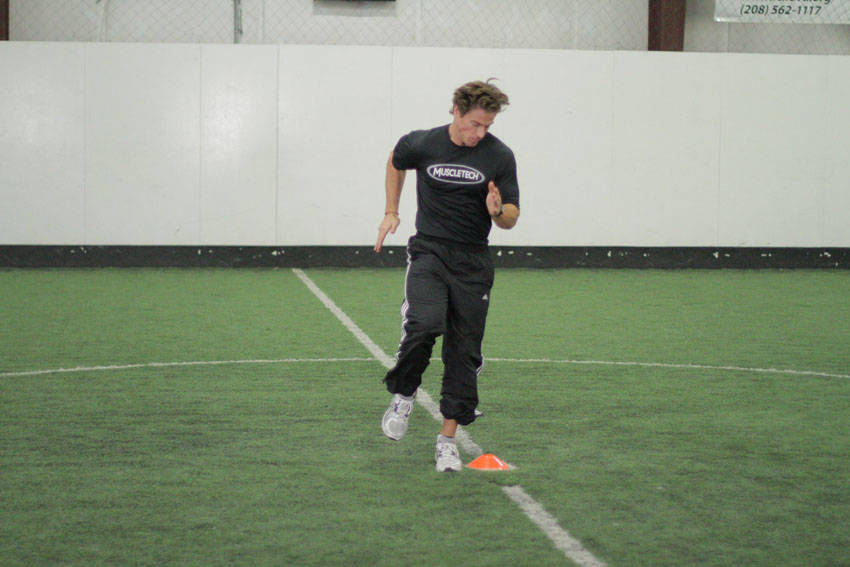
2. Single-cone Sprint Drill
89% match- Quadriceps
- Other
- Intermediate
- Compound
How to perform this exercise
- This drill teaches quick foot action. You need a single cone. Begin standing next to the cone with one arm back and one arm forward.
- Chop the feet as quickly as possible, blocking with the arms. Circle the cone, keep your knees up, with violent foot action.
- Rest after three trips around the cone.
Sets and reps: Work for 30 to 60 seconds, rest as long as you worked, and repeat 6 to 10 times.
Why this matches
- Movement: running, the same as the Side Hop-sprint
- Primary muscle: quadriceps, the same as the Side Hop-sprint
- Equipment: bodyweight only, the same as the Side Hop-sprint
- Body position: standing, the same as the Side Hop-sprint
- Balance: easier to stay steady on than the Side Hop-sprint
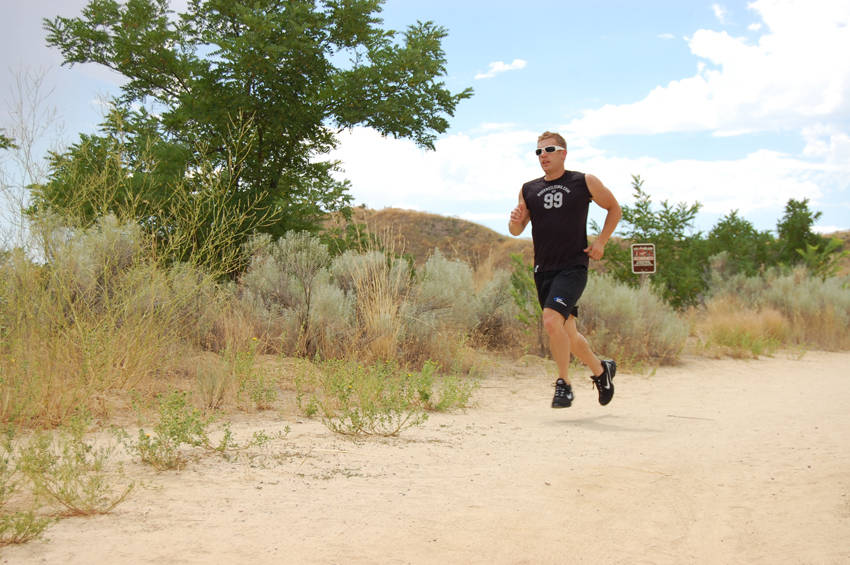
3. Trail Running/walking
89% match- Quadriceps
- Bodyweight
- Intermediate
- Compound
It still works the quadriceps, through a different movement.
How to perform this exercise
- Running or hiking on trails will get the blood pumping and heart beating almost immediately. Make sure you have good shoes. While you use the muscles in your calves and buttocks to pull yourself up a hill, the knees, joints and ankles absorb the bulk of the pounding coming back down. Take smaller steps as you walk downhill, keep your knees bent to reduce the impact and slow down to avoid falling.
- A 150 lb person can burn over 200 calories for 30 minutes walking uphill, compared to 175 on a flat surface. If running the trail, a 150 lb person can burn well over 500 calories in 30 minutes.
Sets and reps: Carry for 20 to 30 metres and repeat for 3 or 4 rounds.
Why this matches
- Primary muscle: quadriceps, the same as the Side Hop-sprint
- Equipment: bodyweight only, the same as the Side Hop-sprint
- Body position: standing, the same as the Side Hop-sprint
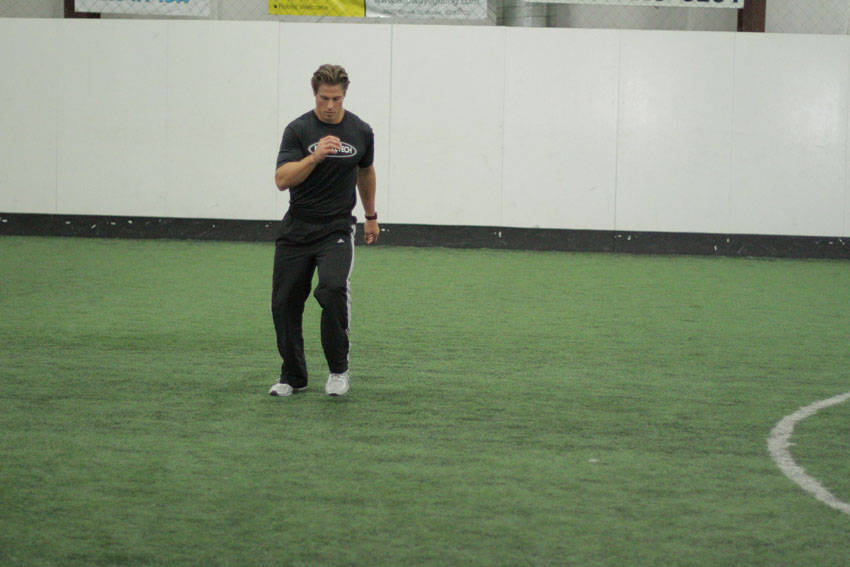
4. Carioca Quick Step
83% match- Adductors
- Bodyweight
- Intermediate
- Compound
A looser match: it works the adductors rather than the quadriceps.
How to perform this exercise
- Begin with your feet a few inches apart and your left arm up in a relaxed, athletic position.
- With your right foot, quick step behind and pull the knee up.
- Fire your arms back up when you pull the right knee, being sure that your knee goes straight up and down. Avoid turning your feet as you move and continue to look forward as you move to the side.
Sets and reps: Work for 30 to 60 seconds, rest as long as you worked, and repeat 6 to 10 times.
Why this matches
- Primary muscle: adductors, not quadriceps
- Equipment: bodyweight only, the same as the Side Hop-sprint
- Body position: standing, the same as the Side Hop-sprint
- Balance: easier to stay steady on than the Side Hop-sprint
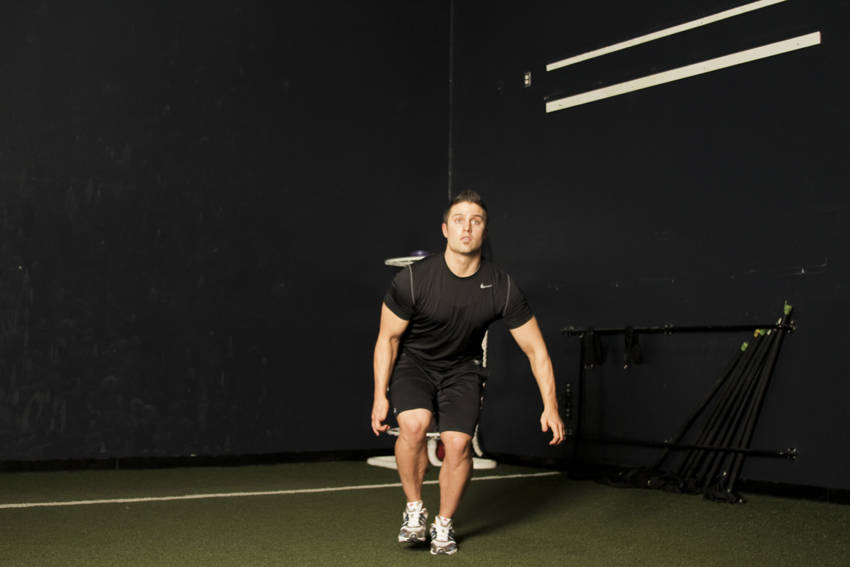
5. Single Leg Butt Kick
82% match- Quadriceps
- Bodyweight
- Beginner
- Compound
How to perform this exercise
- Begin by standing on one leg, with the bent knee raised. This will be your start position.
- Using a countermovement jump, take off upward by extending the hip, knee, and ankle of the grounded leg.
- Immediately flex the knee and attempt to touch your butt with the heel of your jumping leg.
- Return the leg to a partially bent position underneath the hips and land. Your opposite leg should stay in relatively the same position throughout the drill.
Sets and reps: Work for 30 to 60 seconds, rest as long as you worked, and repeat 6 to 10 times.
Why this matches
- Primary muscle: quadriceps, the same as the Side Hop-sprint
- Equipment: bodyweight only, the same as the Side Hop-sprint
- Body position: standing, the same as the Side Hop-sprint
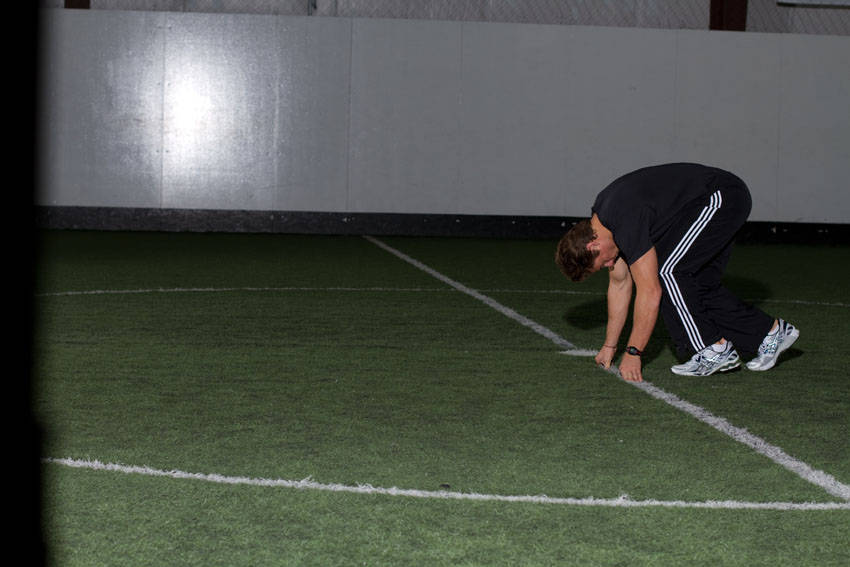
6. Linear 3-part Start Technique
78% match- Hamstrings
- Bodyweight
- Intermediate
- Compound
A looser match: it works the hamstrings rather than the quadriceps.
How to perform this exercise
- This drill helps you accelerate as quickly as possible into a sprint from a dead stop. It helps to use a line to start from. Begin with two feet on the line. Place your left foot with the toe next to your right ankle. Place your right foot 4-6 inches behind the left.
- Place your right hand onto the line, and thing bring your nose close to your left knee.
- Squat down as you lean foward, your head being lower than your hips and your weight loaded onto the left leg. This will be your starting position.
- Take your left hand up so that it is parallel to the ground, pointing behind you, and explode out when ready.
Sets and reps: Work for 30 to 60 seconds, rest as long as you worked, and repeat 6 to 10 times.
Why this matches
- Primary muscle: hamstrings, not quadriceps
- Equipment: bodyweight only, the same as the Side Hop-sprint
- Body position: standing, the same as the Side Hop-sprint
- Balance: easier to stay steady on than the Side Hop-sprint
7. Push To Run
77% match- Cardio
- Bodyweight
- Intermediate
- Compound
A looser match: it works the heart and lungs rather than the quadriceps.
How to perform this exercise
- Start in a push-up position with your hands shoulder-width apart and your body in a straight line.
- Lower your chest towards the ground by bending your elbows, keeping your body straight.
- Push through your hands to extend your arms and return to the starting position.
- Quickly bring one knee towards your chest, then quickly switch and bring the other knee towards your chest.
- Continue alternating knees as fast as you can while maintaining good form.
- Continue for the desired duration or number of repetitions.
Sets and reps: Work for 30 to 60 seconds, rest as long as you worked, and repeat 6 to 10 times.
Why this matches
- Movement: running, the same as the Side Hop-sprint
- Primary muscle: your heart and lungs, not quadriceps
- Equipment: bodyweight only, the same as the Side Hop-sprint
- Body position: standing, the same as the Side Hop-sprint
- Balance: easier to stay steady on than the Side Hop-sprint
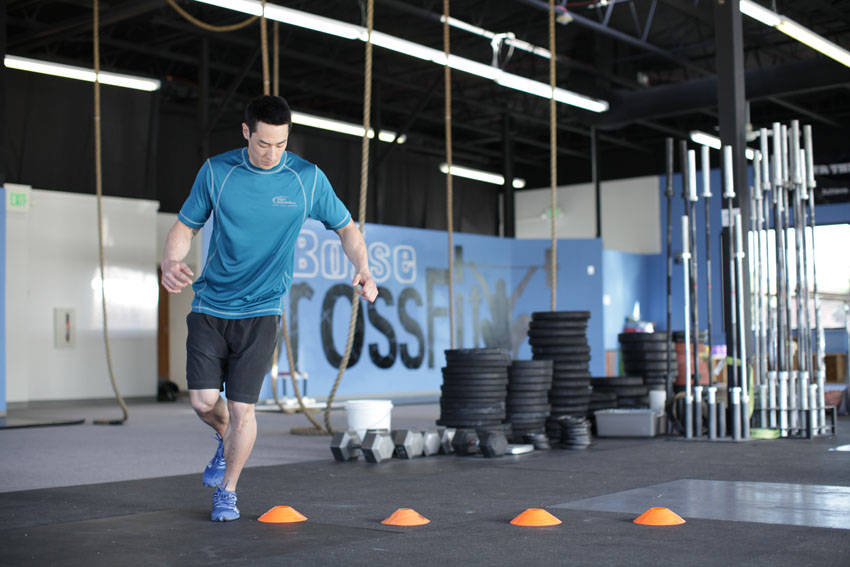
8. Single-leg Lateral Hop
76% match- Quadriceps
- Other
- Advanced
- Compound
How to perform this exercise
- Stand to the side of a cone or hurdle. To get into the start position, stand on one leg with your knee slightly bent.
- To begin, execute a counterjump to hop sideways over the cone.
- Land on your jumping leg, and immediately rebound out of it by jumping back to the start position.
- Continue hopping back and forth.
Sets and reps: Work for 30 to 60 seconds, rest as long as you worked, and repeat 6 to 10 times.
Why this matches
- Primary muscle: quadriceps, the same as the Side Hop-sprint
- Equipment: bodyweight only, the same as the Side Hop-sprint
- Body position: standing, the same as the Side Hop-sprint
- Balance: harder to stay steady on than the Side Hop-sprint
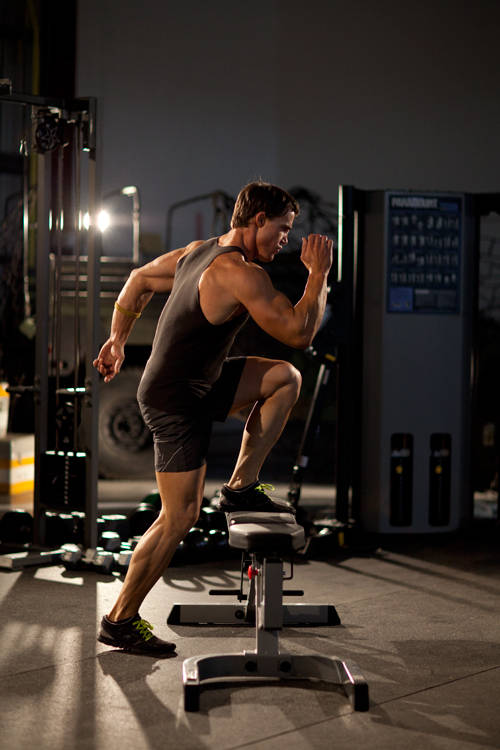
9. Bench Sprint
75% match- Glutes
- Other
- Intermediate
- Compound
How to perform this exercise
- Stand on the ground with one foot resting on a bench or box with your heel close to the edge.
- Push off with your foot on top of the bench, extending through the hip and knee.
- Land with the opposite foot on top of the box, returning your other foot back to the start position.
- Continue alternating from one foot to another to complete the set.
Sets and reps: Work for 30 to 60 seconds, rest as long as you worked, and repeat 6 to 10 times.
Why this matches
- Movement: running, the same as the Side Hop-sprint
- Primary muscle: glutes, not quadriceps
- Equipment: bodyweight only, the same as the Side Hop-sprint
- Body position: standing, the same as the Side Hop-sprint
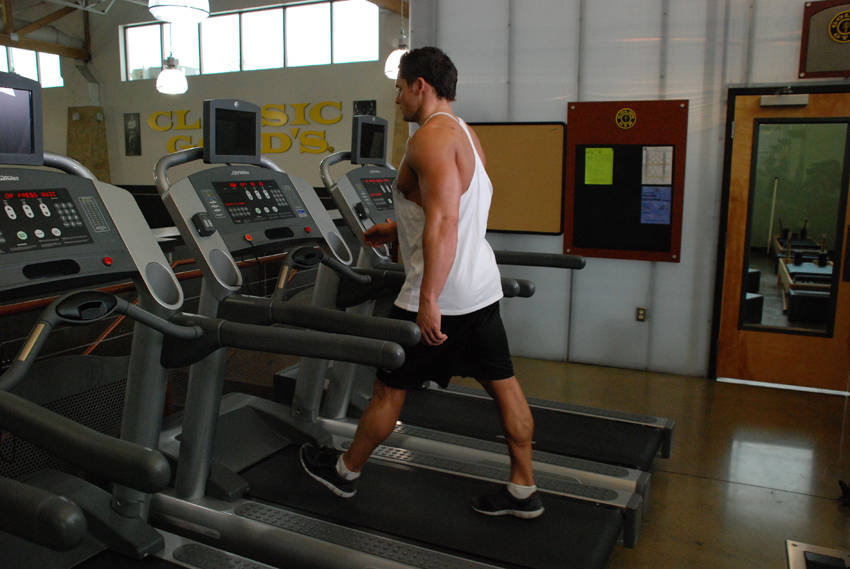
10. Treadmill Walking
75% match- Quadriceps
- Machine
- Beginner
- Compound
How to perform this exercise
- To begin, step onto the treadmill and select the desired option from the menu. Most treadmills have a manual setting, or you can select a program to run. Typically, you can enter your age and weight to estimate the amount of calories burned during exercise. Elevation can be adjusted to change the intensity of the workout.
- Treadmills offer convenience, cardiovascular benefits, and usually have less impact than walking outside. When walking, you should move at a moderate to fast pace, not a leisurely one. Being an activity of lower intensity, walking doesn't burn as many calories as some other activities, but still provides great benefit. A 150 lb person will burn about 175 calories walking 4 miles per hour for 30 minutes, compared to 450 calories running twice as fast. Maintain proper posture as you walk, and only hold onto the handles when necessary, such as when dismounting or checking your heart rate.
Sets and reps: Carry for 20 to 30 metres and repeat for 3 or 4 rounds.
Why this matches
- Primary muscle: quadriceps, the same as the Side Hop-sprint
- Equipment: a cardio machine, not bodyweight only
- Body position: standing, the same as the Side Hop-sprint
- Balance: easier to stay steady on than the Side Hop-sprint
Side Hop-sprint FAQ
What muscles does Side Hop-sprint work?
The Side Hop-sprint primarily loads the quadriceps through repeated knee extension and eccentric landing control. It also recruits the glute medius and maximus for lateral stability, hamstrings and calves for sprint propulsion, and the core for trunk stabilization during changes of direction.
Find Alternatives for Any Exercise
Search the exercise database and filter the ranked substitutes by the equipment you own.
Similarity scores compare exercise metadata such as movement pattern, muscles, equipment and body position. They are not a safety rating or a check that you own the equipment. Learn about our methodology