

10 Best Dumbbell One Arm Bench Fly Alternatives for Chest Development
The Dumbbell One Arm Bench Fly is done lying on your back with dumbbells. Ranked closest by our scoring: the Isometric Chest Squeeze, the Single-arm Push-up and Isometric Wipers.
Updated Ranked by our 12-factor similarity model How it works
Original Exercise: Dumbbell One Arm Bench Fly
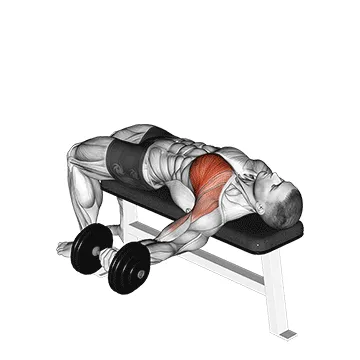
- Primary muscle
- Pectorals
- Equipment
- Dumbbell
- Difficulty
- Advanced
- Type
- Isolation
Secondary muscles: Shoulders
How to perform Dumbbell One Arm Bench Fly
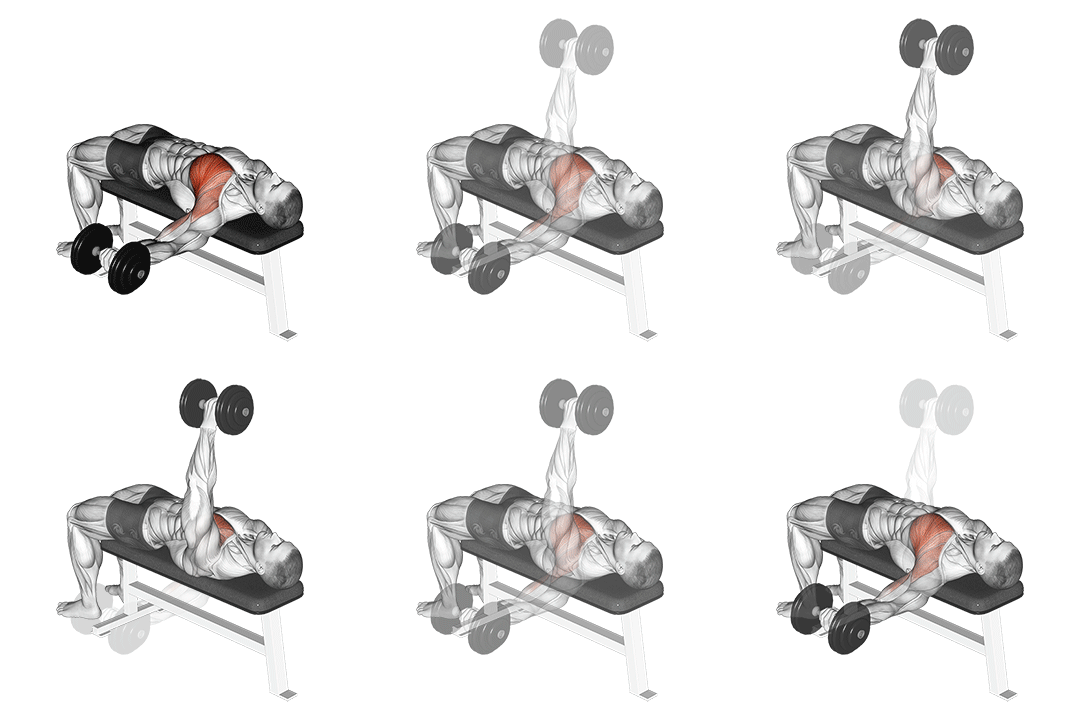
- Sit on a flat bench with a dumbbell in one hand, resting it on top of your thigh.
- Lie back on the bench, keeping the dumbbell pressed against your thigh.
- Using your free hand, help lift the dumbbell up to the starting position.
- Hold the dumbbell directly above your shoulder with your arm extended and palm facing inward.
- Lower the dumbbell out to the side in a wide arc, keeping a slight bend in your elbow.
- Pause when your arm is parallel to the ground, then reverse the movement and bring the dumbbell back to the starting position.
- Repeat for the desired number of repetitions, then switch arms and repeat.
Ranked Dumbbell One Arm Bench Fly Alternatives
10 substitutes, ranked by how closely each one matches the Dumbbell One Arm Bench Fly on movement pattern, muscles worked, equipment and body position. The higher the score, the less you change. Open "How to perform this exercise" on a card for the steps; every card title links to that exercise's own alternatives page.
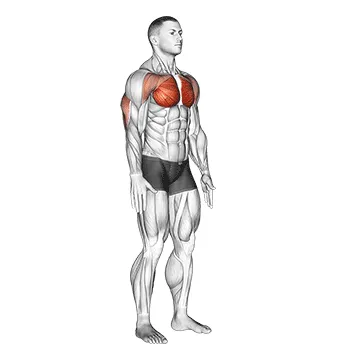
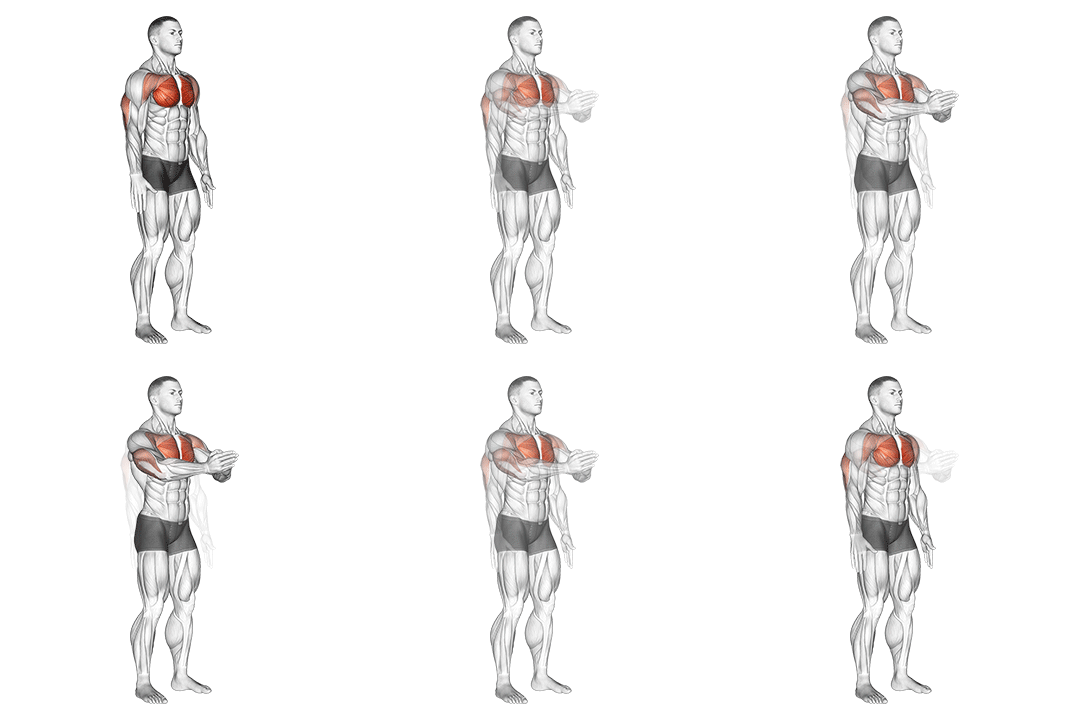
Best match 1. Isometric Chest Squeeze
61% match- Pectorals
- Bodyweight
- Beginner
- Isolation
Use this when you have nothing to train with, because it works the pectorals with bodyweight alone.
How to perform this exercise
- Stand with your feet shoulder-width apart and your knees slightly bent.
- Extend your arms straight out in front of you, parallel to the ground, with your palms facing each other.
- Squeeze your chest muscles together as hard as you can, while keeping your arms straight.
- Hold this position for a few seconds, focusing on contracting your chest muscles.
- Release the squeeze and relax your chest muscles.
- Repeat for the desired number of repetitions.
Sets and reps: 3 sets of 8 to 12 reps, and add reps before you add load.
Why this matches
- Primary muscle: pectorals, the same as the Dumbbell One Arm Bench Fly
- Equipment: bodyweight only, not free weights
- Body position: standing, not lying on your back
- Balance: easier to stay steady on than the Dumbbell One Arm Bench Fly
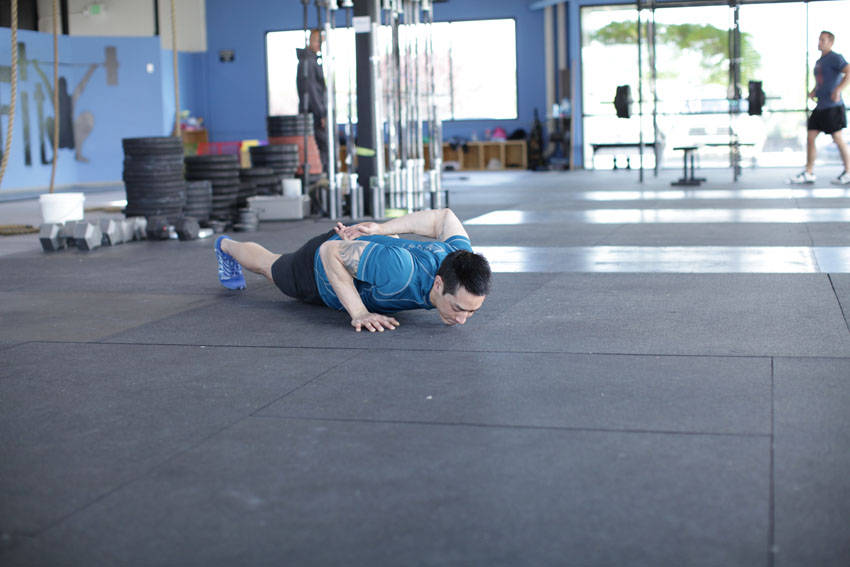
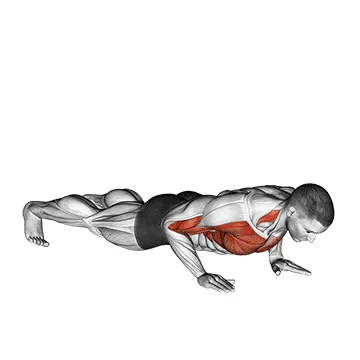
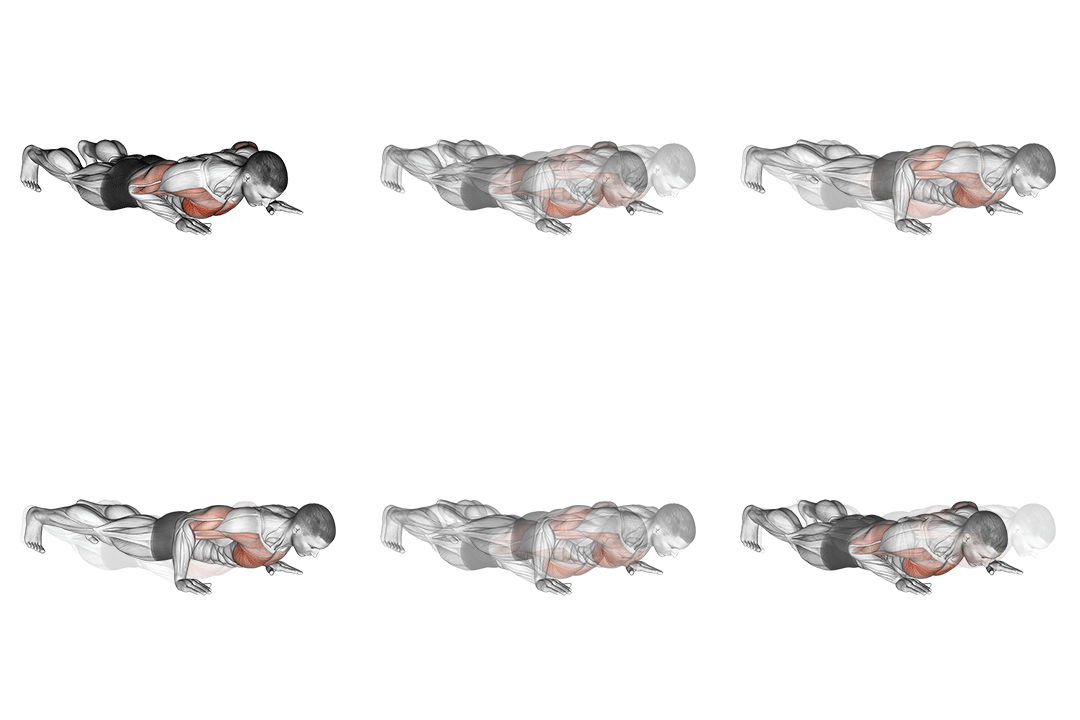
2. Single-arm Push-up
61% match- Pectorals
- Bodyweight
- Advanced
- Compound
How to perform this exercise
- Begin laying prone on the ground. Move yourself into a position supporting your weight on your toes and one arm. Your working arm should be placed directly under the shoulder, fully extended. Your legs should be extended, and for this movement you may need a wider base, placing your feet further apart than in a normal push-up.
- Maintain good posture, and place your free hand behind your back. This will be your starting position.
- Lower yourself by allowing the elbow to flex until you touch the ground.
- Descend slowly, and reverse direction be extending the arm to return to the starting position.
Sets and reps: 3 or 4 sets of 6 to 10 reps on each side.
Why this matches
- Primary muscle: pectorals, the same as the Dumbbell One Arm Bench Fly
- Equipment: bodyweight only, not free weights
- Body position: lying face down, not lying on your back
3. Isometric Wipers
61% match- Pectorals
- Bodyweight
- Intermediate
- Compound
How to perform this exercise
- Start by lying flat on your back on a mat or bench.
- Extend your arms straight out to the sides, perpendicular to your body.
- Engage your core and lift both legs off the ground, keeping them together and straight.
- Slowly lower your legs to one side, aiming to touch the ground with your feet while maintaining control.
- Pause for a moment, then use your core to lift your legs back to the starting position.
- Repeat the movement, this time lowering your legs to the opposite side.
- Continue alternating sides for the desired number of repetitions.
Sets and reps: 3 or 4 sets of 6 to 10 reps.
Why this matches
- Primary muscle: pectorals, the same as the Dumbbell One Arm Bench Fly
- Equipment: bodyweight only, not free weights
- Body position: lying face down, not lying on your back
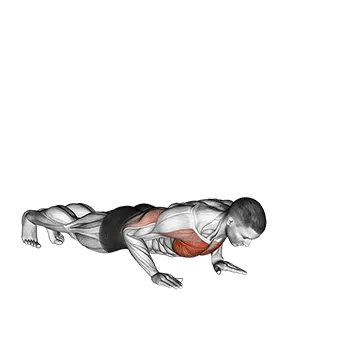
4. Raise Single Arm Push-up
60% match- Pectorals
- Bodyweight
- Advanced
- Compound
How to perform this exercise
- Start in a push-up position with your hands slightly wider than shoulder-width apart and your feet together.
- Extend one arm straight out to the side, parallel to the ground.
- Lower your body towards the ground by bending your elbows, keeping your back straight and core engaged.
- Push back up to the starting position, using your chest muscles to lift your body.
- Repeat with the other arm extended.
Sets and reps: 3 or 4 sets of 6 to 10 reps on each side.
Why this matches
- Primary muscle: pectorals, the same as the Dumbbell One Arm Bench Fly
- Equipment: bodyweight only, not free weights
- Body position: lying face down, not lying on your back
- Balance: harder to stay steady on than the Dumbbell One Arm Bench Fly
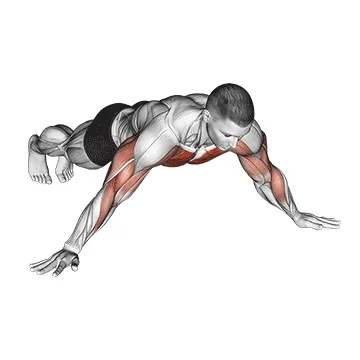
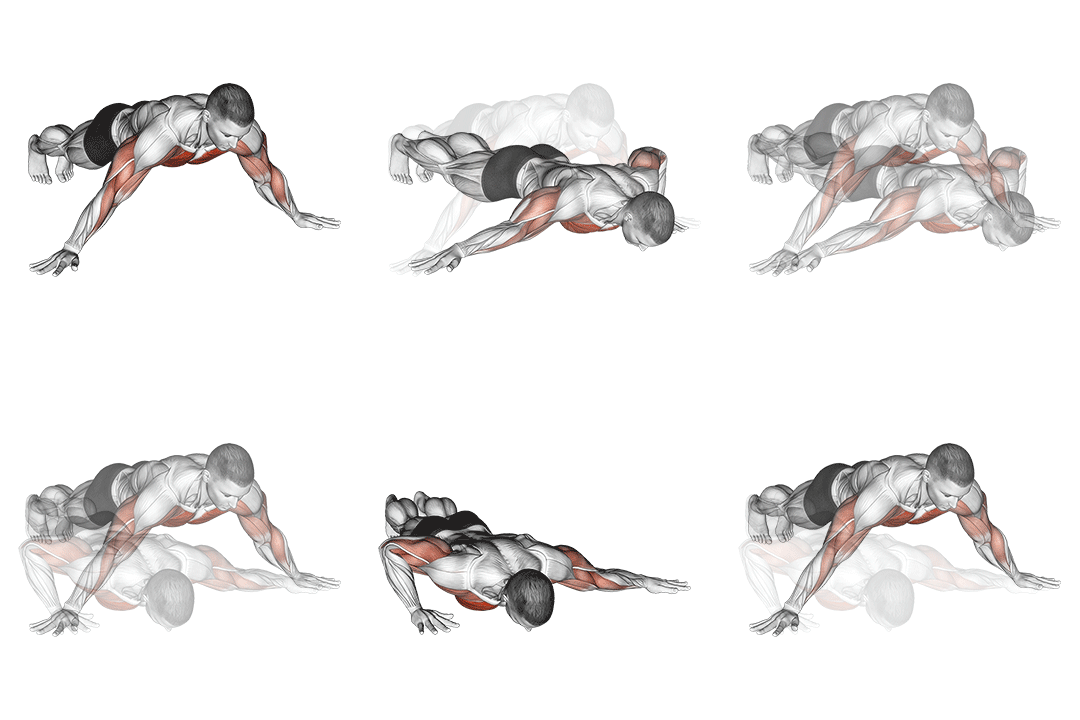
5. Archer Push Up
59% match- Pectorals
- Bodyweight
- Advanced
- Compound
How to perform this exercise
- Start in a push-up position with your hands slightly wider than shoulder-width apart.
- Extend one arm straight out to the side, parallel to the ground.
- Lower your body by bending your elbows, keeping your back straight and core engaged.
- Push back up to the starting position.
- Repeat on the other side, extending the opposite arm out to the side.
- Continue alternating sides for the desired number of repetitions.
Sets and reps: 3 or 4 sets of 6 to 10 reps on each side.
Why this matches
- Primary muscle: pectorals, the same as the Dumbbell One Arm Bench Fly
- Equipment: bodyweight only, not free weights
- Body position: lying face down, not lying on your back
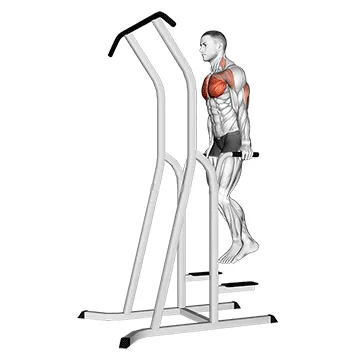
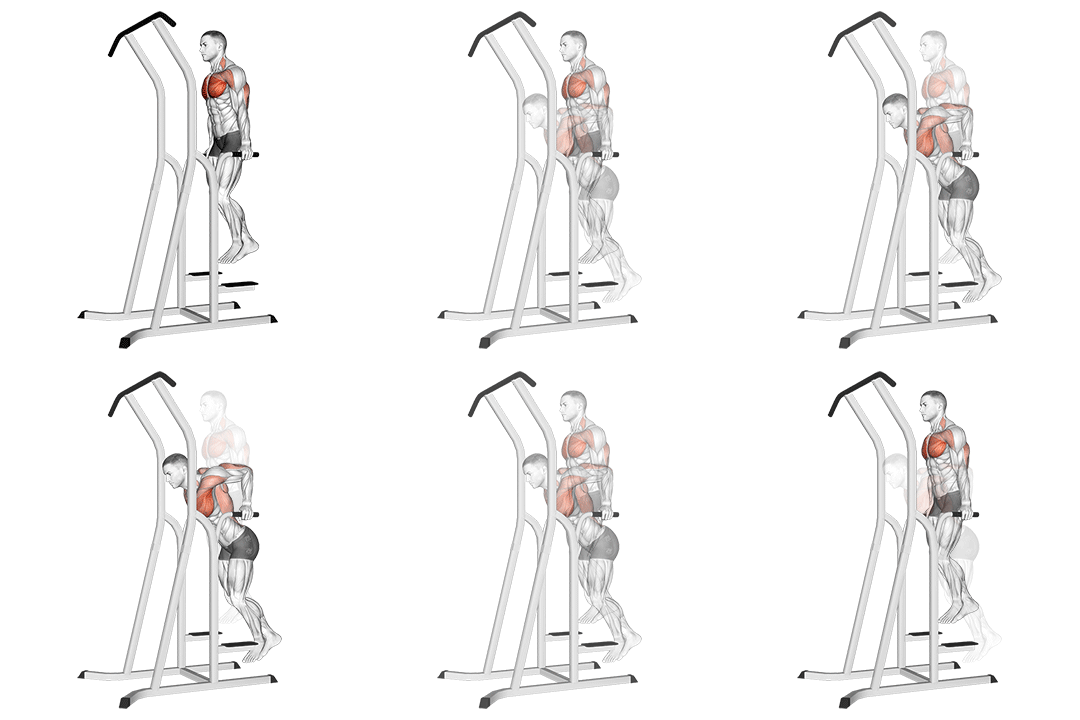
6. Chest Dip (On Dip-pull-up Cage)
59% match- Pectorals
- Bodyweight
- Intermediate
- Compound
How to perform this exercise
- Adjust the dip bars to a height that allows you to comfortably grip them.
- Stand between the bars and place your hands on each bar, slightly wider than shoulder-width apart.
- Jump up and straighten your arms, supporting your body weight on the bars.
- Bend your knees and cross your ankles behind you.
- Lower your body by bending your elbows, keeping your chest up and your shoulders down.
- Continue lowering until your shoulders are below your elbows or until you feel a stretch in your chest.
- Push through your palms and extend your elbows to raise your body back up to the starting position.
- Repeat for the desired number of repetitions.
Sets and reps: 3 or 4 sets of 6 to 10 reps.
Why this matches
- Primary muscle: pectorals, the same as the Dumbbell One Arm Bench Fly
- Equipment: bodyweight only, not free weights
- Body position: hanging, not lying on your back
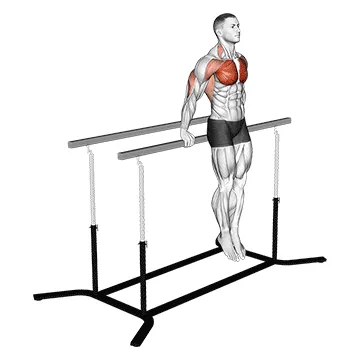
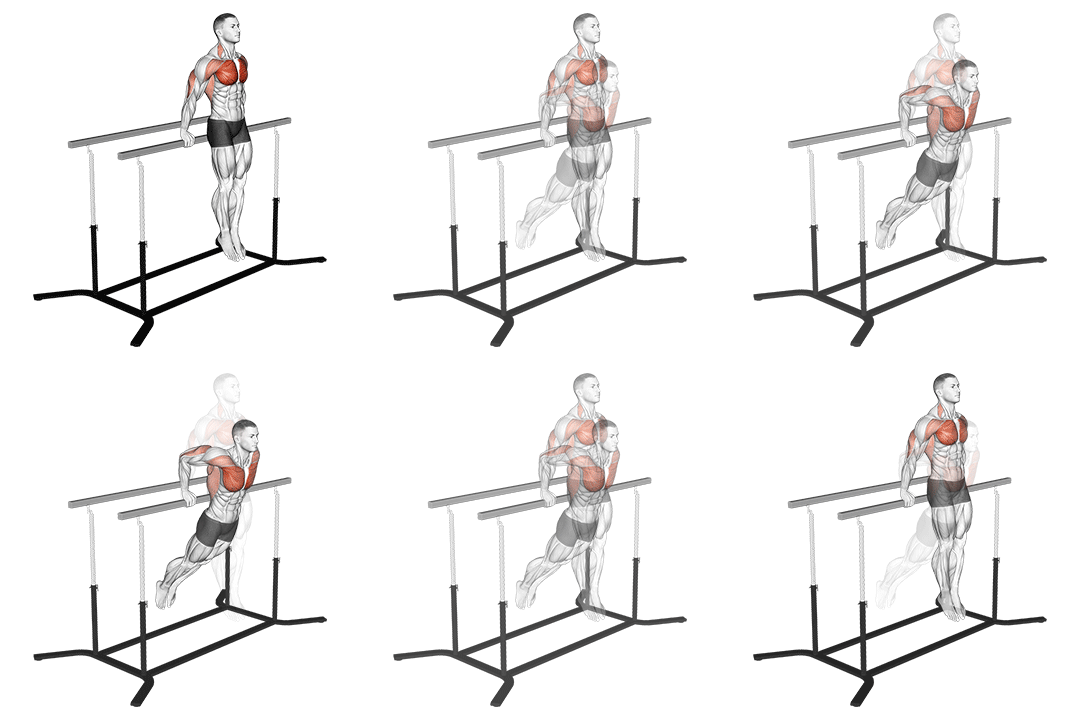
7. Korean Dips
59% match- Pectorals
- Bodyweight
- Advanced
- Compound
How to perform this exercise
- Position yourself between two parallel bars with your arms extended and supporting your body weight.
- Lower your body by bending your elbows until your upper arms are parallel to the ground.
- Pause for a moment, then push yourself back up to the starting position by straightening your arms.
- Repeat for the desired number of repetitions.
Sets and reps: 3 or 4 sets of 6 to 10 reps.
Why this matches
- Primary muscle: pectorals, the same as the Dumbbell One Arm Bench Fly
- Equipment: bodyweight only, not free weights
- Body position: standing, not lying on your back
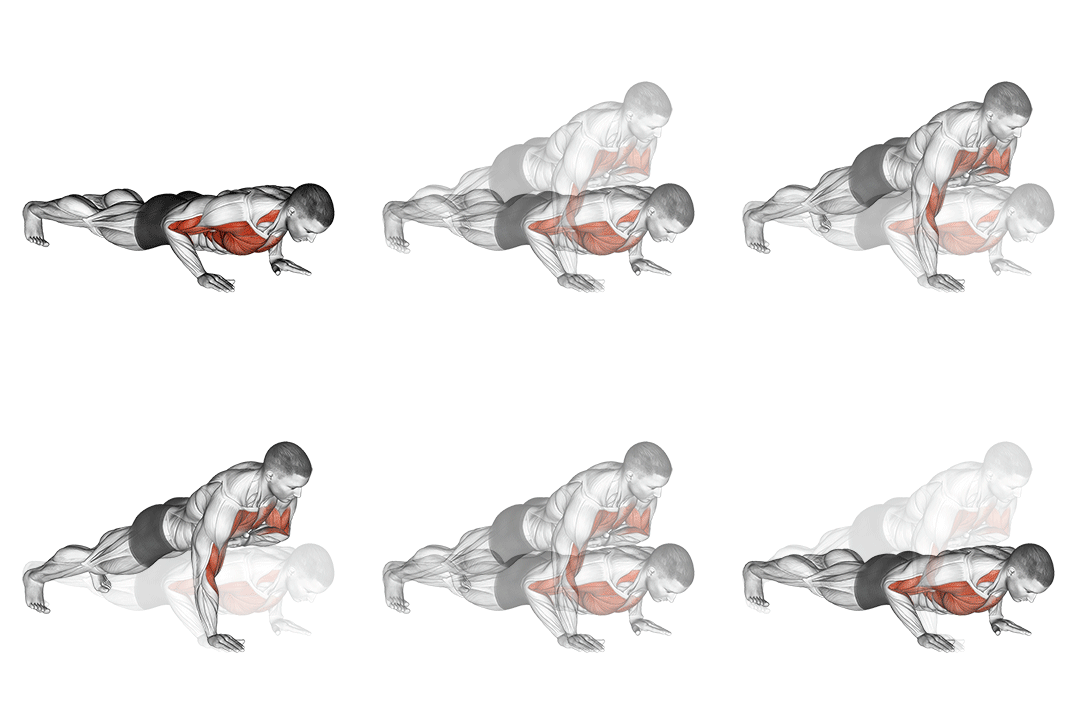
8. Shoulder Tap Push-up
59% match- Pectorals
- Bodyweight
- Intermediate
- Compound
How to perform this exercise
- Start in a high plank position with your hands slightly wider than shoulder-width apart and your body in a straight line from head to heels.
- Lower your body towards the ground by bending your elbows, keeping them close to your sides.
- As you push back up, lift your right hand off the ground and tap your left shoulder.
- Return your right hand to the ground and repeat the push-up, this time lifting your left hand and tapping your right shoulder.
- Continue alternating shoulder taps with each push-up repetition.
- Maintain a stable core and avoid excessive hip rotation throughout the exercise.
- Repeat for the desired number of repetitions.
Sets and reps: 3 or 4 sets of 6 to 10 reps on each side.
Why this matches
- Primary muscle: pectorals, the same as the Dumbbell One Arm Bench Fly
- Equipment: bodyweight only, not free weights
- Body position: lying face down, not lying on your back
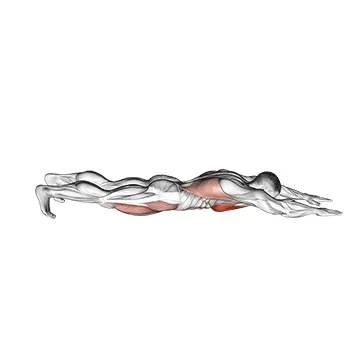
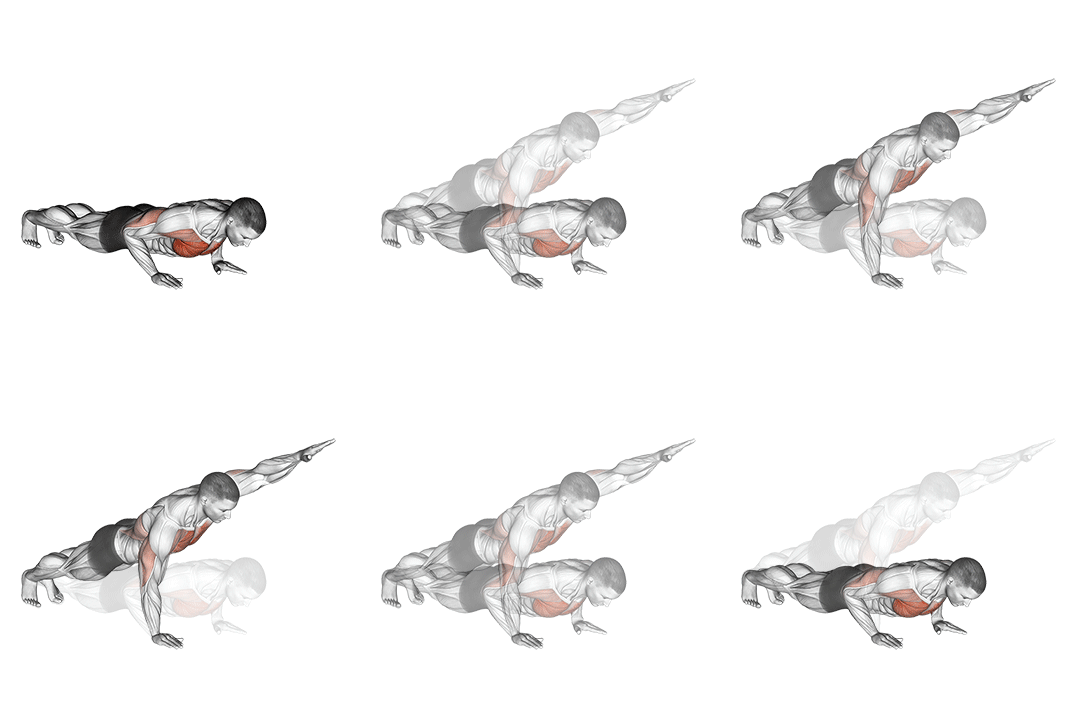
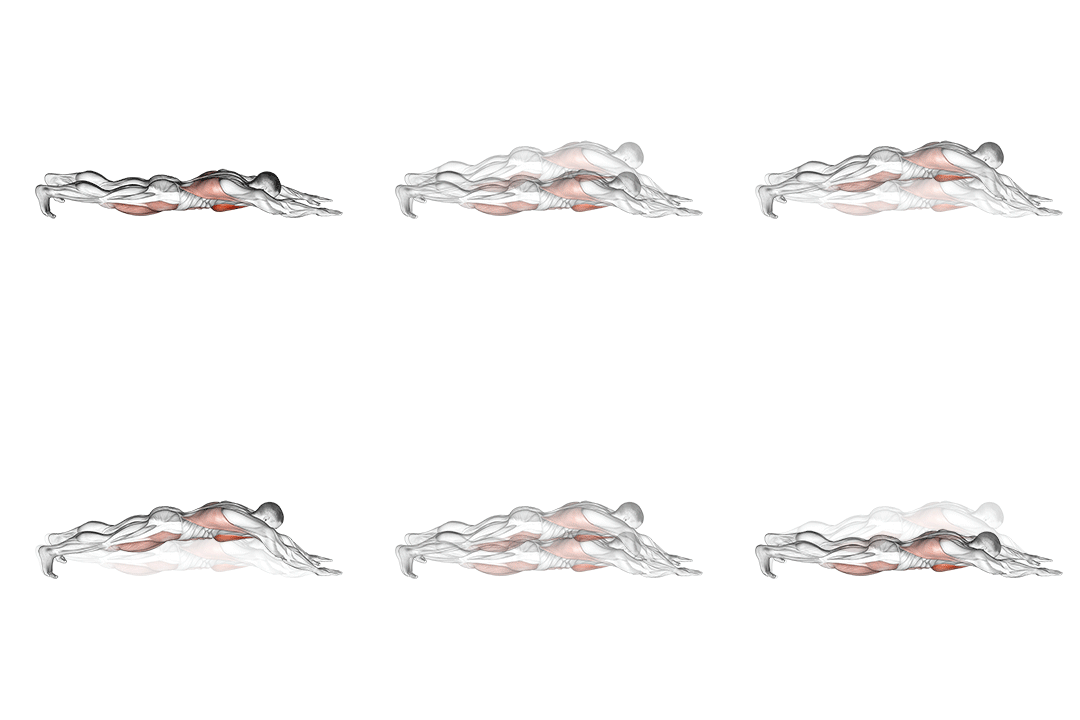
9. Superman Push-up
58% match- Pectorals
- Bodyweight
- Advanced
- Compound
How to perform this exercise
- Start in a high plank position with your hands slightly wider than shoulder-width apart and your feet together.
- Engage your core and lower your body towards the ground, keeping your elbows close to your sides.
- As you lower your body, simultaneously lift your right arm and left leg off the ground, extending them straight out.
- Pause for a moment at the top, then lower your arm and leg back down while pushing yourself back up to the starting position.
- Repeat the movement, this time lifting your left arm and right leg.
- Continue alternating sides for the desired number of repetitions.
Sets and reps: 3 or 4 sets of 6 to 10 reps.
Why this matches
- Primary muscle: pectorals, the same as the Dumbbell One Arm Bench Fly
- Equipment: bodyweight only, not free weights
- Body position: lying face down, not lying on your back
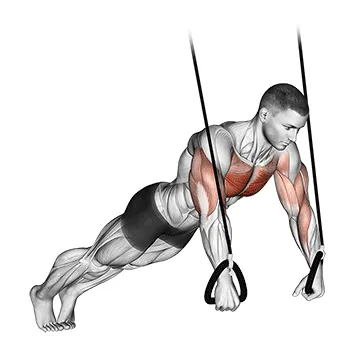
10. Suspended Push-up
58% match- Pectorals
- Bodyweight
- Intermediate
- Compound
How to perform this exercise
- Find a suspension trainer and adjust it to an appropriate height.
- Stand facing away from the anchor point and hold the handles with an overhand grip.
- Walk your feet forward, leaning your body forward until your weight is supported by the suspension trainer.
- Keep your body straight from head to heels, engage your core, and lower your chest towards the handles.
- Push through your chest and arms to return to the starting position.
- Repeat for the desired number of repetitions.
Sets and reps: 3 or 4 sets of 6 to 10 reps.
Why this matches
- Primary muscle: pectorals, the same as the Dumbbell One Arm Bench Fly
- Equipment: a suspension trainer, not free weights
- Body position: lying face down, not lying on your back
- Balance: harder to stay steady on than the Dumbbell One Arm Bench Fly

Why You Might Need a Dumbbell One Arm Bench Fly Alternative
You may substitute the Dumbbell One Arm Bench Fly for several reasons: shoulder pain during long-lever isolation, no access to dumbbells, a need for constant tension, or to correct bilateral imbalances. Cables and machines alter the load curve to keep tension through the range, reducing peak stress on the glenohumeral joint. If you have impingement, shorten range of motion and keep scapula retracted; cue: limit horizontal adduction just before painful end-range while maintaining a soft elbow. For hypertrophy, choose options that allow progressive overload and consistent pec activation rather than maximal range at the cost of joint pain.
Dumbbell One Arm Bench Fly FAQ
What muscles does Dumbbell One Arm Bench Fly work?
The primary target is the pectoralis major (sternal head in flat positions, clavicular head when inclined). The anterior deltoid assists and the serratus anterior plus scapular retractors stabilize the shoulder; cue: retract the scapula and lead movement with horizontal adduction to maximize pec activation.
What is the best bodyweight alternative to Dumbbell One Arm Bench Fly?
Archer push-ups are the best bodyweight alternative because they reproduce unilateral horizontal adduction with high pec loading. Cue: keep the elbow slightly tucked (~30°), lean the torso forward to bias the chest, and control the descent to emphasize eccentric time under tension.
Can I build muscle without doing Dumbbell One Arm Bench Fly?
Yes. You can achieve comparable hypertrophy with presses, bilateral fly variations, and cables that maintain high pec activation and progressive overload. Focus on consistent tension, controlled eccentrics (2–4 seconds), and gradual load increases to stimulate growth even without that specific isolation movement.
Find Alternatives for Any Exercise
Search the exercise database and filter the ranked substitutes by the equipment you own.
Similarity scores compare exercise metadata such as movement pattern, muscles, equipment and body position. They are not a safety rating or a check that you own the equipment. Learn about our methodology