

10 Best Exercise Ball Back Extension With Knees Off Ground Alternatives
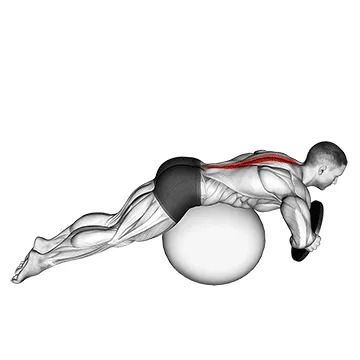
The Exercise Ball Back Extension With Knees Off Ground is done lying face down with a stability ball. Ranked closest by our scoring: the Exercise Ball Back Extension With Arms Extended, the Exercise Ball Back Extension With Hands Behind Head and the Weighted Hyperextension (On Stability Ball).
Updated Ranked by our 12-factor similarity model How it works
Original Exercise: Exercise Ball Back Extension With Knees Off Ground
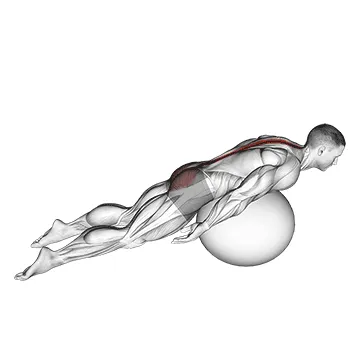
- Primary muscle
- Spine
- Equipment
- Stability-ball
- Difficulty
- Intermediate
- Type
- Compound
Secondary muscles: Glutes, Hamstrings
How to perform Exercise Ball Back Extension With Knees Off Ground
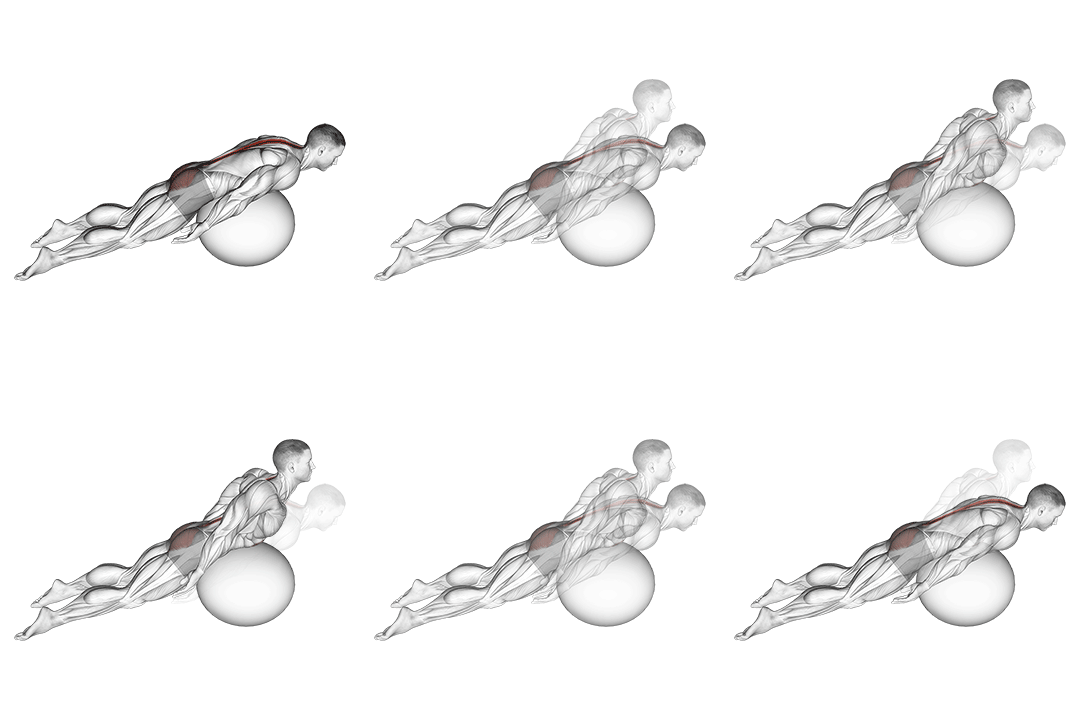
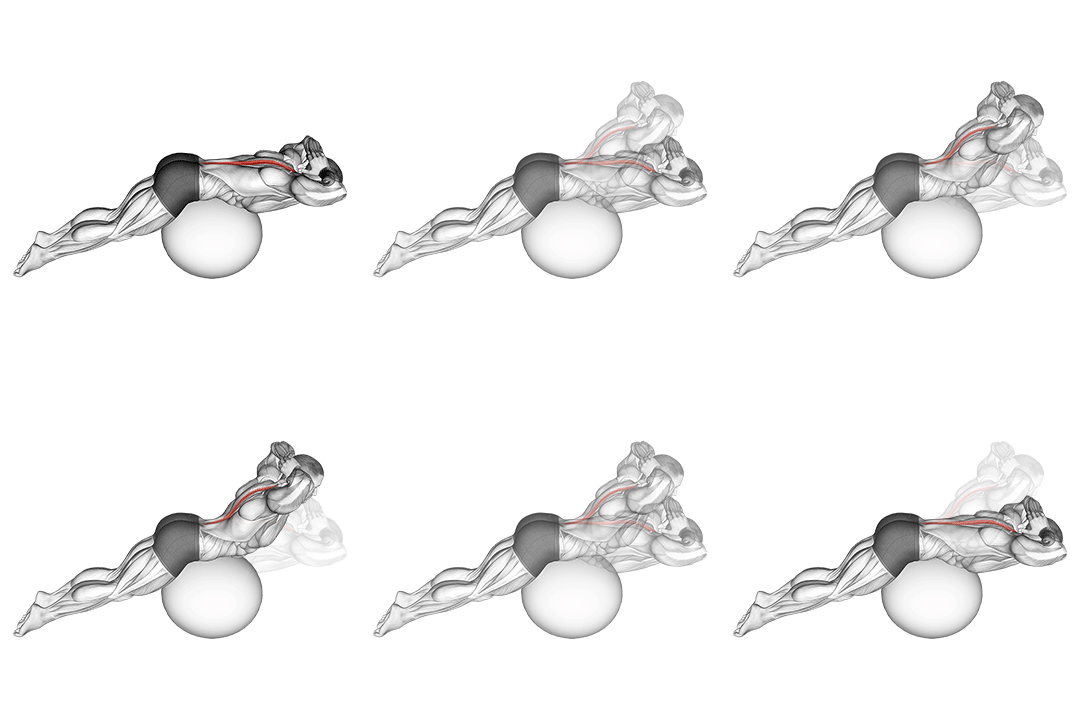
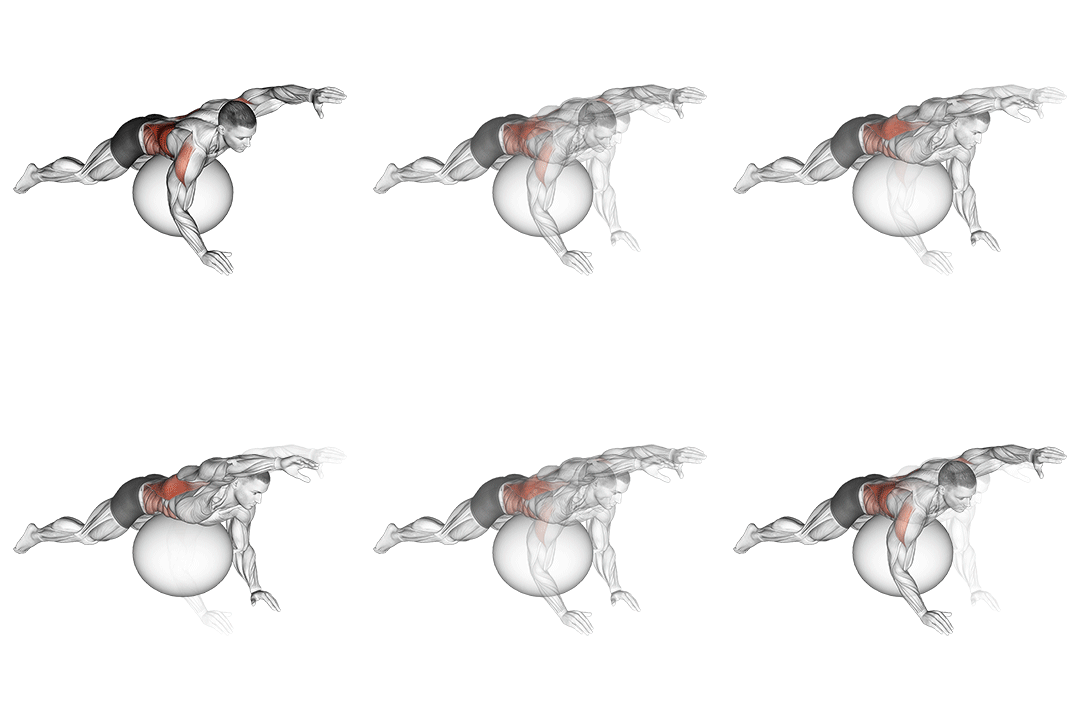
- Place the stability ball on the ground and lie face down on top of it, with your hips resting on the ball and your feet against a wall for stability.
- Position your hands behind your head or crossed over your chest.
- Engage your core and slowly lift your upper body off the ball, extending your back until your body forms a straight line from your head to your heels.
- Pause for a moment at the top, then slowly lower your upper body back down to the starting position.
- Repeat for the desired number of repetitions.
Ranked Exercise Ball Back Extension With Knees Off Ground Alternatives
10 substitutes, ranked by how closely each one matches the Exercise Ball Back Extension With Knees Off Ground on movement pattern, muscles worked, equipment and body position. The higher the score, the less you change. Open "How to perform this exercise" on a card for the steps; every card title links to that exercise's own alternatives page.
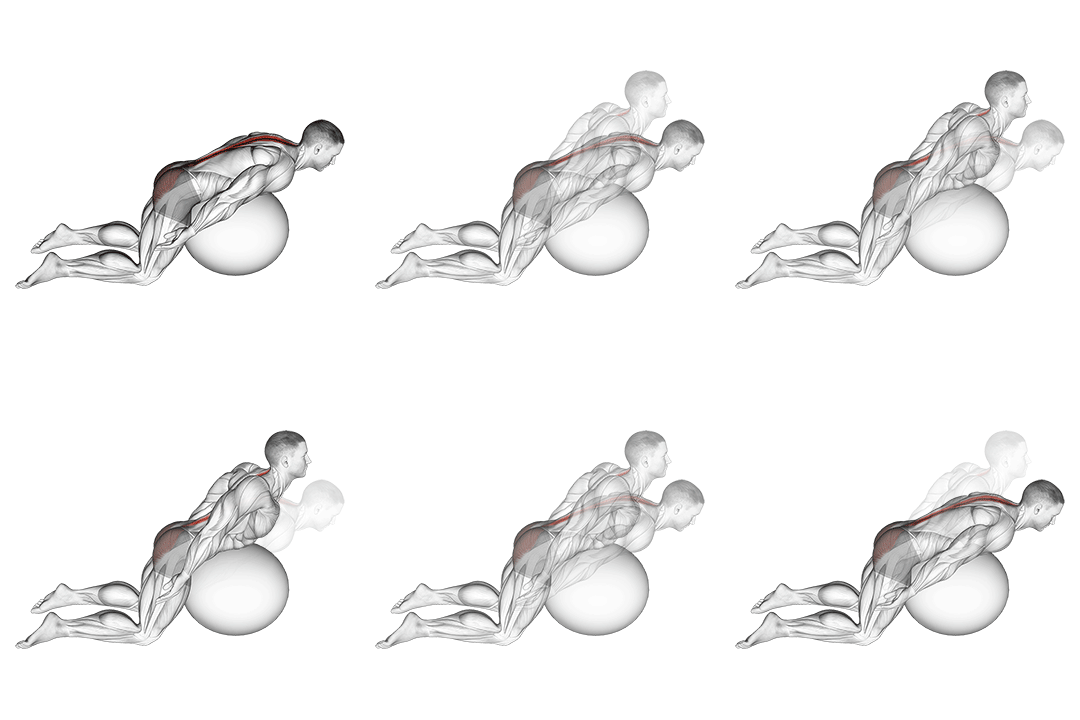
Best match - Spine
- Stability-ball
- Beginner
- Compound
Pick this when you want an easier version that still works the spinal erectors.
How to perform this exercise
- Place the stability ball on the ground and lie face down on top of it, with your hips resting on the ball and your feet against a wall for stability.
- Extend your arms straight out in front of you, with your palms facing down.
- Engage your core and slowly lift your upper body off the ball, keeping your back straight and your neck in line with your spine.
- Pause for a moment at the top, then slowly lower your upper body back down to the starting position.
- Repeat for the desired number of repetitions.
Sets and reps: 3 sets of 8 to 12 reps, and add reps before you add load.
Why this matches
- Primary muscle: spine, the same as the Exercise Ball Back Extension With Knees Off Ground
- Equipment: bodyweight only, the same as the Exercise Ball Back Extension With Knees Off Ground
- Body position: lying face down, the same as the Exercise Ball Back Extension With Knees Off Ground
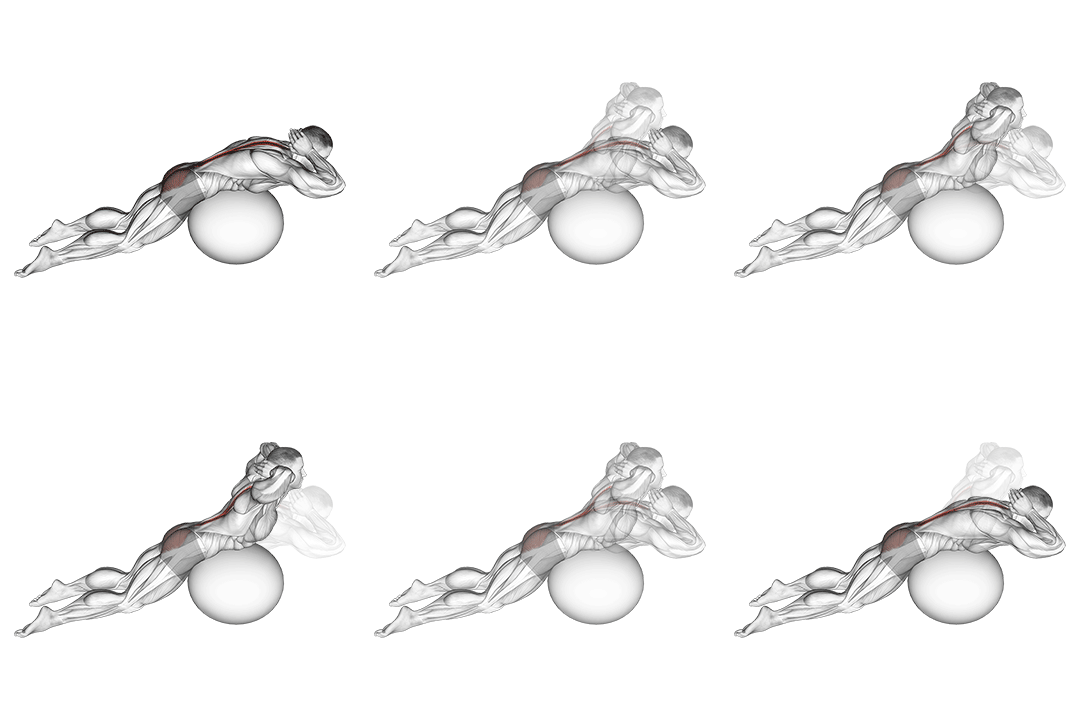
- Spine
- Stability-ball
- Beginner
- Compound
How to perform this exercise
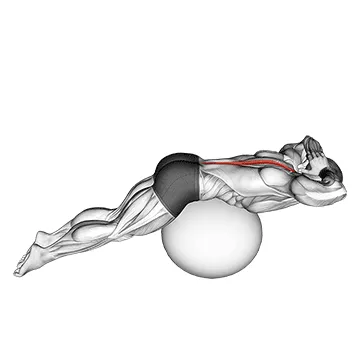
- Place the stability ball on the ground and lie face down on top of it with your hips resting on the ball.
- Position your feet against a wall or other stable surface for support.
- Cross your arms behind your head, with your hands touching the back of your head.
- Engage your core and slowly lift your upper body off the ball, extending your back until your body forms a straight line from your head to your hips.
- Pause for a moment at the top of the movement, then slowly lower your upper body back down to the starting position.
- Repeat for the desired number of repetitions.
Sets and reps: 3 sets of 8 to 12 reps, and add reps before you add load.
Why this matches
- Primary muscle: spine, the same as the Exercise Ball Back Extension With Knees Off Ground
- Equipment: bodyweight only, the same as the Exercise Ball Back Extension With Knees Off Ground
- Body position: lying face down, the same as the Exercise Ball Back Extension With Knees Off Ground
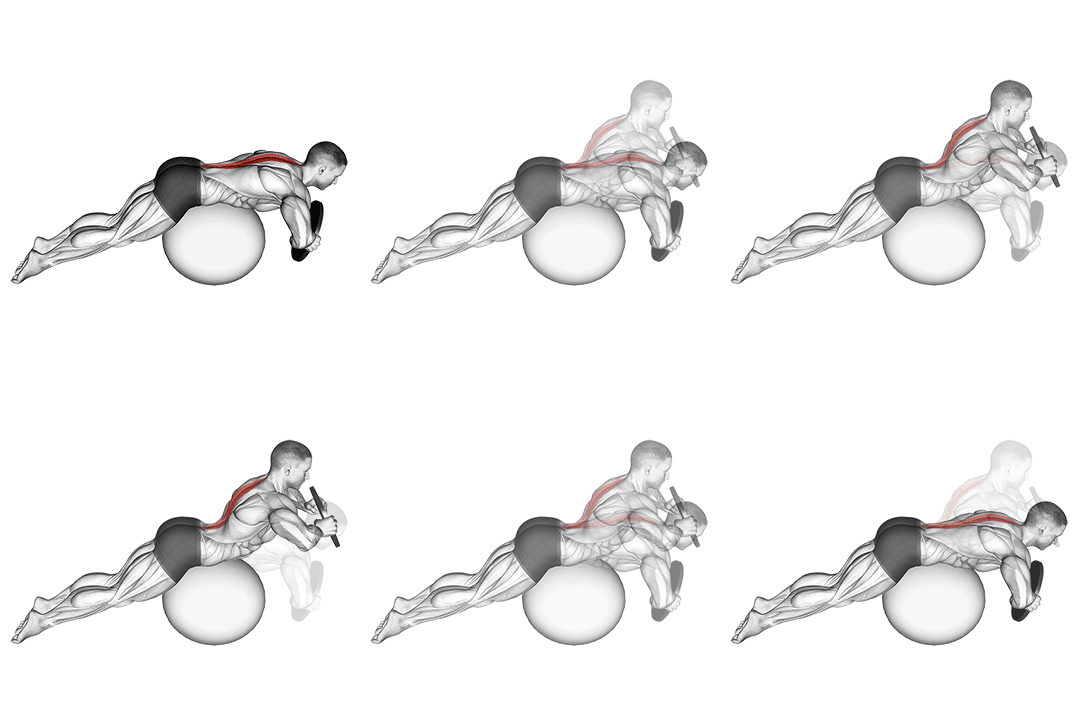
- Spine
- Stability-ball
- Intermediate
- Isolation
The same equipment, taken with a close grip.
How to perform this exercise
- Position yourself face down on a stability ball with your hips resting on the ball and your feet against a wall for stability.
- Place your hands behind your head or cross them over your chest.
- Engage your core and slowly lift your upper body off the ball, extending your back until your body forms a straight line.
- Pause for a moment at the top, then slowly lower your upper body back down to the starting position.
- Repeat for the desired number of repetitions.
Sets and reps: 3 sets of 10 to 15 reps.
Why this matches
- Primary muscle: spine, the same as the Exercise Ball Back Extension With Knees Off Ground
- Body position: lying face down, the same as the Exercise Ball Back Extension With Knees Off Ground
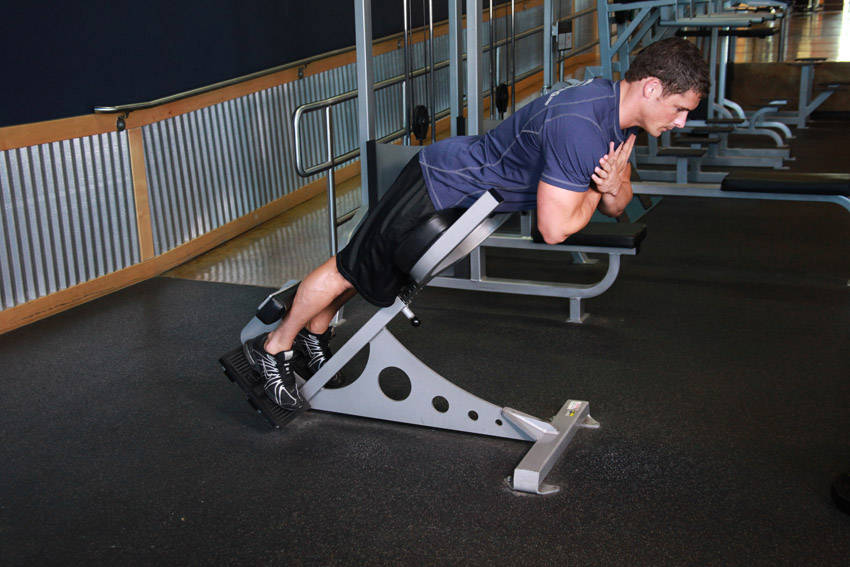
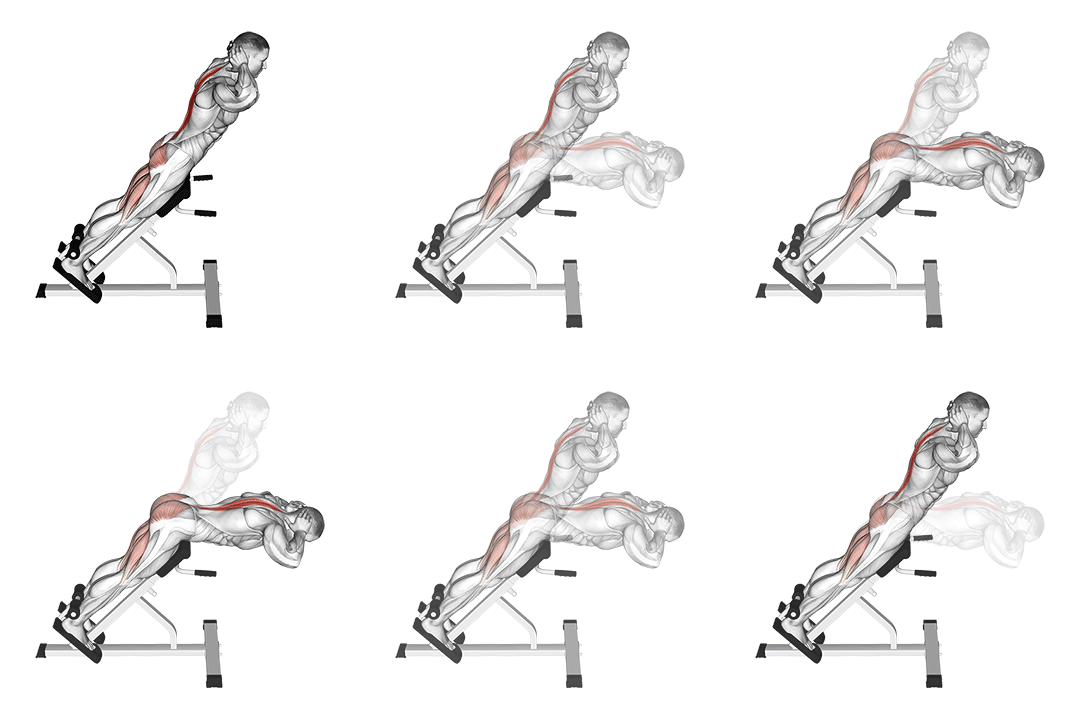
4. Hyperextensions (Back Extensions)
80% match- Lower Back
- Other
- Intermediate
- Compound
A looser match: it works the lower back rather than the spinal erectors.
How to perform this exercise
- Lie face down on a hyperextension bench, tucking your ankles securely under the footpads.
- Adjust the upper pad if possible so your upper thighs lie flat across the wide pad, leaving enough room for you to bend at the waist without any restriction.
- With your body straight, cross your arms in front of you (my preference) or behind your head. This will be your starting position. Tip: You can also hold a weight plate for extra resistance in front of you under your crossed arms.
- Start bending forward slowly at the waist as far as you can while keeping your back flat. Inhale as you perform this movement. Keep moving forward until you feel a nice stretch on the hamstrings and you can no longer keep going without a rounding of the back. Tip: Never round the back as you perform this exercise. Also, some people can go farther than others. The key thing is that you go as far as your body allows you to without rounding the back.
- Slowly raise your torso back to the initial position as you inhale. Tip: Avoid the temptation to arch your back past a straight line. Also, do not swing the torso at any time in order to protect the back from injury.
- Repeat for the recommended amount of repetitions.
Sets and reps: 3 or 4 sets of 6 to 10 reps.
Why this matches
- Primary muscle: lower back, not spine
- Equipment: bodyweight only, the same as the Exercise Ball Back Extension With Knees Off Ground
- Body position: lying face down, the same as the Exercise Ball Back Extension With Knees Off Ground
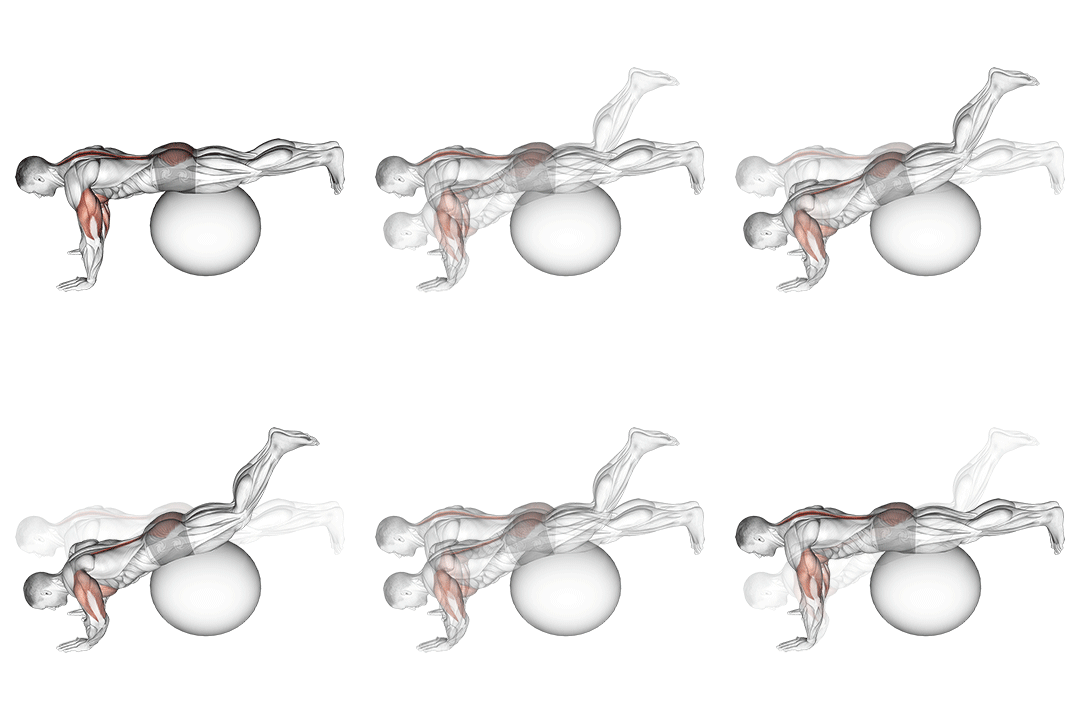
5. Exercise Ball Prone Leg Raise
74% match- Spine
- Stability-ball
- Intermediate
- Compound
It uses the same equipment and still works the spinal erectors.
How to perform this exercise
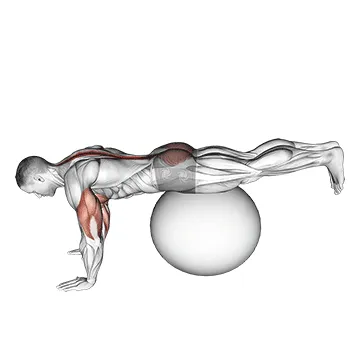
- Lie face down on a mat with your legs extended and your toes resting on top of the stability ball.
- Place your hands on the ground, shoulder-width apart, and engage your core muscles.
- Keeping your legs straight, slowly lift them off the ground, using your lower back and glutes to raise them as high as possible.
- Pause for a moment at the top, then slowly lower your legs back down to the starting position.
- Repeat for the desired number of repetitions.
Sets and reps: 3 or 4 sets of 6 to 10 reps.
Why this matches
- Primary muscle: spine, the same as the Exercise Ball Back Extension With Knees Off Ground
- Equipment: bodyweight only, the same as the Exercise Ball Back Extension With Knees Off Ground
- Body position: lying face down, the same as the Exercise Ball Back Extension With Knees Off Ground
6. Hyperextension
74% match- Spine
- Bodyweight
- Intermediate
- Compound
Use this when you have nothing to train with, because it works the spinal erectors with bodyweight alone.
How to perform this exercise
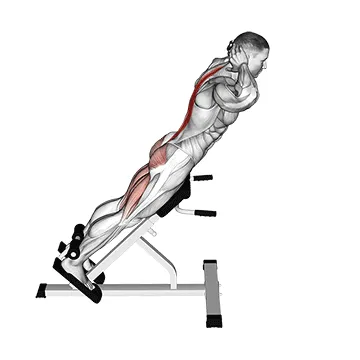
- Adjust the hyperextension bench so that your upper thighs are resting on the pad and your feet are secured.
- Cross your arms over your chest or place your hands behind your head.
- Lower your upper body towards the ground while keeping your back straight.
- Pause for a moment at the bottom, then raise your upper body back up until it is in line with your legs.
- Repeat for the desired number of repetitions.
Sets and reps: 3 or 4 sets of 6 to 10 reps.
Why this matches
- Primary muscle: spine, the same as the Exercise Ball Back Extension With Knees Off Ground
- Equipment: bodyweight only, the same as the Exercise Ball Back Extension With Knees Off Ground
- Body position: lying face down, the same as the Exercise Ball Back Extension With Knees Off Ground
- Balance: easier to stay steady on than the Exercise Ball Back Extension With Knees Off Ground
7. Hyperextension (On Bench)
74% match- Spine
- Bodyweight
- Intermediate
- Compound
How to perform this exercise
- Adjust the hyperextension bench so that your hips are resting comfortably on the pad and your feet are secured.
- Cross your arms over your chest or place your hands behind your head.
- Slowly lower your upper body towards the ground while keeping your back straight.
- Pause for a moment at the bottom, then raise your upper body back up until it is in line with your legs.
- Repeat for the desired number of repetitions.
Sets and reps: 3 or 4 sets of 6 to 10 reps.
Why this matches
- Primary muscle: spine, the same as the Exercise Ball Back Extension With Knees Off Ground
- Equipment: bodyweight only, the same as the Exercise Ball Back Extension With Knees Off Ground
- Body position: lying face down, the same as the Exercise Ball Back Extension With Knees Off Ground
- Balance: easier to stay steady on than the Exercise Ball Back Extension With Knees Off Ground
8. Back Extension On Exercise Ball
73% match- Spine
- Stability-ball
- Beginner
- Isolation
How to perform this exercise
- Place the stability ball on the ground and lie face down on top of it, with your hips resting on the ball and your feet against a wall or other stable surface.
- Position your hands behind your head or crossed over your chest.
- Engage your core and slowly lift your upper body off the ball, extending your back until your body forms a straight line from your head to your heels.
- Pause for a moment at the top, then slowly lower your upper body back down to the starting position.
- Repeat for the desired number of repetitions.
Sets and reps: 3 sets of 8 to 12 reps, and add reps before you add load.
Why this matches
- Primary muscle: spine, the same as the Exercise Ball Back Extension With Knees Off Ground
- Equipment: bodyweight only, the same as the Exercise Ball Back Extension With Knees Off Ground
- Body position: lying face down, the same as the Exercise Ball Back Extension With Knees Off Ground
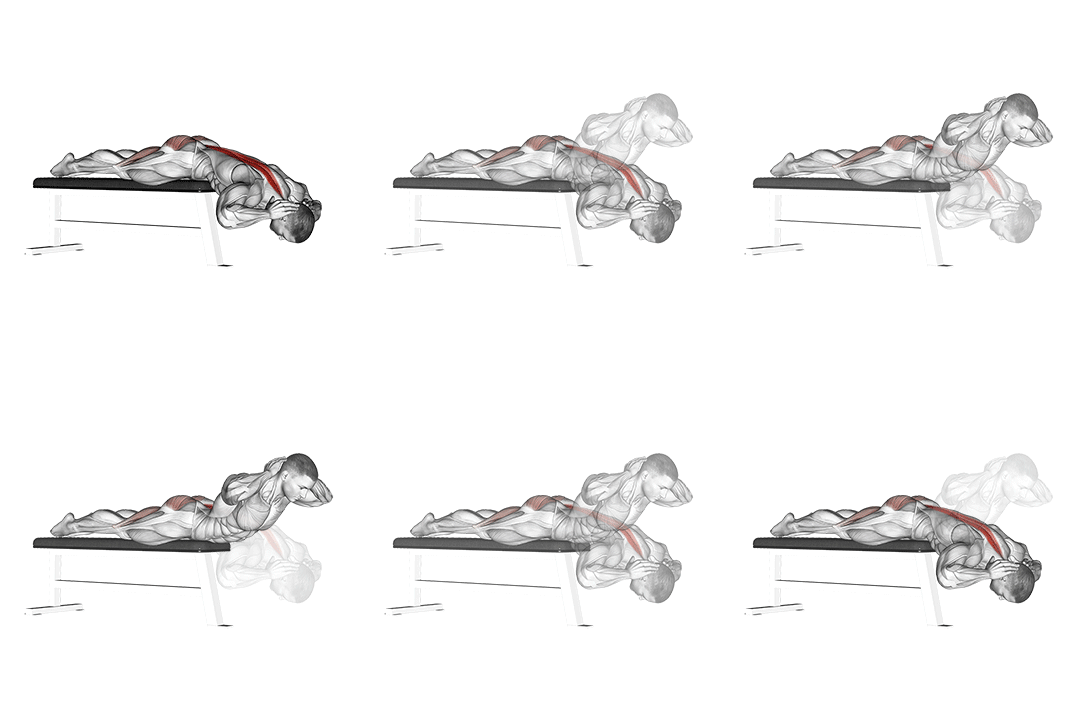
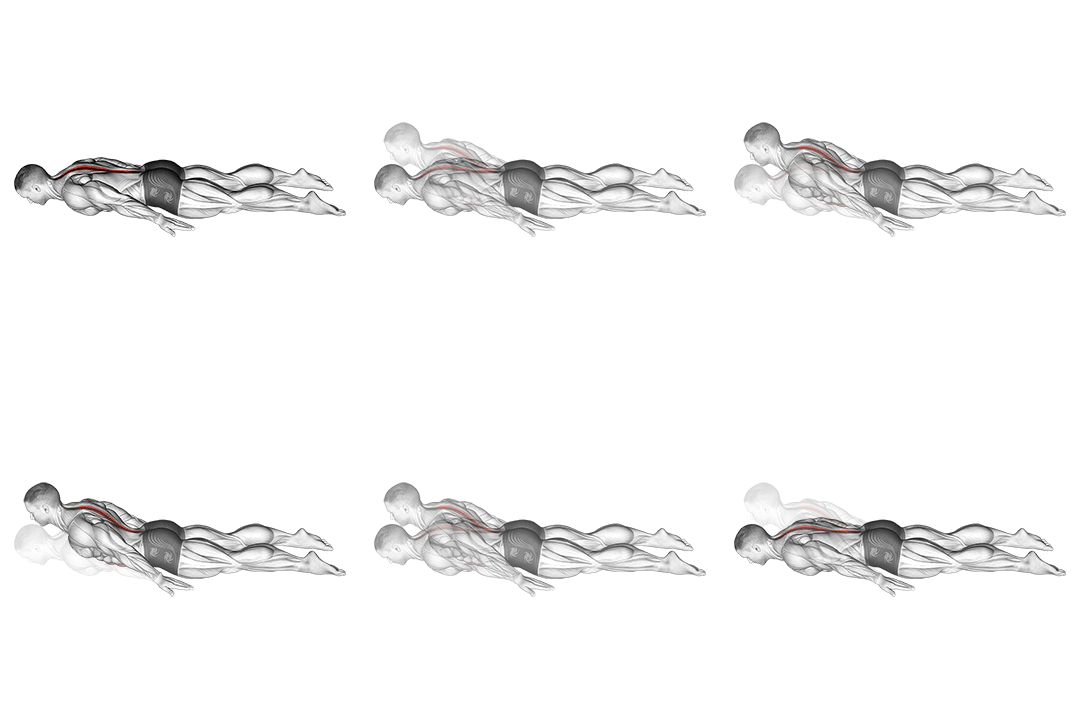
9. Lower Back Curl
65% match- Spine
- Bodyweight
- Intermediate
- Isolation
How to perform this exercise
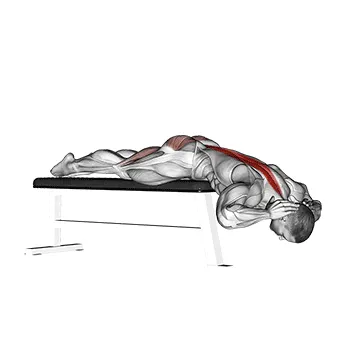
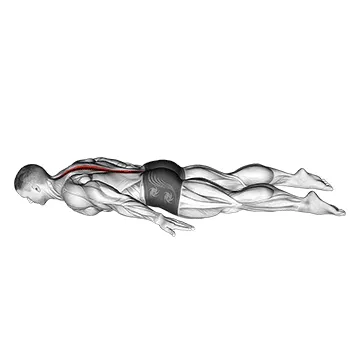
- Lie flat on your stomach with your legs extended and your arms by your sides.
- Engage your glutes and hamstrings, and slowly lift your upper body off the ground, curling your back upwards.
- Pause for a moment at the top, then slowly lower your upper body back down to the starting position.
- Repeat for the desired number of repetitions.
Sets and reps: 3 sets of 10 to 15 reps.
Why this matches
- Primary muscle: spine, the same as the Exercise Ball Back Extension With Knees Off Ground
- Equipment: bodyweight only, the same as the Exercise Ball Back Extension With Knees Off Ground
- Body position: lying face down, the same as the Exercise Ball Back Extension With Knees Off Ground
- Lats
- Stability-ball
- Beginner
- Compound
How to perform this exercise
- Sit on the stability ball with your feet flat on the ground and your back straight.
- Hold a dumbbell in each hand with your palms facing inwards and your arms extended down by your sides.
- Engage your core and slowly lift one arm up towards your shoulder, keeping your elbow slightly bent.
- Pause for a moment at the top, then slowly lower your arm back down to the starting position.
- Repeat the movement with the other arm.
- Continue alternating arms for the desired number of repetitions.
Sets and reps: 3 sets of 8 to 12 reps on each side, and add reps before you add load.
Why this matches
- Primary muscle: lats, not spine
- Equipment: bodyweight only, the same as the Exercise Ball Back Extension With Knees Off Ground
- Body position: lying face down, the same as the Exercise Ball Back Extension With Knees Off Ground
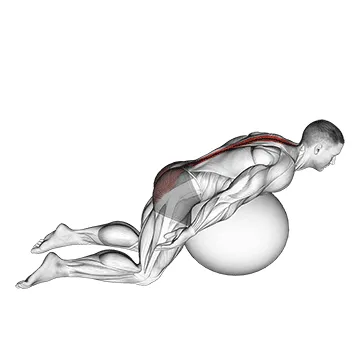
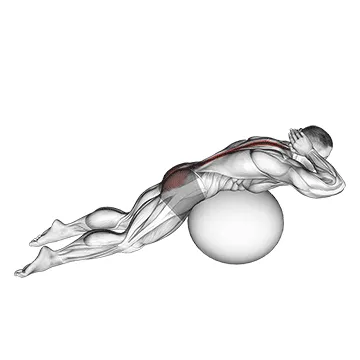
Why You Might Need an Exercise Ball Back Extension With Knees Off Ground Alternative
You may substitute this exercise for several reasons: limited equipment, low tolerance for spinal loading, post-injury progressions, or preference for a different range of motion. Some people feel unstable on a stability ball or can't tolerate the lumbar compression when hips extend actively. Alternatives let you adjust leverage, provide pelvic support, or isolate thoracic extension. For rehab choose low-load isometrics (bird dog or prone hold) and cue a neutral pelvis and glute engagement; for strength use supported movements (reverse hyper or Roman chair) and emphasize slow eccentric control to maximize erector and multifidus activation.
Exercise Ball Back Extension With Knees Off Ground FAQ
What muscles does Exercise Ball Back Extension With Knees Off Ground work?
It primarily targets the spinal erectors (erector spinae and multifidus) and engages the glutes and hamstrings as synergists. The movement emphasizes lumbar and thoracic extension and improves posterior chain endurance and spinal stability.
What is the best bodyweight alternative to Exercise Ball Back Extension With Knees Off Ground?
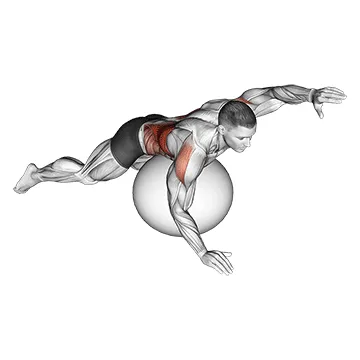
The bird dog is an effective bodyweight alternative that trains spinal stability and extension control. Cue a neutral spine, reach the opposite arm and leg fully, and focus on contracting the erectors and glutes without letting the pelvis rotate.
Can I build muscle without doing Exercise Ball Back Extension With Knees Off Ground?
Yes. You can build the spinal extensors with alternatives like Roman chair extensions, reverse hypers, weighted hyperextensions, and progressive deadlifts. Emphasize progressive overload, slow eccentrics, and full glute activation to increase hypertrophy of the posterior chain.
Find Alternatives for Any Exercise
Search the exercise database and filter the ranked substitutes by the equipment you own.
Similarity scores compare exercise metadata such as movement pattern, muscles, equipment and body position. They are not a safety rating or a check that you own the equipment. Learn about our methodology