

10 Best Lever Back Extension Alternatives for Equipment Limits
The Lever Back Extension is done seated with a lever machine. Ranked closest by our scoring: the Back Extension On Exercise Ball.
Updated Ranked by our 12-factor similarity model How it works
Original Exercise: Lever Back Extension
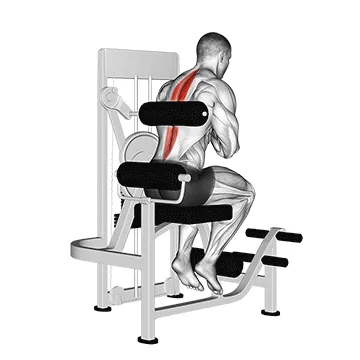
- Primary muscle
- Spine
- Equipment
- Lever
- Difficulty
- Intermediate
- Type
- Isolation
Secondary muscles: Glutes, Hamstrings
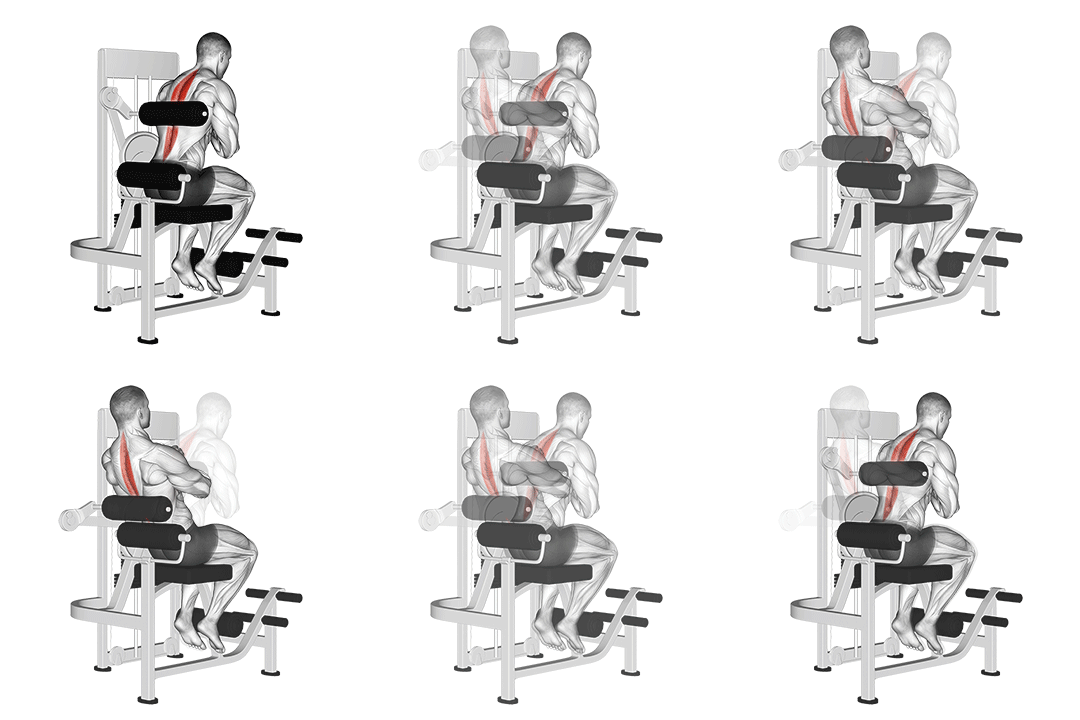
How to perform Lever Back Extension
- Adjust the machine to fit your body size and range of motion.
- Sit on the machine with your back against the pad and your feet secured.
- Place your hands on the handles or grip bars.
- Engage your core and slowly lean forward, allowing your back to round slightly.
- Pause for a moment at the bottom position, feeling a stretch in your lower back.
- Using your back muscles, slowly raise your torso back to the starting position.
- Repeat for the desired number of repetitions.
Ranked Lever Back Extension Alternatives
10 substitutes, ranked by how closely each one matches the Lever Back Extension on movement pattern, muscles worked, equipment and body position. The higher the score, the less you change. Open "How to perform this exercise" on a card for the steps; every card title links to that exercise's own alternatives page.
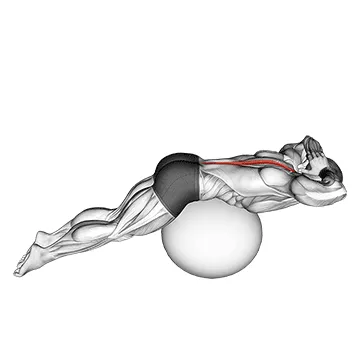
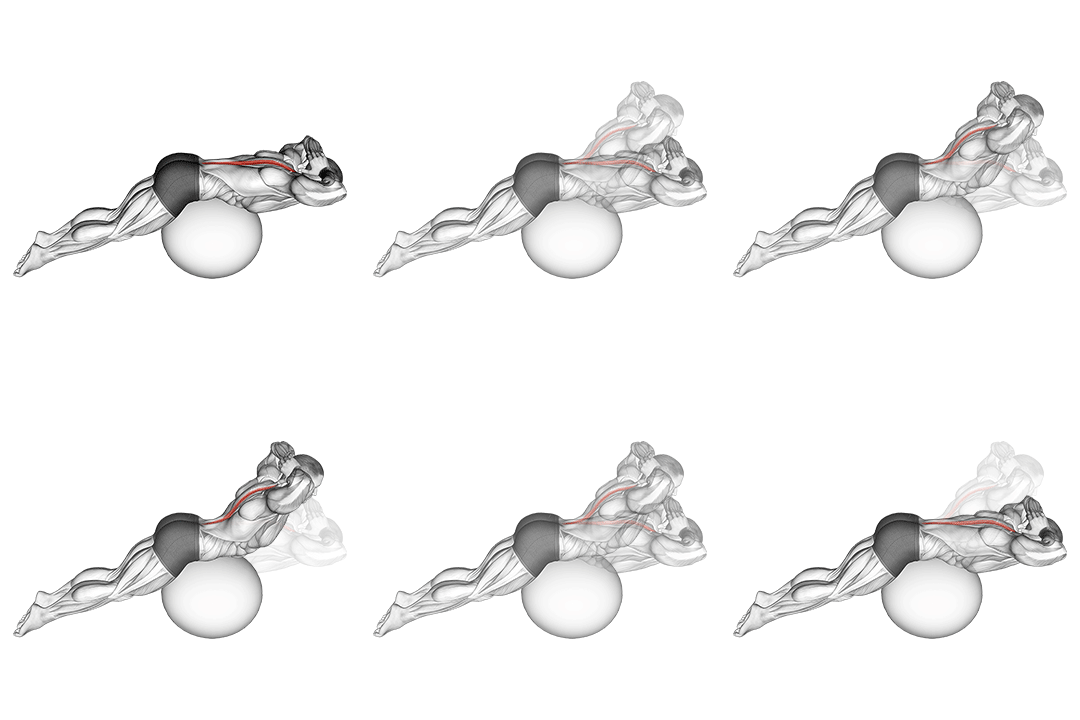
Best match 1. Back Extension On Exercise Ball
77% match- Spine
- Stability-ball
- Beginner
- Isolation
A good swap when you have a stability ball to work with, and it still works the spinal erectors.
How to perform this exercise
- Place the stability ball on the ground and lie face down on top of it, with your hips resting on the ball and your feet against a wall or other stable surface.
- Position your hands behind your head or crossed over your chest.
- Engage your core and slowly lift your upper body off the ball, extending your back until your body forms a straight line from your head to your heels.
- Pause for a moment at the top, then slowly lower your upper body back down to the starting position.
- Repeat for the desired number of repetitions.
Sets and reps: 3 sets of 8 to 12 reps, and add reps before you add load.
Why this matches
- Primary muscle: spine, the same as the Lever Back Extension
- Equipment: bodyweight only, not a machine
- Body position: lying face down, not seated
2. Leverage Shrug
72% match- Traps
- Machine
- Beginner
- Isolation
A looser match: it works the traps rather than the spinal erectors.
How to perform this exercise
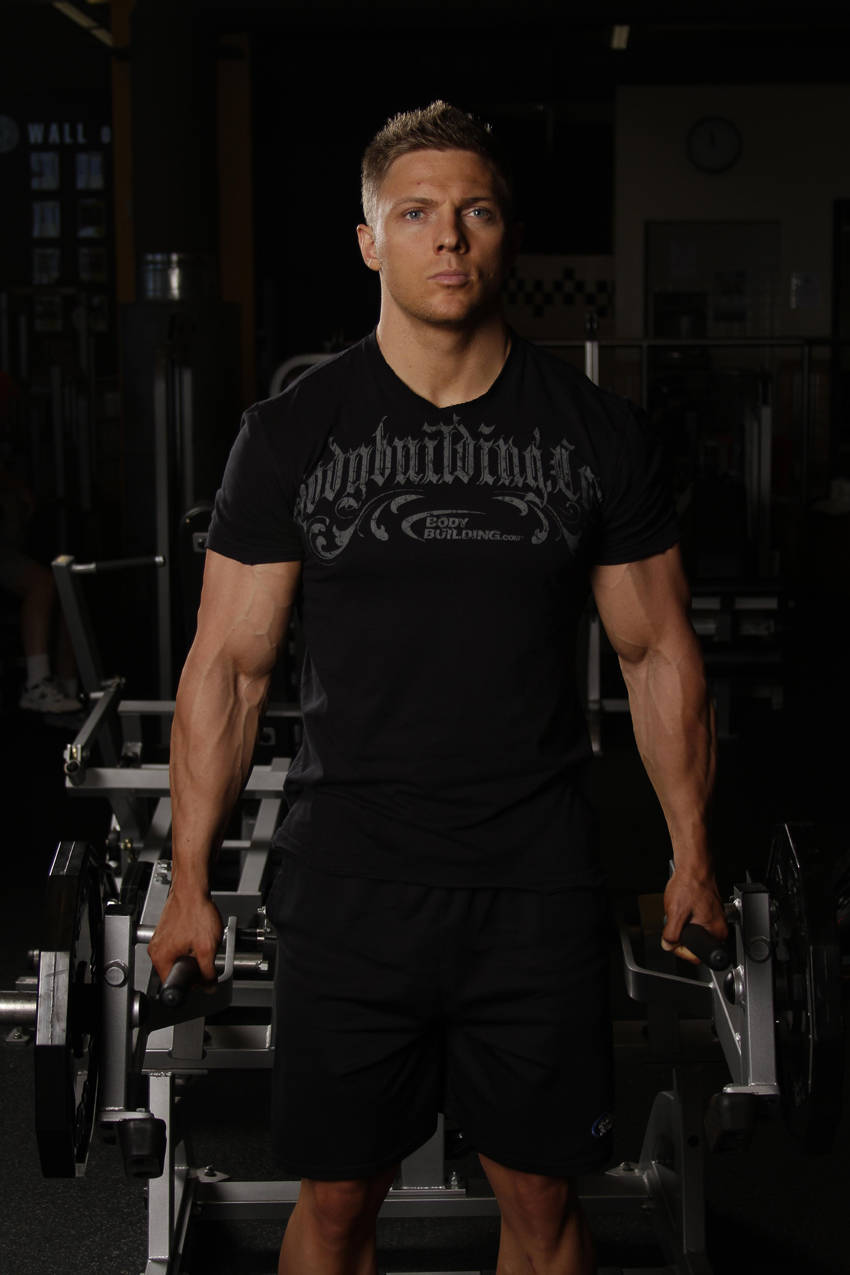
- Load the pins to an appropriate weight. Position yourself directly between the handles.
- Grasp the top handles with a comfortable grip, and then lower your hips as you take a breath. Look forward with your head and keep your chest up.
- Drive through the floor with your heels, extending your hips and knees as you rise to a standing position. Keep your arms straight throughout the movement, finishing with your shoulders back. This will be your starting position.
- Raise the weight by shrugging the shoulders towards your ears, moving straight up and down.
- Pause at the top of the motion, and then return the weight to the starting position.
Sets and reps: 3 sets of 10 to 15 reps.
Why this matches
- Primary muscle: traps, not spine
- Equipment: a machine, the same as the Lever Back Extension
- Body position: standing, not seated
3. Lever Bent-over Row With V-bar
71% match- Lats
- Lever
- Intermediate
- Compound
A looser match: it uses the same equipment, but it works the lats rather than the spinal erectors.
How to perform this exercise
- Adjust the seat height and position yourself facing the machine.
- Grasp the v-bar with an overhand grip, keeping your back straight and your knees slightly bent.
- Pull the v-bar towards your abdomen, squeezing your shoulder blades together.
- Pause for a moment at the top of the movement, then slowly release the weight back to the starting position.
- Repeat for the desired number of repetitions.
Sets and reps: 3 or 4 sets of 6 to 10 reps.
Why this matches
- Primary muscle: lats, not spine
- Equipment: a machine, the same as the Lever Back Extension
- Body position: standing, not seated
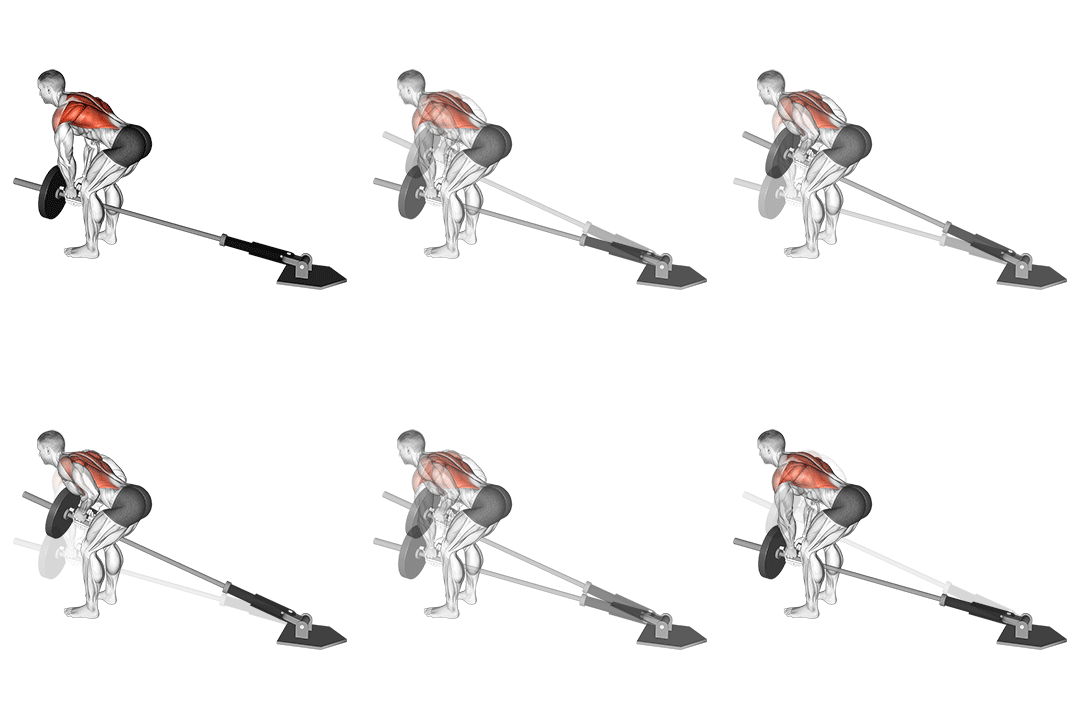
4. Sled Row
70% match- Middle Back
- Other
- Intermediate
- Compound
A looser match: it works the middle back rather than the spinal erectors.
How to perform this exercise
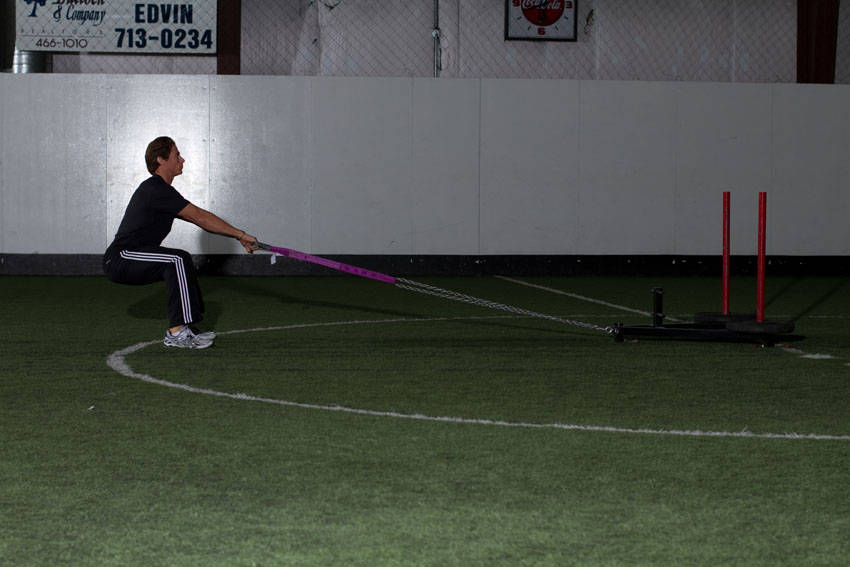
- Attach dual handles to a sled connected by a rope or chain. Load the sled to an appropriate weight. Face the sled, backing up until there is some tension in the line.
- With a handle in each hand, bend the knees slightly, keep your head and chest up, and begin with your arms extended.
- To initiate the movement, flex the elbow as you retract your shoulder blades, pulling the sled towards you.
- Take a step or two back to get tension in the line and repeat.
Sets and reps: 3 or 4 sets of 6 to 10 reps.
Why this matches
- Primary muscle: middle back, not spine
- Equipment: a machine, the same as the Lever Back Extension
- Body position: standing, not seated
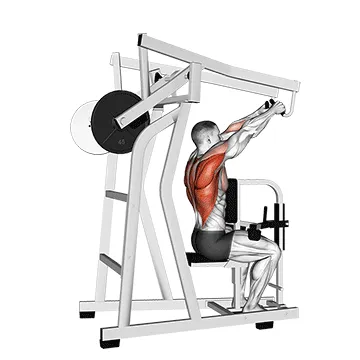
5. Leverage High Row
69% match- Middle Back
- Machine
- Beginner
- Compound
How to perform this exercise
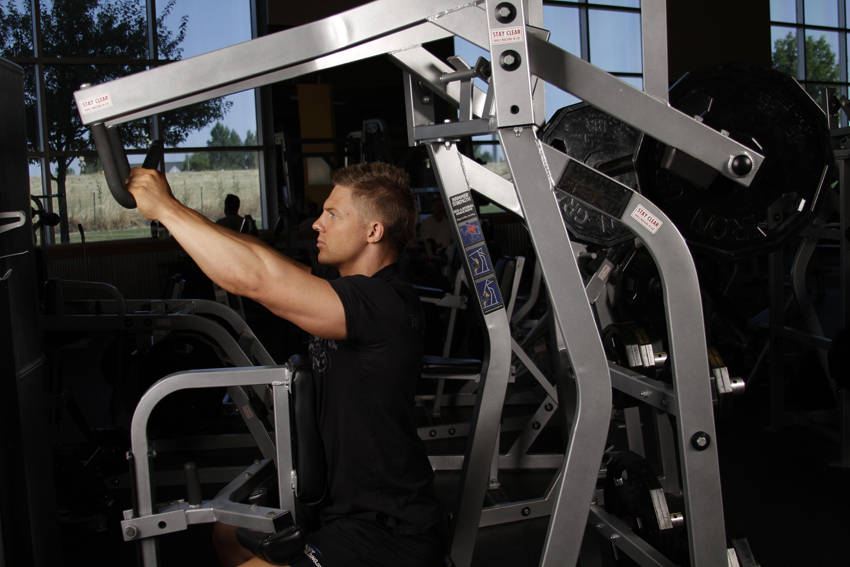
- Load an appropriate weight onto the pins and adjust the seat height so that you can just reach the handles above you. Adjust the knee pad to help keep you down. Grasp the handles with a pronated grip. This will be your starting position.
- Pull the handles towards your torso, retracting your shoulder blades as you flex the elbow.
- Pause at the bottom of the motion, and then slowly return the handles to the starting position.
- For multiple repetitions, avoid completely returning the weight to the stops to keep tension on the muscles being worked.
Sets and reps: 3 or 4 sets of 6 to 10 reps.
Why this matches
- Primary muscle: middle back, not spine
- Equipment: a machine, the same as the Lever Back Extension
- Body position: seated, the same as the Lever Back Extension
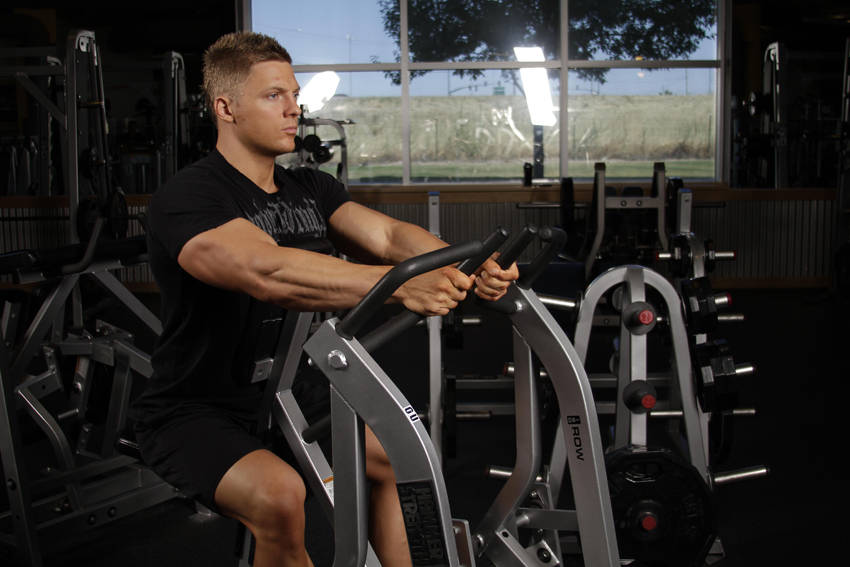
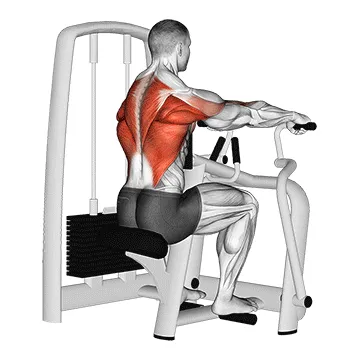
6. Leverage Iso Row
69% match- Lats
- Machine
- Intermediate
- Compound
A looser match: it works the lats rather than the spinal erectors.
How to perform this exercise
- Load an appropriate weight onto the pins and adjust the seat height so that the handles are at chest level. Grasp the handles with either a neutral or pronated grip. This will be your starting position.
- Pull the handles towards your torso, retracting your shoulder blades as you flex the elbow.
- Pause at the bottom of the motion, and then slowly return the handles to the starting position. For multiple repetitions, avoid completely returning the weight to the stops to keep tension on the muscles being worked.
Sets and reps: 3 or 4 sets of 6 to 10 reps.
Why this matches
- Primary muscle: lats, not spine
- Equipment: a machine, the same as the Lever Back Extension
- Body position: seated, the same as the Lever Back Extension
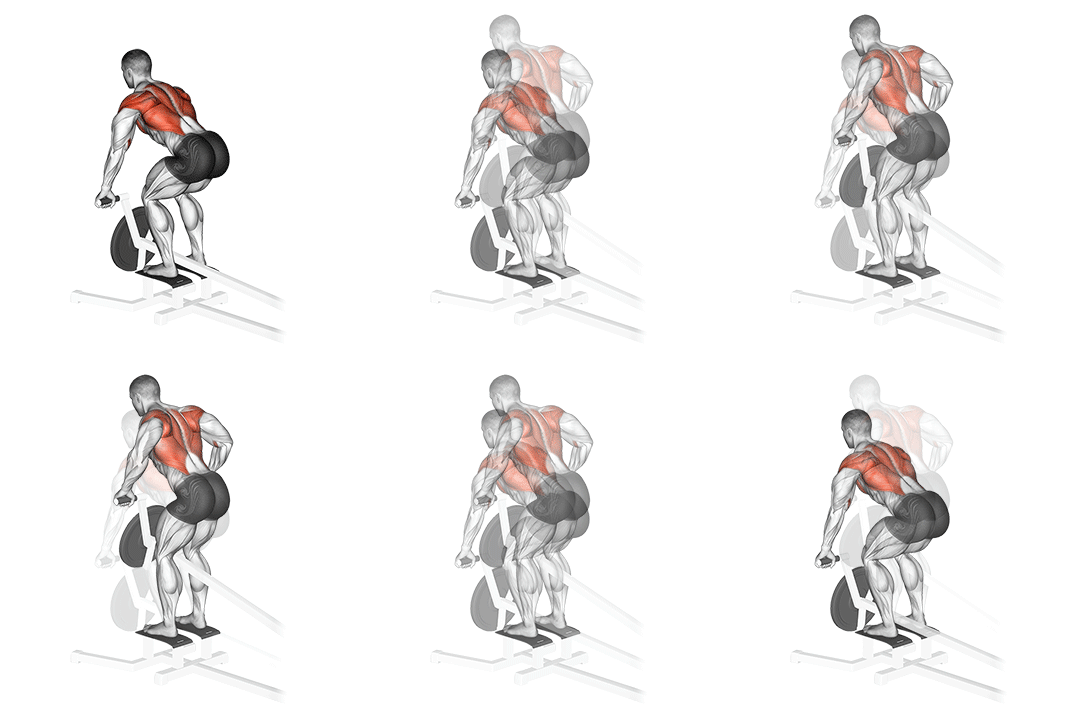
7. Lever T Bar Row
69% match- Upper Back
- Lever
- Intermediate
- Compound
A looser match: it uses the same equipment, but it works the upper back rather than the spinal erectors.
How to perform this exercise
- Adjust the seat height and footplate position to ensure proper alignment.
- Sit on the machine with your chest against the pad and your feet flat on the footplate.
- Grasp the handles with an overhand grip, slightly wider than shoulder-width apart.
- Keep your back straight and engage your core.
- Pull the handles towards your torso, squeezing your shoulder blades together.
- Pause for a moment at the peak contraction, then slowly release the handles back to the starting position.
- Repeat for the desired number of repetitions.
Sets and reps: 3 or 4 sets of 6 to 10 reps.
Why this matches
- Primary muscle: upper back, not spine
- Equipment: a machine, the same as the Lever Back Extension
- Body position: standing, not seated
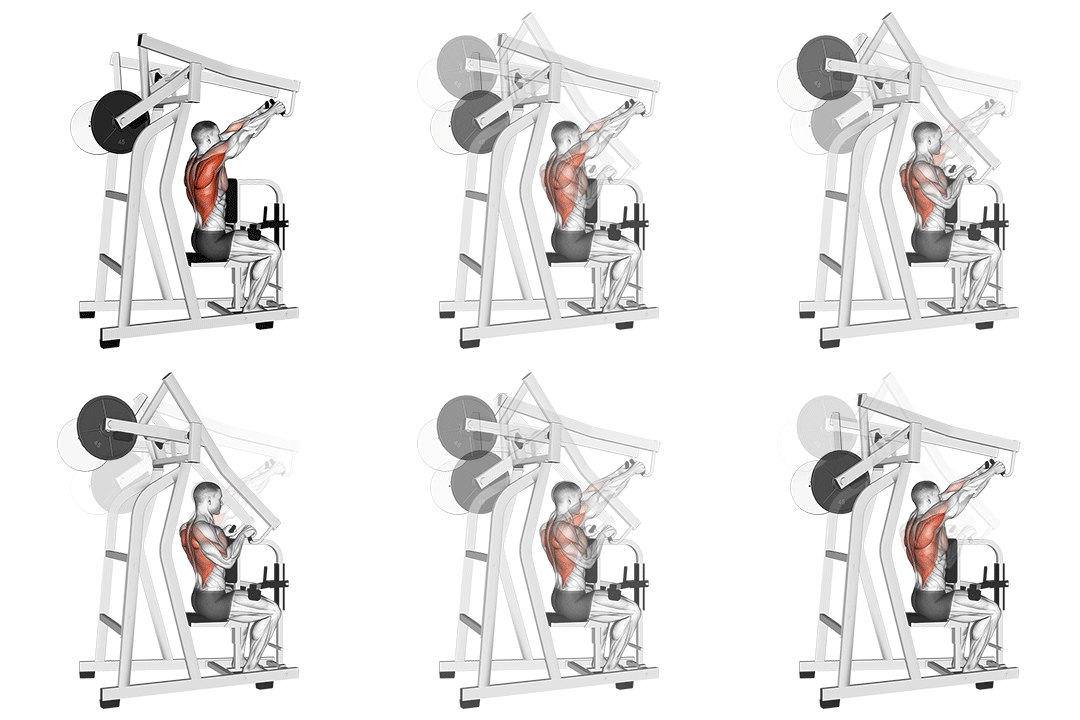
8. Lever High Row
69% match- Upper Back
- Lever
- Intermediate
- Compound
How to perform this exercise
- Adjust the seat height and foot platform to a comfortable position.
- Sit on the machine with your chest against the pad and your feet flat on the foot platform.
- Grasp the handles with an overhand grip, slightly wider than shoulder-width apart.
- Keep your back straight and engage your core.
- Pull the handles towards your body, squeezing your shoulder blades together.
- Pause for a moment at the peak of the movement, then slowly release the handles back to the starting position.
- Repeat for the desired number of repetitions.
Sets and reps: 3 or 4 sets of 6 to 10 reps.
Why this matches
- Primary muscle: upper back, not spine
- Equipment: a machine, the same as the Lever Back Extension
- Body position: seated, the same as the Lever Back Extension
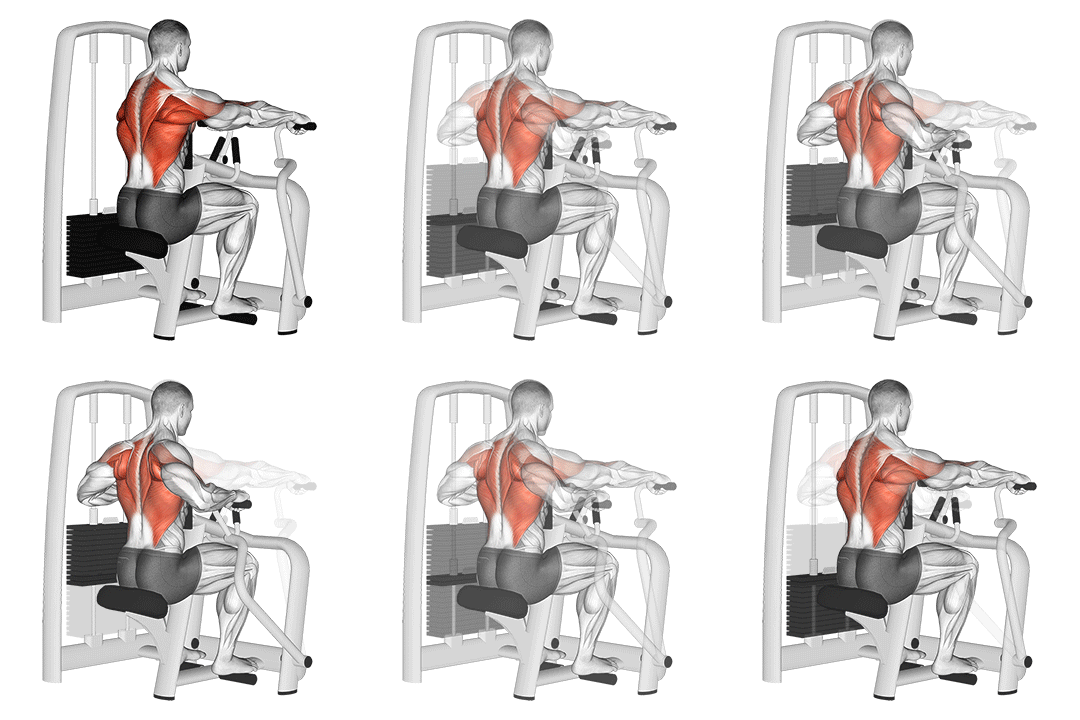
9. Lever Seated Row
69% match- Upper Back
- Lever
- Intermediate
- Compound
How to perform this exercise
- Adjust the seat height and footrests to a comfortable position.
- Sit on the machine with your chest against the pad and your feet on the footrests.
- Grasp the handles with an overhand grip, shoulder-width apart.
- Keep your back straight and your core engaged.
- Pull the handles towards your body, squeezing your shoulder blades together.
- Pause for a moment at the peak of the movement.
- Slowly release the handles and return to the starting position.
- Repeat for the desired number of repetitions.
Sets and reps: 3 or 4 sets of 6 to 10 reps.
Why this matches
- Primary muscle: upper back, not spine
- Equipment: a machine, the same as the Lever Back Extension
- Body position: seated, the same as the Lever Back Extension
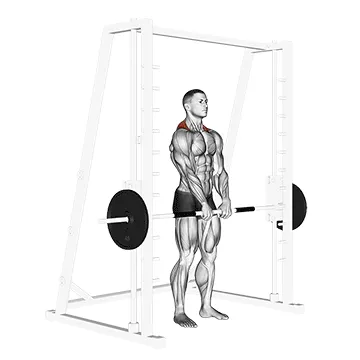
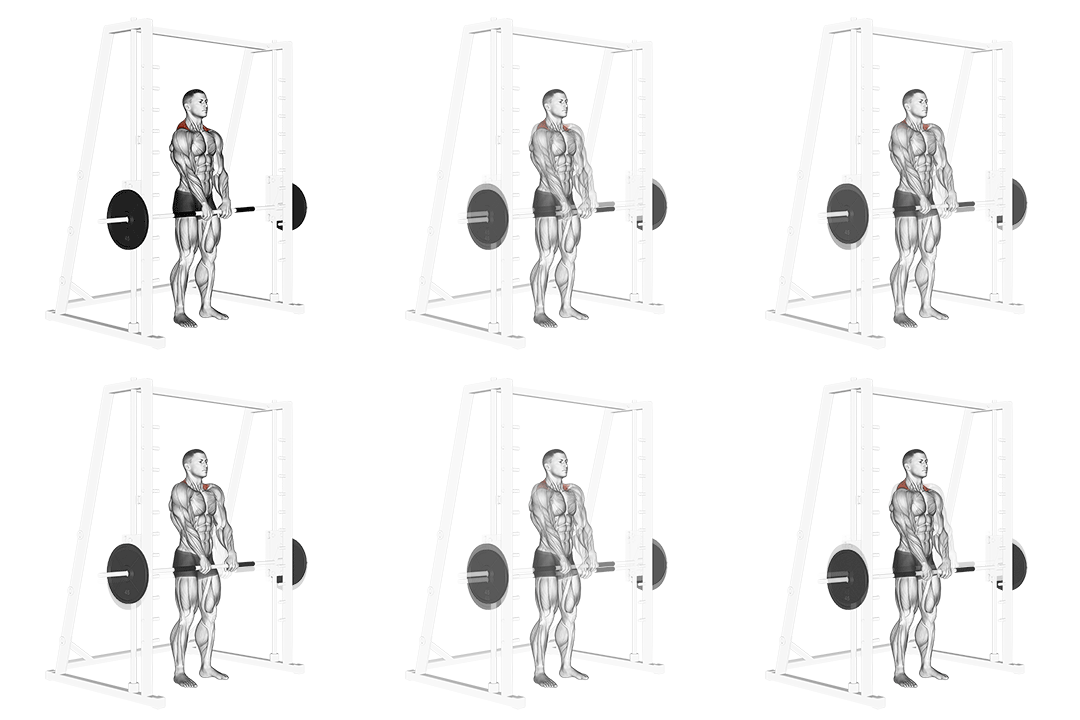
10. Smith Shrug
68% match- Traps
- Smith-machine
- Beginner
- Isolation
How to perform this exercise
- Stand with your feet shoulder-width apart and your knees slightly bent.
- Grasp the barbell with an overhand grip, hands slightly wider than shoulder-width apart.
- Keep your arms straight and your shoulders relaxed.
- Lift your shoulders up towards your ears, squeezing your traps at the top.
- Hold for a moment, then slowly lower your shoulders back down to the starting position.
- Repeat for the desired number of repetitions.
Sets and reps: 3 sets of 10 to 15 reps.
Why this matches
- Primary muscle: traps, not spine
- Equipment: a machine, the same as the Lever Back Extension
- Body position: standing, not seated
Lever Back Extension FAQ
What muscles does Lever Back Extension work?
The lever back extension primarily targets the erector spinae (spinal extensors) and recruits the multifidus and thoracic extensors for spinal stability. It also involves the glutes and hamstrings as hip extensors; cue: extend through the thoracic spine while keeping the pelvis neutral to emphasize the spinal extensors over hip drive.
What is the best bodyweight alternative to Lever Back Extension?
A bird dog is the best simple bodyweight alternative for spinal control and endurance, start on hands and knees, extend opposite arm and leg while keeping a neutral pelvis. For greater loading without equipment, use prone back extensions (supermans) on the floor or on a stability ball; cue: squeeze the glutes and lift from the thoracic spine to activate the erectors and limit lumbar shear.
Find Alternatives for Any Exercise
Search the exercise database and filter the ranked substitutes by the equipment you own.
Similarity scores compare exercise metadata such as movement pattern, muscles, equipment and body position. They are not a safety rating or a check that you own the equipment. Learn about our methodology