

10 Best Exercise Ball Pull-in Alternatives for Core Stability
The Exercise Ball Pull-in is done lying face down with a stability ball. Ranked closest by our scoring: the Pull-in (On Stability Ball), the Standing Wheel Rollerout and the Exercise Ball Crunch.
A lifter training at home without a stability ball still wants the ab pull the Exercise Ball Pull-in trains: hands planted on the floor, shins rolling on a ball, knees drawn to the chest. The closest swap is the Pull-in (On Stability Ball), which trades that plank for sitting on the ball with your feet on the floor, rolling your hips forward to bring your knees to your chest instead. With no ball nearby, the Decline Sit-up trains the same abs on a decline bench with your feet hooked in.
Updated Ranked by our 12-factor similarity model How it works
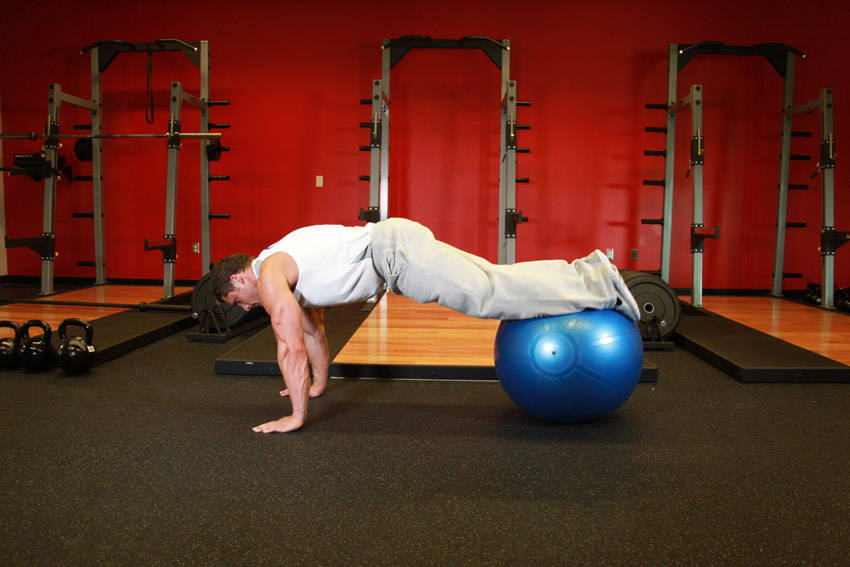
Original Exercise: Exercise Ball Pull-in
- Primary muscle
- Abs
- Equipment
- Stability-ball
- Difficulty
- Intermediate
- Type
- Compound
How to perform Exercise Ball Pull-in
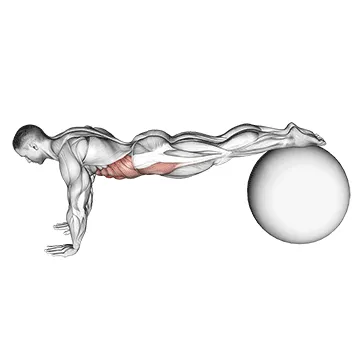
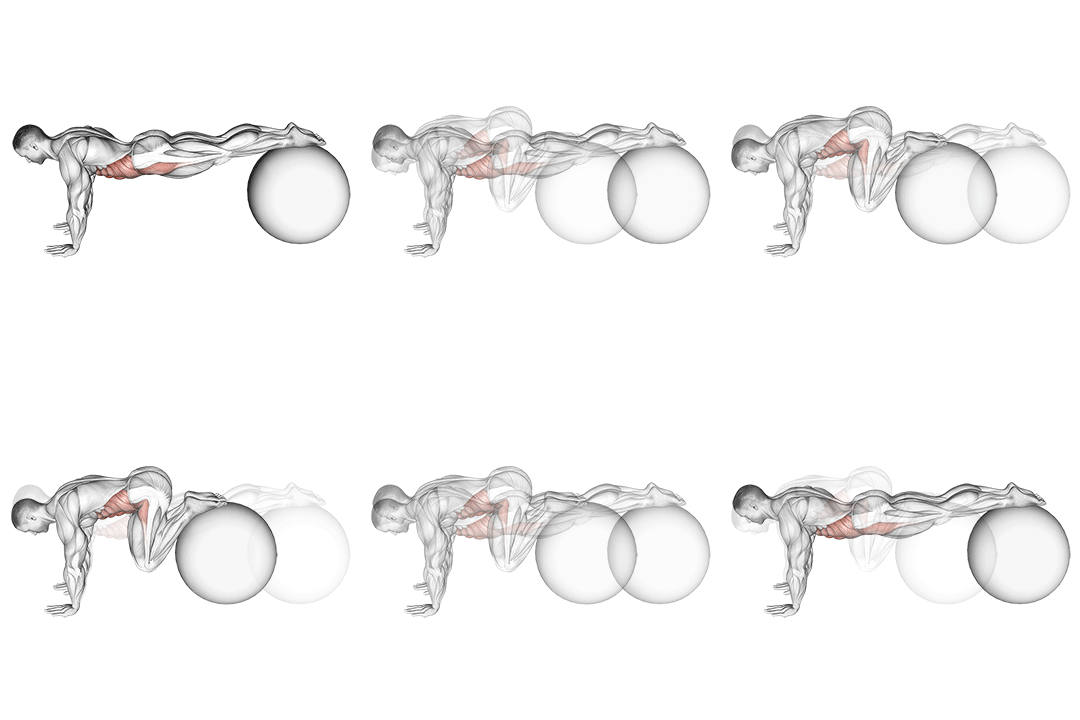
- Place an exercise ball nearby and lay on the floor in front of it with your hands on the floor shoulder width apart in a push-up position.
- Now place your lower shins on top of an exercise ball. Tip: At this point your legs should be fully extended with the shins on top of the ball and the upper body should be in a push-up type of position being supported by your two extended arms in front of you. This will be your starting position.
- While keeping your back completely straight and the upper body stationary, pull your knees in towards your chest as you exhale, allowing the ball to roll forward under your ankles. Squeeze your abs and hold that position for a second.
- Now slowly straighten your legs, rolling the ball back to the starting position as you inhale.
- Repeat for the recommended amount of repetitions.
Ranked Exercise Ball Pull-in Alternatives
10 substitutes, ranked by how closely each one matches the Exercise Ball Pull-in on movement pattern, muscles worked, equipment and body position. The higher the score, the less you change. Open "How to perform this exercise" on a card for the steps; every card title links to that exercise's own alternatives page.
Best match 1. Pull-in (On Stability Ball)
89% match- Abs
- Stability-ball
- Intermediate
- Isolation
Pick this when you want an easier version that still works the abs.
How to perform this exercise
- Start by sitting on the stability ball with your feet flat on the ground and your knees bent at a 90-degree angle.
- Place your hands on the sides of the stability ball for support.
- Engage your abs and slowly roll your hips forward, bringing your knees towards your chest.
- Pause for a moment at the top of the movement, then slowly extend your legs back to the starting position.
- Repeat for the desired number of repetitions.
Sets and reps: 3 sets of 10 to 15 reps.
Why this matches
- Primary muscle: abs, the same as the Exercise Ball Pull-in
- Equipment: bodyweight only, the same as the Exercise Ball Pull-in
- Body position: lying face down, the same as the Exercise Ball Pull-in
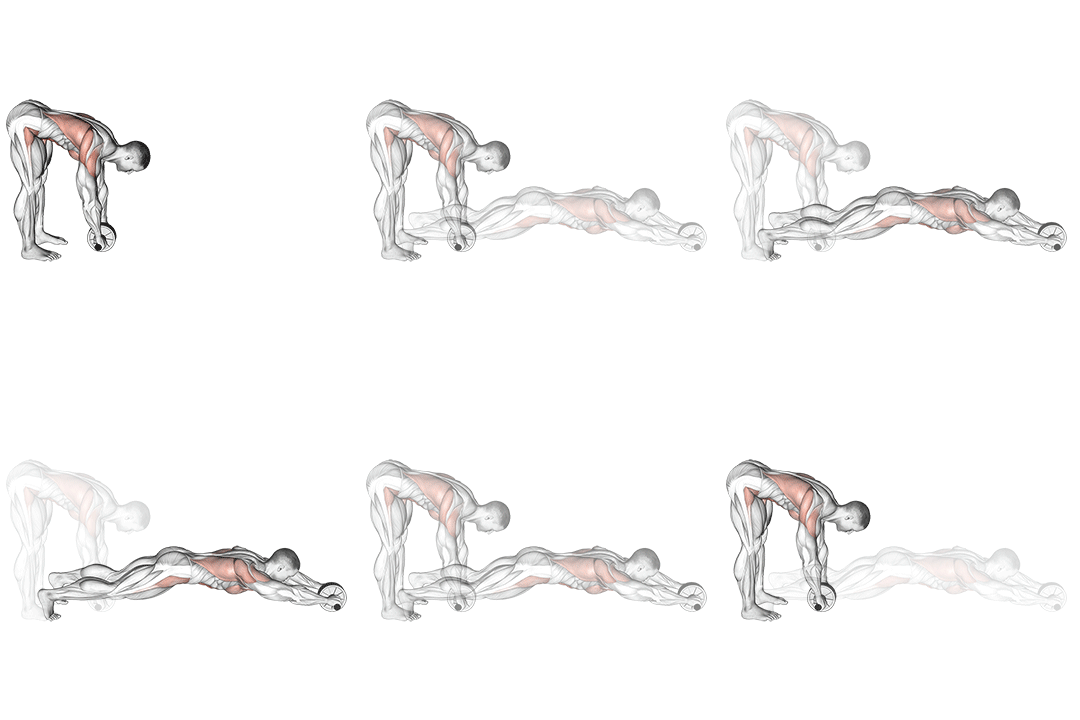
2. Standing Wheel Rollerout
86% match- Abs
- Other
- Advanced
- Compound
Pick this when you want a harder version that still works the abs.
How to perform this exercise
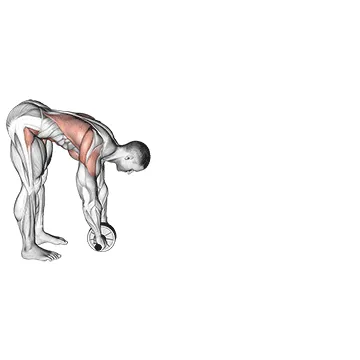
- Start by standing tall with your feet shoulder-width apart and the wheel roller in front of you.
- Bend at your waist and slowly roll the wheel forward, keeping your back straight and your core engaged.
- Continue rolling forward until you feel a stretch in your abs and your body is extended as far as possible.
- Pause for a moment, then slowly roll the wheel back towards your body, returning to the starting position.
- Repeat for the desired number of repetitions.
Sets and reps: 3 or 4 sets of 6 to 10 reps.
Why this matches
- Primary muscle: abs, the same as the Exercise Ball Pull-in
- Equipment: bodyweight only, the same as the Exercise Ball Pull-in
- Body position: kneeling, not lying face down
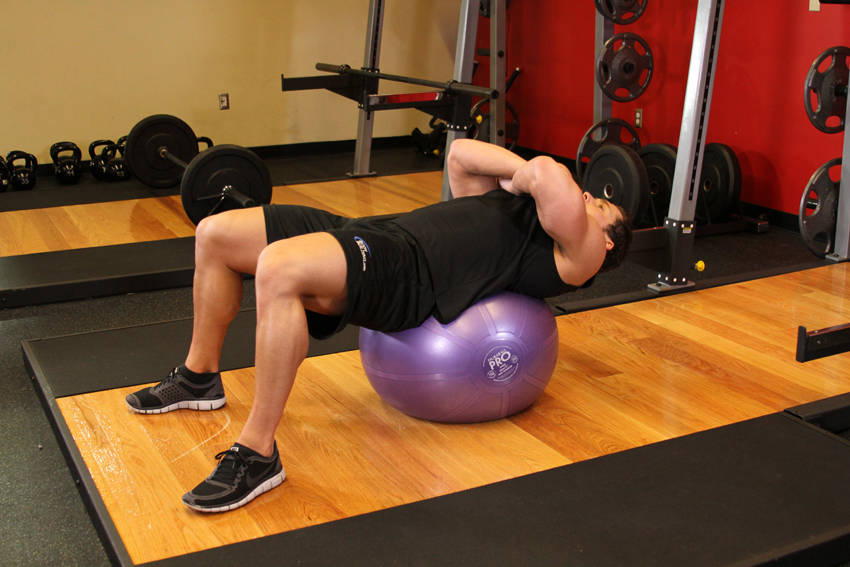
3. Exercise Ball Crunch
86% match- Abs
- Stability-ball
- Beginner
- Isolation
How to perform this exercise
- Lie on an exercise ball with your lower back curvature pressed against the spherical surface of the ball. Your feet should be bent at the knee and pressed firmly against the floor. The upper torso should be hanging off the top of the ball. The arms should either be kept alongside the body or crossed on top of your chest as these positions avoid neck strains (as opposed to the hands behind the back of the head position).
- Lower your torso into a stretch position keeping the neck stationary at all times. This will be your starting position.
- With the hips stationary, flex the waist by contracting the abdominals and curl the shoulders and trunk upward until you feel a nice contraction on your abdominals. The arms should simply slide up the side of your legs if you have them at the side or just stay on top of your chest if you have them crossed. The lower back should always stay in contact with the ball. Exhale as you perform this movement and hold the contraction for a second.
- As you inhale, go back to the starting position.
- Repeat for the recommended amount of repetitions.
Sets and reps: 3 sets of 8 to 12 reps, and add reps before you add load.
Why this matches
- Primary muscle: abs, the same as the Exercise Ball Pull-in
- Equipment: bodyweight only, the same as the Exercise Ball Pull-in
- Body position: lying on your back, not lying face down
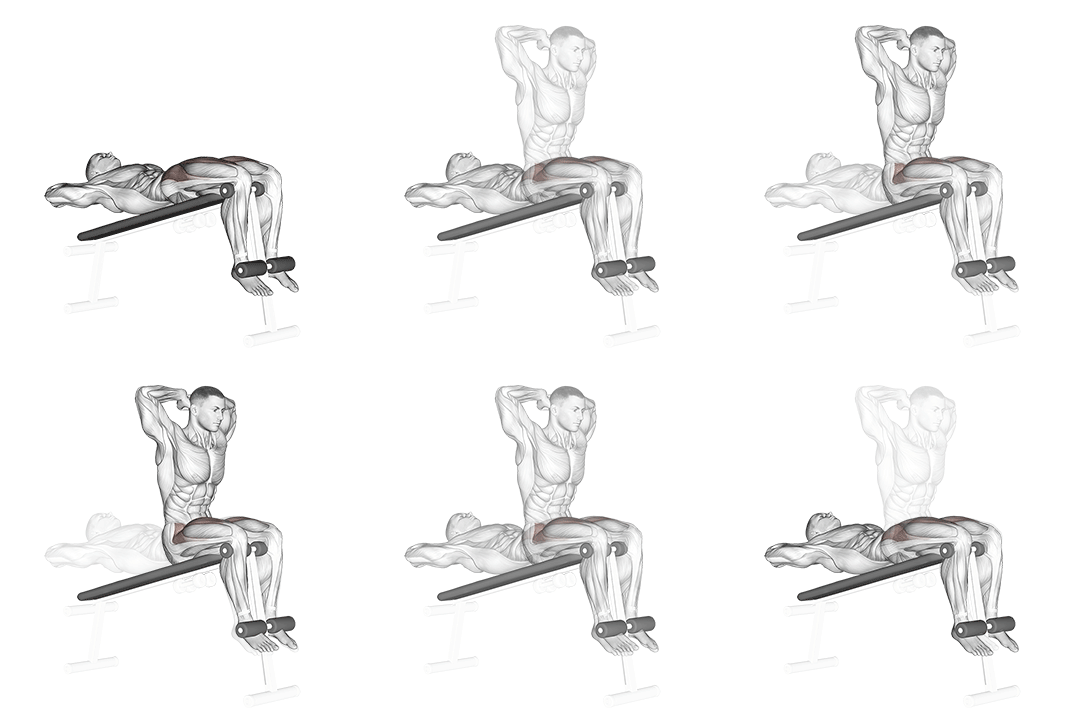
4. Decline Sit-up
84% match- Abs
- Bodyweight
- Intermediate
- Compound
Use this when you have nothing to train with, because it works the abs with bodyweight alone.
How to perform this exercise
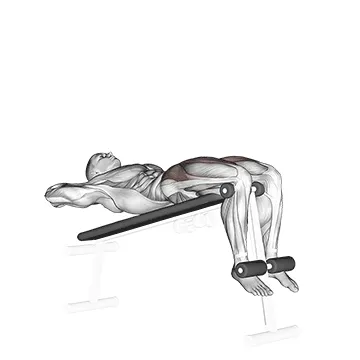
- Lie on a decline bench with your feet secured and your knees bent.
- Place your hands behind your head or across your chest.
- Engage your abs and lift your upper body off the bench, curling forward towards your knees.
- Pause for a moment at the top, then slowly lower your upper body back down to the starting position.
- Repeat for the desired number of repetitions.
Sets and reps: 3 or 4 sets of 6 to 10 reps.
Why this matches
- Primary muscle: abs, the same as the Exercise Ball Pull-in
- Equipment: bodyweight only, the same as the Exercise Ball Pull-in
- Body position: lying on your back, not lying face down
- Balance: easier to stay steady on than the Exercise Ball Pull-in
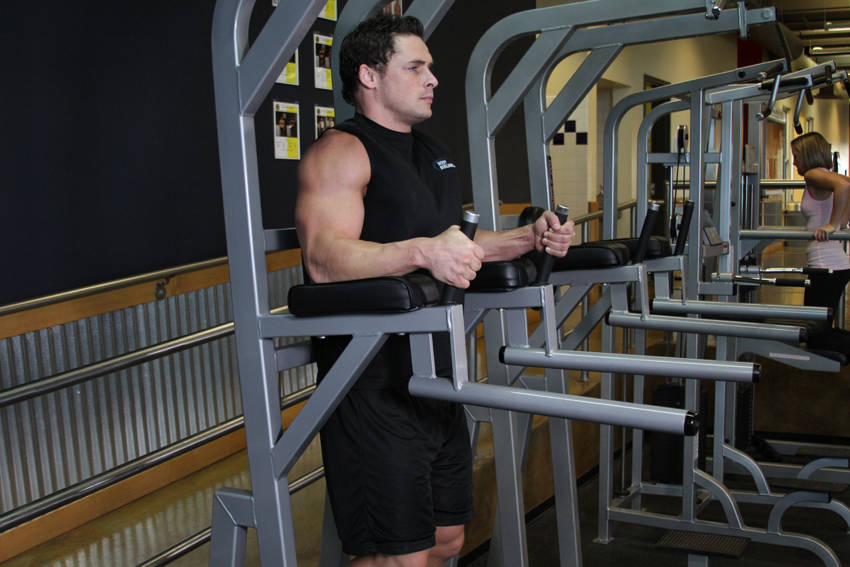
5. Knee/hip Raise On Parallel Bars
84% match- Abs
- Other
- Intermediate
- Compound
Pick this when you want to work the abs with less balance to manage.
How to perform this exercise
- Position your body on the vertical leg raise bench so that your forearms are resting on the pads next to the torso and holding on to the handles. Your arms will be bent at a 90 degree angle.
- The torso should be straight with the lower back pressed against the pad of the machine and the legs extended pointing towards the floor. This will be your starting position.
- Now as you breathe out, lift your legs up as you keep them extended. Continue this movement until your legs are roughly parallel to the floor and then hold the contraction for a second. Tip: Do not use any momentum or swinging as you perform this exercise.
- Slowly go back to the starting position as you breathe in.
- Repeat for the recommended amount of repetitions.
Sets and reps: 3 or 4 sets of 6 to 10 reps.
Why this matches
- Primary muscle: abs, the same as the Exercise Ball Pull-in
- Equipment: bodyweight only, the same as the Exercise Ball Pull-in
- Body position: hanging, not lying face down
- Balance: easier to stay steady on than the Exercise Ball Pull-in
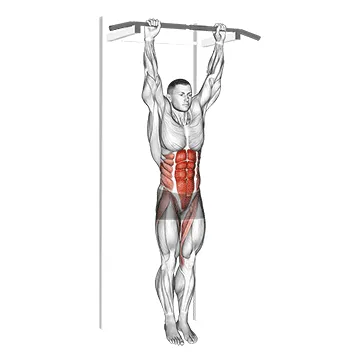
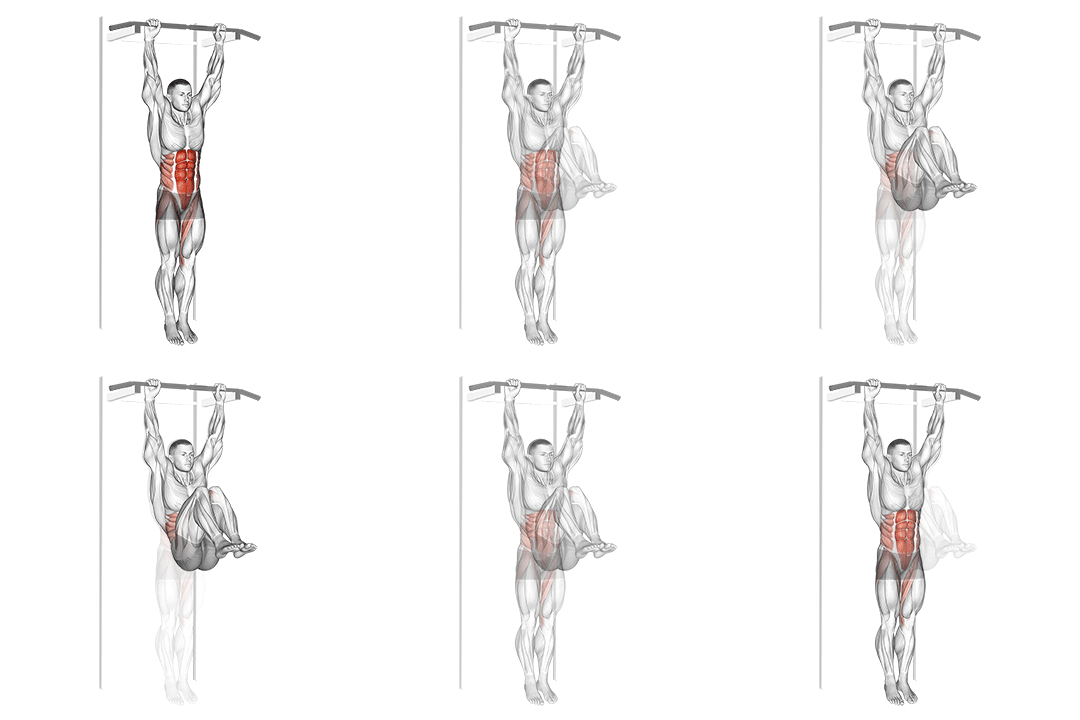
6. Hanging Leg Hip Raise
83% match- Abs
- Bodyweight
- Advanced
- Compound
How to perform this exercise
- Hang from a pull-up bar with your arms fully extended and your palms facing away from you.
- Engage your core and lift your legs up by flexing your hips and knees until your thighs are parallel to the ground.
- Pause for a moment at the top, then slowly lower your legs back down to the starting position.
- Repeat for the desired number of repetitions.
Sets and reps: 3 or 4 sets of 6 to 10 reps.
Why this matches
- Primary muscle: abs, the same as the Exercise Ball Pull-in
- Equipment: bodyweight only, the same as the Exercise Ball Pull-in
- Body position: hanging, not lying face down
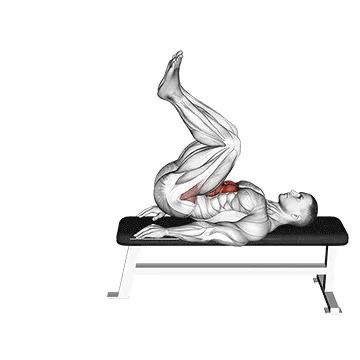
7. Leg Pull In Flat Bench
83% match- Abs
- Bodyweight
- Intermediate
- Isolation
How to perform this exercise
- Sit on a flat bench with your legs extended straight out in front of you.
- Place your hands on the bench beside your hips for support.
- Engage your abs and lift your legs off the ground, bringing your knees towards your chest.
- Pause for a moment at the top, then slowly lower your legs back down to the starting position.
- Repeat for the desired number of repetitions.
Sets and reps: 3 sets of 10 to 15 reps.
Why this matches
- Primary muscle: abs, the same as the Exercise Ball Pull-in
- Equipment: bodyweight only, the same as the Exercise Ball Pull-in
- Body position: seated, not lying face down
- Balance: easier to stay steady on than the Exercise Ball Pull-in
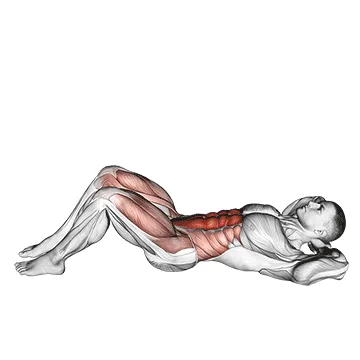
8. Sit-up
83% match- Abs
- Bodyweight
- Beginner
- Isolation
How to perform this exercise
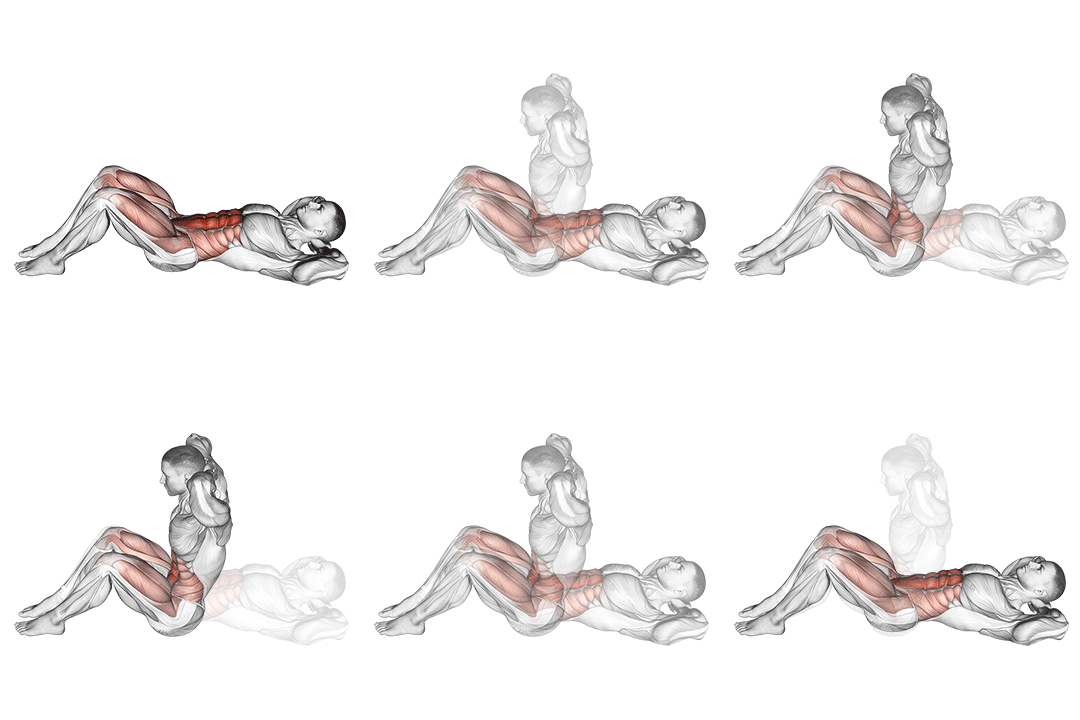
- Lie flat on your back with your knees bent and feet flat on the ground.
- Place your hands behind your head with your elbows pointing outwards.
- Engaging your abs, slowly lift your upper body off the ground, curling forward until your torso is at a 45-degree angle.
- Pause for a moment at the top, then slowly lower your upper body back down to the starting position.
- Repeat for the desired number of repetitions.
Sets and reps: 3 sets of 8 to 12 reps, and add reps before you add load.
Why this matches
- Primary muscle: abs, the same as the Exercise Ball Pull-in
- Equipment: bodyweight only, the same as the Exercise Ball Pull-in
- Body position: lying on your back, not lying face down
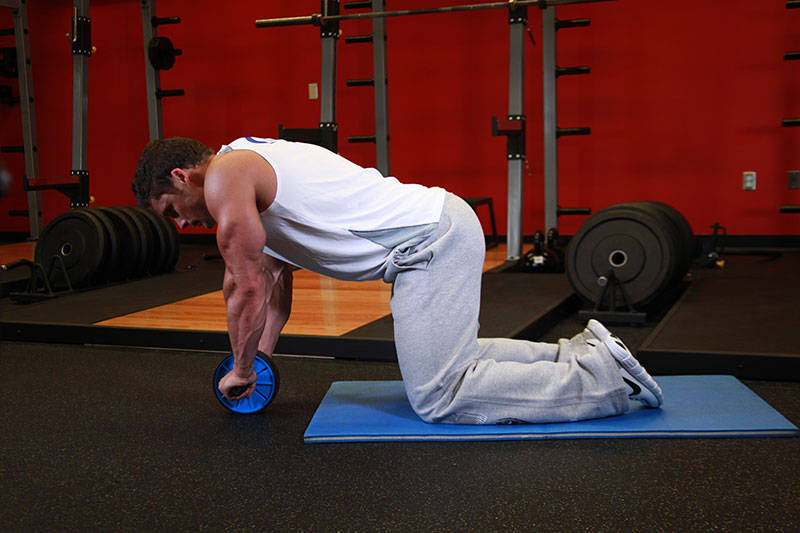
9. Ab Roller
83% match- Abs
- Other
- Advanced
- Compound
How to perform this exercise
- Hold the Ab Roller with both hands and kneel on the floor.
- Now place the ab roller on the floor in front of you so that you are on all your hands and knees (as in a kneeling push up position). This will be your starting position.
- Slowly roll the ab roller straight forward, stretching your body into a straight position. Tip: Go down as far as you can without touching the floor with your body. Breathe in during this portion of the movement.
- After a pause at the stretched position, start pulling yourself back to the starting position as you breathe out. Tip: Go slowly and keep your abs tight at all times.
Sets and reps: 3 or 4 sets of 6 to 10 reps.
Why this matches
- Primary muscle: abs, the same as the Exercise Ball Pull-in
- Equipment: bodyweight only, the same as the Exercise Ball Pull-in
- Body position: kneeling, not lying face down
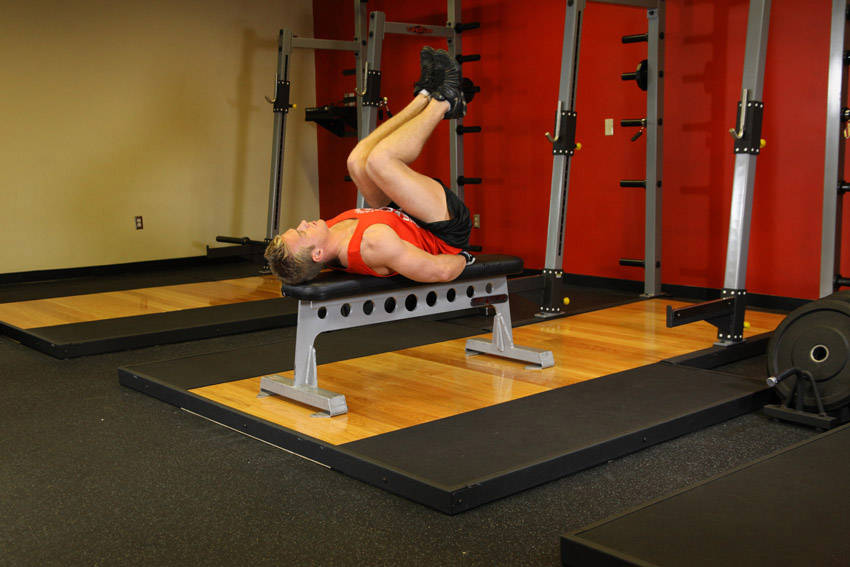
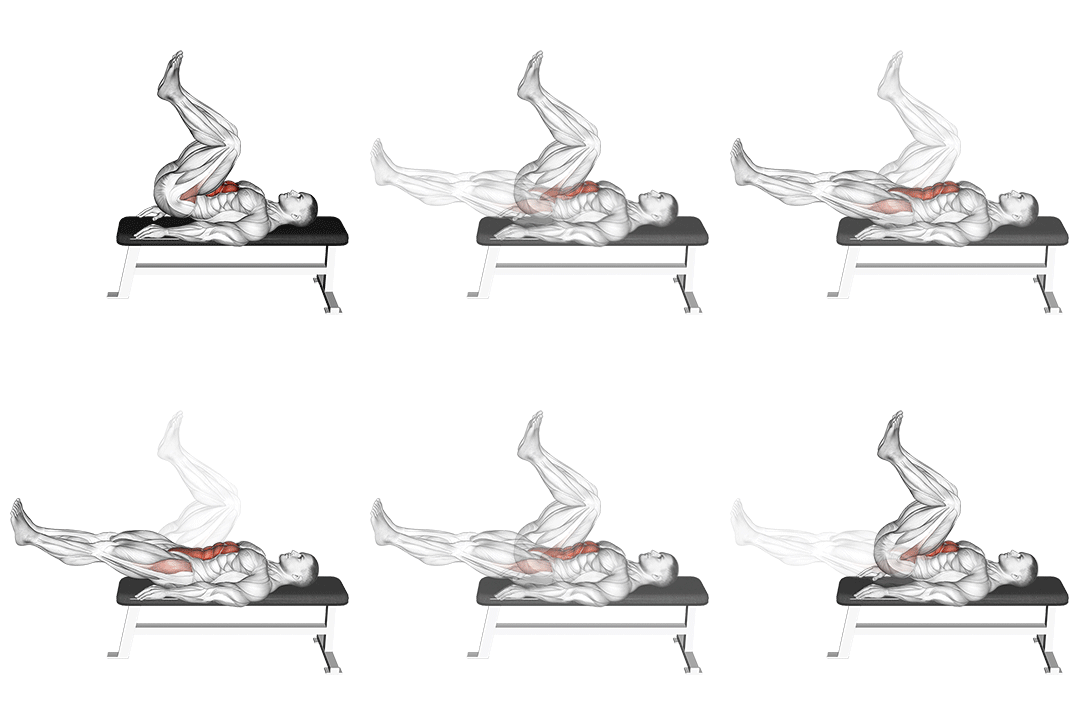
10. Flat Bench Leg Pull-in
83% match- Abs
- Bodyweight
- Beginner
- Isolation
How to perform this exercise
- Lie on an exercise mat or a flat bench with your legs off the end.
- Place your hands either under your glutes with your palms down or by the sides holding on to the bench (or with palms down by the side on an exercise mat). Also extend your legs straight out. This will be your starting position.
- Bend your knees and pull your upper thighs into your midsection as you breathe out. Continue this movement until your knees are near your chest. Hold the contracted position for a second.
- As you breathe in, slowly return to the starting position.
- Repeat for the recommended amount of repetitions.
Sets and reps: 3 sets of 8 to 12 reps, and add reps before you add load.
Why this matches
- Primary muscle: abs, the same as the Exercise Ball Pull-in
- Equipment: bodyweight only, the same as the Exercise Ball Pull-in
- Body position: lying on your back, not lying face down
- Balance: easier to stay steady on than the Exercise Ball Pull-in
Why You Might Need an Exercise Ball Pull-in Alternative
The Exercise Ball Pull-in needs a stability ball and enough shoulder control to stay braced on straight arms while your shins roll under you, which makes it hard to swap without losing the feel. A lifter reaches for an alternative with no ball free, training at home, or when the plank asks too much of the shoulders today. Some of these swaps keep the knee to chest pull and only change what supports you; others curl the torso toward the knees instead, or roll the body out and back against a wheel. Some still use a ball from a different position, some hang you from a bar or roll a wheel instead, and a couple need nothing but the floor for a bodyweight move you can do anywhere you have space.
How to Choose the Right Exercise Ball Pull-in Substitute
Start with the Pull-in (On Stability Ball) if you already own one: sit on the ball, hands braced on its sides, and roll your hips forward to bring your knees to your chest. The Standing Wheel Rollerout stands you up and rolls a wheel out until your body stretches flat, then pulls it back, so treat it as a harder step, not a swap. With no ball or wheel, the Sit-up works the same abs with bodyweight alone, suiting home training or a beginner. If you want to skip balancing on anything round, the Knee/hip Raise On Parallel Bars has you rest your forearms on the pads of a leg raise station with your back against the pad and lift your straight legs to parallel, so the ab work stays but the knees no longer tuck to your chest.
Exercise Ball Pull-in FAQ
What should a beginner try first?
The Exercise Ball Crunch and the Sit-up are both easier moves that train the same abs as the pull-in. The Flat Bench Leg Pull-in is also a good starting point and stays close to the original pull, needing only a mat or a flat bench and your bodyweight to begin.
How do I make the movement harder once it feels easy?
The Standing Wheel Rollerout keeps the same brace on straight arms as your body travels out and back, but standing on your feet instead of resting your shins on a ball, so it is a harder step rather than a like for like swap. The Ab Roller asks for the same brace from a kneeling start. Both need more shoulder and trunk control than the ball version, so build up to them rather than starting there.
Can I do the Exercise Ball Pull-in at home?
Yes if you own a stability ball; without one, several swaps fit a home setup. The Decline Sit-up, the Sit-up and the Flat Bench Leg Pull-in all work the abs with bodyweight, using a bench where the name calls for one, and the Hanging Leg Hip Raise adds a harder pull if you have a bar to hang from. Start with the Sit-up if ab training is new to you.
How is the Pull-in (On Stability Ball) different from the original?
Both finish with your knees drawn to your chest, but you get there a different way. The Exercise Ball Pull-in has you in a plank with your shins on the ball; the Pull-in (On Stability Ball) has you sitting on the ball, rolling your hips forward instead. Both need the same ball, so pick the seated version when holding the plank on straight arms is the problem, not the ball.
Find Alternatives for Any Exercise
Search the exercise database and filter the ranked substitutes by the equipment you own.
Similarity scores compare exercise metadata such as movement pattern, muscles, equipment and body position. They are not a safety rating or a check that you own the equipment. Learn about our methodology