

10 Best Knee/hip Raise On Parallel Bars Alternatives for Home & Gym
The Knee/hip Raise On Parallel Bars is done hanging. Ranked closest by our scoring: the Leg Pull-in, the Vertical Leg Raise (On Parallel Bars) and the Roller Reverse Crunch.
Updated Ranked by our 12-factor similarity model How it works
Original Exercise: Knee/hip Raise On Parallel Bars
- Primary muscle
- Abs
- Equipment
- Other
- Difficulty
- Intermediate
- Type
- Compound
How to perform Knee/hip Raise On Parallel Bars
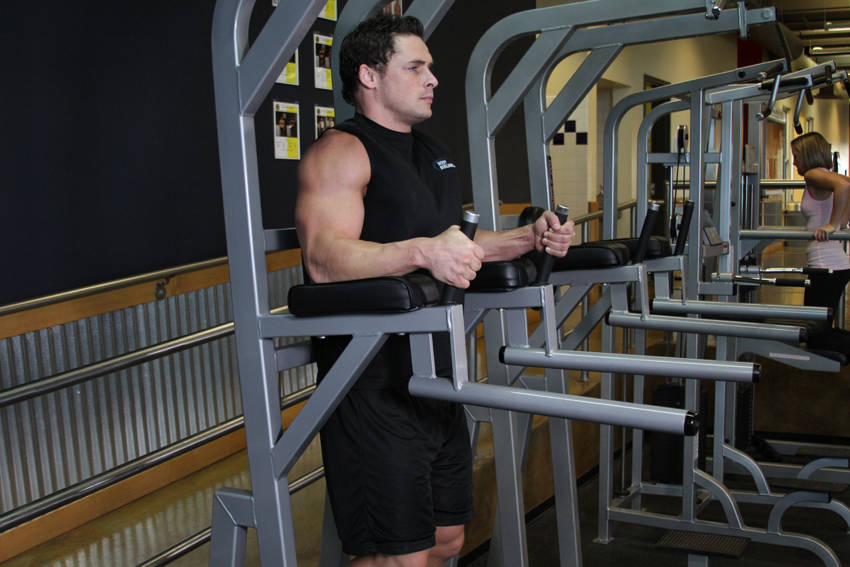
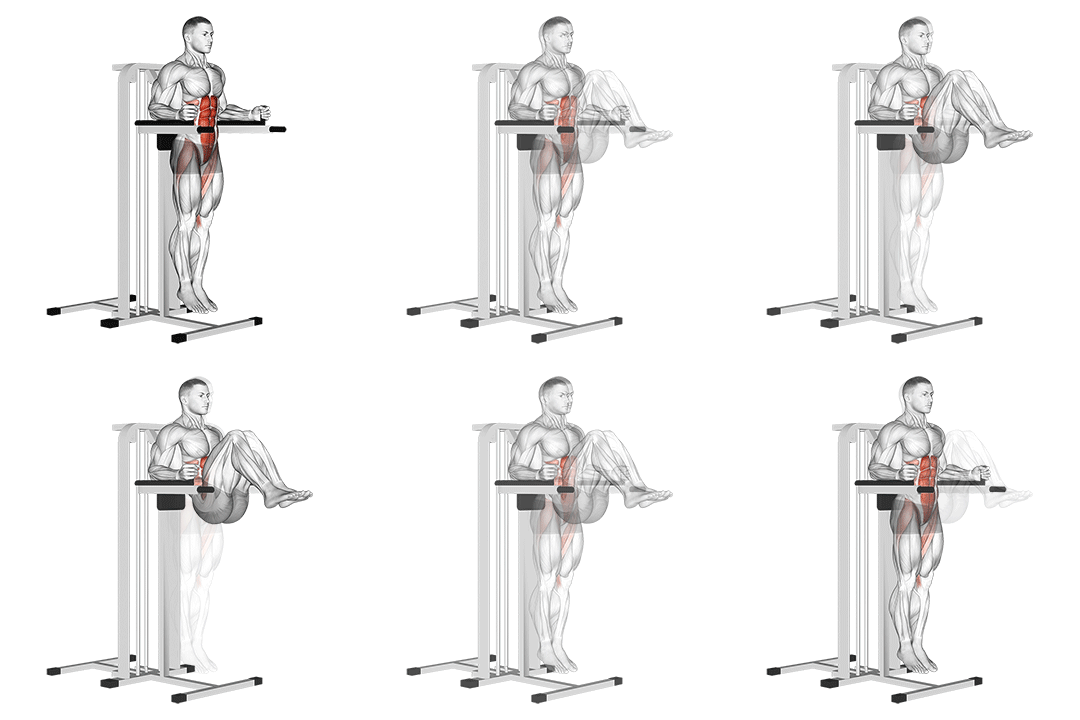
- Position your body on the vertical leg raise bench so that your forearms are resting on the pads next to the torso and holding on to the handles. Your arms will be bent at a 90 degree angle.
- The torso should be straight with the lower back pressed against the pad of the machine and the legs extended pointing towards the floor. This will be your starting position.
- Now as you breathe out, lift your legs up as you keep them extended. Continue this movement until your legs are roughly parallel to the floor and then hold the contraction for a second. Tip: Do not use any momentum or swinging as you perform this exercise.
- Slowly go back to the starting position as you breathe in.
- Repeat for the recommended amount of repetitions.
Ranked Knee/hip Raise On Parallel Bars Alternatives
10 substitutes, ranked by how closely each one matches the Knee/hip Raise On Parallel Bars on movement pattern, muscles worked, equipment and body position. The higher the score, the less you change. Open "How to perform this exercise" on a card for the steps; every card title links to that exercise's own alternatives page.
Best match 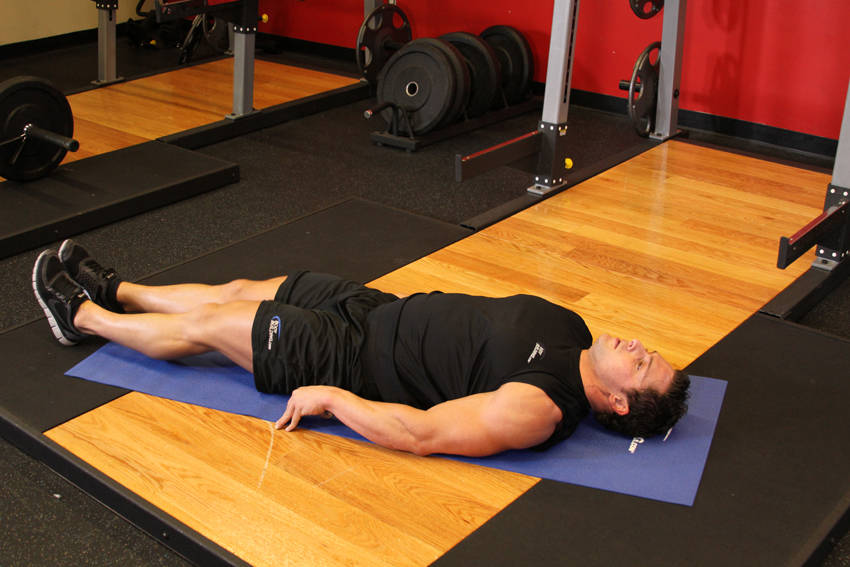
1. Leg Pull-in
95% match- Abs
- Bodyweight
- Intermediate
- Compound
A straight swap when you want to keep working the abs.
How to perform this exercise
- Lie on an exercise mat with your legs extended and your hands either palms facing down next to you or under your glutes. Tip: My preference is with the hands next to me. This will be your starting position.
- Bend your knees and pull your upper thighs into your midsection as you breathe out. Continue the motion until your knees are around chest level. Contract your abs as you execute this movement and hold for a second at the top. Tip: As you perform the motion, the lower legs (calves) should always remain parallel to the floor.
- Return to the starting position as you inhale.
- Repeat for the recommended amount of repetitions.
Sets and reps: 3 or 4 sets of 6 to 10 reps.
Why this matches
- Primary muscle: abs, the same as the Knee/hip Raise On Parallel Bars
- Equipment: bodyweight only, the same as the Knee/hip Raise On Parallel Bars
- Body position: hanging, the same as the Knee/hip Raise On Parallel Bars
- Abs
- Bodyweight
- Advanced
- Compound
Pick this when you want a harder version that still works the abs.
How to perform this exercise
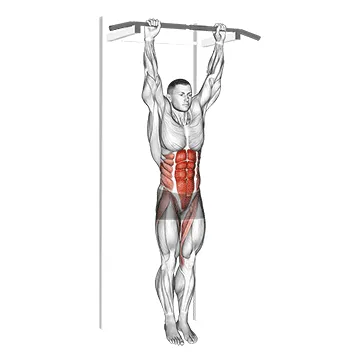
- Hang from the parallel bars with your arms fully extended and your body straight.
- Engage your core and lift your legs up in front of you, keeping them straight.
- Continue lifting until your legs are parallel to the ground or slightly higher.
- Pause for a moment at the top, then slowly lower your legs back down to the starting position.
- Repeat for the desired number of repetitions.
Sets and reps: 3 or 4 sets of 6 to 10 reps.
Why this matches
- Primary muscle: abs, the same as the Knee/hip Raise On Parallel Bars
- Equipment: bodyweight only, the same as the Knee/hip Raise On Parallel Bars
- Body position: hanging, the same as the Knee/hip Raise On Parallel Bars
- Balance: harder to stay steady on than the Knee/hip Raise On Parallel Bars
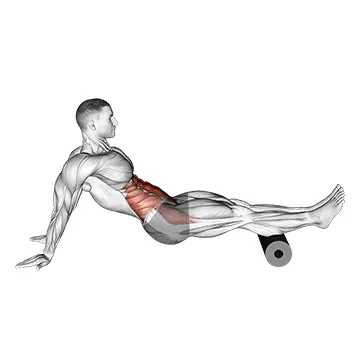
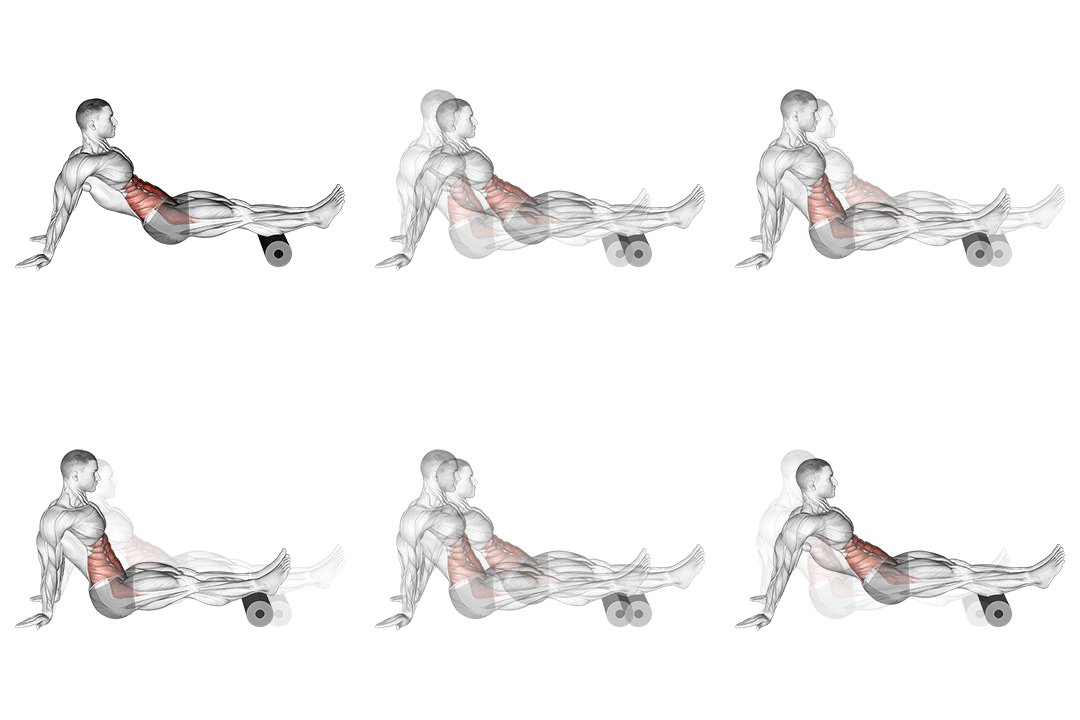
3. Roller Reverse Crunch
87% match- Abs
- Foam-roll
- Intermediate
- Isolation
Pick this when you want an easier version that still works the abs.
How to perform this exercise
- Lie flat on your back with your arms extended straight above your head and your legs straight out in front of you.
- Place the roller between your feet and grip it with your toes.
- Engaging your abs, lift your legs off the ground and curl your knees towards your chest, rolling the roller towards your body.
- Pause for a moment at the top, then slowly lower your legs back down to the starting position, rolling the roller away from your body.
- Repeat for the desired number of repetitions.
Sets and reps: 3 sets of 10 to 15 reps.
Why this matches
- Primary muscle: abs, the same as the Knee/hip Raise On Parallel Bars
- Equipment: bodyweight only, the same as the Knee/hip Raise On Parallel Bars
- Body position: lying on your back, not hanging
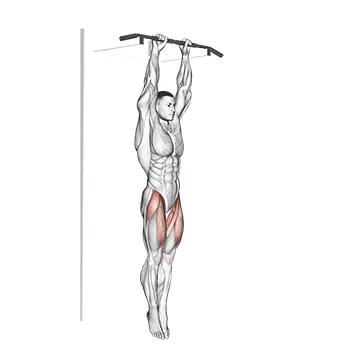
4. Hanging Leg Raise
85% match- Abs
- Bodyweight
- Advanced
- Compound
How to perform this exercise
- Hang from a pull-up bar with your arms fully extended and your palms facing away from you.
- Engage your core and lift your legs up in front of you, keeping them straight.
- Continue lifting until your legs are parallel to the ground or as high as you can comfortably go.
- Pause for a moment at the top, then slowly lower your legs back down to the starting position.
- Repeat for the desired number of repetitions.
Sets and reps: 3 or 4 sets of 6 to 10 reps.
Why this matches
- Primary muscle: abs, the same as the Knee/hip Raise On Parallel Bars
- Equipment: bodyweight only, the same as the Knee/hip Raise On Parallel Bars
- Body position: hanging, the same as the Knee/hip Raise On Parallel Bars
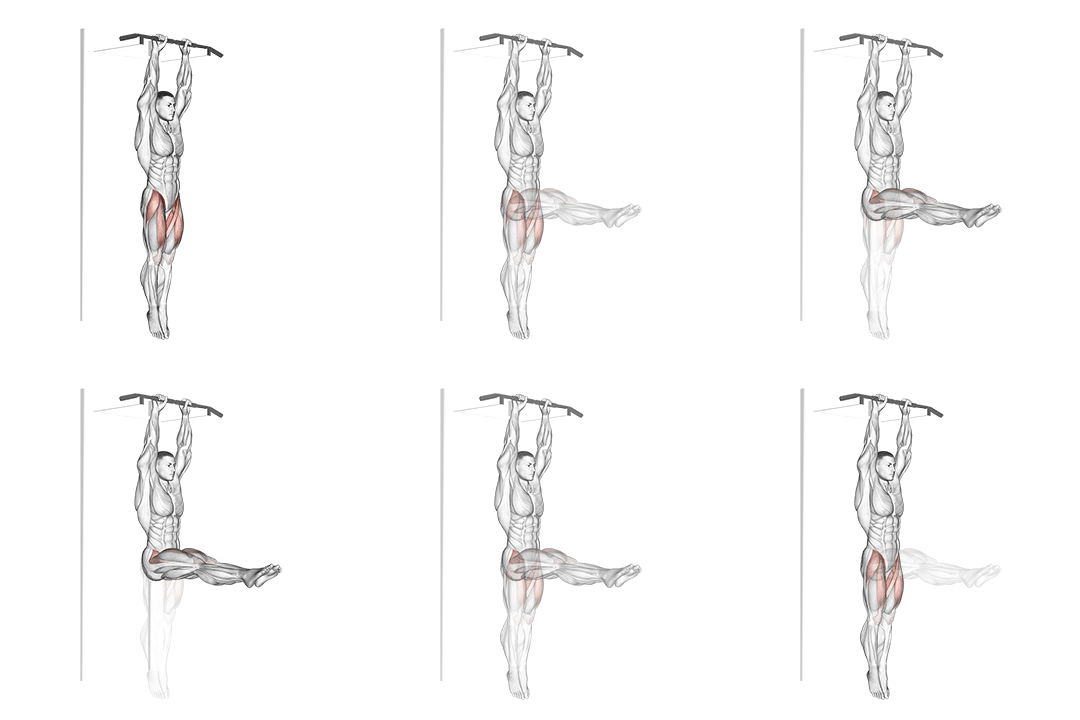
5. Hanging Straight Leg Hip Raise
85% match- Abs
- Bodyweight
- Advanced
- Compound
How to perform this exercise
- Hang from a pull-up bar with your arms fully extended and your palms facing away from you.
- Engage your core and lift your legs up in front of you until they are parallel to the ground.
- Pause for a moment at the top, then slowly lower your legs back down to the starting position.
- Repeat for the desired number of repetitions.
Sets and reps: 3 or 4 sets of 6 to 10 reps.
Why this matches
- Primary muscle: abs, the same as the Knee/hip Raise On Parallel Bars
- Equipment: bodyweight only, the same as the Knee/hip Raise On Parallel Bars
- Body position: hanging, the same as the Knee/hip Raise On Parallel Bars
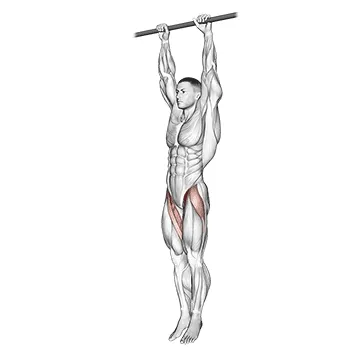
6. Hanging Straight Leg Raise
85% match- Abs
- Bodyweight
- Advanced
- Compound
How to perform this exercise
- Hang from a pull-up bar with your arms fully extended and your palms facing away from you.
- Engage your core and lift your legs up in front of you, keeping them straight.
- Continue lifting until your legs are parallel to the ground or as high as you can comfortably go.
- Pause for a moment at the top, then slowly lower your legs back down to the starting position.
- Repeat for the desired number of repetitions.
Sets and reps: 3 or 4 sets of 6 to 10 reps.
Why this matches
- Primary muscle: abs, the same as the Knee/hip Raise On Parallel Bars
- Equipment: bodyweight only, the same as the Knee/hip Raise On Parallel Bars
- Body position: hanging, the same as the Knee/hip Raise On Parallel Bars
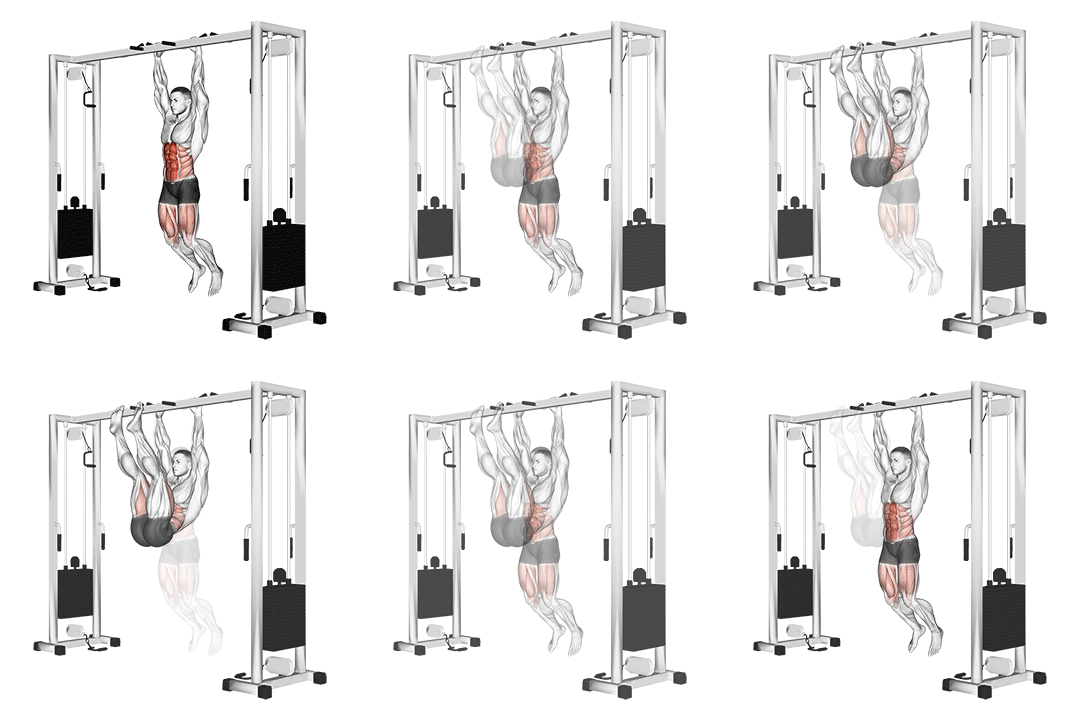
7. Hanging Leg Hip Raise
85% match- Abs
- Bodyweight
- Advanced
- Compound
How to perform this exercise
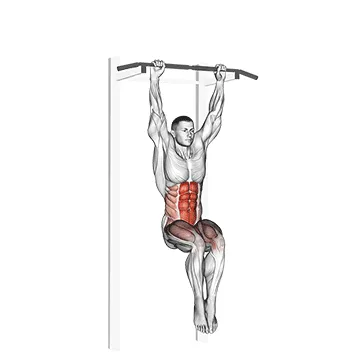
- Hang from a pull-up bar with your arms fully extended and your palms facing away from you.
- Engage your core and lift your legs up by flexing your hips and knees until your thighs are parallel to the ground.
- Pause for a moment at the top, then slowly lower your legs back down to the starting position.
- Repeat for the desired number of repetitions.
Sets and reps: 3 or 4 sets of 6 to 10 reps.
Why this matches
- Primary muscle: abs, the same as the Knee/hip Raise On Parallel Bars
- Equipment: bodyweight only, the same as the Knee/hip Raise On Parallel Bars
- Body position: hanging, the same as the Knee/hip Raise On Parallel Bars
- Balance: harder to stay steady on than the Knee/hip Raise On Parallel Bars
8. Exercise Ball Pull-in
84% match- Abs
- Stability-ball
- Intermediate
- Compound
How to perform this exercise
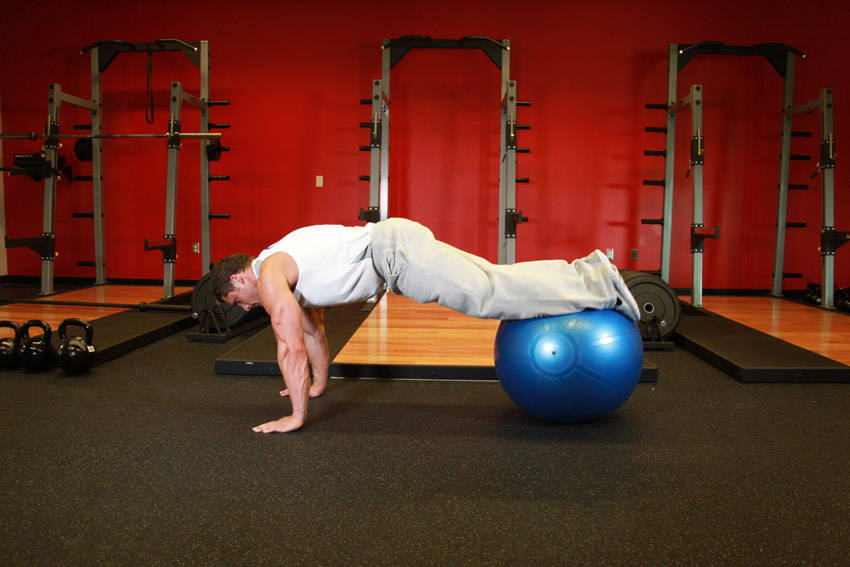
- Place an exercise ball nearby and lay on the floor in front of it with your hands on the floor shoulder width apart in a push-up position.
- Now place your lower shins on top of an exercise ball. Tip: At this point your legs should be fully extended with the shins on top of the ball and the upper body should be in a push-up type of position being supported by your two extended arms in front of you. This will be your starting position.
- While keeping your back completely straight and the upper body stationary, pull your knees in towards your chest as you exhale, allowing the ball to roll forward under your ankles. Squeeze your abs and hold that position for a second.
- Now slowly straighten your legs, rolling the ball back to the starting position as you inhale.
- Repeat for the recommended amount of repetitions.
Sets and reps: 3 or 4 sets of 6 to 10 reps.
Why this matches
- Primary muscle: abs, the same as the Knee/hip Raise On Parallel Bars
- Equipment: bodyweight only, the same as the Knee/hip Raise On Parallel Bars
- Body position: lying face down, not hanging
- Balance: harder to stay steady on than the Knee/hip Raise On Parallel Bars
9. Hanging Pike
84% match- Abs
- Bodyweight
- Advanced
- Compound
How to perform this exercise
- Hang from a pull-up bar with your arms fully extended and your palms facing away from you.
- Engage your core and lift your legs up towards the bar, keeping them straight.
- Continue lifting until your body forms a 'V' shape, with your legs parallel to the ground.
- Hold the position for a moment, then slowly lower your legs back down to the starting position.
- Repeat for the desired number of repetitions.
Sets and reps: 3 or 4 sets of 6 to 10 reps.
Why this matches
- Primary muscle: abs, the same as the Knee/hip Raise On Parallel Bars
- Equipment: bodyweight only, the same as the Knee/hip Raise On Parallel Bars
- Body position: hanging, the same as the Knee/hip Raise On Parallel Bars
- Balance: harder to stay steady on than the Knee/hip Raise On Parallel Bars
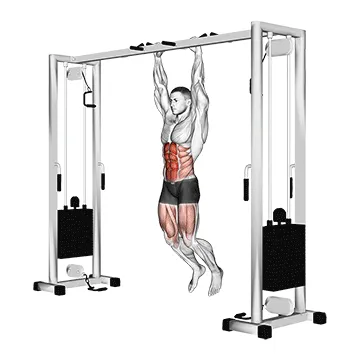
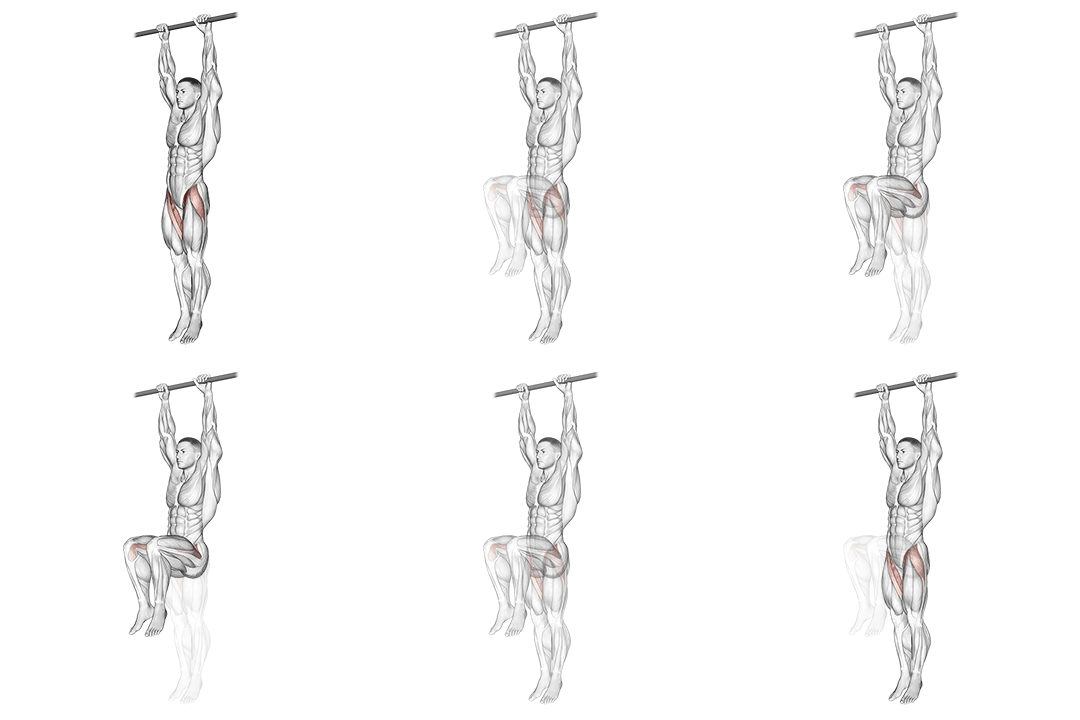
10. Assisted Hanging Knee Raise
83% match- Abs
- Machine
- Beginner
- Compound
How to perform this exercise
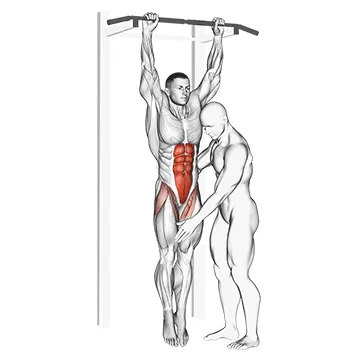
- Hang from a pull-up bar with your arms fully extended and your palms facing away from you.
- Engage your core muscles and lift your knees towards your chest, bending at the hips and knees.
- Pause for a moment at the top of the movement, squeezing your abs.
- Slowly lower your legs back down to the starting position.
- Repeat for the desired number of repetitions.
Sets and reps: 3 or 4 sets of 6 to 10 reps.
Why this matches
- Primary muscle: abs, the same as the Knee/hip Raise On Parallel Bars
- Equipment: a machine, not bodyweight only
- Body position: hanging, the same as the Knee/hip Raise On Parallel Bars
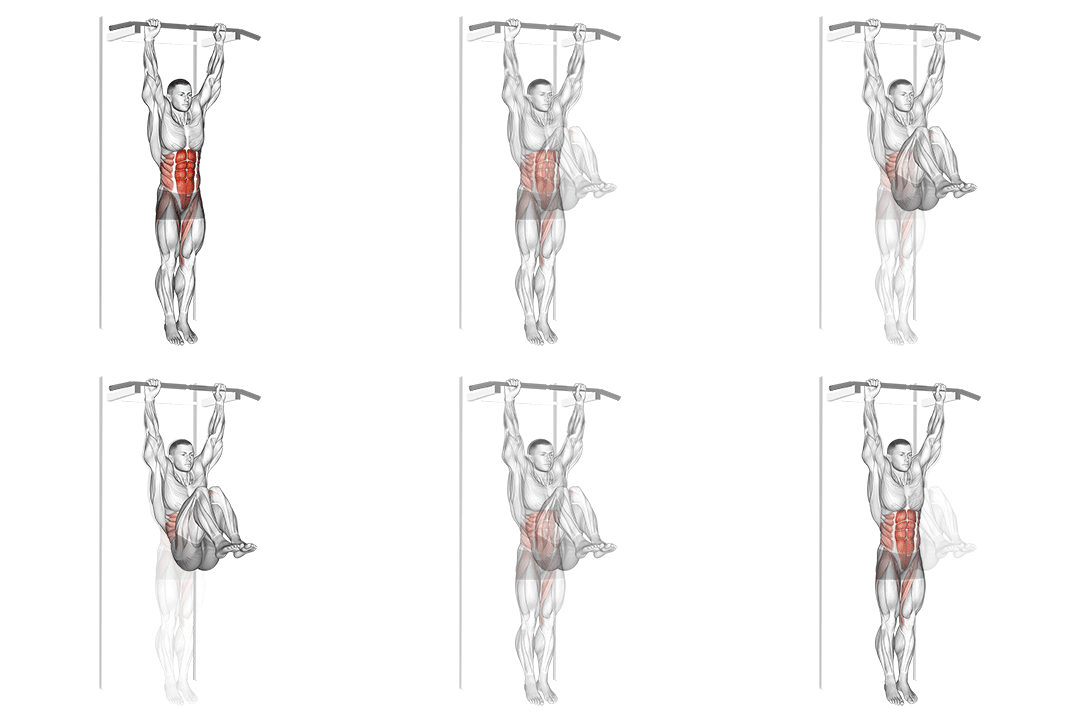
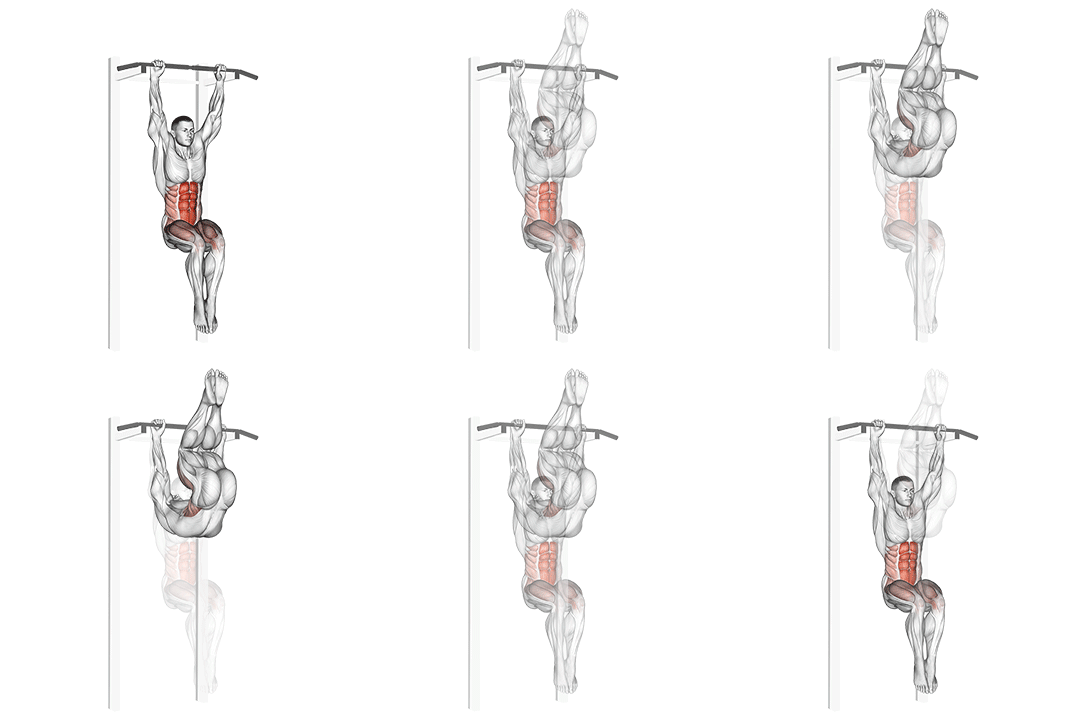
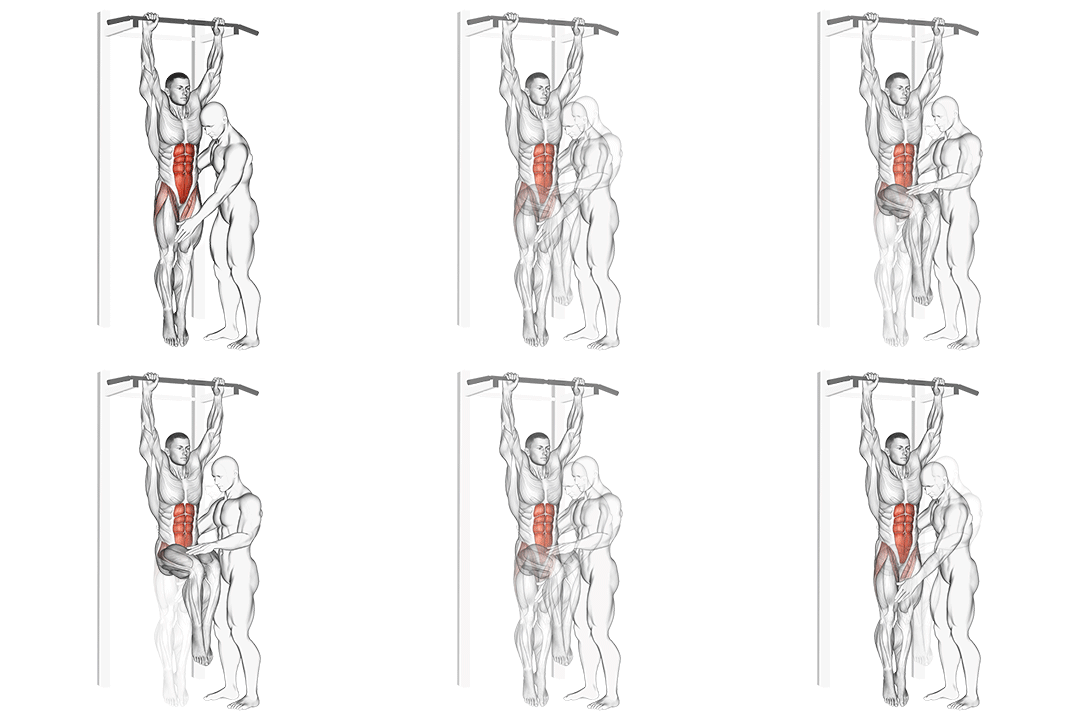
How to Choose the Right Knee/hip Raise On Parallel Bars Substitute
Select a substitute based on equipment, mobility, and the muscle emphasis you want. If shoulders limit you, pick supine leg raises on the floor or a decline bench, press your lower back gently to the mat and lead with the sternum to favor the abs over the iliopsoas. If you want vertical loading similar to parallel bars, use hanging knee tucks or a dip-stand captain's chair and cue scapular depression and pelvic tuck to maintain spinal neutrality. Progress by increasing lever length (straight-leg raises) or adding resisted bands to scale intensity while monitoring lumbar extension.
Knee/hip Raise On Parallel Bars FAQ
What is the best bodyweight alternative to Knee/hip Raise On Parallel Bars?
Hanging knee tucks or lying straight-leg raises are the best bodyweight alternatives depending on equipment. For hanging tucks cue scapular depression and a pelvic tuck to keep tension on the abs; for lying raises press the lower back into the mat and lead with the sternum to reduce lumbar shear.
Can I build muscle without doing Knee/hip Raise On Parallel Bars?
Yes. You can hypertrophy the rectus abdominis and hip flexors with progressive variations like weighted decline leg raises, straight-leg raises with a controlled tempo, or band-resisted knee tucks. Focus on increasing load, lever length, or time under tension while maintaining a neutral spine and proper pelvic control.
Find Alternatives for Any Exercise
Search the exercise database and filter the ranked substitutes by the equipment you own.
Similarity scores compare exercise metadata such as movement pattern, muscles, equipment and body position. They are not a safety rating or a check that you own the equipment. Learn about our methodology