

10 Best Half Knee Bends Alternatives for Cardio Workouts
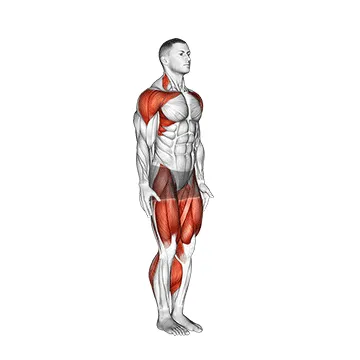
Half Knee Bends are done standing. Ranked closest by our scoring: the Back And Forth Step. Nine harder versions, among them the Star Jump and the Burpee, are listed below as progressions rather than swaps.
Updated Ranked by our 12-factor similarity model How it works
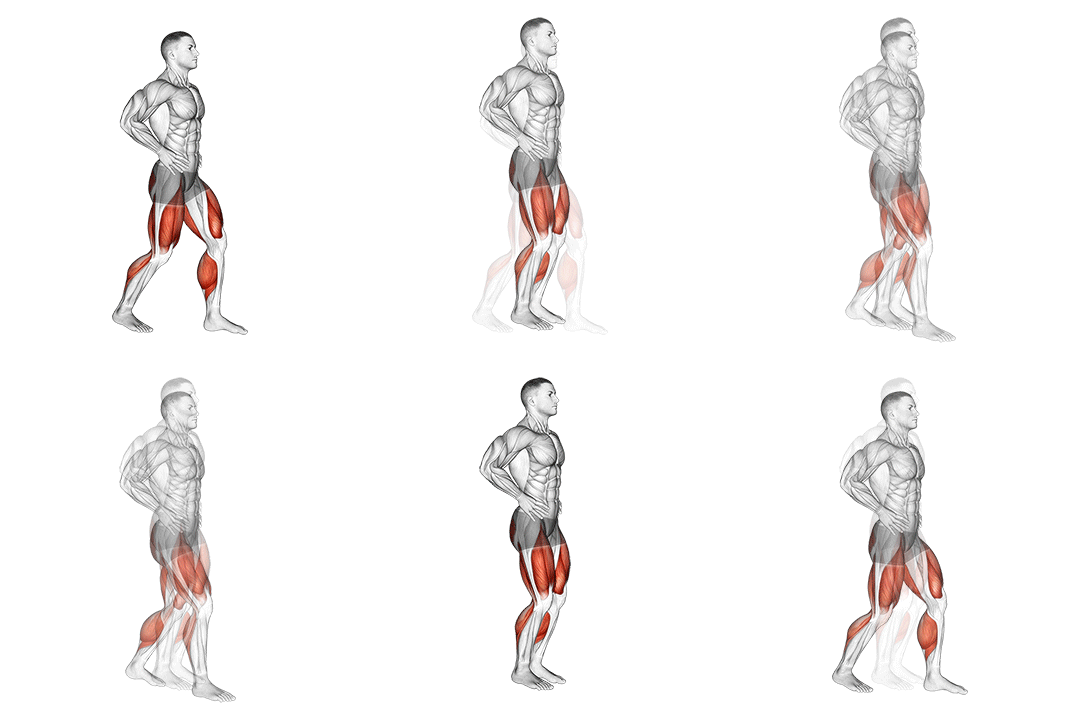
Original Exercise: Half Knee Bends
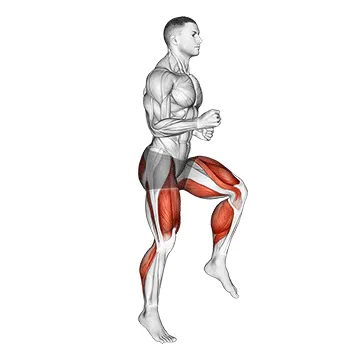
- Primary muscle
- Cardio
- Equipment
- Bodyweight
- Difficulty
- Beginner
- Type
- Compound
Secondary muscles: Quadriceps, Hamstrings, Glutes
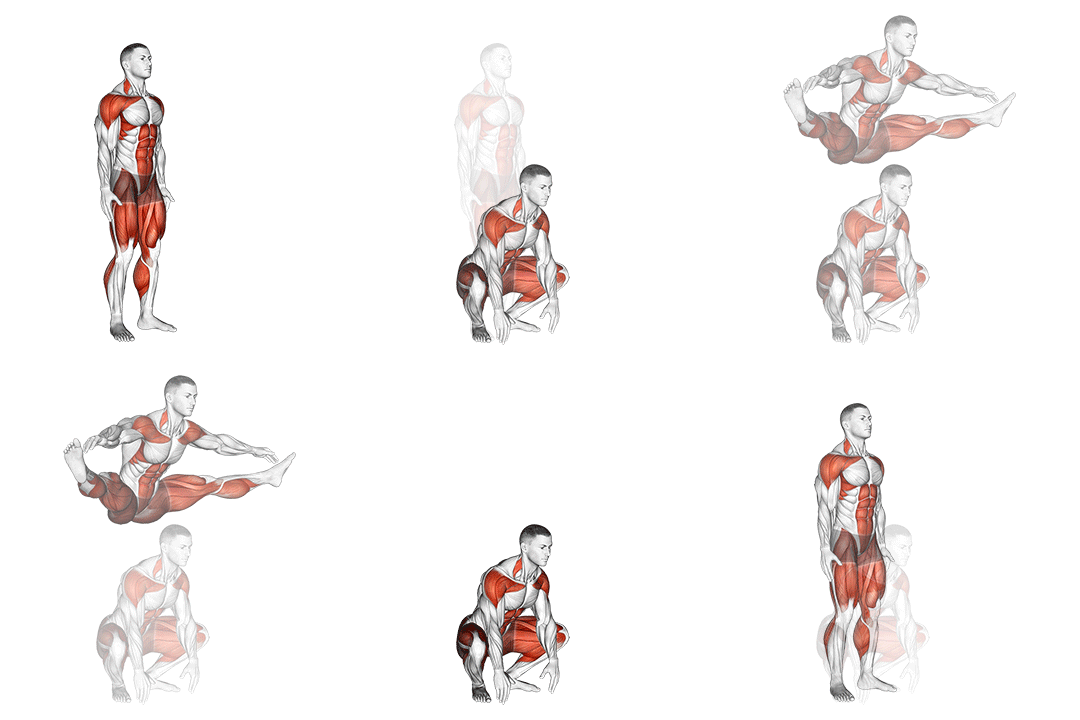
How to perform Half Knee Bends
- Stand with your feet shoulder-width apart.
- Bend your knees and lower your body down as if you were sitting back into a chair.
- Keep your chest up and your weight in your heels.
- Pause for a moment at the bottom, then push through your heels to return to the starting position.
- Repeat for the desired number of repetitions.
Ranked Half Knee Bends Alternatives
10 substitutes, ranked by how closely each one matches Half Knee Bends on movement pattern, muscles worked, equipment and body position. The higher the score, the less you change. Open "How to perform this exercise" on a card for the steps; every card title links to that exercise's own alternatives page. Harder versions are tagged as progressions and kept out of the top spot even when they score higher.
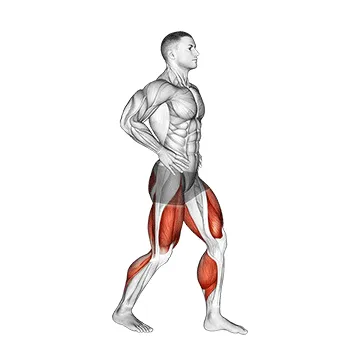
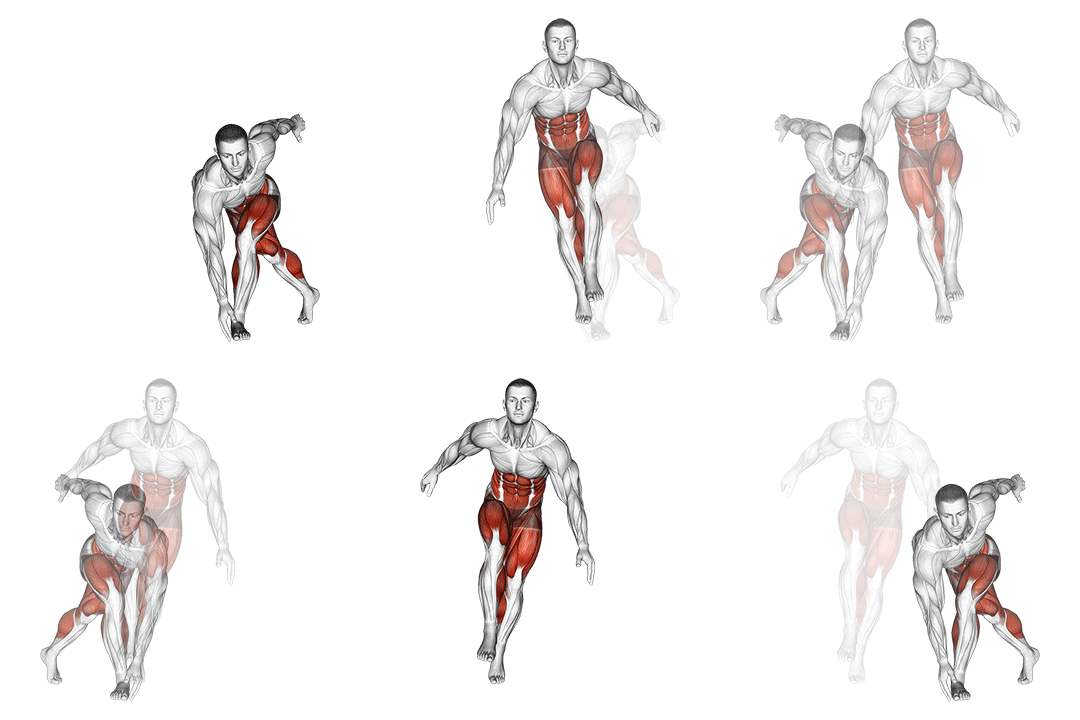
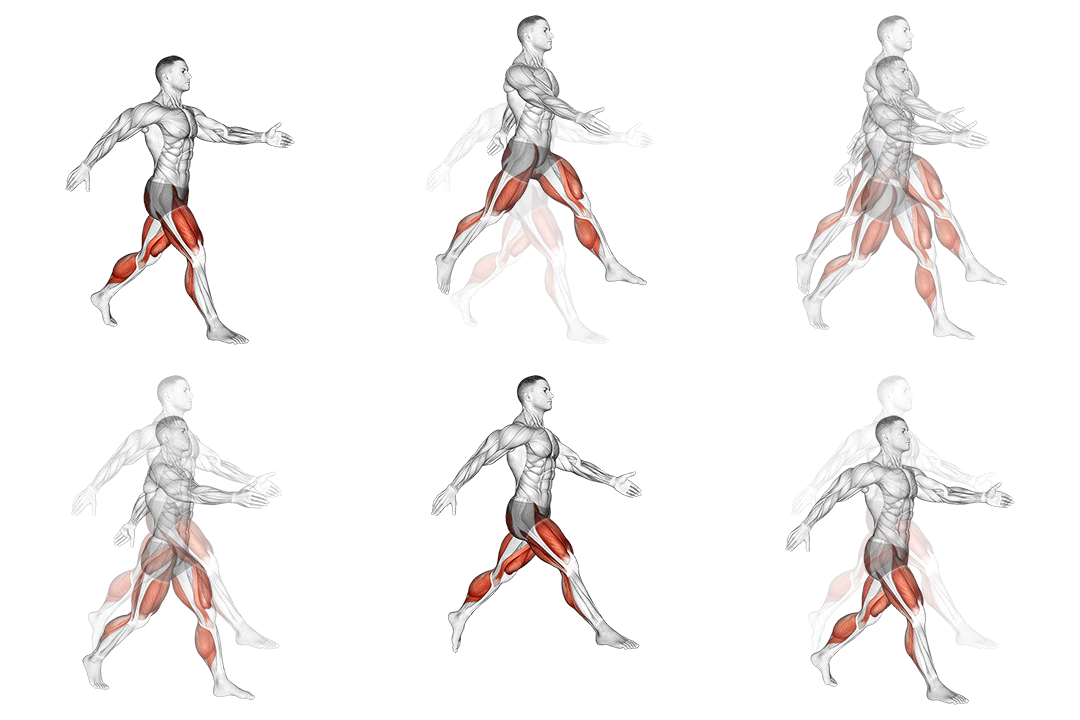
Best match 1. Back And Forth Step
84% match- Cardio
- Bodyweight
- Beginner
- Compound
Pick this when you want to work the heart and lungs one side at a time.
How to perform this exercise
- Stand with your feet shoulder-width apart.
- Step forward with your right foot, bending your knee and lowering your body into a lunge position.
- Push off with your right foot and step back to the starting position.
- Repeat the movement with your left foot, alternating legs with each step.
- Continue stepping back and forth, maintaining a steady pace.
- Repeat for the desired duration or number of repetitions.
Sets and reps: Work for 30 to 60 seconds, rest as long as you worked, and repeat 6 to 10 times.
Why this matches
- Primary muscle: your heart and lungs, the same as Half Knee Bends
- Equipment: bodyweight only, the same as Half Knee Bends
- Body position: standing, the same as Half Knee Bends
Progression
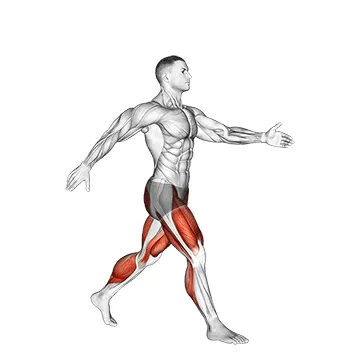
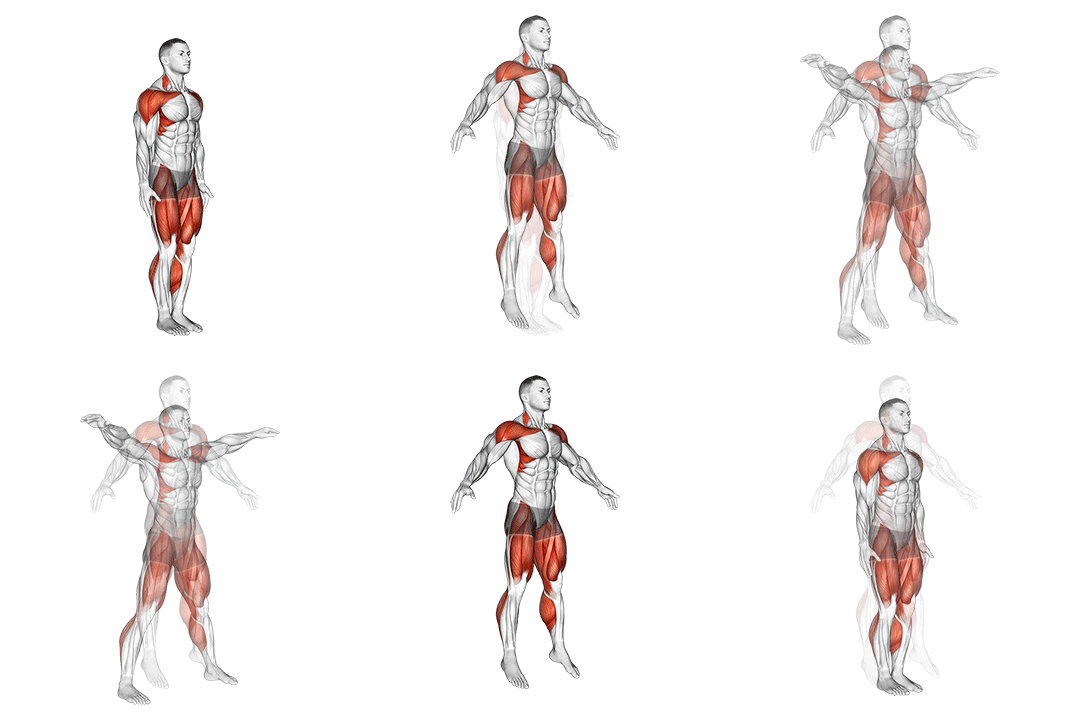
2. Star Jump
95% match- Cardio
- Bodyweight
- Beginner
- Compound
Pick this when you want a harder version that still works the heart and lungs.
How to perform this exercise
- Stand with your feet shoulder-width apart and your arms by your sides.
- Bend your knees slightly and jump up explosively.
- As you jump, spread your legs and extend your arms out to the sides, forming a star shape with your body.
- Land softly on the balls of your feet with your knees slightly bent.
- Repeat for the desired number of repetitions.
Sets and reps: Work for 30 to 60 seconds, rest as long as you worked, and repeat 6 to 10 times.
Why this matches
- Primary muscle: your heart and lungs, the same as Half Knee Bends
- Equipment: bodyweight only, the same as Half Knee Bends
- Body position: standing, the same as Half Knee Bends
Progression
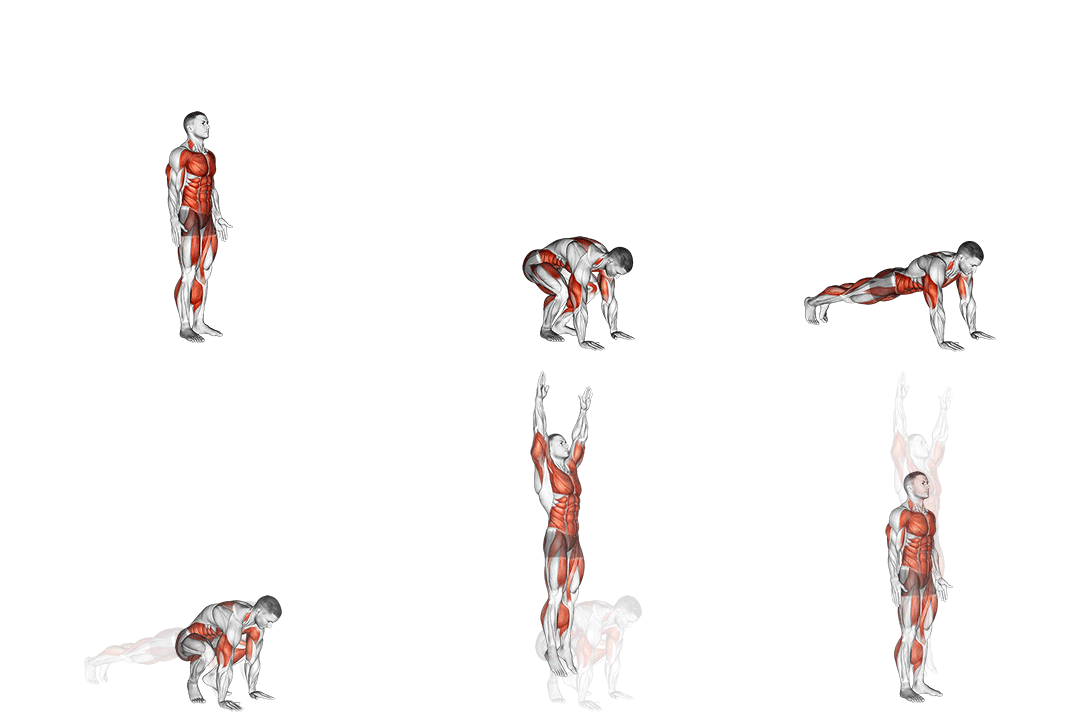
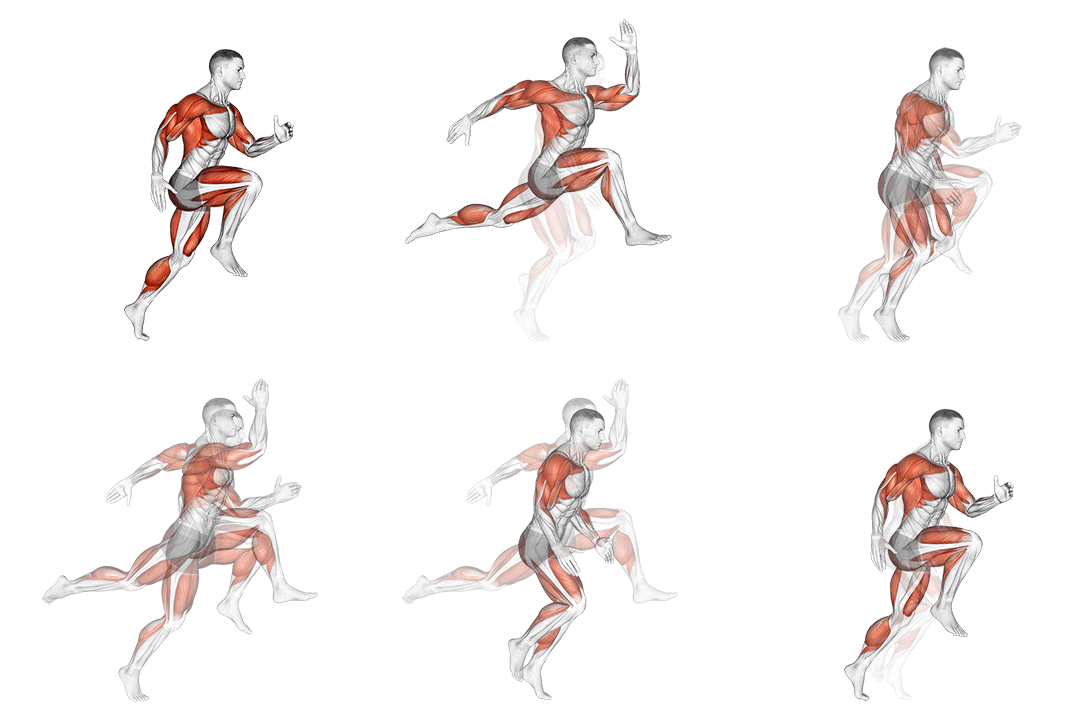
3. Burpee
93% match- Cardio
- Bodyweight
- Intermediate
- Compound
How to perform this exercise
- Start in a standing position with your feet shoulder-width apart.
- Lower your body into a squat position by bending your knees and placing your hands on the floor in front of you.
- Kick your feet back into a push-up position.
- Perform a push-up, keeping your body in a straight line.
- Jump your feet back into the squat position.
- Jump up explosively, reaching your arms overhead.
- Land softly and immediately lower back into a squat position to begin the next repetition.
Sets and reps: Work for 30 to 60 seconds, rest as long as you worked, and repeat 6 to 10 times.
Why this matches
- Primary muscle: your heart and lungs, the same as Half Knee Bends
- Equipment: bodyweight only, the same as Half Knee Bends
- Balance: harder to stay steady on than Half Knee Bends
Progression
4. Astride Jumps
87% match- Cardio
- Bodyweight
- Intermediate
- Compound
Pick this when you want a harder version that works the heart and lungs one side at a time.
How to perform this exercise
- Stand with your feet shoulder-width apart.
- Bend your knees and lower your body into a squat position.
- Jump explosively upwards, extending your legs and arms.
- While in the air, spread your legs apart and bring your arms out to the sides.
- Land softly with your feet shoulder-width apart, bending your knees to absorb the impact.
- Repeat for the desired number of repetitions.
Sets and reps: Work for 30 to 60 seconds, rest as long as you worked, and repeat 6 to 10 times.
Why this matches
- Primary muscle: your heart and lungs, the same as Half Knee Bends
- Equipment: bodyweight only, the same as Half Knee Bends
- Body position: standing, the same as Half Knee Bends
- Balance: harder to stay steady on than Half Knee Bends
Progression
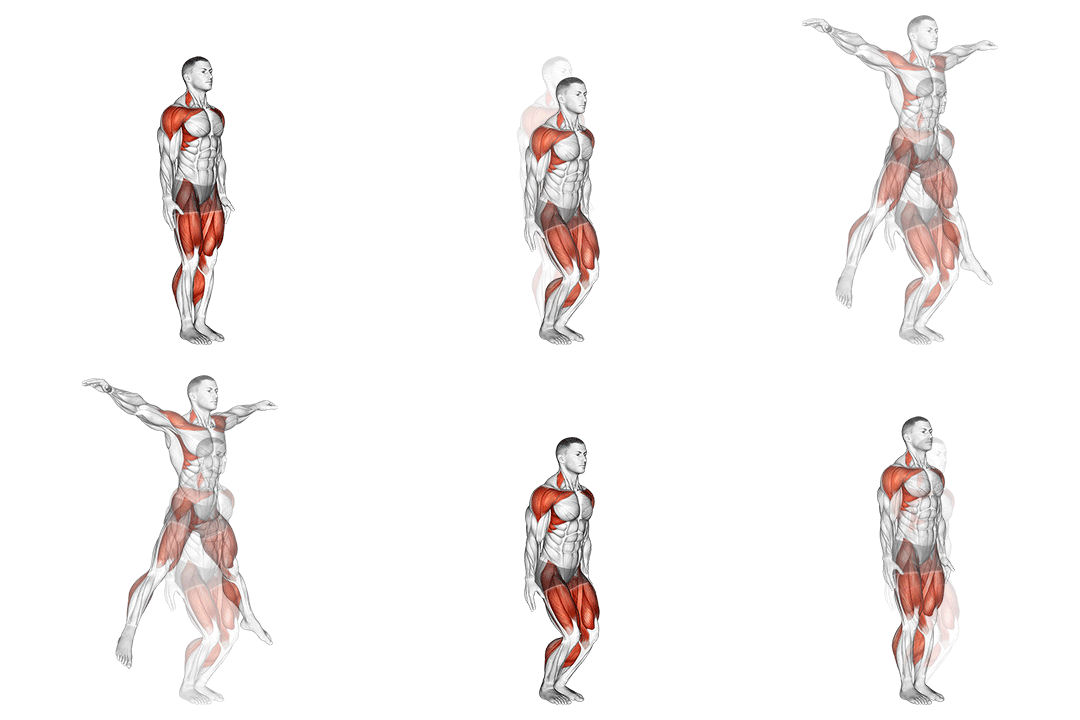
5. Ski Step
87% match- Cardio
- Bodyweight
- Beginner
- Compound
How to perform this exercise
- Stand with your feet shoulder-width apart.
- Bend your knees slightly and keep your back straight.
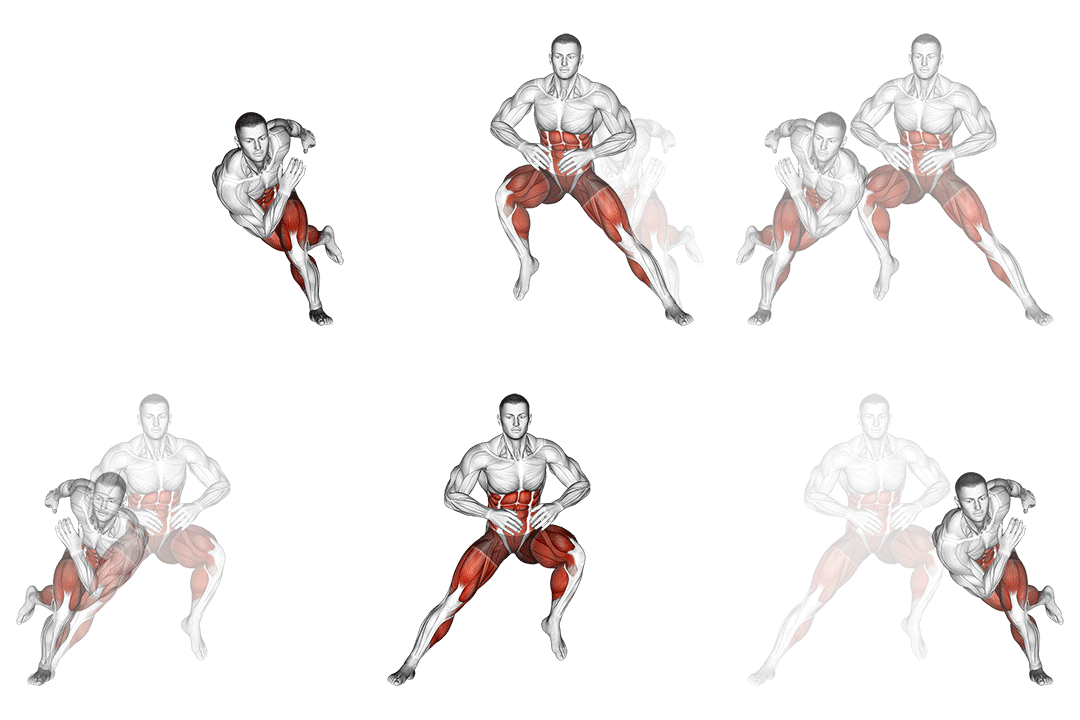
- Jump to the right, landing on your right foot while swinging your left leg behind your right leg.
- Immediately jump to the left, landing on your left foot while swinging your right leg behind your left leg.
- Continue alternating jumps from side to side, mimicking a skiing motion.
- Repeat for the desired number of repetitions.
Sets and reps: Work for 30 to 60 seconds, rest as long as you worked, and repeat 6 to 10 times.
Why this matches
- Primary muscle: your heart and lungs, the same as Half Knee Bends
- Equipment: bodyweight only, the same as Half Knee Bends
- Body position: standing, the same as Half Knee Bends
- Balance: harder to stay steady on than Half Knee Bends
Progression
6. Scissor Jumps
86% match- Cardio
- Bodyweight
- Intermediate
- Compound
How to perform this exercise
- Stand with your feet shoulder-width apart.
- Jump off the ground and simultaneously cross your right leg in front of your left leg.
- As you land, quickly switch legs, crossing your left leg in front of your right leg.
- Continue alternating legs and jumping as quickly as possible.
- Repeat for the desired number of repetitions.
Sets and reps: Work for 30 to 60 seconds, rest as long as you worked, and repeat 6 to 10 times.
Why this matches
- Primary muscle: your heart and lungs, the same as Half Knee Bends
- Equipment: bodyweight only, the same as Half Knee Bends
- Body position: standing, the same as Half Knee Bends
- Balance: harder to stay steady on than Half Knee Bends
Progression
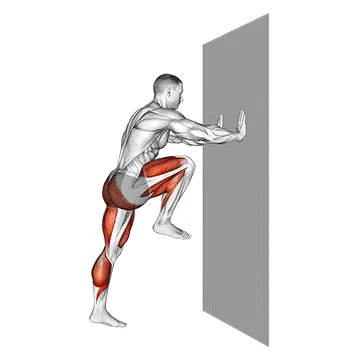
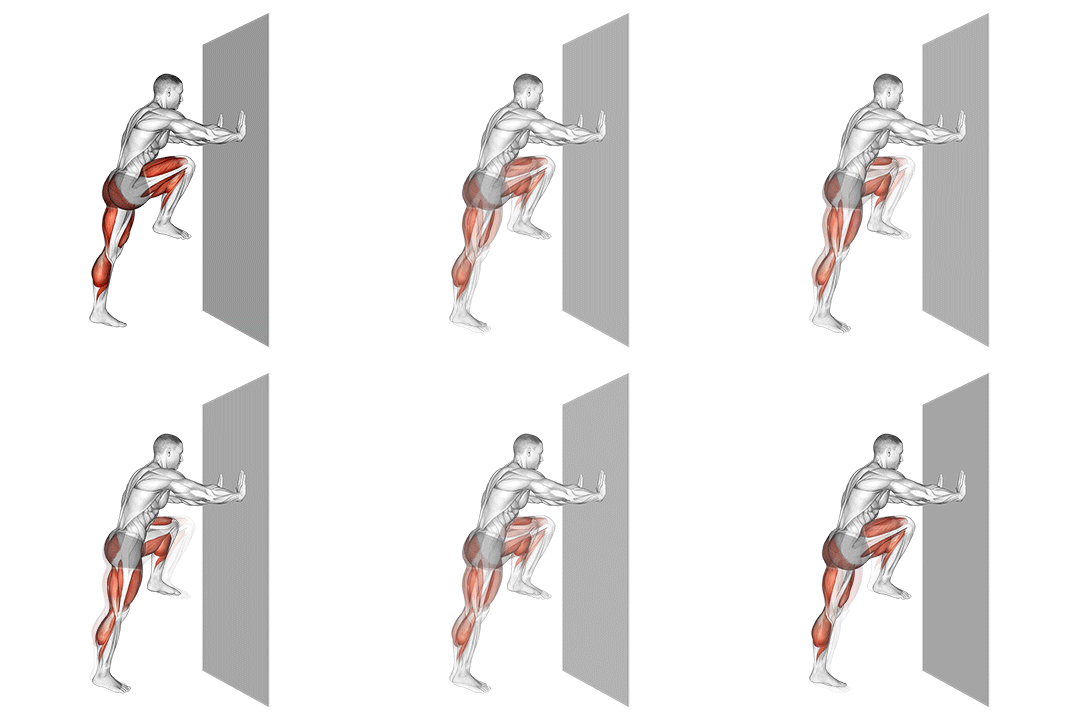
7. High Knee Against Wall
82% match- Cardio
- Bodyweight
- Beginner
- Compound
How to perform this exercise
- Stand facing a wall with your feet hip-width apart.
- Place your hands on the wall for support.
- Engage your core and lift your right knee up towards your chest, while keeping your left foot on the ground.
- Quickly switch legs, bringing your left knee up towards your chest and lowering your right foot back down.
- Continue alternating legs in a running motion, bringing your knees up as high as possible.
- Maintain a fast pace and keep your upper body stable throughout the exercise.
- Repeat for the desired duration or number of repetitions.
Sets and reps: Work for 30 to 60 seconds, rest as long as you worked, and repeat 6 to 10 times.
Why this matches
- Primary muscle: your heart and lungs, the same as Half Knee Bends
- Equipment: bodyweight only, the same as Half Knee Bends
- Body position: standing, the same as Half Knee Bends
Progression
8. Wheel Run
82% match- Cardio
- Bodyweight
- Intermediate
- Compound
How to perform this exercise
- Start in a plank position with your hands on the wheel and your body straight.
- Engage your core and start rolling the wheel forward by extending your arms.
- Continue rolling until your body is fully extended and your arms are overhead.
- Reverse the movement by pulling the wheel back towards your body, using your core and arms.
- Repeat for the desired number of repetitions.
Sets and reps: Work for 30 to 60 seconds, rest as long as you worked, and repeat 6 to 10 times.
Why this matches
- Primary muscle: your heart and lungs, the same as Half Knee Bends
- Equipment: bodyweight only, the same as Half Knee Bends
- Body position: standing, the same as Half Knee Bends
Progression
9. Jack Jump
80% match- Cardio
- Bodyweight
- Beginner
- Compound
How to perform this exercise
- Stand with your feet together and your arms by your sides.
- Jump up, spreading your feet apart and raising your arms above your head.
- As you land, quickly jump back to the starting position.
- Repeat for the desired number of repetitions.
Sets and reps: Work for 30 to 60 seconds, rest as long as you worked, and repeat 6 to 10 times.
Why this matches
- Primary muscle: your heart and lungs, the same as Half Knee Bends
- Equipment: bodyweight only, the same as Half Knee Bends
- Body position: standing, the same as Half Knee Bends
Progression
10. Skater Hops
80% match- Cardio
- Bodyweight
- Advanced
- Compound
How to perform this exercise
- Stand with your feet shoulder-width apart.
- Bend your knees slightly and jump to the right, landing on your right foot.
- As you land, swing your left leg behind your right leg and tap the ground with your left toes.
- Immediately jump to the left, landing on your left foot.
- As you land, swing your right leg behind your left leg and tap the ground with your right toes.
- Continue alternating sides, jumping and tapping the ground with each leg.
- Repeat for the desired number of repetitions.
Sets and reps: Work for 30 to 60 seconds, rest as long as you worked, and repeat 6 to 10 times.
Why this matches
- Primary muscle: your heart and lungs, the same as Half Knee Bends
- Equipment: bodyweight only, the same as Half Knee Bends
- Body position: standing, the same as Half Knee Bends
- Balance: harder to stay steady on than Half Knee Bends
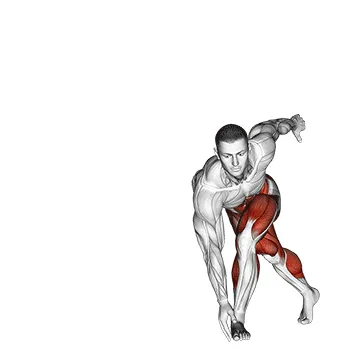
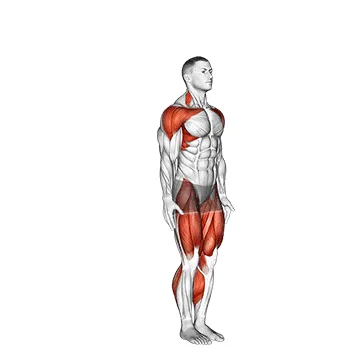
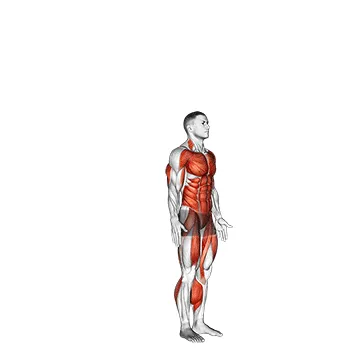
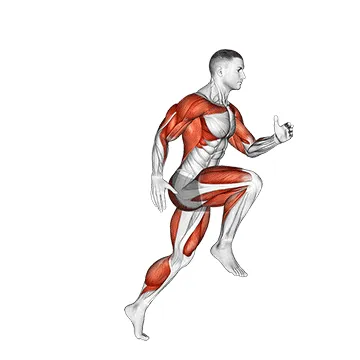
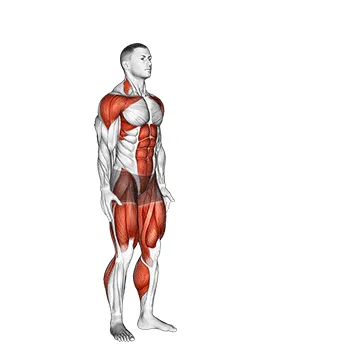
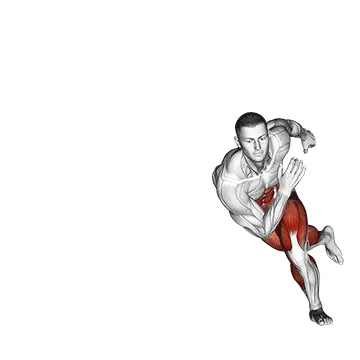
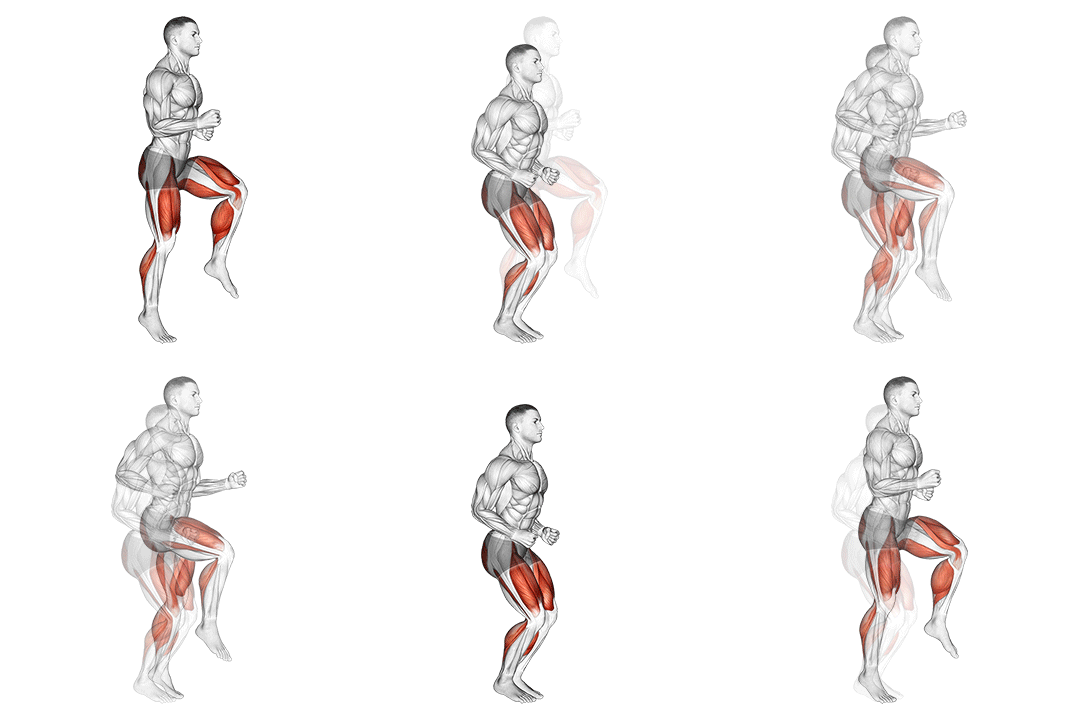
Half Knee Bends FAQ
What muscles does Half Knee Bends (male) work?
Half Knee Bends primarily elevate cardiovascular demand while engaging hip flexors, quadriceps and core stabilizers. The dynamic knee-drive pattern also recruits low-level glute activation and ankle plantarflexors during repeated cycles, brace your core to protect the lumbar spine.
What is the best bodyweight alternative to Half Knee Bends (male)?
High knees are the closest bodyweight alternative because they replicate the knee-drive and cardiovascular output. Cue: drive knees toward hip height, land on the forefoot, and keep an upright torso to maintain hip flexor and core activation.
Find Alternatives for Any Exercise
Search the exercise database and filter the ranked substitutes by the equipment you own.
Similarity scores compare exercise metadata such as movement pattern, muscles, equipment and body position. They are not a safety rating or a check that you own the equipment. Learn about our methodology