

10 Best Hurdle Hops Alternatives for Hamstring Power
What can I do instead of Hurdle Hops? Use broad jumps, box jumps, kettlebell swings, Romanian deadlifts, or Nordic hamstring curls to load the hamstrings and upper legs. Emphasize a hip hinge: push hips back, keep a neutral spine and land softly with knees slightly bent to maintain the stretch-shortening cycle.
Original Exercise: Hurdle Hops
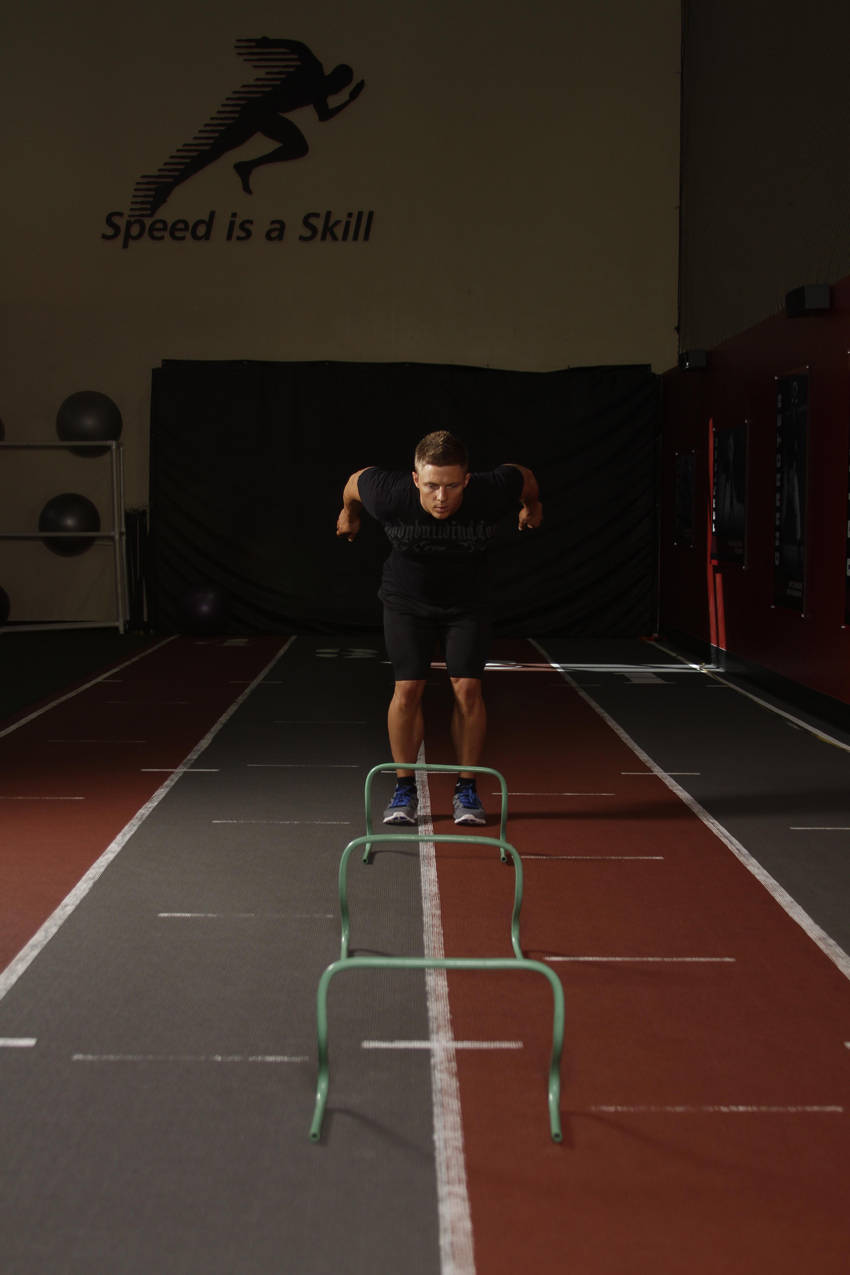
How to Perform Hurdle Hops
- Set up a row of hurdles or other small barriers, placing them a few feet apart.
- Stand in front of the first hurdle with your feet shoulder width apart. This will be your starting position.
- Begin by jumping with both feet over the first hurdle, swinging both arms as you jump.
- Absorb the impact of landing by bending the knees, rebounding out of the first leap by jumping over the next hurdle. Continue until you have jumped over all of the hurdles.
Pro Tips
- Category: Plyometrics
- Force: Push
- Movement type: Compound
Ranked Hurdle Hops Alternatives
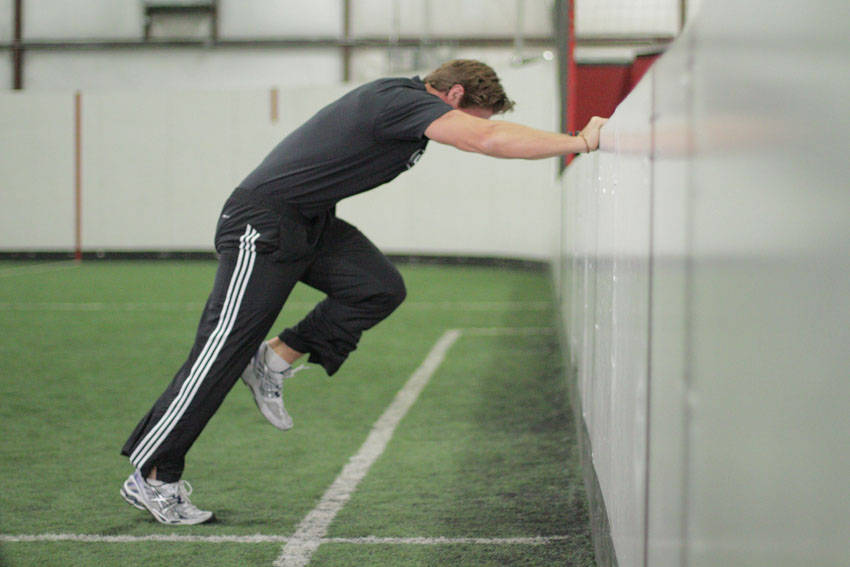
1. Linear Acceleration Wall Drill
86.9% MatchHow to perform this exercise
- Lean at around 45 degrees against a wall. Your feet should be together, glutes contracted.
- Begin by lifting your right knee quickly, pausing, and then driving it straight down into the ground.
- Switch legs, raising the opposite knee, and then attacking the ground straight down.
- Repeat once more with your right leg, and as soon as the right foot strikes the ground hammer them out rapidly, alternating left and right as fast as you can.
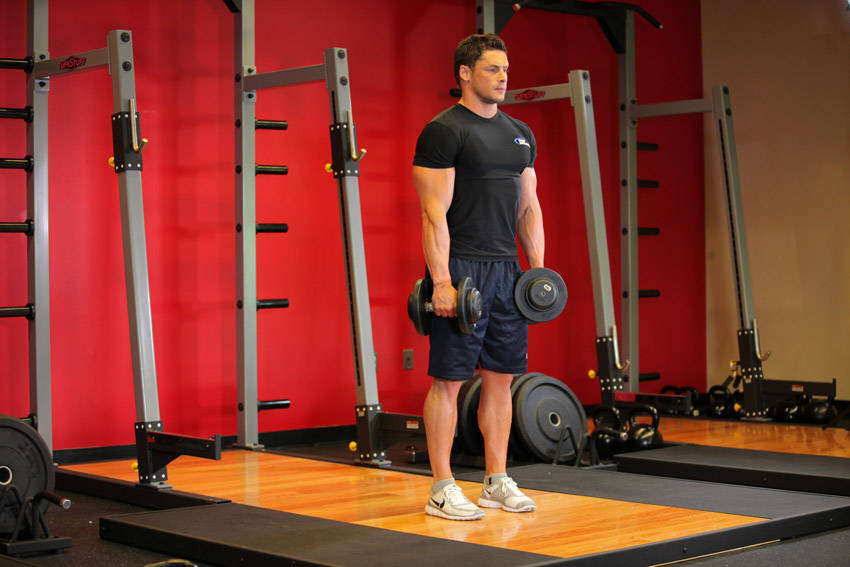
2. Stiff-Legged Dumbbell Deadlift
84.4% MatchHow to perform this exercise
- Grasp a couple of dumbbells holding them by your side at arm's length.
- Stand with your torso straight and your legs spaced using a shoulder width or narrower stance. The knees should be slightly bent. This is your starting position.
- Keeping the knees stationary, lower the dumbbells to over the top of your feet by bending at the waist while keeping your back straight. Keep moving forward as if you were going to pick something from the floor until you feel a stretch on the hamstrings. Exhale as you perform this movement
- Start bringing your torso up straight again by extending your hips and waist until you are back at the starting position. Inhale as you perform this movement.
- Repeat for the recommended amount of repetitions.
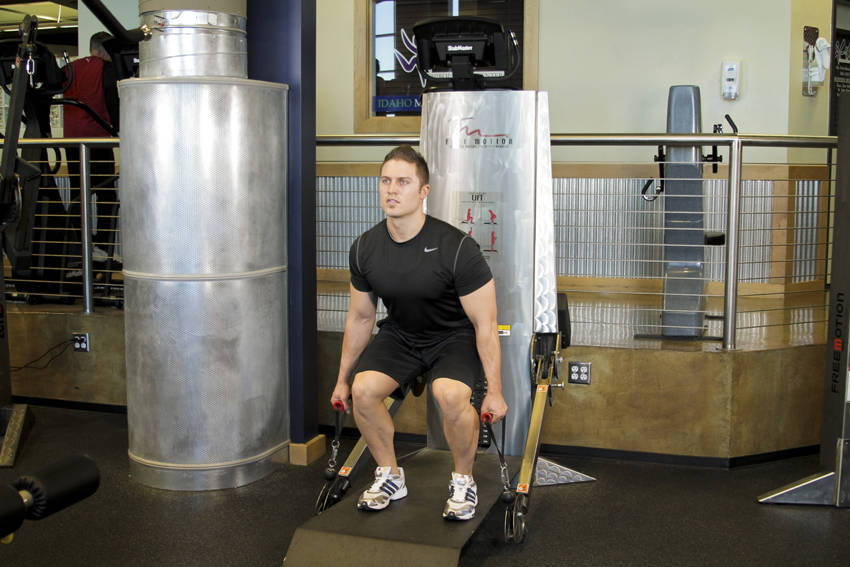
3. Cable Deadlifts
82.3% MatchHow to perform this exercise
- Move the cables to the bottom of the towers and select an appropriate weight. Stand directly in between the uprights.
- To begin, squat down be flexing your hips and knees until you can reach the handles.
- After grasping them, begin your ascent. Driving through your heels extend your hips and knees keeping your hands hanging at your side. Keep your head and chest up throughout the movement.
- After reaching a full standing position, Return to the starting position and repeat.
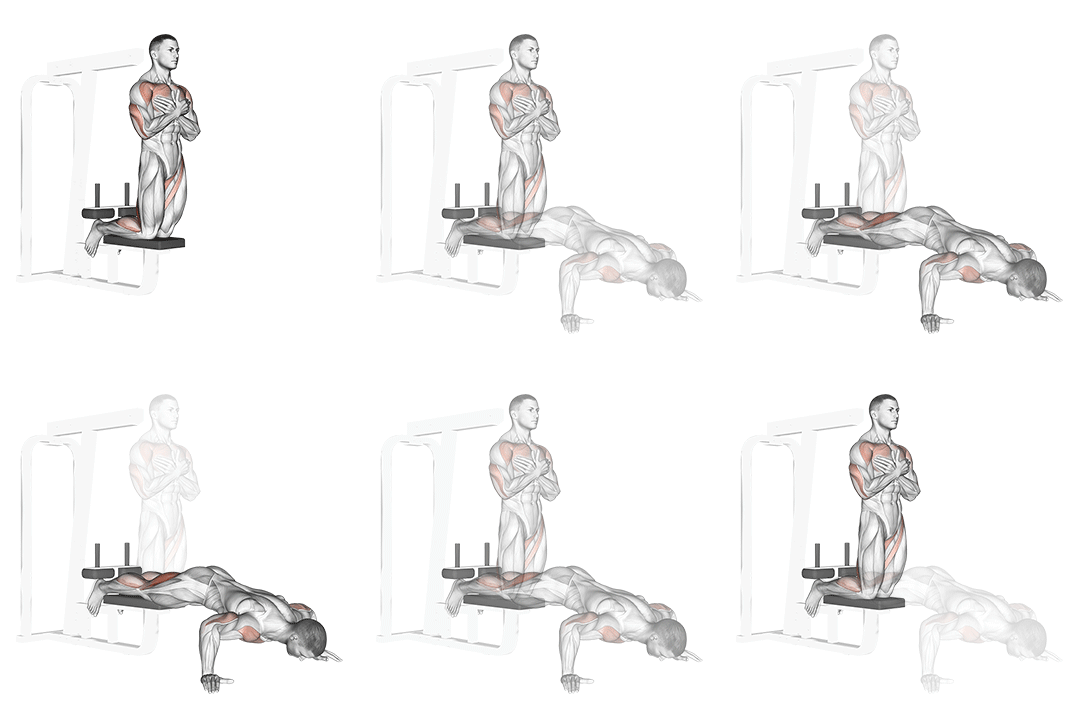
4. Self Assisted Inverse Leg Curl
81.4% MatchHow to perform this exercise
- Lie flat on your back on a mat or bench with your legs extended.
- Place your hands by your sides or under your glutes for support.
- Bend your knees and lift your feet off the ground, bringing your thighs towards your chest.
- Pause for a moment at the top, then slowly lower your legs back to the starting position.
- Repeat for the desired number of repetitions.
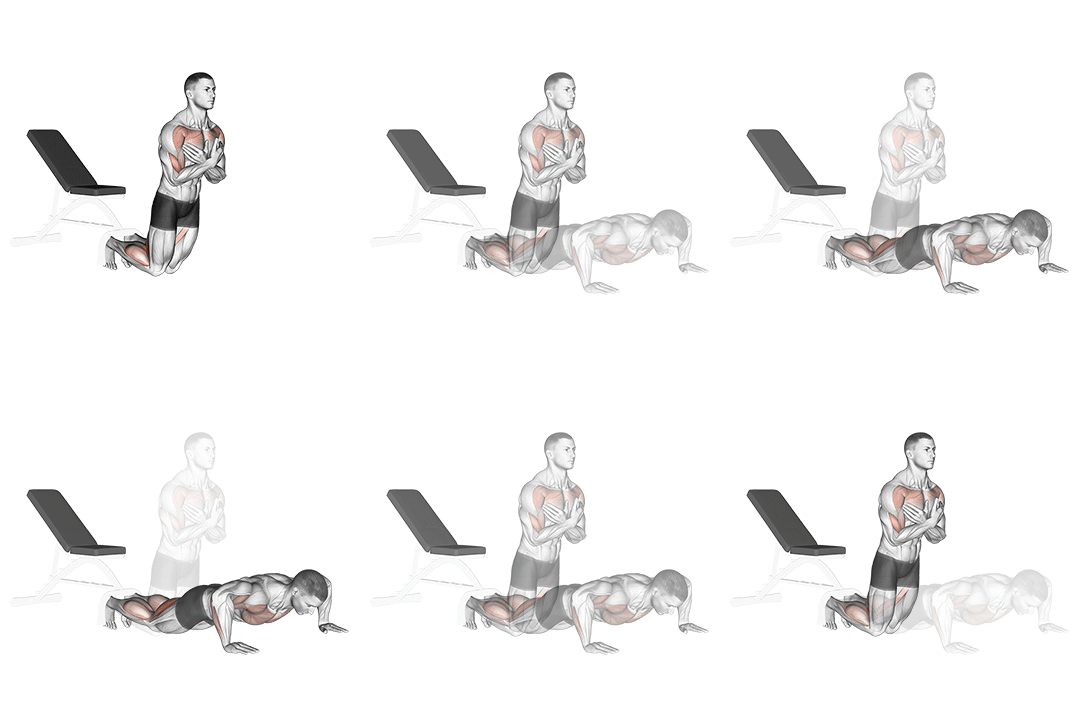
5. Self Assisted Inverse Leg Curl (on Floor)
81.4% MatchHow to perform this exercise
- Lie flat on your back with your legs extended and your arms by your sides.
- Bend your knees and place your feet flat on the ground, hip-width apart.
- Lift your hips off the ground, engaging your glutes and hamstrings.
- Slowly curl your legs towards your glutes, keeping your hips lifted.
- Pause for a moment at the top, then slowly extend your legs back to the starting position.
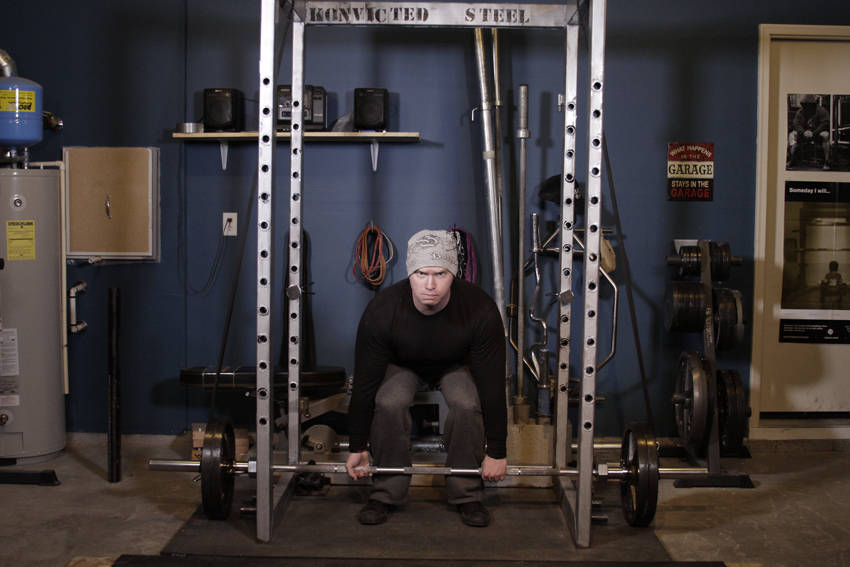
6. Reverse Band Deadlift
80.4% MatchHow to perform this exercise
- Set the bar up in a power rack. Attach bands to the top of the rack, using either bands pegs or the frame itself. Attach the other end of the bands to the bar.
- Approach the bar so that it is centered over your feet. You feet should be about hip width apart. Bend at the hip to grip the bar at shoulder width, allowing your shoulder blades to protract. Typically, you would use an overhand grip or an over/under grip on heavier sets.
- With your feet, and your grip set, take a big breath and then lower your hips and bend the knees until your shins contact the bar. Look forward with your head, keep your chest up and your back arched, and begin driving through the heels to move the weight upward.
- After the bar passes the knees, aggressively pull the bar back, pulling your shoulder blades together as you drive your hips forward into the bar.
- Lower the bar by bending at the hips and guiding it to the floor.
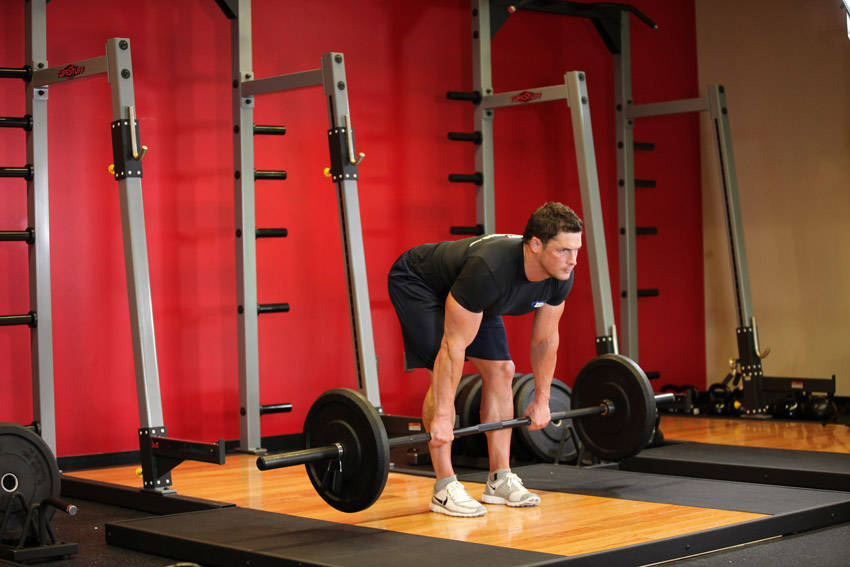
7. Stiff-Legged Barbell Deadlift
80.4% MatchHow to perform this exercise
- Grasp a bar using an overhand grip (palms facing down). You may need some wrist wraps if using a significant amount of weight.
- Stand with your torso straight and your legs spaced using a shoulder width or narrower stance. The knees should be slightly bent. This is your starting position.
- Keeping the knees stationary, lower the barbell to over the top of your feet by bending at the hips while keeping your back straight. Keep moving forward as if you were going to pick something from the floor until you feel a stretch on the hamstrings. Inhale as you perform this movement.
- Start bringing your torso up straight again by extending your hips until you are back at the starting position. Exhale as you perform this movement.
- Repeat for the recommended amount of repetitions.
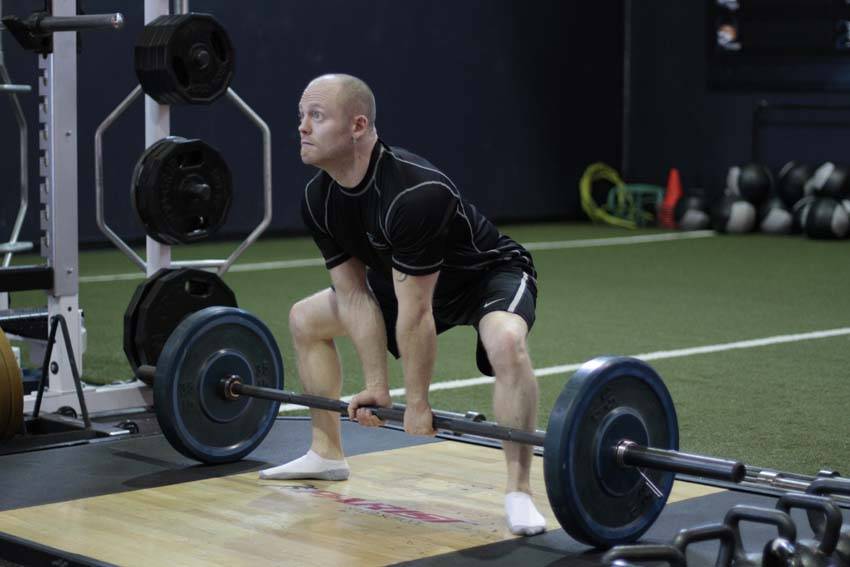
8. Sumo Deadlift
80.4% MatchHow to perform this exercise
- Begin with a bar loaded on the ground. Approach the bar so that the bar intersects the middle of the feet. The feet should be set very wide, near the collars. Bend at the hips to grip the bar. The arms should be directly below the shoulders, inside the legs, and you can use a pronated grip, a mixed grip, or hook grip. Relax the shoulders, which in effect lengthens your arms.
- Take a breath, and then lower your hips, looking forward with your head with your chest up. Drive through the floor, spreading your feet apart, with your weight on the back half of your feet. Extend through the hips and knees.
- As the bar passes through the knees, lean back and drive the hips into the bar, pulling your shoulder blades together.
- Return the weight to the ground by bending at the hips and controlling the weight on the way down.
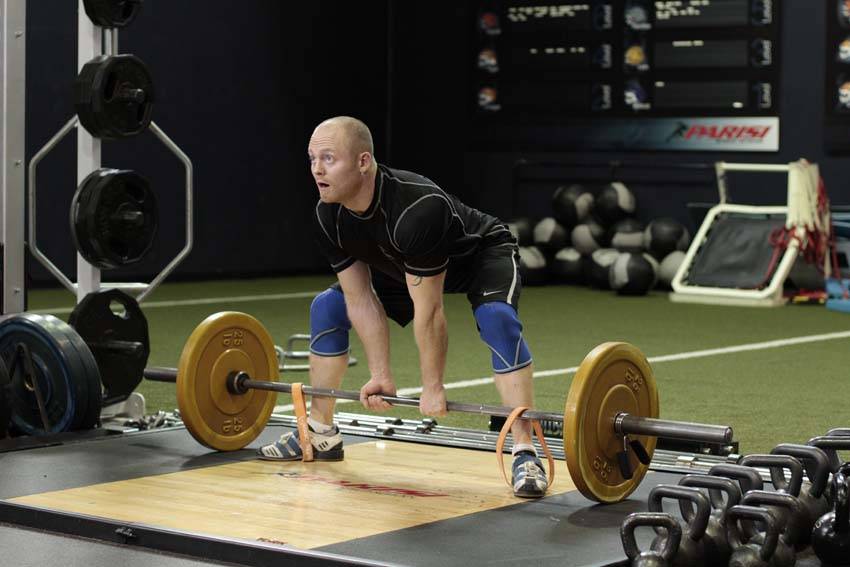
9. Sumo Deadlift With Bands
80.2% MatchHow to perform this exercise
- To deadlift with short bands, simply loop them over the bar before you start, and step into them to set up. Ensure that they under the back half of your foot, directly where you are driving into the floor.
- Begin with a bar loaded on the ground. Approach the bar so that the bar intersects the middle of the feet. The feet should be set very wide, near the collars. Bend at the hips to grip the bar. The arms should be directly below the shoulders, inside the legs, and you can use a pronated grip, a mixed grip, or hook grip.
- Take a breath, and then lower your hips, looking forward with your head with your chest up. Drive through the floor, spreading your feet apart, with your weight on the back half of your feet. Extend through the hips and knees.
- As the bar passes through the knees, lean back and drive the hips into the bar, pulling your shoulder blades together.
- Return the weight to the ground by bending at the hips and controlling the weight on the way down.
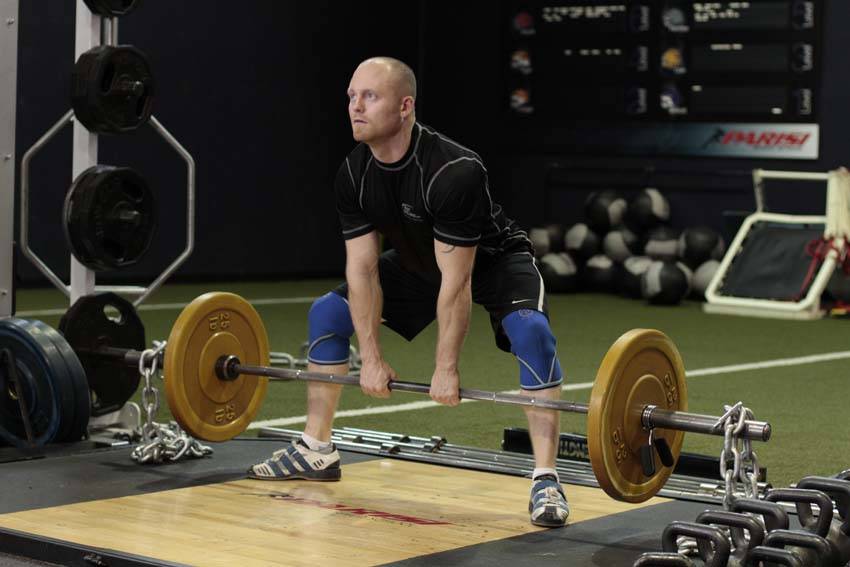
10. Sumo Deadlift With Chains
80.2% MatchHow to perform this exercise
- You can attach the chains to the sleeves of the bar, or just drape the middle over the bar so there is a greater weight increase as you lift. Attempt to keep the ends of the chains away from the plates so you don't hit them when you lower the weight.
- Begin with a bar loaded on the ground. Approach the bar so that the bar intersects the middle of the feet. The feet should be set very wide, near the collars. Bend at the hips to grip the bar. The arms should be directly below the shoulders, inside the legs, and you can use a pronated grip, a mixed grip, or hook grip. Relax the shoulders, which in effect lengthens your arms.
- Take a breath, and then lower your hips, looking forward with your head with your chest up. Drive through the floor, spreading your feet apart, with your weight on the back half of your feet. Extend through the hips and knees.
- As the bar passes through the knees, lean back and drive the hips into the bar, pulling your shoulder blades together.
- Return the weight to the ground by bending at the hips and controlling the weight on the way down.
Why You Might Need a Hurdle Hops Alternative
You may substitute hurdle hops because of impact concerns, joint pain, limited equipment, or a goal shift from explosiveness to strength. Plyometrics stress the Achilles, knee, and lumbar spine via high ground reaction forces, so lower-impact options reduce eccentric overload. Choose movements that still recruit hip extensors and hamstrings, e.g., RDLs for eccentric loading or kettlebell swings for powerful hip extension. Technique cue: hinge at the hips with a braced core and a neutral spine to maximize hamstring activation and protect the lumbar region.
How to Choose the Right Substitute
Select a substitute based on goal (power vs hypertrophy), current load tolerance, and available equipment. For power, pick plyometric options like broad jumps or box jumps and cue an explosive hip drive; for muscle growth, choose RDLs or Nordic curls and prioritize slow eccentric control to increase time under tension. Consider biomechanics: favor hip-hinge patterns to emphasize hamstring and glute activation, and reduce knee-dominant squatting if you want greater posterior-chain stimulus.
Frequently Asked Questions
What muscles does Hurdle Hops work?
Hurdle hops primarily target the hamstrings and glutes through explosive hip extension and the quadriceps via knee extension during landing. The exercise also engages the calves and core to stabilize the pelvis and control the stretch-shortening cycle during takeoff and landing.
What is the best bodyweight alternative to Hurdle Hops?
Broad jumps are the best bodyweight alternative for power; they use the same hip-extension pattern and stretch-shortening cycle. Cue an aggressive hip drive, swing the arms, and land softly with hips back and knees bent to maintain hamstring activation and reduce impact.
Can I build muscle without doing Hurdle Hops?
Yes. Build hamstring muscle with resistance exercises that emphasize the hip hinge and eccentric loading, Romanian deadlifts, single-leg RDLs, and Nordic hamstring curls increase time under tension and promote hypertrophy. Focus on progressive overload and controlled eccentrics while keeping technique: push hips back, maintain a neutral spine, and feel the stretch in the hamstrings.
More Exercise Alternatives
Find Alternatives for Any Exercise
Use the exercise substitution finder to compare ranked alternatives for your available equipment and training preference.
Try the Exercise Substitution Finder →