

10 Best Linear Acceleration Wall Drill Alternatives for Sprint Power
The Linear Acceleration Wall Drill is done standing. Ranked closest by our scoring: Hurdle Hops, Moving Claw Series and the Stiff-legged Dumbbell Deadlift. A harder version, the Kick Out Sit, is listed below as a progression rather than a swap.
Updated Ranked by our 12-factor similarity model How it works
Original Exercise: Linear Acceleration Wall Drill
- Primary muscle
- Hamstrings
- Equipment
- Bodyweight
- Difficulty
- Intermediate
- Type
- Compound
Secondary muscles: Calves, Glutes, Quadriceps
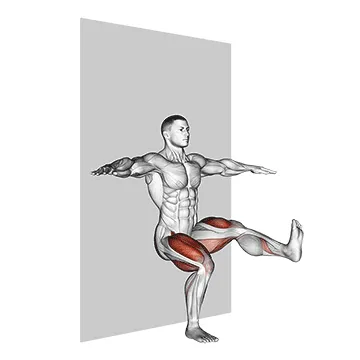
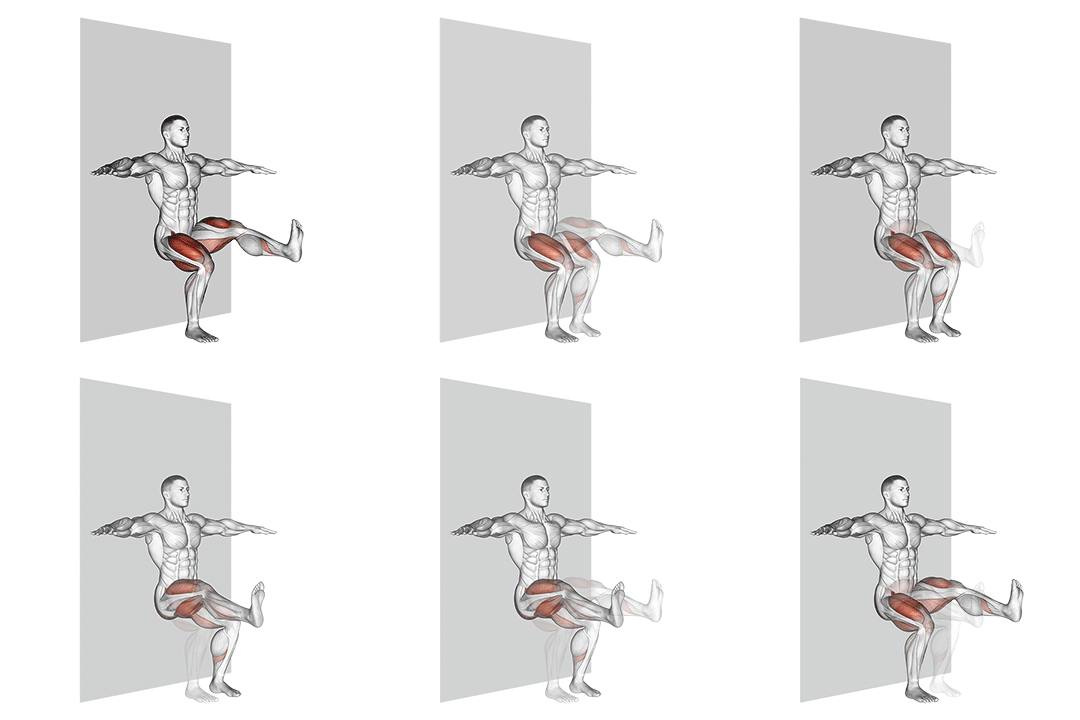
How to perform Linear Acceleration Wall Drill
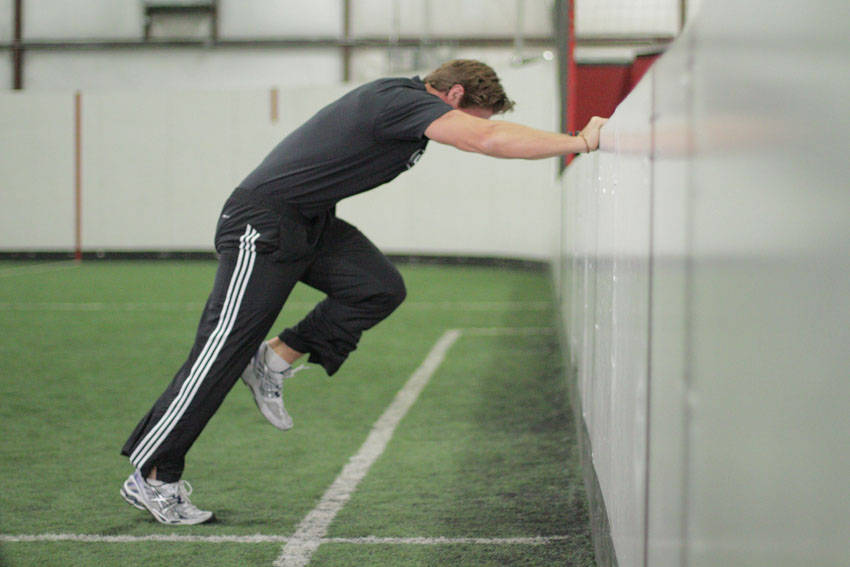
- Lean at around 45 degrees against a wall. Your feet should be together, glutes contracted.
- Begin by lifting your right knee quickly, pausing, and then driving it straight down into the ground.
- Switch legs, raising the opposite knee, and then attacking the ground straight down.
- Repeat once more with your right leg, and as soon as the right foot strikes the ground hammer them out rapidly, alternating left and right as fast as you can.
Ranked Linear Acceleration Wall Drill Alternatives
10 substitutes, ranked by how closely each one matches the Linear Acceleration Wall Drill on movement pattern, muscles worked, equipment and body position. The higher the score, the less you change. Open "How to perform this exercise" on a card for the steps; every card title links to that exercise's own alternatives page. Harder versions are tagged as progressions and kept out of the top spot even when they score higher.
Best match 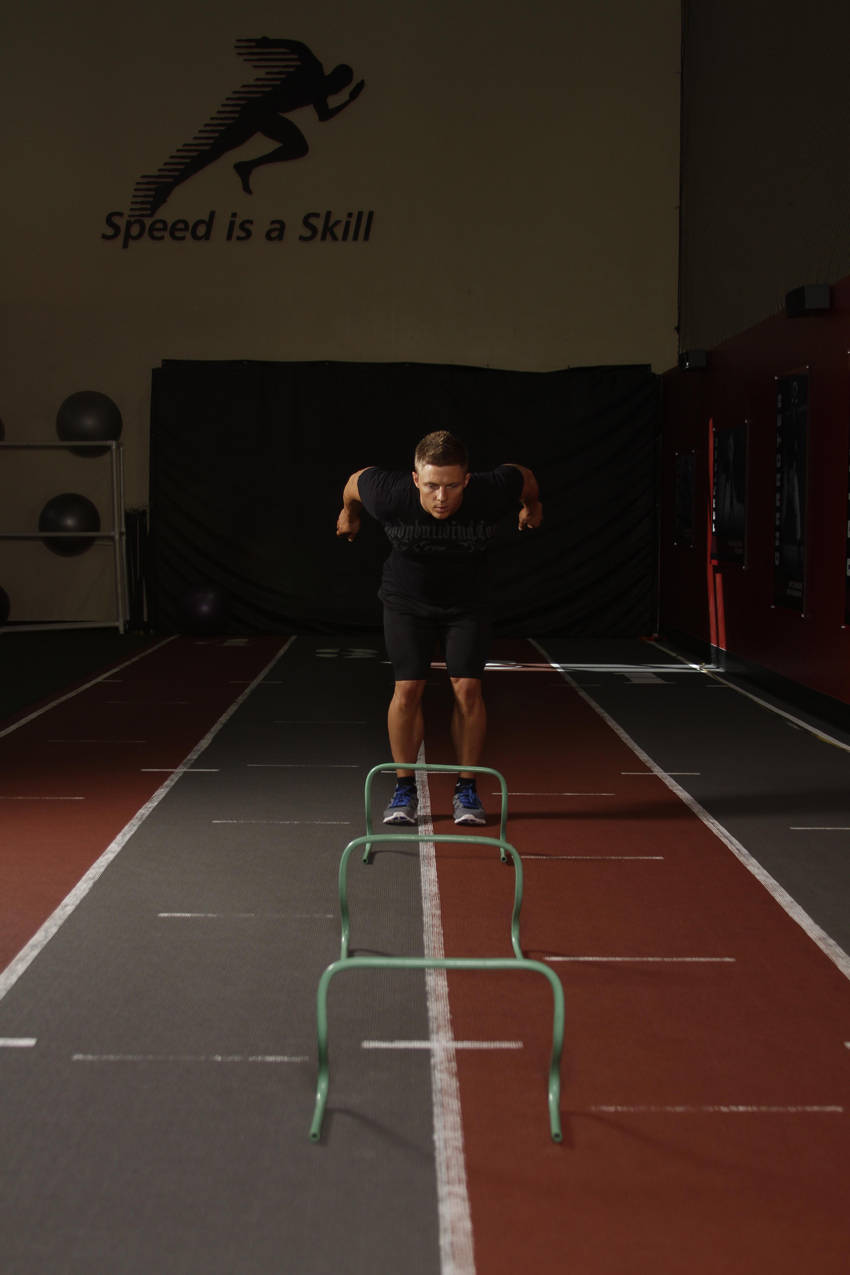
1. Hurdle Hops
87% match- Hamstrings
- Other
- Intermediate
- Compound
Pick this when you want a harder version that still works the hamstrings.
How to perform this exercise
- Set up a row of hurdles or other small barriers, placing them a few feet apart.
- Stand in front of the first hurdle with your feet shoulder width apart. This will be your starting position.
- Begin by jumping with both feet over the first hurdle, swinging both arms as you jump.
- Absorb the impact of landing by bending the knees, rebounding out of the first leap by jumping over the next hurdle. Continue until you have jumped over all of the hurdles.
Sets and reps: 3 or 4 sets of 6 to 10 reps.
Why this matches
- Primary muscle: hamstrings, the same as the Linear Acceleration Wall Drill
- Equipment: bodyweight only, the same as the Linear Acceleration Wall Drill
- Body position: standing, the same as the Linear Acceleration Wall Drill
- Balance: harder to stay steady on than the Linear Acceleration Wall Drill
2. Moving Claw Series
83% match- Hamstrings
- Bodyweight
- Intermediate
- Compound
Pick this when you want to work the hamstrings with more balance to manage.
How to perform this exercise
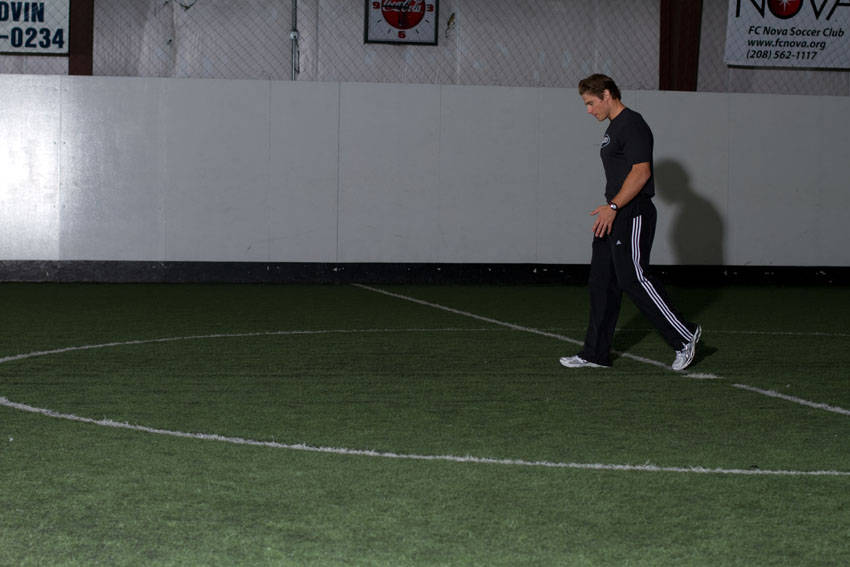
- This move helps prepare your running form to help you excel at sprinting. As you run, be sure to flex the knee, aiming to kick your glutes as the hip extends.
- Reload the quad as the leg moves back forward, attacking the ground on the next step.
- Ensure that as you run, you block with the arms, punching through in a rapid 1-2 motion.
Sets and reps: 3 or 4 sets of 6 to 10 reps on each side.
Why this matches
- Primary muscle: hamstrings, the same as the Linear Acceleration Wall Drill
- Equipment: bodyweight only, the same as the Linear Acceleration Wall Drill
- Body position: standing, the same as the Linear Acceleration Wall Drill
- Balance: harder to stay steady on than the Linear Acceleration Wall Drill
3. Front Cone Hops (Or Hurdle Hops)
79% match- Quads
- Other
- Advanced
- Compound
A looser match: it works the quads rather than the hamstrings.
How to perform this exercise
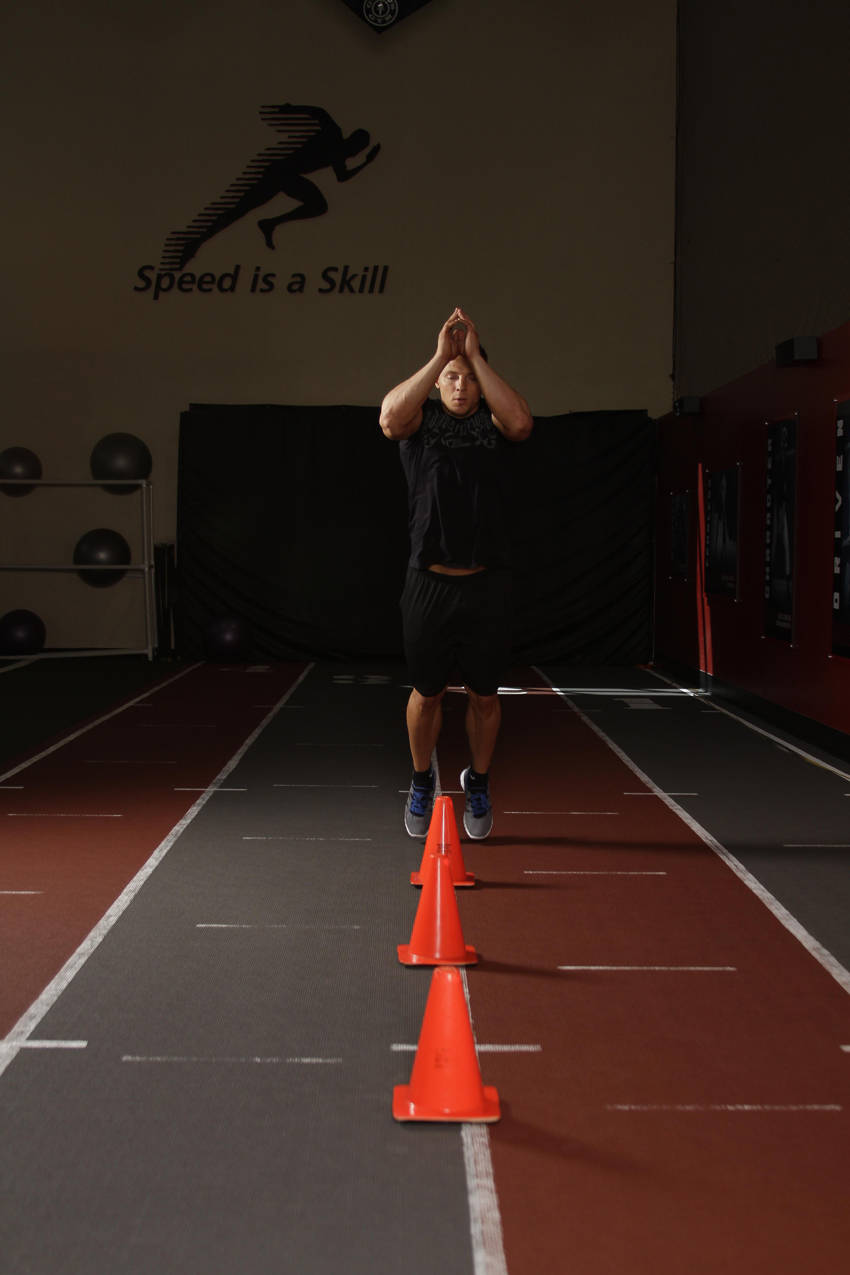
- Set up a row of cones or other small barriers, placing them a few feet apart.
- Stand in front of the first cone with your feet shoulder width apart. This will be your starting position.
- Begin by jumping with both feet over the first cone, swinging both arms as you jump.
- Absorb the impact of landing by bending the knees, rebounding out of the first leap by jumping over the next cone.
- Continue until you have jumped over all of the cones.
Sets and reps: 3 or 4 sets of 6 to 10 reps on each side.
Why this matches
- Primary muscle: quads, not hamstrings
- Equipment: bodyweight only, the same as the Linear Acceleration Wall Drill
- Body position: standing, the same as the Linear Acceleration Wall Drill
- Balance: harder to stay steady on than the Linear Acceleration Wall Drill
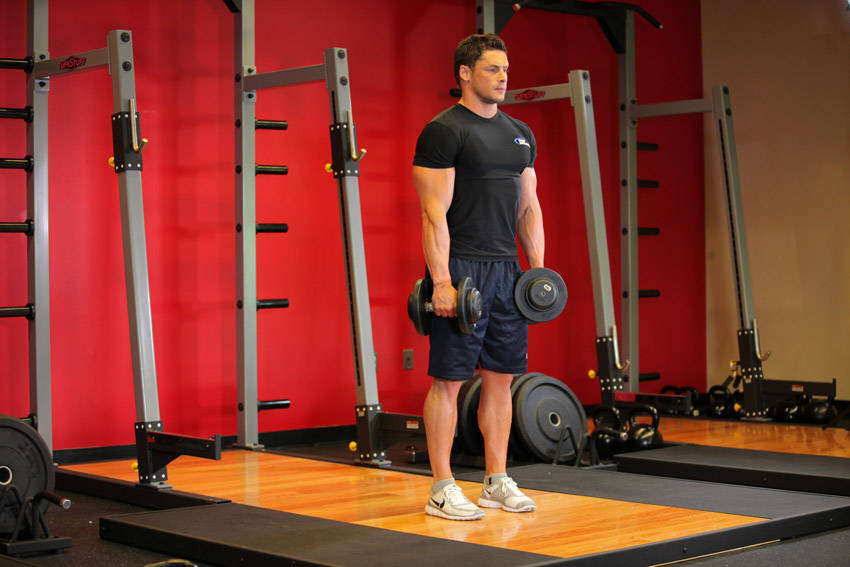
4. Stiff-legged Dumbbell Deadlift
78% match- Hamstrings
- Dumbbell
- Intermediate
- Compound
A good swap when you have dumbbells to work with, and it still works the hamstrings.
How to perform this exercise
- Grasp a couple of dumbbells holding them by your side at arm's length.
- Stand with your torso straight and your legs spaced using a shoulder width or narrower stance. The knees should be slightly bent. This is your starting position.
- Keeping the knees stationary, lower the dumbbells to over the top of your feet by bending at the waist while keeping your back straight. Keep moving forward as if you were going to pick something from the floor until you feel a stretch on the hamstrings. Exhale as you perform this movement
- Start bringing your torso up straight again by extending your hips and waist until you are back at the starting position. Inhale as you perform this movement.
- Repeat for the recommended amount of repetitions.
Sets and reps: 3 or 4 sets of 6 to 10 reps.
Why this matches
- Primary muscle: hamstrings, the same as the Linear Acceleration Wall Drill
- Equipment: free weights, not bodyweight only
- Body position: standing, the same as the Linear Acceleration Wall Drill
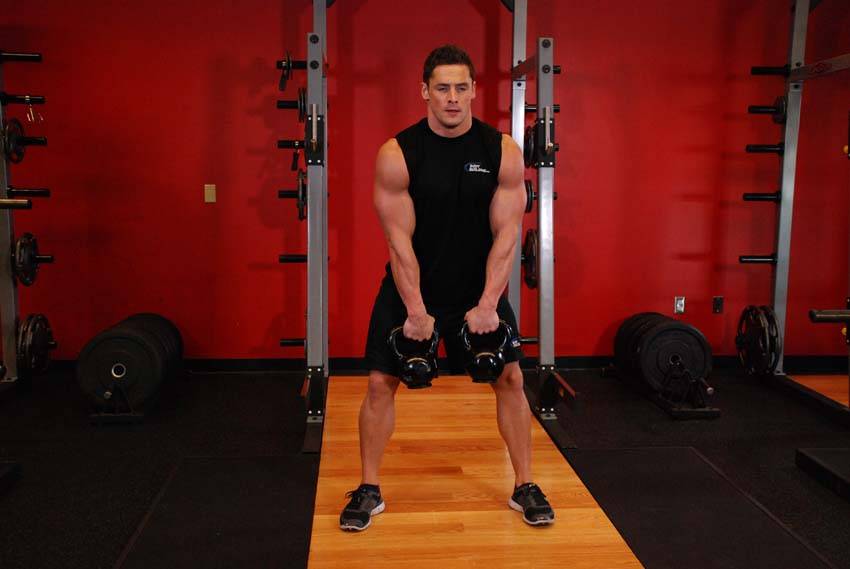
- Hamstrings
- Kettlebell
- Advanced
- Compound
A good swap when you have a kettlebell to work with, and it still works the hamstrings.
How to perform this exercise
- Place two kettlebells between your feet. To get in the starting position, push your butt back and look straight ahead.
- Clean one kettlebell to your shoulder and hold on to the other kettlebell.
- With a fluid motion, lower the top kettlebell while driving the bottom kettlebell up.
Sets and reps: 3 to 5 sets of 5 to 8 reps on each side.
Why this matches
- Primary muscle: hamstrings, the same as the Linear Acceleration Wall Drill
- Equipment: free weights, not bodyweight only
- Body position: standing, the same as the Linear Acceleration Wall Drill
- Balance: harder to stay steady on than the Linear Acceleration Wall Drill
Progression
6. Kick Out Sit
78% match- Hamstrings
- Bodyweight
- Intermediate
- Compound
How to perform this exercise
- Sit on the edge of a bench or chair with your feet flat on the ground and your knees bent at a 90-degree angle.
- Lean back slightly and place your hands on the edge of the bench or chair for support.
- Engaging your hamstrings, lift your feet off the ground and extend your legs straight out in front of you.
- Pause for a moment at the top, then slowly bend your knees and bring your feet back towards your body.
- Repeat for the desired number of repetitions.
Sets and reps: 3 or 4 sets of 6 to 10 reps on each side.
Why this matches
- Primary muscle: hamstrings, the same as the Linear Acceleration Wall Drill
- Equipment: bodyweight only, the same as the Linear Acceleration Wall Drill
- Body position: standing, the same as the Linear Acceleration Wall Drill
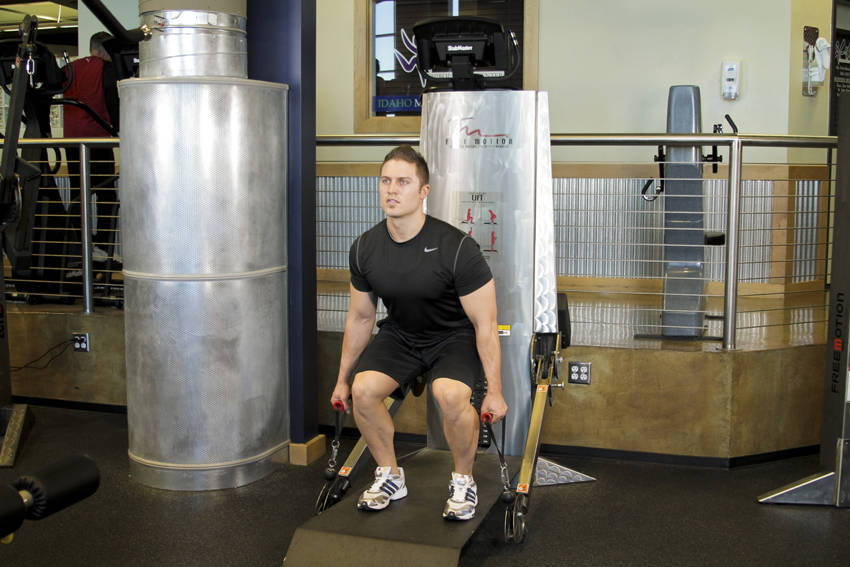
7. Cable Deadlifts
77% match- Hamstrings
- Cable
- Intermediate
- Compound
A good swap when you have a cable machine to work with, and it still works the hamstrings.
How to perform this exercise
- Move the cables to the bottom of the towers and select an appropriate weight. Stand directly in between the uprights.
- To begin, squat down be flexing your hips and knees until you can reach the handles.
- After grasping them, begin your ascent. Driving through your heels extend your hips and knees keeping your hands hanging at your side. Keep your head and chest up throughout the movement.
- After reaching a full standing position, Return to the starting position and repeat.
Sets and reps: 3 or 4 sets of 6 to 10 reps.
Why this matches
- Primary muscle: hamstrings, the same as the Linear Acceleration Wall Drill
- Equipment: a cable, not bodyweight only
- Body position: standing, the same as the Linear Acceleration Wall Drill
- Balance: easier to stay steady on than the Linear Acceleration Wall Drill
8. Self Assisted Inverse Leg Curl
75% match- Hamstrings
- Bodyweight
- Intermediate
- Isolation
How to perform this exercise
- Lie flat on your back on a mat or bench with your legs extended.
- Place your hands by your sides or under your glutes for support.
- Bend your knees and lift your feet off the ground, bringing your thighs towards your chest.
- Pause for a moment at the top, then slowly lower your legs back to the starting position.
- Repeat for the desired number of repetitions.
Sets and reps: 3 sets of 10 to 15 reps.
Why this matches
- Primary muscle: hamstrings, the same as the Linear Acceleration Wall Drill
- Equipment: bodyweight only, the same as the Linear Acceleration Wall Drill
- Body position: kneeling, not standing
- Hamstrings
- Bodyweight
- Beginner
- Isolation
How to perform this exercise
- Lie flat on your back with your legs extended and your arms by your sides.
- Bend your knees and place your feet flat on the ground, hip-width apart.
- Lift your hips off the ground, engaging your glutes and hamstrings.
- Slowly curl your legs towards your glutes, keeping your hips lifted.
- Pause for a moment at the top, then slowly extend your legs back to the starting position.
- Lower your hips back down to the ground.
- Repeat for the desired number of repetitions.
Sets and reps: 3 sets of 8 to 12 reps, and add reps before you add load.
Why this matches
- Primary muscle: hamstrings, the same as the Linear Acceleration Wall Drill
- Equipment: bodyweight only, the same as the Linear Acceleration Wall Drill
- Body position: kneeling, not standing
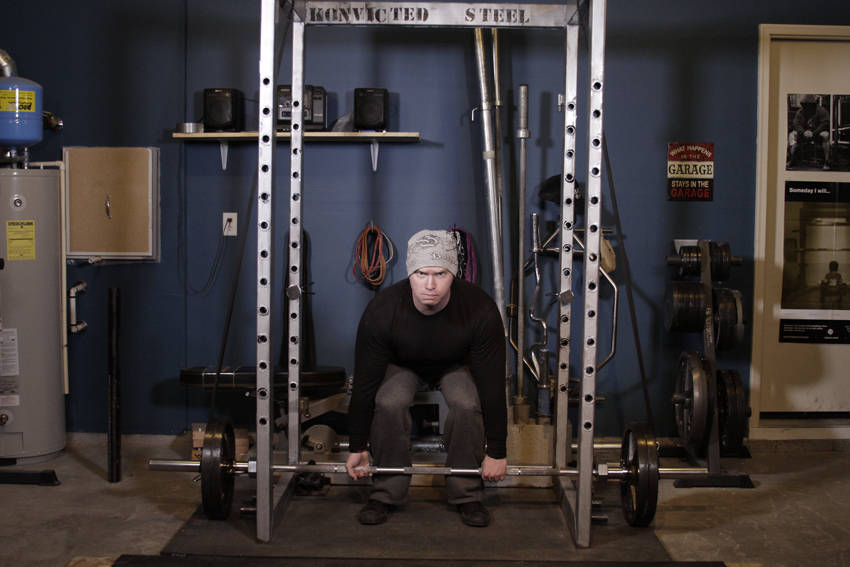
10. Reverse Band Deadlift
74% match- Hamstrings
- Barbell
- Advanced
- Compound
How to perform this exercise
- Set the bar up in a power rack. Attach bands to the top of the rack, using either bands pegs or the frame itself. Attach the other end of the bands to the bar.
- Approach the bar so that it is centered over your feet. You feet should be about hip width apart. Bend at the hip to grip the bar at shoulder width, allowing your shoulder blades to protract. Typically, you would use an overhand grip or an over/under grip on heavier sets.
- With your feet, and your grip set, take a big breath and then lower your hips and bend the knees until your shins contact the bar. Look forward with your head, keep your chest up and your back arched, and begin driving through the heels to move the weight upward.
- After the bar passes the knees, aggressively pull the bar back, pulling your shoulder blades together as you drive your hips forward into the bar.
- Lower the bar by bending at the hips and guiding it to the floor.
Sets and reps: 3 to 5 sets of 5 to 8 reps.
Why this matches
- Primary muscle: hamstrings, the same as the Linear Acceleration Wall Drill
- Equipment: free weights, not bodyweight only
- Body position: standing, the same as the Linear Acceleration Wall Drill
Why You Might Need a Linear Acceleration Wall Drill Alternative
You may substitute the wall drill for several reasons: acute hamstring pain, lack of wall space, coaching emphasis on eccentric strength, or a need for progression. Alternatives let you target hamstring eccentric control, hip extension power, or rate of force development specifically. For example, Nordic curls load the hamstrings eccentrically and train length-tension control; single-leg RDLs emphasize unilateral hip-hinge stability and glute-ham co-activation. Use a cue like "control the descent and snap the hips forward" to maintain the intended movement pattern and ensure the hamstrings are loaded through both hip extension and knee flexion.
How to Choose the Right Linear Acceleration Wall Drill Substitute
Select a substitute based on your training goal, equipment, and injury history. For pure RFD and sprint specificity, prioritize A-skips and sprint starts with short, maximal drives; cue: drive the ball of the foot into the ground and extend the hip rapidly. For strength or rehab, pick Nordic curls or single-leg RDLs to increase eccentric capacity and single-leg stability; cue: hinge from the hips, keep a long spine, and pull the heels toward the glutes. Monitor hamstring soreness and progress load with tempo, reps, or added band resistance to match the original drill's intent.
Linear Acceleration Wall Drill FAQ
What muscles does Linear Acceleration Wall Drill work?
The drill primarily targets the hamstrings and glutes by training hip extension and rapid knee drive, with secondary activation of the quads and core for posture. Biomechanically it trains the posterior chain to produce force quickly while the hamstrings eccentrically control leg recovery.
What is the best bodyweight alternative to Linear Acceleration Wall Drill?
For most athletes the Nordic hamstring curl is the best bodyweight alternative because it overloads hamstring eccentrics and builds injury-resistant tissue. Cue: anchor the feet, hinge from the knees and hips, lower slowly for 3 seconds and push back up with your hands if needed to finish the rep.
Find Alternatives for Any Exercise
Search the exercise database and filter the ranked substitutes by the equipment you own.
Similarity scores compare exercise metadata such as movement pattern, muscles, equipment and body position. They are not a safety rating or a check that you own the equipment. Learn about our methodology