

10 Best Medicine Ball Chest Push Multiple Response Alternatives for Home Gyms
The Medicine Ball Chest Push Multiple Response is done standing with a medicine ball. Ranked closest by our scoring: the Modified Hindu Push-up, Isometric Chest Squeezes and the Chest Tap Push-up.
Updated Ranked by our 12-factor similarity model How it works
Original Exercise: Medicine Ball Chest Push Multiple Response
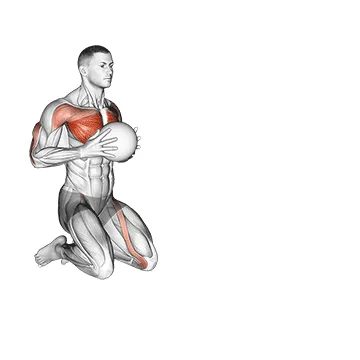
- Primary muscle
- Pectorals
- Equipment
- Medicine-ball
- Difficulty
- Intermediate
- Type
- Compound
Secondary muscles: Triceps, Shoulders
How to perform Medicine Ball Chest Push Multiple Response
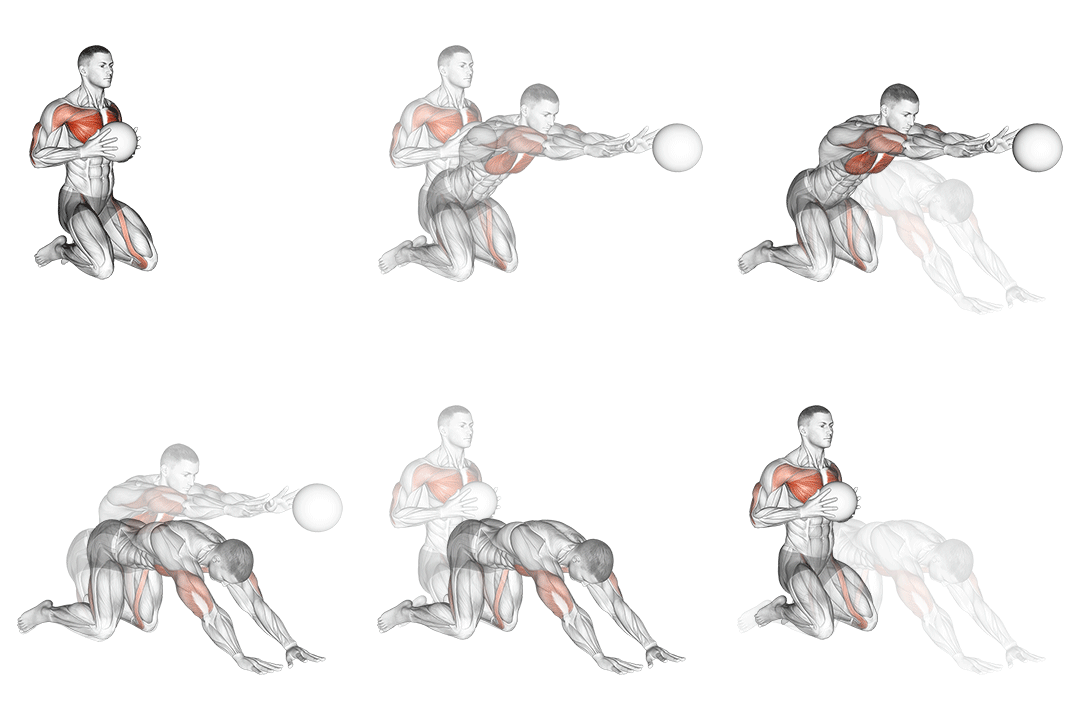
- Stand with your feet shoulder-width apart, holding a medicine ball at chest level.
- Extend your arms forward, pushing the medicine ball away from your chest.
- Pause for a moment, then slowly bring the medicine ball back to your chest.
- Repeat for the desired number of repetitions.
Ranked Medicine Ball Chest Push Multiple Response Alternatives
10 substitutes, ranked by how closely each one matches the Medicine Ball Chest Push Multiple Response on movement pattern, muscles worked, equipment and body position. The higher the score, the less you change. Open "How to perform this exercise" on a card for the steps; every card title links to that exercise's own alternatives page.
Best match 1. Modified Hindu Push-up
80% match- Pectorals
- Bodyweight
- Intermediate
- Compound
Use this when you have nothing to train with, because it works the pectorals with bodyweight alone.
How to perform this exercise
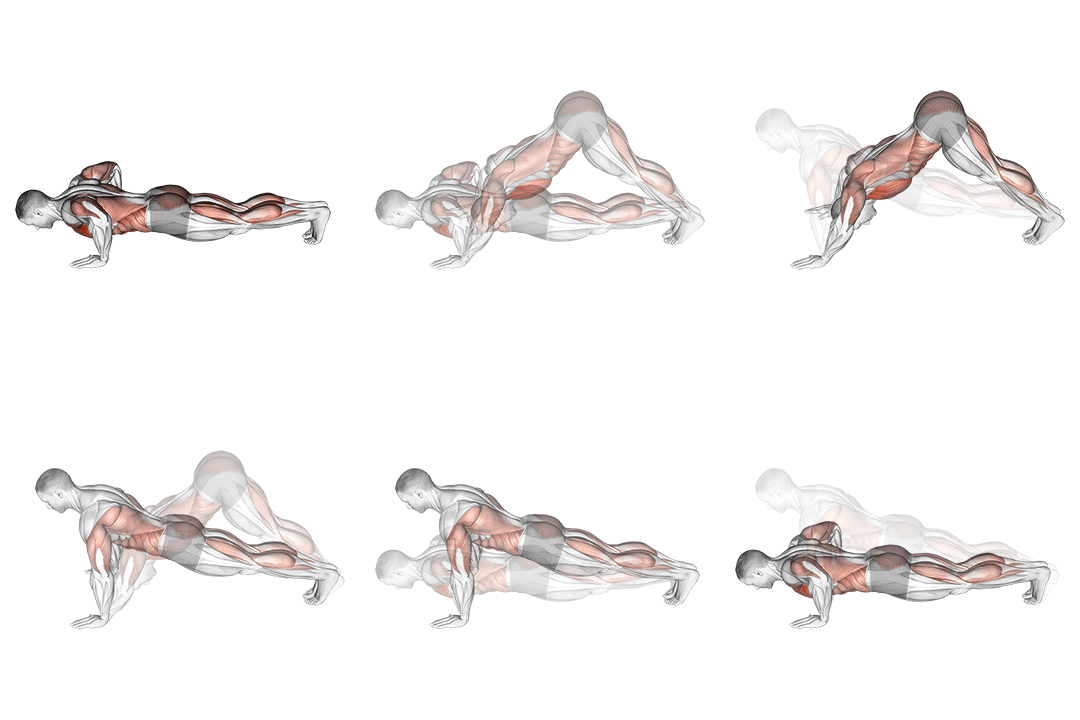
- Start in a push-up position with your hands slightly wider than shoulder-width apart and your feet hip-width apart.
- Lower your body towards the ground, bending your elbows and keeping your core engaged.
- As you lower your body, shift your weight back and lift your hips up towards the ceiling, creating an inverted V shape with your body.
- Continue to lower your body until your chest is just above the ground, then reverse the movement, pushing your hips back down and extending your arms to return to the starting position.
- Repeat for the desired number of repetitions.
Sets and reps: 3 or 4 sets of 6 to 10 reps.
Why this matches
- Primary muscle: pectorals, the same as the Medicine Ball Chest Push Multiple Response
- Equipment: bodyweight only, not free weights
- Body position: standing, the same as the Medicine Ball Chest Push Multiple Response
- Balance: harder to stay steady on than the Medicine Ball Chest Push Multiple Response
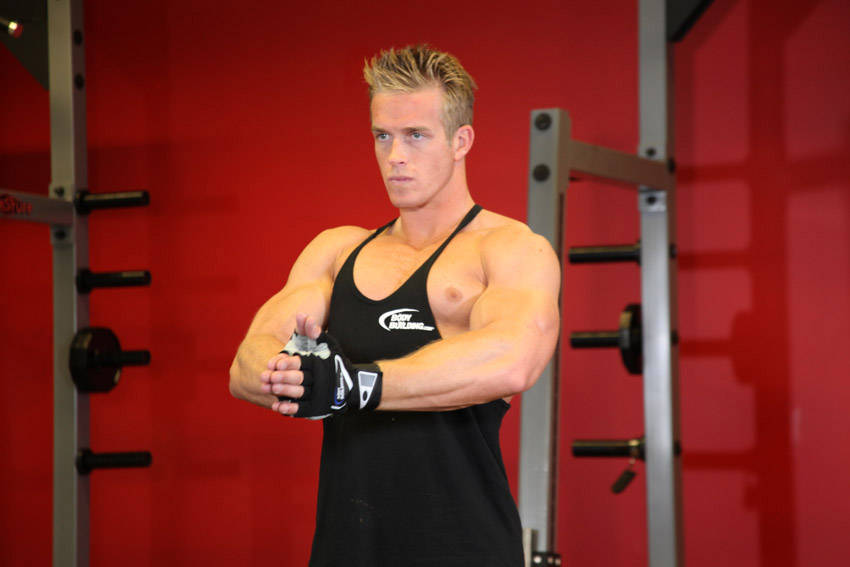
2. Isometric Chest Squeezes
78% match- Pectorals
- Bodyweight
- Beginner
- Isolation
How to perform this exercise
- While either seating or standing, bend your arms at a 90-degree angle and place the palms of your hands together in front of your chest. Tip: Your hands should be open with the palms together and fingers facing forward (perpendicular to your torso).
- Push both hands against each other as you contract your chest. Start with slow tension and increase slowly. Keep breathing normally as you execute this contraction.
- Hold for the recommended number of seconds.
- Now release the tension slowly.
- Rest for the recommended amount of time and repeat.
Sets and reps: Hold for 20 to 30 seconds, 3 sets.
Why this matches
- Primary muscle: pectorals, the same as the Medicine Ball Chest Push Multiple Response
- Equipment: bodyweight only, not free weights
- Body position: standing, the same as the Medicine Ball Chest Push Multiple Response
- Balance: easier to stay steady on than the Medicine Ball Chest Push Multiple Response
3. Chest Tap Push-up
75% match- Pectorals
- Bodyweight
- Advanced
- Compound
How to perform this exercise
- Start in a high plank position with your hands slightly wider than shoulder-width apart and your body in a straight line.
- Lower your body towards the ground by bending your elbows, keeping them close to your sides.
- As you lower yourself, tap your chest with your right hand.
- Push yourself back up to the starting position.
- Repeat the movement, this time tapping your chest with your left hand.
- Continue alternating sides for the desired number of repetitions.
Sets and reps: 3 or 4 sets of 6 to 10 reps.
Why this matches
- Primary muscle: pectorals, the same as the Medicine Ball Chest Push Multiple Response
- Equipment: bodyweight only, not free weights
- Body position: lying face down, not standing
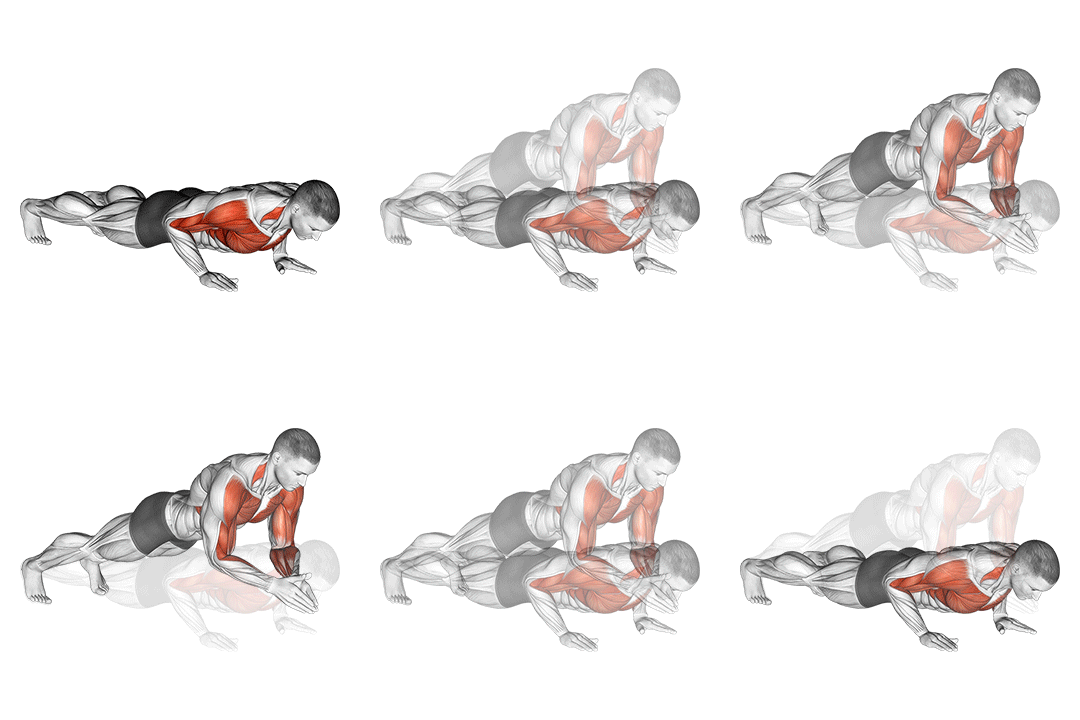
4. Clap Push Up
74% match- Pectorals
- Bodyweight
- Advanced
- Compound
How to perform this exercise
- Start in a high plank position with your hands slightly wider than shoulder-width apart.
- Lower your body towards the ground by bending your elbows, keeping your core engaged.
- Push through your palms explosively to propel your body off the ground.
- While in mid-air, clap your hands together before landing back in the starting position.
- Repeat for the desired number of repetitions.
Sets and reps: 3 or 4 sets of 6 to 10 reps.
Why this matches
- Primary muscle: pectorals, the same as the Medicine Ball Chest Push Multiple Response
- Equipment: bodyweight only, not free weights
- Body position: lying face down, not standing
5. Wide Hand Push Up
73% match- Pectorals
- Bodyweight
- Beginner
- Compound
How to perform this exercise
- Start in a high plank position with your hands wider than shoulder-width apart.
- Keep your body in a straight line from head to toe.
- Lower your chest towards the ground by bending your elbows, keeping them close to your sides.
- Push through your palms to extend your arms and return to the starting position.
- Repeat for the desired number of repetitions.
Sets and reps: 3 sets of 8 to 12 reps, and add reps before you add load.
Why this matches
- Primary muscle: pectorals, the same as the Medicine Ball Chest Push Multiple Response
- Equipment: bodyweight only, not free weights
- Body position: lying face down, not standing
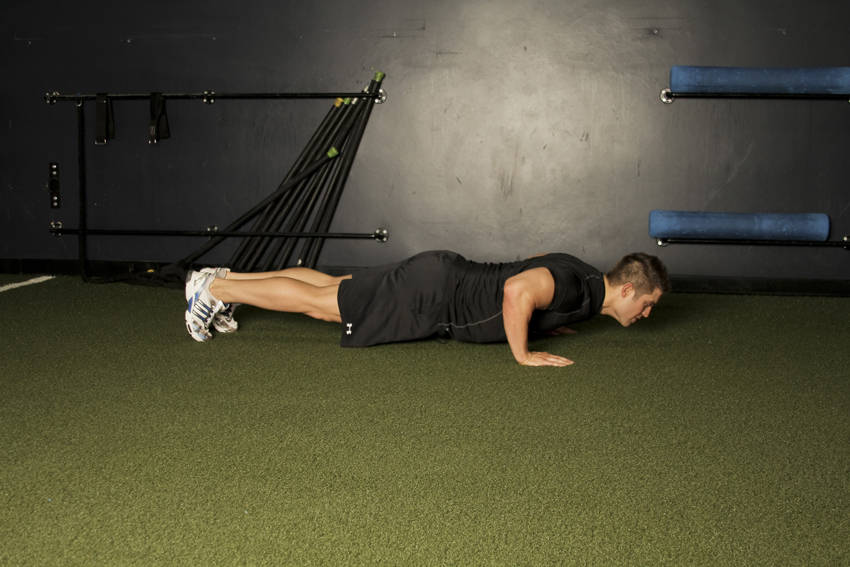
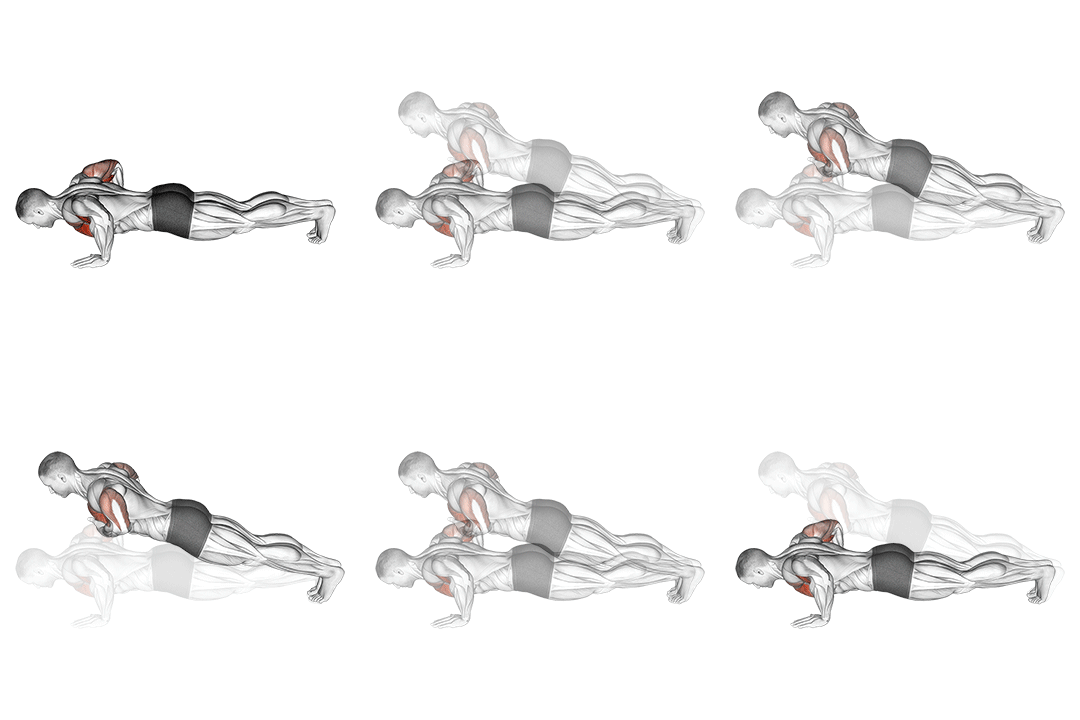
6. Plyo Push-up
73% match- Pectorals
- Bodyweight
- Advanced
- Compound
How to perform this exercise
- Move into a prone position on the floor, supporting your weight on your hands and toes.
- Your arms should be fully extended with the hands around shoulder width. Keep your body straight throughout the movement. This will be your starting position.
- Descend by flexing at the elbow, lowering your chest towards the ground.
- At the bottom, reverse the motion by pushing yourself up through elbow extension as quickly as possible. Attempt to push your upper body up until your hands leave the ground.
- Return to the starting position and repeat the exercise.
- For added difficulty, add claps into the movement while you are air borne.
Sets and reps: 3 or 4 sets of 6 to 10 reps.
Why this matches
- Primary muscle: pectorals, the same as the Medicine Ball Chest Push Multiple Response
- Equipment: bodyweight only, not free weights
- Body position: lying face down, not standing
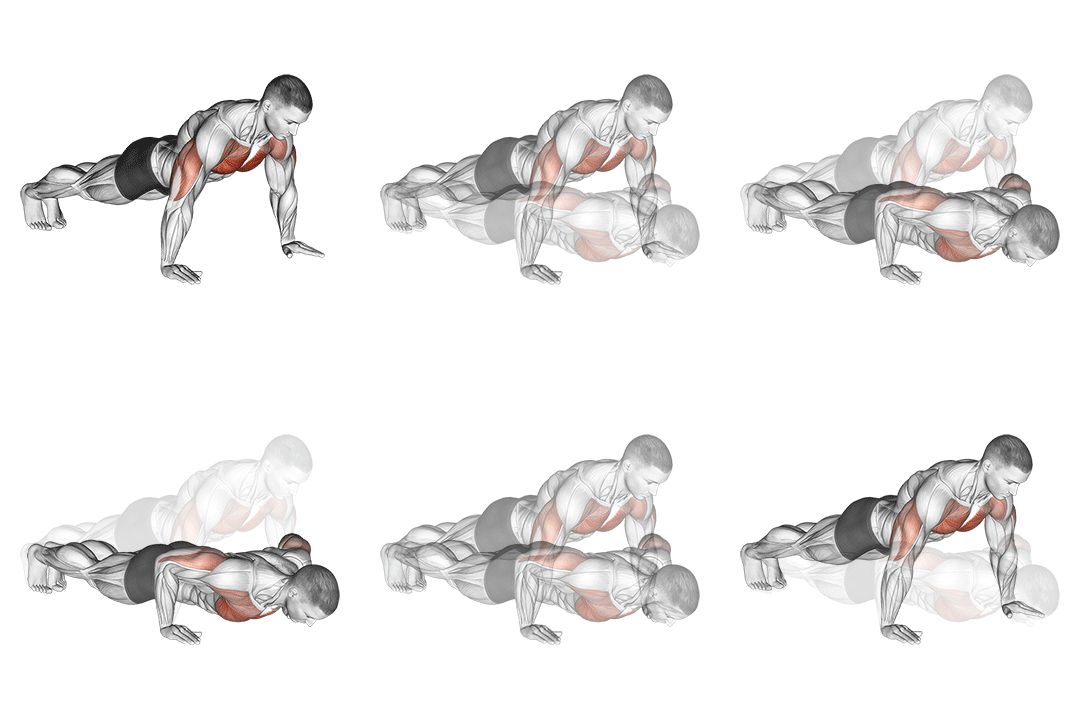
7. Push-up
73% match- Pectorals
- Bodyweight
- Intermediate
- Compound
How to perform this exercise
- Start in a high plank position with your hands slightly wider than shoulder-width apart and your feet together.
- Engage your core and lower your body towards the ground by bending your elbows, keeping your body in a straight line.
- Pause for a moment when your chest is just above the ground, then push yourself back up to the starting position by straightening your arms.
- Repeat for the desired number of repetitions.
Sets and reps: 3 or 4 sets of 6 to 10 reps.
Why this matches
- Primary muscle: pectorals, the same as the Medicine Ball Chest Push Multiple Response
- Equipment: bodyweight only, not free weights
- Body position: lying face down, not standing

- Pectorals
- Bodyweight
- Intermediate
- Compound
How to perform this exercise
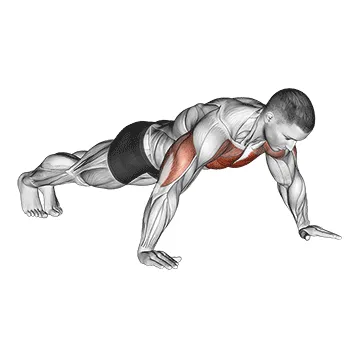
- Lie on the floor face down and body straight with your toes on the floor and the hands wider than shoulder width for a wide hand position and closer than shoulder width for a close hand position. Make sure you are holding your torso up at arms length.
- Lower yourself until your chest almost touches the floor as you inhale.
- Using your pectoral muscles, press your upper body back up to the starting position and squeeze your chest. Breathe out as you perform this step.
- After a second pause at the contracted position, repeat the movement for the prescribed amount of repetitions.
Sets and reps: 3 or 4 sets of 6 to 10 reps.
Why this matches
- Primary muscle: pectorals, the same as the Medicine Ball Chest Push Multiple Response
- Equipment: bodyweight only, not free weights
- Body position: lying face down, not standing
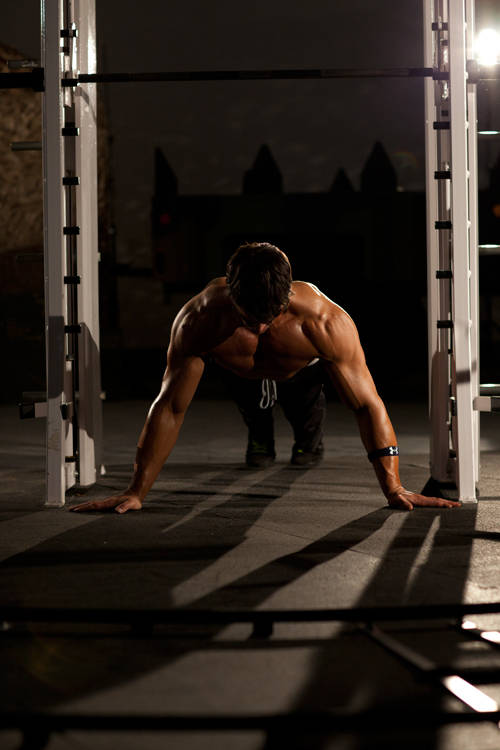
9. Push-up Wide
73% match- Pectorals
- Bodyweight
- Beginner
- Compound
How to perform this exercise
- With your hands wide apart, support your body on your toes and hands in a plank position. Your elbows should be extended and your body straight. Do not allow your hips to sag. This will be your starting position.
- To begin, allow the elbows to flex, lowering your chest to the floor as you inhale.
- Using your pectoral muscles, press your upper body back up to the starting position by extending the elbows. Exhale as you perform this step.
- After pausing at the contracted position, repeat the movement for the prescribed amount of repetitions.
Sets and reps: 3 sets of 8 to 12 reps, and add reps before you add load.
Why this matches
- Primary muscle: pectorals, the same as the Medicine Ball Chest Push Multiple Response
- Equipment: bodyweight only, not free weights
- Body position: lying face down, not standing
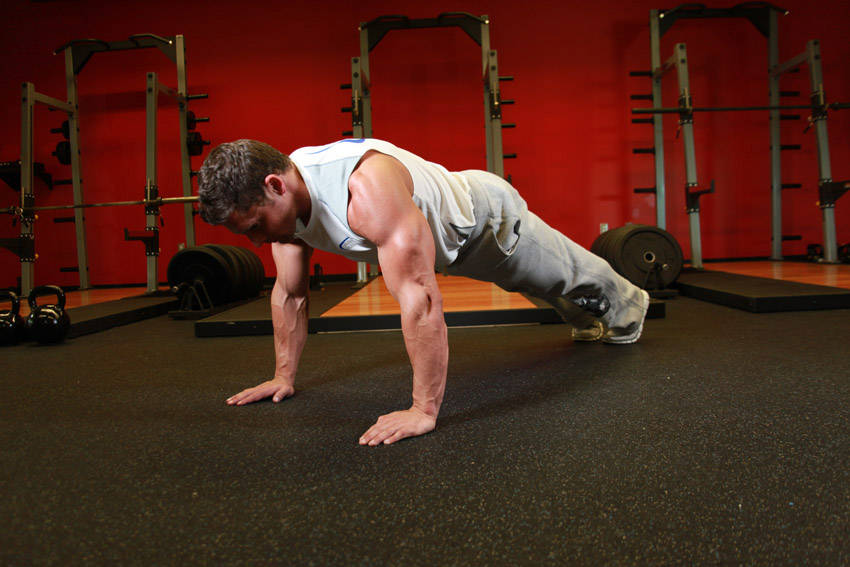
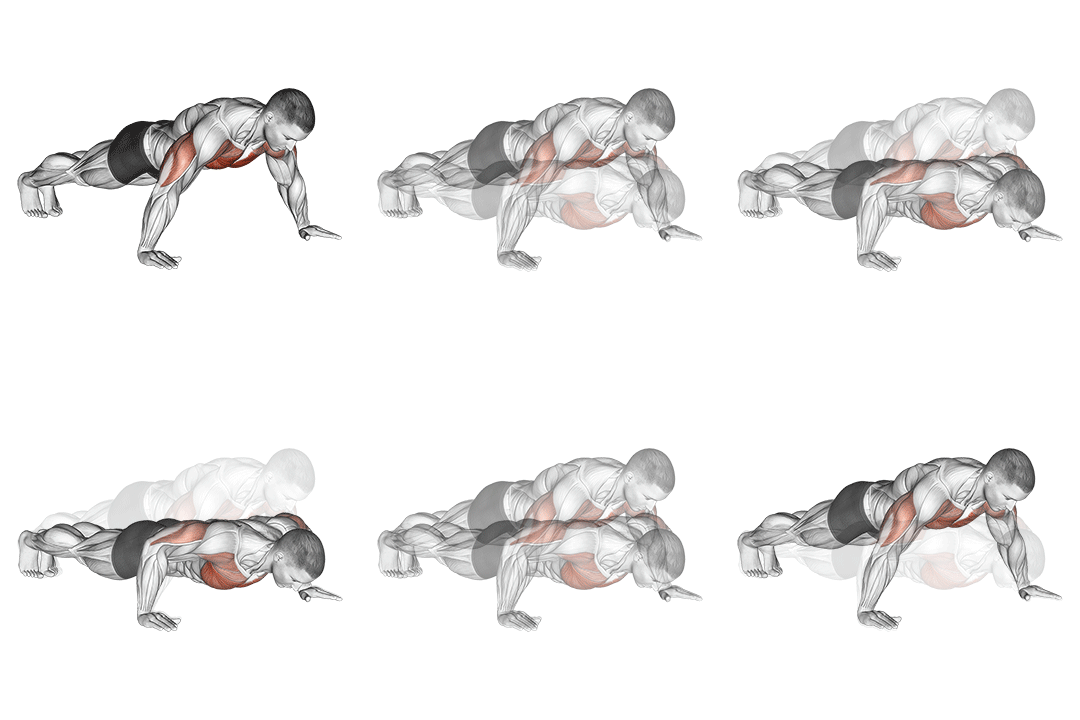
10. Pushups
73% match- Pectorals
- Bodyweight
- Beginner
- Compound
How to perform this exercise
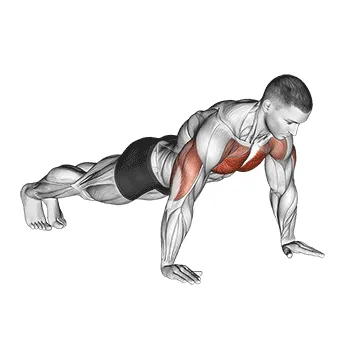
- Lie on the floor face down and place your hands about 36 inches apart while holding your torso up at arms length.
- Next, lower yourself downward until your chest almost touches the floor as you inhale.
- Now breathe out and press your upper body back up to the starting position while squeezing your chest.
- After a brief pause at the top contracted position, you can begin to lower yourself downward again for as many repetitions as needed.
Sets and reps: 3 sets of 8 to 12 reps, and add reps before you add load.
Why this matches
- Primary muscle: pectorals, the same as the Medicine Ball Chest Push Multiple Response
- Equipment: bodyweight only, not free weights
- Body position: lying face down, not standing
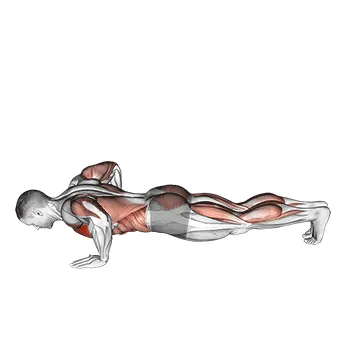
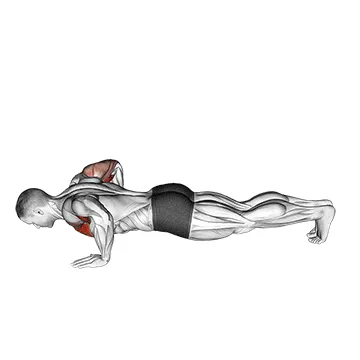
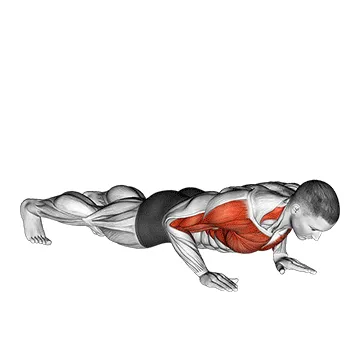
How to Choose the Right Medicine Ball Chest Push Multiple Response Substitute
Match the substitute to the movement pattern, loading method, and your goals. For power development, choose explosive push variations (e.g., medicine-ball throws or plyo push-ups); cue an aggressive scapular protraction and fast concentric drive. For hypertrophy use controlled dumbbell or cable presses with full range and slow eccentrics to increase time under tension and pectoral recruitment. Consider unilateral options if you need to fix imbalances, and pick neutral-grip presses if you have anterior shoulder issues. Also assess available equipment and required joint stability; always brace the core and maintain a stable thoracic position during horizontal pressing.
Medicine Ball Chest Push Multiple Response FAQ
What muscles does Medicine Ball Chest Push Multiple Response work?
The exercise primarily targets the pectoralis major (horizontal adduction), with secondary recruitment of the anterior deltoid, triceps brachii, and serratus anterior for scapular protraction. The core and hips also stabilize and transfer force during explosive pushes; cue a tight midline and driven palms for maximal chest engagement.
Can I build muscle without doing Medicine Ball Chest Push Multiple Response?
Yes. You can build chest muscle using progressive overload via bench presses, dumbbell presses, cable flyes, and controlled push-up progressions. Prioritize full range of motion, slow eccentrics, and incremental load increases to stimulate pectoralis major hypertrophy.
Find Alternatives for Any Exercise
Search the exercise database and filter the ranked substitutes by the equipment you own.
Similarity scores compare exercise metadata such as movement pattern, muscles, equipment and body position. They are not a safety rating or a check that you own the equipment. Learn about our methodology