

10 Best Medicine Ball Chest Push With Run Release Alternatives for Home Gyms
The Medicine Ball Chest Push With Run Release is done standing with a medicine ball. Ranked closest by our scoring: the Medicine Ball Chest Pass, the Medicine Ball Chest Push Multiple Response and the Medicine Ball Chest Push Single Response.
Updated Ranked by our 12-factor similarity model How it works
Original Exercise: Medicine Ball Chest Push With Run Release
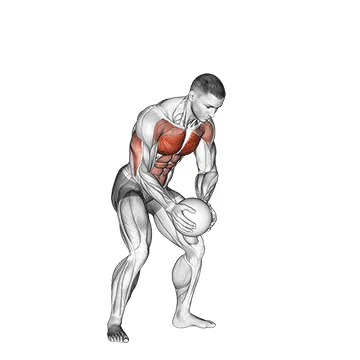
- Primary muscle
- Pectorals
- Equipment
- Medicine-ball
- Difficulty
- Advanced
- Type
- Compound
Secondary muscles: Triceps, Shoulders, Core
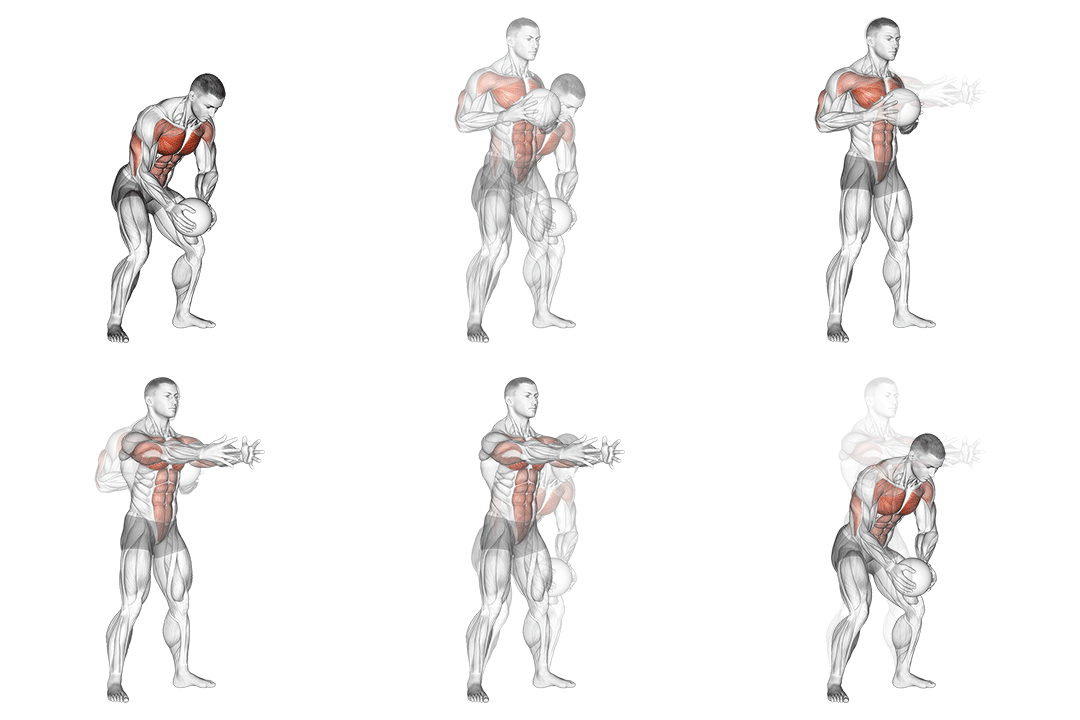
How to perform Medicine Ball Chest Push With Run Release
- Stand with your feet shoulder-width apart, holding a medicine ball at chest level.
- Step forward with your right foot and simultaneously push the medicine ball forward, extending your arms fully.
- As you push the ball forward, release it and let it roll forward.
- Quickly run forward and catch the ball before it hits the ground.
- Once you catch the ball, bring it back to your chest and repeat the movement with your left foot forward.
- Continue alternating legs and repeating the exercise for the desired number of repetitions.
Ranked Medicine Ball Chest Push With Run Release Alternatives
10 substitutes, ranked by how closely each one matches the Medicine Ball Chest Push With Run Release on movement pattern, muscles worked, equipment and body position. The higher the score, the less you change. Open "How to perform this exercise" on a card for the steps; every card title links to that exercise's own alternatives page.
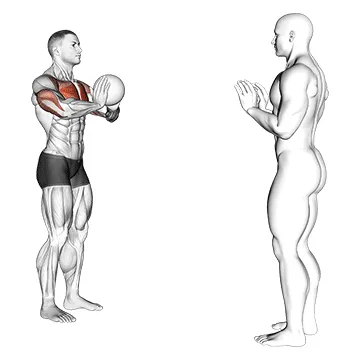
Best match 1. Medicine Ball Chest Pass
99% match- Pectorals
- Medicine-ball
- Intermediate
- Compound
Pick this when you want an easier version that still works the pectorals.
How to perform this exercise
- Stand with your feet shoulder-width apart, holding the medicine ball at chest level.
- Extend your arms forward, pushing the medicine ball away from your chest with force.
- As you release the ball, follow through with your arms and torso, transferring your weight from your back foot to your front foot.
- Catch the ball as it rebounds off the wall or partner, and immediately repeat the movement.
- Continue for the desired number of repetitions.
Sets and reps: 3 or 4 sets of 6 to 10 reps.
Why this matches
- Primary muscle: pectorals, the same as the Medicine Ball Chest Push With Run Release
- Equipment: free weights, the same as the Medicine Ball Chest Push With Run Release
- Body position: standing, the same as the Medicine Ball Chest Push With Run Release
- Pectorals
- Medicine-ball
- Intermediate
- Compound
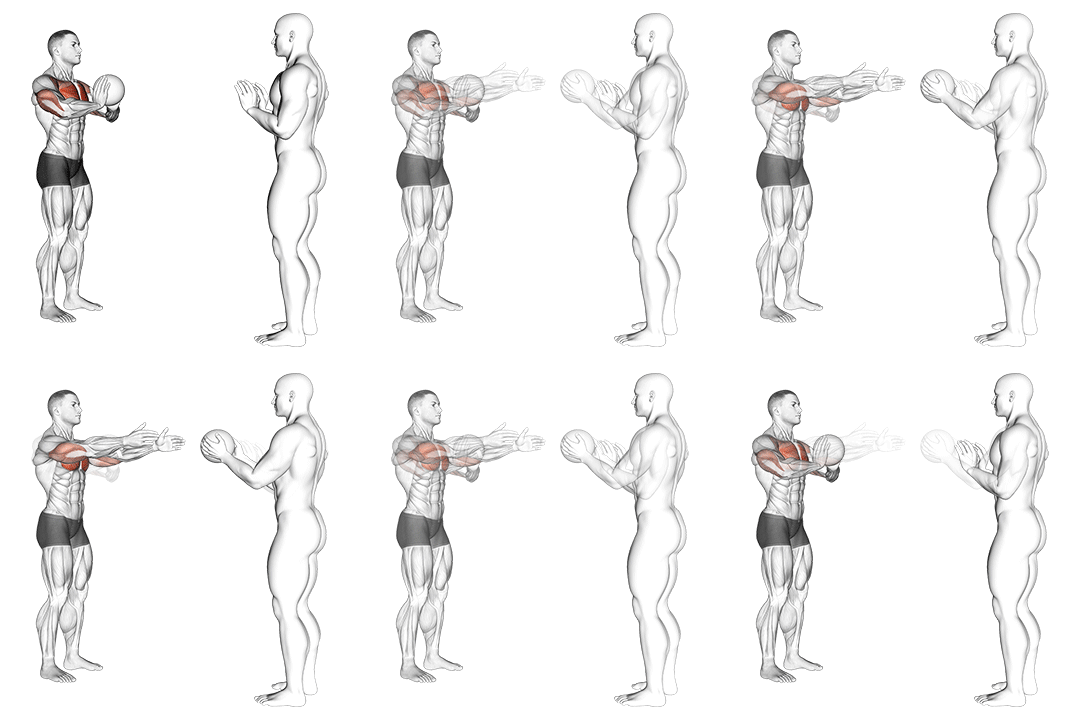
How to perform this exercise
- Stand with your feet shoulder-width apart, holding a medicine ball at chest level.
- Extend your arms forward, pushing the medicine ball away from your chest.
- Pause for a moment, then slowly bring the medicine ball back to your chest.
- Repeat for the desired number of repetitions.
Sets and reps: 3 or 4 sets of 6 to 10 reps.
Why this matches
- Primary muscle: pectorals, the same as the Medicine Ball Chest Push With Run Release
- Equipment: free weights, the same as the Medicine Ball Chest Push With Run Release
- Body position: standing, the same as the Medicine Ball Chest Push With Run Release
- Pectorals
- Medicine-ball
- Intermediate
- Compound
How to perform this exercise
- Stand with your feet shoulder-width apart, holding the medicine ball at chest level.
- Extend your arms forward, pushing the medicine ball away from your chest.
- Pause for a moment, then slowly bring the medicine ball back to your chest.
- Repeat for the desired number of repetitions.
Sets and reps: 3 or 4 sets of 6 to 10 reps.
Why this matches
- Primary muscle: pectorals, the same as the Medicine Ball Chest Push With Run Release
- Equipment: free weights, the same as the Medicine Ball Chest Push With Run Release
- Body position: standing, the same as the Medicine Ball Chest Push With Run Release
- Pectorals
- Medicine-ball
- Intermediate
- Compound
How to perform this exercise
- Start in a 3 point stance with one hand on the medicine ball and the other hand on the ground.
- Extend your legs and position your body in a straight line.
- Lower your chest towards the ground while keeping your back straight.
- Push the medicine ball away from your body, extending your arm fully.
- Return to the starting position and repeat for the desired number of repetitions.
Sets and reps: 3 or 4 sets of 6 to 10 reps.
Why this matches
- Primary muscle: pectorals, the same as the Medicine Ball Chest Push With Run Release
- Equipment: free weights, the same as the Medicine Ball Chest Push With Run Release
- Body position: standing, the same as the Medicine Ball Chest Push With Run Release
- Balance: harder to stay steady on than the Medicine Ball Chest Push With Run Release
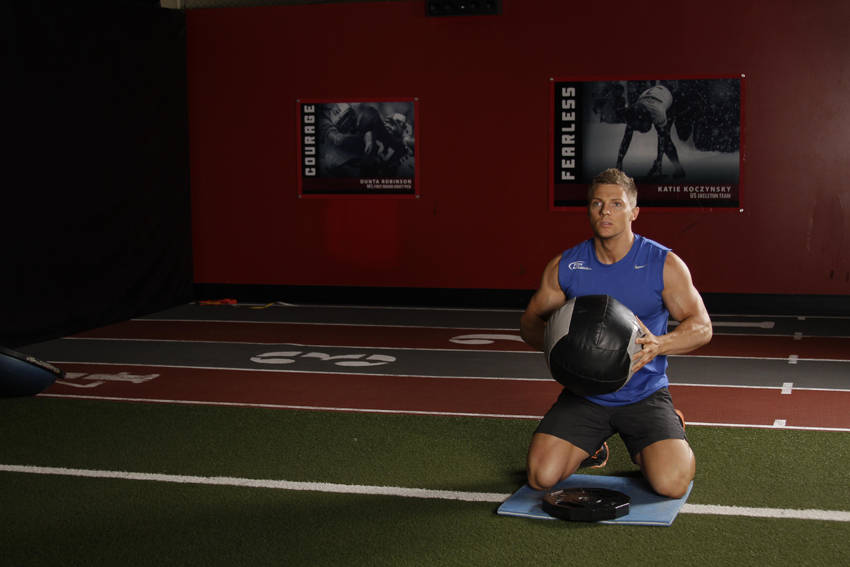
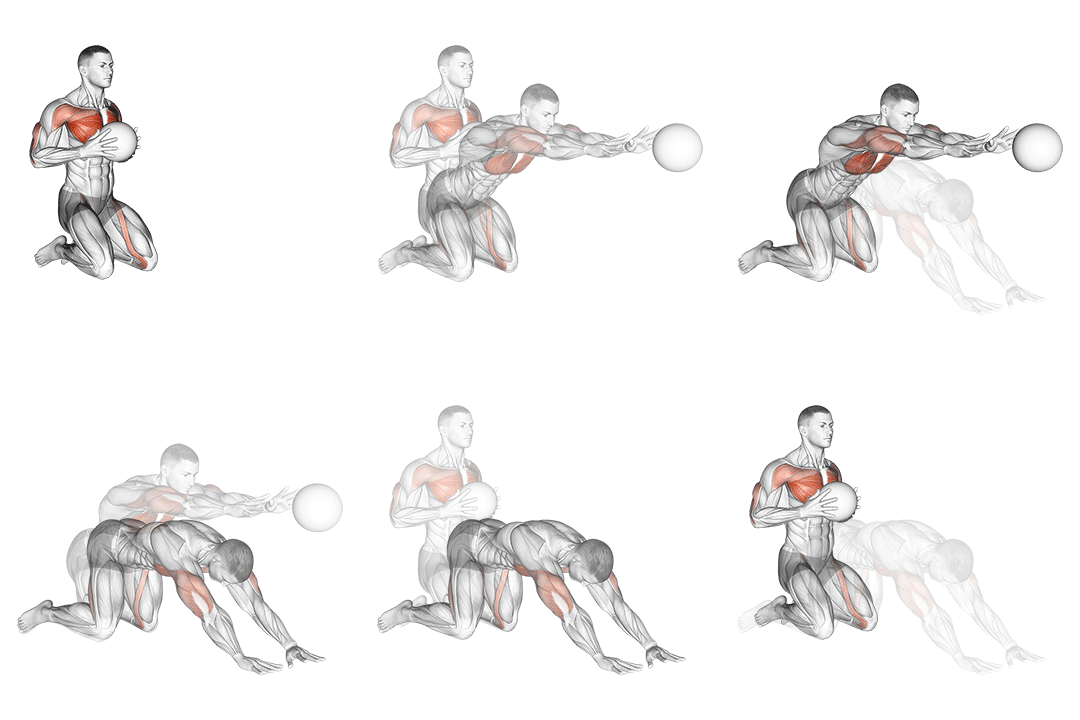
5. Chest Push (Single Response)
94% match- Pectorals
- Medicine-ball
- Beginner
- Compound
How to perform this exercise
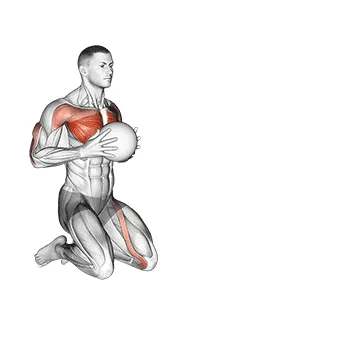
- Begin in a kneeling position holding the medicine ball with both hands tightly into the chest.
- Execute the pass by exploding forward and outward with the hips while pushing the ball as far as possible.
- Follow through by falling forward, catching yourself with your hands.
Sets and reps: 3 or 4 sets of 6 to 10 reps.
Why this matches
- Primary muscle: pectorals, the same as the Medicine Ball Chest Push With Run Release
- Equipment: free weights, the same as the Medicine Ball Chest Push With Run Release
- Body position: standing, the same as the Medicine Ball Chest Push With Run Release
- Balance: harder to stay steady on than the Medicine Ball Chest Push With Run Release
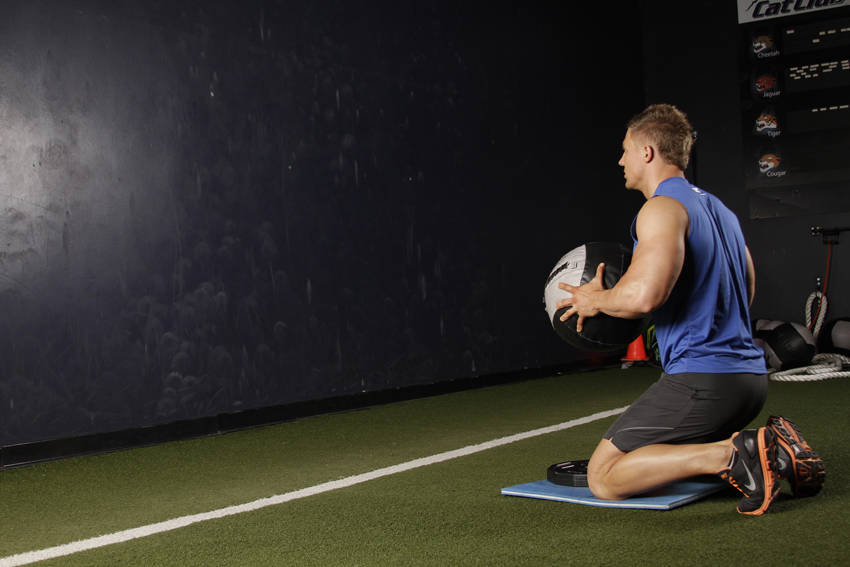
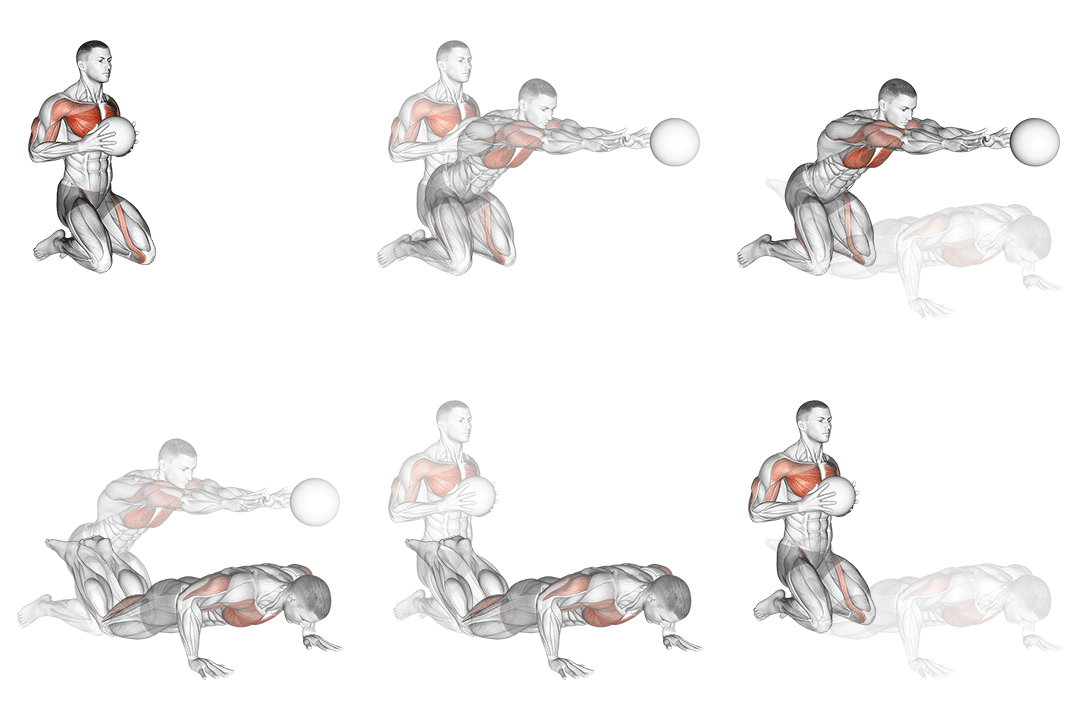
6. Chest Push (Multiple Response)
94% match- Pectorals
- Medicine-ball
- Intermediate
- Compound
How to perform this exercise
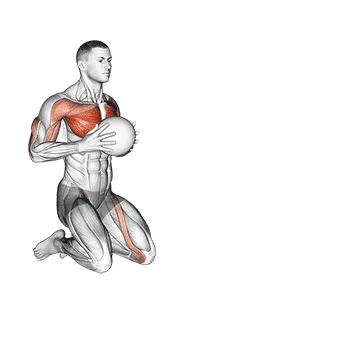
- Begin in a kneeling position facing a wall or utilize a partner. Hold the ball with both hands tight into the chest.
- Execute the pass by exploding forward and outward with the hips while pushing the ball as hard as possible.
- Follow through by falling forward, catching yourself with your hands.
- Immediately return to an upright position. Repeat for the desired number of repetitions.
Sets and reps: 3 or 4 sets of 6 to 10 reps.
Why this matches
- Primary muscle: pectorals, the same as the Medicine Ball Chest Push With Run Release
- Equipment: free weights, the same as the Medicine Ball Chest Push With Run Release
- Body position: standing, the same as the Medicine Ball Chest Push With Run Release
- Balance: harder to stay steady on than the Medicine Ball Chest Push With Run Release

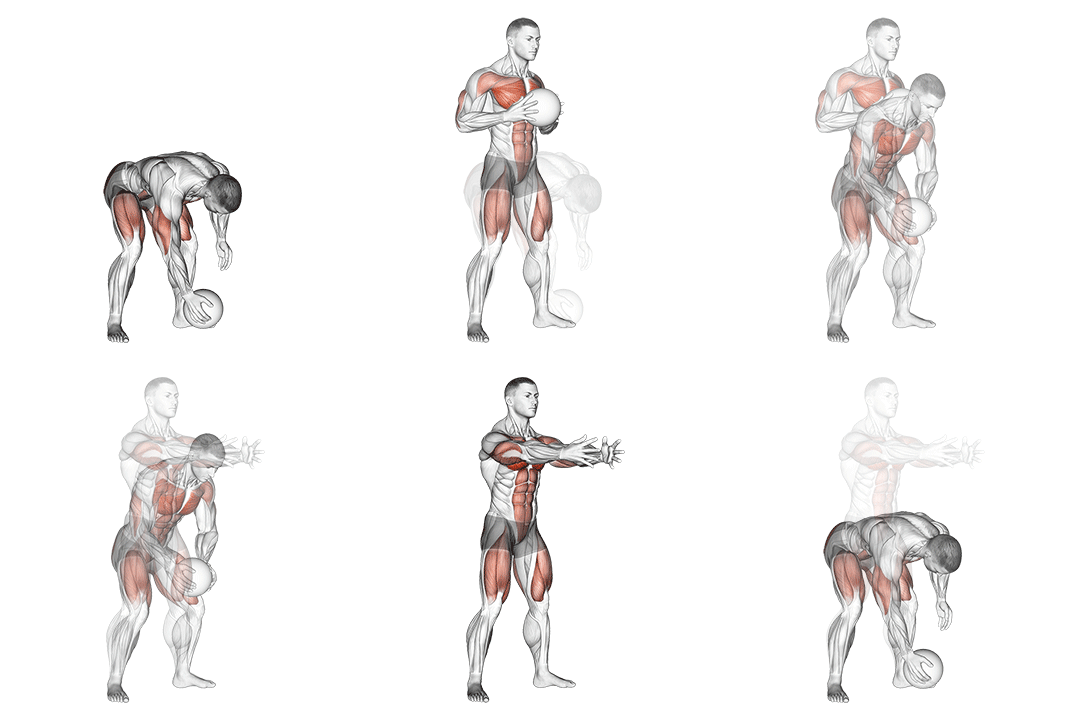
7. Chest Push With Run Release
92% match- Pectorals
- Medicine-ball
- Intermediate
- Compound
How to perform this exercise
- Begin in an athletic stance with the knees bent, hips back, and back flat. Hold the medicine ball near your legs. This will be your starting position.
- While taking your first step draw the medicine ball into your chest.
- As you take the second step, explosively push the ball forward, immediately sprinting for 10 yards after the release. If you are really fast, you can catch your own pass!
Sets and reps: 3 or 4 sets of 6 to 10 reps.
Why this matches
- Primary muscle: pectorals, the same as the Medicine Ball Chest Push With Run Release
- Equipment: free weights, the same as the Medicine Ball Chest Push With Run Release
- Body position: standing, the same as the Medicine Ball Chest Push With Run Release
- Balance: harder to stay steady on than the Medicine Ball Chest Push With Run Release
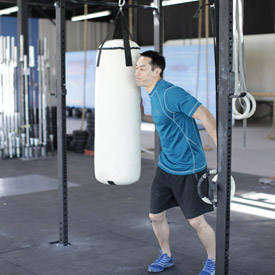
8. Heavy Bag Thrust
91% match- Pectorals
- Other
- Intermediate
- Compound
How to perform this exercise
- Utilize a heavy bag for this exercise. Assume an upright stance next to the bag, with your feet staggered, fairly wide apart. Place your hand on the bag at about chest height. This will be your starting position.
- Begin by twisting at the waist, pushing the bag forward as hard as possible. Perform this move quickly, pushing the bag away from your body.
- Receive the bag as it swings back by reversing these steps.
Sets and reps: 3 or 4 sets of 6 to 10 reps.
Why this matches
- Primary muscle: pectorals, the same as the Medicine Ball Chest Push With Run Release
- Body position: standing, the same as the Medicine Ball Chest Push With Run Release
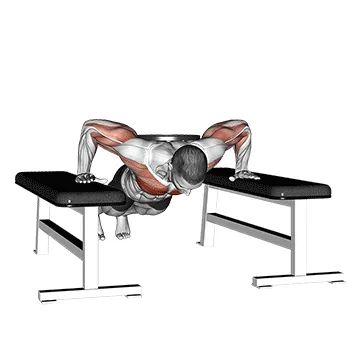
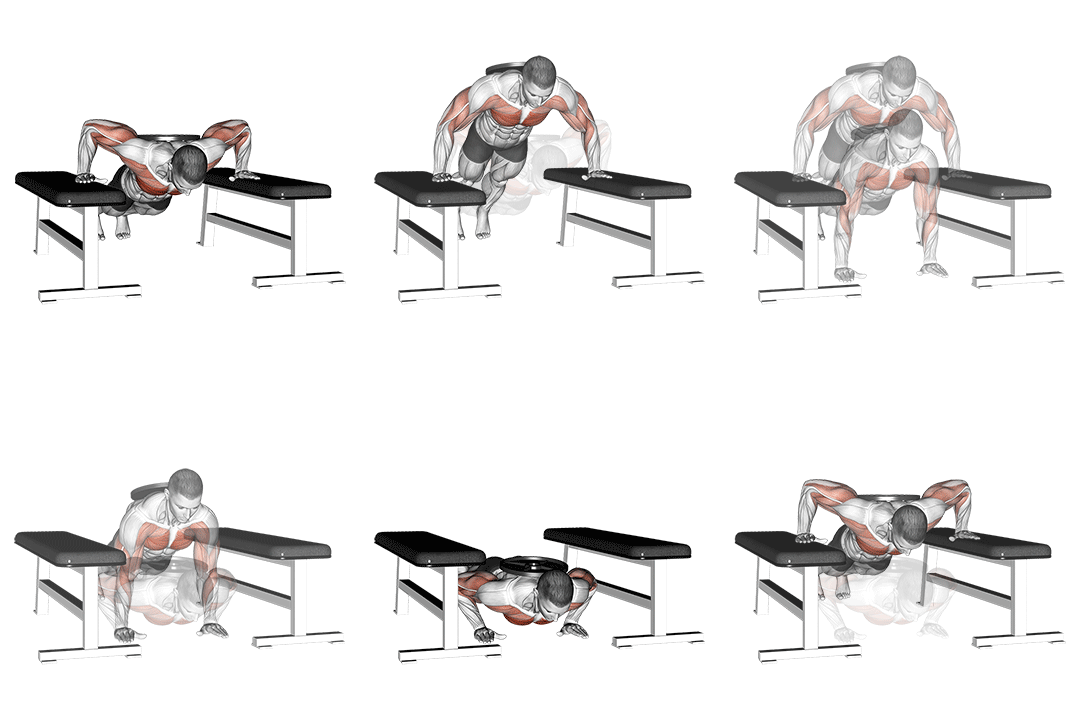
9. Weighted Drop Push Up
87% match- Pectorals
- Weighted
- Advanced
- Compound
How to perform this exercise
- Start in a high plank position with your hands slightly wider than shoulder-width apart and your feet together.
- Lower your chest towards the ground, keeping your elbows close to your body.
- Once your chest is just above the ground, explosively push yourself up, lifting your hands off the ground.
- As you push up, quickly move your hands out to the sides and slightly forward, allowing your body to drop down towards the ground.
- Catch yourself with your hands in the wider position and immediately lower your chest towards the ground again.
- Repeat the push-up motion, dropping down and catching yourself with your hands in the narrower position.
- Continue alternating between the wider and narrower hand positions for the desired number of repetitions.
Sets and reps: 3 to 5 sets of 5 to 8 reps.
Why this matches
- Primary muscle: pectorals, the same as the Medicine Ball Chest Push With Run Release
- Equipment: free weights, the same as the Medicine Ball Chest Push With Run Release
- Body position: lying face down, not standing
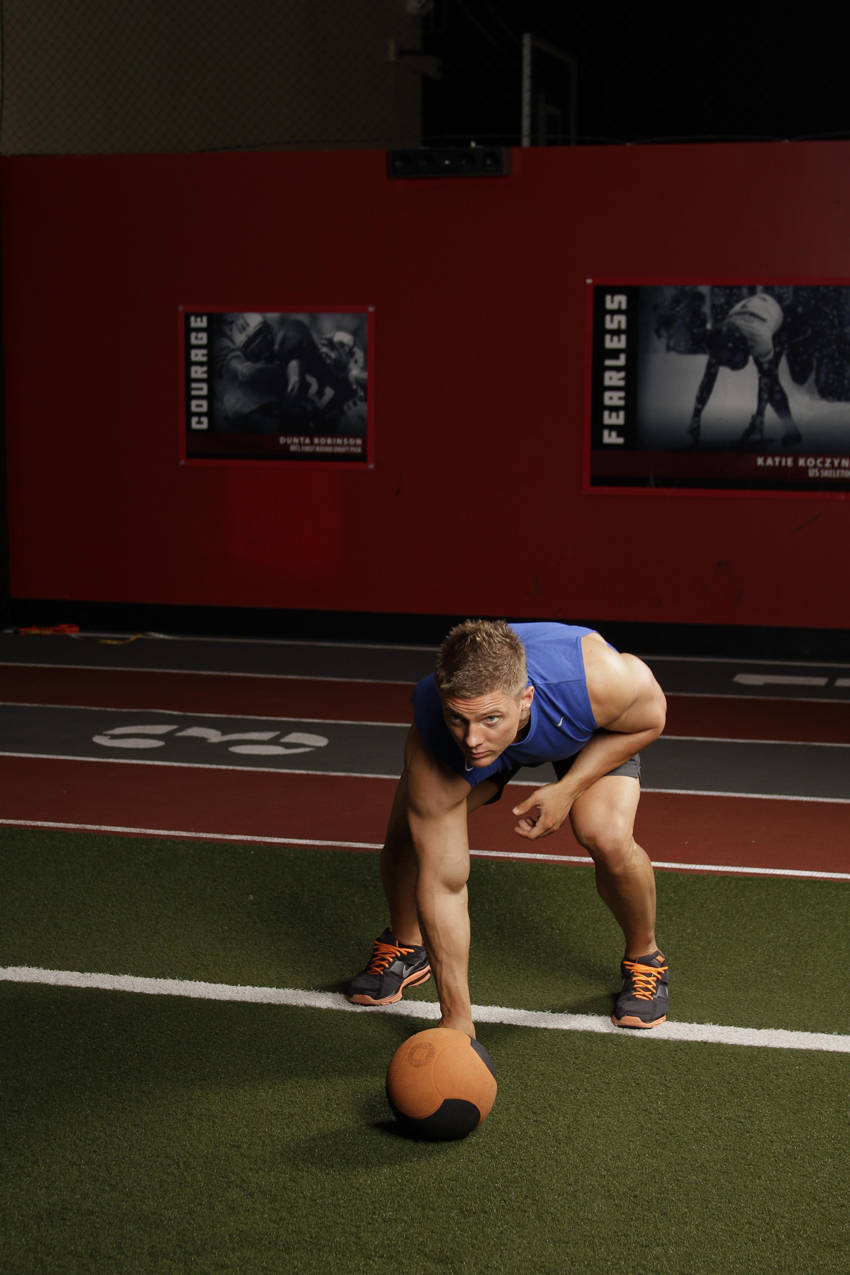
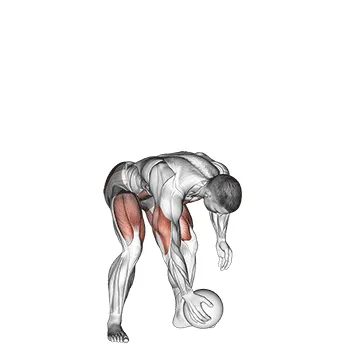
10. Chest Push From 3 Point Stance
86% match- Pectorals
- Medicine-ball
- Intermediate
- Compound
How to perform this exercise
- Begin in a three point stance, squatted down with your back flat and one hand on the ground. Place the medicine ball directly in front of you.
- To begin, take your first step as you pull the ball to your chest, positioning both hands to prepare for the throw.
- As you execute the second step, explosively release the ball forward as hard as possible.
Sets and reps: 3 or 4 sets of 6 to 10 reps on each side.
Why this matches
- Primary muscle: pectorals, the same as the Medicine Ball Chest Push With Run Release
- Equipment: free weights, the same as the Medicine Ball Chest Push With Run Release
- Body position: standing, the same as the Medicine Ball Chest Push With Run Release
- Balance: harder to stay steady on than the Medicine Ball Chest Push With Run Release
Why You Might Need a Medicine Ball Chest Push With Run Release Alternative
You might substitute this exercise for shoulder pain, limited space, lack of a partner, or to prioritize progressive overload. Med-ball throws demand coordination, horizontal force transfer, and a dynamic release that aggravates some AC or rotator cuff issues. Substitutes let you target pectoral fibers while controlling load and range of motion. For rehab choose slow eccentrics and partial ROM; for power use fast concentric drives and an explosive scapular protraction cue. If you lack a medicine ball, use dumbbells, cables, or a landmine to reproduce horizontal pressing and stress the sternocostal fibers of the pecs.
Medicine Ball Chest Push With Run Release FAQ
What muscles does Medicine Ball Chest Push With Run Release work?
It primarily targets the pectoralis major (sternal and clavicular heads) through horizontal adduction. Secondary muscles include the anterior deltoid and triceps, while the serratus anterior and scapular stabilizers activate during the release and protraction phase.
Find Alternatives for Any Exercise
Search the exercise database and filter the ranked substitutes by the equipment you own.
Similarity scores compare exercise metadata such as movement pattern, muscles, equipment and body position. They are not a safety rating or a check that you own the equipment. Learn about our methodology