

10 Best Posterior Tibialis Stretch Alternatives for Calf Mobility
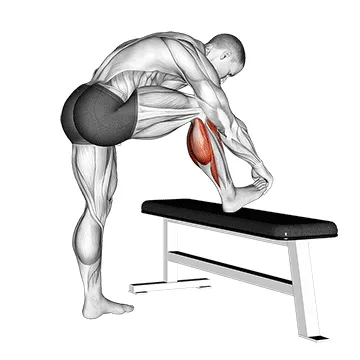
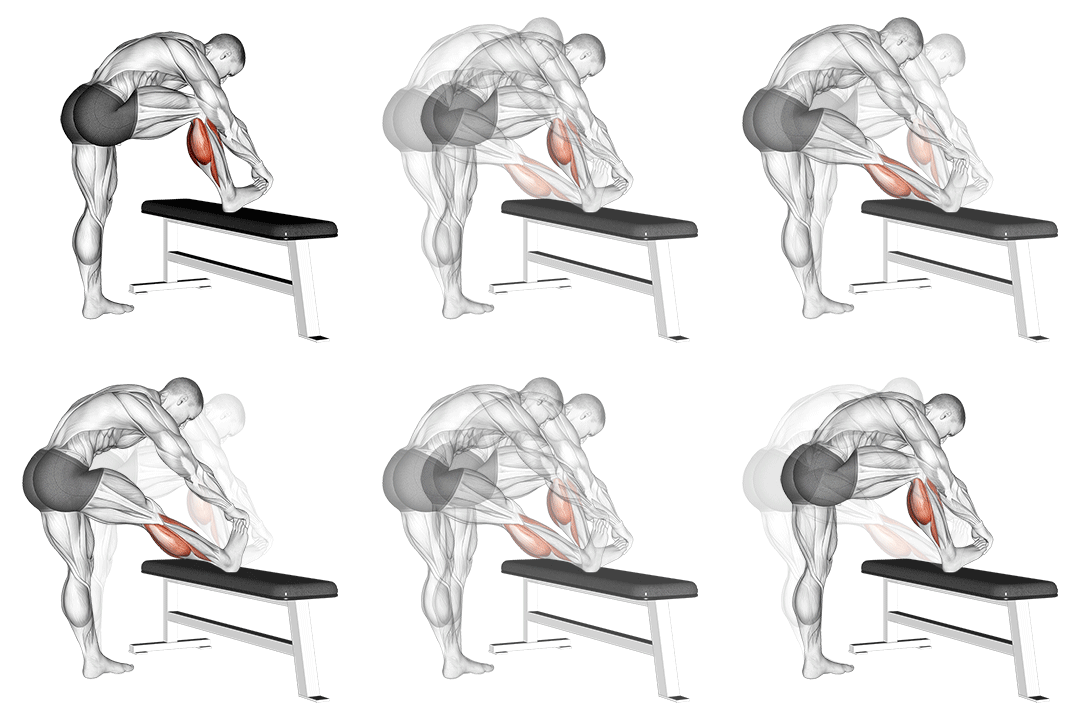
The Posterior Tibialis Stretch is done seated with a rope. Ranked closest by our scoring: the Seated Calf Stretch, the Standing Calves Calf Stretch and the Calf Push Stretch With Hands Against Wall.
Updated Ranked by our 12-factor similarity model How it works
Original Exercise: Posterior Tibialis Stretch
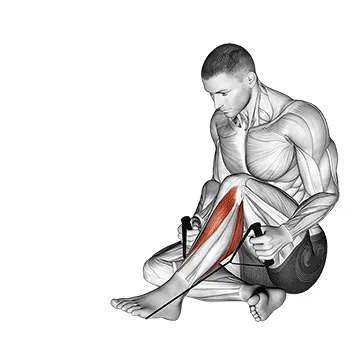
- Primary muscle
- Calves
- Equipment
- Rope
- Difficulty
- Beginner
- Type
- Isolation
Secondary muscles: Hamstrings, Quadriceps
How to perform Posterior Tibialis Stretch
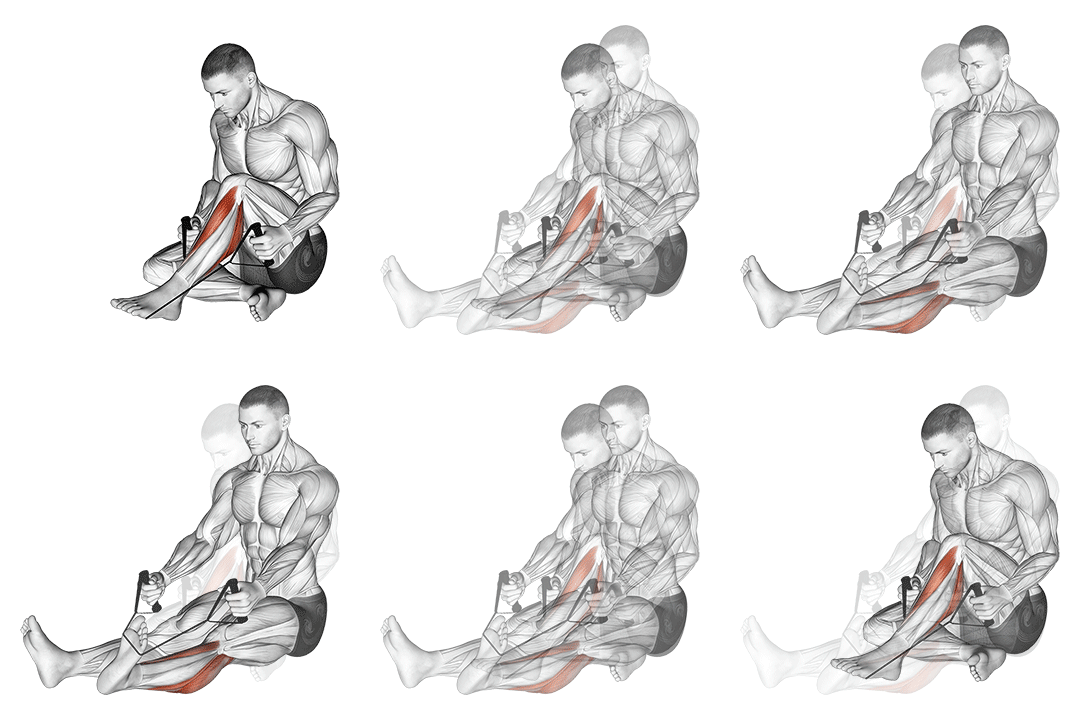
- Sit on the ground with your legs extended in front of you.
- Loop the rope around the ball of your foot and hold the ends of the rope with your hands.
- Gently pull the rope towards you, flexing your foot and stretching your calf muscles.
- Hold the stretch for 20-30 seconds.
- Release the tension on the rope and relax your foot.
- Repeat the stretch on the other leg.
Ranked Posterior Tibialis Stretch Alternatives
10 substitutes, ranked by how closely each one matches the Posterior Tibialis Stretch on movement pattern, muscles worked, equipment and body position. The higher the score, the less you change. Open "How to perform this exercise" on a card for the steps; every card title links to that exercise's own alternatives page.
Best match 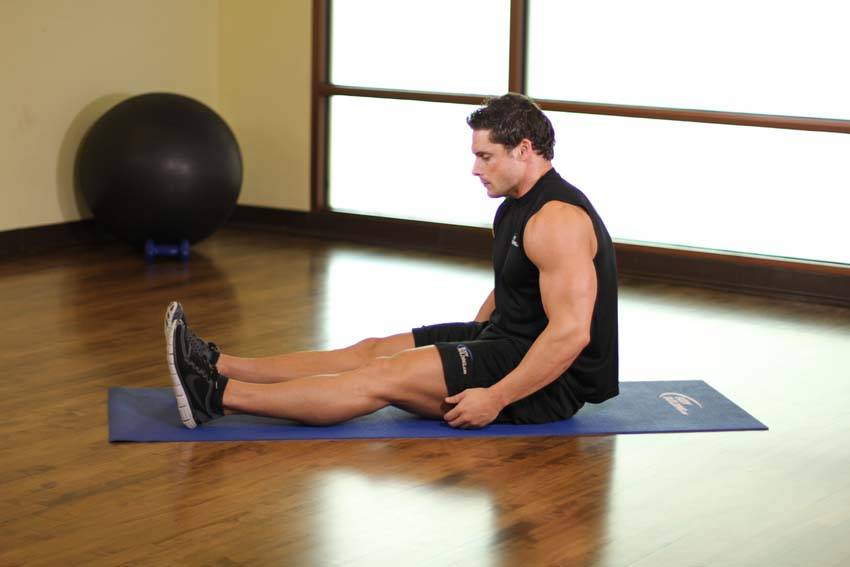
1. Seated Calf Stretch
74% match- Calves
- Bodyweight
- Beginner
- Isolation
Use this when you have nothing to train with, because it works the calves with bodyweight alone.
How to perform this exercise
- Sit up straight on an exercise mat.
- Bend one knee and put that foot on the floor to stabilize the torso.
- Straighten your other leg and flex your ankle.
- Using a band, towel, or your hand if you can reach, pull the toes toward you. Hold for 10 to 20 seconds, then switch sides.
Sets and reps: Hold for 20 to 30 seconds, 3 sets.
Why this matches
- Movement: static stretch, the same as the Posterior Tibialis Stretch
- Primary muscle: calves, the same as the Posterior Tibialis Stretch
- Equipment: bodyweight only, not a band
- Body position: seated, the same as the Posterior Tibialis Stretch
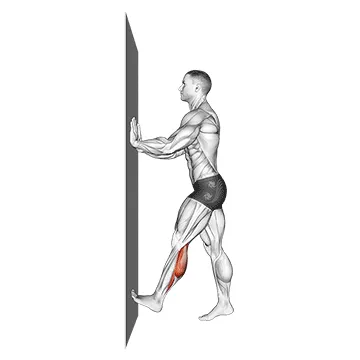
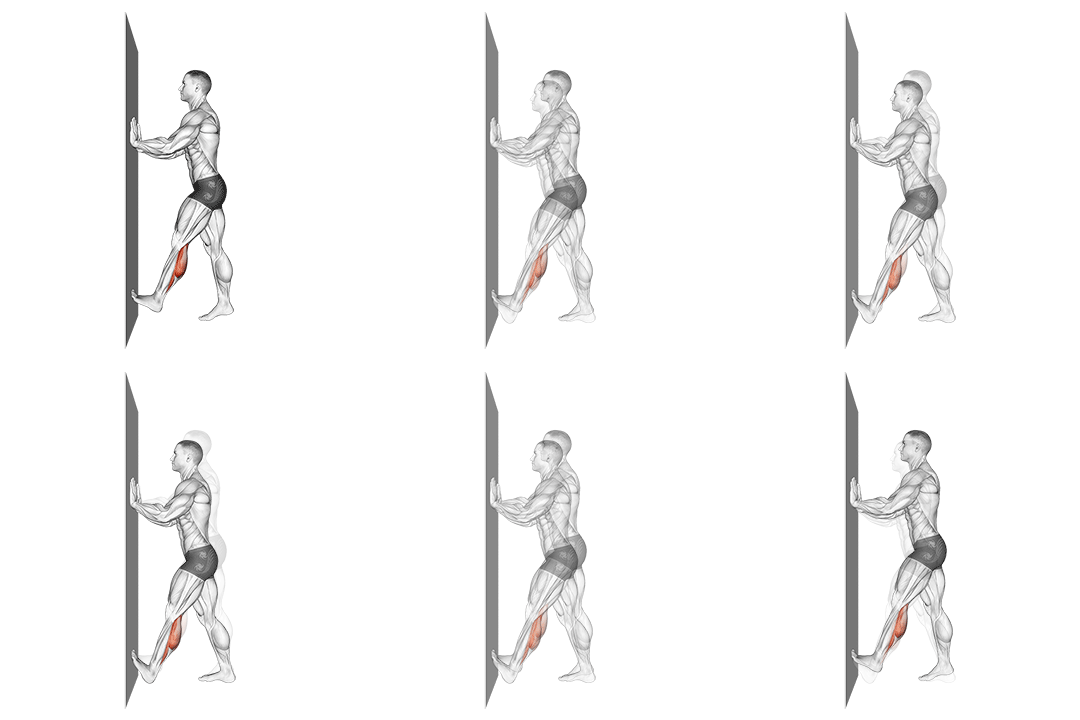
2. Standing Calves Calf Stretch
66% match- Calves
- Bodyweight
- Beginner
- Isolation
How to perform this exercise
- Stand facing a wall or sturdy object, about an arm's length away.
- Place your hands on the wall or object at shoulder height.
- Step back with one foot, keeping your heel flat on the ground.
- Bend your front knee slightly and lean forward, keeping your back leg straight.
- You should feel a stretch in your calf muscle.
- Hold the stretch for 20-30 seconds.
- Repeat on the other leg.
Sets and reps: Hold for 20 to 30 seconds, 3 sets.
Why this matches
- Movement: static stretch, the same as the Posterior Tibialis Stretch
- Primary muscle: calves, the same as the Posterior Tibialis Stretch
- Equipment: bodyweight only, not a band
- Body position: standing, not seated
- Calves
- Bodyweight
- Beginner
- Isolation
How to perform this exercise
- Stand facing a wall with your feet hip-width apart.
- Place your hands against the wall at shoulder height.
- Step back with one foot, keeping your heel on the ground and your leg straight.
- Bend your front knee slightly and lean forward, feeling a stretch in your calf.
- Hold the stretch for 20-30 seconds.
- Switch legs and repeat the stretch.
Sets and reps: Hold for 20 to 30 seconds, 3 sets.
Why this matches
- Movement: static stretch, the same as the Posterior Tibialis Stretch
- Primary muscle: calves, the same as the Posterior Tibialis Stretch
- Equipment: bodyweight only, not a band
- Body position: standing, not seated
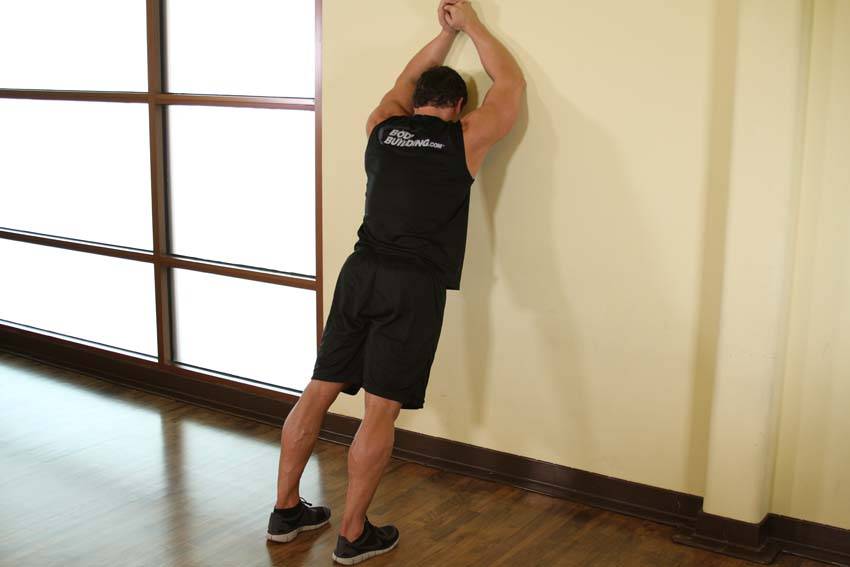
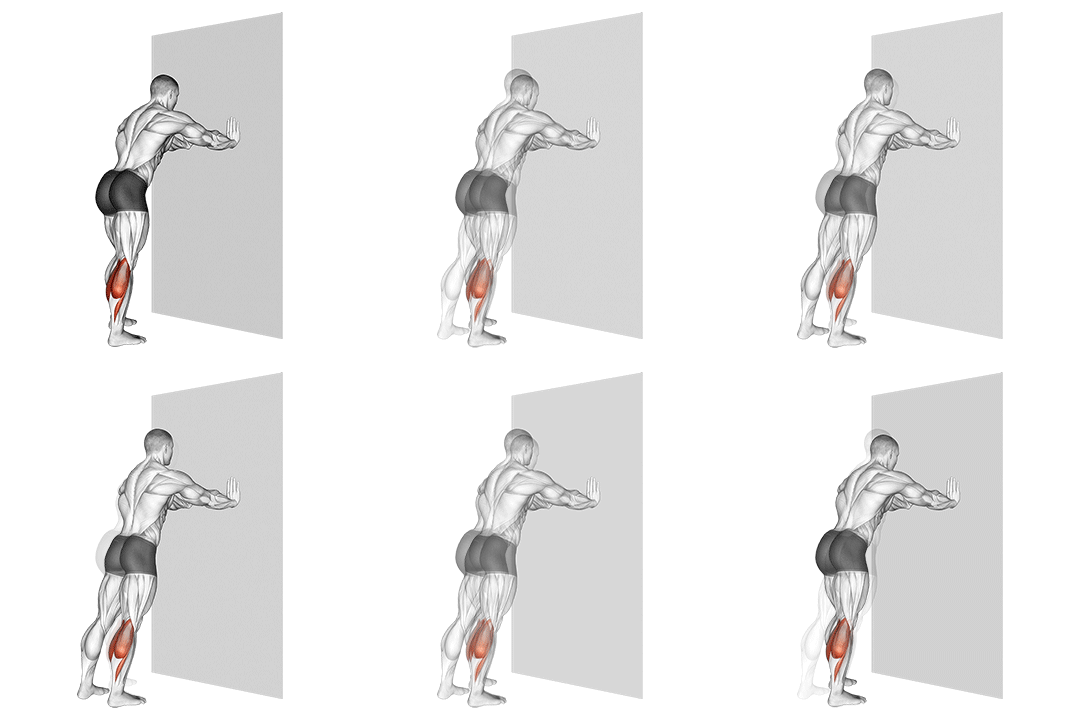
4. Calf Stretch Elbows Against Wall
64% match- Calves
- Bodyweight
- Beginner
- Isolation
How to perform this exercise
- Stand facing a wall from a couple feet away.
- Lean against the wall, placing your weight on your forearms.
- Attempt to keep your heels on the ground. Hold for 10-20 seconds. You may move further or closer the wall, making it more or less difficult, respectively.
Sets and reps: Hold for 20 to 30 seconds, 3 sets.
Why this matches
- Movement: static stretch, the same as the Posterior Tibialis Stretch
- Primary muscle: calves, the same as the Posterior Tibialis Stretch
- Equipment: bodyweight only, not a band
- Body position: standing, not seated
- Balance: harder to stay steady on than the Posterior Tibialis Stretch
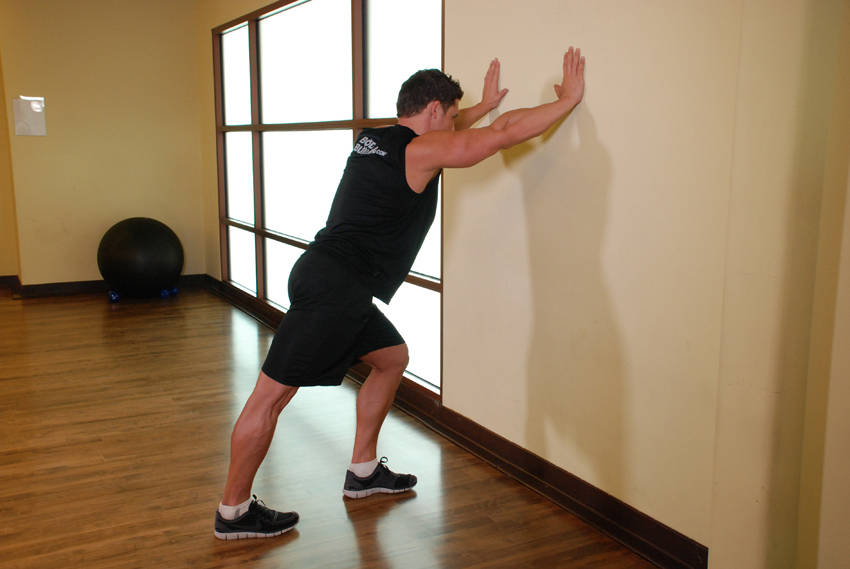
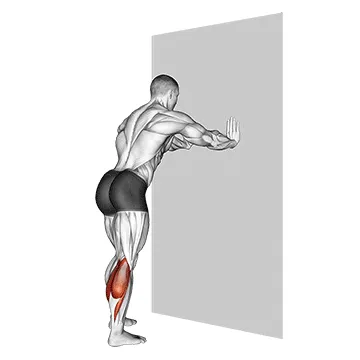
5. Calf Stretch Hands Against Wall
64% match- Calves
- Bodyweight
- Beginner
- Isolation
How to perform this exercise
- Stand facing a wall from several feet away. Stagger your stance, placing one foot forward.
- Lean forward and rest your hands on the wall, keeping your heel, hip and head in a straight line.
- Attempt to keep your heel on the ground. Hold for 10-20 seconds and then switch sides.
Sets and reps: Hold for 20 to 30 seconds, 3 sets.
Why this matches
- Movement: static stretch, the same as the Posterior Tibialis Stretch
- Primary muscle: calves, the same as the Posterior Tibialis Stretch
- Equipment: bodyweight only, not a band
- Body position: standing, not seated
- Balance: harder to stay steady on than the Posterior Tibialis Stretch
- Calves
- Bodyweight
- Beginner
- Isolation
How to perform this exercise
- Stand facing a wall with your feet hip-width apart.
- Place your hands against the wall at shoulder height.
- Step your right foot back, keeping your heel on the ground and your leg straight.
- Bend your left knee and lean forward, keeping your back leg straight and your heel on the ground.
- Hold the stretch for 20-30 seconds.
- Switch legs and repeat the stretch.
Sets and reps: Hold for 30 to 60 seconds and repeat 2 or 3 times.
Why this matches
- Movement: static stretch, the same as the Posterior Tibialis Stretch
- Primary muscle: calves, the same as the Posterior Tibialis Stretch
- Equipment: bodyweight only, not a band
- Body position: standing, not seated
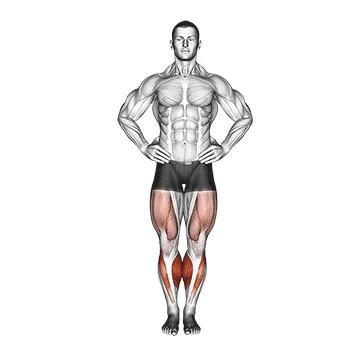
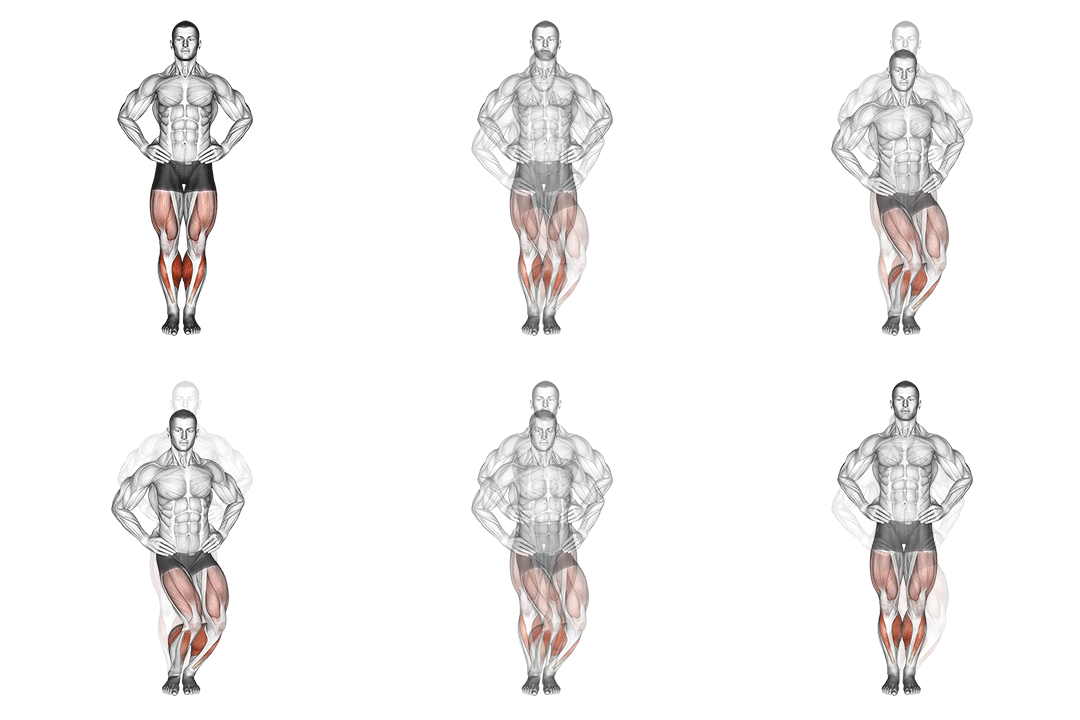
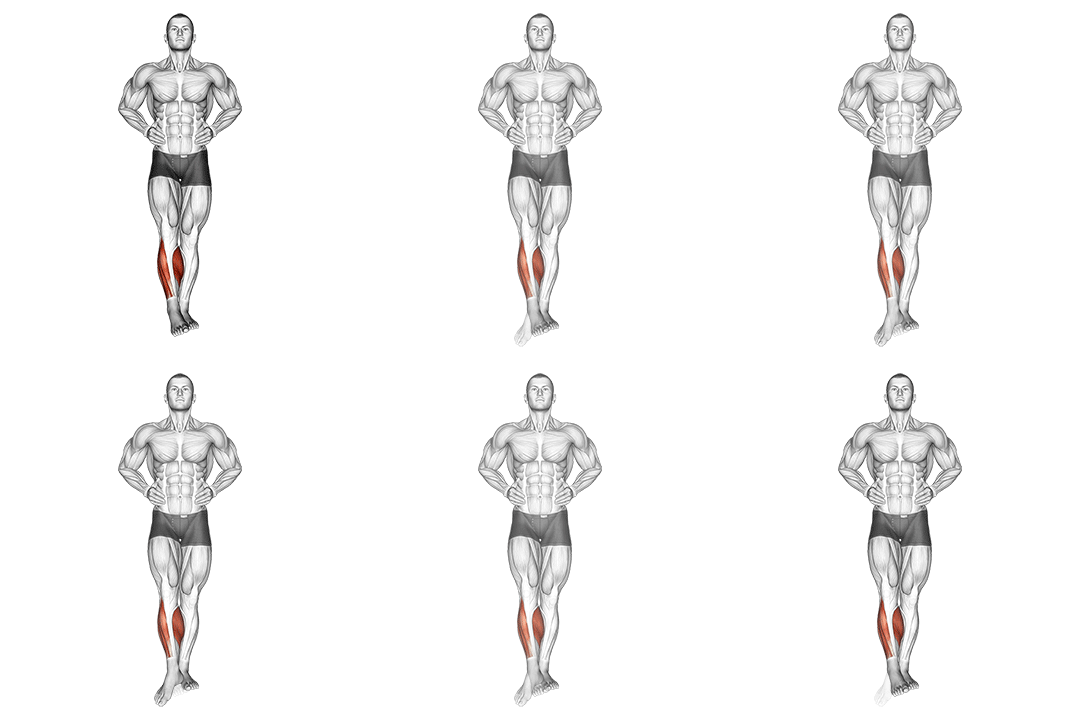
7. Circles Knee Stretch
52% match- Calves
- Bodyweight
- Beginner
- Isolation
How to perform this exercise
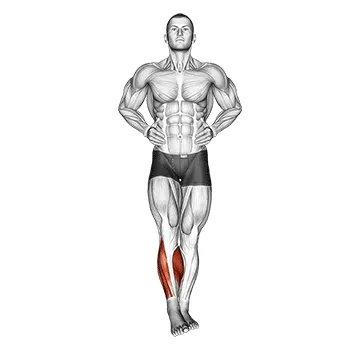
- Stand with your feet shoulder-width apart and your hands on your hips.
- Bend your knees slightly and lift your heels off the ground, balancing on the balls of your feet.
- Keeping your knees bent, rotate your knees in a circular motion, first clockwise and then counterclockwise.
- Perform the movement for the desired number of repetitions.
Sets and reps: Hold for 30 to 60 seconds and repeat 2 or 3 times.
Why this matches
- Primary muscle: calves, the same as the Posterior Tibialis Stretch
- Equipment: bodyweight only, not a band
- Body position: standing, not seated
8. Ankle Circles
40% match- Calves
- Bodyweight
- Beginner
- Isolation
How to perform this exercise
- Sit on the ground with your legs extended in front of you.
- Lift one leg off the ground and rotate your ankle in a circular motion.
- Perform the desired number of circles in one direction, then switch to the other direction.
- Repeat with the other leg.
Sets and reps: 3 sets of 8 to 12 reps on each side, and add reps before you add load.
Why this matches
- Primary muscle: calves, the same as the Posterior Tibialis Stretch
- Equipment: bodyweight only, not a band
- Body position: seated, the same as the Posterior Tibialis Stretch
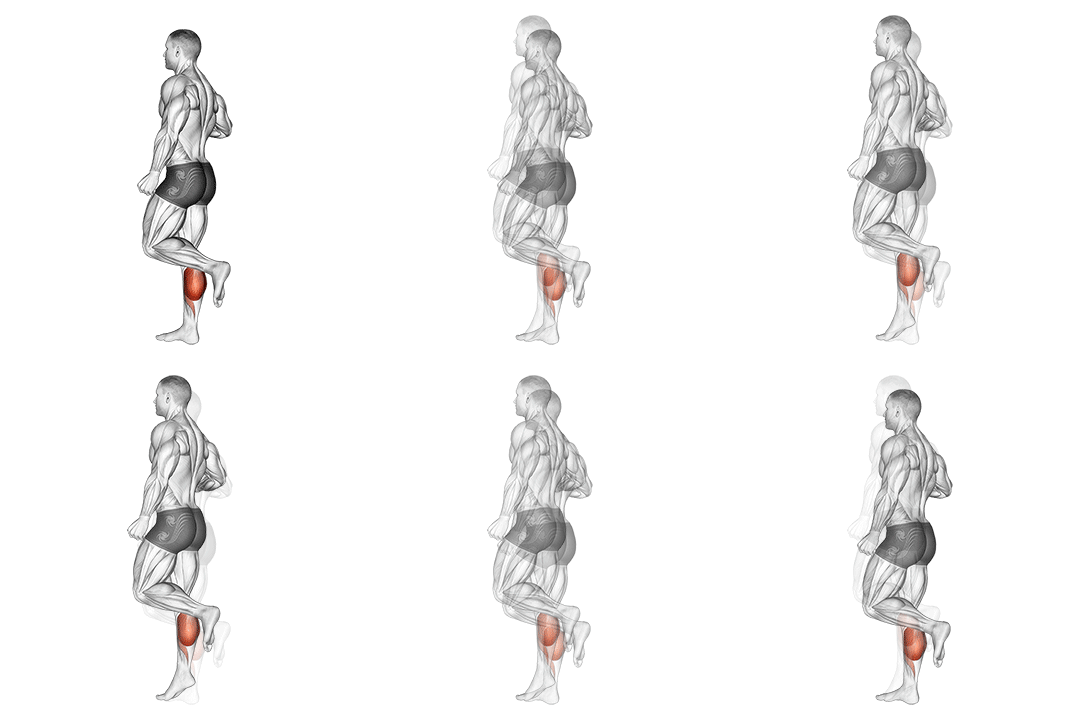
9. One Leg Floor Calf Raise
33% match- Calves
- Bodyweight
- Beginner
- Isolation
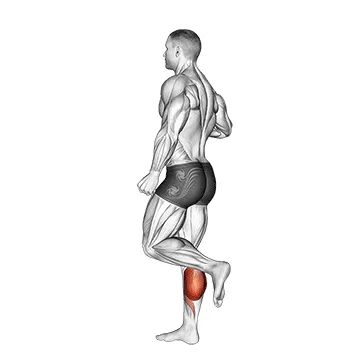
How to perform this exercise
- Stand with your feet hip-width apart and place your hands on a wall or sturdy object for balance.
- Lift one foot off the ground and balance on the other foot.
- Slowly raise your heel off the ground, lifting your body up onto the ball of your foot.
- Pause for a moment at the top, then slowly lower your heel back down to the starting position.
- Repeat for the desired number of repetitions, then switch legs and repeat.
Sets and reps: 3 sets of 8 to 12 reps on each side, and add reps before you add load.
Why this matches
- Primary muscle: calves, the same as the Posterior Tibialis Stretch
- Equipment: bodyweight only, not a band
- Body position: standing, not seated
- Balance: harder to stay steady on than the Posterior Tibialis Stretch
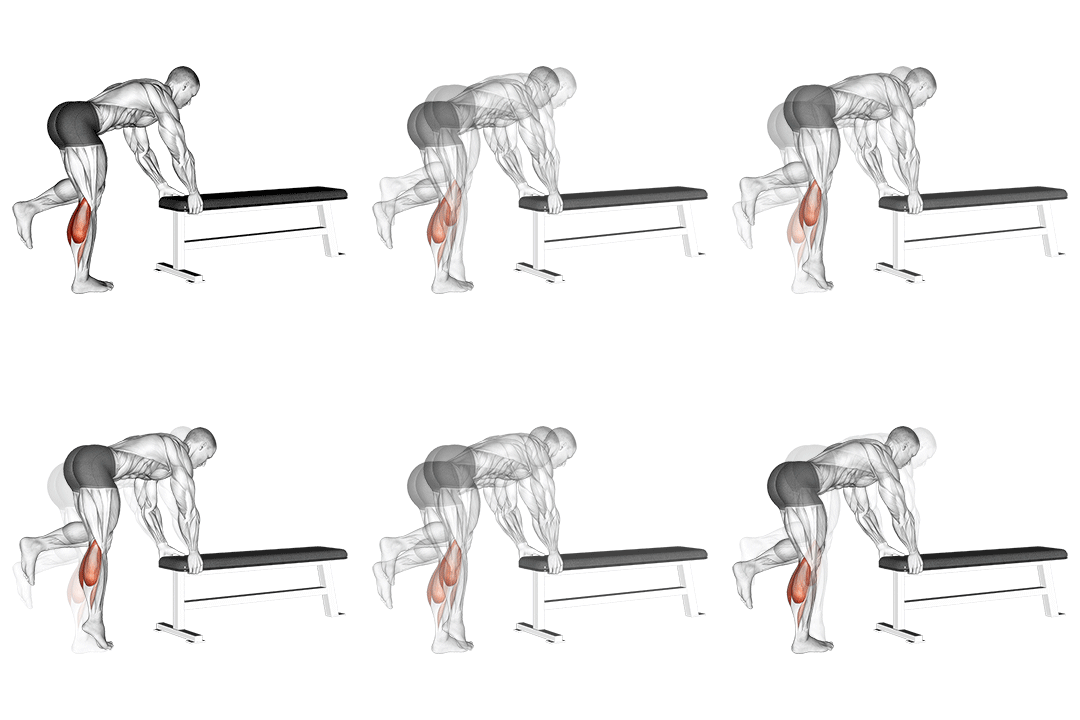
10. One Leg Donkey Calf Raise
32% match- Calves
- Bodyweight
- Beginner
- Isolation
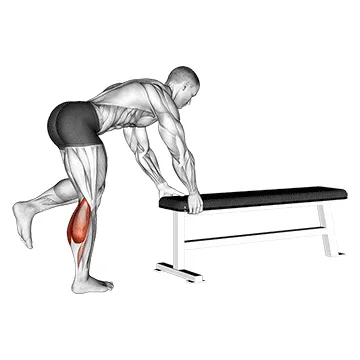
How to perform this exercise
- Stand with your feet shoulder-width apart, toes pointing forward.
- Place your hands on a stable surface for support, such as a wall or a bar.
- Lift one leg off the ground, keeping your knee slightly bent.
- Raise your heel as high as possible, using your calf muscles.
- Pause for a moment at the top, then slowly lower your heel back down.
- Repeat for the desired number of repetitions, then switch legs.
Sets and reps: 3 sets of 8 to 12 reps on each side, and add reps before you add load.
Why this matches
- Primary muscle: calves, the same as the Posterior Tibialis Stretch
- Equipment: bodyweight only, not a band
- Body position: standing, not seated
- Balance: harder to stay steady on than the Posterior Tibialis Stretch
Why You Might Need a Posterior Tibialis Stretch Alternative
You may need substitutes due to no rope available, ankle surgery precautions, medial shin pain, or poor tolerance of direct tissue compression. Substitutes let you isolate the same fibers and movement patterns while avoiding aggravating positions. For example, a bent-knee soleus wall stretch biases the soleus and deep posterior chain without strong plantarflexion torque, reducing strain on an inflamed tendon. A banded posterior tibialis self-mobilization lets you produce a controlled eversion/inversion shear to unload adherent tissue while maintaining neuromuscular activation of the tibialis posterior.
How to Choose the Right Posterior Tibialis Stretch Substitute
Pick a substitute based on your goal (mobility, pain reduction, or strength), available equipment, and tissue irritability. If your aim is mobility, perform sustained, low-load stretches (30–60s) with ankle dorsiflexion and knee position to bias soleus or gastrocnemius. For strength or tendon rehab, choose slow eccentric calf raises or banded resisted inversion to eccentrically load the posterior tibialis. If pain limits range, use isometric holds at a comfortable angle to maintain activation. Always cue medial arch lift and ankle dorsiflexion to ensure posterior tibialis recruitment.
Posterior Tibialis Stretch FAQ
What muscles does Posterior Tibialis Stretch work?
The stretch targets the deep posterior compartment of the lower leg, emphasizing the posterior tibialis and the medial calf fibers such as the soleus. Biomechanically it places the ankle into dorsiflexion and slight eversion/inversion control, lengthening tissues that support the medial arch.
What is the best bodyweight alternative to Posterior Tibialis Stretch?
A bent-knee soleus wall stretch is the best bodyweight substitute for most people; stand with one foot back, bend both knees, press the back heel down and dorsiflex the ankle. Cue: keep the heel driven into the floor and feel stretch deep in the medial calf and around the tibialis posterior insertion.
Can I build muscle without doing Posterior Tibialis Stretch?
Yes. Build calf and posterior tibialis muscle through progressive loading like weighted calf raises, single-leg eccentric heel drops, and resisted inversion exercises. Use knee position to bias soleus (knee bent) or gastrocnemius (knee extended) and prioritize progressive overload rather than relying on a single stretch.
Find Alternatives for Any Exercise
Search the exercise database and filter the ranked substitutes by the equipment you own.
Similarity scores compare exercise metadata such as movement pattern, muscles, equipment and body position. They are not a safety rating or a check that you own the equipment. Learn about our methodology