

10 Best Quadriceps-smr Alternatives for Mobility & Recovery
The Quadriceps-smr is done lying face down with a foam roller. Ranked closest by our scoring: the Lying Prone Quadriceps, the Assisted Prone Lying Quads Stretch and the Assisted Prone Rectus Femoris Stretch.
Updated Ranked by our 12-factor similarity model How it works
Original Exercise: Quadriceps-smr
- Primary muscle
- Quads
- Equipment
- Foam-roll
- Difficulty
- Beginner
- Type
- Isolation
How to perform Quadriceps-smr
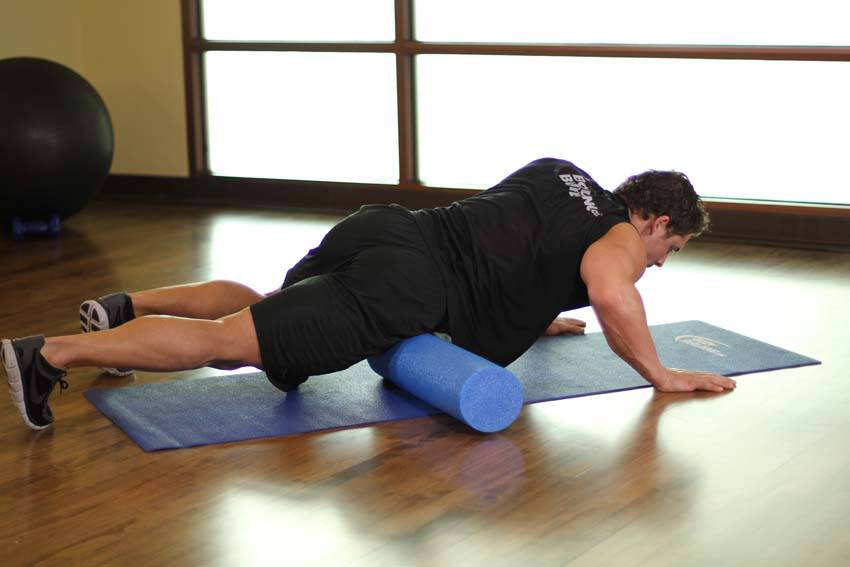
- Lay facedown on the floor with your weight supported by your hands or forearms. Place a foam roll underneath one leg on the quadriceps, and keep the foot off of the ground. Make sure to relax the leg as much as possible. This will be your starting position.
- Shifting as much weight onto the leg to be stretched as is tolerable, roll over the foam from above the knee to below the hip, holding points of tension for 10-30 seconds. Switch sides.
Ranked Quadriceps-smr Alternatives
10 substitutes, ranked by how closely each one matches the Quadriceps-smr on movement pattern, muscles worked, equipment and body position. The higher the score, the less you change. Open "How to perform this exercise" on a card for the steps; every card title links to that exercise's own alternatives page.
Best match 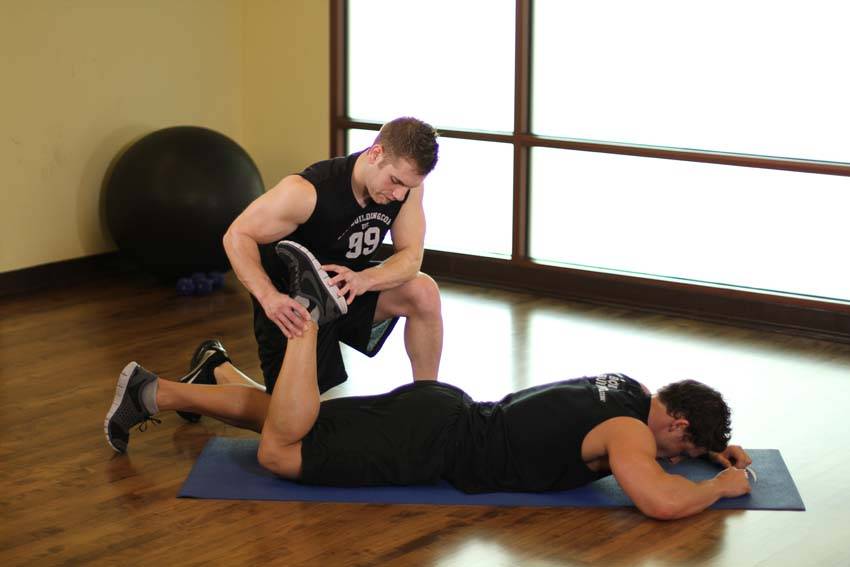
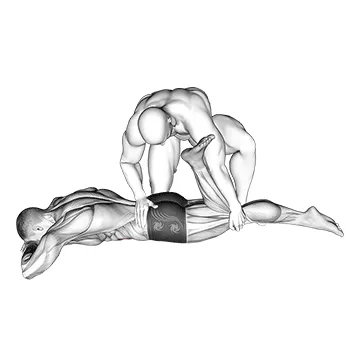
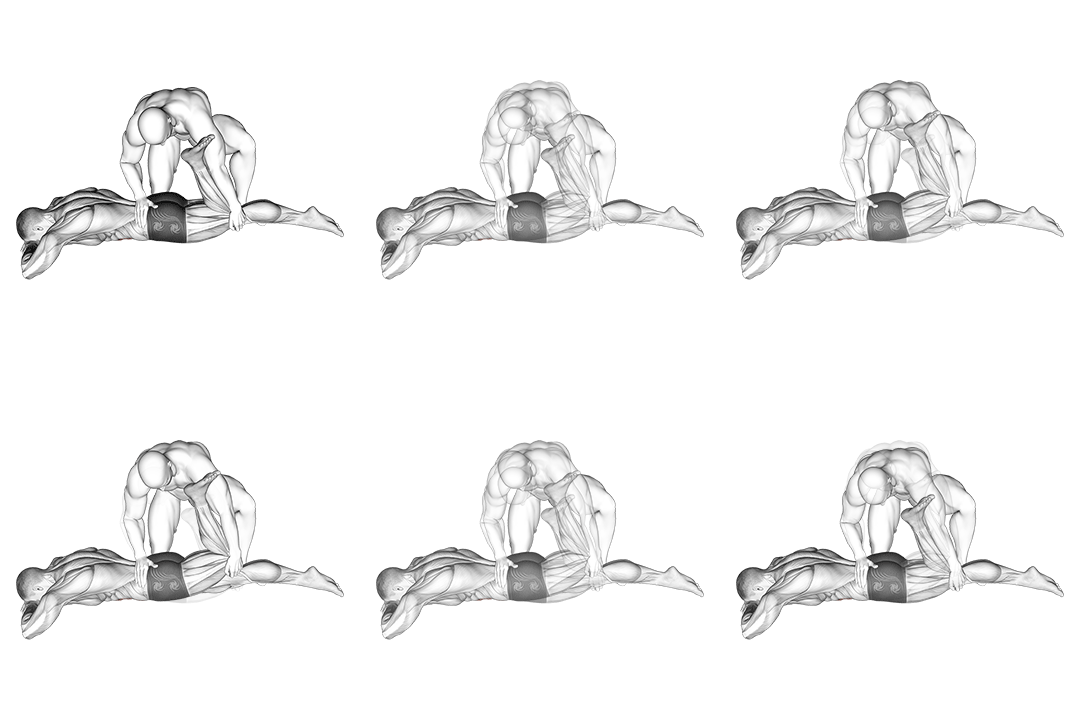
1. Lying Prone Quadriceps
96% match- Quads
- Bodyweight
- Beginner
- Isolation
Use this when you have nothing to train with, because it works the quads with bodyweight alone.
How to perform this exercise
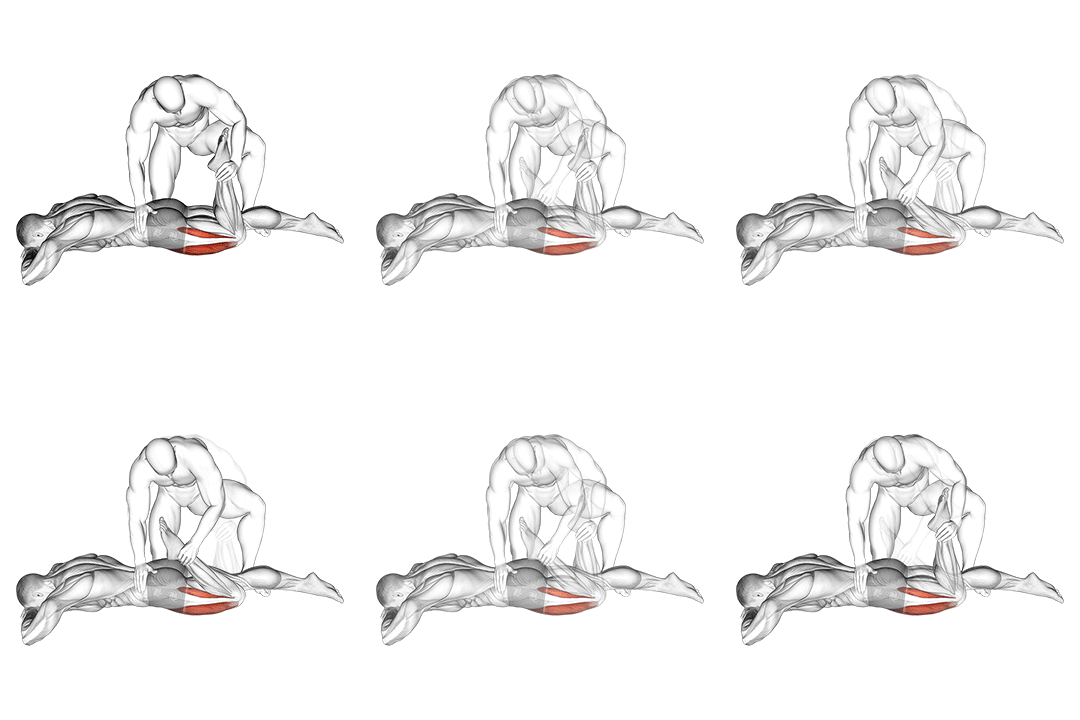
- Lay face down on the floor with your partner kneeling beside you. Flex one knee and raise that leg off the ground, attempting to touch your glutes with your foot. Your partner should hold the knee and ankle. This will be your starting position.
- Attempt to extend your knee while your partner prevents any actual movement.
- After 10-20 seconds, relax your muscles as your partner gently pushes the foot towards your glutes, further stretching the quadriceps and hip flexors.
- After 10-20 seconds, switch sides.
Sets and reps: Hold for 30 to 60 seconds and repeat 2 or 3 times.
Why this matches
- Primary muscle: quads, the same as the Quadriceps-smr
- Equipment: bodyweight only, the same as the Quadriceps-smr
- Body position: lying face down, the same as the Quadriceps-smr
- Quads
- Other
- Beginner
- Isolation
A straight swap when you want to keep working the quads.
How to perform this exercise
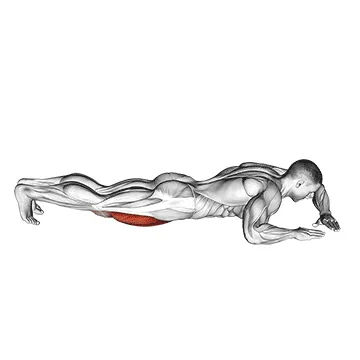
- Lie face down on the ground with your legs extended.
- Bend your left knee and reach back with your left hand to grab your left foot or ankle.
- Gently pull your left foot towards your glutes, feeling a stretch in your left quad.
- Hold the stretch for 20-30 seconds, then release.
- Repeat with your right leg.
Sets and reps: Hold for 30 to 60 seconds and repeat 2 or 3 times.
Why this matches
- Primary muscle: quads, the same as the Quadriceps-smr
- Equipment: bodyweight only, the same as the Quadriceps-smr
- Body position: lying face down, the same as the Quadriceps-smr
- Quads
- Other
- Beginner
- Isolation
How to perform this exercise
- Lie face down on the ground with your legs straight.
- Bend your right knee and reach back with your right hand to grab your right foot or ankle.
- Gently pull your right foot or ankle towards your glutes, feeling a stretch in the front of your right thigh.
- Hold the stretch for 20-30 seconds.
- Release and repeat on the other side.
Sets and reps: Hold for 30 to 60 seconds and repeat 2 or 3 times.
Why this matches
- Primary muscle: quads, the same as the Quadriceps-smr
- Equipment: bodyweight only, the same as the Quadriceps-smr
- Body position: lying face down, the same as the Quadriceps-smr
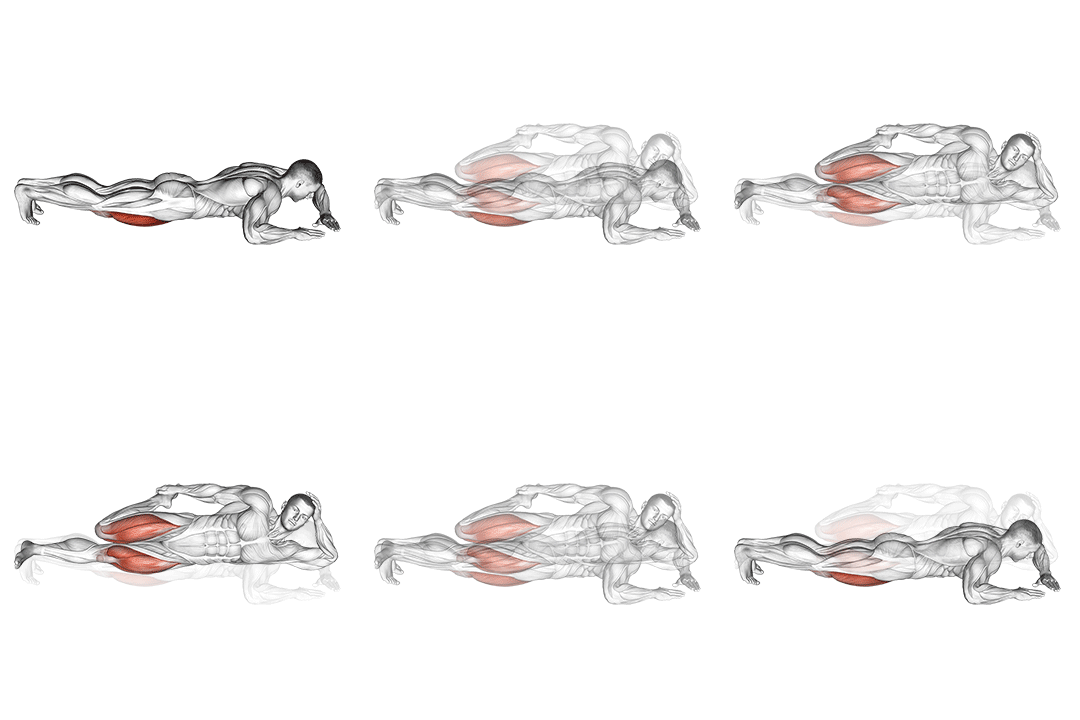
4. Lying (Side) Quads Stretch
91% match- Quads
- Bodyweight
- Beginner
- Isolation
How to perform this exercise
- Lie on your side with your legs straight.
- Bend your top leg and grab your ankle or foot with your hand.
- Gently pull your ankle or foot towards your glutes until you feel a stretch in your quads.
- Hold the stretch for 20-30 seconds.
- Release the stretch and repeat on the other side.
Sets and reps: Hold for 20 to 30 seconds on each side, 3 sets.
Why this matches
- Primary muscle: quads, the same as the Quadriceps-smr
- Equipment: bodyweight only, the same as the Quadriceps-smr
5. On Your Side Quad Stretch
90% match- Quads
- Other
- Beginner
- Isolation
How to perform this exercise
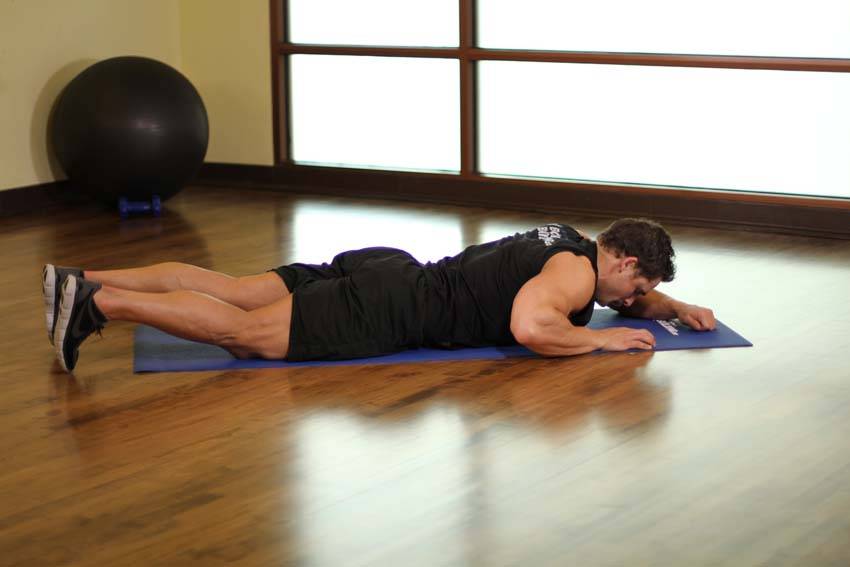
- Start off by lying on your right side, with your right knee bent at a 90-degree angle resting on the floor in front of you (this stabilizes the torso).
- Bend your left knee behind you and hold your left foot with your left hand. To stretch your hip flexor, press your left hip forward as you push your left foot back into your hand. Switch sides.
Sets and reps: Hold for 30 to 60 seconds and repeat 2 or 3 times.
Why this matches
- Primary muscle: quads, the same as the Quadriceps-smr
- Equipment: bodyweight only, the same as the Quadriceps-smr
- Body position: lying face down, the same as the Quadriceps-smr
6. Kneeling Hip Flexor
87% match- Quads
- Bodyweight
- Beginner
- Isolation
How to perform this exercise
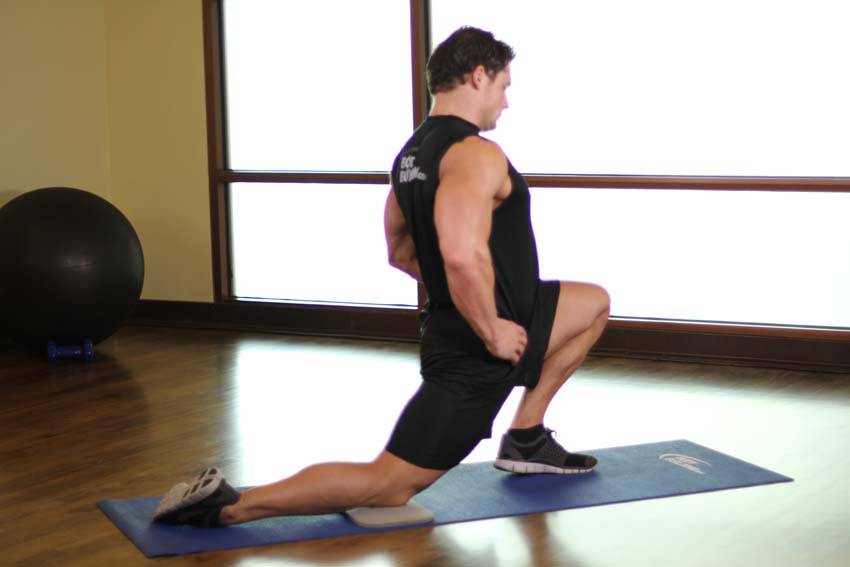
- Kneel on a mat and bring your right knee up so the bottom of your foot is on the floor and extend your left leg out behind you so the top of your foot is on the floor.
- Shift your weight forward until you feel a stretch in your hip. Hold for 15 seconds, then repeat for your other side.
Sets and reps: Hold for 20 to 30 seconds on each side, 3 sets.
Why this matches
- Primary muscle: quads, the same as the Quadriceps-smr
- Equipment: bodyweight only, the same as the Quadriceps-smr
- Body position: kneeling, not lying face down
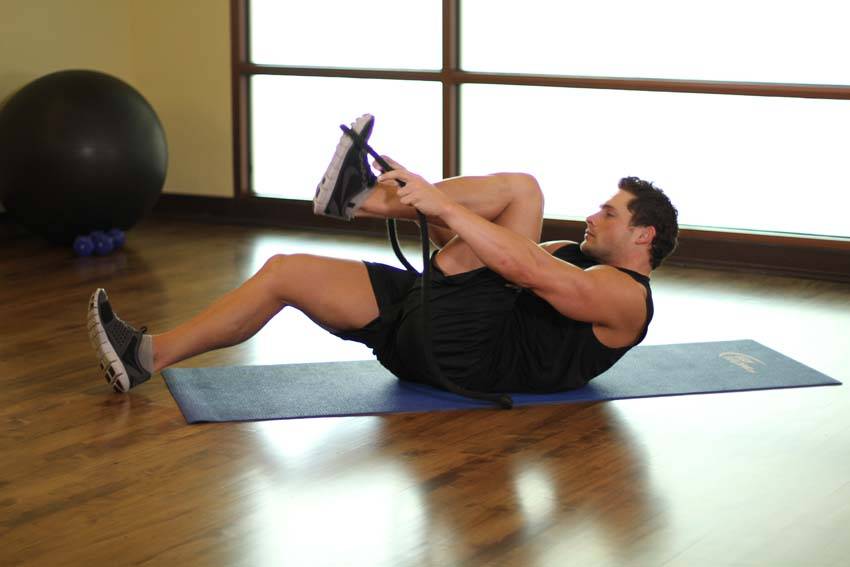
7. Quad Stretch
87% match- Quads
- Other
- Beginner
- Isolation
How to perform this exercise
- Lay on your side. Loop a belt, rope, or band around your top foot. Flex the knee and extend your hip, attempting to touch your glutes with your foot, and holding the belt with your hands. This will be your starting position.
- With the belt being held over the shoulder or overhead, gently pull to increase the stretch in the quadriceps. Hold for 10-20 seconds, and then switch sides.
Sets and reps: Hold for 20 to 30 seconds on each side, 3 sets.
Why this matches
- Primary muscle: quads, the same as the Quadriceps-smr
- Equipment: bodyweight only, the same as the Quadriceps-smr
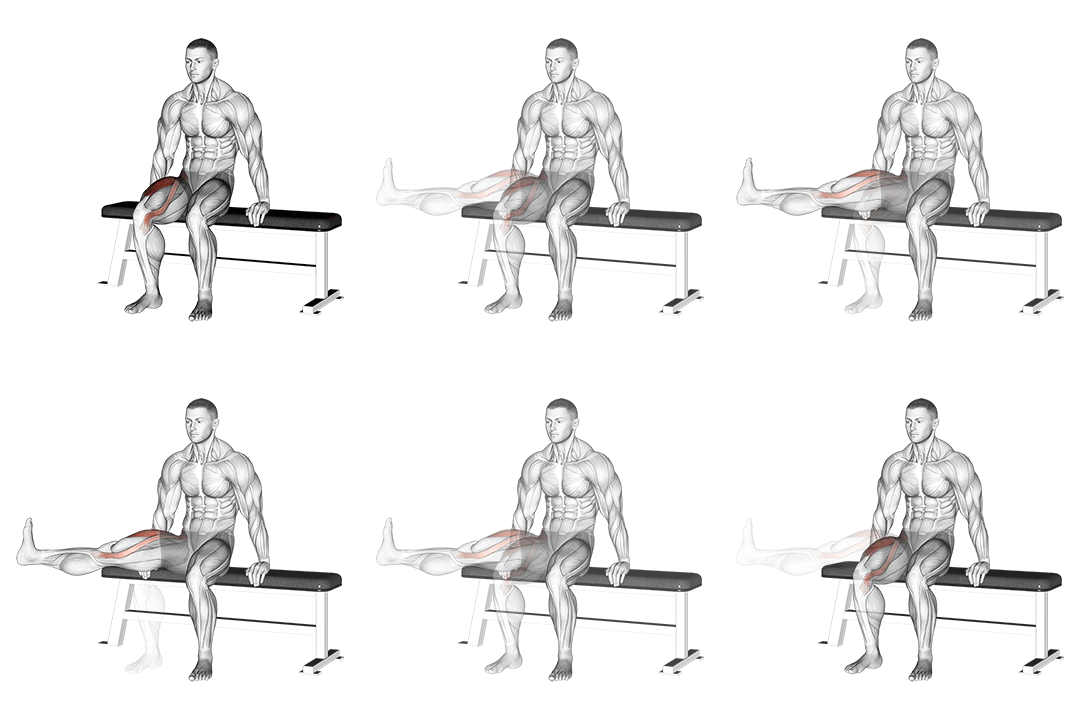
8. Chair Leg Extended Stretch
82% match- Quads
- Bodyweight
- Beginner
- Isolation
How to perform this exercise
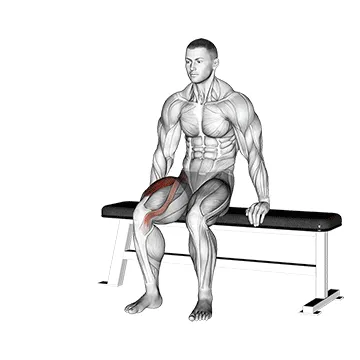
- Sit on the edge of a chair with your back straight and feet flat on the ground.
- Extend one leg straight out in front of you, keeping your heel on the ground.
- Lean forward slightly, feeling a stretch in your quadriceps.
- Hold this position for 20-30 seconds.
- Switch legs and repeat the stretch.
Sets and reps: Hold for 20 to 30 seconds on each side, 3 sets.
Why this matches
- Primary muscle: quads, the same as the Quadriceps-smr
- Equipment: bodyweight only, the same as the Quadriceps-smr
- Body position: seated, not lying face down
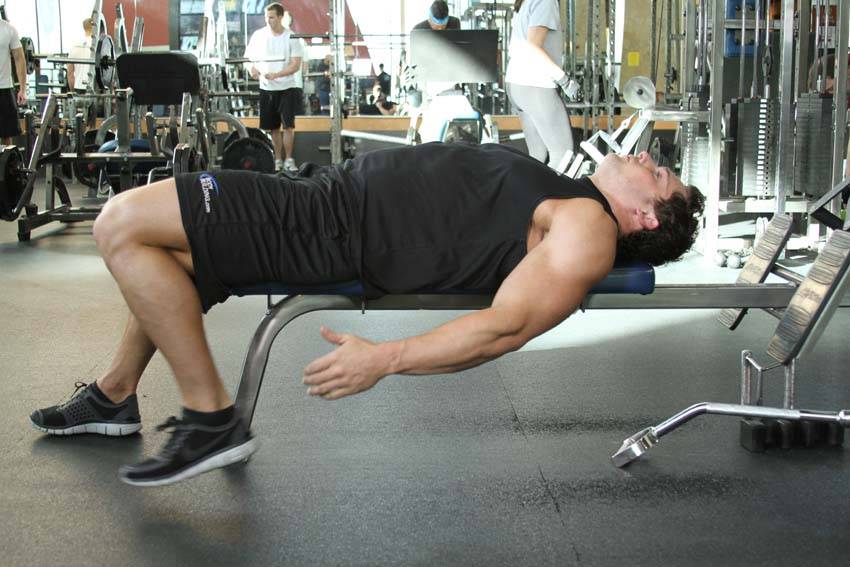
9. On-your-back Quad Stretch
82% match- Quads
- Other
- Beginner
- Isolation
How to perform this exercise
- Lie on a flat bench or step, and hang one leg and arm over the side.
- Bend the knee and hold the top of the foot. As you do this, be careful not to arch your lower back.
- Pull the belly button to the spine to stay in neutral. Press your foot down and into your hand. To add the hip stretch, lift the hip of the leg you're holding up toward the ceiling.
- Switch sides.
Sets and reps: Hold for 30 to 60 seconds and repeat 2 or 3 times.
Why this matches
- Primary muscle: quads, the same as the Quadriceps-smr
- Equipment: bodyweight only, the same as the Quadriceps-smr
- Body position: lying on your back, not lying face down
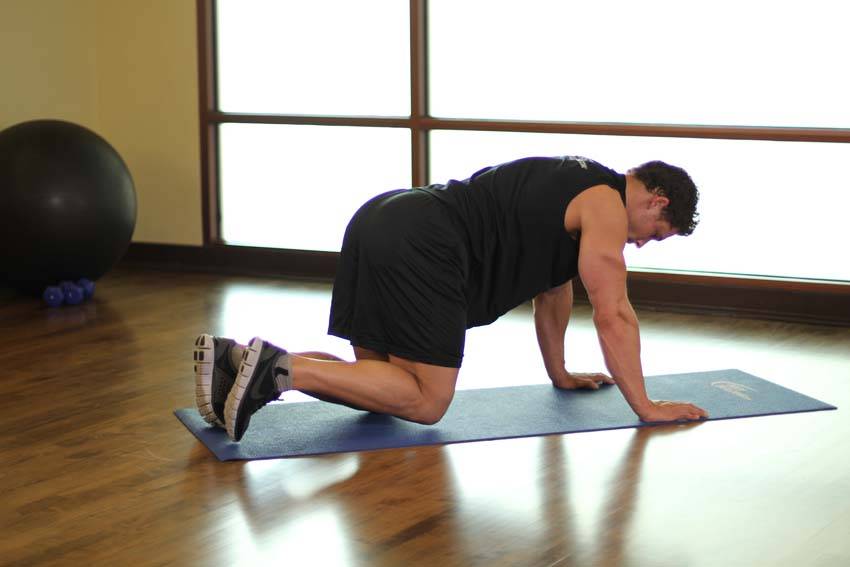
10. Looking At Ceiling
81% match- Quads
- Bodyweight
- Beginner
- Isolation
How to perform this exercise
- Kneel on the floor, holding your heels with both hands.
- Lift your buttocks up and forward while bringing your head back to look up at the ceiling, to give an arch in your back.
Sets and reps: Hold for 20 to 30 seconds, 3 sets.
Why this matches
- Primary muscle: quads, the same as the Quadriceps-smr
- Equipment: bodyweight only, the same as the Quadriceps-smr
- Body position: lying on your back, not lying face down
Why You Might Need a Quadriceps-smr Alternative
You may substitute Quadriceps-smr when foam rolling aggravates pain, you lack equipment, or you need more precise trigger-point work. Athletes with anterior knee pain or post-surgical sensitivity often tolerate a lacrosse-ball or percussion gun better because those tools allow focal pressure on the rectus femoris and vasti. Manual therapy or a couch stretch can actively lengthen the quad while protecting the patellofemoral joint. Use a controlled cue, kneel with the back foot against a wall, squeeze glutes, and tilt the pelvis, to bias rectus femoris lengthening rather than passive compression.
How to Choose the Right Quadriceps-smr Substitute
Select a substitute based on pain tolerance, target specificity, and stage of recovery. If you need deep, focal pressure for trigger points, use a lacrosse ball and apply 20–30 seconds of sustained pressure directly on the tight spot while keeping hips level. For general tissue loosening and circulation, a percussion device stroking along the muscle belly at low amplitude works well. For mobility and strengthening of lengthened tissue, pick the couch stretch and add hip-extension activation (squeeze glutes) to reinforce proper rectus femoris mechanics. Prioritize methods that let you control intensity and preserve knee alignment.
Quadriceps-smr FAQ
What muscles does Quadriceps-smr work?
Quadriceps-smr targets the quadriceps group, rectus femoris, vastus lateralis, vastus medialis, and vastus intermedius. It focuses on the muscle bellies and fascia to reduce tension and improve mobility across the anterior thigh and knee joint.
What is the best bodyweight alternative to Quadriceps-smr?
The couch stretch is the most effective bodyweight option: kneel with your back foot against a wall, tuck your pelvis by squeezing glutes, and drive hips forward to lengthen the rectus femoris. Hold 30–60 seconds and perform active glute squeezes to reinforce hip extension mechanics.
Find Alternatives for Any Exercise
Search the exercise database and filter the ranked substitutes by the equipment you own.
Similarity scores compare exercise metadata such as movement pattern, muscles, equipment and body position. They are not a safety rating or a check that you own the equipment. Learn about our methodology