

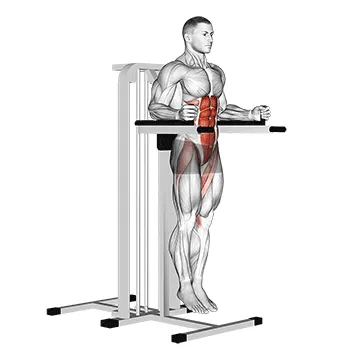
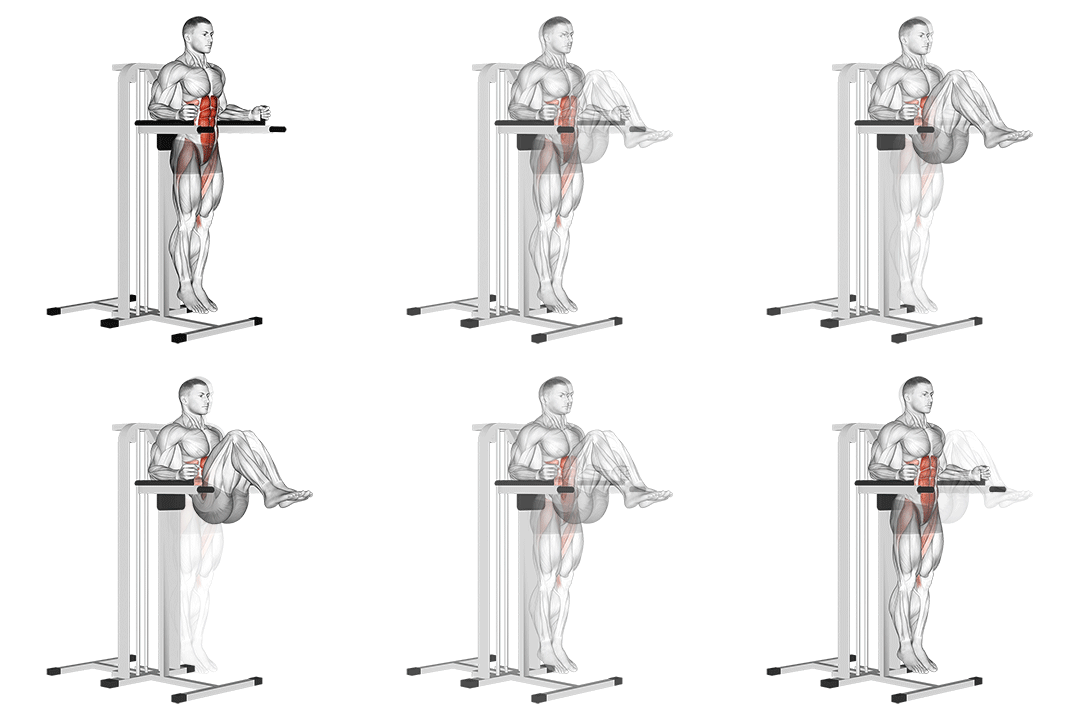
10 Best Side Hip (On Parallel Bars) Alternatives for Limited Equipment
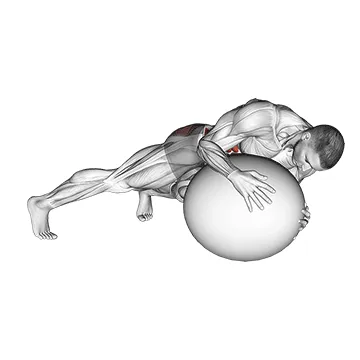
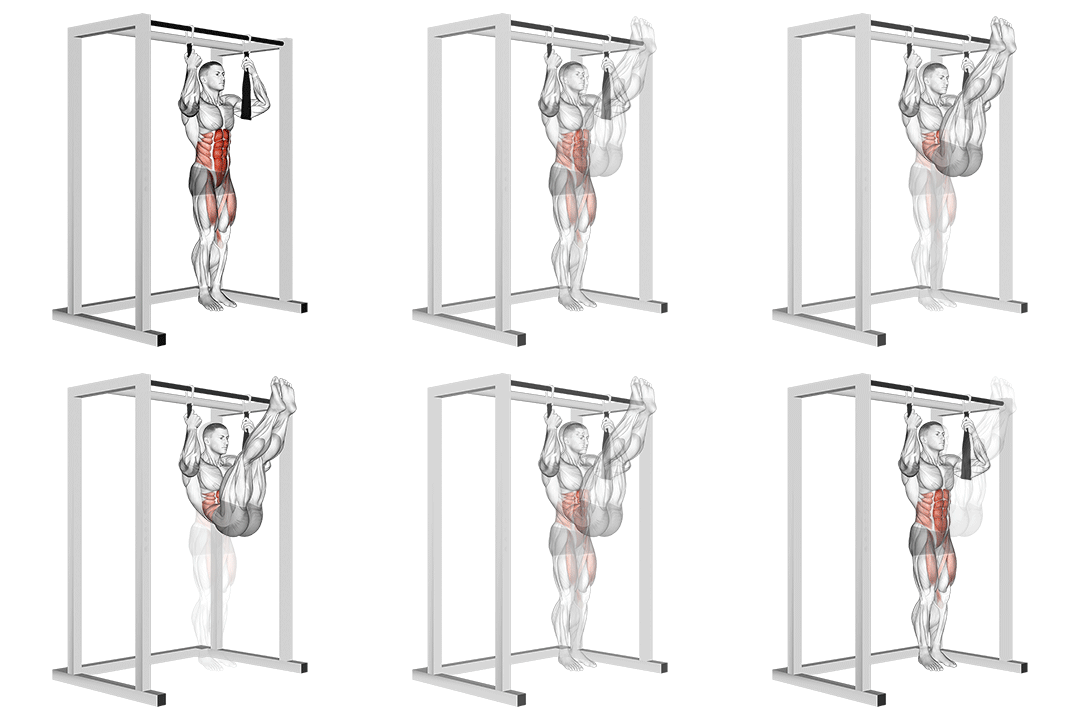
The Side Hip (On Parallel Bars) is done hanging. Ranked closest by our scoring: the Incline Twisting Sit-up, the Gorilla Chin and the Prone Twist On Stability Ball. Five harder versions, among them the Hanging Straight Twisting Leg Hip Raise and the Hanging Oblique Knee Raise, are listed below as progressions rather than swaps.
Updated Ranked by our 12-factor similarity model How it works
Original Exercise: Side Hip (On Parallel Bars)
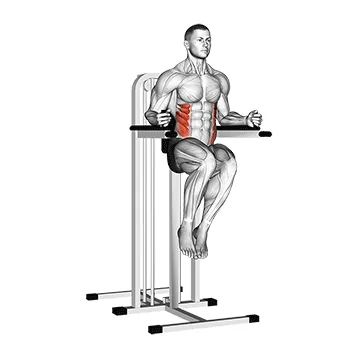
- Primary muscle
- Abs
- Equipment
- Bodyweight
- Difficulty
- Advanced
- Type
- Compound
Secondary muscles: Obliques, Hip Flexors
How to perform Side Hip (On Parallel Bars)
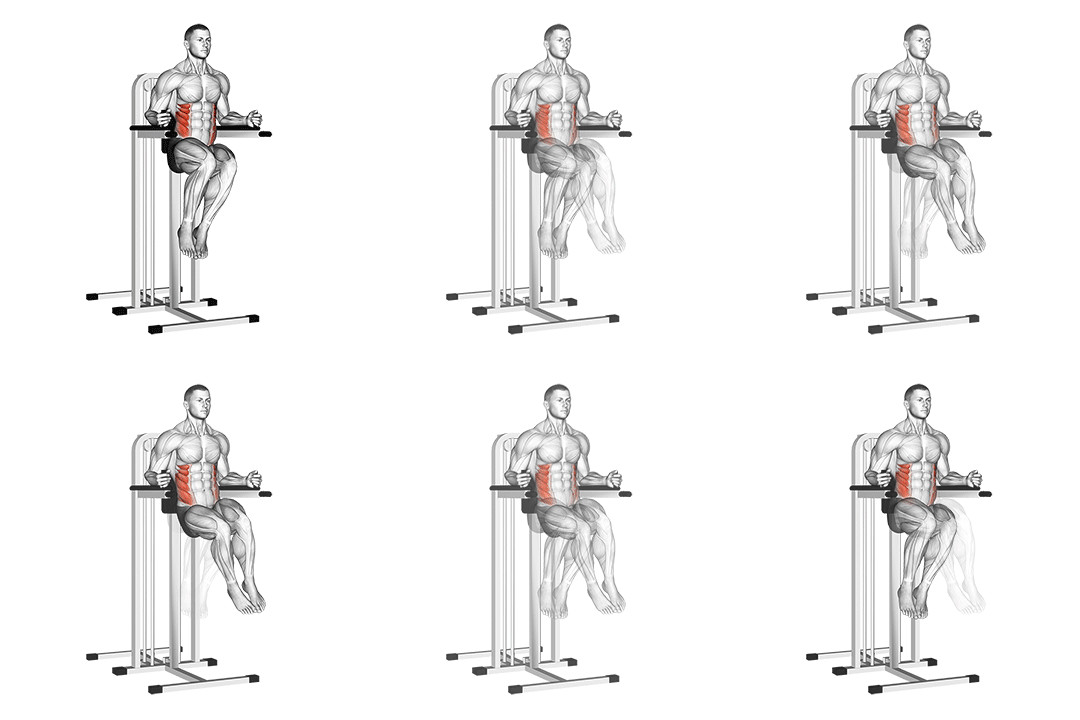
- Stand between two parallel bars with your feet shoulder-width apart.
- Place your hands on the bars and lift your body off the ground, supporting your weight on your arms.
- Engage your abs and slowly lift your legs to the side, keeping them straight.
- Pause for a moment at the top, then slowly lower your legs back down to the starting position.
- Repeat for the desired number of repetitions.
Ranked Side Hip (On Parallel Bars) Alternatives
10 substitutes, ranked by how closely each one matches the Side Hip (On Parallel Bars) on movement pattern, muscles worked, equipment and body position. The higher the score, the less you change. Open "How to perform this exercise" on a card for the steps; every card title links to that exercise's own alternatives page. Harder versions are tagged as progressions and kept out of the top spot even when they score higher.
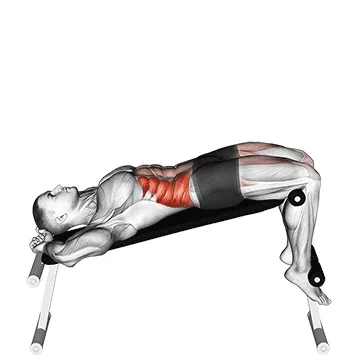
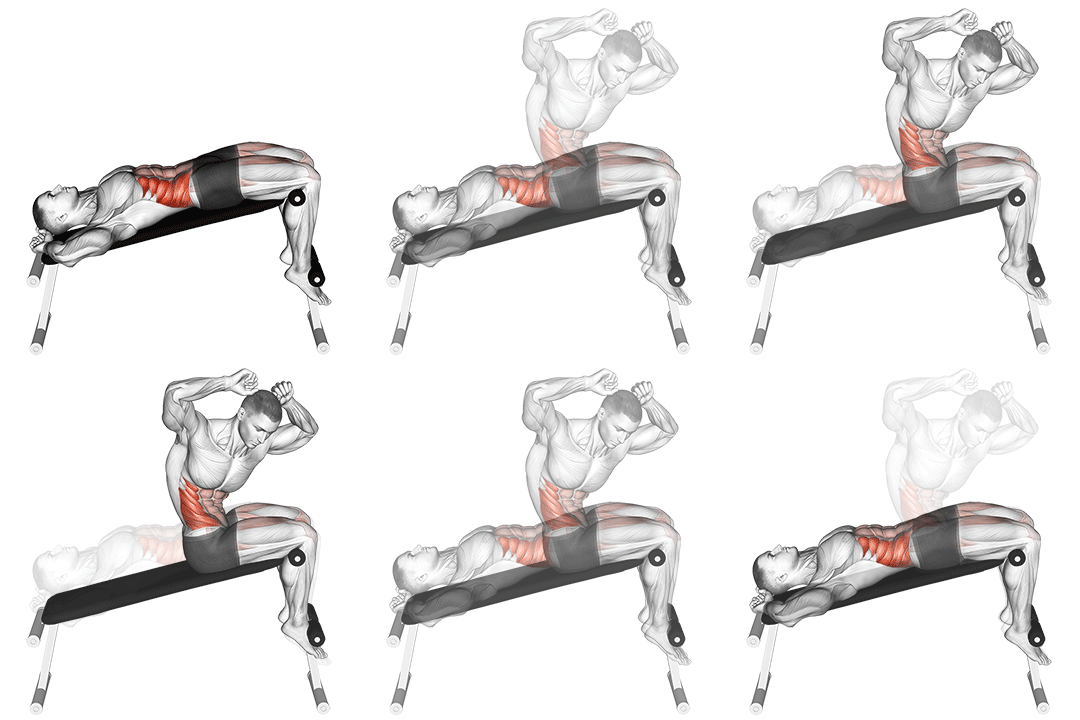
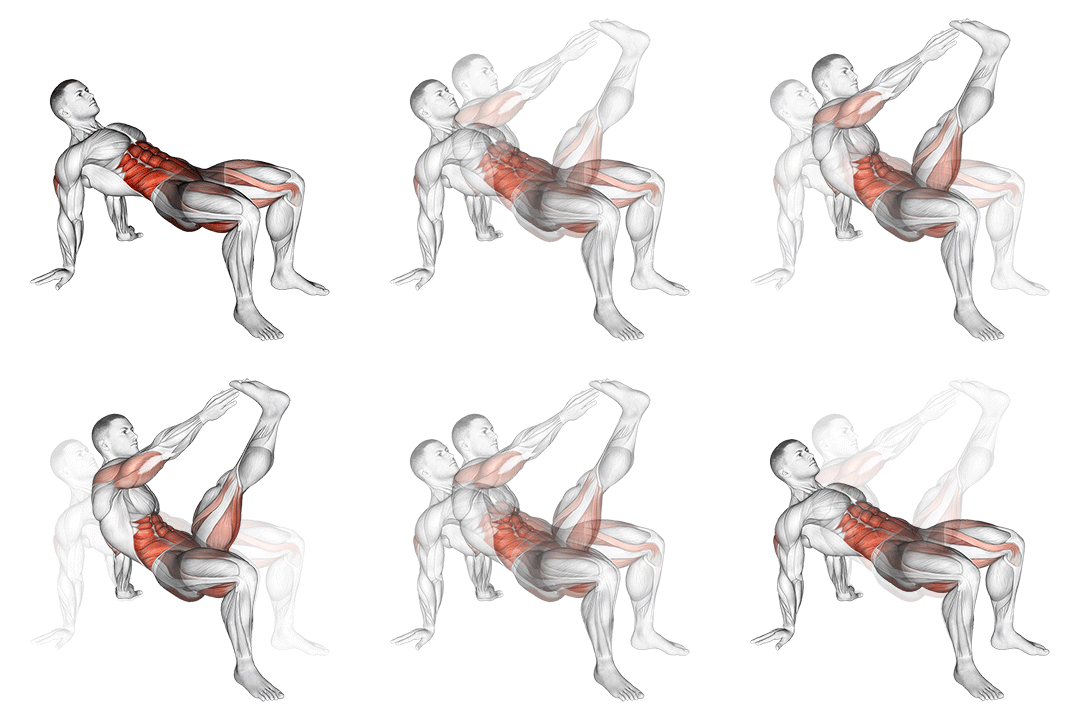
Best match 1. Incline Twisting Sit-up
88% match- Abs
- Bodyweight
- Intermediate
- Compound
Pick this when you want an easier version that still works the abs.
How to perform this exercise
- Set up an incline bench at a 45-degree angle.
- Lie down on the bench with your feet secured under the foot pads.
- Place your hands behind your head or across your chest.
- Engage your abs and lift your upper body off the bench, curling forward.
- As you curl up, twist your torso to one side, bringing your elbow towards the opposite knee.
- Pause for a moment at the top, then slowly lower your upper body back down to the starting position.
- Repeat the movement, this time twisting your torso to the other side.
- Continue alternating sides for the desired number of repetitions.
Sets and reps: 3 or 4 sets of 6 to 10 reps.
Why this matches
- Primary muscle: abs, the same as the Side Hip (On Parallel Bars)
- Equipment: bodyweight only, the same as the Side Hip (On Parallel Bars)
- Body position: lying on your back, not hanging
- Balance: easier to stay steady on than the Side Hip (On Parallel Bars)
Progression
- Abs
- Bodyweight
- Advanced
- Compound
Pick this when you want a harder version that still works the abs.
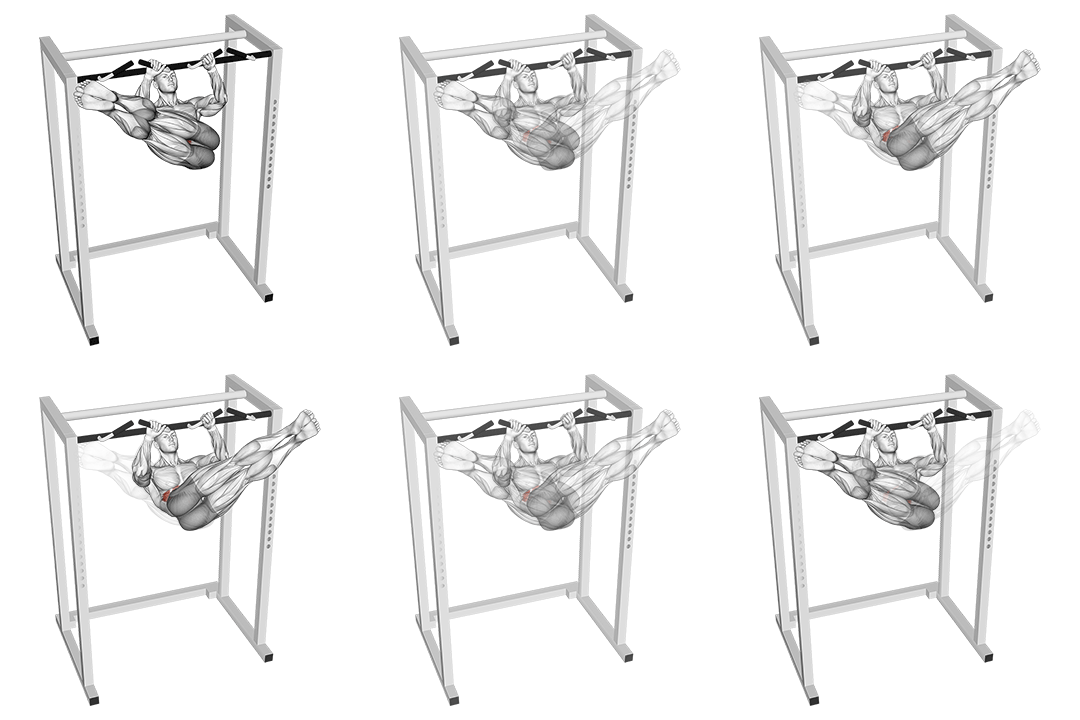
How to perform this exercise
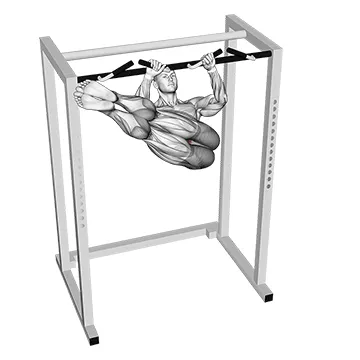
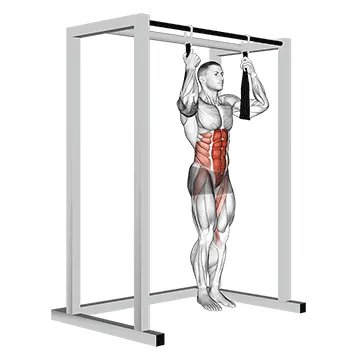
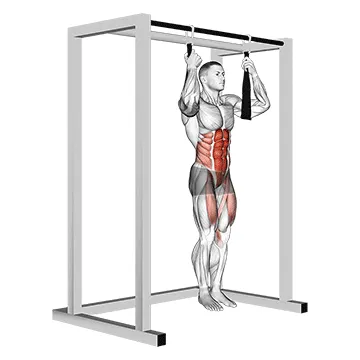
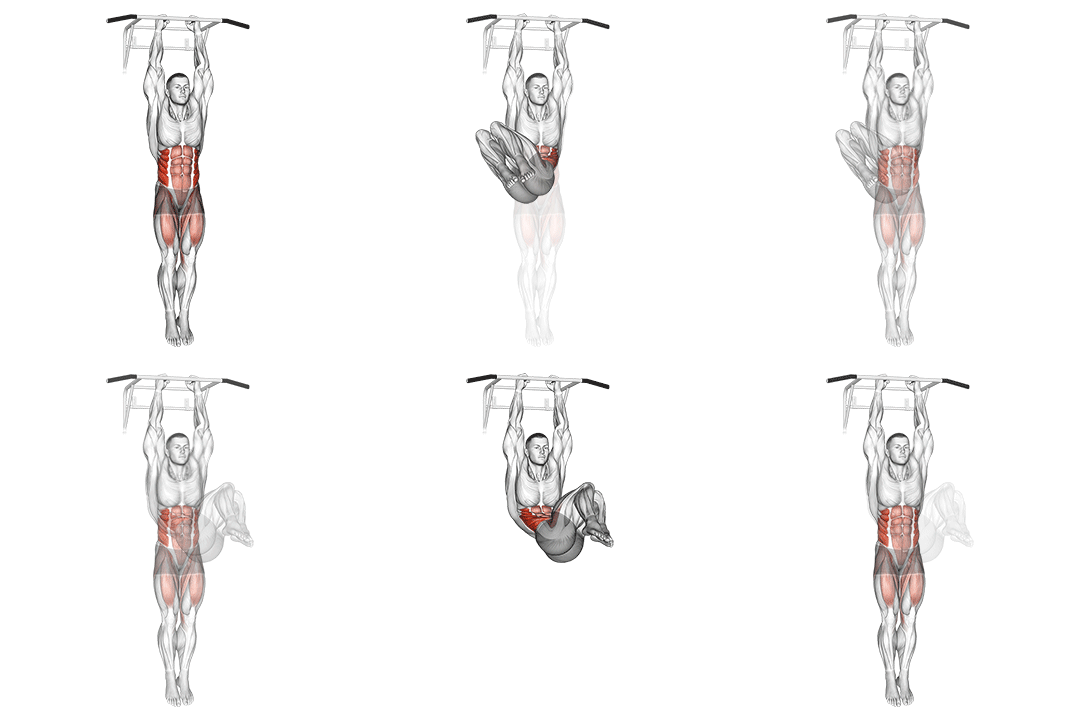
- Hang from a pull-up bar with your arms fully extended and your legs straight.
- Engage your core and lift your legs up towards your chest, keeping them straight.
- Once your legs are parallel to the ground, twist your hips to one side, bringing your legs towards that side.
- Pause for a moment, then return to the starting position.
- Repeat the movement, but this time twist your hips to the opposite side.
- Continue alternating sides for the desired number of repetitions.
Sets and reps: 3 or 4 sets of 6 to 10 reps.
Why this matches
- Primary muscle: abs, the same as the Side Hip (On Parallel Bars)
- Equipment: bodyweight only, the same as the Side Hip (On Parallel Bars)
- Body position: hanging, the same as the Side Hip (On Parallel Bars)
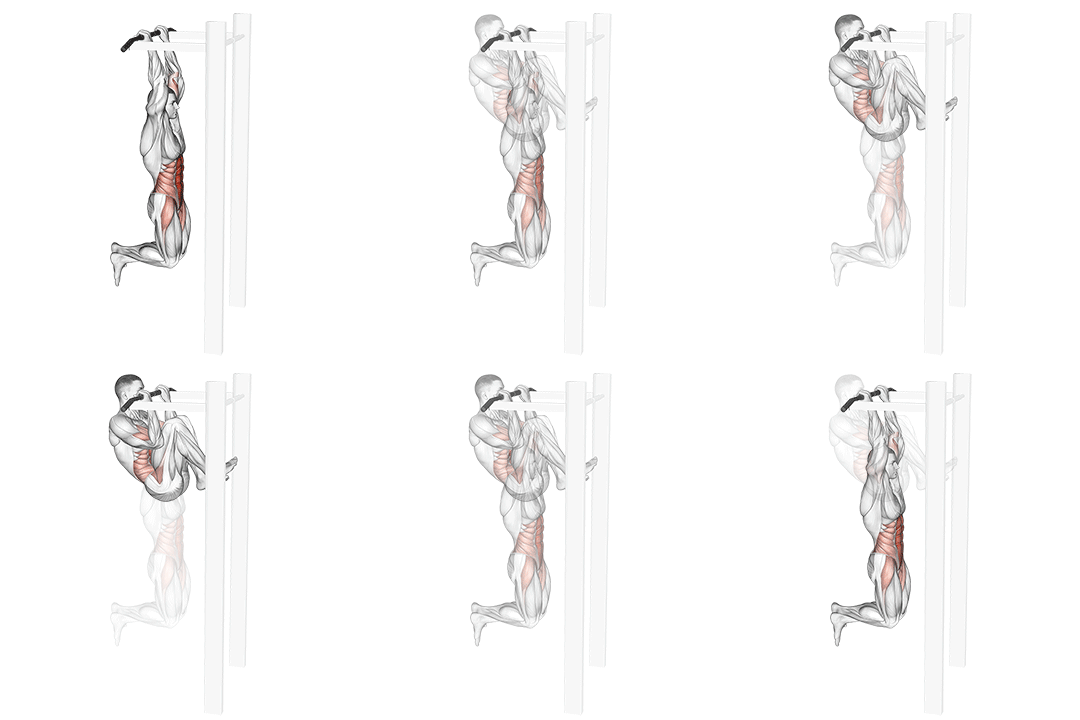
3. Gorilla Chin
88% match- Abs
- Bodyweight
- Intermediate
- Compound
Pick this when you want an easier version that works the abs one side at a time.
How to perform this exercise
- Stand with your feet shoulder-width apart and your knees slightly bent.
- Grasp a pull-up bar with an overhand grip, slightly wider than shoulder-width apart.
- Hang from the bar with your arms fully extended and your palms facing away from you.
- Engage your core and pull your body up towards the bar, bringing your chin above the bar.
- Pause for a moment at the top, then slowly lower your body back down to the starting position.
- Repeat for the desired number of repetitions.
Sets and reps: 3 or 4 sets of 6 to 10 reps on each side.
Why this matches
- Primary muscle: abs, the same as the Side Hip (On Parallel Bars)
- Equipment: bodyweight only, the same as the Side Hip (On Parallel Bars)
- Body position: hanging, the same as the Side Hip (On Parallel Bars)
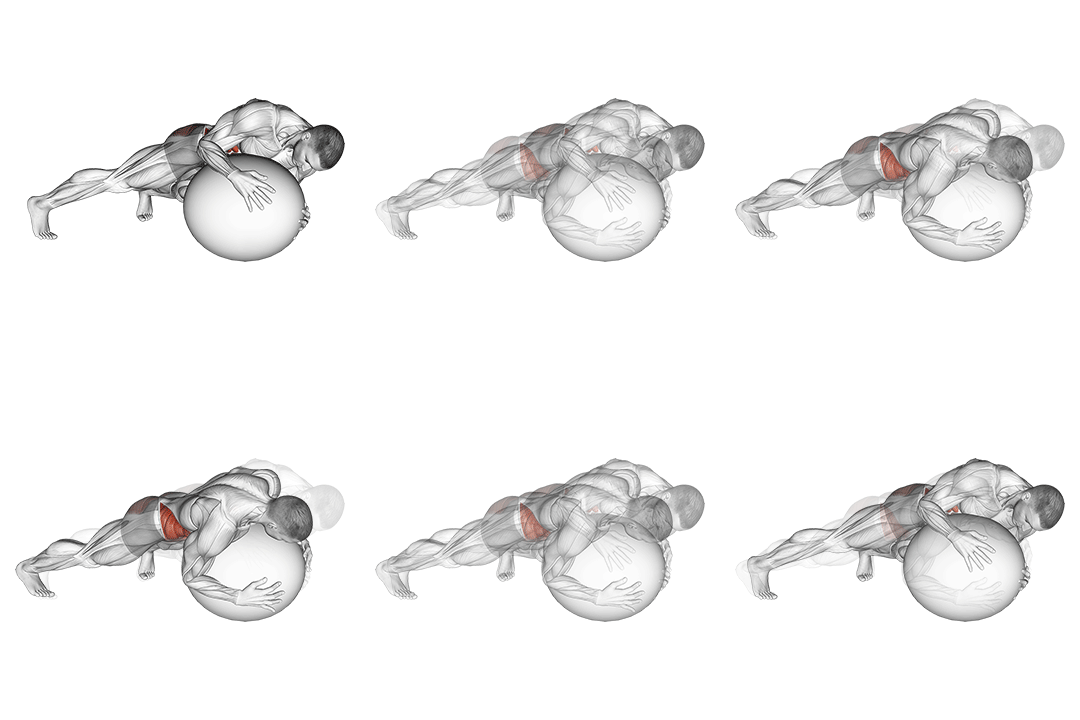
4. Prone Twist On Stability Ball
86% match- Abs
- Stability-ball
- Intermediate
- Isolation
A good swap when you have a stability ball to work with, and it still works the abs.
How to perform this exercise
- Start by lying face down on a stability ball with your feet shoulder-width apart and your toes touching the ground.
- Place your hands behind your head or cross them over your chest.
- Engage your core muscles and slowly lift your upper body off the ball, keeping your back straight.
- Rotate your torso to one side, bringing your shoulder towards your hip. Keep your hips and legs stable throughout the movement.
- Pause for a moment, then return to the starting position.
- Repeat the rotation to the other side.
- Continue alternating sides for the desired number of repetitions.
Sets and reps: 3 sets of 10 to 15 reps.
Why this matches
- Primary muscle: abs, the same as the Side Hip (On Parallel Bars)
- Equipment: bodyweight only, the same as the Side Hip (On Parallel Bars)
- Body position: lying face down, not hanging
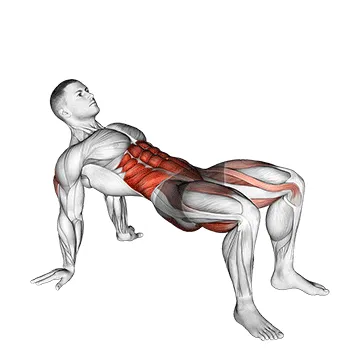
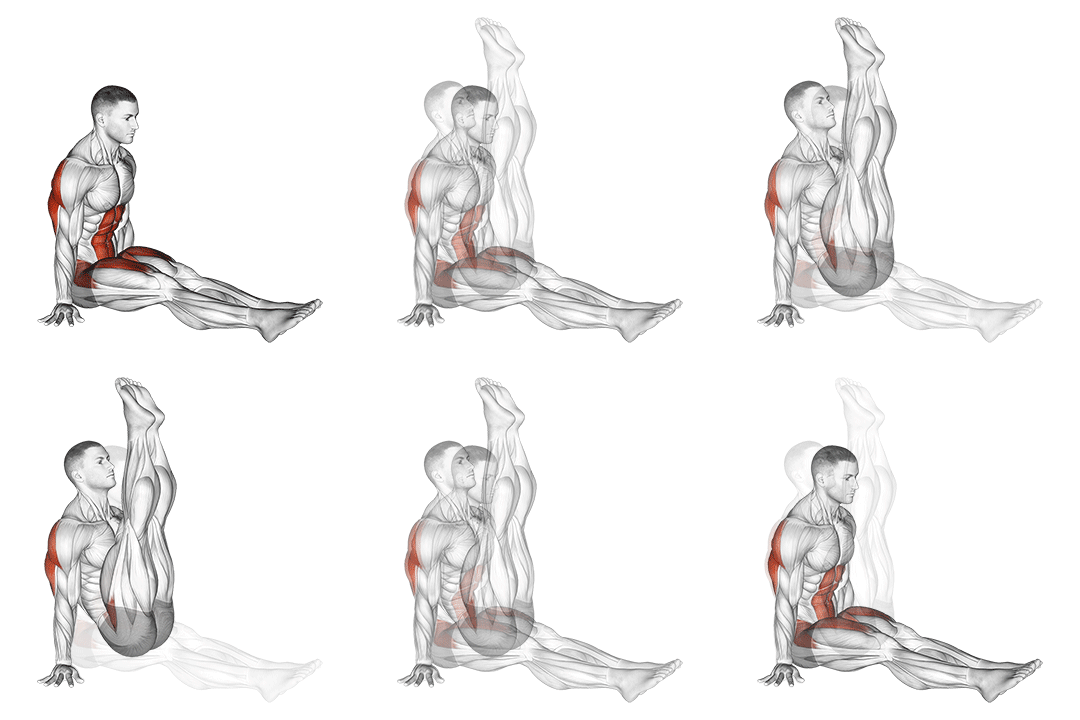
5. Crab Twist Toe Touch
85% match- Abs
- Bodyweight
- Intermediate
- Compound
Pick this when you want an easier single-leg version that still works the abs.
How to perform this exercise
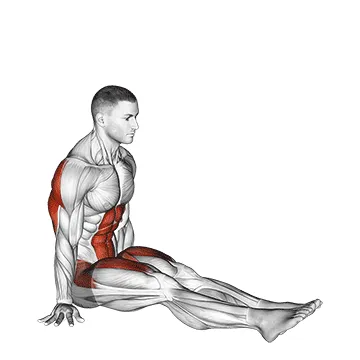
- Start by sitting on the ground with your knees bent and feet flat on the floor.
- Place your hands behind you, fingers pointing towards your feet, and lift your hips off the ground.
- Extend one leg straight out in front of you while simultaneously reaching your opposite hand towards your toes.
- Return to the starting position and repeat on the other side.
- Continue alternating sides for the desired number of repetitions.
Sets and reps: 3 or 4 sets of 6 to 10 reps on each side.
Why this matches
- Primary muscle: abs, the same as the Side Hip (On Parallel Bars)
- Equipment: bodyweight only, the same as the Side Hip (On Parallel Bars)
- Body position: seated, not hanging
Progression
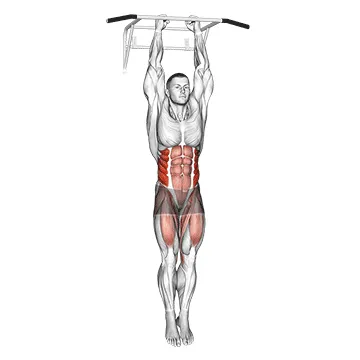
6. Hanging Oblique Knee Raise
85% match- Abs
- Bodyweight
- Advanced
- Compound
Pick this when you want a harder version that works the abs one side at a time.
How to perform this exercise
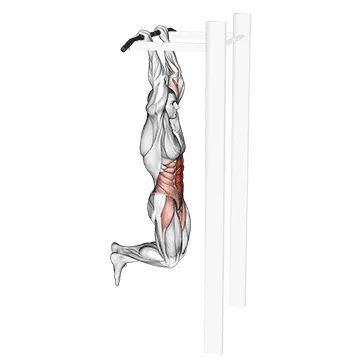
- Hang from a pull-up bar with your arms fully extended and your palms facing away from you.
- Engage your core and lift your knees towards your chest, twisting your torso to the side as you do so.
- Pause for a moment at the top, then slowly lower your legs back down to the starting position.
- Repeat on the other side, twisting your torso in the opposite direction.
- Continue alternating sides for the desired number of repetitions.
Sets and reps: 3 or 4 sets of 6 to 10 reps on each side.
Why this matches
- Primary muscle: abs, the same as the Side Hip (On Parallel Bars)
- Equipment: bodyweight only, the same as the Side Hip (On Parallel Bars)
- Body position: hanging, the same as the Side Hip (On Parallel Bars)
Progression
- Abs
- Bodyweight
- Advanced
- Compound
How to perform this exercise
- Hang from the parallel bars with your arms fully extended and your body straight.
- Engage your core and lift your legs up in front of you, keeping them straight.
- Continue lifting until your legs are parallel to the ground or slightly higher.
- Pause for a moment at the top, then slowly lower your legs back down to the starting position.
- Repeat for the desired number of repetitions.
Sets and reps: 3 or 4 sets of 6 to 10 reps.
Why this matches
- Primary muscle: abs, the same as the Side Hip (On Parallel Bars)
- Equipment: bodyweight only, the same as the Side Hip (On Parallel Bars)
- Body position: hanging, the same as the Side Hip (On Parallel Bars)
- Abs
- Bodyweight
- Intermediate
- Compound
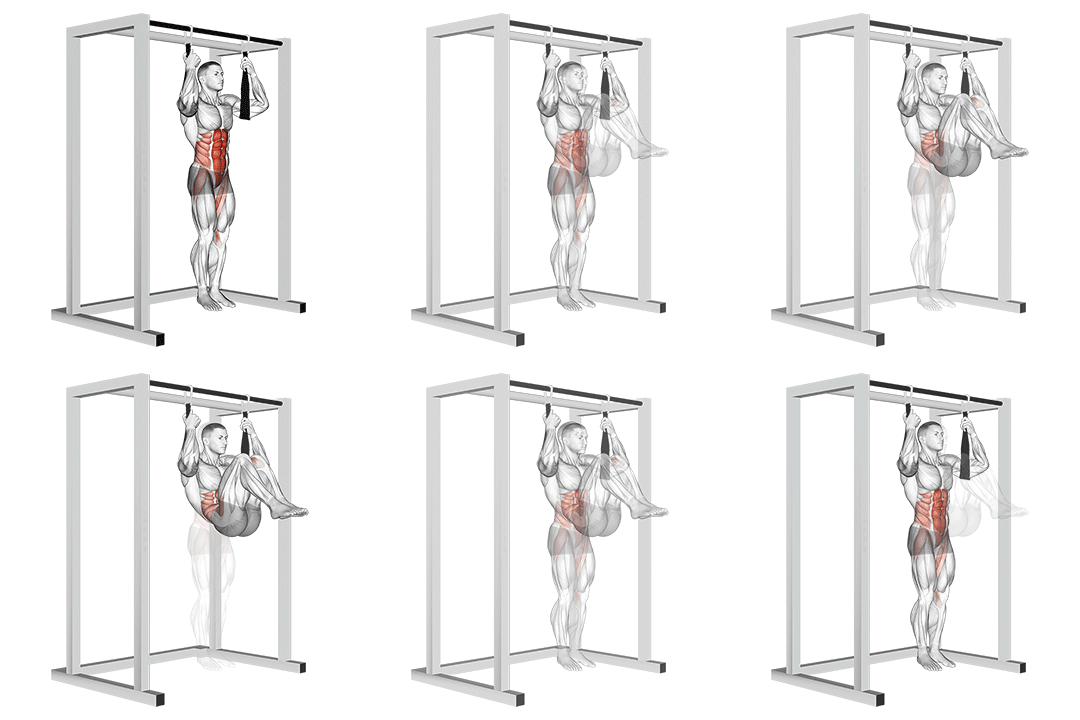
How to perform this exercise
- Hang from a pull-up bar with your arms fully extended and your knees bent at a 90-degree angle.
- Engage your core and lift your knees towards your chest, bringing them as close to your elbows as possible.
- Slowly lower your legs back down to the starting position.
- Repeat for the desired number of repetitions.
Sets and reps: 3 or 4 sets of 6 to 10 reps on each side.
Why this matches
- Primary muscle: abs, the same as the Side Hip (On Parallel Bars)
- Equipment: bodyweight only, the same as the Side Hip (On Parallel Bars)
- Body position: hanging, the same as the Side Hip (On Parallel Bars)
Progression
- Abs
- Bodyweight
- Advanced
- Compound
How to perform this exercise
- Hang from a pull-up bar with your arms fully extended and your legs straight down.
- Engage your core and lift your legs up in front of you until they are parallel to the ground.
- Hold for a moment at the top, then slowly lower your legs back down to the starting position.
- Repeat for the desired number of repetitions.
Sets and reps: 3 or 4 sets of 6 to 10 reps on each side.
Why this matches
- Primary muscle: abs, the same as the Side Hip (On Parallel Bars)
- Equipment: bodyweight only, the same as the Side Hip (On Parallel Bars)
- Body position: hanging, the same as the Side Hip (On Parallel Bars)
Progression
10. V-sit On Floor
82% match- Abs
- Bodyweight
- Advanced
- Compound
How to perform this exercise
- Sit on the floor with your legs extended in front of you.
- Lean back slightly and lift your legs off the ground, keeping them straight.
- Simultaneously, lift your upper body off the ground and reach your arms towards your legs.
- Hold this position for a few seconds, then slowly lower your upper body and legs back down to the starting position.
- Repeat for the desired number of repetitions.
Sets and reps: 3 or 4 sets of 6 to 10 reps.
Why this matches
- Movement: anti-rotation hold, not anti-rotation twist
- Primary muscle: abs, the same as the Side Hip (On Parallel Bars)
- Equipment: bodyweight only, the same as the Side Hip (On Parallel Bars)
- Body position: seated, not hanging
Why You Might Need a Side Hip (On Parallel Bars) Alternative
You might substitute Side Hip because you lack parallel bars, suffer shoulder or wrist pain, or need a lower-skill progression. Grip fatigue and scapular instability often limit hanging variations, shifting load away from the obliques. Choosing a substitute lets you control hip flexor involvement and spinal load. For example, side plank hip dips limit hip flexor pull and isolate the external obliques; cue: keep ribs pulled down and rotate the torso from the waist to feel oblique contraction.
Side Hip (On Parallel Bars) FAQ
What muscles does Side Hip (on Parallel Bars) work?
Side Hip primarily targets the external and internal obliques and the transverse abdominis to create lateral flexion and anti-rotation. You also recruit hip flexors and shoulder/scapular stabilizers for support when hanging; brace your core and exhale as you lift to maximize oblique activation.
What is the best bodyweight alternative to Side Hip (on Parallel Bars)?
Side plank hip dips are the top bodyweight alternative because they isolate the obliques without hanging demands. Technique cue: stack your feet, place your elbow under the shoulder, drop the hip 3–5 cm, then lift driving the oblique; this reduces hip flexor contribution and increases lateral core tension.
Can I build muscle without doing Side Hip (on Parallel Bars)?
Yes. You can hypertrophy the obliques using progressive overload through increased time under tension, lever length, or added resistance. For example, perform slow windshield wipers with a longer lever or add ankle weights to hanging knee raises to increase eccentric load and create muscle adaptation.
Find Alternatives for Any Exercise
Search the exercise database and filter the ranked substitutes by the equipment you own.
Similarity scores compare exercise metadata such as movement pattern, muscles, equipment and body position. They are not a safety rating or a check that you own the equipment. Learn about our methodology