

10 Best Skating Alternatives for Quad Strength
The Skating is done standing. Ranked closest by our scoring: the Bodyweight Walking Lunge, the Alternate Leg Diagonal Bound and the Scissors Jump.
Updated Ranked by our 12-factor similarity model How it works
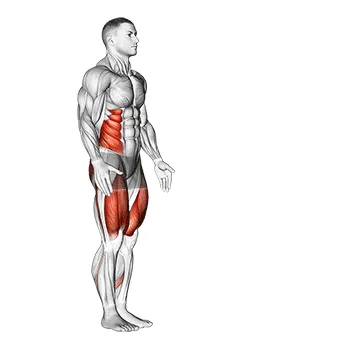
Original Exercise: Skating
- Primary muscle
- Quads
- Equipment
- Other
- Difficulty
- Intermediate
- Type
- Compound
Secondary muscles: Abductors, Adductors, Calves, Glutes, Hamstrings
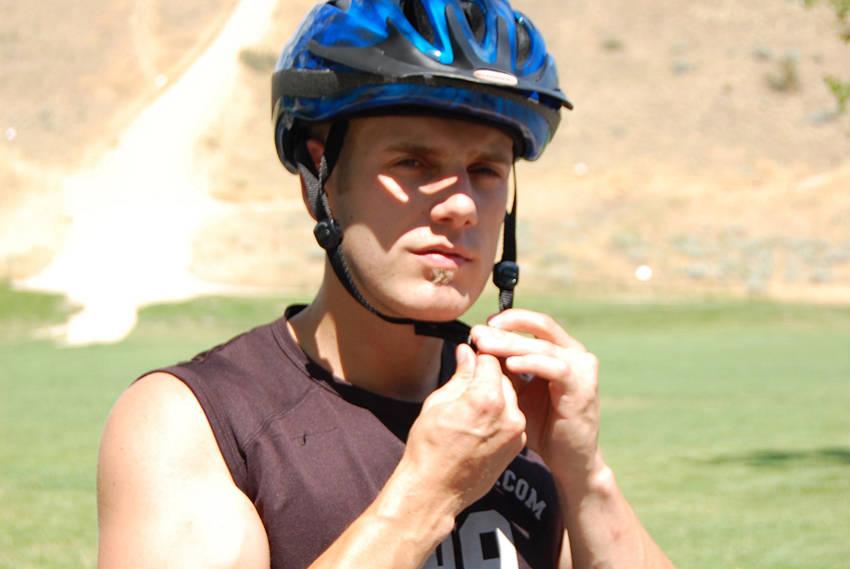
How to perform Skating
- Roller skating is a fun activity which can be effective in improving cardiorespiratory fitness and muscular endurance. It requires relatively good balance and coordination. It is necessary to learn the basics of skating including turning and stopping and to wear protective gear to avoid possible injury.
- You can skate at a comfortable pace for 30 minutes straight. If you want a cardio challenge, do interval skating, speed skate two minutes of every five minutes, using the remaining three minutes to recover. A 150 lb person will typically burn about 175 calories in 30 minutes skating at a comfortable pace, similar to brisk walking.
Ranked Skating Alternatives
10 substitutes, ranked by how closely each one matches the Skating on movement pattern, muscles worked, equipment and body position. The higher the score, the less you change. Open "How to perform this exercise" on a card for the steps; every card title links to that exercise's own alternatives page.
Best match 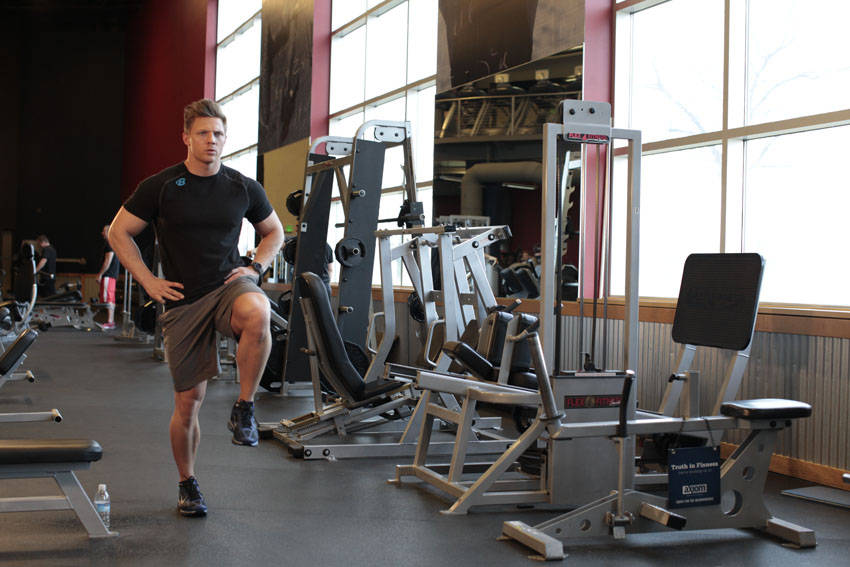
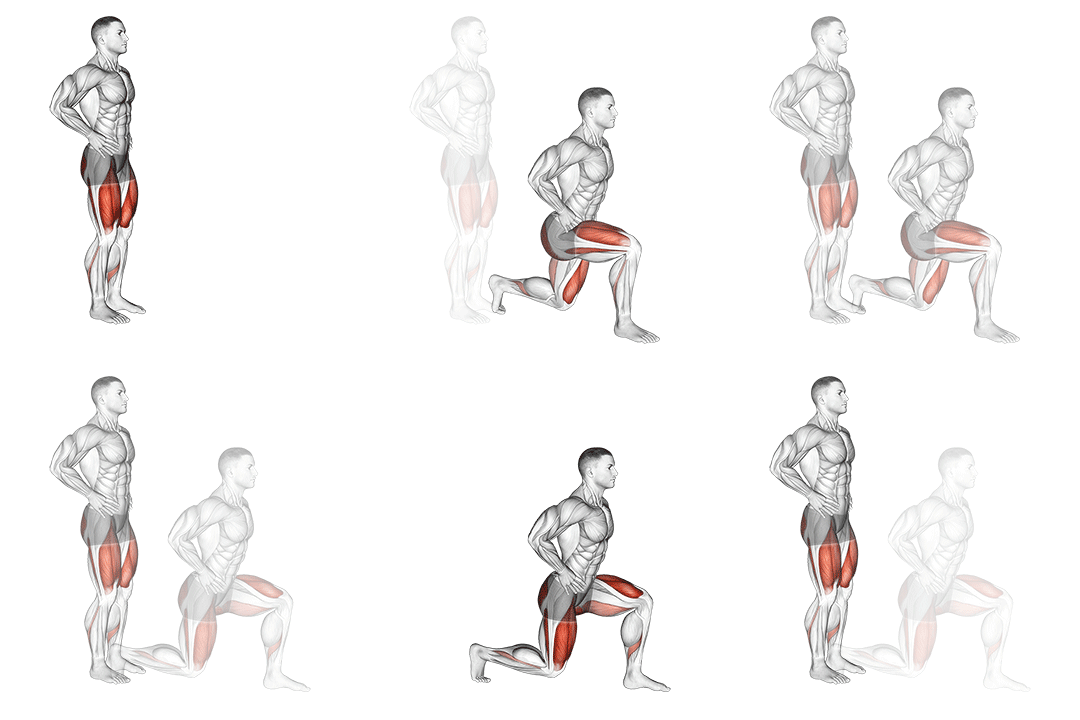
1. Bodyweight Walking Lunge
86% match- Quads
- Bodyweight
- Intermediate
- Compound
It still works the quads, through a different movement.
How to perform this exercise
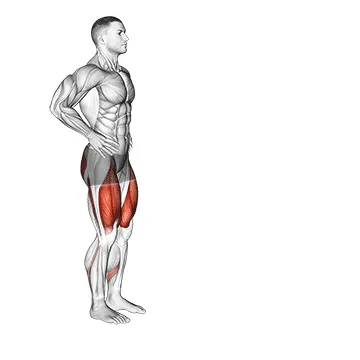
- Begin standing with your feet shoulder width apart and your hands on your hips.
- Step forward with one leg, flexing the knees to drop your hips. Descend until your rear knee nearly touches the ground. Your posture should remain upright, and your front knee should stay above the front foot.
- Drive through the heel of your lead foot and extend both knees to raise yourself back up.
- Step forward with your rear foot, repeating the lunge on the opposite leg.
Sets and reps: 3 or 4 sets of 6 to 10 reps on each side.
Why this matches
- Primary muscle: quads, the same as the Skating
- Equipment: bodyweight only, the same as the Skating
- Body position: standing, the same as the Skating
2. Alternate Leg Diagonal Bound
85% match- Quads
- Bodyweight
- Intermediate
- Compound
How to perform this exercise
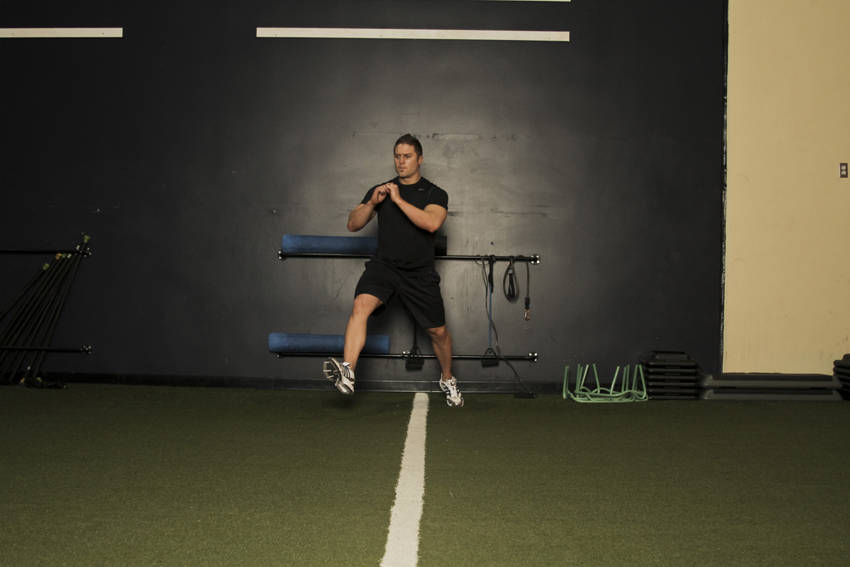
- Assume a comfortable stance with one foot slightly in front of the other.
- Begin by pushing off with the front leg, driving the opposite knee forward and as high as possible before landing. Attempt to cover as much distance to each side with each bound.
- It may help to use a line on the ground to guage distance from side to side.
- Repeat the sequence with the other leg.
Sets and reps: 3 or 4 sets of 6 to 10 reps on each side.
Why this matches
- Primary muscle: quads, the same as the Skating
- Equipment: bodyweight only, the same as the Skating
- Body position: standing, the same as the Skating
3. Lateral Bound
84% match- Adductors
- Bodyweight
- Advanced
- Compound
A looser match: it works the adductors rather than the quads.
How to perform this exercise
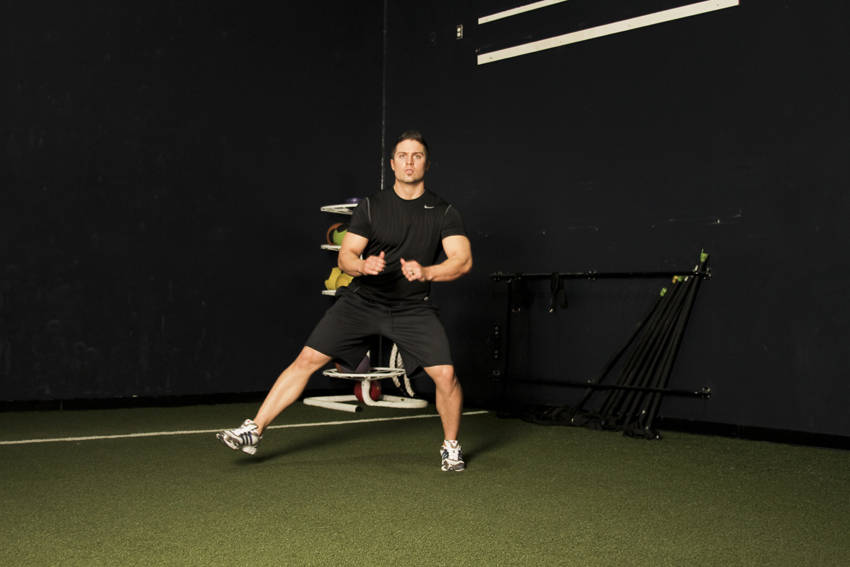
- Assume a half squat position facing 90 degrees from your direction of travel. This will be your starting position.
- Allow your lead leg to do a countermovement inward as you shift your weight to the outside leg.
- Immediately push off and extend, attempting to bound to the side as far as possible.
- Upon landing, immediately push off in the opposite direction, returning to your original start position.
- Continue back and forth for several repetitions.
Sets and reps: 3 or 4 sets of 6 to 10 reps on each side.
Why this matches
- Primary muscle: adductors, not quads
- Equipment: bodyweight only, the same as the Skating
- Body position: standing, the same as the Skating
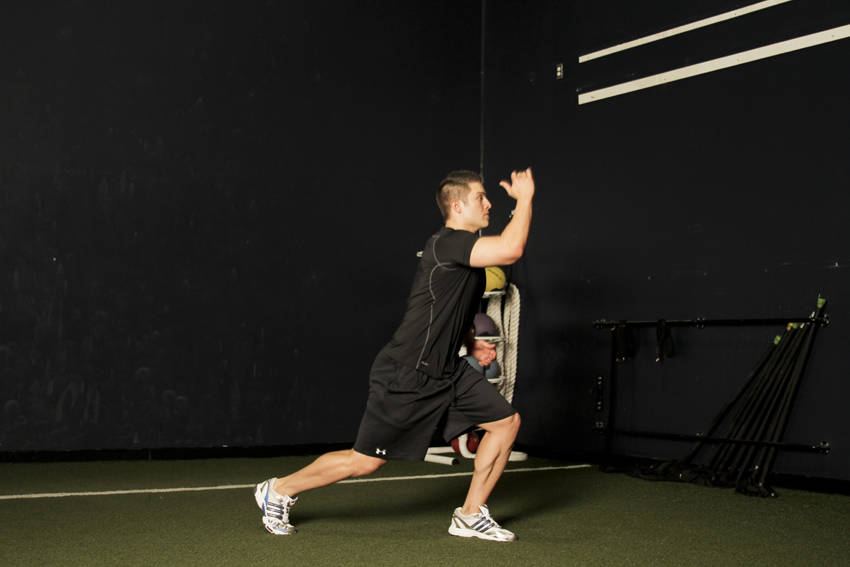
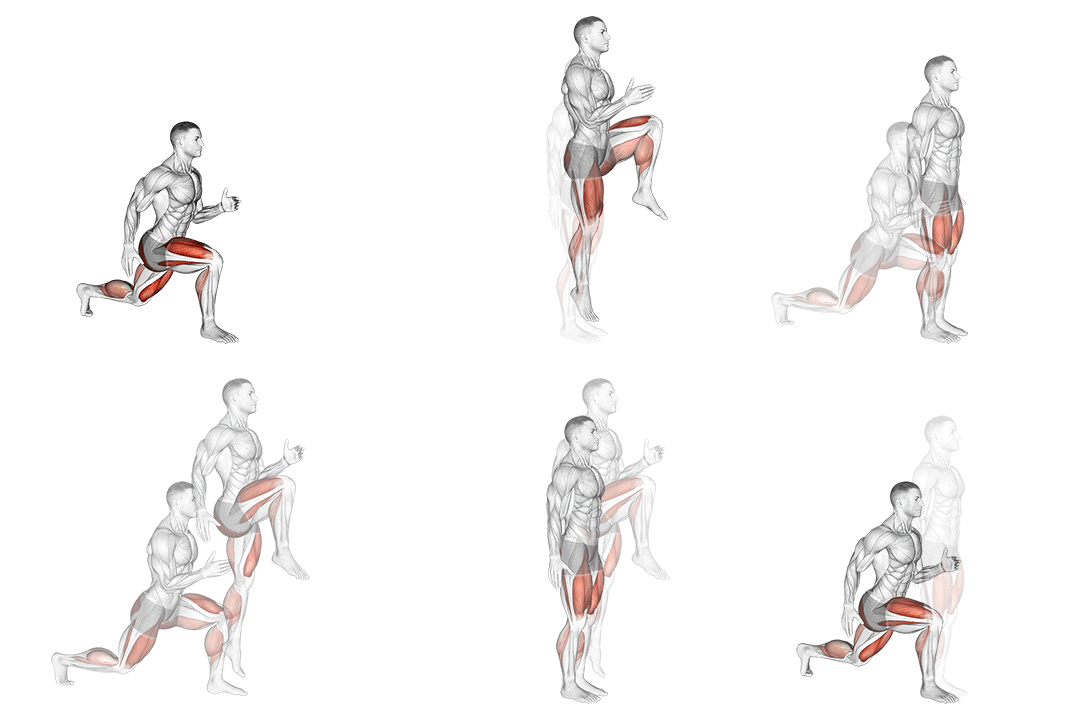
4. Scissors Jump
81% match- Quads
- Bodyweight
- Advanced
- Compound
Pick this when you want a harder version that still works the quads.
How to perform this exercise
- Assume a lunge stance position with one foot forward with the knee bent, and the rear knee nearly touching the ground.
- Ensure that the front knee is over the midline of the foot. Extending through both legs, jump as high as possible, swinging your arms to gain lift.
- As you jump as high as you can, switch the position of your legs, moving your front leg to the back and the rear leg to the front.
- As you land, absorb the impact through the legs by adopting the lunge position, and repeat.
Sets and reps: 3 or 4 sets of 6 to 10 reps on each side.
Why this matches
- Primary muscle: quads, the same as the Skating
- Equipment: bodyweight only, the same as the Skating
- Body position: standing, the same as the Skating
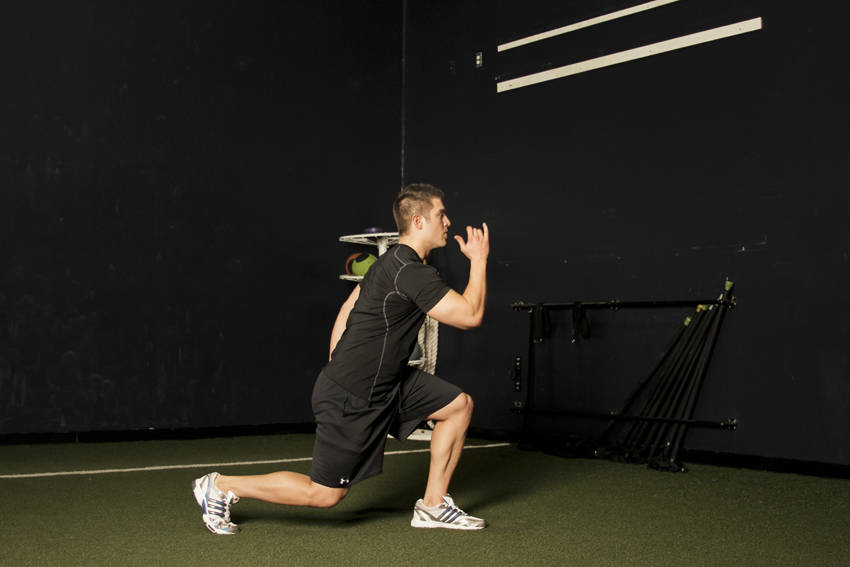
5. Split Jump
81% match- Quads
- Bodyweight
- Intermediate
- Compound
How to perform this exercise
- Assume a lunge stance position with one foot forward with the knee bent, and the rear knee nearly touching the ground.
- Ensure that the front knee is over the midline of the foot.
- Extending through both legs, jump as high as possible, swinging your arms to gain lift.
- As you jump, bring your feet together, and move them back to their initial positions as you land.
- Absorb the impact by reverting back to the starting position.
Sets and reps: 3 or 4 sets of 6 to 10 reps on each side.
Why this matches
- Primary muscle: quads, the same as the Skating
- Equipment: bodyweight only, the same as the Skating
- Body position: standing, the same as the Skating
6. Monster Walk
79% match- Glutes
- Bodyweight
- Intermediate
- Compound
A looser match: it works the glutes rather than the quads.
How to perform this exercise
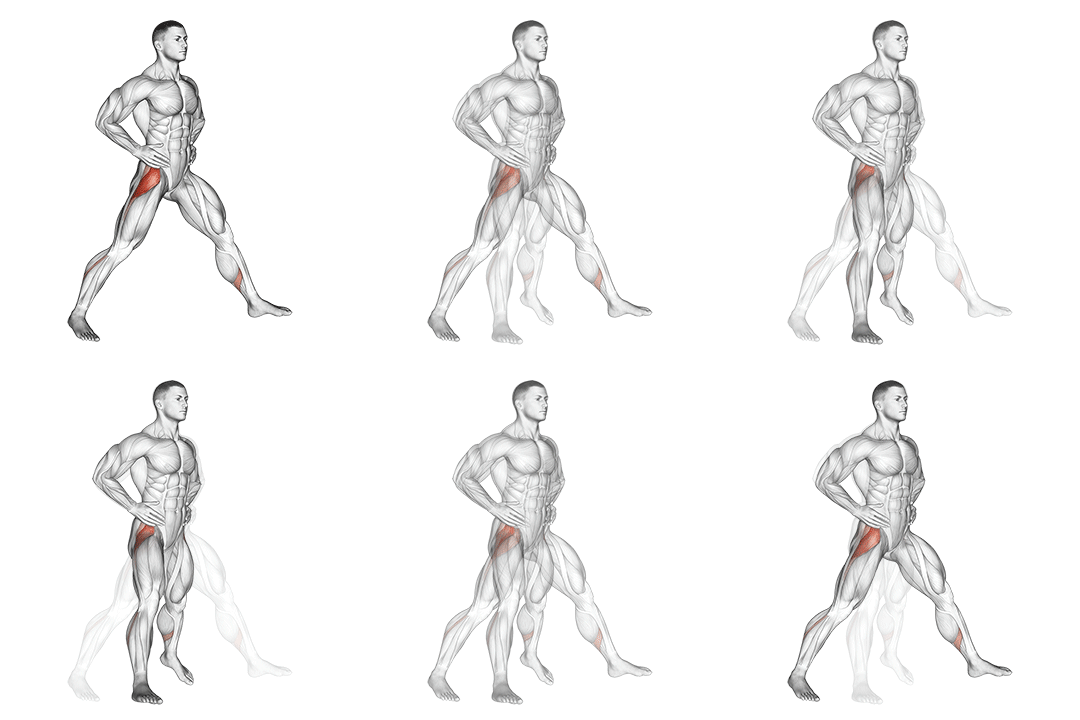
- Place a resistance band around your ankles.
- Stand with your feet shoulder-width apart and slightly bend your knees.
- Take a step to the side with your right foot, maintaining tension on the resistance band.
- Follow with your left foot, stepping to the side to return to the starting position.
- Repeat for the desired number of repetitions, then switch sides.
Sets and reps: 3 or 4 sets of 6 to 10 reps on each side.
Why this matches
- Primary muscle: glutes, not quads
- Equipment: bodyweight only, the same as the Skating
- Body position: standing, the same as the Skating
7. Lunge With Jump
70% match- Glutes
- Bodyweight
- Advanced
- Compound
How to perform this exercise
- Start by standing with your feet shoulder-width apart.
- Take a step forward with your right foot, lowering your body into a lunge position.
- Push off with your right foot and jump into the air, switching the position of your feet mid-air.
- Land softly with your left foot forward and immediately lower your body into a lunge position.
- Continue alternating between lunges and jumps for the desired number of repetitions.
Sets and reps: 3 or 4 sets of 6 to 10 reps on each side.
Why this matches
- Primary muscle: glutes, not quads
- Equipment: bodyweight only, the same as the Skating
- Body position: standing, the same as the Skating
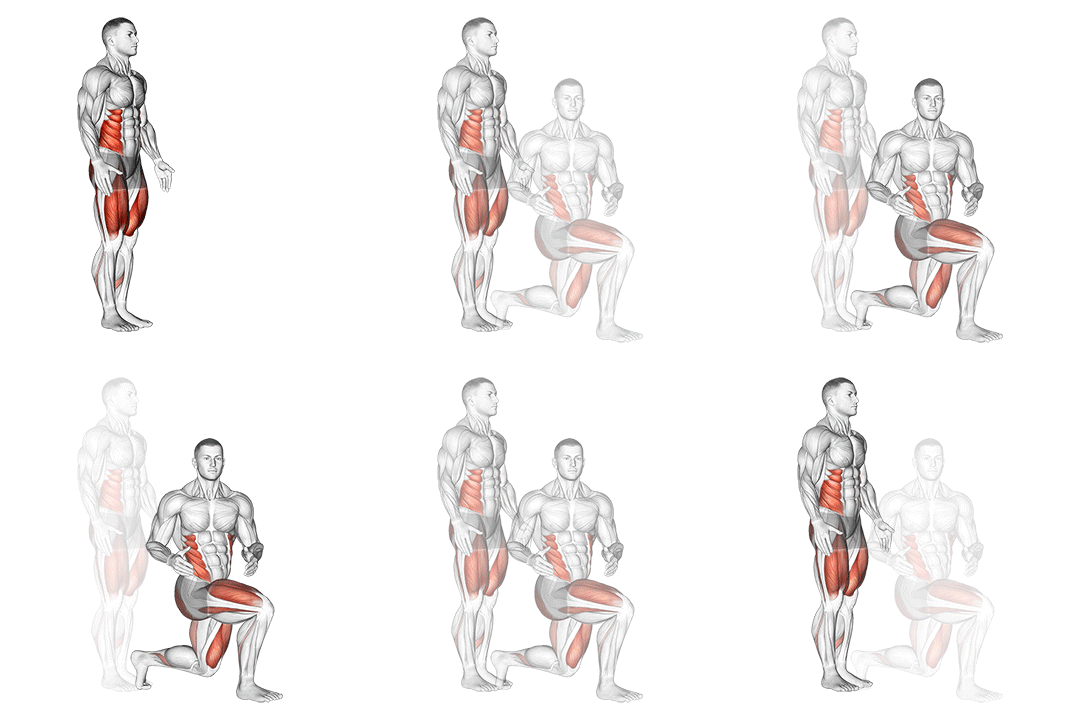
8. Lunge With Twist
70% match- Abs
- Bodyweight
- Intermediate
- Compound
How to perform this exercise
- Start by standing with your feet shoulder-width apart.
- Take a step forward with your right foot, lowering your body into a lunge position.
- As you lunge, twist your torso to the right, bringing your left elbow towards your right knee.
- Pause for a moment, then return to the starting position.
- Repeat on the other side, stepping forward with your left foot and twisting your torso to the left.
- Continue alternating sides for the desired number of repetitions.
Sets and reps: 3 or 4 sets of 6 to 10 reps on each side.
Why this matches
- Primary muscle: abs, not quads
- Equipment: bodyweight only, the same as the Skating
- Body position: standing, the same as the Skating
9. Forward Lunge
70% match- Glutes
- Bodyweight
- Beginner
- Compound
How to perform this exercise
- Stand with your feet hip-width apart and hands on your hips.
- Take a big step forward with your right foot, lowering your body into a lunge position.
- Bend your right knee to about 90 degrees, keeping your knee aligned with your ankle.
- Push off with your right foot and return to the starting position.
- Repeat with your left leg, alternating sides for the desired number of repetitions.
Sets and reps: 3 sets of 8 to 12 reps on each side, and add reps before you add load.
Why this matches
- Primary muscle: glutes, not quads
- Equipment: bodyweight only, the same as the Skating
- Body position: standing, the same as the Skating
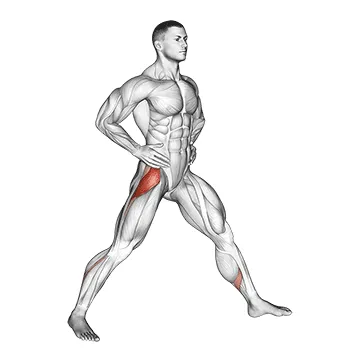
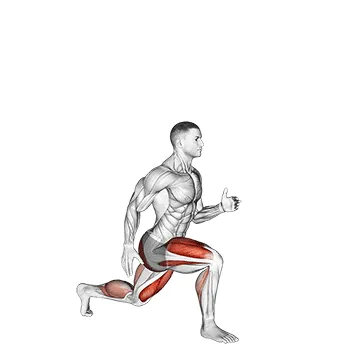
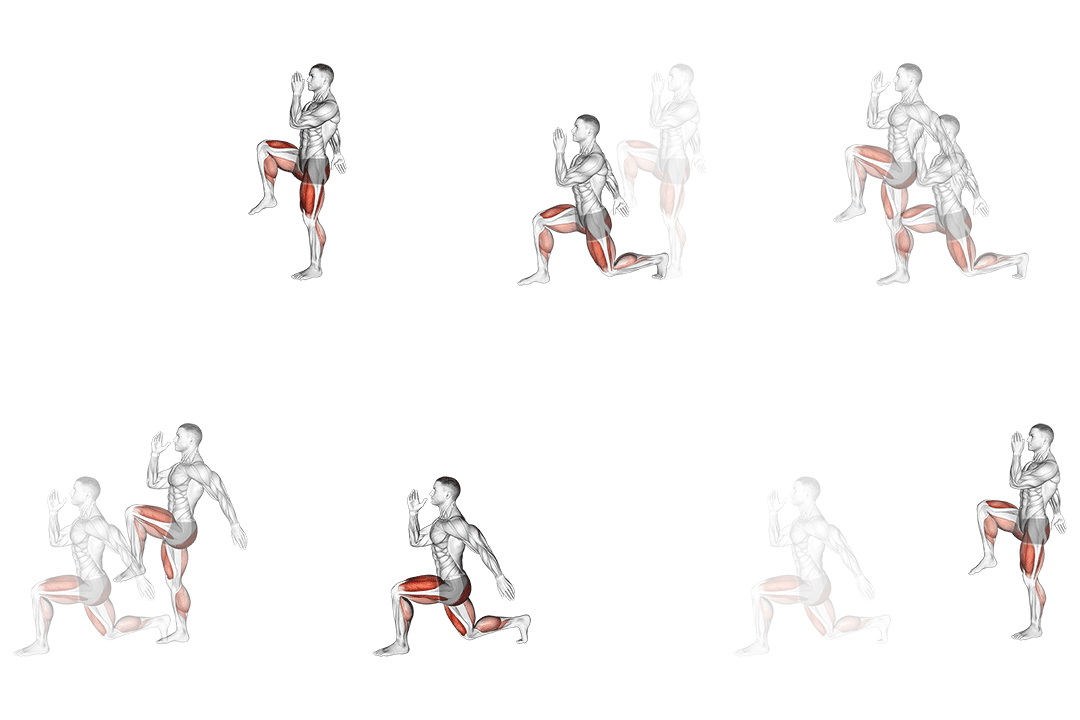
10. Walking High Knees Lunge
70% match- Cardio
- Bodyweight
- Beginner
- Compound
How to perform this exercise
- Stand with your feet hip-width apart.
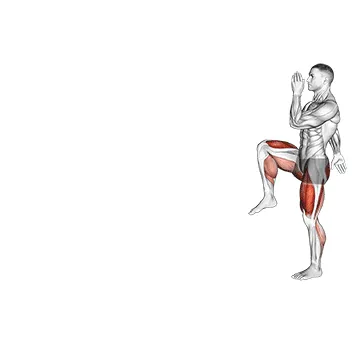
- Lift your right knee up towards your chest as high as you can while balancing on your left leg.
- Step forward with your right foot and lower your body into a lunge position, bending both knees to a 90-degree angle.
- Push off with your right foot and bring your left knee up towards your chest.
- Step forward with your left foot and lower your body into a lunge position.
- Continue alternating legs and lunging forward, keeping your core engaged and maintaining a steady pace.
- Repeat for the desired number of repetitions.
Sets and reps: 3 sets of 8 to 12 reps on each side, and add reps before you add load.
Why this matches
- Primary muscle: your heart and lungs, not quads
- Equipment: bodyweight only, the same as the Skating
- Body position: standing, the same as the Skating
Why You Might Need a Skating Alternative
You may swap Skating for pain, limited space, lack of plyometric readiness, or to increase loading. Skating is a lateral plyometric that stresses the quads, glutes, and hip stabilizers through rapid single-leg loading; substitutes let you isolate those movement patterns safely. For example, a Bulgarian split squat keeps a similar unilateral knee-flexion angle, sit back slightly and track the knee over toes to load the quads without impact. A controlled lateral lunge trains hip adductors and quad eccentrics by emphasizing slow descent and explosive drive back to standing.
Skating FAQ
What muscles does Skating work?
Skating primarily targets the quads, glutes, and hip abductors/adductors while stressing ankle and knee stabilizers. It uses single-leg landing mechanics so the working leg must absorb force eccentrically and then produce concentric power.
What is the best bodyweight alternative to Skating?
The best bodyweight alternative is the lateral lunge: step wide, sit the hips back, keep the chest up and push through the lead heel to return. That movement preserves lateral hip and quad activation with minimal impact.
Find Alternatives for Any Exercise
Search the exercise database and filter the ranked substitutes by the equipment you own.
Similarity scores compare exercise metadata such as movement pattern, muscles, equipment and body position. They are not a safety rating or a check that you own the equipment. Learn about our methodology