

10 Best Standing Biceps Stretch Alternatives for Limited Equipment
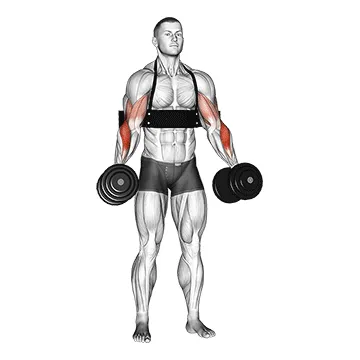
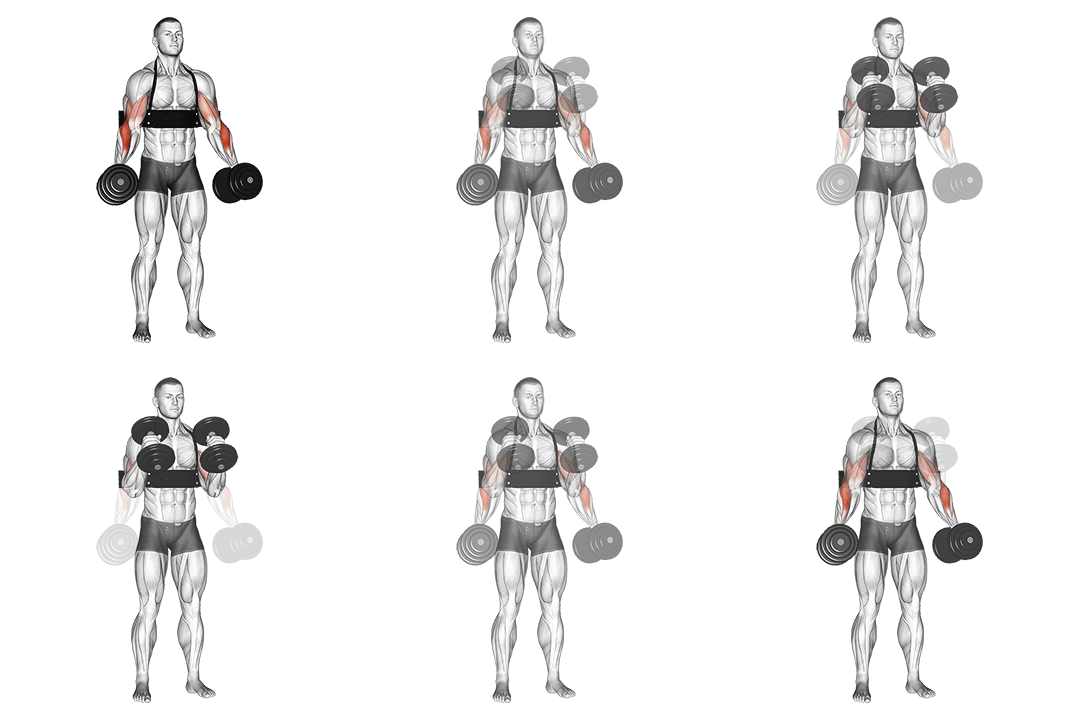
The Standing Biceps Stretch is done standing. Ranked closest by our scoring: the Brachialis-smr, the Seated Biceps and Dumbbell Hammer Curls (With Arm Blaster).
Updated Ranked by our 12-factor similarity model How it works
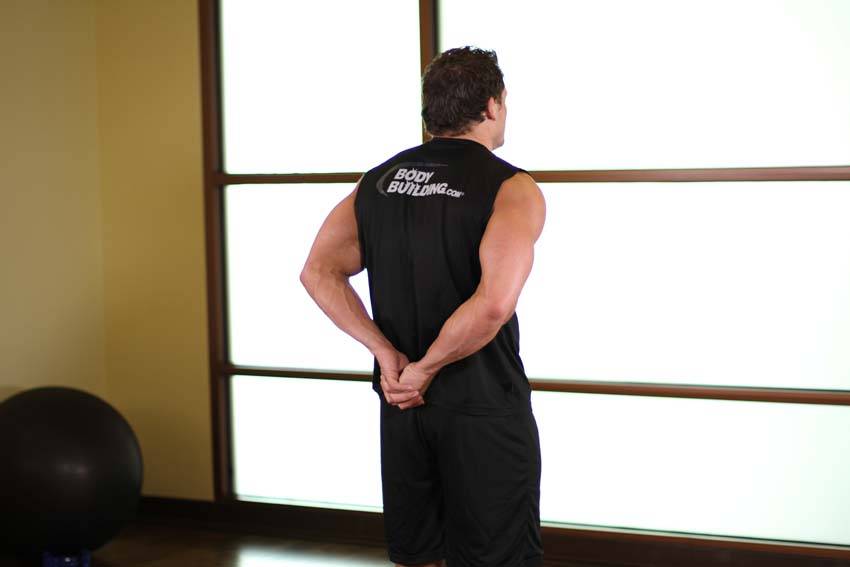
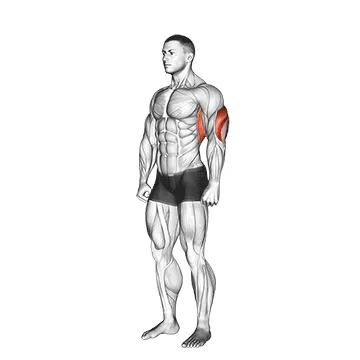
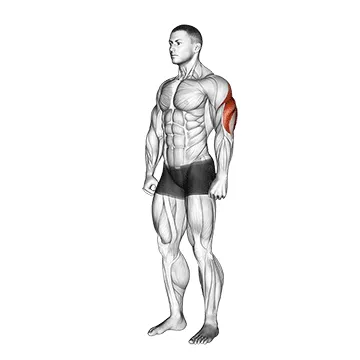
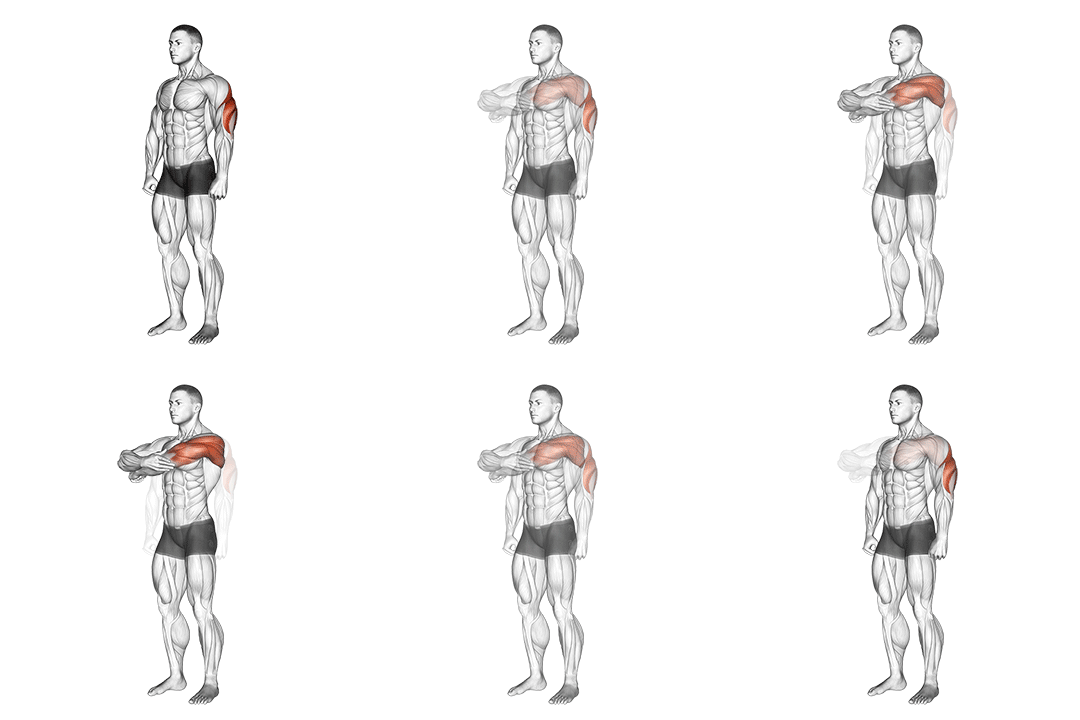
Original Exercise: Standing Biceps Stretch
- Primary muscle
- Biceps
- Equipment
- Other
- Difficulty
- Beginner
- Type
- Isolation
Secondary muscles: Chest, Shoulders
How to perform Standing Biceps Stretch
- Clasp your hands behind your back with your palms together, straighten arms and then rotate them so your palms face downward.
- Raise your arms up and hold until you feel a stretch in your biceps.
Ranked Standing Biceps Stretch Alternatives
10 substitutes, ranked by how closely each one matches the Standing Biceps Stretch on movement pattern, muscles worked, equipment and body position. The higher the score, the less you change. Open "How to perform this exercise" on a card for the steps; every card title links to that exercise's own alternatives page.
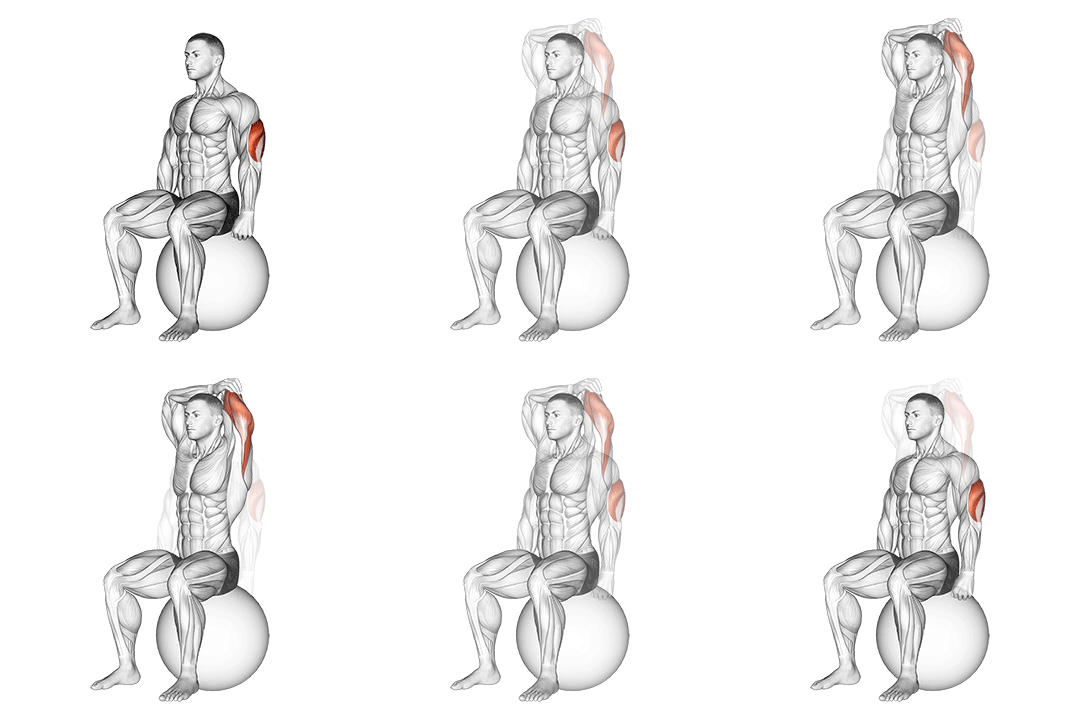
- Triceps
- Stability-ball
- Beginner
- Isolation
A looser match: it works the triceps rather than the biceps.
How to perform this exercise
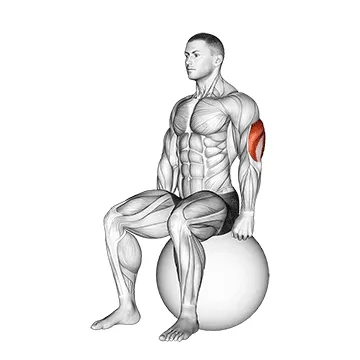
- Sit on a stability ball with your feet flat on the ground and your back straight.
- Hold a dumbbell in one hand and extend your arm straight up above your head.
- Bend your elbow and lower the dumbbell behind your head, keeping your upper arm close to your ear.
- Hold the stretch for a few seconds, then return to the starting position.
- Repeat with the other arm.
Sets and reps: Hold for 20 to 30 seconds, 3 sets.
Why this matches
- Primary muscle: triceps, not biceps
- Equipment: bodyweight only, the same as the Standing Biceps Stretch
- Body position: seated, not standing
- Balance: harder to stay steady on than the Standing Biceps Stretch
Best match 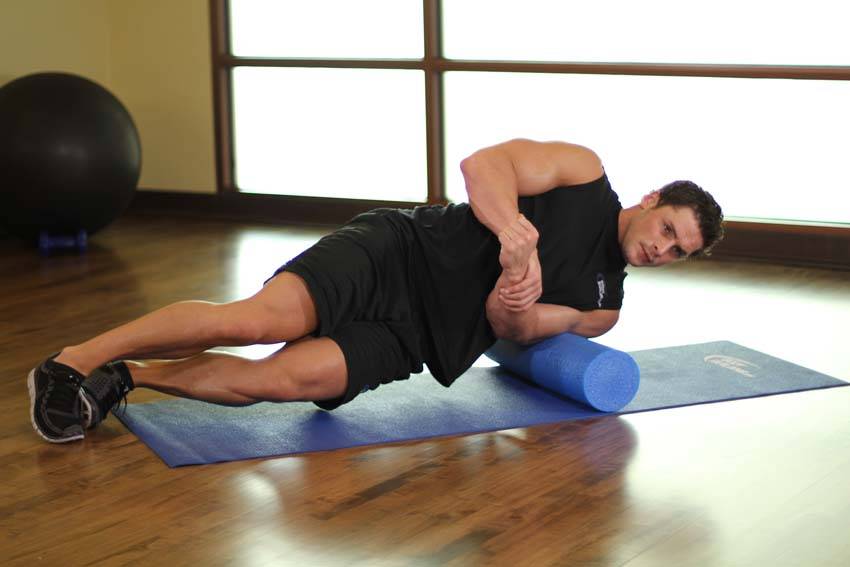
2. Brachialis-smr
64% match- Biceps
- Foam-roll
- Beginner
- Isolation
Pick this when you want to work the biceps one side at a time.
How to perform this exercise
- Lie on your side, with your upper arm against the foam roller. The upper arm should be more or less aligned with your body, with the outside of the bicep pressed against the foam roller.
- Raise your hips off of the floor, supporting your weight on your arm and on your feet. Hold for 10-30 seconds, and then switch sides.
Sets and reps: Hold for 20 to 30 seconds on each side, 3 sets.
Why this matches
- Primary muscle: biceps, the same as the Standing Biceps Stretch
- Equipment: bodyweight only, the same as the Standing Biceps Stretch
- Body position: seated, not standing
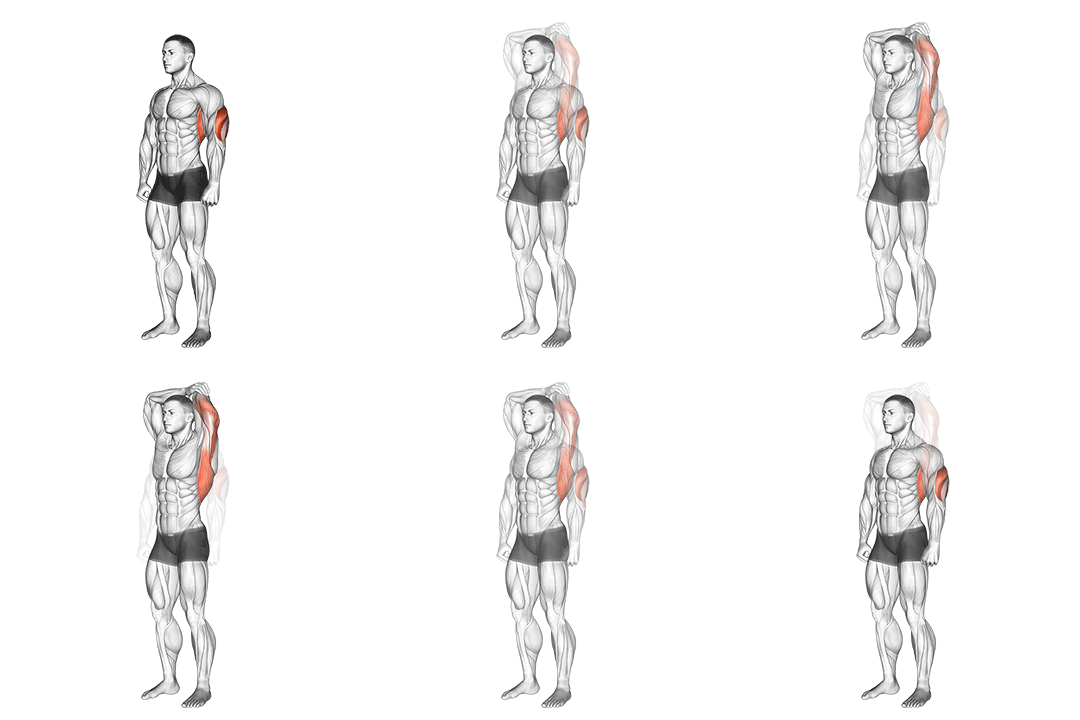
3. Overhead Triceps Stretch
63% match- Triceps
- Bodyweight
- Beginner
- Isolation
How to perform this exercise
- Stand or sit upright with your feet shoulder-width apart.
- Extend one arm overhead, bending at the elbow so that your hand reaches towards the opposite shoulder blade.
- With your other hand, gently pull the elbow of the extended arm towards the opposite side of your head, feeling a stretch in your triceps.
- Hold the stretch for 15-30 seconds, then release.
- Repeat on the other side.
Sets and reps: Hold for 20 to 30 seconds on each side, 3 sets.
Why this matches
- Primary muscle: triceps, not biceps
- Equipment: bodyweight only, the same as the Standing Biceps Stretch
- Body position: standing, the same as the Standing Biceps Stretch
4. Triceps Stretch
63% match- Triceps
- Bodyweight
- Beginner
- Isolation
How to perform this exercise
- Stand or sit upright with your back straight.
- Extend one arm overhead, bending it at the elbow.
- Place your opposite hand on the bent elbow and gently pull it towards your head.
- Hold the stretch for 15-30 seconds, feeling a gentle stretch in your triceps.
- Release the stretch and repeat on the other arm.
Sets and reps: Hold for 20 to 30 seconds on each side, 3 sets.
Why this matches
- Primary muscle: triceps, not biceps
- Equipment: bodyweight only, the same as the Standing Biceps Stretch
- Body position: standing, the same as the Standing Biceps Stretch
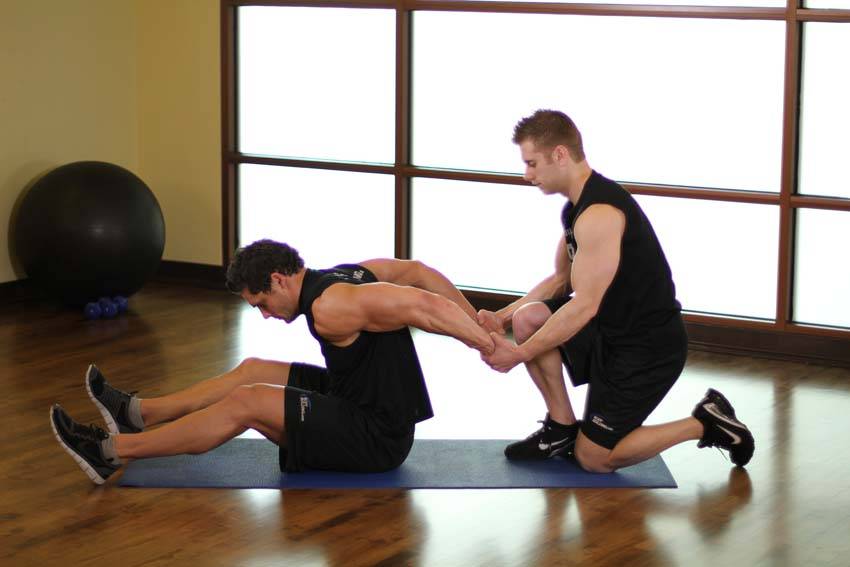
5. Seated Biceps
63% match- Biceps
- Bodyweight
- Beginner
- Isolation
It still works the biceps, through a different movement.
How to perform this exercise
- Sit on the floor with your knees bent and your partner standing behind you. Extend your arms straight behind you with your palms facing each other. Your partner will hold your wrists for you. This will be the starting position.
- Attempt to flex your elbows, while your partner prevents any actual movement.
- After 10-20 seconds, relax your arms while your partner gently pulls your wrists up to stretch your biceps. Be sure to let your partner know when the stretch is appropriate to prevent injury or overstretching.
Sets and reps: 3 sets of 8 to 12 reps, and add reps before you add load.
Why this matches
- Primary muscle: biceps, the same as the Standing Biceps Stretch
- Equipment: bodyweight only, the same as the Standing Biceps Stretch
- Body position: seated, not standing
- Biceps
- Dumbbell
- Beginner
- Isolation
Pick this when you want to work the biceps with more balance to manage.
How to perform this exercise
- Stand up straight with a dumbbell in each hand, palms facing your torso.
- Keep your elbows close to your torso and rotate the palms of your hands until they are facing forward.
- This will be your starting position.
- Now, while holding your upper arm stationary, exhale and curl the weights while contracting your biceps.
- Continue to raise the weights until your biceps are fully contracted and the dumbbells are at shoulder level.
- Hold the contracted position for a brief pause as you squeeze your biceps.
- Then, inhale and slowly begin to lower the dumbbells back to the starting position.
- Repeat for the recommended amount of repetitions.
Sets and reps: 3 sets of 10 to 15 reps.
Why this matches
- Primary muscle: biceps, the same as the Standing Biceps Stretch
- Equipment: free weights, not bodyweight only
- Body position: standing, the same as the Standing Biceps Stretch
- Balance: harder to stay steady on than the Standing Biceps Stretch
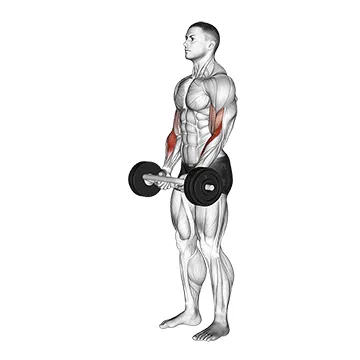
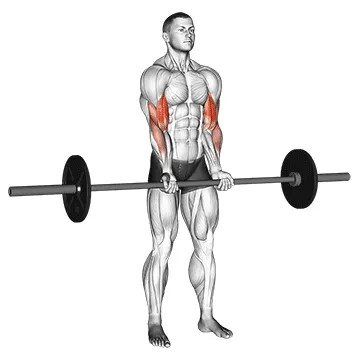
7. Olympic Barbell Hammer Curl
62% match- Biceps
- Barbell
- Intermediate
- Isolation
Pick this when you want a harder version that still works the biceps.
How to perform this exercise
- Stand up straight with your feet shoulder-width apart and hold an Olympic barbell with an overhand grip.
- Let the barbell hang at arm's length in front of your thighs, with your palms facing your body.
- Keeping your upper arms stationary, exhale and curl the weights while contracting your biceps.
- Continue to raise the barbell until your biceps are fully contracted and the barbell is at shoulder level.
- Hold the contracted position for a brief pause as you squeeze your biceps.
- Inhale and slowly begin to lower the barbell back to the starting position.
- Repeat for the desired number of repetitions.
Sets and reps: 3 sets of 10 to 15 reps.
Why this matches
- Primary muscle: biceps, the same as the Standing Biceps Stretch
- Equipment: free weights, not bodyweight only
- Body position: standing, the same as the Standing Biceps Stretch
- Balance: harder to stay steady on than the Standing Biceps Stretch
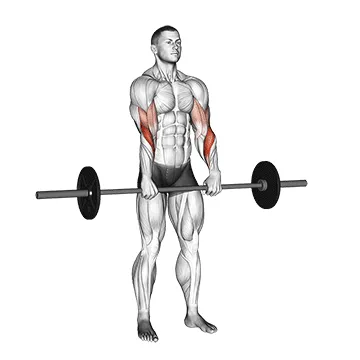
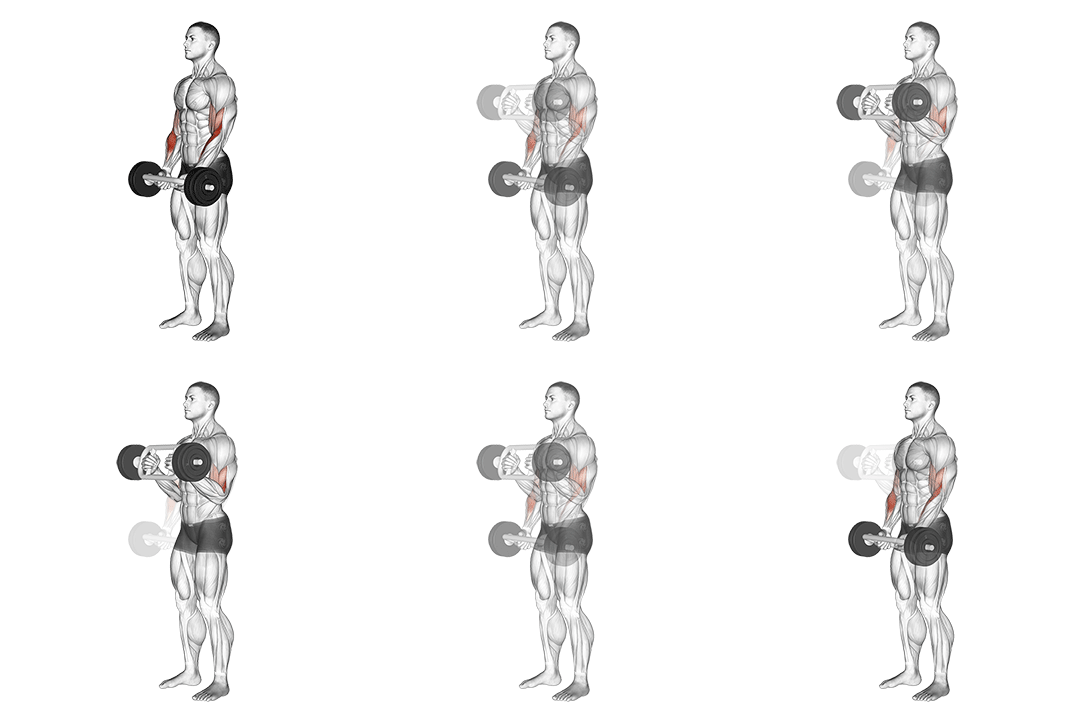
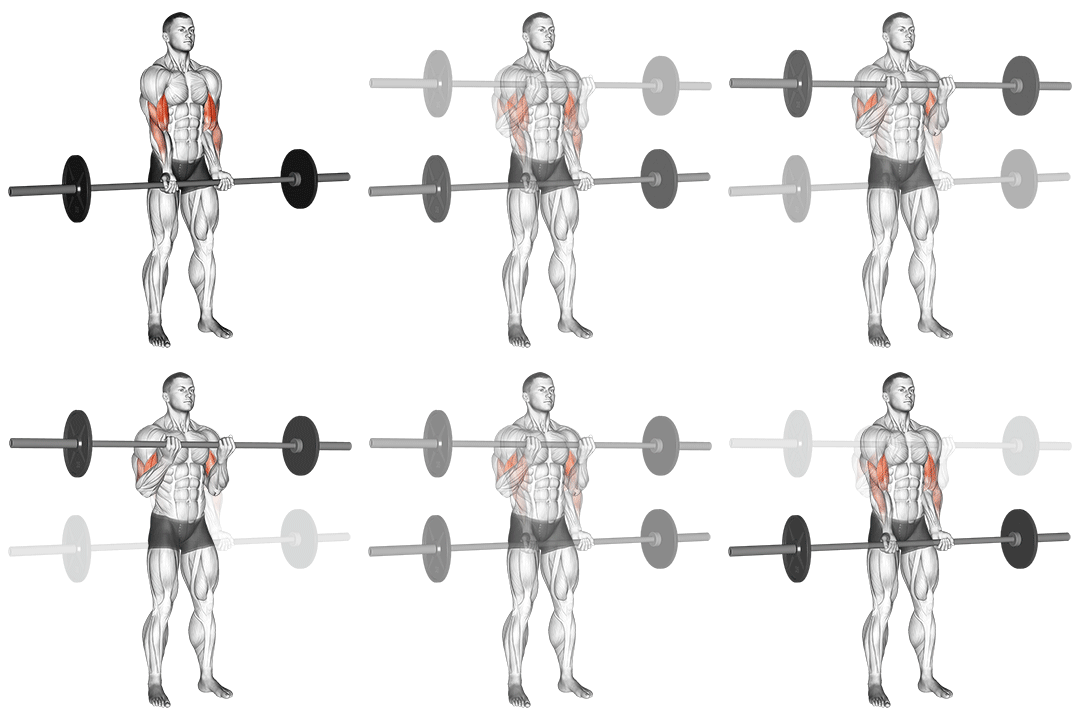
8. Barbell Standing Close Grip Curl
59% match- Biceps
- Barbell
- Beginner
- Isolation
How to perform this exercise
- Stand up straight with your feet shoulder-width apart and hold a barbell with an underhand grip, hands close together.
- Keep your elbows close to your torso and your upper arms stationary throughout the movement.
- Exhale as you curl the weights while contracting your biceps. Continue to raise the bar until your biceps are fully contracted and the bar is at shoulder level.
- Hold the contracted position for a brief pause as you squeeze your biceps.
- Inhale as you slowly begin to bring the barbell back to the starting position.
- Repeat for the desired number of repetitions.
Sets and reps: 3 sets of 10 to 15 reps.
Why this matches
- Primary muscle: biceps, the same as the Standing Biceps Stretch
- Equipment: free weights, not bodyweight only
- Body position: standing, the same as the Standing Biceps Stretch
- Balance: harder to stay steady on than the Standing Biceps Stretch
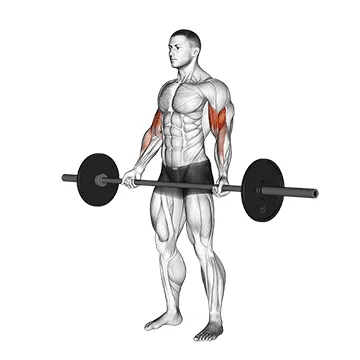
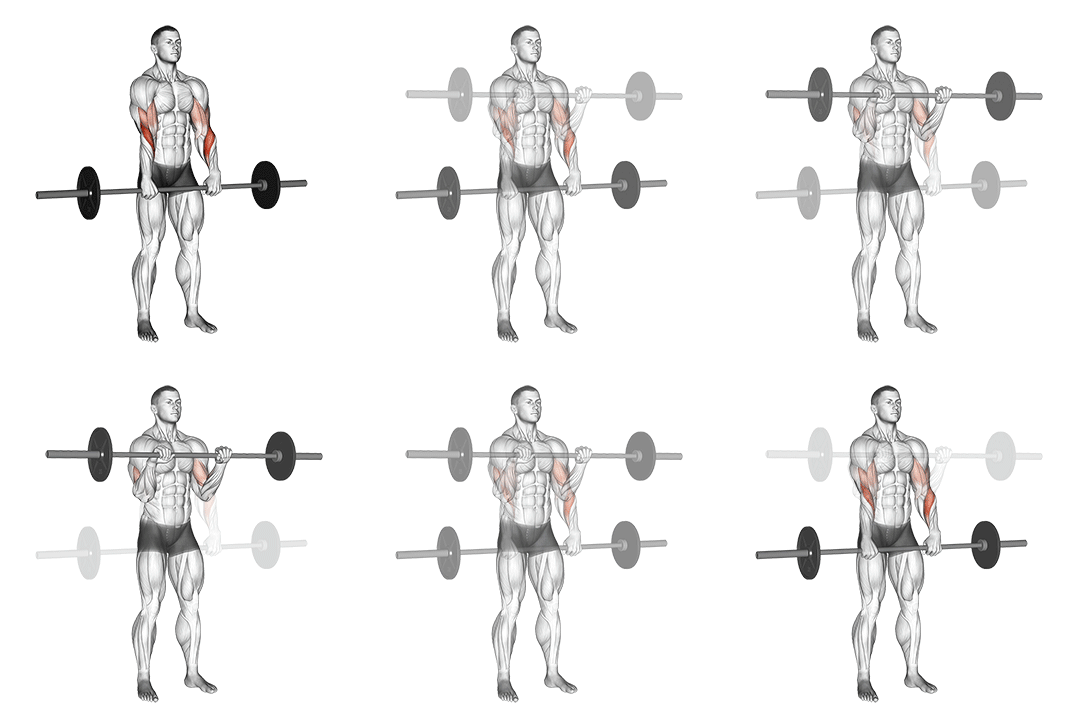
- Biceps
- Barbell
- Beginner
- Isolation
How to perform this exercise
- Stand up straight with your feet shoulder-width apart and hold a barbell with an underhand grip, palms facing up.
- Keep your elbows close to your torso and your upper arms stationary.
- Exhale and curl the weights while contracting your biceps, bringing the barbell as close to your shoulders as possible.
- Hold the contracted position for a brief pause as you squeeze your biceps.
- Inhale and slowly lower the barbell back to the starting position.
- Repeat for the desired number of repetitions.
Sets and reps: 3 sets of 10 to 15 reps.
Why this matches
- Primary muscle: biceps, the same as the Standing Biceps Stretch
- Equipment: free weights, not bodyweight only
- Body position: standing, the same as the Standing Biceps Stretch
- Balance: harder to stay steady on than the Standing Biceps Stretch
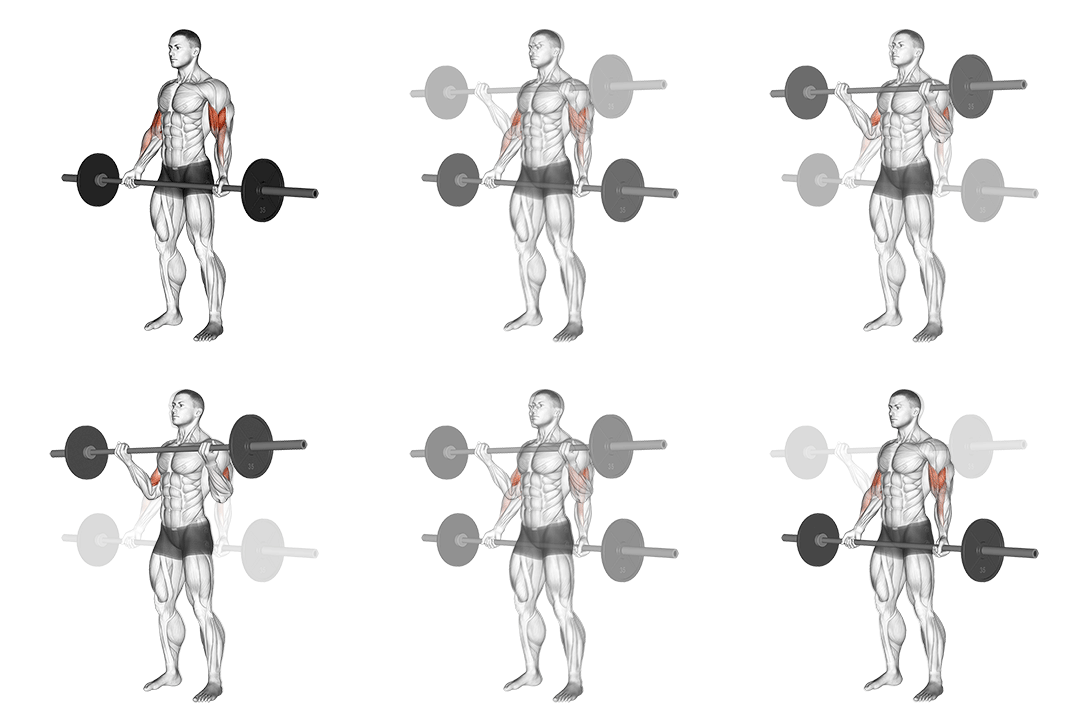
10. Barbell Standing Wide-grip Curl
59% match- Biceps
- Barbell
- Beginner
- Isolation
How to perform this exercise
- Stand up straight with your feet shoulder-width apart and hold a barbell with an overhand grip, hands wider than shoulder-width apart.
- Let the barbell hang at arm's length in front of your thighs, with your palms facing away from your body.
- Keeping your upper arms stationary, exhale and curl the barbell upward by contracting your biceps.
- Continue to raise the barbell until your biceps are fully contracted and the barbell is at shoulder level.
- Hold the contracted position for a brief pause as you squeeze your biceps.
- Inhale and slowly begin to lower the barbell back to the starting position.
- Repeat for the desired number of repetitions.
Sets and reps: 3 sets of 10 to 15 reps.
Why this matches
- Primary muscle: biceps, the same as the Standing Biceps Stretch
- Equipment: free weights, not bodyweight only
- Body position: standing, the same as the Standing Biceps Stretch
- Balance: harder to stay steady on than the Standing Biceps Stretch
Why You Might Need a Standing Biceps Stretch Alternative
You may substitute the Standing Biceps Stretch for reasons such as shoulder pain, limited range of motion, elbow issues, or lack of a suitable anchor point. Passive standing stretches can irritate the anterior shoulder or compress the cubital tunnel; switching to a supine strap stretch reduces joint compression and lets you control tension. For example, lie supine, loop a strap around your wrist, extend the elbow and gently abduct the shoulder while keeping the scapula depressed to target the biceps long head without shoulder impingement. Choose alternatives that let you modulate elbow angle and shoulder rotation to manage tissue load.
How to Choose the Right Standing Biceps Stretch Substitute
Select a substitute based on your goal (mobility vs tissue unloading), pain triggers, and available equipment. If you need a passive lengthening option, use the doorway or supine strap stretch and keep the elbow fully extended with the palm up to maximize biceps lengthening. If you want active control or rehab, use eccentric biceps lowers or isometric holds, perform slow 3–5 second eccentrics with the elbow fixed and wrist neutral to load the biceps tendon while minimizing joint shear. Always test a mild tension first and adjust shoulder rotation and scapular position to avoid compensatory recruitment.
Standing Biceps Stretch FAQ
What is the best bodyweight alternative to Standing Biceps Stretch?
The doorway biceps stretch is the best bodyweight option: place your palm on a doorframe, extend the elbow, externally rotate the shoulder, and step forward until you feel a controlled stretch. That position passively elongates the biceps long head while allowing you to adjust tension by foot position.
Can I build muscle without doing Standing Biceps Stretch?
Yes. Hypertrophy depends on mechanical tension, not that specific stretch. Use progressive resistance, barbell or dumbbell curls, slow 3–5 second eccentric reps with elbow fixed and wrist neutral, to create the mechanical stimulus that drives biceps growth.
Find Alternatives for Any Exercise
Search the exercise database and filter the ranked substitutes by the equipment you own.
Similarity scores compare exercise metadata such as movement pattern, muscles, equipment and body position. They are not a safety rating or a check that you own the equipment. Learn about our methodology