

10 Best Suspended Fallout Alternatives for Home & Gym
If you can't do the Suspended Fallout, use rollouts and anti-extension drills that load the rectus abdominis and teach hip-spine dissociation. Begin with stability-ball rollouts or kneeling ab-wheel rollouts, brace your core and avoid lumbar hyperextension. Progress to standing cable rollouts or TRX fallouts as your tolerance improves.
Original Exercise: Suspended Fallout
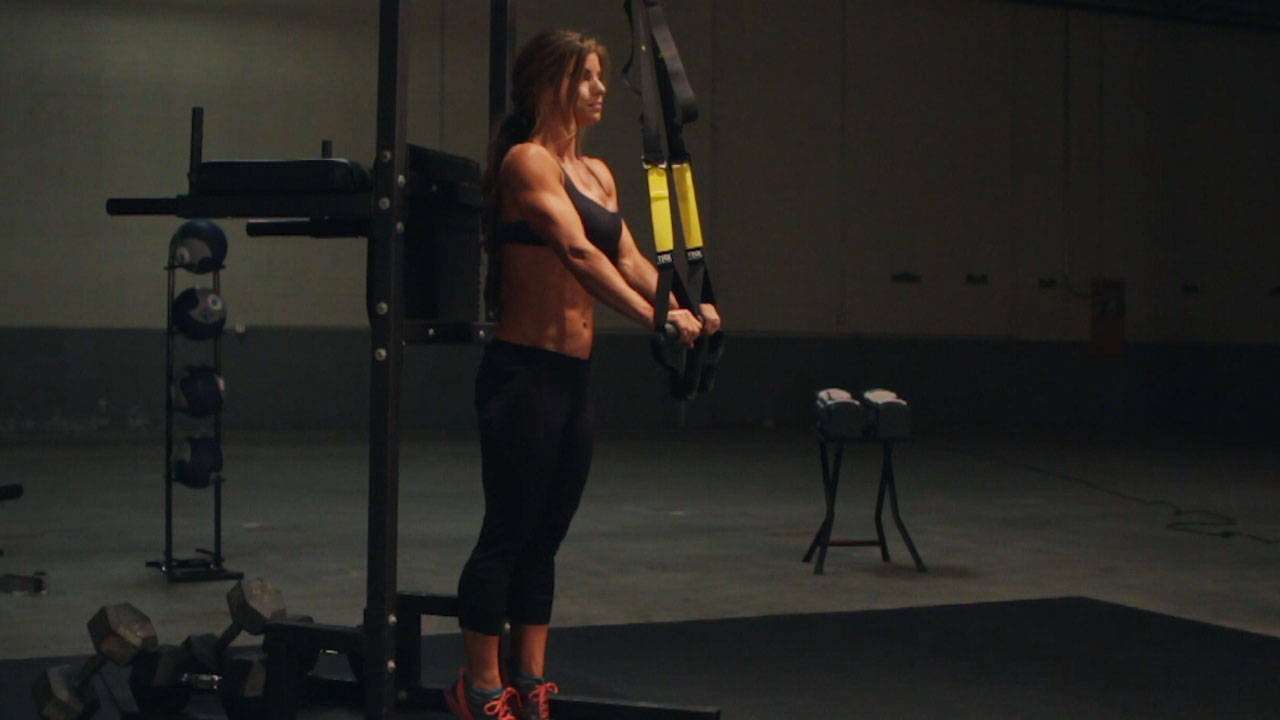
How to Perform Suspended Fallout
- Adjust the straps so the handles are at an appropriate height, below waist level.
- Begin standing and grasping the handles. Lean into the straps, moving to an incline push-up position. This will be your starting position.
- Keeping your arms straight, lean further into the suspension straps, bringing your body closer to the ground, allowing your shoulders to extend, raising your arms up and over your head.
- Maintain a neutral spine and keep the rest of your body straight, your shoulders being the only joints allowed to move.
- Pause during the peak contraction, and then return to the starting position.
Pro Tips
- Category: Strength
- Force: Pull
- Movement type: Isolation
Ranked Suspended Fallout Alternatives
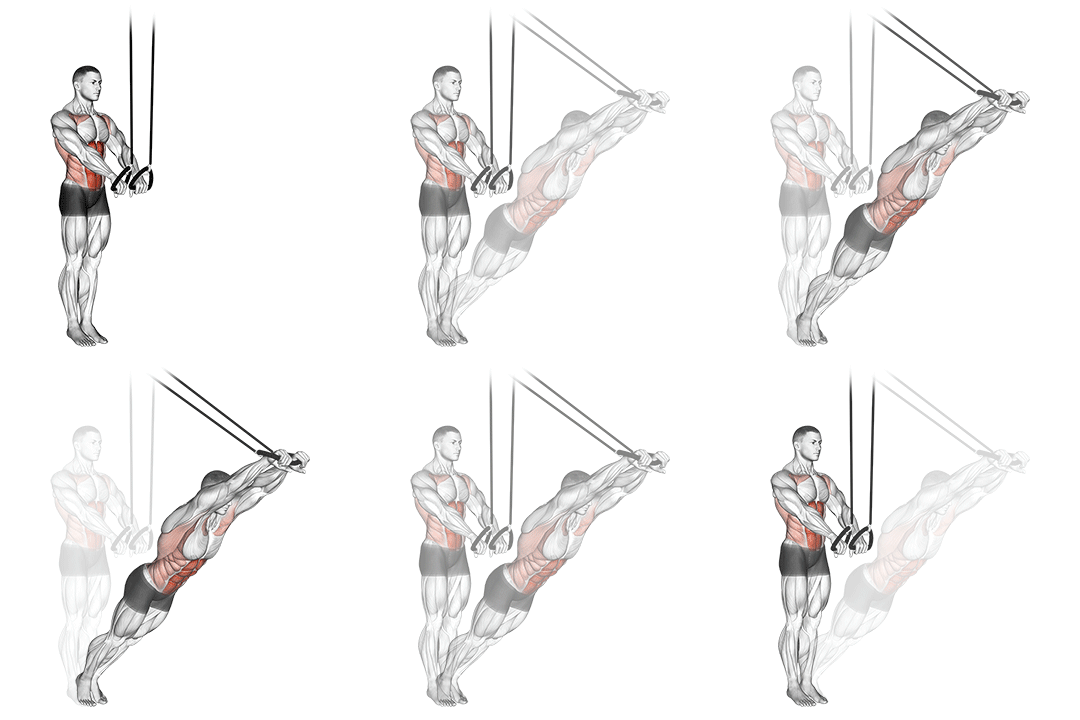
1. Suspended Abdominal Fallout
44.2% MatchHow to perform this exercise
- Attach a suspension trainer to a high anchor point and adjust the straps to waist height.
- Stand facing away from the anchor point and hold the handles with your arms extended in front of you.
- Lean forward at the waist, keeping your body straight and your core engaged.
- Lower your body as far as you can while maintaining control and tension in your abs.
- Pause for a moment at the bottom, then slowly raise your body back up to the starting position.
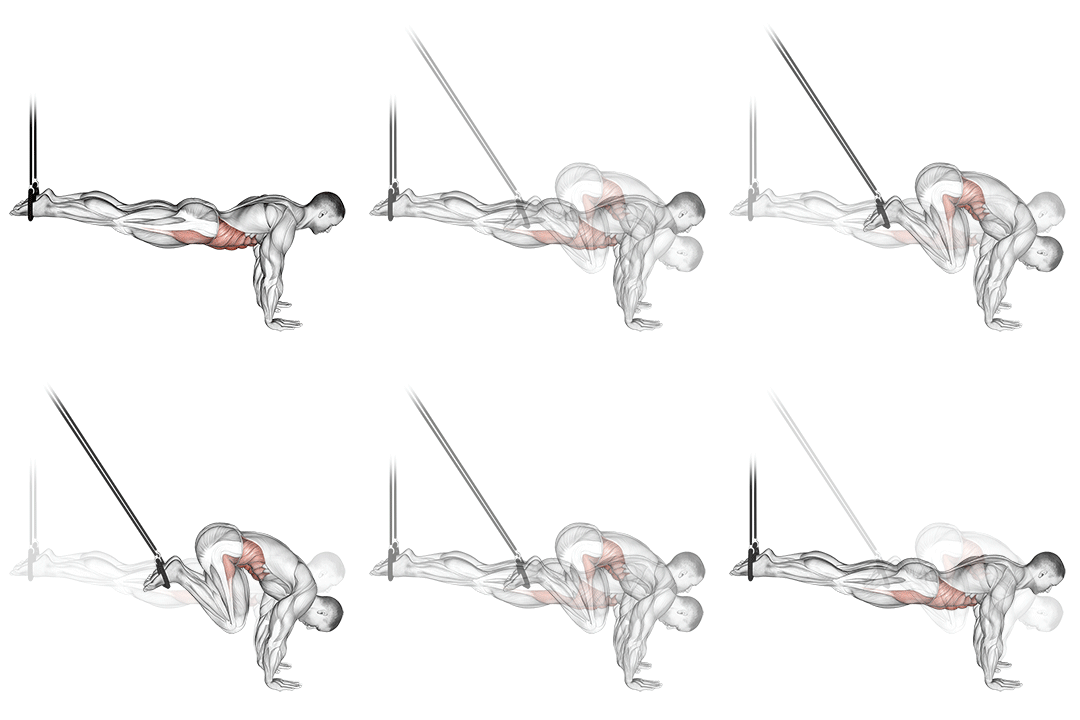
2. Suspended Reverse Crunch
41.7% MatchHow to perform this exercise
- Hang from a pull-up bar with your arms fully extended and your palms facing away from you.
- Engage your core and lift your knees up towards your chest, curling your pelvis towards your ribcage.
- Pause for a moment at the top, then slowly lower your knees back down to the starting position.
- Repeat for the desired number of repetitions.
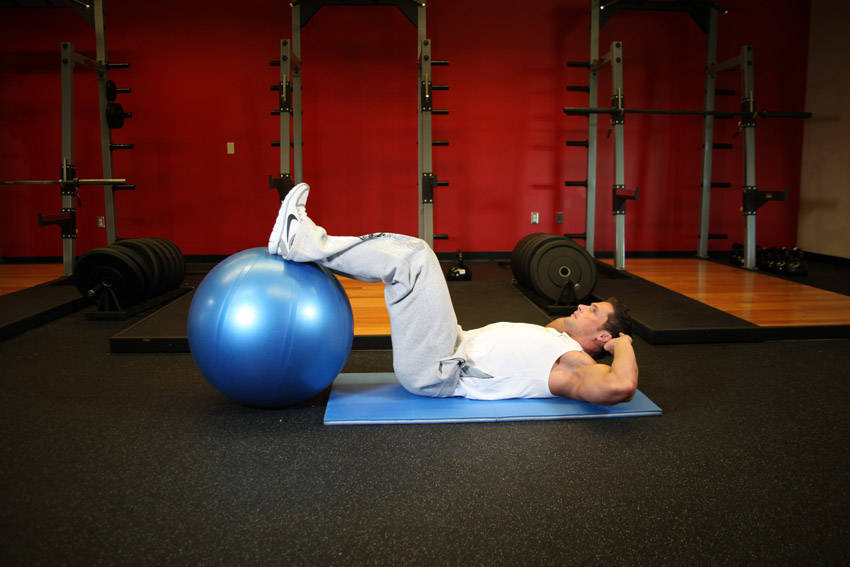
3. Crunch - Legs On Exercise Ball
36.9% MatchHow to perform this exercise
- Lie flat on your back with your feet resting on an exercise ball and your knees bent at a 90 degree angle.
- Place your feet three to four inches apart and point your toes inward so they touch.
- Place your hands lightly on either side of your head keeping your elbows in. Tip: Don't lock your fingers behind your head.
- Push the small of your back down in the floor in order to better isolate your abdominal muscles. This will be your starting position.
- Begin to roll your shoulders off the floor and continue to push down as hard as you can with your lower back. Your shoulders should come up off the floor only about four inches, and your lower back should remain on the floor. Breathe out as you execute this portion of the movement. Squeeze your abdominals hard at the top of the contraction and hold for a second. Tip: Focus on a slow, controlled movement. Refrain from using momentum at any time.
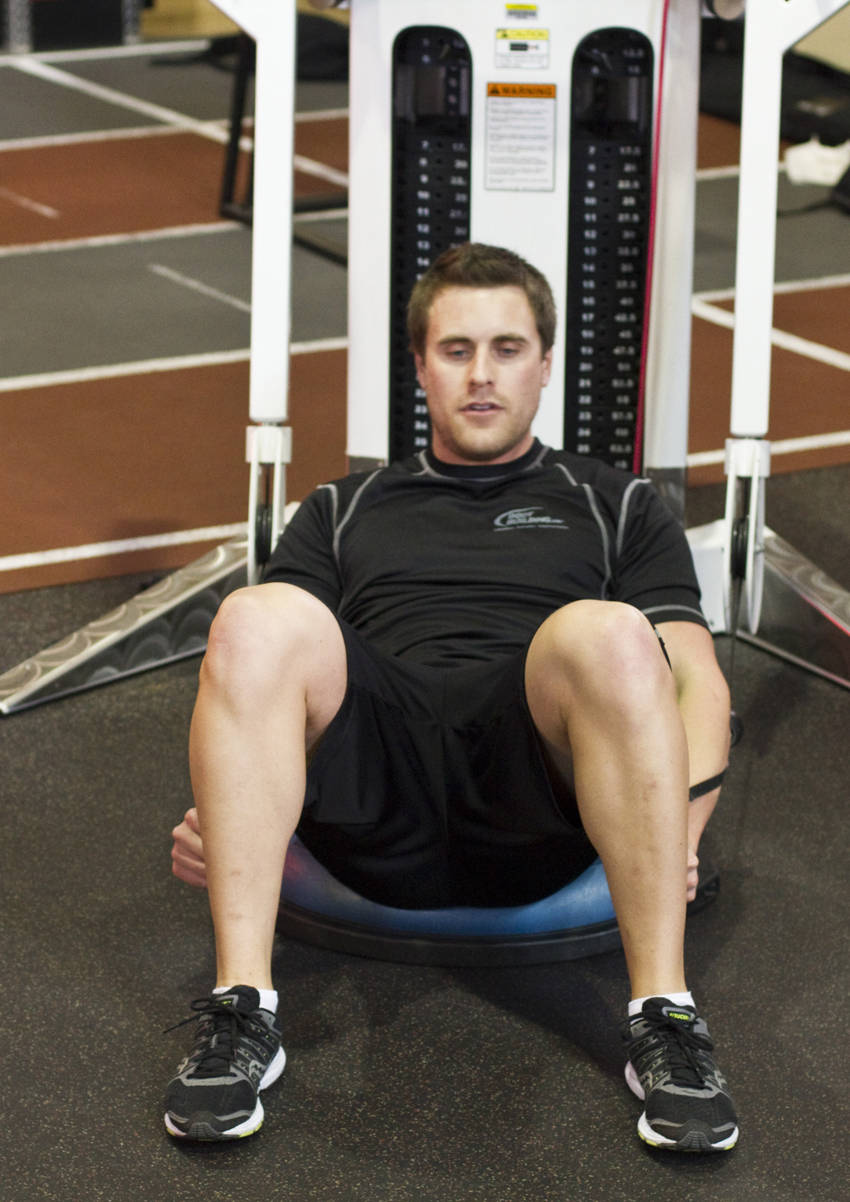
4. Bosu Ball Cable Crunch With Side Bends
36.4% MatchHow to perform this exercise
- Connect a standard handle to each arm of a cable machine, and position them in the most downward position.
- Grab a Bosu Ball and position it in front and center of the cable machine.
- Lie down on the Bosu Ball with the small of your back arched around the ball. Your rear end should be close to the floor without touching it.
- With both hands, reach back and grab the handle of each cable.
- With your feet positioned in a wide stance, extend your arms straight out in front of you and in between your knees. Your hands should be at knee level.
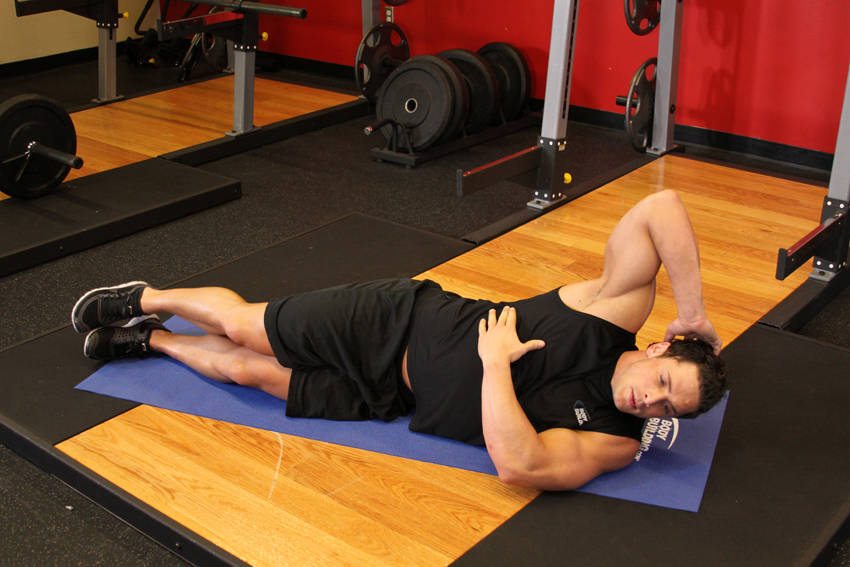
5. Side Jackknife
35.2% Match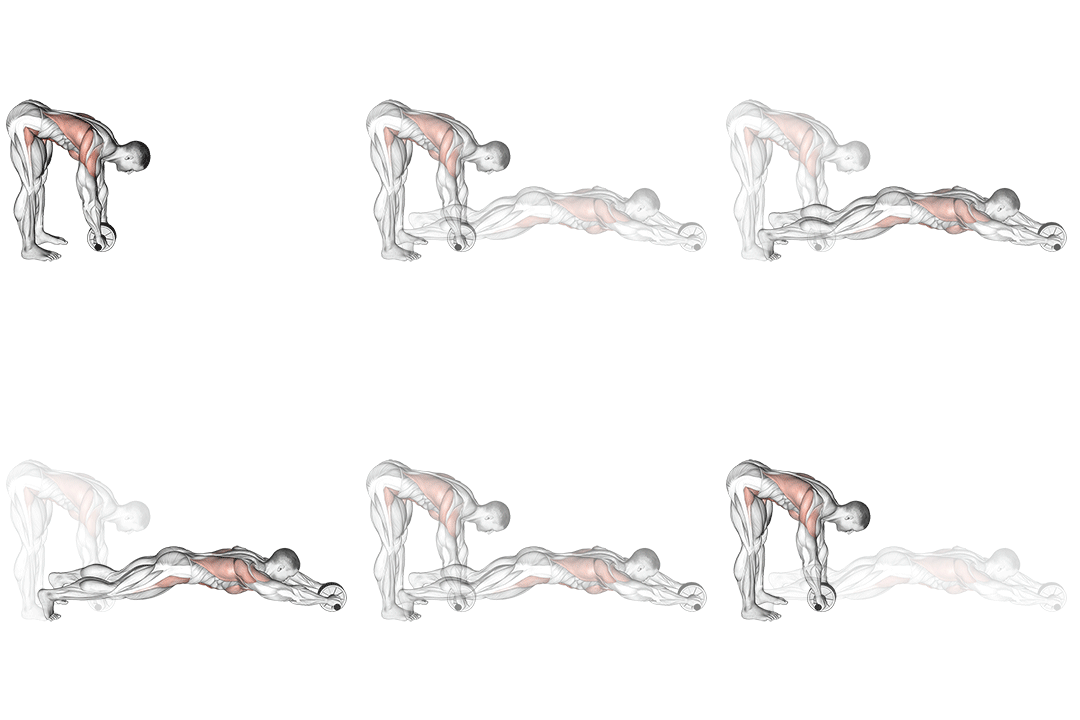
6. Standing Wheel Rollerout
35% MatchHow to perform this exercise
- Start by standing tall with your feet shoulder-width apart and the wheel roller in front of you.
- Bend at your waist and slowly roll the wheel forward, keeping your back straight and your core engaged.
- Continue rolling forward until you feel a stretch in your abs and your body is extended as far as possible.
- Pause for a moment, then slowly roll the wheel back towards your body, returning to the starting position.
- Repeat for the desired number of repetitions.
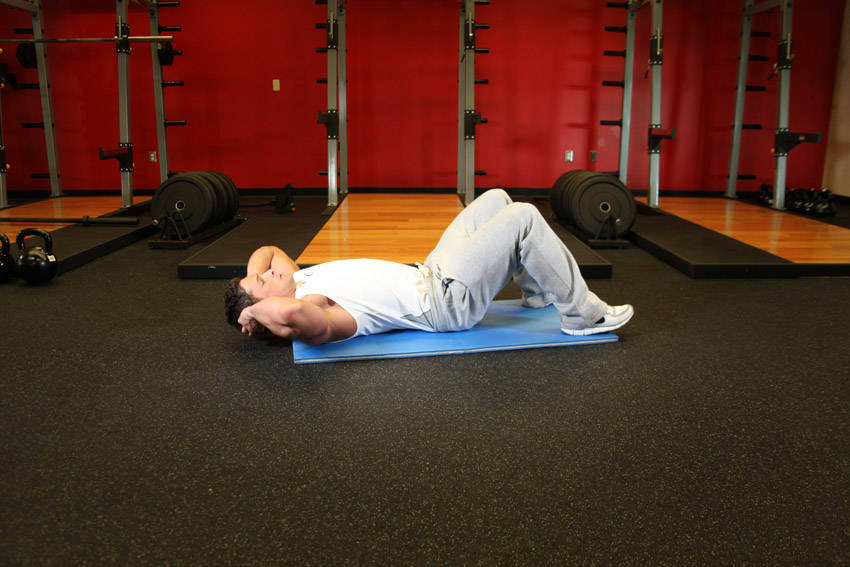
7. Crunches
34.8% MatchHow to perform this exercise
- Lie flat on your back with your feet flat on the ground, or resting on a bench with your knees bent at a 90 degree angle. If you are resting your feet on a bench, place them three to four inches apart and point your toes inward so they touch.
- Now place your hands lightly on either side of your head keeping your elbows in. Tip: Don't lock your fingers behind your head.
- While pushing the small of your back down in the floor to better isolate your abdominal muscles, begin to roll your shoulders off the floor.
- Continue to push down as hard as you can with your lower back as you contract your abdominals and exhale. Your shoulders should come up off the floor only about four inches, and your lower back should remain on the floor. At the top of the movement, contract your abdominals hard and keep the contraction for a second. Tip: Focus on slow, controlled movement - don't cheat yourself by using momentum.
- After the one second contraction, begin to come down slowly again to the starting position as you inhale.
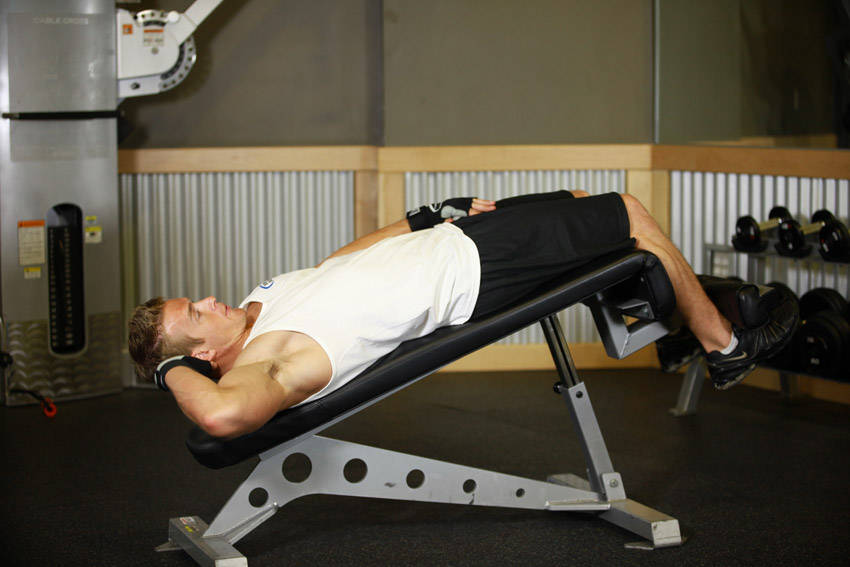
8. Decline Oblique Crunch
34.8% MatchHow to perform this exercise
- Secure your legs at the end of the decline bench and slowly lay down on the bench.
- Raise your upper body off the bench until your torso is about 35-45 degrees if measured from the floor.
- Put one hand beside your head and the other on your thigh. This will be your starting position.
- Raise your upper body slowly from the starting position while turning your torso to the left. Continue crunching up as you exhale until your right elbow touches your left knee. Hold this contracted position for a second. Tip: Focus on keeping your abs tight and keeping the movement slow and controlled.
- Lower your body back down slowly to the starting position as you inhale.
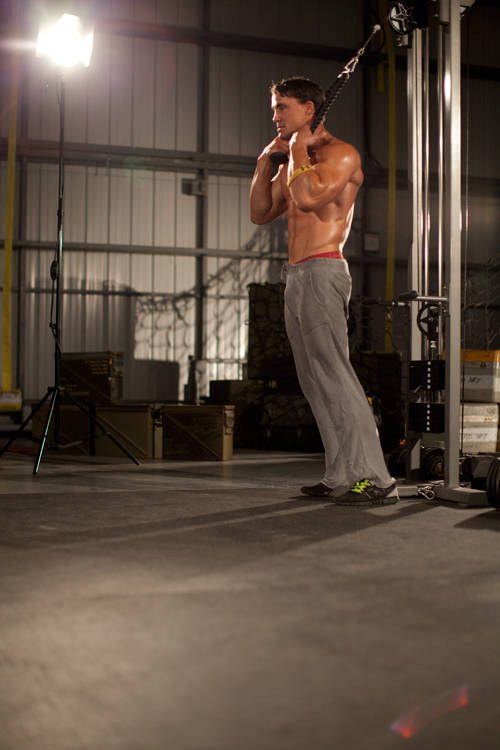
9. Standing Rope Crunch
33.4% MatchHow to perform this exercise
- Attach a rope to a high pulley and select an appropriate weight.
- Stand with your back to the cable tower. Take the rope with both hands over your shoulders, holding it to your upper chest. This will be your starting position.
- Perform the movement by flexing the spine, crunching the weight down as far as you can.
- Hold the peak contraction for a moment before returning to the starting position.
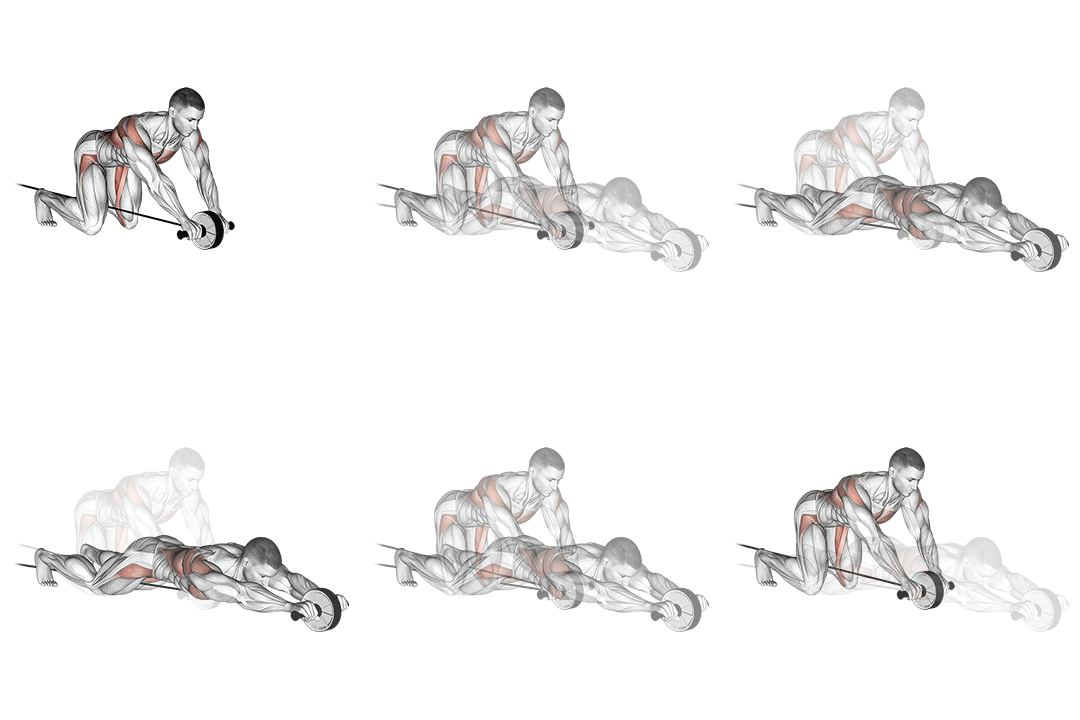
10. Band Assisted Wheel Rollerout
31.4% MatchHow to perform this exercise
- Kneel on the floor and hold the handles of the band with both hands, palms facing down.
- Place the band on the ground in front of you and position your hands shoulder-width apart.
- Engage your core and slowly roll the wheel forward, extending your body as far as you can while maintaining control.
- Pause for a moment at the furthest point, then slowly roll the wheel back towards your knees to return to the starting position.
- Repeat for the desired number of repetitions.
Why You Might Need a Suspended Fallout Alternative
You may need substitutes for shoulder pain, limited equipment, low grip strength, or inadequate anti-extension tolerance. Suspended fallouts demand scapular and shoulder stability plus high trunk anti-extension control; that can aggravate rotator cuff or low-back issues. Choose rollouts or plank progressions to keep the rectus abdominis and transverse abdominis under tension while reducing shoulder load. For example, use a stability-ball rollout with slow tempo and a braced belly button-to-spine cue to minimize lumbar shear and maintain core activation. Regressing to kneeling rollouts or plank walkouts preserves motor pattern while reducing lever length and joint stress.
How to Choose the Right Substitute
Match the substitute to your goal, equipment, and injury history. If you want pure anti-extension overload choose an ab-wheel or cable rollout and keep a neutral spine while pushing the hips back to prevent lumbar flare. If you need low shoulder demand pick a stability-ball rollout or plank walkout and focus on transverse abdominis bracing to maintain stiffness. For hypertrophy use slow eccentrics and higher time-under-tension; for endurance do higher-rep sets with controlled breathing. Always monitor lumbar position, stop any drill that produces a pronounced low-back arch, and progress by increasing lever length or adding load.
Frequently Asked Questions
What muscles does Suspended Fallout work?
Suspended Fallout primarily trains anti-extension through the rectus abdominis, with strong involvement from the transverse abdominis and external obliques to resist spinal extension and rotation. The hip flexors assist on return, and shoulder girdle muscles (serratus anterior, scapular stabilizers) engage to support the suspension straps.
What is the best bodyweight alternative to Suspended Fallout?
A plank walkout is an effective bodyweight alternative: walk your hands forward from a tall plank until you feel maximal anti-extension challenge, then walk back while keeping the ribs down. Cue a braced core and posterior pelvic tilt to keep the rectus abdominis and transverse abdominis engaged and avoid lumbar sag.
Can I build muscle without doing Suspended Fallout?
Yes. You can develop core strength and hypertrophy with progressive rollouts, weighted crunches, cable anti-extension drills, and loaded planks. Use progressive overload, increase lever length or add resistance, and maintain strict bracing to target the same abdominal fibers.
More Exercise Alternatives
Find Alternatives for Any Exercise
Use the exercise substitution finder to compare ranked alternatives for your available equipment and training preference.
Try the Exercise Substitution Finder →