

10 Best Tate Press Alternatives for Limited Equipment
The Tate Press is done lying on your back with dumbbells. Ranked closest by our scoring: the Decline Dumbbell Triceps Extension, the Dumbbell Incline Triceps Extension and the Dumbbell Incline Two Arm Extension.
Updated Ranked by our 12-factor similarity model How it works
Original Exercise: Tate Press
- Primary muscle
- Triceps
- Equipment
- Dumbbell
- Difficulty
- Intermediate
- Type
- Isolation
Secondary muscles: Chest, Shoulders
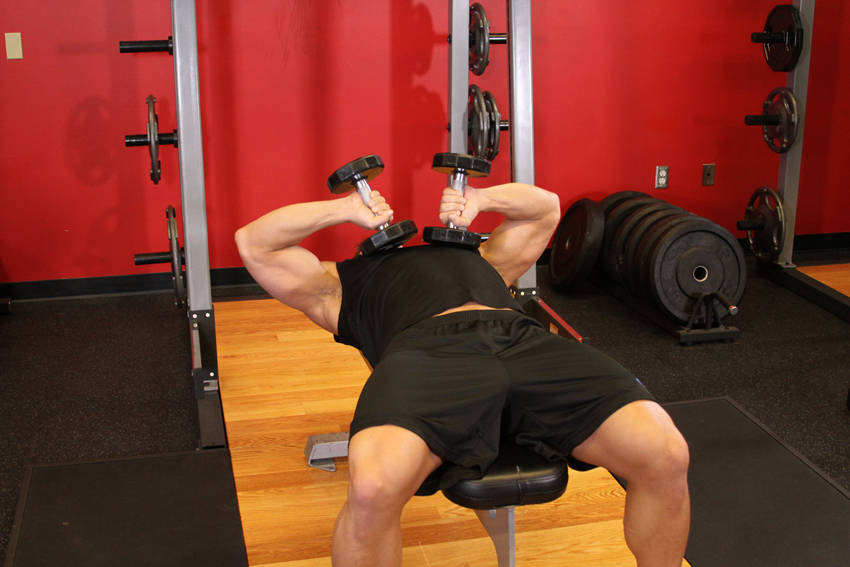
How to perform Tate Press
- Lie down on a flat bench with a dumbbell in each hand on top of your thighs. The palms of your hand will be facing each other.
- By using your thighs to help you get the dumbbells up, clean the dumbbells one arm at a time so that you can hold them in front of you at shoulder width. Note: when holding the dumbbells in front of you, make sure your arms are wider than shoulder width apart from each other using a pronated (palms forward) grip. Allow your elbows to point out. This is your starting position.
- Keeping the upper arms stationary, slowly move the dumbbells in and down in a semi circular motion until they touch the upper chest while inhaling. Keep full control of the dumbbells at all times and do not move the upper arms nor rest the dumbbells on the chest.
- As you breathe out, move the dumbbells up using your triceps and the same semi-circular motion but in reverse. Attempt to keep the dumbbells together as they move up. Lock your arms in the contracted position, hold for a second and then start coming down again slowly again. Tip: It should take at least twice as long to go down than to come up.
- Repeat the movement for the prescribed amount of repetitions of your training program.
Ranked Tate Press Alternatives
10 substitutes, ranked by how closely each one matches the Tate Press on movement pattern, muscles worked, equipment and body position. The higher the score, the less you change. Open "How to perform this exercise" on a card for the steps; every card title links to that exercise's own alternatives page.
Best match 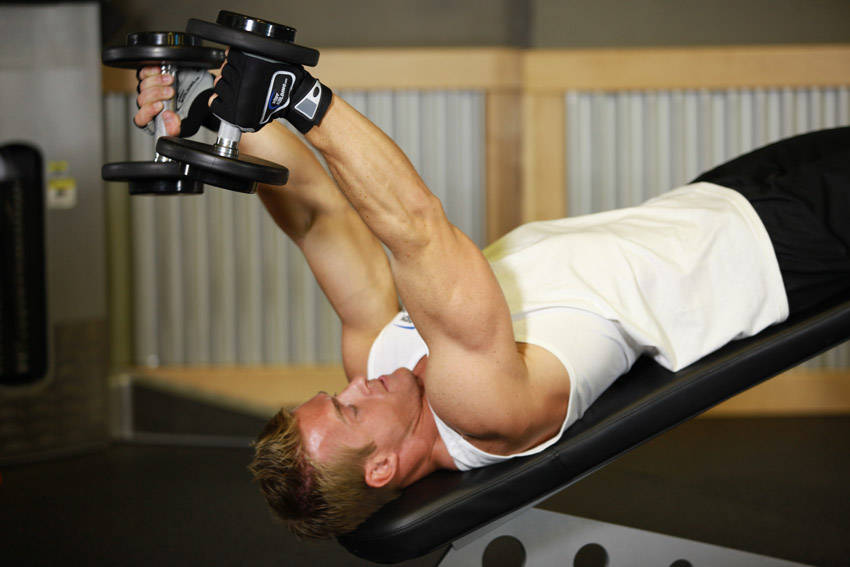
- Triceps
- Dumbbell
- Intermediate
- Isolation
Pick this when you want an easier version that still works the triceps.
How to perform this exercise
- Secure your legs at the end of the decline bench and lie down with a dumbbell on each hand on top of your thighs. The palms of your hand will be facing each other.
- Once you are laying down, move the dumbbells in front of you at shoulder width. The palms of the hands should be facing each other and the arms should be perpendicular to the floor and fully extended. This will be your starting position.
- As you breathe in and you keep the upper arms stationary (and elbows in), bring the dumbbells down slowly by moving your forearms in a semicircular motion towards you until your thumbs are next to your ears. Breathe in as you perform this portion of the movement.
- Lift the dumbbells back to the starting position by contracting the triceps and exhaling.
- Repeat for the recommended amount of repetitions.
Sets and reps: 3 sets of 10 to 15 reps.
Why this matches
- Primary muscle: triceps, the same as the Tate Press
- Equipment: free weights, the same as the Tate Press
- Body position: lying on your back, the same as the Tate Press
- Triceps
- Dumbbell
- Intermediate
- Isolation
How to perform this exercise
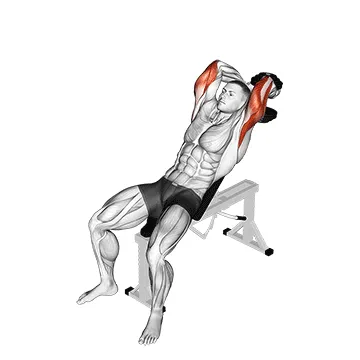
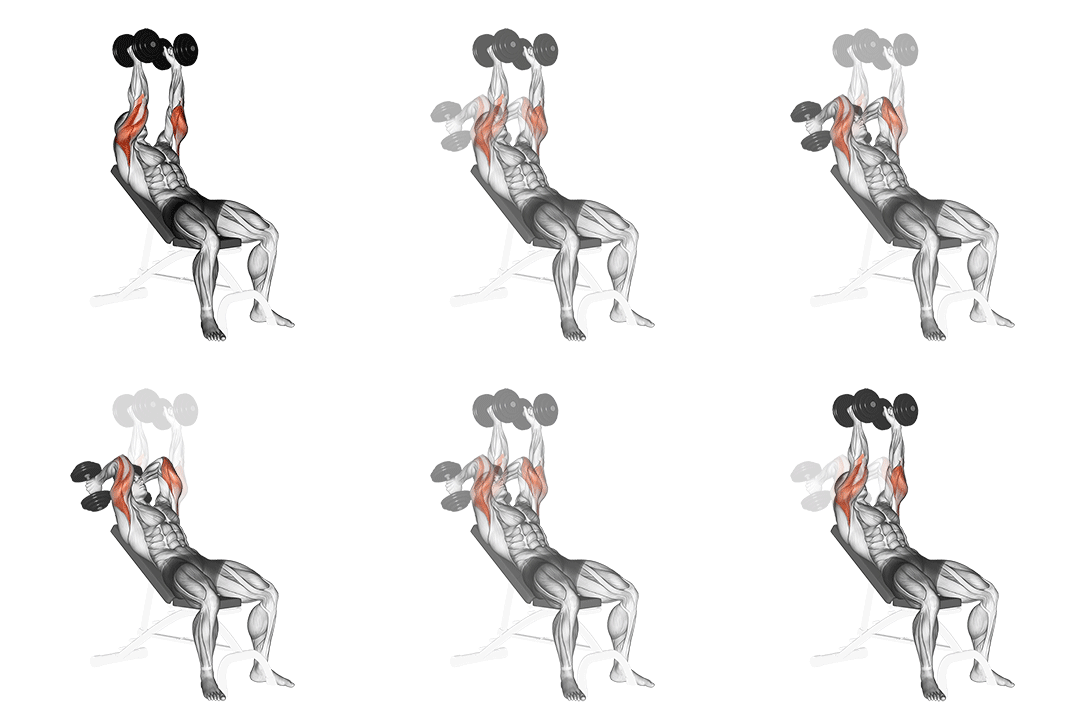
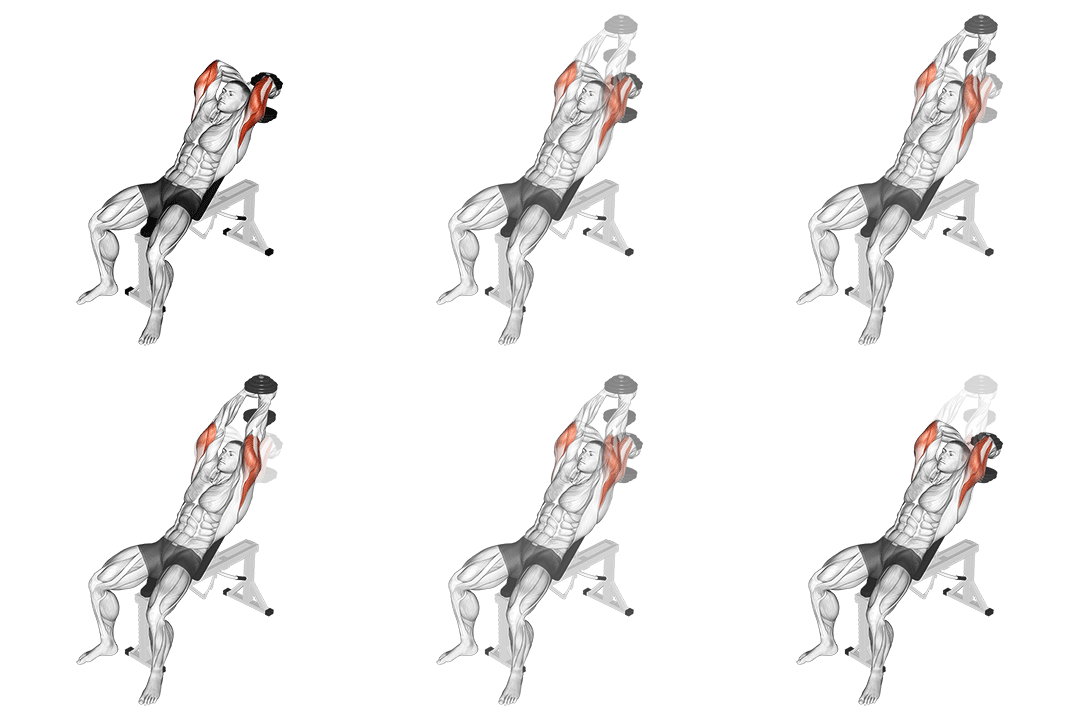
- Sit on an incline bench with a dumbbell in each hand, palms facing inwards.
- Extend your arms fully overhead, keeping your elbows close to your head.
- Lower the dumbbells behind your head by bending your elbows, keeping your upper arms stationary.
- Pause for a moment, then raise the dumbbells back to the starting position by extending your arms.
- Repeat for the desired number of repetitions.
Sets and reps: 3 sets of 10 to 15 reps.
Why this matches
- Primary muscle: triceps, the same as the Tate Press
- Equipment: free weights, the same as the Tate Press
- Body position: lying on your back, the same as the Tate Press
- Triceps
- Dumbbell
- Intermediate
- Isolation
How to perform this exercise
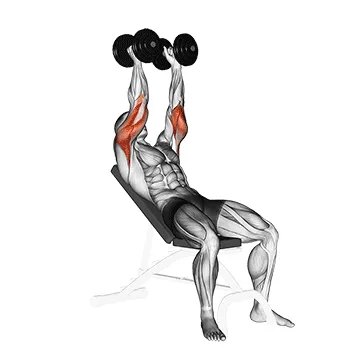
- Sit on an incline bench with a dumbbell in each hand, resting on your thighs.
- Slowly lie back on the bench, keeping the dumbbells close to your chest.
- Once you are fully lying down, extend your arms straight up towards the ceiling, keeping your elbows slightly bent.
- Pause for a moment at the top, then slowly lower the dumbbells back down to the starting position.
- Repeat for the desired number of repetitions.
Sets and reps: 3 sets of 10 to 15 reps.
Why this matches
- Primary muscle: triceps, the same as the Tate Press
- Equipment: free weights, the same as the Tate Press
- Body position: lying on your back, the same as the Tate Press
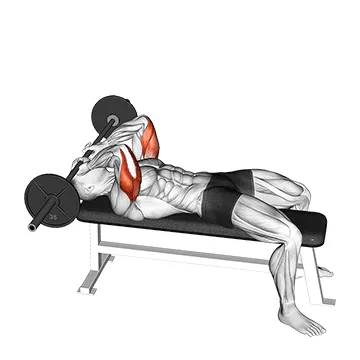
4. Barbell Lying Triceps Extension
92% match- Triceps
- Barbell
- Intermediate
- Isolation
A good swap when you have a barbell to work with, and it still works the triceps.
How to perform this exercise
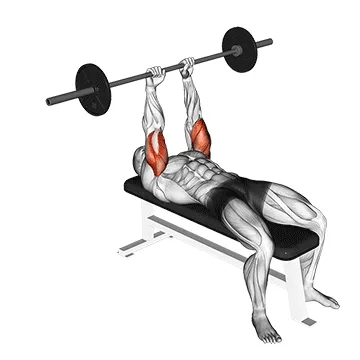
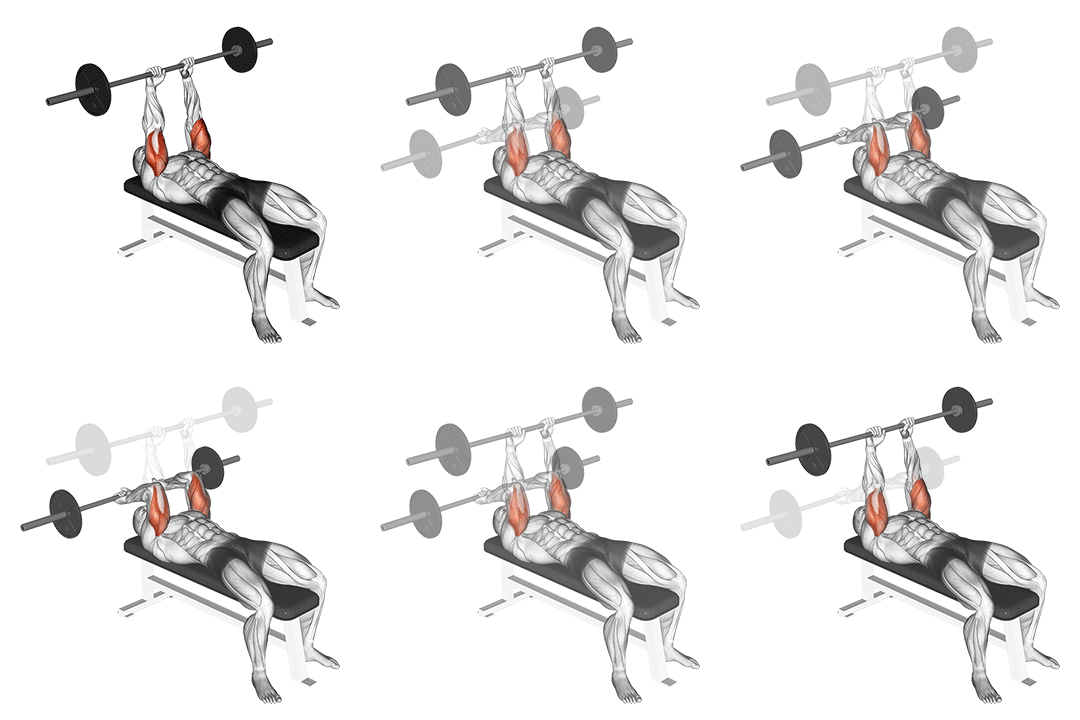
- Lie flat on a bench with your feet flat on the ground and your head at the end of the bench.
- Hold the barbell with an overhand grip, hands shoulder-width apart, and extend your arms straight up over your chest.
- Keeping your upper arms stationary, slowly lower the barbell towards your forehead by bending your elbows.
- Pause for a moment at the bottom, then extend your arms back up to the starting position.
- Repeat for the desired number of repetitions.
Sets and reps: 3 sets of 10 to 15 reps.
Why this matches
- Primary muscle: triceps, the same as the Tate Press
- Equipment: free weights, the same as the Tate Press
- Body position: lying on your back, the same as the Tate Press
- Triceps
- Barbell
- Intermediate
- Isolation
How to perform this exercise
- Lie flat on a bench with your feet flat on the ground and your head at the end of the bench.
- Hold the barbell with an overhand grip, hands shoulder-width apart, and extend your arms straight up over your chest.
- Keeping your upper arms stationary, slowly lower the barbell towards your forehead by bending your elbows.
- Pause for a moment when the barbell is just above your forehead, then extend your arms back up to the starting position.
- Repeat for the desired number of repetitions.
Sets and reps: 3 sets of 10 to 15 reps.
Why this matches
- Primary muscle: triceps, the same as the Tate Press
- Equipment: free weights, the same as the Tate Press
- Body position: lying on your back, the same as the Tate Press
- Triceps
- Dumbbell
- Intermediate
- Isolation
How to perform this exercise
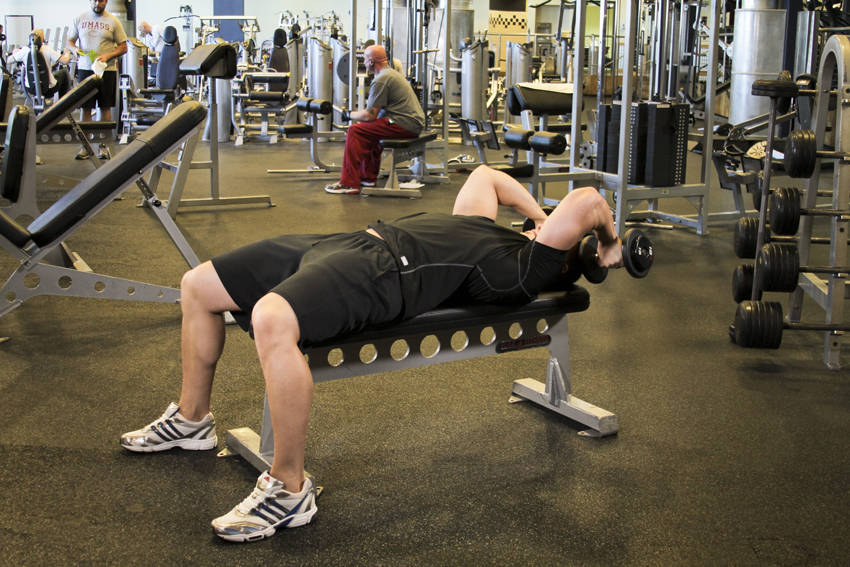
- Lie down on a flat bench holding two dumbbells directly above your shoulders. Your arms should be fully extended and form a 90 degree angle from your torso and the floor.
- The palms of your hands should be facing forward, and your elbows should be tucked in. This will be your starting position.
- Now, inhale and slowly lower the dumbbells until they are near your ears. Be sure to keep your upper arms stationary and your elbows tucked in.
- Then, exhale and use your triceps to return the weight to the starting position.
Sets and reps: 3 sets of 10 to 15 reps.
Why this matches
- Primary muscle: triceps, the same as the Tate Press
- Equipment: free weights, the same as the Tate Press
- Body position: lying on your back, the same as the Tate Press
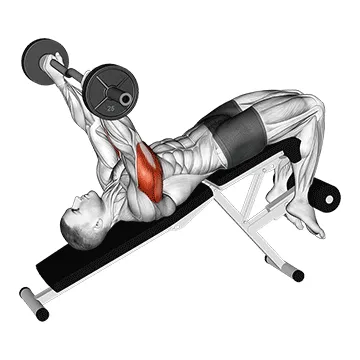
7. Decline EZ Bar Triceps Extension
91% match- Triceps
- Ez-barbell
- Intermediate
- Isolation
A good swap when you have an EZ bar to work with, and it still works the triceps.
How to perform this exercise
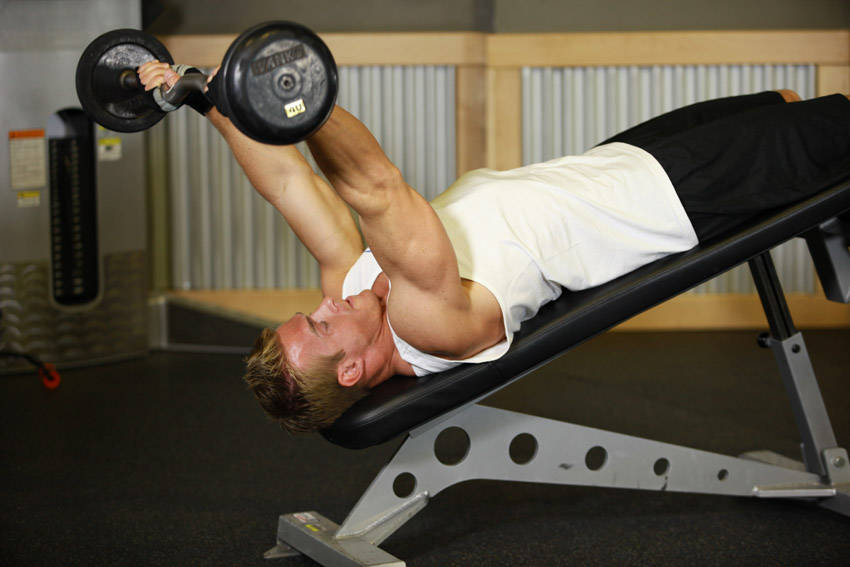
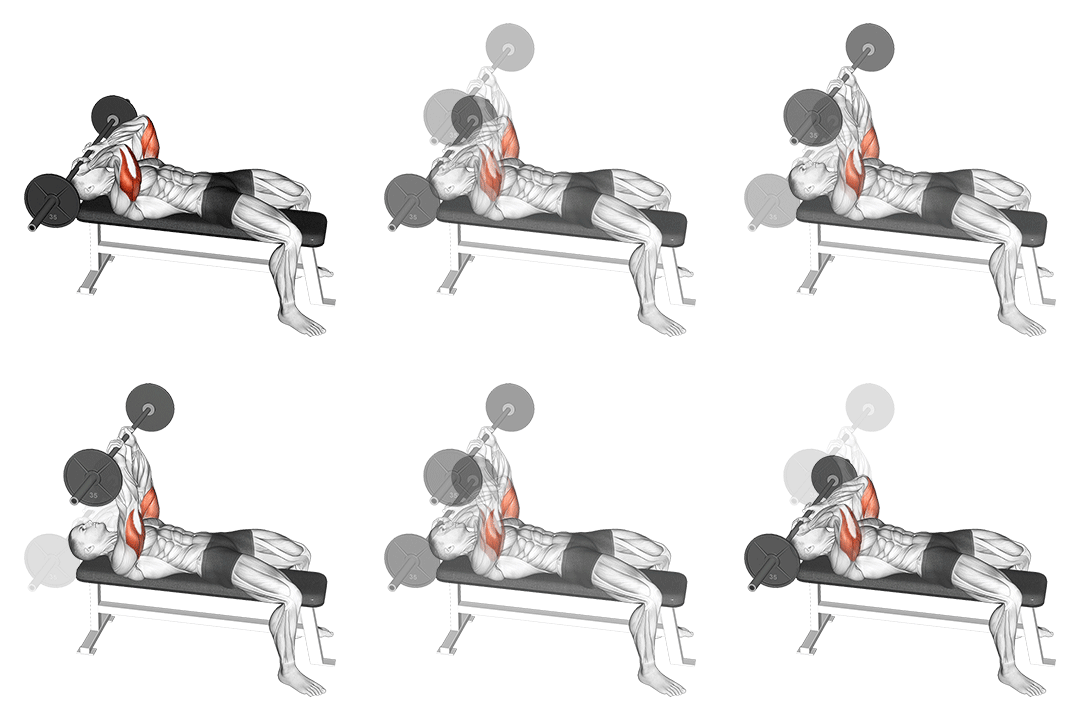
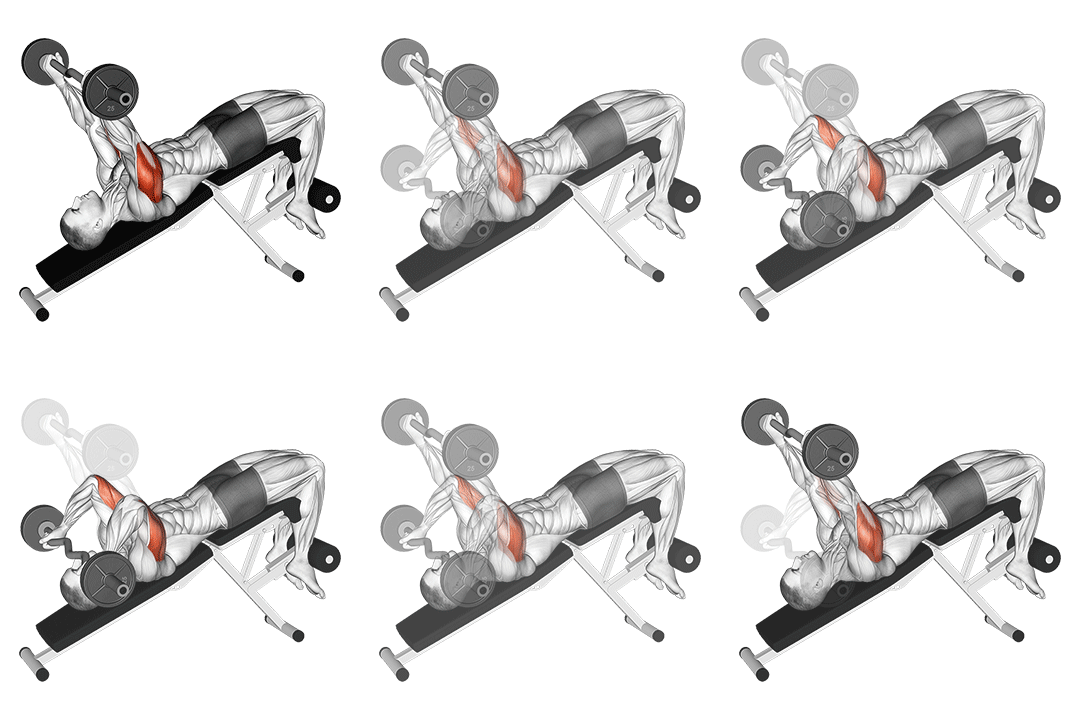
- Secure your legs at the end of the decline bench and slowly lay down on the bench.
- Using a close grip (a grip that is slightly less than shoulder width), lift the EZ bar from the rack and hold it straight over you with your arms locked and elbows in. The arms should be perpendicular to the floor. This will be your starting position. Tip: In order to protect your rotator cuff, it is best if you have a spotter help you lift the barbell off the rack.
- As you breathe in and you keep the upper arms stationary, bring the bar down slowly by moving your forearms in a semicircular motion towards you until you feel the bar slightly touch your forehead. Breathe in as you perform this portion of the movement.
- Lift the bar back to the starting position by contracting the triceps and exhaling.
- Repeat until the recommended amount of repetitions is performed.
Sets and reps: 3 sets of 10 to 15 reps.
Why this matches
- Primary muscle: triceps, the same as the Tate Press
- Equipment: free weights, the same as the Tate Press
- Body position: lying on your back, the same as the Tate Press
- Triceps
- Ez-barbell
- Intermediate
- Isolation
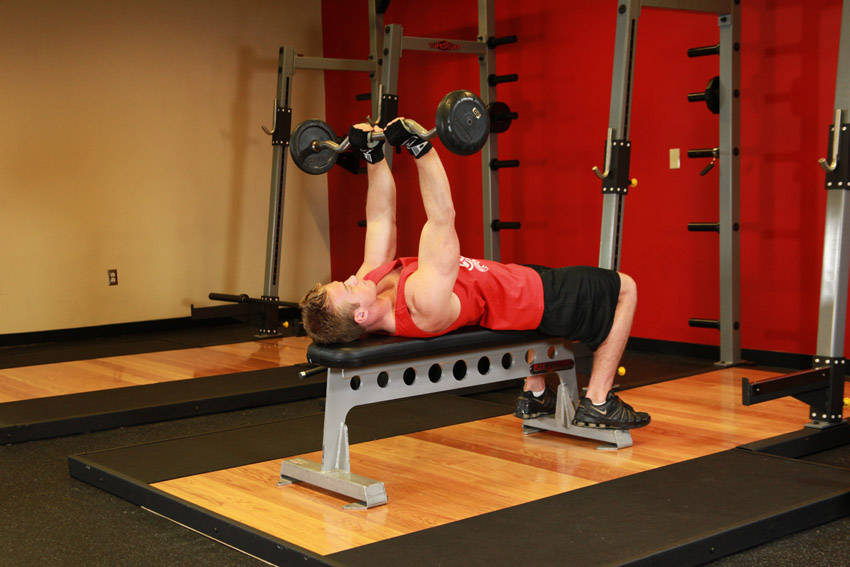
How to perform this exercise
- While holding a barbell or EZ Curl bar with a pronated grip (palms facing forward), lie on your back on a flat bench with your head off the end of the bench. Tip: If you are holding a barbell grab it using a shoulder-width grip and if you are using an E-Z Bar grab it on the inner handles.
- Extend your arms in front of you as you hold the barbell over your chest. The arms should be perpendicular to your torso (90-degree angle). This will be your starting position.
- As you inhale, lower the bar in a semi-circular motion by bending at the elbows and while keeping the upper arm stationary and elbows in. Keep lowering the bar until it lightly touches your chin.
- As you exhale bring the bar back up to the starting position by pushing the bar up in a semi-circular motion. Contract the triceps hard at the top of the movement for a second. Tip: Again, only the forearms should move. The upper arms should remain stationary at all times.
- Repeat for the recommended amount of repetitions.
Sets and reps: 3 sets of 10 to 15 reps.
Why this matches
- Primary muscle: triceps, the same as the Tate Press
- Equipment: free weights, the same as the Tate Press
- Body position: lying on your back, the same as the Tate Press
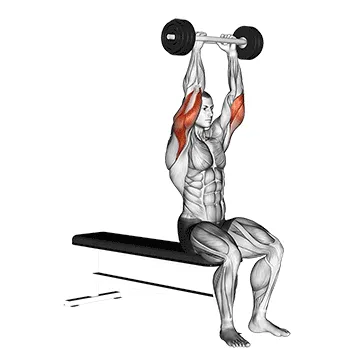
9. Olympic Barbell Triceps Extension
91% match- Triceps
- Barbell
- Intermediate
- Isolation
How to perform this exercise
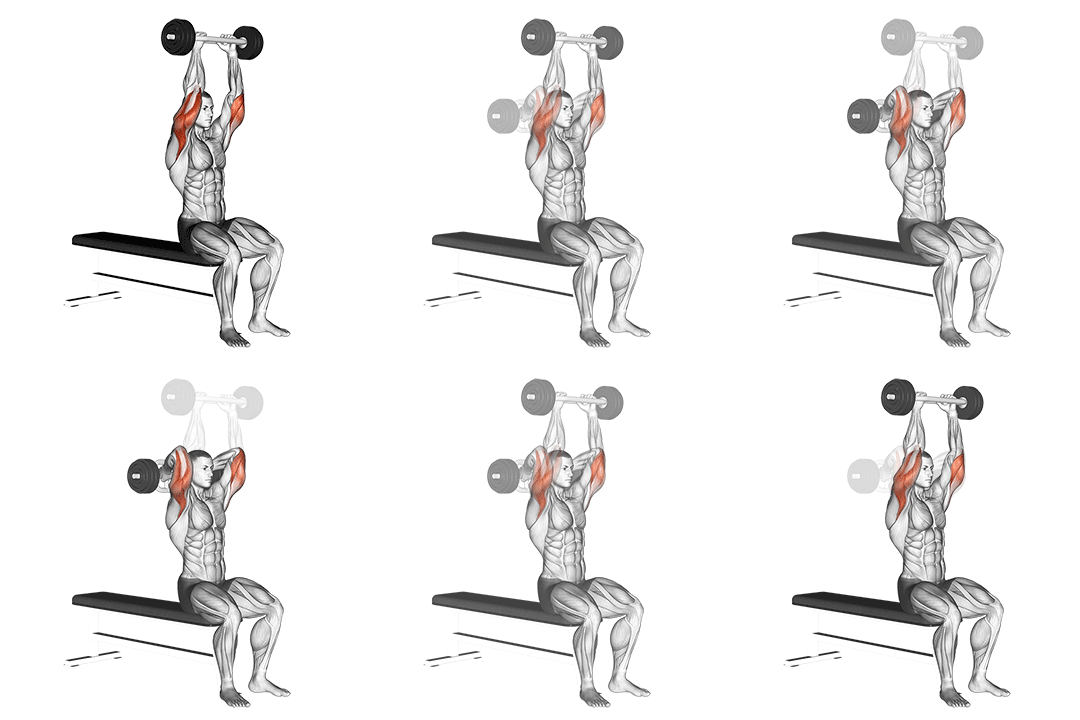
- Start by standing with your feet shoulder-width apart and holding the barbell with an overhand grip.
- Raise the barbell above your head, fully extending your arms.
- Keeping your upper arms close to your head, slowly lower the barbell behind your head by bending your elbows.
- Pause for a moment, then extend your arms back to the starting position.
- Repeat for the desired number of repetitions.
Sets and reps: 3 sets of 10 to 15 reps.
Why this matches
- Primary muscle: triceps, the same as the Tate Press
- Equipment: free weights, the same as the Tate Press
- Body position: lying on your back, the same as the Tate Press
- Triceps
- Ez-barbell
- Intermediate
- Isolation
How to perform this exercise
- Lie on a decline bench with your head lower than your feet and your feet secured.
- Hold the ez barbell with an overhand grip, hands shoulder-width apart.
- Extend your arms fully, keeping your elbows close to your head.
- Lower the barbell slowly towards your forehead, bending your elbows.
- Pause for a moment, then extend your arms back to the starting position.
- Repeat for the desired number of repetitions.
Sets and reps: 3 sets of 10 to 15 reps.
Why this matches
- Primary muscle: triceps, the same as the Tate Press
- Equipment: free weights, the same as the Tate Press
- Body position: lying on your back, the same as the Tate Press
Why You Might Need a Tate Press Alternative
You may substitute the Tate Press because of elbow irritation, lack of dumbbells, or a desire for different triceps activation. Tate Press uses a lying, press-style pattern that stresses all three triceps heads through horizontal pressing and a unique elbow flare. Alternatives shift biomechanics: skull crushers bias long-head stretch through a larger elbow flexion range, close-grip bench increases compound load and medial head recruitment, and pushdowns or overhead extensions let you adjust elbow path to reduce tendon stress. Use strict tempo and control the eccentric phase to limit elbow strain when testing substitutes.
Tate Press FAQ
What muscles does Tate Press work?
The Tate Press primarily targets the triceps, long, lateral, and medial heads, while also recruiting the pecs and anterior deltoids as stabilizers. Keep elbows slightly flared and wrists neutral to emphasize triceps activation and minimize excessive shoulder involvement.
Can I build muscle without doing Tate Press?
Yes. You can build triceps size using progressive overload with skull crushers, close-grip presses, overhead extensions, pushdowns, or bodyweight variations. Focus on full range of motion, controlled eccentrics, and gradually increasing load or reps to stimulate hypertrophy.
Find Alternatives for Any Exercise
Search the exercise database and filter the ranked substitutes by the equipment you own.
Similarity scores compare exercise metadata such as movement pattern, muscles, equipment and body position. They are not a safety rating or a check that you own the equipment. Learn about our methodology