The bench press is one of the most popular exercises in strength training. Almost everyone who lifts weights does bench presses. But that wasn’t always the case. In fact, the bench press is a relatively new exercise that’s only been around since the late 1940s.
Before that, bodybuilders did dips, push-ups, and floor presses to work their chests. The lifters of the day developed and demonstrated their upper body pressing prowess with variations of the shoulder press.
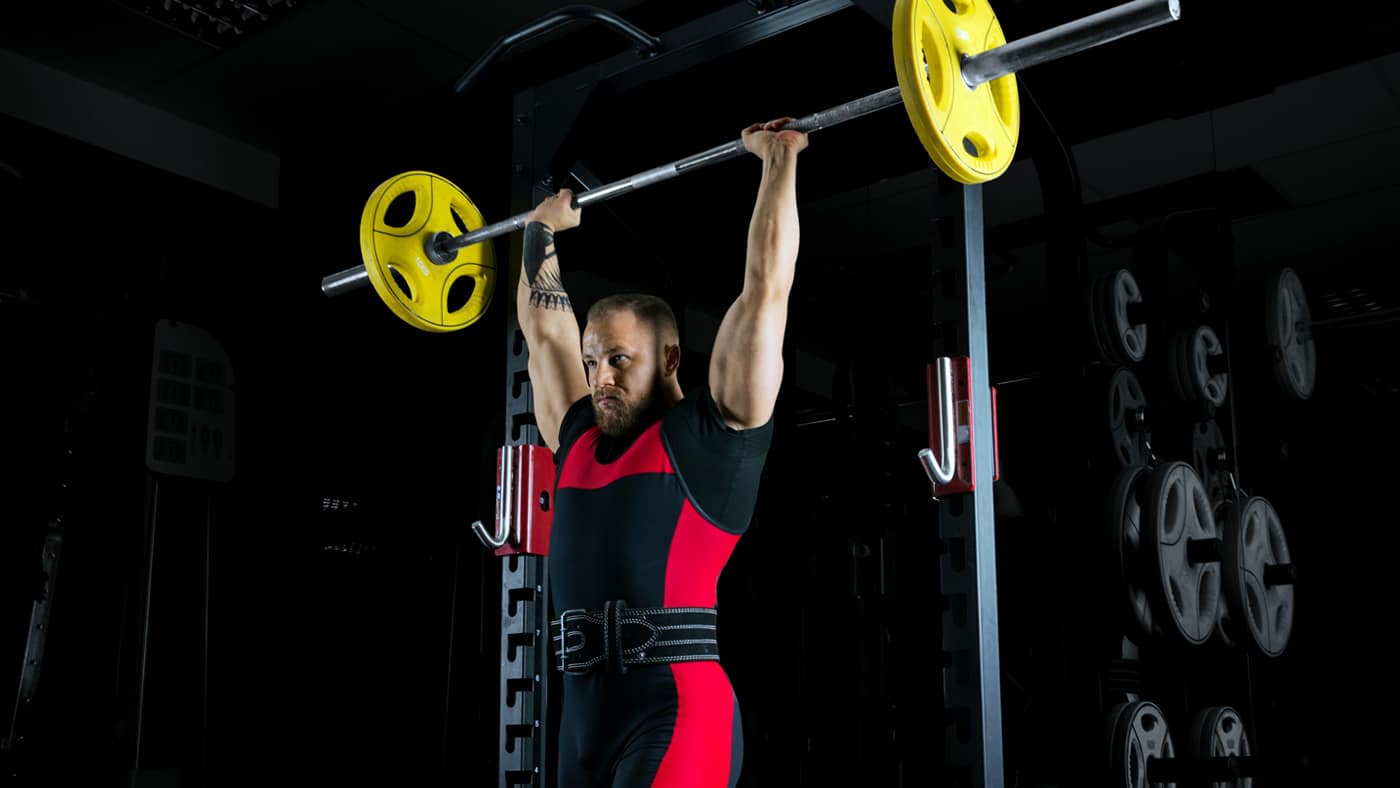
Pressing weights overhead is a real test of strength and one of the best ways to develop a bigger, more muscular upper body.
There are lots of shoulder pressing exercises to choose from, and they’re all valuable and effective, but two of the best are the push press and strict overhead press.
In this article, we compare these two classic shoulder builders so you can pick the best one for your strength training workouts.
Push Press 101
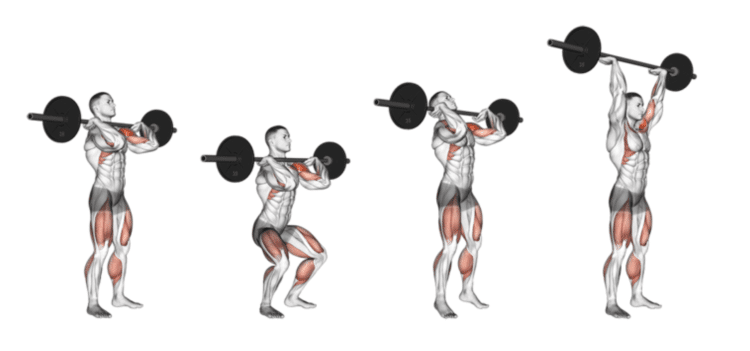
The push press is a classic barbell exercise, although it can be done using dumbbells or kettlebells, too. With the push press, you use your legs to help drive the weight up and overhead. While some may view this as cheating, it’s actually a legitimate method for lifting heavier weights or extending your set past failure.
Muscles Worked
Push presses are a compound exercise. That means they involve multiple joints and work several muscles simultaneously. Because they involve your legs and upper body, push presses are virtually a full-body exercise. That said, the primary muscles developed by push presses are:
Deltoids – the deltoids are your shoulder muscles. There are three sets of deltoid fibers or heads: anterior (front), medial (middle), and posterior (rear). All three heads are involved in push presses, but the anterior deltoids are the most active. The medial and posterior deltoids mostly work as stabilizers and synergists.
Triceps brachii – extending your elbows is the job of your triceps brachii or triceps for short. Located on the back of the upper arm, push presses involve significant triceps engagement.
Trapezius – known as the traps for short, this is the large diamond-shaped muscle of the upper back. Three sets of fibers make up the traps: Upper, middle (mid), and lower. All three are involved in push presses, but the upper and mid fibers are most active and are responsible for stabilizing your shoulder girdle.
Core – made up of the rectus abdominis, obliques, transverse abdominis, and erector spinae, the core muscles contract inward to create intra-abdominal pressure to stabilize your spine during push presses.
Legs – every rep of push-presses starts with a dip of the knees followed by an explosive extension of the legs. As such, push presses also work your:
- Quadriceps – front of the thigh
- Glutes – rear of hips
- Hamstrings – back of the thigh
- Gastrocnemius – upper calf
- Soleus – lower calf
However, the range of motion and force on these muscles is relatively low, so push presses probably won’t do much for your leg strength or size.
How to do Push Presses
- Stand with your feet between shoulder and hip-width apart.
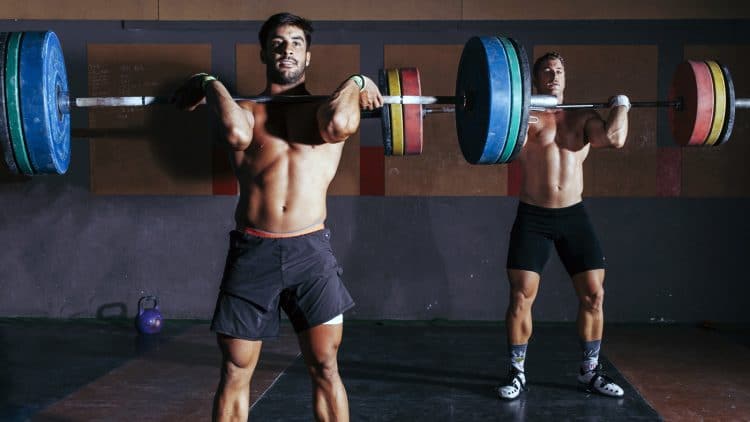
- Using an overhand grip, rack and hold your barbell across the front of your shoulders. Your hands should be just outside shoulder-width apart. Raise your elbows slightly, so they are in front of the bar.
- Brace your core, pull your shoulders down and back, and lift your chest.
- Without leaning forward, bend your knees and descend into a quarter-depth squat. Imagine you are setting up for a jump. Keep your heels on the floor.
- Rapidly extend your knees and hips and use this momentum to help you drive the bar up and overhead.
- Receive the bar overhead with your knees, hips, and arms extended.
- Lower the bar back to your shoulders and repeat.
Push Press – Pros
Not sure if push presses are the right shoulder exercise for you? Consider these benefits before making your final decision!
A functional full-body exercise – push presses teach and train you to lift heavy weights overhead using your entire body. This is arguably more natural and functional than pressing while seated or without using your legs.
A good power exercise – power is force generated quickly. The dip and drive of push presses is very explosive, and the rapid movement will develop muscle power. Power is a component of most sports, making the push press a valuable exercise for athletes.
Lift heavier weights – you should be able to lift about 30% more weight with push presses compared to strict overhead presses. This could help you build more strength. Lowering the weights under control (i.e., eccentrically) may also enhance hypertrophy.
A good way to extend your set beyond failure – with overhead presses, you’ll reach a point in your set where you cannot do any more reps. Your muscles will be too tired to generate the force necessary to push the weight overhead. However, doing a few push press reps will allow you to extend your set beyond this point, potentially stimulating more muscle growth.
Push Press – Cons
There are a couple of drawbacks to consider before you add push presses to your deltoid workouts:
More technically demanding – the push press requires good full-body coordination to perform correctly. You need to be able to transfer the force generated by your legs into your upper body and arms via your core. This is not an easy exercise and, as such, maybe too complex for some exercisers, e.g., beginners.
Lift heavier weights – while lifting heavy weights can be a good thing, that’s not always the case. On the one hand, lifting more weight means you should get stronger. But, on the downside, heavier weights mean more joint stress, increasing the risk of injury. You also need to be strong enough to lower the bar under control.
Not so beneficial for bodybuilding – while the push press is a good exercise for strength and power, it may not be ideal for triggering hypertrophy. While you CAN push press more weight, that’s because you use your legs to help drive the weight up, taking stress off your deltoids. However, you can alleviate this problem by emphasizing the negative or lowering part of each rep or doing push presses immediately after strict presses.
Overhead Press 101
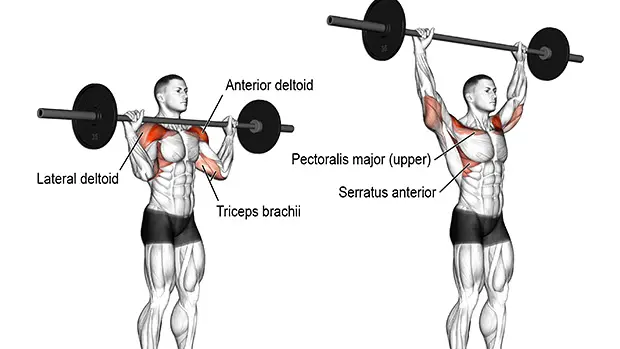
The overhead press, also known as the strict or military press, involves lifting a weight overhead without assistance from your legs. With the overhead/strict press, you typically stand with your feet about shoulder-width apart, knees slightly bent but rigid. However, with the military press, your feet are together, and your legs are straight like you are standing to attention.
Muscles Worked
Overhead presses work many of the same muscles as push presses. However, because the legs are not actively involved, the overhead press is an upper-body rather than a full-body exercise.
The main muscles involved in the overhead press are:
- Deltoids
- Triceps
- Trapezius
- Core
How to do Overhead Presses
- Stand with your feet between shoulder and hip-width apart. Your knees should be slightly bent but rigid. Or, if doing military presses, stand with your feet together and legs straight.
- Using an overhand grip, rack and hold your barbell across the front of your shoulders. Your hands should be just outside shoulder-width apart. Raise your elbows slightly, so they are in front of the bar.
- Brace your core, pull your shoulders down and back, and lift your chest.
- Without using your legs, press the weight up and overhead to arms’ length.
- Lower the bar back to the front of your shoulders and repeat.
Overhead Press – Pros
Are overhead presses the right shoulder exercise for you? Consider these benefits and then decide!
Easy to learn – with fewer movements and less coordination involved, the overhead press is easier to learn than the push press. This makes it a better exercise for most beginners.
A prerequisite for push presses – the overhead press teaches you the right way to lift a weight overhead. As such, it’s an essential stepping stone on the way to doing push presses. It will also help develop the strength necessary to perform more advanced pressing exercises safely and effectively.
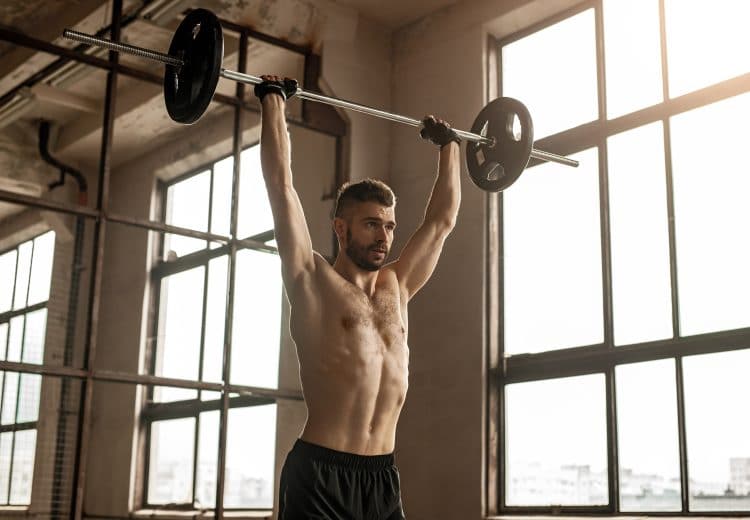
Easier to judge your progress – with push presses, increased performance could come from improved leg strength just as easily as stronger shoulders or triceps. With the stricter overhead presses, any increase in reps or weight can be attributed to stronger upper body muscles.
Relatively safe – overhead presses are done with a slower tempo and lighter weights than push presses. As such, it may be a safer choice for some exercisers. As overhead presses involve a more straightforward movement, there is also less to go wrong.
Overhead Press – Cons
There are disadvantages to strict overhead presses. Consider these cons before you add them to your workouts:
No assistance from your legs – with overhead presses, when your deltoids and triceps tire, your set will come to a grinding halt. With push presses, you’ll be able to pump out a few more reps even as your upper body starts to fail.
Not as functional – pressing a heavy weight overhead without using your legs is not very natural. It’s a technique that makes this task much harder. As such, if you want to develop functional strength, e.g., for sports, the strict overhead press may not be the best choice.
Push Press vs. Overhead Press
So, now that you know a little more about push presses and overhead presses, let’s judge these exercises by a few different criteria:
Push Press vs. Overhead Press: Strength
While both exercises can increase your strength, the push press is more of a power exercise. The dip and drive of the legs generate momentum, taking work away from your upper body. This means that the slower strict press is arguably better for building pure strength, especially if you want to emphasize your upper body.
Push Press vs. Overhead Press: Hypertrophy
Building muscle mass is best done using a combination of muscle tension and metabolic stress. The overhead press is one way to accomplish this. However, doing the push press while emphasizing the negative could also trigger hypertrophy. Doing push presses immediately after overhead presses is another effective method for producing muscle growth.
Push Press vs. Overhead Press: Fat loss
Either of these pressing exercises can be included in fat loss workouts. But, in terms of caloric expenditure, the push press involves the most movements and muscles per rep, so it could be better for fat loss. However, any advantage is minimal.
Push Press vs. Overhead Press: Safety
Lifting heavy weights explosively puts a lot of stress on your muscles, joints, and connective tissues. As such, the slower overhead press is potentially safer than push presses. That said, even the overhead press can be dangerous if you use too much weight or perform it with improper technique.
Push Press vs. Overhead Press: Ease of learning
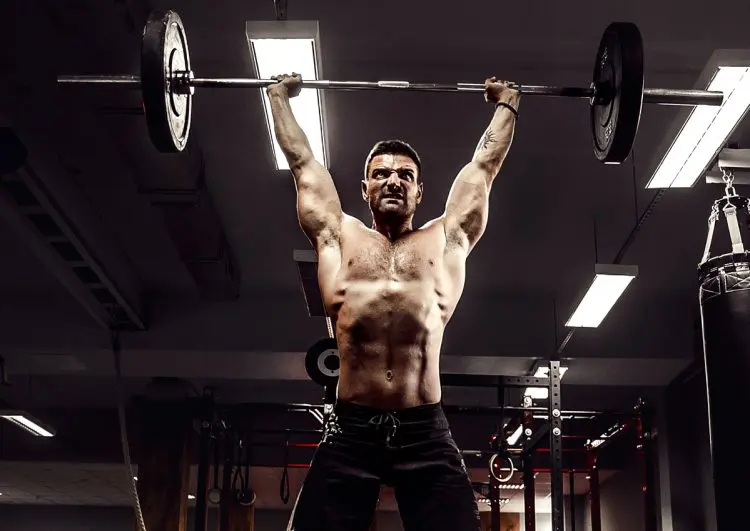
Overhead presses are much simpler than push presses. With less lower-body involvement and fewer movements, the overhead press should be easier to learn than push presses. That said, the push isn’t really all that complicated, so most exercisers should soon be able to progress from the overhead press to the push press quite quickly.
Push Press vs. Overhead Press: Variety
Push presses can be done with a barbell, dumbbells, or kettlebells. You can also do them unilaterally, i.e., single-armed. However, there aren’t really many other ways you can do this exercise.
The overhead press can also be done unilaterally, and with dumbbells or kettlebells, you can also do it seated, sat on the floor (Z press), using a machine or cables, with an alternating arm action, and with resistance bands.
As such, there are more variations of the overhead press variations than for push presses.
Wrapping Up
When choosing which exercises you should do, it’s best to base your choices on your training goals. While the push press and overhead press are very similar, the few differences between them mean that one may suit you better than the other.
The push press is generally better for experienced exercisers, athletes, and those looking to increase muscle power. In contrast, the overhead press is better for beginners and training for strength and muscle size.
Still unable to decide between these two excellent exercises? Just do them both! Alternate between them from workout to workout or do one for 4-6 weeks and then switch to the other.
Either way, both of these pressing exercises can help you build bigger, more powerful shoulders.