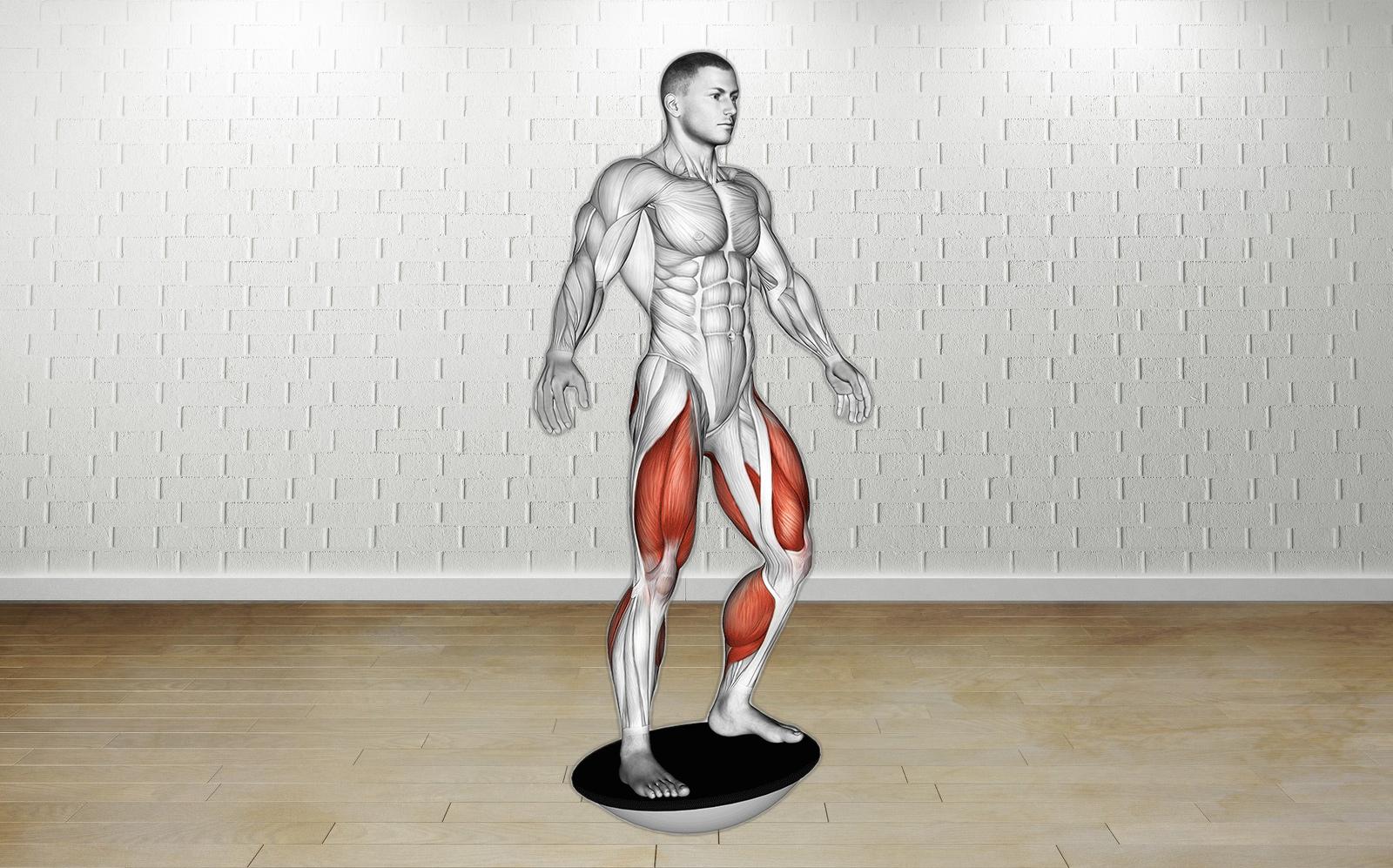
Boost Quad Strength with Balance Board Exercise Today!

Enhance Stability while Sculpting Stronger Thighs

Tom Miller, CSCS
By
Tom Miller, CSCS
Tom Miller, CSCS, is a Sr. Editor & Content Strategist with 10 years of experience in Powerlifting and Personal Training. As a Certified Strength and Conditioning...
6 Min Read
How to do Balance Board

Elevate your fitness regimen with balance board workouts that specifically target your quadriceps while improving overall balance and stability. Whether you’re a teen athlete looking to boost sports performance or a senior aiming to maintain mobility, these workouts offer a fun and challenging way to enhance your fitness at any level.

Balance Board Details
Basic Information
Body Part
Upper Legs
Primary Muscles
Secondary Muscles
Equipment
Bodyweight
Exercise Characteristics
Exercise Type
Balance
Movement Pattern
Brace
Force Type
Isometric
Unilateral/Bilateral
Unilateral
Compound/Isolation
Compound
Bodyweight Exercise
Yes
Training Parameters
Difficulty Level
Intermediate
Target Training Goals
Balance
Suitable Workout Phases
Main workout
Risk Level
Moderate
Weight Category
Bodyweight
Recommended Rep Ranges
GoalRep Range
Strength8-12
Hypertrophy8-12
EnduranceVaries
Power1-5
Muscular endurance15-20
Stability core8-12
Flexibility mobility30-60 seconds

Why Balance Board Workouts for Quads?

Balance board exercises engage your core muscles and place a strong emphasis on quadriceps strength—crucial for knee extension, walking, and squatting. Performing squats on a balance board forces your body to work harder to maintain stability, effectively activating auxiliary muscles and enhancing core strength.

How to Perform Balance Board Squats
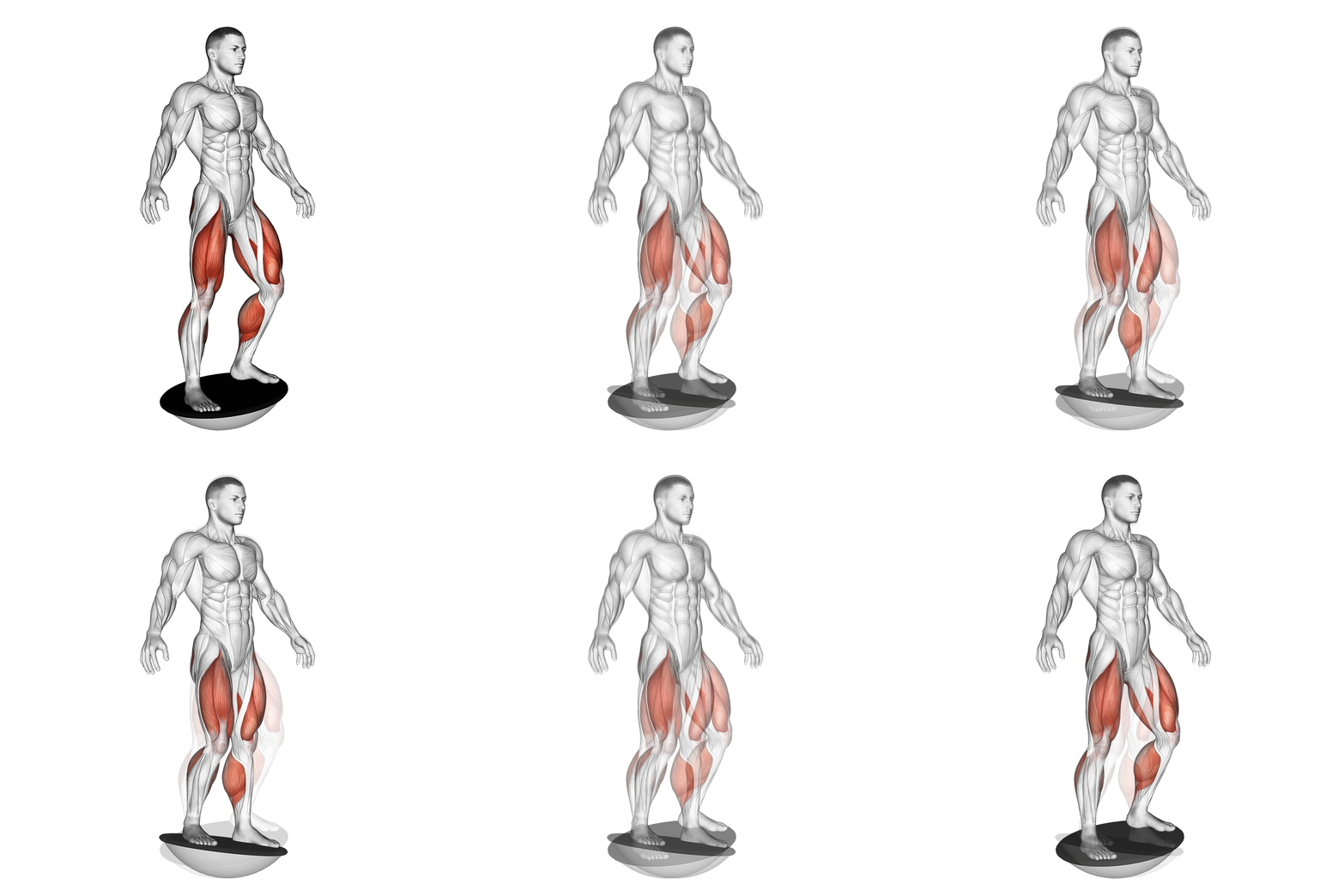
How to do a Balance Board - Step by step Balance exercise demonstration targeting Quads, Calves, Glutes, Hamstrings

Begin by standing upright on a balance board with your feet shoulder-width apart, ensuring your weight is evenly distributed. Engage your core and maintain a straight posture.

  1. Slowly bend your knees and lower your body into a squat position, keeping your chest lifted and back straight.
  2. Ensure your knees are aligned over your toes as you descend.
  3. Hold the squat position momentarily, focusing on balance and stability.
  4. Gradually push through your heels to rise back to the starting position, maintaining control throughout the movement.
  5. Repeat for the desired number of repetitions, keeping your movements smooth and controlled.

Inhale as you lower into the squat and exhale as you rise back up. Aim to perform these workouts 2-3 times a week for optimal results.

Get Fitter, Faster

Level Up Your Fitness: Join our 💪 strong community in Fitness Volt Newsletter. Get daily inspiration, expert-backed workouts, nutrition tips, the latest in strength sports, and the support you need to reach your goals. Subscribe for free!

Common Mistakes to Avoid

  • Incorrect Foot Placement: Placing your feet too close or too wide can lead to instability. Always ensure your feet are shoulder-width apart and balanced on the board.
  • Neglecting Core Engagement: Failing to activate your core muscles compromises balance. Tighten your abdominal muscles to maintain stability throughout the exercise.
  • Knees Caving Inward: Allowing your knees to fall inward puts unnecessary stress on your joints. Keep your knees aligned with your toes to promote proper form and reduce injury risk.
  • Leaning Forward: Excessive forward lean can throw off your balance. Maintain an upright posture with your chest up and hips back to distribute weight evenly.
  • Rushing the Movement: Performing the exercise too quickly can compromise form and effectiveness. Focus on slow, controlled movements to maximize strengthening benefits.

Benefits

  • Enhances Quad Strength: Effectively targets and builds the quadriceps, essential for overall leg strength.
  • Improves Balance and Stability: Challenges your stability, leading to improved coordination and proprioception.
  • Engages Core Muscles: Promotes a stronger core by requiring constant engagement for balance.
  • Reduces Injury Risk: Strengthening the quads and improving balance help minimize the risk of knee and lower-body injuries.
  • Boosts Athletic Performance: Enhanced quad strength and balance contribute to better performance in sports and physical activities.

Exercise Variations

  • Side Plank Hip Adduction
    Level: Intermediate
    Targets: Adductors, Gluteus Medius, Transverse abdominis, Adductor muscles, Erector Spinae
    Equipment: Yoga Mat, Resistance Band, Ankle Weights | Movement: Brace | Type: Strength | Force Type: Isometric | Isolation
  • Cable Shrug
    Level: Intermediate
    Targets: Levator Scapulae, Rhomboids, Serratus Anterior, Trapezius, Deltoids, Upper Trapezius
    Equipment: Cable Machine, Cable Attachment (Such As A Straight Bar Or Rope). | Movement: Brace | Type: Strength | Force Type: Isometric | Isolation
  • Stability Ball Jackknife
    Level: Intermediate
    Targets: Hip Flexors, Obliques, Quadriceps, Rectus Abdominis, Shoulders, Transverse abdominis, Lower Back
    Equipment: Stability Ball | Movement: Brace | Type: Stability | Force Type: Isotonic | Compound
  • Crunch
    Level: Intermediate
    Targets: Obliques, Rectus Abdominis, Transverse abdominis, Erector Spinae, Hip Flexors, Rectus Femoris
    Equipment: None | Movement: Brace | Type: Plyometric | Force Type: Isometric | Compound
  • Hanging Straight Leg Raise
    Level: Intermediate
    Targets: Hip Flexors, Iliopsoas, Obliques, Quadratus lumborum, Rectus Abdominis, Latissimus Dorsi, Quadriceps, Rhomboids, Shoulders, Trapezius
    Equipment: Pull-Up Bar, Gymnastic Rings, Or Dip Bars. | Movement: Brace | Type: Strength | Force Type: Concentric | Isolation
  • Side Plank Hip Abduction
    Level: Intermediate
    Targets: Erector Spinae, Gluteus Maximus, Gluteus Medius, Obliques, Quadratus lumborum, Tensor Fasciae Latae, Adductors
    Equipment: Exercise Mat, Resistance Band | Movement: Brace | Type: Strength | Force Type: Isometric | Isolation
  • Reverse Crunch
    Level: Intermediate
    Targets: Hip Flexors, Obliques, Rectus Abdominis, Transverse abdominis, Iliopsoas, Rectus Femoris
    Equipment: Mat | Movement: Brace | Type: Strength | Force Type: Concentric | Isolation
  • RKC Plank
    Level: Advanced
    Targets: Deltoids, Erector Spinae, Glutes, Hip Flexors, Obliques, Pectorals, Quadratus lumborum, Rectus Abdominis, Transverse abdominis, Lats, Serratus Anterior, Shoulders
    Equipment: None | Movement: Brace | Type: Stability | Force Type: Isometric | Isolation
  • Barbell Rollout
    Level: Intermediate
    Targets: Hip Flexors, Latissimus Dorsi, Obliques, Rectus Abdominis, Shoulders, Transverse abdominis, Triceps
    Equipment: Barbell, Weight Plates, Floor Mat | Movement: Brace | Type: Stability | Force Type: Isometric | Compound
  • Cable Side Shrug
    Level: Intermediate
    Targets: Deltoids, Levator Scapulae, Trapezius, Rhomboids, Serratus Anterior
    Equipment: Cable Machine, Cable Attachment, Weight Plates. | Movement: Brace | Type: Strength | Force Type: Isometric | Isolation

Alternative Exercises

  • Table Bridge
    Level: Intermediate
    Targets: Core, Glutes, Hamstrings, Lower Back, Quadriceps, Calves, Erector Spinae, Gluteus Medius, Obliques, Rectus Abdominis
    Equipment: Exercise Mat, Resistance Bands, Yoga Blocks, Timer | Movement: Push | Type: Balance | Force Type: Isometric | Compound
  • Rolling Bridge
    Level: Intermediate
    Targets: Core, Glutes, Hamstrings, Hip Flexors, Lower Back, Calves, Erector Spinae, Gluteus Maximus, Quadriceps
    Equipment: Yoga Mat, Resistance Bands, Foam Roller | Movement: Hinge | Type: Balance | Force Type: Isometric | Compound
  • Low Cable Cross-Over
    Level: Intermediate
    Targets: Pectoralis major, Triceps brachii, Rhomboids, Triceps
    Equipment: Cable Machine, Adjustable Pulleys, Handle Attachments | Movement: Pull | Type: Strength | Force Type: Isotonic | Isolation
  • Inverse Leg Curl
    Level: Intermediate
    Targets: Gastrocnemius, Gluteus Maximus, Hamstrings, Calves, Erector Spinae, Glutes, Quadriceps
    Equipment: Leg Curl Machine, Ankle Weights, Resistance Bands | Movement: Pull | Type: Strength | Force Type: Eccentric | Isolation
  • Australian Pull-Ups
    Level: Intermediate
    Targets: Biceps brachii, Core Muscles, Latissimus Dorsi, Pectoralis major, Rhomboids, Teres Major, Trapezius, Infraspinatus
    Equipment: Pull-Up Bar Or Low Bar, Gymnastic Rings Or TRX Straps, Resistance Bands | Movement: Pull | Type: Strength | Force Type: Concentric | Compound
  • Front Lever Raises
    Level: Advanced
    Targets: Biceps brachii, Core Muscles, Latissimus Dorsi, Pectoralis major, Rhomboids, Shoulders, Trapezius, Hip Flexors, Teres Major
    Equipment: Pull-Up Bar, Gymnastic Rings, Resistance Bands, Ab Mat | Movement: Pull | Type: Strength | Force Type: Concentric | Compound
  • Close Grip Dumbbell Press
    Level: Intermediate
    Targets: Anterior Deltoid, Pectoralis major, Serratus Anterior, Triceps brachii, Anterior Deltoids, Rhomboids
    Equipment: Dumbbells, Workout Bench | Movement: Push | Type: Strength | Force Type: Concentric | Compound
  • Hand-Release Push-Ups
    Level: Intermediate
    Targets: Core Muscles, Deltoids, Pectoralis major, Serratus Anterior, Triceps brachii, Abdominals, Erector Spinae, Pectoralis Minor, Rhomboids, Triceps
    Equipment: None | Movement: Push | Type: Strength | Force Type: Concentric | Compound
  • Hanging Pike Exercise
    Level: Intermediate
    Targets: Hip Flexors, Iliopsoas, Obliques, Rectus Abdominis, Transverse abdominis, Forearms, Lats, Quadriceps, Shoulders, Trapezius
    Equipment: Pull-Up Bar, Gymnastic Rings Or TRX Straps, Mat | Movement: Pull | Type: Strength | Force Type: Isometric | Isolation
  • Belt Squat
    Level: Intermediate
    Targets: Adductors, Erector Spinae, Gluteus Maximus, Hamstrings, Quadriceps, Gluteus Medius, Quadratus lumborum, Rectus Abdominis, Spinal Erectors
    Equipment: Belt Squat Machine, Weight Plates, Squat Belt, Safety Straps | Movement: Squat | Type: Strength | Force Type: Concentric | Compound

Safety Precautions

When engaging in balance board workouts, safety is paramount:

  • Use a Stable Surface: Ensure the balance board is on a flat, non-slip surface to prevent falls.
  • Clear Your Space: Remove any obstacles around you to avoid accidents.
  • Warm Up Properly: Perform dynamic stretches and light cardio to prepare your muscles.
  • Listen to Your Body: If you feel discomfort or struggle to maintain balance, take a break.
  • Start with Support: Beginners should consider standing near a wall or sturdy object for added stability.

Frequently Asked Questions

Can beginners use a balance board for quad workouts?

Absolutely! Beginners can start by standing on the balance board near a wall or support to build confidence and stability before progressing to more challenging movements.

How often should I do balance board workouts?

Aiming for 2-3 sessions per week allows adequate time for muscle recovery while providing consistent benefits to quad strength and balance.

What type of balance board is best for these exercises?

A wobble board or rocker board works well for quad-focused exercises. Choose one that matches your fitness level and offers the right amount of challenge.

Can balance board workouts help with knee pain?

Strengthening the quadriceps can support knee health. However, if you have existing knee pain, consult a healthcare professional before starting new exercises.

Get Fitter, Faster

Level Up Your Fitness: Join our 💪 strong community in Fitness Volt Newsletter. Get daily inspiration, expert-backed workouts, nutrition tips, the latest in strength sports, and the support you need to reach your goals. Subscribe for free!

Final Thoughts

Balance board workouts offer an engaging way to boost quad strength, enhance stability, and elevate your overall fitness journey. By incorporating these exercises into your routine, you’ll not only sculpt stronger thighs but also improve coordination and reduce injury risk. Remember to prioritize proper form and safety as you challenge yourself and progress.

Looking for more ways to enhance your lower body strength? Check out our guide on best leg exercises for comprehensive workouts.

Interested in measuring your progress? Check out our strength standards for Squat.

Stay on top of the latest fitness news and updates by adding Fitness Volt to your Google News feed: Follow us on Google News You can also follow us on Twitter, Facebook, Instagram, and YouTube for even more content.

If you have any questions or need further clarification about this article, please leave a comment below, and Tom will get back to you as soon as possible.

Stay Updated with FitnessVolt Get the latest fitness news, workouts & nutrition tips delivered to your feed
Follow on Google News
Share This Article
Tom Miller, CSCS, is a Sr. Editor & Content Strategist with 10 years of experience in Powerlifting and Personal Training. As a Certified Strength and Conditioning Specialist, he is dedicated to delivering informative, engaging, and reliable health and fitness content. His work has been featured on websites including the-sun.com, Well+Good, Bleacher Report, Muscle and Fitness, UpJourney, Business Insider, NewsBreak and more.
Leave a Comment