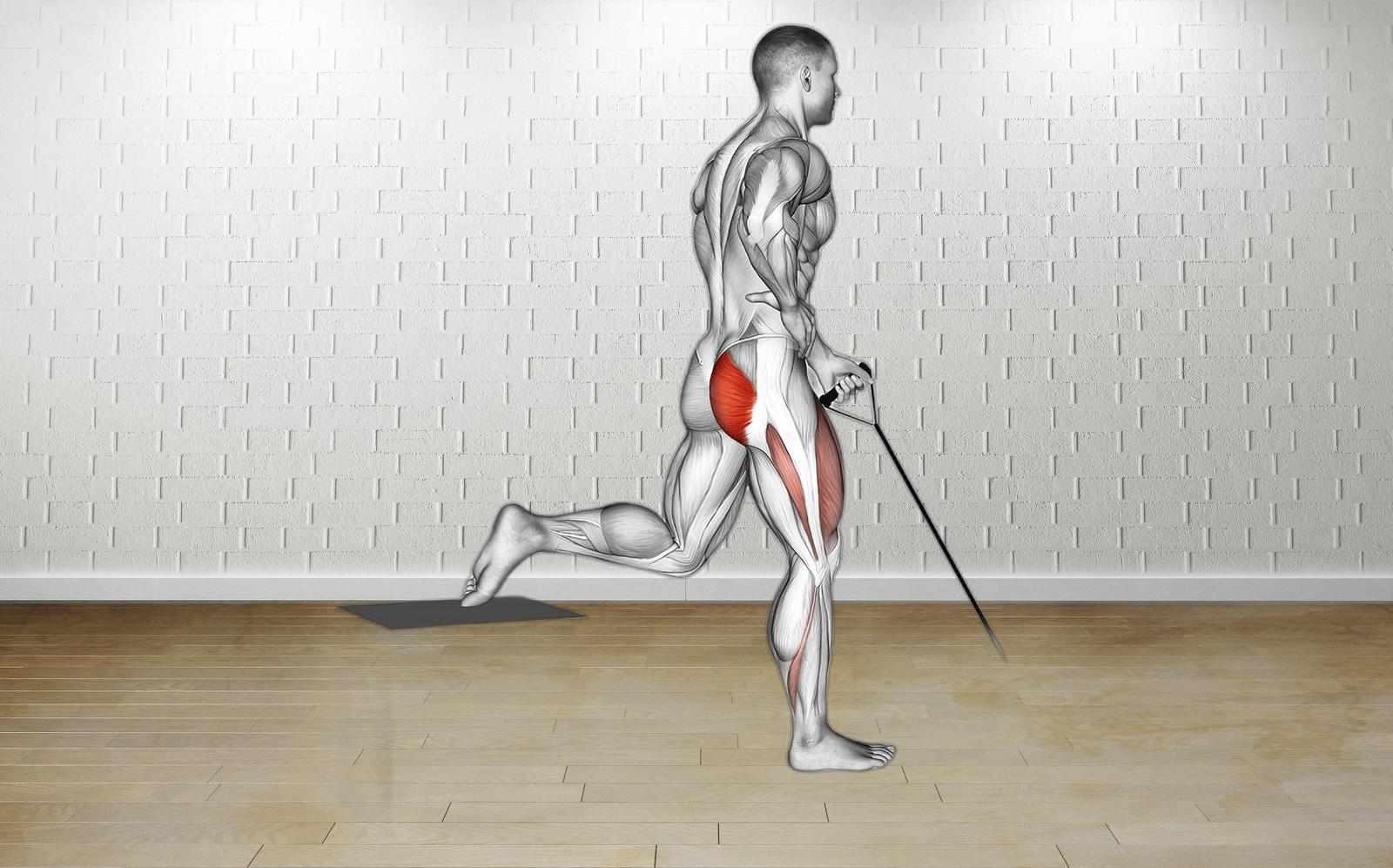
Band One Arm Single Leg Split Squat: Boost Your Quads Today!

Enhance Balance and Isolate Your Quads with Resistance Training

Ash, ACE, MSc
By
Ash, ACE, MSc
Ash is a highly respected fitness expert and certified personal trainer through the American Council on Exercise (ACE). With a B.A. in biology from Rutgers and...
7 Min Read
How to do Band One Arm Single Leg Split Squat

Enhance your quadriceps and overall lower body strength with the Band One Arm Single Leg Split Squat. This effective exercise combines resistance training with the balance and coordination inherent in split squats, making it a valuable addition to any fitness regimen. It’s ideal for those seeking to elevate their workouts with a challenge that stimulates strength and stability.

Primarily targeting the quadriceps, the Band One Arm Single Leg Split Squat also engages the glutes, hamstrings, calves, and core for improved posture and overall stability. The resistance band adds intensity, ensuring your muscles work harder throughout the movement. Incorporating this exercise two to three times a week can significantly boost your strength, balance, and endurance. It’s convenient for both gym and home workouts, provided you have a secure anchor point for the band.

Safety is crucial; maintain proper form by keeping your chest up and ensuring your knee doesn’t extend past your toes. Start with a lighter band to focus on technique before progressing to heavier resistance. Modifications, such as performing the split squat without the band or using a stable object for support, can assist beginners. Incorporate this dynamic exercise into your routine and watch your quadriceps strength improve.

Band One Arm Single Leg Split Squat Details
Basic Information
Body Part
Upper Legs
Primary Muscles
Secondary Muscles
Equipment
Band
Exercise Characteristics
Exercise Type
Strength
Movement Pattern
Lunge
Force Type
Concentric
Unilateral/Bilateral
Unilateral
Compound/Isolation
Compound
Bodyweight Exercise
Yes
Training Parameters
Difficulty Level
Intermediate
Target Training Goals
Functional Fitness
Suitable Workout Phases
Main workout
Risk Level
Low
Weight Category
Bodyweight
Recommended Rep Ranges
GoalRep Range
Strength6-8
Hypertrophy8-12
Endurance15-20
Power3-5
Muscular endurance12-20
Stability core8-12
Flexibility mobilityVaries

How to Do a Band One Arm Single Leg Split Squat
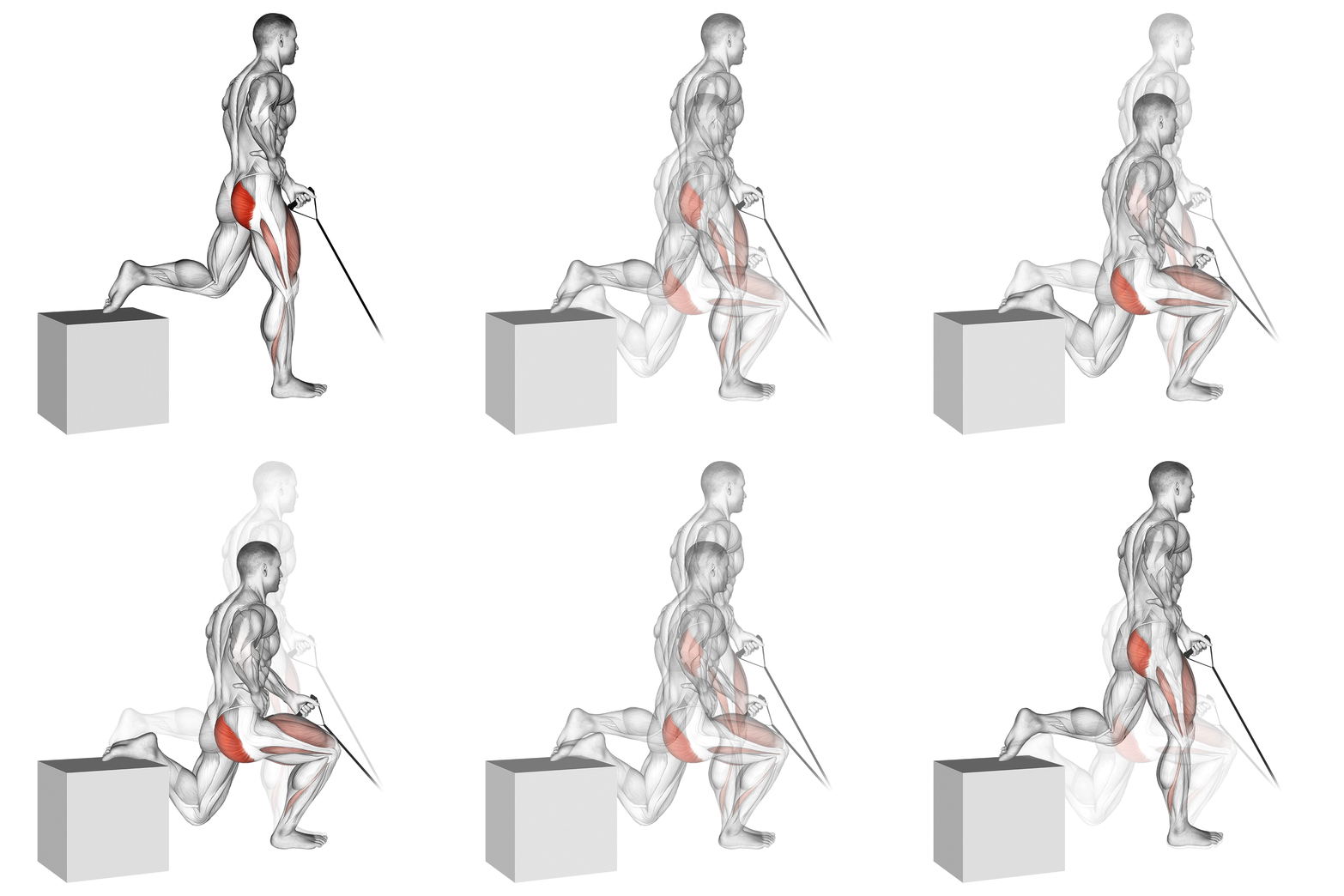
How to do a Band One Arm Single Leg Split Squat - Step by step Strength exercise demonstration targeting Quads, Glutes, Hamstrings

Begin by standing with a resistance band anchored at a low point behind you. Hold one end of the band in the opposite hand while balancing on one leg, with the other leg positioned behind you in a split stance.

Get Fitter, Faster

Level Up Your Fitness: Join our 💪 strong community in Fitness Volt Newsletter. Get daily inspiration, expert-backed workouts, nutrition tips, the latest in strength sports, and the support you need to reach your goals. Subscribe for free!

  1. Engage your core and keep your chest upright.
  2. Lower your body by bending the knee of the standing leg, keeping the back leg straight and descending into a squat.
  3. Ensure your front knee stays aligned over your ankle as you descend.
  4. Push through the heel of your standing leg to return to the starting position.
  5. Repeat for the desired number of repetitions before switching legs.

Inhale as you lower down and exhale as you push back up to the starting position.

Common Mistakes

  • Not Engaging the Core: Failing to engage your core can lead to poor balance and instability. Always consciously tighten your abdominal muscles to maintain alignment and control.
  • Incorrect Knee Alignment: Allowing the front knee to cave inward can cause strain on the joint. Focus on keeping your knee directly over your ankle to ensure proper alignment throughout the movement.
  • Leaning Forward Too Much: Overextending your torso forward can result in excessive stress on the lower back. Maintain an upright chest to promote a safer and more effective squat.
  • Neglecting the Back Leg Position: Letting the back leg collapse or bending it can reduce the effectiveness of the exercise. Keep this leg straight and engaged to maximize the exercise’s benefits and stability.
  • Using Improper Band Resistance: Selecting a band that is either too light or too heavy can affect your performance. Choose a resistance level that challenges you without compromising form or control.

Benefits of Band One Arm Single Leg Split Squat

  • Enhanced Quadricep Strength: This exercise effectively targets the quadriceps, promoting muscle growth and strength specifically in your front thighs.
  • Improved Balance and Stability: By working on one leg, the exercise challenges your balance, aiding in better coordination and stability, which can translate to improved performance in other activities.
  • Core Engagement: Holding a resistance band while balancing engages your core muscles, helping to boost core stability and strength as you resist lateral movement.
  • Injury Prevention: Strengthening the legs and improving stability can help reduce the risk of injuries related to weak muscles and imbalances.
  • Single-Leg Strength Development: The split stance increases the workload on the standing leg, fostering unilateral strength development that can correct muscular imbalances.

Exercise Variations

  • Lying Alternating Knee Raise
    Level: Intermediate
    Targets: Iliopsoas, Adductors
    Equipment: Yoga Mat, None | Movement: Lunge | Type: Strength | Force Type: Concentric | Isolation
  • Dumbbell Forward Lunge
    Level: Intermediate
    Targets: Calves, Core, Glutes, Hamstrings, Hip Flexors, Quadriceps, Erector Spinae, Gluteus Medius, Gluteus Minimus
    Equipment: Dumbbells | Movement: Lunge | Type: Strength | Force Type: Concentric | Compound
  • Cable Hip Adduction
    Level: Intermediate
    Targets: Adductor Brevis, Adductor Longus, Gracilis, Pectineus, Gluteus Maximus, Gluteus Medius, Iliopsoas, Quadratus lumborum, Sartorius, Tensor Fasciae Latae
    Equipment: Cable Machine, Ankle Strap. | Movement: Lunge | Type: Strength | Force Type: Concentric | Isolation
  • Dumbbell Step-Up
    Level: Intermediate
    Targets: Calves, Gluteus Maximus, Hamstrings, Hip Flexors, Quadriceps, Core, Glutes
    Equipment: Dumbbells, Step Or Bench. | Movement: Lunge | Type: Strength | Force Type: Concentric | Compound
  • Barbell Lunge
    Level: Intermediate
    Targets: Adductors, Calves, Gluteus Maximus, Hamstrings, Hip Flexors, Quadriceps, Core Muscles, Gluteus Medius
    Equipment: Barbell, Weight Plates, Weightlifting Belt, Exercise Mat | Movement: Lunge | Type: Strength | Force Type: Concentric | Compound
  • Side Hip Raise
    Level: Intermediate
    Targets: Gluteus Medius, Gluteus Minimus, Quadratus lumborum, Tensor Fasciae Latae, Erector Spinae
    Equipment: Exercise Mat, Resistance Band, Ankle Weights | Movement: Lunge | Type: Strength | Force Type: Concentric | Isolation
  • Dumbbell Rear Lunge
    Level: Intermediate
    Targets: Adductors, Calves, Glutes, Hamstrings, Hip Flexors, Quadriceps, Core Muscles, Gluteus Medius
    Equipment: Dumbbells | Movement: Lunge | Type: Strength | Force Type: Concentric | Compound
  • Barbell Side Lunge
    Level: Intermediate
    Targets: Adductors, Calves, Gluteus Maximus, Hamstrings, Hip Flexors, Quadriceps, Erector Spinae, Glutes
    Equipment: Barbell, Weight Plates, Gym Mat | Movement: Lunge | Type: Strength | Force Type: Concentric | Compound
  • Dumbbell Lunge
    Level: Intermediate
    Targets: Adductors, Calves, Gluteus Maximus, Hamstrings, Hip Flexors, Quadriceps, Gastrocnemius, Gluteus Medius, Gluteus Minimus, Quadratus lumborum, Tibialis anterior
    Equipment: Dumbbells | Movement: Lunge | Type: Strength | Force Type: Concentric | Compound
  • Cable Hip Abduction
    Level: Intermediate
    Targets: Gluteus Medius, Gluteus Minimus, Sartorius, Tensor Fasciae Latae, Adductor Brevis, Adductor Longus, Gluteus Maximus, Quadratus lumborum
    Equipment: Cable Machine, Ankle Strap. | Movement: Lunge | Type: Strength | Force Type: Isotonic | Isolation

Alternative Exercises

  • Low Cable Cross-Over
    Level: Intermediate
    Targets: Pectoralis major, Triceps brachii, Rhomboids, Triceps
    Equipment: Cable Machine, Adjustable Pulleys, Handle Attachments | Movement: Pull | Type: Strength | Force Type: Isotonic | Isolation
  • Standing Dumbbell One-Leg Calf Raise
    Level: Intermediate
    Targets: Tibialis posterior, Flexor digitorum longus, Flexor hallucis longus, Peroneus brevis, Peroneus longus, Tibialis anterior
    Equipment: Dumbbells, Exercise Mat | Movement: Push | Type: Strength | Force Type: Concentric | Isolation
  • Tricep Dip
    Level: Intermediate
    Targets: Anterior Deltoid, Triceps brachii, Erector Spinae, Latissimus Dorsi
    Equipment: Bench, Dip Bars, Sturdy Chair, Parallel Bars | Movement: Push | Type: Strength | Force Type: Concentric | Compound
  • One-leg Hyperextension
    Level: Intermediate
    Targets: Gluteus Maximus, Multifidus
    Equipment: Bench, Ankle Weights Or Resistance Bands | Movement: Hinge | Type: Strength | Force Type: Concentric | Isolation
  • Side Plank Hip Adduction
    Level: Intermediate
    Targets: Adductors, Gluteus Medius, Transverse abdominis, Adductor muscles, Erector Spinae
    Equipment: Yoga Mat, Resistance Band, Ankle Weights | Movement: Brace | Type: Strength | Force Type: Isometric | Isolation
  • Barbell Stiff Leg Deadlift
    Level: Intermediate
    Targets: Adductors, Gluteus Maximus, Quadratus lumborum, Core, Forearms, Rhomboids, Trapezius
    Equipment: Barbell, Weight Plates, Lifting Platform Or Mat, Weightlifting Belt, Chalk | Movement: Hinge | Type: Strength | Force Type: Eccentric | Compound
  • Barbell Romanian Deadlift
    Level: Intermediate
    Targets: Calves, Quadriceps, Core, Forearms, Lower Back, Upper Back
    Equipment: Barbell, Weight Plates, Weightlifting Belt, Lifting Shoes, Chalk | Movement: Hinge | Type: Strength | Force Type: Eccentric | Compound
  • Underhand Yates Row
    Level: Intermediate
    Targets: Latissimus Dorsi, Posterior deltoids, Teres Major, Forearm muscles, Rear deltoids
    Equipment: Barbell, Weight Plates, Weightlifting Belt, Lifting Straps, Gym Mat | Movement: Pull | Type: Strength | Force Type: Concentric | Compound
  • Reverse-Grip Lat Pull-Down
    Level: Intermediate
    Targets: Infraspinatus, Latissimus Dorsi, Pectoralis major
    Equipment: Lat Pull-Down Machine, V-Bar Attachment Or EZ Curl Bar, Weight Plates | Movement: Pull | Type: Strength | Force Type: Concentric | Compound
  • Behind-the-Back Smith Machine Wrist Curl
    Level: Intermediate
    Targets: Flexor carpi radialis, Flexor carpi ulnaris, Flexor digitorum profundus, Flexor digitorum superficialis, Palmaris longus, Brachioradialis, Extensor carpi radialis brevis, Extensor carpi radialis longus, Extensor carpi ulnaris, Forearm Flexors
    Equipment: Smith Machine, Weight Plates, Weightlifting Bench | Movement: Pull | Type: Strength | Force Type: Concentric | Isolation

Safety Precautions for Band One Arm Single Leg Split Squat

When performing the Band One Arm Single Leg Split Squat, it is crucial to maintain proper form to prevent injury. Begin by ensuring that your resistance band is securely anchored at a low point behind you. A loose or improperly positioned band can snap back, posing a risk to your safety. Always inspect the band before use for any signs of wear or damage to ensure it is in good condition.

It is also important to focus on your balance during this exercise. Start with your body in an upright position and engage your core muscles to stabilize yourself. If you’re new to this movement, consider practicing without the band or with lighter resistance. This will help you develop your balance and strength gradually. If you find yourself struggling to maintain control, consider placing your rear foot on a bench or low step to reduce the range of motion, which can aid in balance.

Lastly, pay close attention to your range of motion and be mindful of your joints, particularly your knees. Ensure that your front knee is aligned over your ankle throughout the movement to avoid undue stress on the joint. If you experience any discomfort or pain while performing this exercise, stop immediately and assess your form or consider consulting a fitness professional for guidance. Listening to your body can help prevent injuries and ensure a safe workout experience.

Interested in measuring your progress? Check out our strength standards for Bench Press, Squat, Deadlift, and more exercises.



If you have any questions or need further clarification about this article, please leave a comment below, and Ash will get back to you as soon as possible.

Share This Article
Ash is a highly respected fitness expert and certified personal trainer through the American Council on Exercise (ACE). With a B.A. in biology from Rutgers and an M.S. in Exercise Science (Kinesiology) from CBU, she brings a wealth of knowledge and expertise to her work. Ash is dedicated to helping people achieve their fitness and health goals through personalized training and nutrition plans. With a passion for fitness and a deep understanding of the science behind healthy living, she is able to create effective and sustainable programs that deliver real results. Whether you're looking to lose weight, build muscle, or just feel better in your own skin, Ash is the expert you can trust to guide you on your journey to a healthier and happier life.
Leave a Comment