Strengthen Your Forearms: Barbell Standing Back Wrist Curl

Develop Powerful Forearm Strength and Grip Control

Ash, ACE, MSc
By
Ash, ACE, MSc
Ash is a highly respected fitness expert and certified personal trainer through the American Council on Exercise (ACE). With a B.A. in biology from Rutgers and...
7 Min Read
How to do Barbell Standing Back Wrist Curl

Strengthening your forearms is essential for enhancing grip strength and performance in various activities. The Barbell Standing Behind-the-Back Wrist Curls specifically targets the forearm extensor muscles, which are crucial for daily tasks like carrying groceries and sports such as rock climbing and weightlifting. By integrating this exercise into your routine, you’ll not only build muscle but also enhance your functional strength, benefiting multiple areas of your life.

This exercise focuses on wrist extension, engaging the muscles along the top of your forearms to improve balance and control, which are vital for athletic performance and everyday movements. For optimal results, include the Barbell Standing Behind-the-Back Wrist Curls  in your training regimen two to three times a week, allowing adequate recovery time between sessions to promote strength without strain.

Prioritize safety by starting with a manageable weight to avoid injury. Be mindful to keep your forearms steady, using only wrist movement. You can perform this exercise with a barbell, but it’s also adaptable with resistance bands or lighter dumbbells. This flexibility makes it accessible for all fitness levels. Grab your barbell and start building strong forearms to elevate your overall performance.

Barbell Standing Back Wrist Curl Details
Basic Information
Body Part
Lower Arms
Primary Muscles
Secondary Muscles
Equipment
Barbell
Exercise Characteristics
Exercise Type
Strength
Movement Pattern
Pull
Force Type
Concentric
Unilateral/Bilateral
Unilateral
Compound/Isolation
Isolation
Bodyweight Exercise
Yes
Training Parameters
Difficulty Level
Intermediate
Target Training Goals
Hypertrophy
Suitable Workout Phases
Main workout
Risk Level
Moderate
Weight Category
Bodyweight
Recommended Rep Ranges
GoalRep Range
Strength8-12
Hypertrophy8-12
Endurance12-15
Power1-5
Muscular endurance15-20
Stability core8-12
Flexibility mobility8-12

How to Do a Barbell Standing Back Wrist Curl
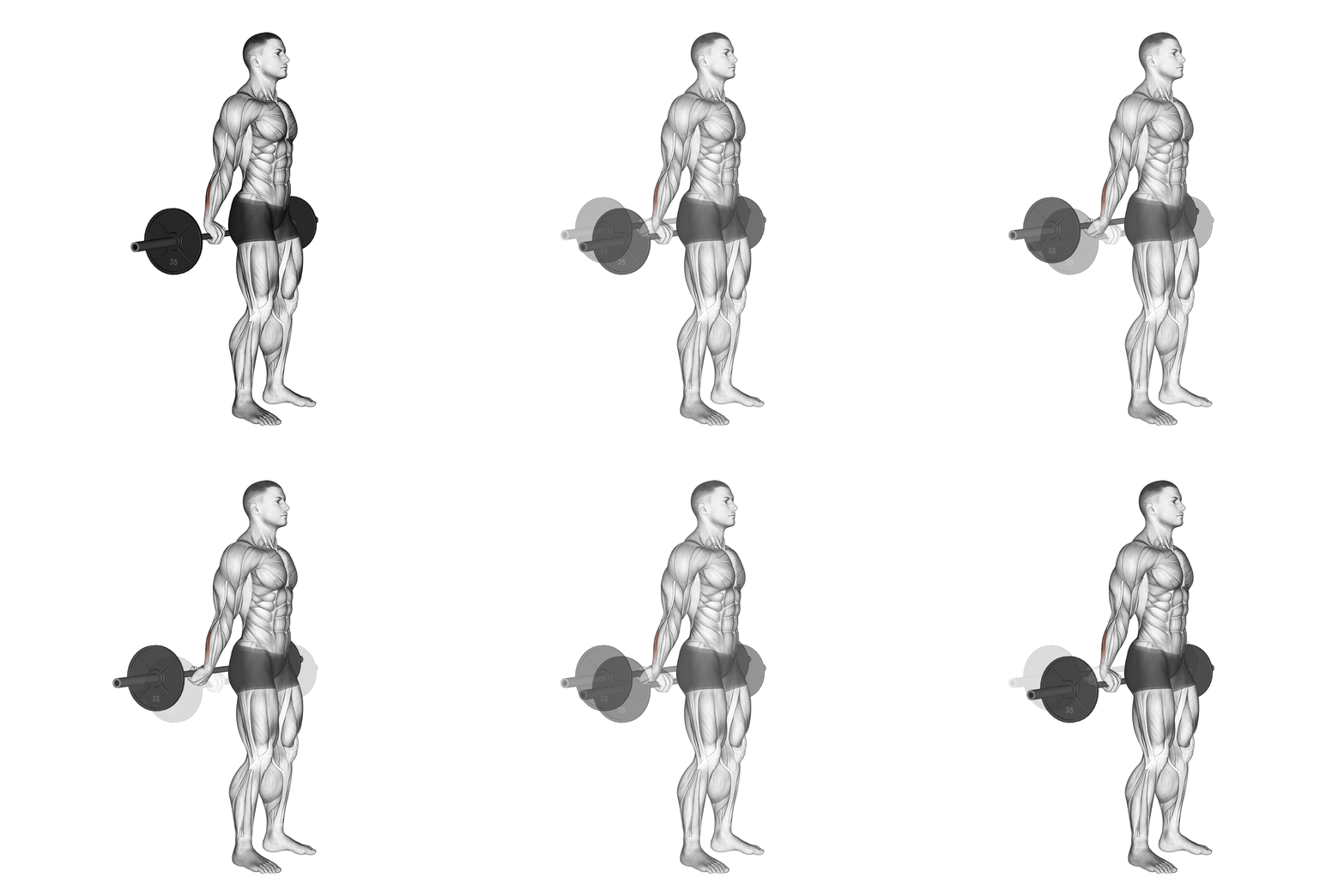
How to do a Barbell Standing Back Wrist Curl - Step by step Strength exercise demonstration targeting Forearms, Biceps, Shoulders

Start by standing with your feet shoulder-width apart, holding a barbell with an overhand grip (palms facing down). Your arms should be fully extended in front of you, resting on your thighs.

Get Fitter, Faster

Level Up Your Fitness: Join our 💪 strong community in Fitness Volt Newsletter. Get daily inspiration, expert-backed workouts, nutrition tips, the latest in strength sports, and the support you need to reach your goals. Subscribe for free!

  1. With a slight bend in your elbows, curl the barbell upward by flexing your wrists, keeping your forearms stationary.
  2. Raise the barbell until your wrists are fully extended, feeling the contraction in your forearms.
  3. Pause for a moment at the top of the movement to maximize muscle engagement.
  4. Slowly lower the barbell back to the starting position, maintaining control throughout the descent.

Exhale as you curl the barbell up and inhale as you lower it back down.

Common Mistakes

  • Using Too Much Weight: Choosing a weight that is too heavy can lead to poor form and increase the risk of injury. Start with a manageable weight to focus on technique and gradually increase as your strength improves.
  • Not Keeping Forearms Stationary: Allowing your forearms to lift or move during the curl reduces the effectiveness of the exercise. Focus on isolating your wrist movement while keeping your forearms anchored on your thighs.
  • Inadequate Range of Motion: Not fully extending or contracting your wrists limits muscle engagement. Make sure to complete the full motion by raising the barbell until your wrists are extended and lowering it back to the starting position.
  • Using Momentum: Swinging the barbell instead of using your wrist muscles can lead to ineffective workouts. Perform the exercise in a slow and controlled manner to fully engage your forearm muscles.
  • Neglecting Breathing Patterns: Holding your breath can lead to increased tension and reduce performance. Remember to exhale while curling the barbell up and inhale while lowering it again to maintain proper oxygen flow.

Benefits

  • Enhanced Grip Strength: Improves overall grip strength which is vital for various sports and weightlifting activities.
  • Forearm Development: Specifically targets the extensor muscles of the forearm, promoting balanced muscle growth.
  • Injury Prevention: Strengthens the wrist joint and surrounding muscles, reducing the risk of injuries during other exercises.
  • Improved Athletic Performance: Increases effectiveness in sports requiring wrist and forearm strength, such as rock climbing and tennis.
  • Better Forearm Definition: Contributes to a well-defined forearm, enhancing the aesthetics of the arms.

Exercise Variations

  • Battle Ropes Exercise
    Level: Intermediate
    Targets: Back, Biceps, Core, Forearms, Legs, Shoulders, Triceps
    Equipment: Battle Ropes | Movement: Pull | Type: Cardio | Force Type: Isotonic | Compound
  • Kettlebell Alternating Hang Clean
    Level: Intermediate
    Targets: Biceps, Calves, Forearms, Glutes, Hamstrings, Lower Back, Quadriceps, Shoulders, Upper Back, Abdominals, Biceps brachii, Deltoids, Erector Spinae, Forearm muscles, Gluteus Maximus, Trapezius
    Equipment: Kettlebell | Movement: Pull | Type: Power | Force Type: Concentric | Compound
  • Barbell Sumo Deadlift
    Level: Intermediate
    Targets: Adductors, Erector Spinae, Forearms, Glutes, Hamstrings, Quadriceps, Trapezius, Core, Traps
    Equipment: Barbell, Weight Plates, Weightlifting Belt, Lifting Platform Or Flat Surface. | Movement: Hinge | Type: Strength | Force Type: Concentric | Compound
  • The Jefferson Deadlift
    Level: Intermediate
    Targets: Core, Forearms, Glutes, Hamstrings, Lower Back, Quadriceps, Upper Back, Adductors, Traps
    Equipment: Barbell, Weight Plates, Lifting Platform Or Floor Mat, Weightlifting Shoes, Chalk. | Movement: Hinge | Type: Strength | Force Type: Isotonic | Compound
  • Kettlebell Swings
    Level: Intermediate
    Targets: Core, Forearms, Gluteus Maximus, Hamstrings, Lower Back, Quadriceps, Shoulders, Trapezius, Glutes
    Equipment: Kettlebell | Movement: Hinge | Type: Power | Force Type: Concentric | Compound
  • Kettlebell Hang Clean
    Level: Intermediate
    Targets: Biceps, Calves, Core, Deltoids, Forearms, Glutes, Hamstrings, Quadriceps, Trapezius, Biceps brachii, Erector Spinae, Forearm muscles, Rhomboids
    Equipment: Kettlebell | Movement: Hinge | Type: Power | Force Type: Concentric | Compound
  • Cable Pulldown
    Level: Intermediate
    Targets: Biceps brachii, Latissimus Dorsi, Pectoralis major, Rhomboids, Teres Major, Trapezius, Infraspinatus
    Equipment: Cable Machine, Adjustable Pulley, Cable Attachment (E.G., Wide Grip Bar Or Rope). | Movement: Pull | Type: Strength | Force Type: Concentric | Isolation
  • Cable Standing Row
    Level: Intermediate
    Targets: Biceps brachii, Latissimus Dorsi, Rear deltoids, Rhomboids, Teres Major, Trapezius, Infraspinatus, Teres Minor
    Equipment: Cable Machine, Handle Attachment. | Movement: Pull | Type: Strength | Force Type: Isotonic | Compound
  • Cable Straight Arm Pulldown
    Level: Intermediate
    Targets: Latissimus Dorsi, Posterior deltoids, Rhomboids, Teres Major, Triceps brachii, Anterior Deltoid, Core Muscles, Trapezius
    Equipment: Cable Machine, Straight Bar Attachment Or Rope Attachment. | Movement: Pull | Type: Strength | Force Type: Isotonic | Isolation
  • Cable Wrist Curl
    Level: Intermediate
    Targets: Flexor carpi radialis, Flexor carpi ulnaris, Flexor digitorum profundus, Flexor digitorum superficialis, Palmaris longus, Brachioradialis, Pronator Teres
    Equipment: Cable Machine, Cable Attachment (Wrist Strap Or Handle), Weight Plates. | Movement: Pull | Type: Strength | Force Type: Concentric | Isolation

Alternative Exercises

  • The Jefferson Deadlift
    Level: Intermediate
    Targets: Core, Forearms, Glutes, Hamstrings, Lower Back, Quadriceps, Upper Back, Adductors, Traps
    Equipment: Barbell, Weight Plates, Lifting Platform Or Floor Mat, Weightlifting Shoes, Chalk. | Movement: Hinge | Type: Strength | Force Type: Isotonic | Compound
  • Barbell Sumo Deadlift
    Level: Intermediate
    Targets: Adductors, Erector Spinae, Forearms, Glutes, Hamstrings, Quadriceps, Trapezius, Core, Traps
    Equipment: Barbell, Weight Plates, Weightlifting Belt, Lifting Platform Or Flat Surface. | Movement: Hinge | Type: Strength | Force Type: Concentric | Compound
  • Kettlebell Swings
    Level: Intermediate
    Targets: Core, Forearms, Gluteus Maximus, Hamstrings, Lower Back, Quadriceps, Shoulders, Trapezius, Glutes
    Equipment: Kettlebell | Movement: Hinge | Type: Power | Force Type: Concentric | Compound
  • Kettlebell Hang Clean
    Level: Intermediate
    Targets: Biceps, Calves, Core, Deltoids, Forearms, Glutes, Hamstrings, Quadriceps, Trapezius, Biceps brachii, Erector Spinae, Forearm muscles, Rhomboids
    Equipment: Kettlebell | Movement: Hinge | Type: Power | Force Type: Concentric | Compound
  • Cable Triceps Pushdown
    Level: Intermediate
    Targets: Anconeus, Triceps brachii, Brachialis, Deltoid, Pectoralis major
    Equipment: Cable Machine, Straight Bar Attachment Or Rope Attachment. | Movement: Push | Type: Strength | Force Type: Isotonic | Isolation
  • Cable Side Crunch
    Level: Intermediate
    Targets: Erector Spinae, Obliques, Rectus Abdominis, Transverse abdominis, Hip Flexors, Quadratus lumborum
    Equipment: Cable Machine, Ankle Strap Or Handle Attachment. | Movement: Rotation | Type: Strength | Force Type: Concentric | Isolation
  • Cable Side Bend
    Level: Intermediate
    Targets: Erector Spinae, Obliques, Rectus Abdominis, Quadratus lumborum
    Equipment: Cable Machine, Handle Attachment. | Movement: Rotation | Type: Strength | Force Type: Isotonic | Isolation
  • Cable Russian Twists
    Level: Intermediate
    Targets: Erector Spinae, Hip Flexors, Obliques, Rectus Abdominis, Transverse abdominis, Latissimus Dorsi, Shoulders
    Equipment: Cable Machine, Adjustable Cable Handle, Mats | Movement: Rotation | Type: Strength | Force Type: Isotonic | Isolation
  • Cable Shoulder Press
    Level: Intermediate
    Targets: Deltoids, Serratus Anterior, Triceps, Upper Pectorals, Deltoid Anterior, Pectoralis major, Rhomboids, Supraspinatus, Trapezius, Triceps brachii
    Equipment: Cable Machine, Adjustable Bench, Cable Handles. | Movement: Push | Type: Strength | Force Type: Concentric | Compound
  • Wall Sit Exercise
    Level: Intermediate
    Targets: Calves, Core, Glutes, Hamstrings, Quadriceps, Abdominals, Erector Spinae, Gastrocnemius, Gluteus Medius, Gluteus Minimus, Hip Flexors, Quadratus lumborum, Soleus
    Equipment: None | Movement: Squat | Type: Strength | Force Type: Isometric | Isolation

Safety Precautions

Before starting the Barbell Standing Back Wrist Curl, it is crucial to prepare adequately to minimize the risk of injury. Begin by warming up your wrists and forearms through dynamic stretching or light exercises such as wrist rolls and gentle flexion/extension motions. This will help increase blood flow to the muscles and joints involved in the exercise. Additionally, ensure that you select an appropriate weight for the exercise; starting with too heavy a load can compromise form and increase the likelihood of strain or injury. If you’re unsure, test the weight with a few lighter repetitions first to gauge your comfort and ability levels.

While executing the Barbell Standing Behind-the-Back Wrist Curls , maintaining proper form is imperative. Ensure that your feet are shoulder-width apart for a stable base, and avoid excessive bending of the elbows—keep them slightly bent but still stationary throughout the movement. As you curl the barbell upward, focus on using your wrists rather than swinging your arms or using momentum; this promotes greater engagement of the forearm muscles and reduces strain on the shoulders and back. Always keep your core tight to support your posture, and avoid arching your back during the exercise. Furthermore, exhale during the upward movement and inhale as you lower the weight back down; this breath pattern will help maintain control and focus throughout your sets.

This exercise may not be suitable for individuals with wrist injuries or conditions such as carpal tunnel syndrome, as it places additional strain on the wrists. If you experience any pain during the movement, it is best to stop immediately and consult with a fitness professional or healthcare provider. To modify the exercise for increased comfort, consider using a lighter barbell or opting for a wrist roller instead, which can provide a similar workout without the same level of wrist flexion required in the curl. Focusing on your limits and adjusting as needed will ensure not only the effectiveness of the workout but also your safety and overall well-being.

Interested in measuring your progress? Check out our strength standards for Wrist Curl.

Stay on top of the latest fitness news and updates by adding Fitness Volt to your Google News feed: Follow us on Google News You can also follow us on Twitter, Facebook, Instagram, and YouTube for even more content.

If you have any questions or need further clarification about this article, please leave a comment below, and Ash will get back to you as soon as possible.

Stay Updated with FitnessVolt Get the latest fitness news, workouts & nutrition tips delivered to your feed
Follow on Google News
Share This Article
Ash is a highly respected fitness expert and certified personal trainer through the American Council on Exercise (ACE). With a B.A. in biology from Rutgers and an M.S. in Exercise Science (Kinesiology) from CBU, she brings a wealth of knowledge and expertise to her work. Ash is dedicated to helping people achieve their fitness and health goals through personalized training and nutrition plans. With a passion for fitness and a deep understanding of the science behind healthy living, she is able to create effective and sustainable programs that deliver real results. Whether you're looking to lose weight, build muscle, or just feel better in your own skin, Ash is the expert you can trust to guide you on your journey to a healthier and happier life.
Leave a Comment