
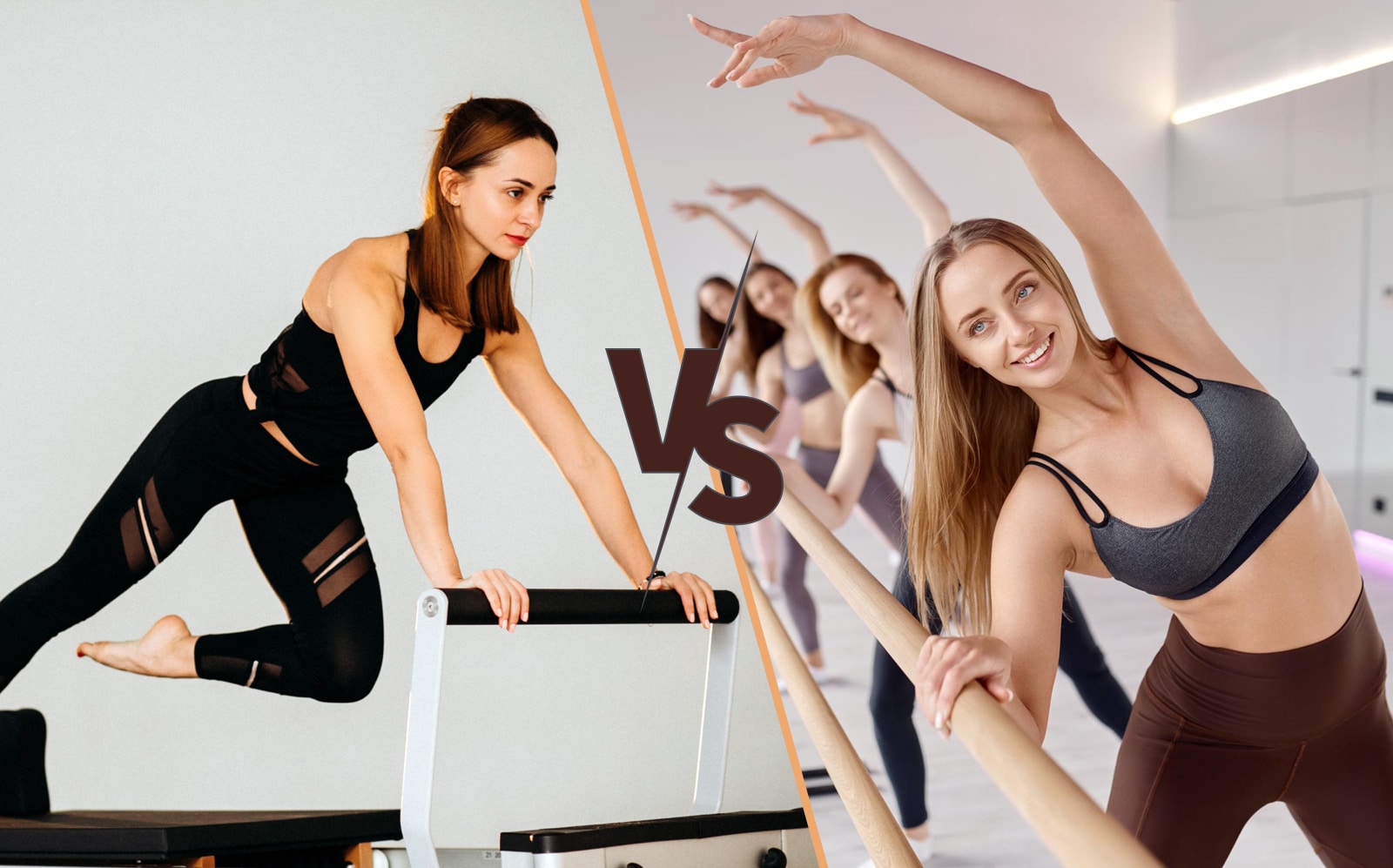
Pilates and barre have been around for more than half a century, but their popularity continues to grow year after year. That’s why it doesn’t surprise me when clients ask me what I think about these two training methods.
Unquestionably, you can improve your physical shape and health by doing these workouts. A study published in the Journal of Coastal Life Medicine showed that Pilates and barre can significantly reduce the severity of premenstrual syndrome (PMS) symptoms after an eight-week exercise program (1). This is an excellent indicator of Pilates and barre’s far-reaching effect on health.
Yet, many are unsure which one to choose. In this article, I’ll analyze their features, types, benefits, and differences to help you determine the best fitness regimen according to your needs.
What is Pilates?
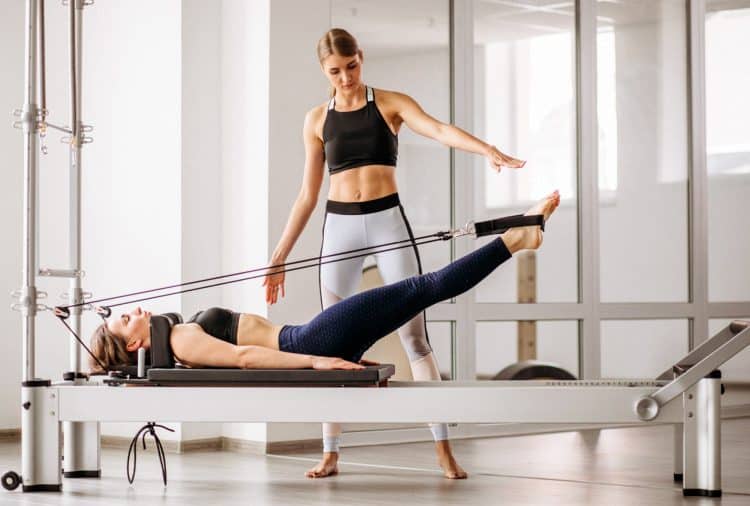
Joseph Pilates created Pilates in the early 20th century. You will also find it under the name “Contrology” because that is what Mr. Pilates called it. However, this training regimen is globally known only by the last name of its inventor.
Pilates focuses on strengthening the core since that is the foundation for all movement. Pilates is a full-body workout that starts from your core. Strengthening these muscles gives you a solid center, helps you move better, and supports your spine. Pilates is a popular choice for those afflicted by back pain.
In addition to core strength, Pilates improves flexibility, mobility, and upper-body muscular endurance. Doing just two 60-minute Pilates sessions per week can lead to immense progress in these regards. (2)
Breathing is a fundamental aspect of Pilates. Syncing your breath with your movements makes you more aware of how your body works. Mindful breathing promotes relaxation and reduces stress.
Overall, Pilates is all about making you feel good inside and out. Such a holistic approach suits people who don’t like strenuous gym workouts or jogging.
Types of Pilates
The fitness industry has advanced immensely in the last 100 years since Pilates was invented, so it is not surprising that we have several versions of Pilates today.
I have listed the three most famous Pilates variations below.
- Reformer Pilates: A specialized piece of equipment called a reformer consists of a sliding carriage, springs, and adjustable resistance settings. The reformer adds an element of resistance training to Pilates.
- Clinical Pilates: Also known as rehabilitation Pilates, this is a specialized form of Pilates for individuals with specific rehabilitative needs or medical conditions. This type of Pilates focuses on therapeutic exercises designed to address injuries, improve mobility, and alleviate pain. Such a workout program should be developed jointly by a physiotherapist and a Pilates trainer.
- Contemporary Pilates: Contemporary Pilates is an umbrella term for modernized versions of classical Pilates that combine old-school and modern approaches.
- Classical Pilates: The original method developed by Joseph Pilates himself. It emphasizes precise movements, focusing on core strength, flexibility, and mind-body connection.
- Mat Pilates: Mat Pilates involves performing Pilates exercises exclusively on a mat, using body weight. It is very popular since it can be practiced virtually anywhere with minimal equipment.
- Stott Pilates: This is a contemporary approach to Pilates. It integrates modern principles of exercise science and rehabilitation. Stott Pilates emphasizes natural spine alignment and biomechanics, offering a more contemporary and comprehensive approach to Pilates training.
- Winsor Pilates: It is a Pilates program developed by Mari Winsor. The focus is on dynamic movements. Winsor Pilates aims to sculpt and tone the entire body while improving flexibility and posture.
- Power Pilates: Power Pilates is a vigorous and intense form of Pilates. It builds strength, endurance, and cardiovascular fitness, unlike regular Pilates.
- 3-2-1 Pilates: A structured approach to Pilates training. The name refers to the ratio of repetitions performed for each exercise: three sets of strength, two sets of flexibility, and one set of endurance exercises.
It is hard to say that these variations are inherently superior to traditional Pilates. You could try each and settle on what works best for you.
Tip: Try our calories burned Pilates calculator.
What is Barre?
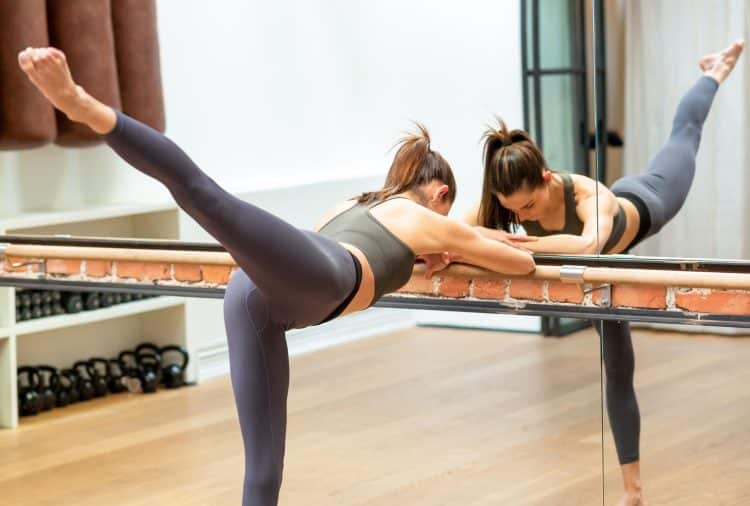
Originating in the 1950s, barre was developed as a training method by German dancer Lotte Berk. She was dealing with a back injury and used her ballet training to create exercises to help her recover.
Berk’s workouts used a ballet barre for support, and hence the name. She mixed in bits of ballet, dance, Pilates, and yoga to get stronger and improve flexibility.
People loved Berk’s approach, and soon she opened up the first Barre studio in London. From there, the word spread, and Barre became super popular worldwide. Later, her student opened a studio in New York, and today, celebrities like Natalie Portman and Maddona also like Barre.
Over time, Barre has evolved to include all sorts of exercises, not just ballet stuff. It became a full-body workout that anyone can do, regardless of age or fitness level.
Types of Barre
Similar to Pilates, classic Barre remains the most popular, but new types of Barre have emerged over the years.
- Cardio Barre: These classes combine regular Barre exercises and higher-intensity elements to elevate the heart rate, burn extra calories, and boost endurance.
- Barre Fusion: Blends elements from various fitness modalities, such as yoga, Pilates, strength training, sport-specific movements, and dance, to create a dynamic and versatile workout.
- Classic Barre: These classes adhere closely to the traditional Barre method. It includes ballet-inspired movements, isometric contractions, and small range-of-motion exercises performed at a stationary ballet barre.
- Yoga Barre: It combines elements of traditional Barre with yoga-inspired movements and poses.
- Pilates Barre: Integrate principles and exercises from Pilates with traditional Barre movements.
- Booty Barre: Focuses on training the lower body, particularly the glutes, thighs, and hips. Booty Barre classes often feature dynamic sequences set to upbeat music for a fun and energetic workout.
- Barre3: A unique blend of ballet barre, yoga, and Pilates-inspired movements developed by fitness expert Sadie Lincoln. Barre3 classes combine strength and cardio.
- Pure Barre: A popular Barre franchise known for its intense and challenging workouts. Pure Barre classes consist of isometric movements, high repetitions, and targeted exercises to fatigue muscles.
In almost every barre studio, you will see some new versions. Nevertheless, the difference is usually negligible and aligns with the classic Barre principles.
What is the Difference Between Barre and Pilates?
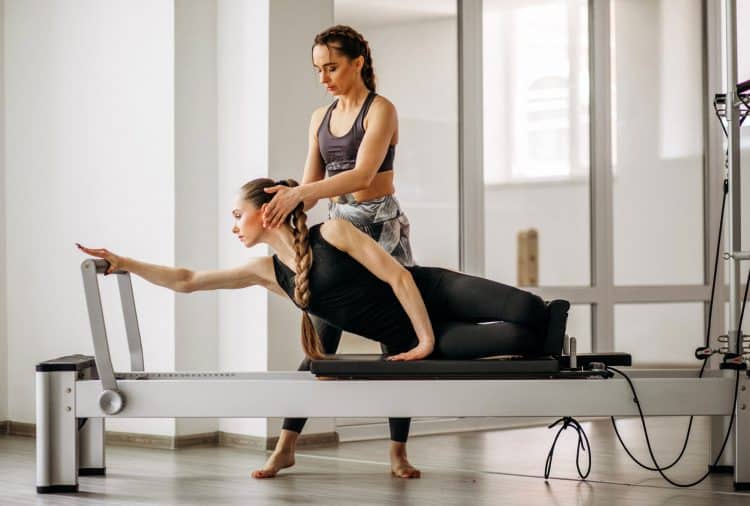
There are numerous differences between Barre and Pilates. One might say they are practically incomparable. I could agree with that to some extent, but they still have certain similarities that I will talk about later.
Since most people often compare the two, I think it is necessary to explain all the differences.
Primary Focus
Pilates primarily focuses on developing core strength, improving flexibility, and enhancing overall body awareness through controlled movements and breathwork.
In contrast, barre emphasizes toning muscles, particularly in the arms, legs, and glutes. Ballet-inspired movements and isometric contractions are entirely different from Pilates movements.
Target Market
Generally, both are suitable for people of all ages and fitness levels. However, Pilates is usually chosen by those who need to improve their strength and posture.
Barre classes appeal more to those who like dance or ballet-inspired workouts. Hence, at least 80% of those attending barre classes are women. However, men can also benefit from barre training.
Equipment and Environment
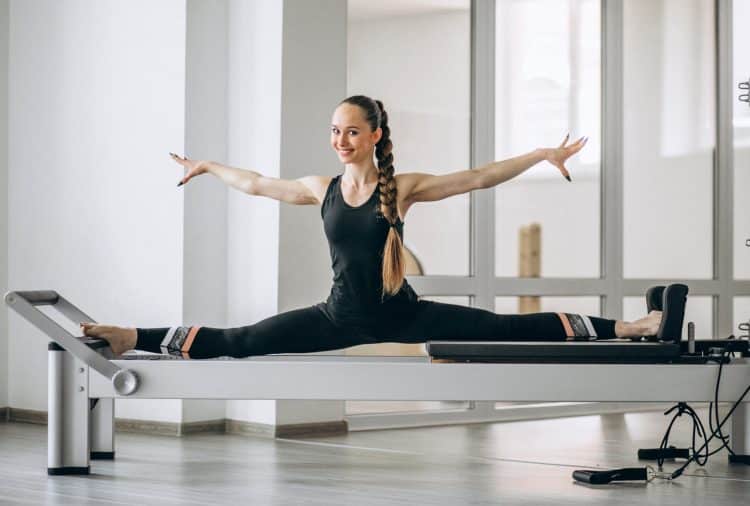
Pilates workouts can be performed on a mat, but using specialized equipment such as a reformer, Cadillac, or chair is common.
Barre workouts typically require minimal equipment, primarily a ballet barre and occasionally small props such as light hand weights, resistance bands, or stability balls. Classes are often conducted in a studio setting with mirrored walls and ballet bars for support during exercises.
Movement
Range of motion is one of the most significant differences. Pilates exercises involve working through a muscle’s full ROM with fluidity and control.
In barre classes, movements are often dynamic and rhythmic, but the range of motion is small. The goal of Barre is to improve muscle tone, but it’s improbable that it will increase hip range of motion.
Mind-Body Connection
The mind-body connection is one of the foundations of Pilates. While barre workouts also promote body awareness, the focus leans more towards the physical aspects of movement and muscle engagement.
Similarities of Pilates and Barre
What characteristics do these two share? Let’s find out.
- Bodyweight Resistance: Pilates and barre training rely primarily on bodyweight resistance, and this is one of their two main similarities. To be clear, I am talking about classic Pilates and barre here, not reformer Pilates or other similar variations. Using your body weight as resistance makes these workouts suitable even for seniors.
- Low-Impact Nature: Pilates and barre workouts are intrinsically low-impact. So, you can engage in these workouts even if you have joint issues, injuries, or mobility limitations. It is practically impossible that these gentle, controlled movements will cause or worsen an injury. If you’re injured or recovering, you must get a doctor’s clearance before doing Pilates, barre, or any other workout.
Choosing Between Pilates and Barre
You can’t decide which one is better for you if you don’t consider the following factors:
- Fitness Goals: Begin by identifying your specific fitness objectives. Are you looking to improve core strength and increase flexibility? You should pick Pilates. Do you want to enhance your flexibility? Barre should be your pick.
- Preferences: This is very important when choosing a fitness program, and many overlook it. If you don’t enjoy something, you won’t persevere. You must genuinely enjoy and look forward to training, or you will lose motivation after some time.
- Accessibility: Consider the availability of Pilates and barre classes in your area. If you have to drive an hour to the studio, it increases your odds of quitting before achieving your training objectives.
Contrary to what most people think, you don’t have to choose between Pilates or barre. Combining both is a viable option. However, the key to success lies in being consistent.
Pros and Cons of Pilates
Here are the advantages and disadvantages of Pilates:
| Pros | Cons |
| Core strength | Could be expensive |
| Range of motion | Sometimes too monotonous |
| Injury prevention | Limited cardiovascular benefits |
| Customizable | |
| Low injury risk |
Pros and Cons of Barre
Benefits and drawbacks of barre include:
| Pros | Cons |
| Improved posture | Lack of Barre studios |
| Low-impact | Muscle building |
| Easy to learn | Limited cardiovascular benefits |
| Interesting for dance enthusiasts | |
| Flexibility |
FAQs
Can Pilates and barre help with weight loss?
Pilates and barre can contribute to weight loss by putting you in a calorie deficit, building muscle mass, and boosting metabolism. However, pairing exercise routines with a calorie deficit is essential since it is the cornerstone of weight loss.
Can I combine Pilates and barre in the same fitness routine?
Absolutely, you can blend Pilates and barre into your fitness routine. Each offers unique benefits. Pilates will build your core strength and flexibility, while barre is excellent for toning muscles and building endurance.
How do Pilates and barre workouts compare in terms of intensity?
When it comes to intensity, Pilates workouts usually fall in the low to moderate range. On the flip side, Barre workouts involve ballet movements and isometric contractions. So, the intensity can vary from low to high depending on the style of the class and the instructor.
What are modifications for pregnant women in Pilates and barre classes?
It’s generally safe for pregnant women to join Pilates and barre classes. But you must talk with your doctor first and inform your instructors about your pregnancy. In Pilates, you should skip exercises that involve lying flat on your back after the first trimester. In barre classes, it’s best to avoid exercises that require a lot of twisting or balance challenges.
Are there any specific certifications I should look for in a Pilates or barre instructor?
When choosing a Pilates or Barre instructor, look for certifications from reputable organizations like the Pilates Method Alliance (PMA) or the Barre Intensity program. Remember, it’s not just about the certifications — experience working with clients matters just as much.
Wrapping Up
Without a doubt, these two exercise methods are fantastic options for those seeking low-impact, fun, and effective workouts. They can help you improve core strength and flexibility and even speed up rehabilitation. (3)
Which one you choose will depend on your training objectives and preferences.
However, as a strength and conditioning coach, I must say both have strengths and shortcomings. Thus, I cannot recommend them to advanced trainers, seasoned gym goers, and athletes as a substitute for weight training, plyometrics, and cardio.
Let me know in the comment section if you have tried Pilates and barre.
References
Fitness Volt is committed to providing our readers with science-based information. We use only credible and peer-reviewed sources to support the information we share in our articles.
- Vasudevan, Velkumar & Elayaperumal, Shanmugananth. (2023). Effects of Barre Exercise Versus Pilates Versus Aerobic Exercise on Pre-Menstrual Syndrome Among College Going Coastal Students. 2440-2451.
- Kloubec JA. Pilates for improvement of muscle endurance, flexibility, balance, and posture. J Strength Cond Res. 2010 Mar;24(3):661-7. doi: 10.1519/JSC.0b013e3181c277a6. PMID: 20145572.
- Byrnes K, Wu PJ, Whillier S. Is Pilates an effective rehabilitation tool? A systematic review. J Bodyw Mov Ther. 2018 Jan;22(1):192-202. doi: 10.1016/j.jbmt.2017.04.008. Epub 2017 Apr 26. PMID: 29332746.
Article Updates Timeline:
Our editorial team experts constantly update the articles with new information & research, ensuring you always have access to the latest and most reliable information.
February 17, 2024
Written By
Filip Maric, PT
Reviewed By
Vidur Saini