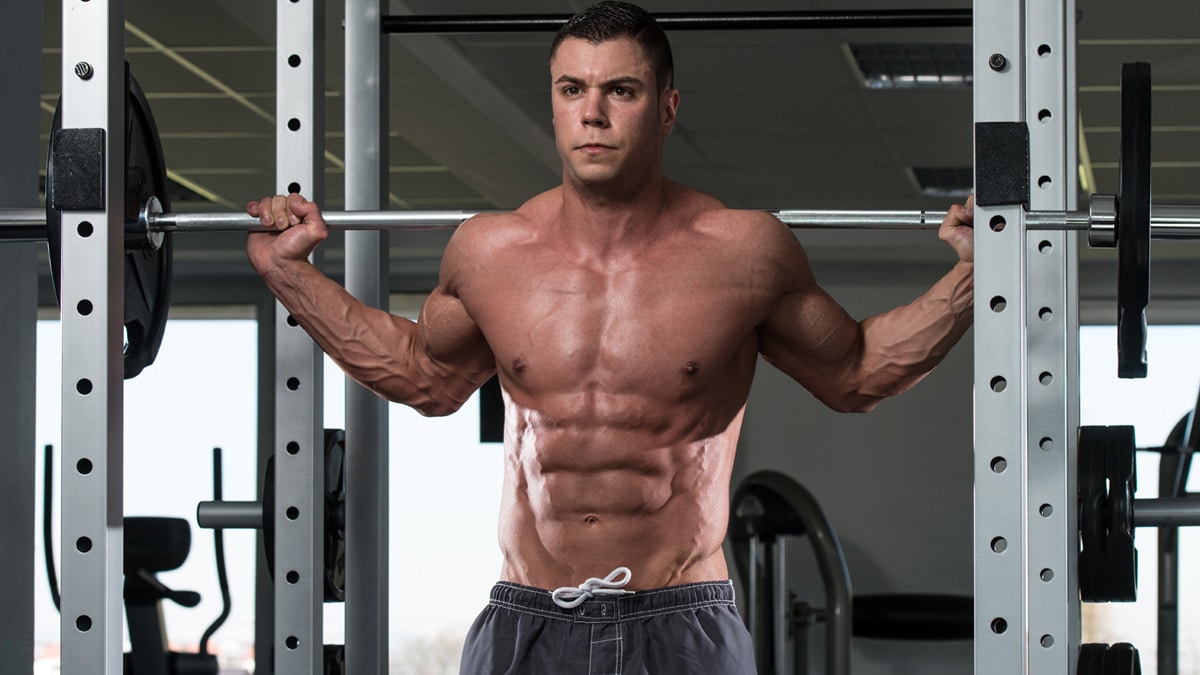
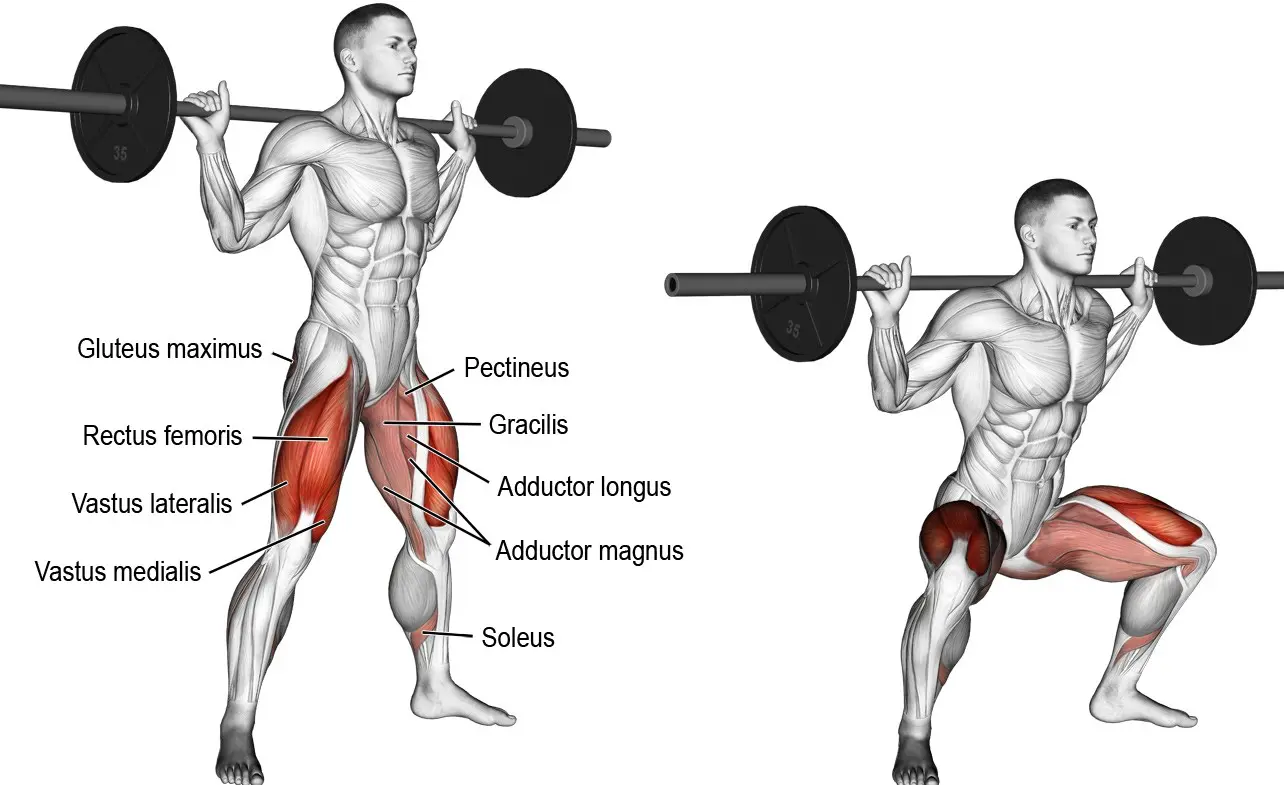
Squats primarily train the quadriceps, gluteus maximus, and adductor magnus. The hamstrings and calves assist and stabilize, while the spinal erectors, abdominal wall, obliques, and upper back brace the torso and support the load.
The exact share of work changes with the squat variation, depth, body proportions, and load. This guide focuses on which muscles contribute and what that means for training. For stance, bar path, leverage, and technique, use our separate squat biomechanics guide.
What Muscles Do Squats Work?
A squat combines knee extension, hip extension, ankle control, and trunk bracing. The quads straighten the knees. The gluteus maximus and adductor magnus help extend the hips. Muscles around the ankles, spine, abdomen, and upper back keep the movement stable enough for the legs to produce force.
| Muscle group | Main role | How much the squat trains it |
|---|---|---|
| Quadriceps | Extend the knees as you stand up. | Primary mover |
| Gluteus maximus | Extends the hips out of the bottom. | Primary mover |
| Adductor magnus | Assists hip extension and controls the thigh. | Major contributor |
| Hamstrings | Help stabilize the hip and knee. | Secondary contributor |
| Calves | Control the ankle and help maintain foot pressure. | Secondary contributor |
| Spinal erectors | Resist trunk flexion under load. | Major stabilizer |
| Abs and obliques | Create trunk stiffness and resist unwanted motion. | Major stabilizer |
| Upper back | Supports the bar and maintains torso position. | Major stabilizer in loaded squats |
This ranking matters because a muscle can work hard without being the main source of movement. Your abs may fatigue during heavy squats, for example, but the quads, glutes, and adductors still produce most of the force that moves you out of the bottom.
The Primary Movers: Quads, Glutes, and Adductors
The four quadriceps muscles straighten the knee. They work through the descent to control knee flexion and through the ascent to extend the knee. Squats with substantial knee travel and a relatively upright torso are often chosen when quad development is the priority, although individual anatomy and technique still affect the result.
The gluteus maximus is the largest hip extensor. Its contribution becomes especially important as the hip moves from a flexed position toward standing. In a small EMG study, deeper back squats increased the gluteus maximus contribution compared with partial and parallel depths, while the measured quadriceps and biceps femoris responses did not change significantly across depths. That supports a greater glute demand in that protocol, not a universal rule that deeper is always better for every muscle or lifter (Caterisano et al., 2002).
The adductor magnus sits on the inner thigh but also has a strong hip-extension role. It helps bring the thigh back toward the torso as you rise. Stance width changes hip position and may change where a lifter feels the exercise, but research does not show a simple rule that a wider stance always produces more overall adductor activation (Paoli et al., 2009).
Secondary Muscles and Stabilizers
Squats involve more than the three main movers, but involvement does not mean equal growth potential.
- Hamstrings cross both the hip and knee. During a squat, motion at one joint can offset motion at the other, which limits how much their length changes. They assist and stabilize, but squats are not a complete substitute for hinges and leg curls.
- The soleus and gastrocnemius help control the ankle and keep the lower leg stable. Direct calf work is still useful when calf growth is a goal.
- The spinal erectors resist the tendency of the torso to fold forward. Their demand rises as the load and trunk moment increase.
- The traps, rhomboids, rear delts, and lats help support the bar and maintain torso position in front and back squats.
- The glute medius and smaller hip muscles help control the femur and keep the pelvis stable, especially in unilateral variations.
If overall leg development is the goal, combine squats with a hip hinge, a knee-flexion exercise for the hamstrings, calf work, and unilateral training. Our leg day workouts show how those patterns can fit into complete sessions.
Do Squats Work Your Abs?
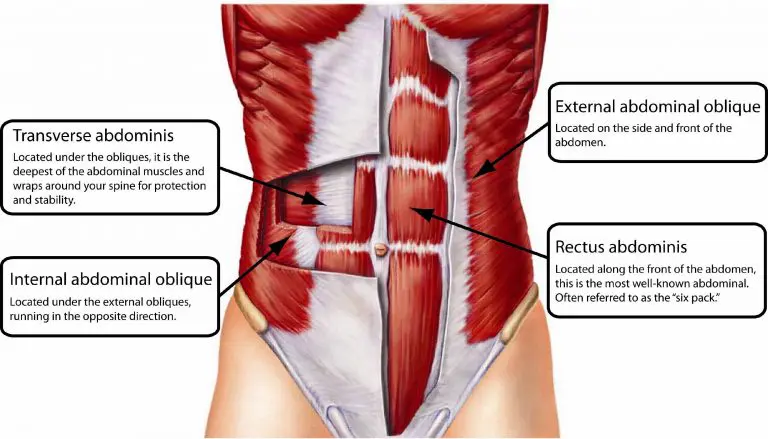
Yes. Squats train the abs mainly through loaded isometric bracing. The rectus abdominis, obliques, transverse abdominis, diaphragm, and pelvic floor work together to create pressure and resist unwanted spinal movement while the hips and knees move.
In a study of 12 resistance-trained men, rectus abdominis and external oblique activation during a six-repetition-max back squat did not differ significantly from a weighted prone bridge. The squat produced greater erector spinae activation. This shows that the abdominal wall contributes substantially during a heavy squat, but acute EMG does not prove long-term ab growth or show that squats replace direct trunk training (van den Tillaar and Saeterbakken, 2018).
| Core function | What a squat provides | Useful addition when needed |
|---|---|---|
| Bracing under load | Trunk stabilizers work to maintain torso position as load increases. | Front squats, carries, paused squats |
| Anti-extension | The trunk resists arching or losing rib position. | Ab wheel rollouts, dead bugs |
| Anti-rotation | Greater challenge in unilateral or uneven-load variations. | Pallof presses, suitcase carries |
| Spinal flexion | Little dynamic flexion because the torso remains braced. | Cable crunches, reverse crunches |
Squats can improve your ability to brace, but direct ab training remains useful for hypertrophy and for trunk functions the squat does not train through a large range of motion. Lower body-fat levels generally make the abs more visible. Nutrition affects body fat, while abdominal muscle size, anatomy, and fat distribution also influence appearance. Our washboard abs guide covers both training and nutrition.
How Squat Variations Shift Muscle Emphasis
Variation changes joint angles and loading demands, but it rarely switches a muscle completely on or off. Treat the table below as a selection guide, not an EMG ranking.
| Variation | Likely emphasis | Best reason to choose it |
|---|---|---|
| High-bar back squat | Quads, glutes, adductors, trunk | Balanced strength and hypertrophy |
| Low-bar back squat | Greater hip and lower-back demand from a more inclined torso | Powerlifting-specific practice and heavier loading |
| Front squat | Quads, upper back, and trunk with a more upright torso | Using less load while maintaining strong lower-body recruitment |
| Goblet squat | Quads, glutes, and anterior trunk | Learning the pattern and training with limited equipment |
| Bulgarian split squat | Quads, glutes, adductors, and hip stabilizers | Unilateral strength and reducing side-to-side loading gaps |
| Hack or Smith squat | Quads and glutes with less balance demand | Stable hypertrophy work when bracing or balance limits the set |
Front squats are often chosen for an upright, knee-dominant pattern, but they have not consistently produced greater measured quadriceps activation than back squats. One comparison found similar overall muscle recruitment with lower loads and lower compressive forces in the front squat (Gullett et al., 2009).
High-bar and low-bar squats also differ more clearly in mechanics than in a simple list of muscles. A matched-load study found greater rectus femoris, vastus medialis, and lower erector spinae activity in the high-bar squat. The controlled protocol should not be expanded into a universal claim that one style builds every hip muscle better (van den Tillaar et al., 2020).
For a practical side-by-side comparison, read back squat vs. front squat. Use the biomechanics guide for detailed stance, depth, and bar-path decisions.
Are Squats Enough for Complete Leg Development?
Squats cover knee extension, hip extension, and trunk bracing well. They do not train every lower-body function through a full range. The hamstrings receive limited shortening work, the calves are not loaded through the same range as a calf raise, and the hip extensors can benefit from a dedicated hinge.
| If this is your priority | Keep the squat for | Add this |
|---|---|---|
| Quad size | Loaded knee extension | Leg press, hack squat, or leg extension |
| Glute size | Hip extension from a flexed position | Hip thrust, Romanian deadlift, or split squat |
| Hamstring size | Hip and knee stability | Romanian deadlift plus a leg curl |
| Calf size | Ankle stability | Straight-leg and bent-knee calf raises |
| Ab development | Heavy bracing | Loaded flexion, anti-extension, and carries |
| Single-leg control | Bilateral strength | Split squats, lunges, or step-ups |
The useful question is not whether squats are enough in the abstract. It is whether your program includes the joint actions and weekly volume required for your goal. Squats can remain the main lower-body lift without carrying the entire program.
How to Feel the Intended Muscles Without Chasing Sensation
Muscle sensation is feedback, not proof of a good or bad rep. A controlled squat can train the target muscles even when you do not feel a dramatic burn. Use these checks before changing exercises:
- Choose a variation and depth you can repeat without losing balance or trunk position.
- Keep the heel, big toe, and little toe in contact with the floor.
- Let the knees travel in the same general direction as the toes.
- Brace before the descent and maintain pressure through the sticking point.
- Use a load that keeps the final repetitions challenging without changing the movement completely.
If ankle range limits a comfortable squat, our ankle mobility test can help distinguish a mobility restriction from a setup problem. Heel elevation can also be a valid exercise choice, not merely a temporary correction. If you use a belt, the weight lifting belt guide explains how it changes bracing without replacing trunk control.
Common Questions About Squat Muscles
Do squats build hamstrings?
They involve the hamstrings, but usually do not replace hip hinges and knee-flexion exercises when hamstring growth is the goal.
Do squats build calves?
The calves stabilize the ankle during squats. Add calf raises if you want to train them through a larger loaded range of motion.
Which squat is best for quads?
Front squats, high-bar squats, heel-elevated squats, hack squats, and Smith squats all support a knee-dominant pattern. The best choice is the one that lets you use adequate knee flexion, stable technique, and progressive loading without joint pain.
Do squats make your waist thicker?
Squats train the trunk under load, but waist appearance also depends on body fat, abdominal and oblique size, ribcage and pelvis structure, and genetics. Normal squat training does not guarantee a visibly thicker waist.
What if squats hurt?
Stop any variation that produces sharp or worsening pain. Persistent pain, swelling, instability, or loss of function warrants assessment by a qualified clinician. A different squat variation may be more tolerable, but exercise substitution does not diagnose the cause.
Squats Train the Legs and Core
Squats primarily train the quads, gluteus maximus, and adductor magnus. The hamstrings and calves assist, while the spinal erectors, upper back, abs, and obliques stabilize the trunk and load.
Squats do work your abs, especially during heavy bracing, but they do not train every abdominal function or replace direct core work. Use squats as a high-value lower-body lift, then add targeted exercises for the muscles and actions your program still needs.
Sources
- Caterisano A, Moss RE, Pellinger TK, et al. The effect of back squat depth on the EMG activity of 4 superficial hip and thigh muscles. Journal of Strength and Conditioning Research. 2002;16(3):428-432. doi:10.1519/00124278-200208000-00014.
- Schoenfeld BJ. Squatting kinematics and kinetics and their application to exercise performance. Journal of Strength and Conditioning Research. 2010;24(12):3497-3506. doi:10.1519/JSC.0b013e3181bac2d7.
- Hartmann H, Wirth K, Klusemann M. Analysis of the load on the knee joint and vertebral column with changes in squatting depth and weight load. Sports Medicine. 2013;43(10):993-1008. doi:10.1007/s40279-013-0073-6.
- van den Tillaar R, Saeterbakken AH. Comparison of core muscle activation between a prone bridge and 6-RM back squats. Journal of Human Kinetics. 2018;62:43-53. doi:10.1515/hukin-2017-0176.
- Paoli A, Marcolin G, Petrone N. The effect of stance width on the electromyographical activity of eight superficial thigh muscles during back squat with different bar loads. Journal of Strength and Conditioning Research. 2009;23(1):246-250. doi:10.1519/JSC.0b013e3181876811.
- Gullett JC, Tillman MD, Gutierrez GM, Chow JW. A biomechanical comparison of back and front squats in healthy trained individuals. Journal of Strength and Conditioning Research. 2009;23(1):284-292. doi:10.1519/JSC.0b013e31818546bb.
- van den Tillaar R, Knutli TR, Larsen S. The effects of barbell placement on kinematics and muscle activation around the sticking region in squats. Frontiers in Sports and Active Living. 2020;2:604177. doi:10.3389/fspor.2020.604177.