

Assisted Chest Dip (kneeling) vs Lever Incline Chest Press V. 2: Complete Comparison Guide
Assisted Chest Dip (kneeling) vs Lever Incline Chest Press V. 2 — both target your pectorals but they load the chest differently. In this guide you’ll get clear direction on muscle emphasis, equipment needs, technique cues, and which movement suits hypertrophy, strength, or beginner programming. I’ll break down how body angle, force vector, and range of motion change pectoral recruitment, give specific rep ranges and angles (30–45° incline, 40–60° elbow flare), and recommend progressions so you can pick the exercise that best matches your goals.
Exercise Comparison
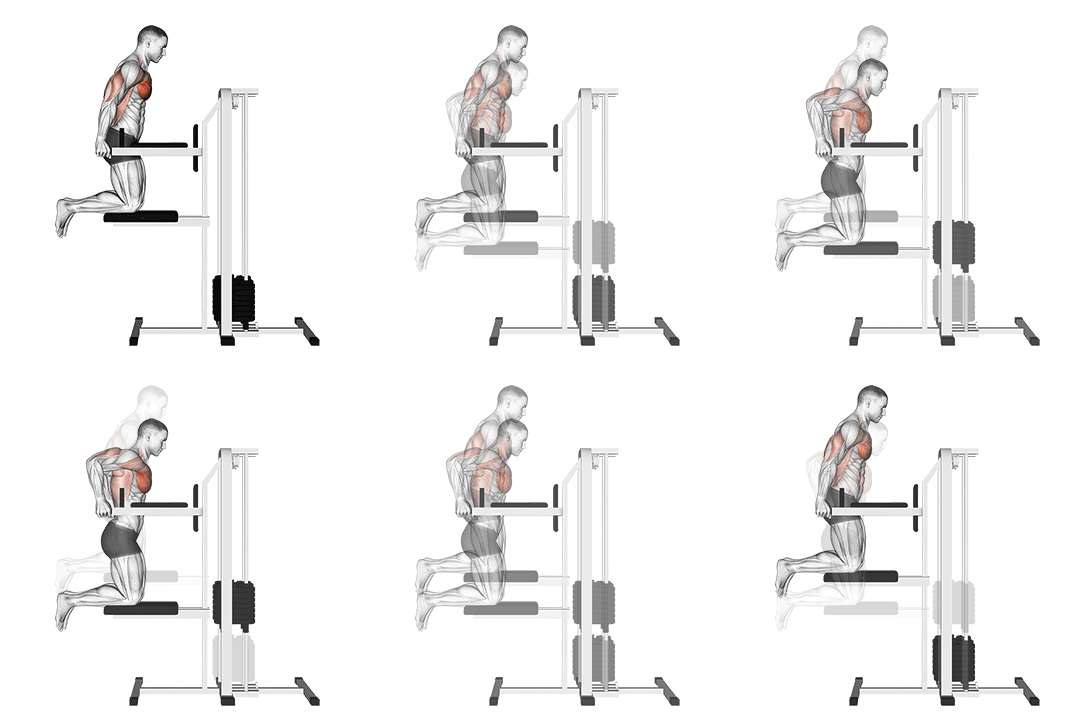
Assisted Chest Dip (kneeling)
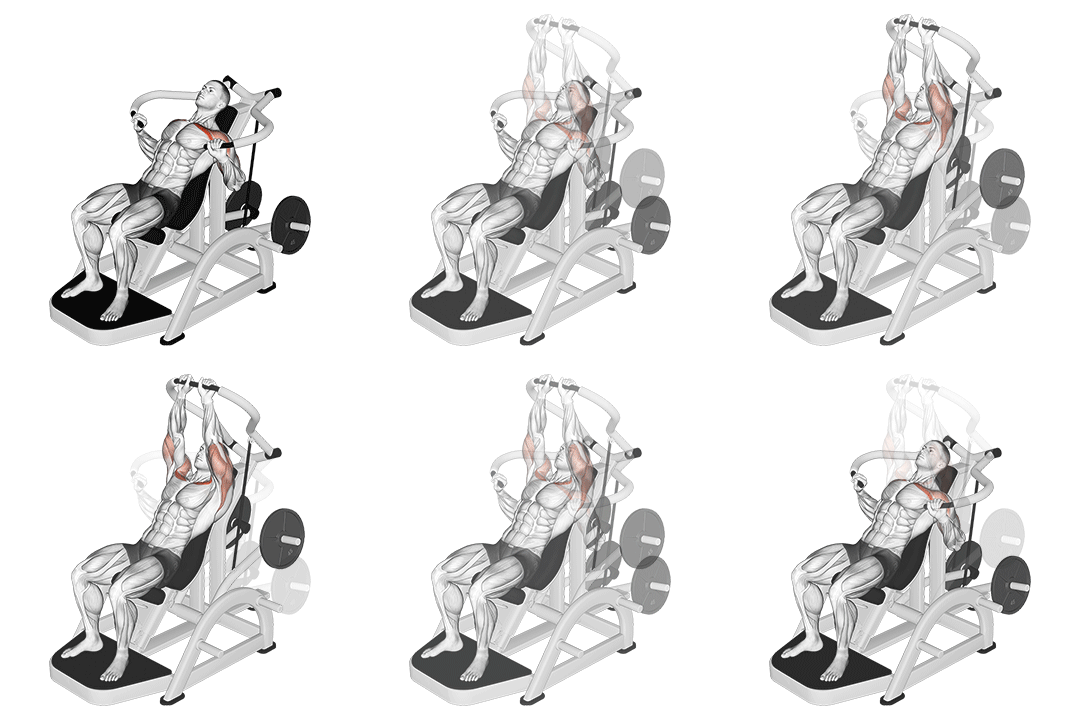
Lever Incline Chest Press V. 2
Head-to-Head Comparison
| Attribute | Assisted Chest Dip (kneeling) | Lever Incline Chest Press V. 2 |
|---|---|---|
| Target Muscle |
Pectorals
|
Pectorals
|
| Body Part |
Chest
|
Chest
|
| Equipment |
Lever
|
Lever
|
| Difficulty |
Beginner
|
Intermediate
|
| Movement Type |
Compound
|
Compound
|
| Secondary Muscles |
2
|
2
|
Secondary Muscles Activated
Assisted Chest Dip (kneeling)
Lever Incline Chest Press V. 2
Visual Comparison
Overview
Assisted Chest Dip (kneeling) vs Lever Incline Chest Press V. 2 — both target your pectorals but they load the chest differently. In this guide you’ll get clear direction on muscle emphasis, equipment needs, technique cues, and which movement suits hypertrophy, strength, or beginner programming. I’ll break down how body angle, force vector, and range of motion change pectoral recruitment, give specific rep ranges and angles (30–45° incline, 40–60° elbow flare), and recommend progressions so you can pick the exercise that best matches your goals.
Key Differences
- Difficulty levels differ: Assisted Chest Dip (kneeling) is beginner, while Lever Incline Chest Press V. 2 is intermediate.
- Both exercises target the Pectorals using Lever. The main differences are in their movement patterns and muscle activation angles.
Pros & Cons
Assisted Chest Dip (kneeling)
+ Pros
- Easy to scale with adjustable assistance — ideal for complete beginners
- Strong sternal pec emphasis when you lean forward, good for lower-chest development
- Requires minimal technical setup; machine stabilizes balance and path
- Translates well to bodyweight progressions and weighted dip variations
− Cons
- Deep range of motion can stress anterior shoulder if scapular control is weak
- Harder to add small, precise load increments compared to lever machines
- Less isolated upper-pectoral (clavicular) emphasis than incline pressing
Lever Incline Chest Press V. 2
+ Pros
- Precise loading for progressive overload and strength cycles
- Consistent path reduces balance demands and isolates pectorals effectively
- Angle (30–45°) targets upper chest (clavicular head) and reduces lower pec bias
- Safer for heavy sets due to constrained lever path and stable seat
− Cons
- Less accessible in smaller gyms or home setups
- Requires careful seat/back adjustment to hit the intended muscle angle
- Slightly higher learning curve to maintain scapular retraction and avoid shoulder elevation
When Each Exercise Wins
The lever incline press lets you load precisely in the 6–12 rep hypertrophy range and target the clavicular head with a 30–45° angle, improving overall chest thickness. The machine’s controlled path reduces compensatory movement so you can maximize time under tension and progressive overload.
For raw strength, consistent loading and safety matter — the lever press supports heavier absolute loads and microloading (2.5–5 lb) for 3–6 rep strength cycles. Its constrained plane reduces joint shear and allows you to focus on force production.
Beginners benefit from the adjustable assistance and simpler motor pattern of the kneeling dip; you can practice full ROM with support and gradually reduce assistance. It builds pressing coordination and helps you develop scapular control before progressing to heavier or more complex presses.
While both need a lever, dips are easier to replicate at home with resistance bands, a bench, or partner assistance. The movement translates to simple, low-equipment alternatives that still load the sternal pecs effectively.
Frequently Asked Questions
Can I do both Assisted Chest Dip (kneeling) and Lever Incline Chest Press V. 2 in the same workout?
Yes — pairing them works well. Use the leverage press as your heavy, low-rep compound and follow with assisted dips for higher-rep volume (8–15) to target the chest from a different angle and increase time under tension.
Which exercise is better for beginners?
Assisted Chest Dip (kneeling) is better for most beginners because adjustable assistance preserves technique and reduces joint stress. It lets you build strength and scapular control before moving to heavier lever pressing.
How do the muscle activation patterns differ?
Dips produce a larger elbow-extension moment and longer pec length at the bottom, increasing sternal head engagement and triceps work. Incline pressing shifts the force vector upward (30–45°), increasing clavicular head activation and reducing relative triceps moment arm.
Can Lever Incline Chest Press V. 2 replace Assisted Chest Dip (kneeling)?
Yes for many goals — the lever press can replace dips when you need precise loading or safer heavy sets, especially for hypertrophy and strength. However, keep dips in your program if you want to build bodyweight pressing ability and reinforce a slightly different chest and triceps synergy.
Expert Verdict
Use the Assisted Chest Dip (kneeling) when you or your clients need an approachable chest press with easy scaling and strong lower-pec stimulus — it’s ideal for beginners and bodyweight progressions. Choose the Lever Incline Chest Press V. 2 when you want precise loading, safer heavy sets, and targeted upper-pec development; set the bench at 30–45° and focus on controlled tempo for 6–12 reps. If your goal is overall chest hypertrophy and progressive overload, prioritize the lever press; if you need accessibility, motor pattern learning, or home-friendly options, prioritize the kneeling assisted dip.
Also Compare
More comparisons with Assisted Chest Dip (kneeling)
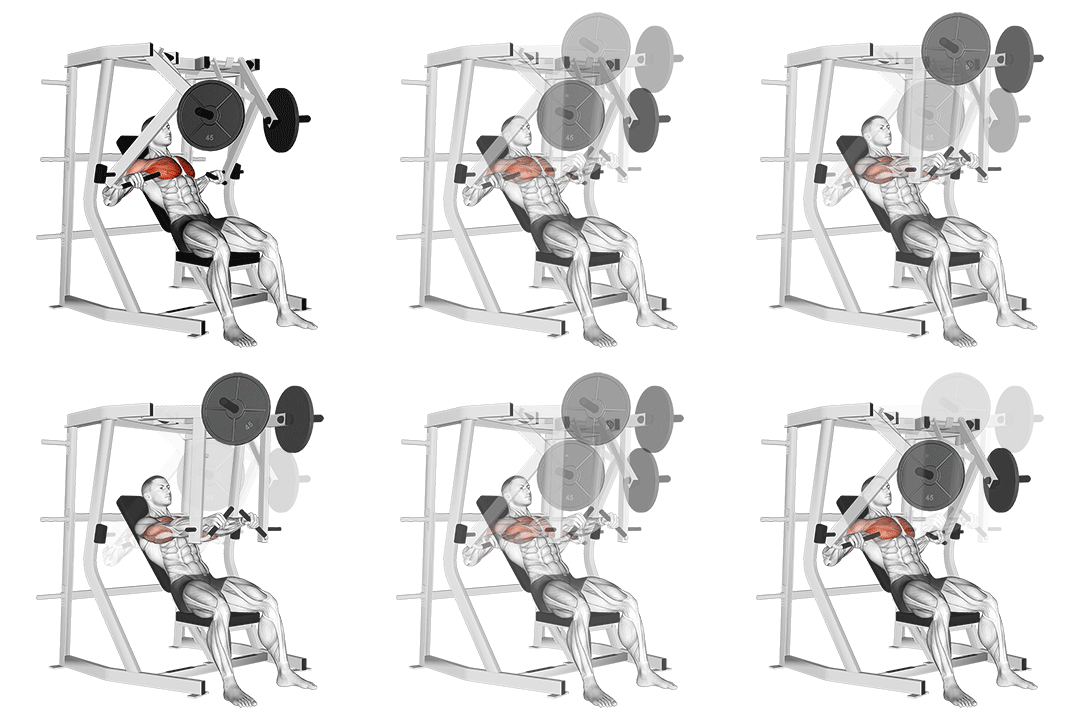
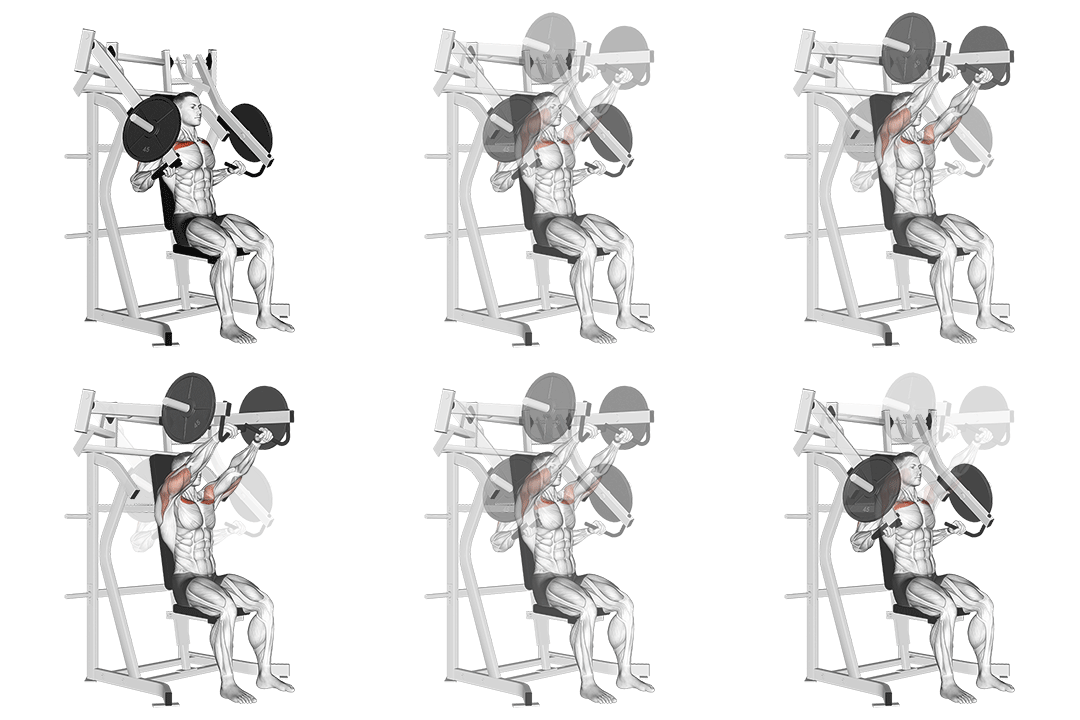
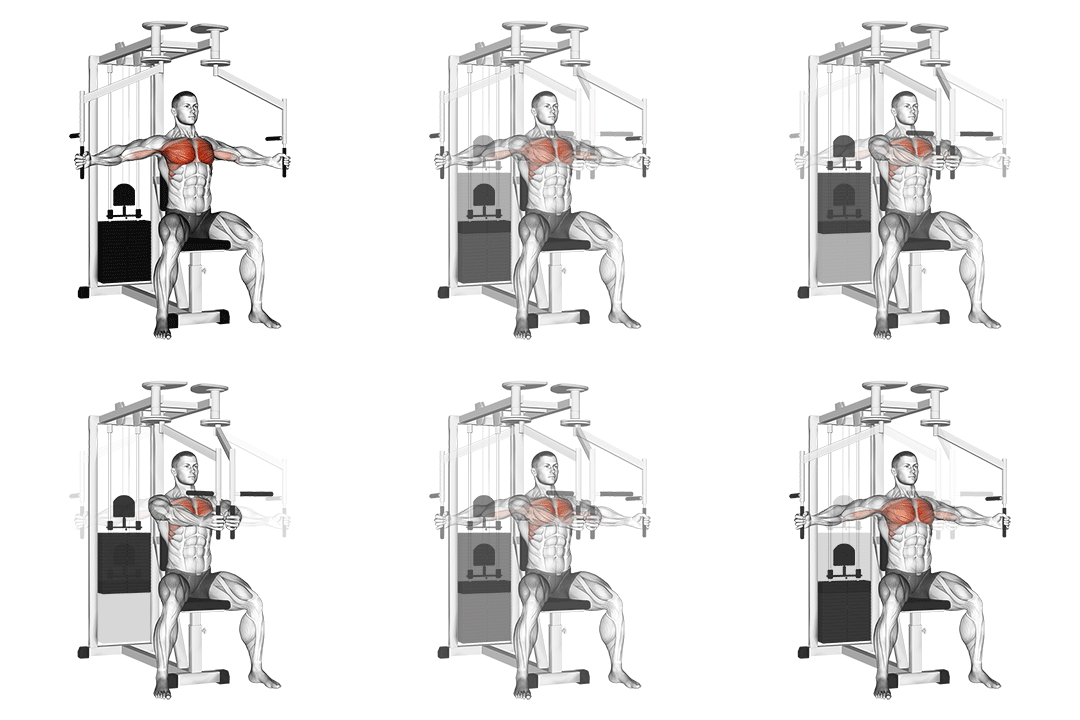
More comparisons with Lever Incline Chest Press V. 2
Compare More Exercises
Use our free comparison tool to analyze any two exercises head-to-head.
Compare Exercises