

Band Alternating V-up vs Band Horizontal Pallof Press: Complete Comparison Guide
Band Alternating V-up vs Band Horizontal Pallof Press — two banded core moves that look similar on paper but serve different roles. You’ll learn how each exercise loads the rectus abdominis, hip flexors, and obliques; how force vectors and length-tension relationships change the stimulus; and practical cues, progressions, and rep ranges so you can pick the right move for strength, muscle growth, or stability. Read on for clear, actionable recommendations and technique notes you can use the next time you train your waist.
Exercise Comparison
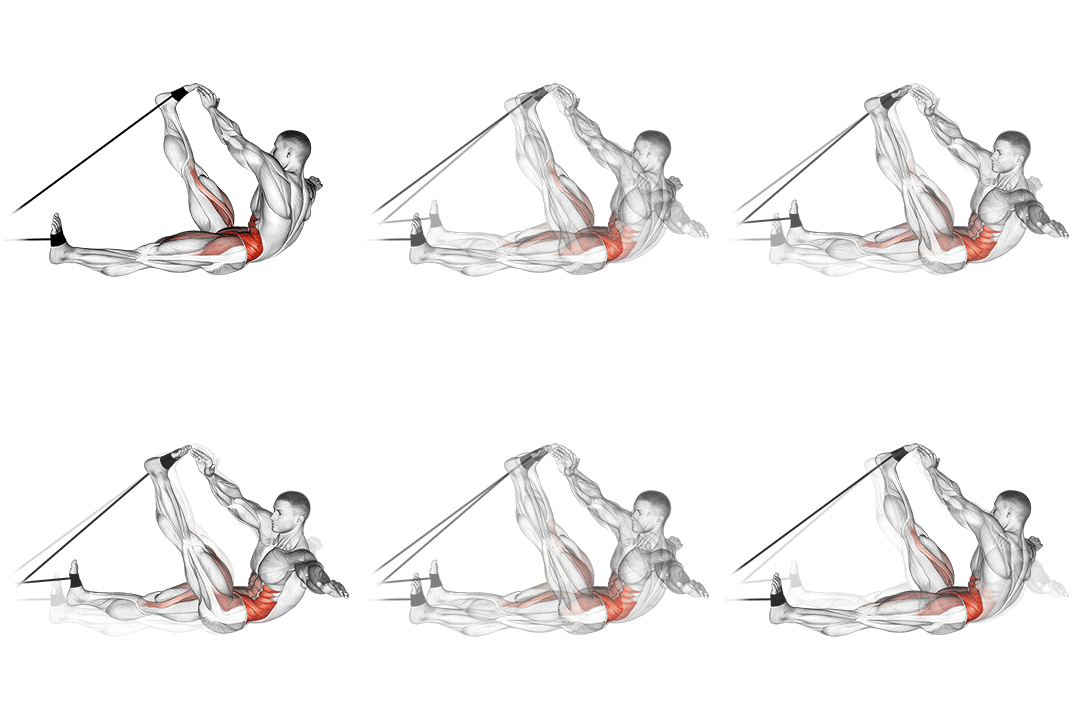
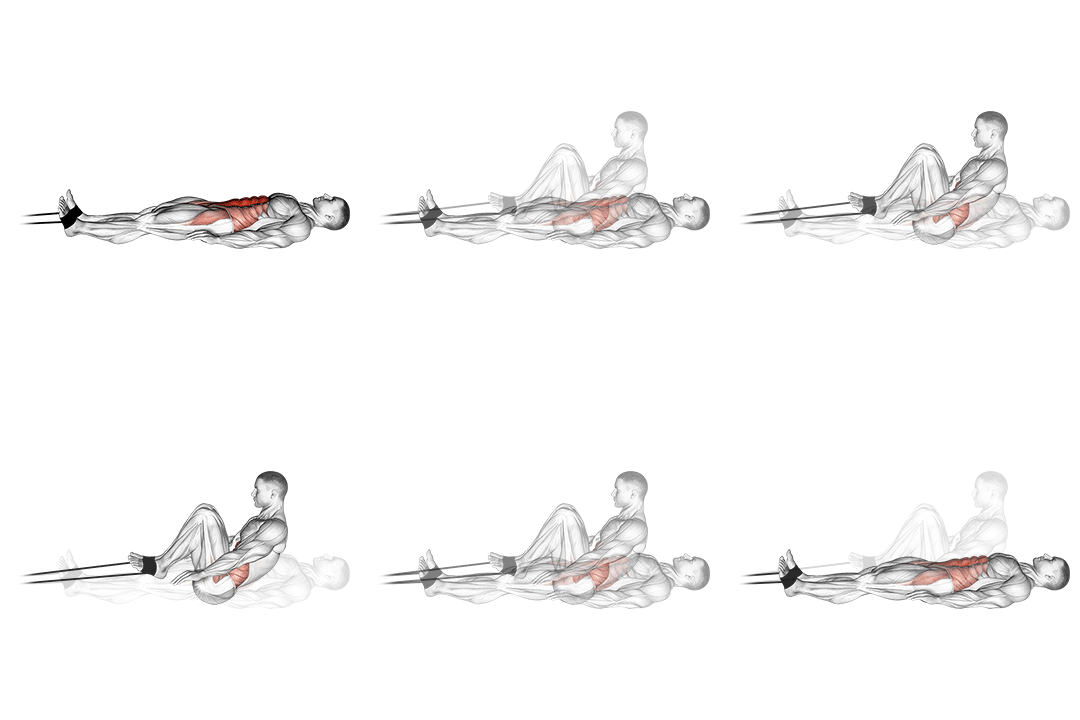
Band Alternating V-up
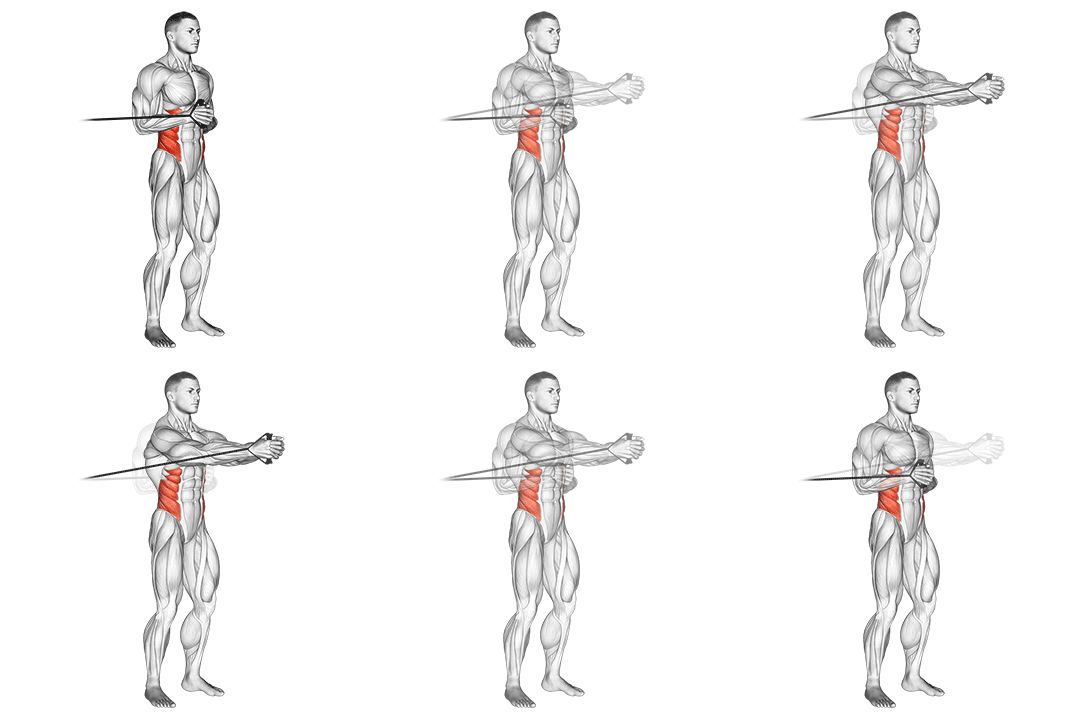
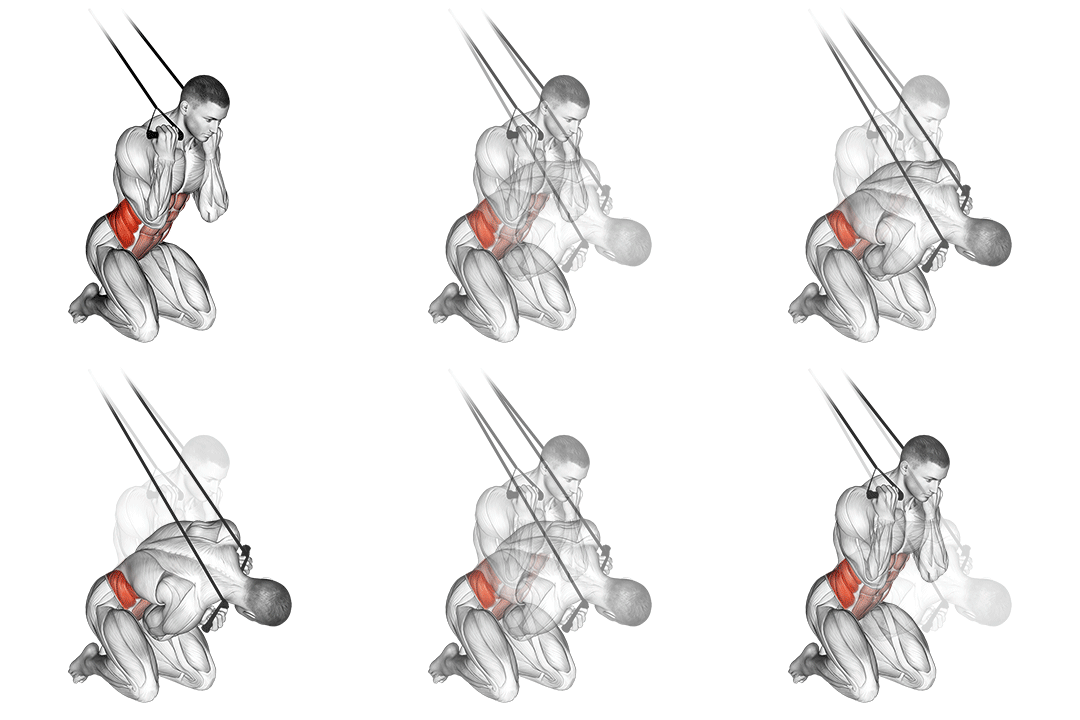
Band Horizontal Pallof Press
Head-to-Head Comparison
| Attribute | Band Alternating V-up | Band Horizontal Pallof Press |
|---|---|---|
| Target Muscle |
Abs
|
Abs
|
| Body Part |
Waist
|
Waist
|
| Equipment |
Band
|
Band
|
| Difficulty |
Advanced
|
Intermediate
|
| Movement Type |
Isolation
|
Isolation
|
| Secondary Muscles |
1
|
2
|
Secondary Muscles Activated
Band Alternating V-up
Band Horizontal Pallof Press
Visual Comparison
Overview
Band Alternating V-up vs Band Horizontal Pallof Press — two banded core moves that look similar on paper but serve different roles. You’ll learn how each exercise loads the rectus abdominis, hip flexors, and obliques; how force vectors and length-tension relationships change the stimulus; and practical cues, progressions, and rep ranges so you can pick the right move for strength, muscle growth, or stability. Read on for clear, actionable recommendations and technique notes you can use the next time you train your waist.
Key Differences
- Difficulty levels differ: Band Alternating V-up is advanced, while Band Horizontal Pallof Press is intermediate.
- Both exercises target the Abs using Band. The main differences are in their movement patterns and muscle activation angles.
Pros & Cons
Band Alternating V-up
+ Pros
- High phasic activation of rectus abdominis and hip flexors for muscle growth
- Clear concentric-eccentric loading — good for hypertrophy and power
- Minimal equipment: one band and floor space
- Easy to program for rep ranges (8–20 reps) and tempo work (2–3 s eccentrics)
− Cons
- Advanced difficulty: requires strong hip flexors and spinal control
- Higher lumbar shear risk with poor technique
- Less emphasis on transverse-plane stability and obliques
Band Horizontal Pallof Press
+ Pros
- Excellent anti-rotation and transverse-plane stability training
- Low technical barrier — suitable for most fitness levels
- Highly scalable via band tension, lever arm, and hold duration (10–60 s)
- Also trains glutes and obliques for pelvic control
− Cons
- Lower peak phasic rectus activation compared to dynamic V-ups
- Requires an anchor point at chest height or appropriate set-up
- Less direct stimulus for hip flexor strength and sagittal-plane power
When Each Exercise Wins
V-ups produce repeated concentric-eccentric cycles of the rectus and hip flexors that stimulate muscle growth better than a static hold. Use 8–20 reps or controlled 3–4 s eccentrics with higher band tension to increase mechanical tension.
Pallof presses build anti-rotational core strength and increase the ability to resist external torque — essential for transferring force through the hips and spine. Work heavier tensions for 8–15 reps or timed holds of 20–40 seconds to raise isometric torque capacity.
Pallof presses let you learn bracing and anti-rotation mechanics with minimal lumbar motion, making them safer and easier to scale than advanced V-ups. Start with light tension and 3–4 sets of 10–20 presses or 20–30 s holds.
Pallof presses require a single band and a simple anchor and scale across fitness levels without demanding large ROM or floor mobility. If you do choose V-ups at home, ensure a soft surface and progress slowly to avoid lumbar strain.
Frequently Asked Questions
Can I do both Band Alternating V-up and Band Horizontal Pallof Press in the same workout?
Yes — pair them but order matters. Do Pallof presses first to establish anti-rotation stability, then perform V-ups to target phasic rectus and hip flexor work; that minimizes compensatory rotation during dynamic reps.
Which exercise is better for beginners?
Band Horizontal Pallof Press is better for beginners because it teaches bracing and anti-rotation control with low spinal motion. Start with light tension and short holds before progressing range or load.
How do the muscle activation patterns differ?
V-ups create phasic concentric-eccentric activation of rectus abdominis and hip flexors across ~45–90° of hip/trunk motion; Pallofs rely on sustained isometric activation to produce anti-rotation torque, engaging obliques and glutes to stabilize the pelvis.
Can Band Horizontal Pallof Press replace Band Alternating V-up?
Not entirely: Pallof presses can replace V-ups for stability and anti-rotation strength but won’t match the dynamic sagittal-plane loading that drives rectus and hip flexor hypertrophy. Use Pallofs when stability is the priority, V-ups when you need phasic rectus development.
Expert Verdict
Choose the Band Alternating V-up when your goal is targeted rectus abdominis and hip flexor development with higher phasic loading — program 3–4 sets of 8–20 reps, emphasize a tight posterior pelvic tilt, and control a 2–3 second eccentric. Pick the Band Horizontal Pallof Press when you want durable anti-rotation strength, improved transverse-plane stability, and safer scaling; aim for 3–5 sets of 8–15 reps or 20–40 second unilateral holds. For a balanced core plan, pair Pallof presses for stability and V-ups for sagittal-plane strength, but sequence Pallofs before high-velocity V-ups to preserve control.
Also Compare
More comparisons with Band Alternating V-up
More comparisons with Band Horizontal Pallof Press
Compare More Exercises
Use our free comparison tool to analyze any two exercises head-to-head.
Compare Exercises