

Band Alternating V-up vs Band Kneeling Twisting Crunch: Complete Comparison Guide
Band Alternating V-up vs Band Kneeling Twisting Crunch — which one should you pick for a stronger, more defined midsection? I’ll walk you through how each exercise loads the rectus abdominis, how secondary muscles like hip flexors and obliques come into play, and which movement fits your experience level and training goals. You’ll get clear technique cues, practical progression options (sets, reps, band tension), and a decisive recommendation for hypertrophy, strength, beginners, and home workouts so you can choose the best move for your program.
Exercise Comparison
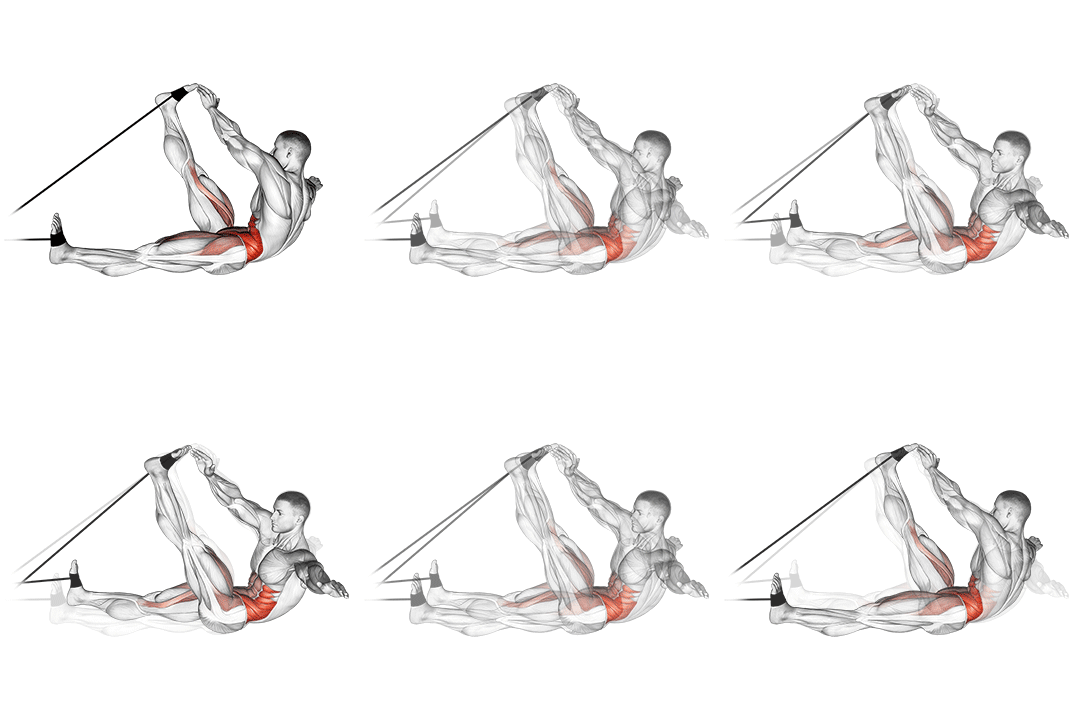
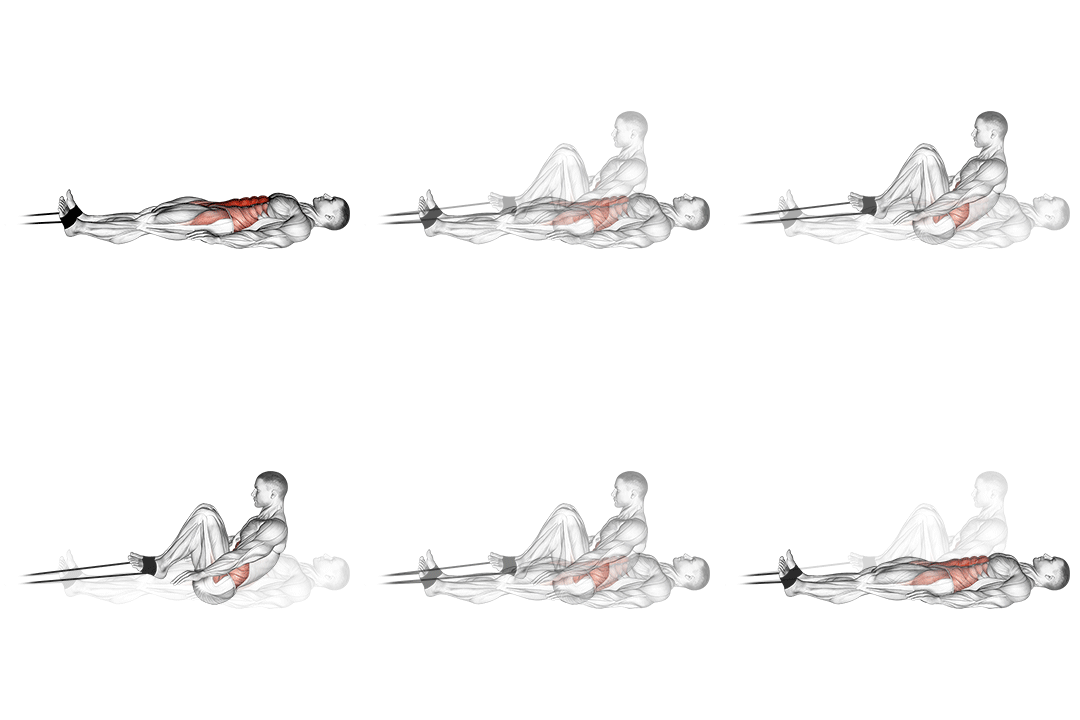
Band Alternating V-up
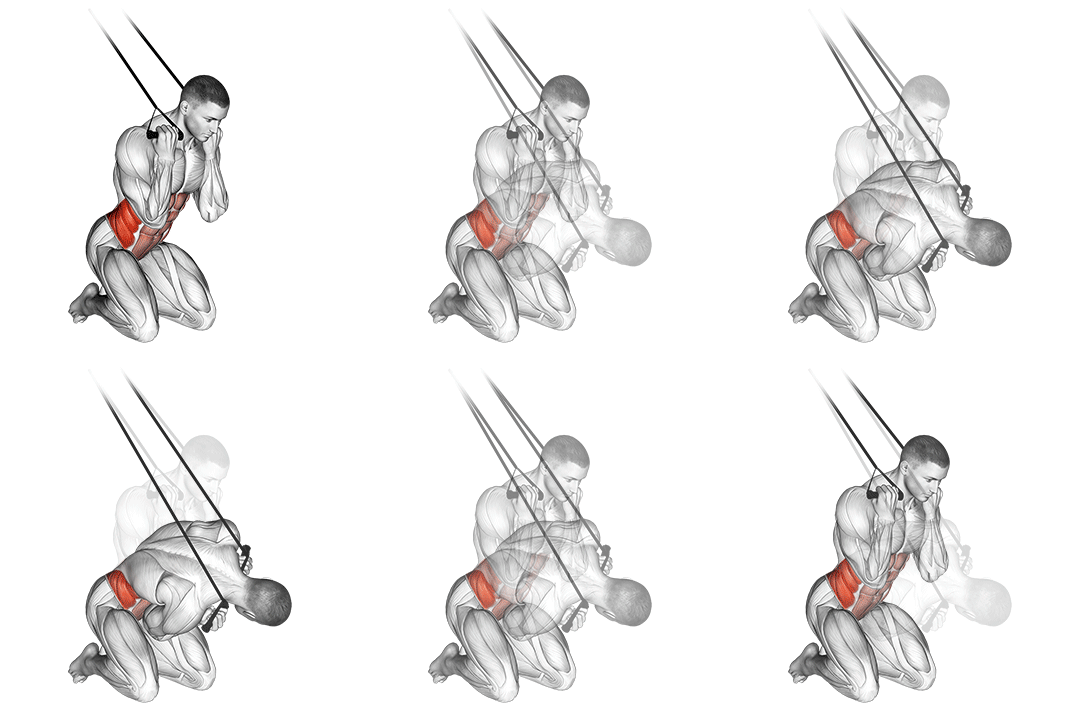
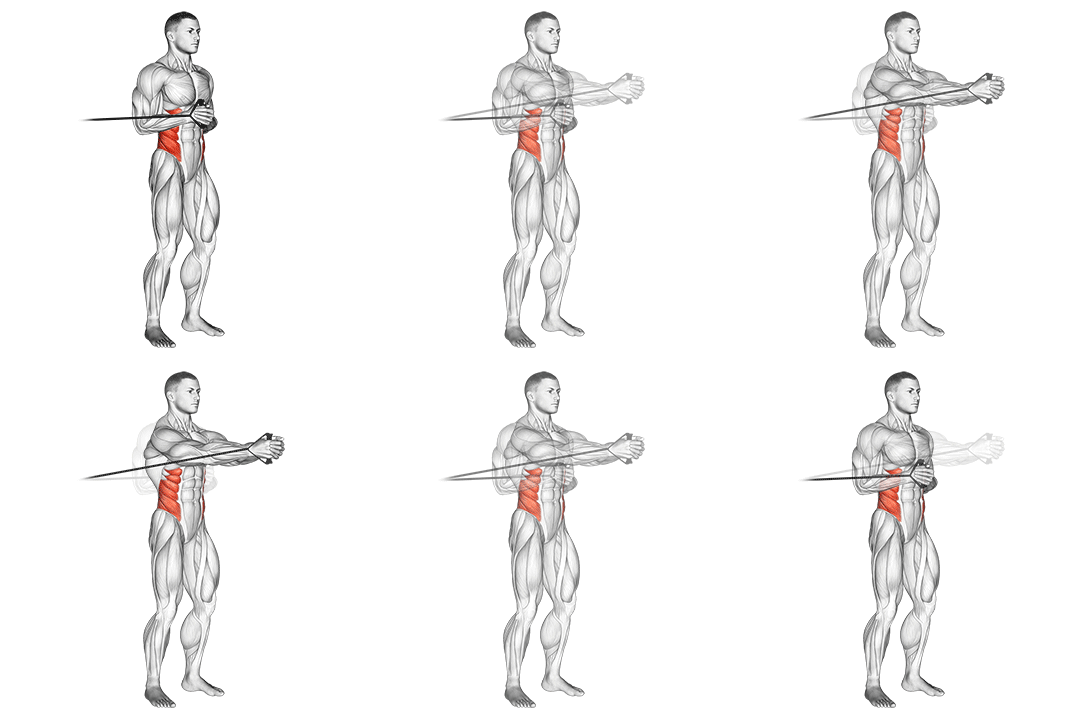
Band Kneeling Twisting Crunch
Head-to-Head Comparison
| Attribute | Band Alternating V-up | Band Kneeling Twisting Crunch |
|---|---|---|
| Target Muscle |
Abs
|
Abs
|
| Body Part |
Waist
|
Waist
|
| Equipment |
Band
|
Band
|
| Difficulty |
Advanced
|
Intermediate
|
| Movement Type |
Isolation
|
Isolation
|
| Secondary Muscles |
1
|
1
|
Secondary Muscles Activated
Band Alternating V-up
Band Kneeling Twisting Crunch
Visual Comparison
Overview
Band Alternating V-up vs Band Kneeling Twisting Crunch — which one should you pick for a stronger, more defined midsection? I’ll walk you through how each exercise loads the rectus abdominis, how secondary muscles like hip flexors and obliques come into play, and which movement fits your experience level and training goals. You’ll get clear technique cues, practical progression options (sets, reps, band tension), and a decisive recommendation for hypertrophy, strength, beginners, and home workouts so you can choose the best move for your program.
Key Differences
- Difficulty levels differ: Band Alternating V-up is advanced, while Band Kneeling Twisting Crunch is intermediate.
- Both exercises target the Abs using Band. The main differences are in their movement patterns and muscle activation angles.
Pros & Cons
Band Alternating V-up
+ Pros
- High rectus abdominis demand through combined hip and spinal flexion
- Unilateral loading improves core symmetry and anti-rotation control
- Large range of motion enhances eccentric strength when you slow the descent
- Easy to increase intensity by using heavier bands or pausing mid-range
− Cons
- Advanced coordination and hip mobility required; steep learning curve
- Greater lumbar flexion stress if pelvic positioning is poor
- Heavier band tension can shift load to hip flexors, reducing pure abdominal emphasis
Band Kneeling Twisting Crunch
+ Pros
- Strong oblique recruitment from rotational force vectors
- More accessible setup and lower mobility demands
- Easier to cue and maintain neutral pelvis, reducing lumbar shear
- Simple to scale with band tension or increased rotation angle
− Cons
- Less hip flexor and full-range rectus loading compared with V-up
- Rotation can overload the lumbar spine if done aggressively
- Provides less overall posterior chain engagement, so limited carryover to hip-driven movements
When Each Exercise Wins
Choose the V-up for hypertrophy because it produces a larger rectus abdominis shortening range and allows heavier progressive overload (aim for 8–15 controlled reps, 3–4 sets). Slowing the eccentric to 3–4 seconds increases time under tension and stimulates muscle growth more effectively.
The V-up builds maximal core strength by combining hip-drive and spinal flexion against band resistance; you can increase force output with heavier bands and unilateral overload to drive absolute strength improvements.
Kneeling twisting crunches are simpler to master, require less hip mobility, and let you feel oblique and rectus contractions quickly; start with 10–15 reps per side using a light band for motor patterning.
Kneeling twists need minimal space and a single anchor point and are easy to scale with common loop bands, making them the more practical choice for home training setups.
Frequently Asked Questions
Can I do both Band Alternating V-up and Band Kneeling Twisting Crunch in the same workout?
Yes — pairing them targets different movement patterns: use V-ups for sagittal overload (3 sets of 8–12) and kneeling twists for rotational work (3 sets of 10–15 per side). Place the V-ups earlier when you’re fresh, and add twists later for accessory oblique volume.
Which exercise is better for beginners?
Band Kneeling Twisting Crunch is better for beginners because it demands less coordination and hip mobility and lets you feel the obliques and rectus contract safely. Start with light band tension and focus on controlled rotation and a 1–2 second concentric.
How do the muscle activation patterns differ?
V-ups produce higher hip flexor and global rectus activation because legs and torso move together through a large sagittal ROM, altering the length-tension curve. Kneeling twists bias oblique activation via rotational force vectors while the rectus contributes to flexion over a shorter range.
Can Band Kneeling Twisting Crunch replace Band Alternating V-up?
It can replace V-ups if your goal is oblique-focused conditioning or you need a lower-risk option, but it won’t match V-ups for hip-flexor-driven rectus overload and eccentric lengthening. Choose replacement based on whether you prioritize rotation and accessibility or maximal sagittal core loading.
Expert Verdict
Use Band Alternating V-ups when you want maximum rectus abdominis overload and advanced core control—program them for 3–4 sets of 8–15 reps with controlled eccentrics and a focus on posterior pelvic tilt to protect the lumbar spine. Use Band Kneeling Twisting Crunches when you want accessible oblique development, safer rotational training, or a beginner-friendly core exercise—perform 3–4 sets of 10–20 reps per side, progressing band tension or rotation angle. If your priority is pure hypertrophy or core strength, pick the V-up; if you need accessibility, rotation practice, or lower injury risk, pick the kneeling twist.
Also Compare
More comparisons with Band Alternating V-up
More comparisons with Band Kneeling Twisting Crunch
Compare More Exercises
Use our free comparison tool to analyze any two exercises head-to-head.
Compare Exercises