

Band Push Sit-up vs Band Bench Press: Complete Comparison Guide
Band Push Sit-up vs Band Bench Press — you can build a stronger midsection or a thicker chest with bands, but the two exercises do very different jobs. I'll walk you through muscle targets, movement mechanics, equipment needs, progression options, and safety cues so you can choose the right move for your goals. Read on for specific technique cues (body angles, band placement), recommended rep ranges, and clear recommendations whether you want core definition, chest hypertrophy, or a simple home workout pairing.
Exercise Comparison
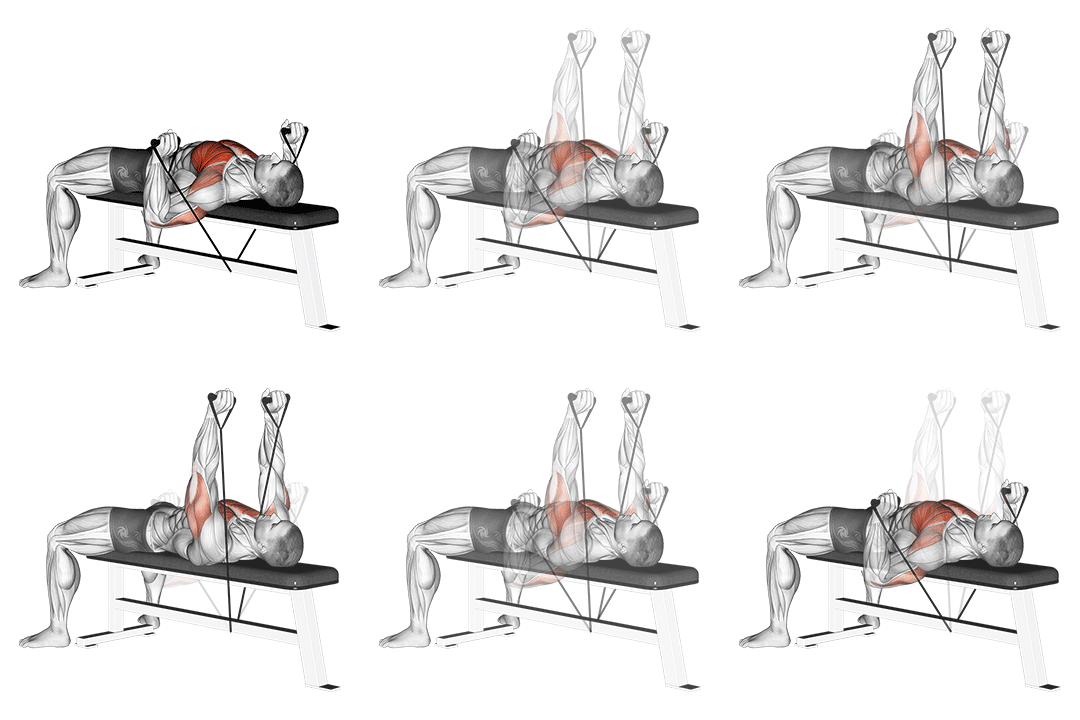
Band Bench Press
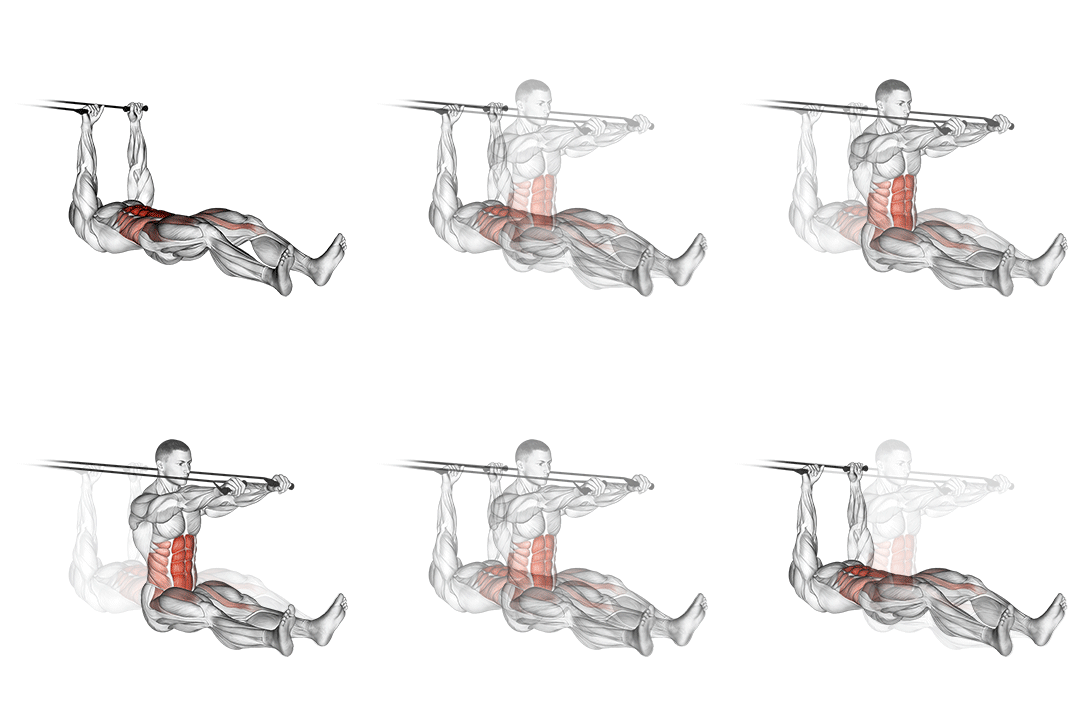
Band Push Sit-up
Head-to-Head Comparison
| Attribute | Band Bench Press | Band Push Sit-up |
|---|---|---|
| Target Muscle |
Pectorals
|
Abs
|
| Body Part |
Chest
|
Waist
|
| Equipment |
Band
|
Band
|
| Difficulty |
Intermediate
|
Intermediate
|
| Movement Type |
Compound
|
Isolation
|
| Secondary Muscles |
2
|
2
|
Secondary Muscles Activated
Band Bench Press
Band Push Sit-up
Visual Comparison
Overview
Band Push Sit-up vs Band Bench Press — you can build a stronger midsection or a thicker chest with bands, but the two exercises do very different jobs. I'll walk you through muscle targets, movement mechanics, equipment needs, progression options, and safety cues so you can choose the right move for your goals. Read on for specific technique cues (body angles, band placement), recommended rep ranges, and clear recommendations whether you want core definition, chest hypertrophy, or a simple home workout pairing.
Key Differences
- Band Bench Press primarily targets the Pectorals, while Band Push Sit-up focuses on the Abs.
- Band Bench Press is a compound movement, while Band Push Sit-up is an isolation exercise.
Pros & Cons
Band Bench Press
+ Pros
- Targets rectus abdominis and obliques directly with a clear trunk-flexion pattern
- Very portable: only a band and floor space required
- Good for high-rep core endurance and metabolic work (12-20+ reps)
- Lower systemic load makes it suitable for frequent use and core-focused circuits
− Cons
- Limited capacity for progressive overload compared to compound presses
- Can strain the lumbar spine if you use excessive spinal flexion or momentum
- Less effective for upper-body mass or pushing strength development
Band Push Sit-up
+ Pros
- Primary chest-focused compound movement that builds mechanical tension across pecs
- Strong progression options by changing band tension, bench angle, and rep ranges (6-12 ideal for hypertrophy)
- Also trains triceps and shoulder stabilizers for functional pressing strength
- Accommodating resistance from bands improves lockout strength and tempo control
− Cons
- Requires a secure anchor point or bench for full-range pressing
- Higher shoulder and elbow strain risk with poor scapular mechanics
- Less core isolation—won't develop rectus abdominis as directly as sit-ups
When Each Exercise Wins
Band Bench Press loads the pectoralis major through a horizontal adduction vector and allows clear progressive overload in the 6-12 rep range. The compound nature recruits more muscle mass and produces higher mechanical tension across the chest than a sit-up.
Strength requires heavy, progressive loading and neural adaptation; the band bench lets you manipulate tension and practice pressing mechanics under load, improving both force production and lockout strength.
Beginners benefit from simpler motor patterns and lower joint stress; the push sit-up teaches bracing and trunk control while requiring minimal setup or anchoring knowledge, making it easier to learn safely.
Home training favors minimal equipment and quick setup. The push sit-up needs only a band and floor space, whereas the band bench press often needs a bench or sturdy anchor to perform correctly.
Frequently Asked Questions
Can I do both Band Push Sit-up and Band Bench Press in the same workout?
Yes. Sequence compound pressing earlier when you are fresh to maximize chest output, then finish with Band Push Sit-ups as accessory work for the core. That order preserves pressing strength and lets you use higher band tensions for the bench.
Which exercise is better for beginners?
Band Push Sit-up is generally better for beginners because it teaches bracing and trunk control with low external load. The Band Bench Press is effective too but requires more coaching on scapular positioning and safe band anchoring.
How do the muscle activation patterns differ?
The sit-up produces concentric contraction of the rectus abdominis through trunk flexion with peak activation in mid-flexion, while the bench press drives horizontal adduction and elbow extension, recruiting pectorals and triceps. Bands change the length-tension pattern by increasing resistance near end ranges: sit-ups load abs more near full flexion, bench loads pecs more toward lockout.
Can Band Bench Press replace Band Push Sit-up?
Not fully. The bench press builds chest and pressing strength but does not isolate the rectus abdominis and obliques the way a push sit-up does. If your goal is core development or anti-extension control, keep the sit-up; if you need chest size or strength, prioritize the bench press.
Expert Verdict
Choose the Band Bench Press when your priority is chest hypertrophy or pushing strength: it creates greater mechanical tension across the pectorals, allows clear progressive overload, and also trains triceps and shoulder stabilizers. Use sets of 3-5 and reps of 6-12, cueing scapular retraction, a 45-degree elbow path, and controlled eccentrics. Pick the Band Push Sit-up when your focus is core development, endurance, or minimalist training: perform 2-4 sets of 12-20 reps, brace the ribs, hinge from the hips minimally, and control the descent to protect the lumbar spine. For balanced programs, pair them: use bench press as the primary chest mover and finish with band sit-ups for anti-extension strength and core stability.
Also Compare
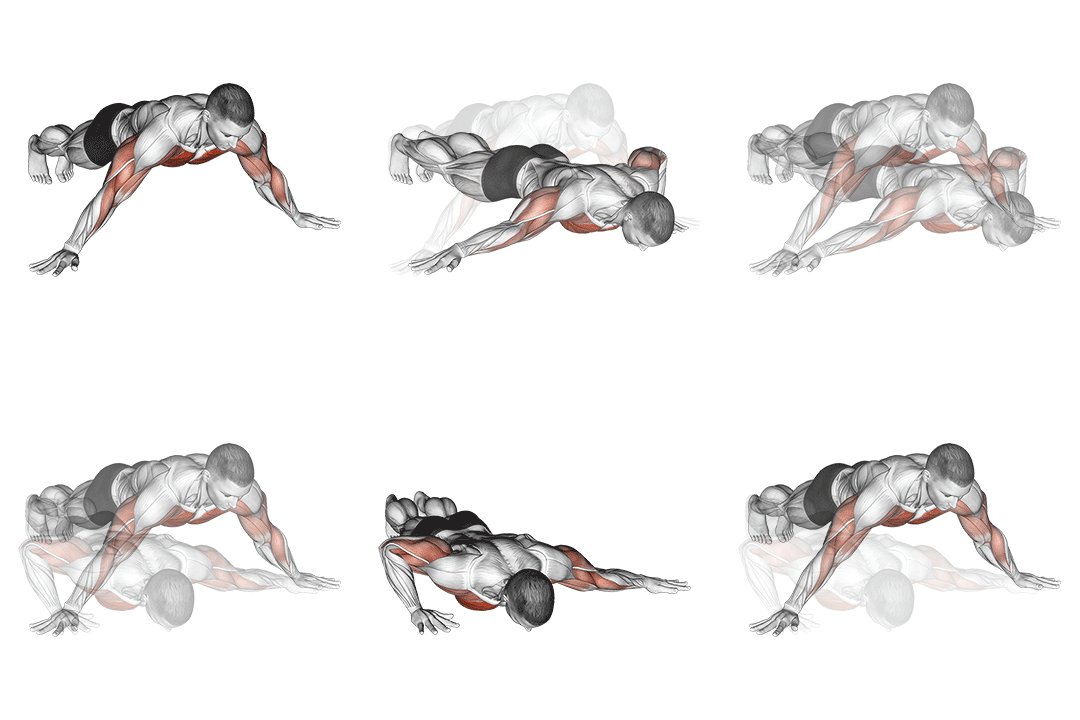
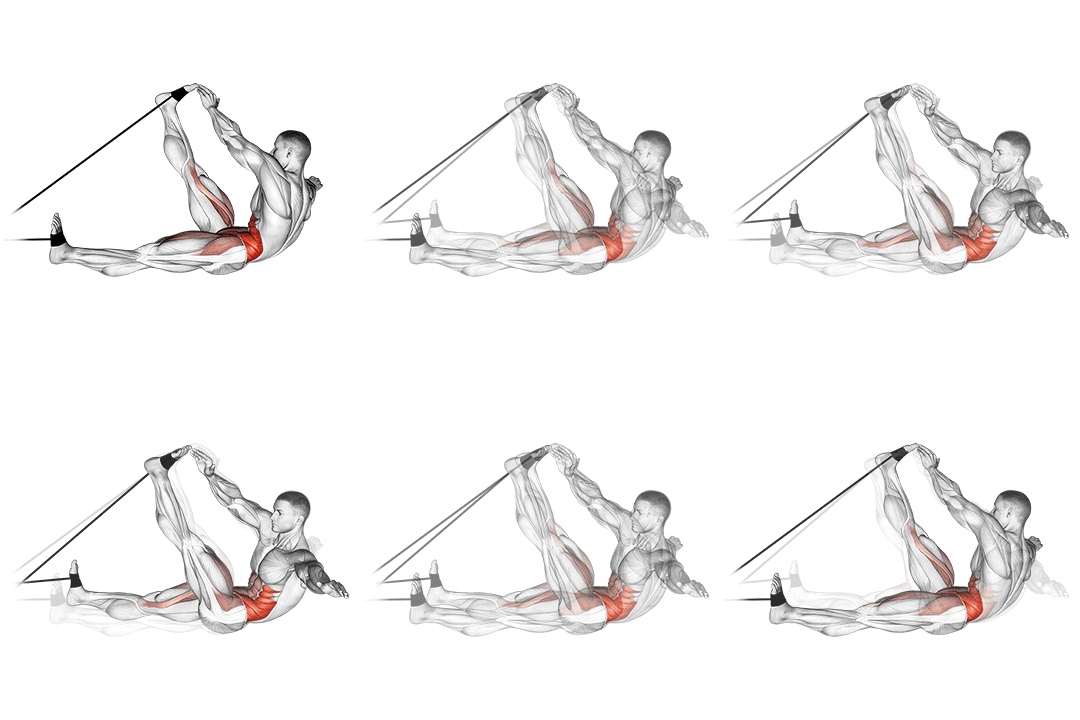
More comparisons with Band Bench Press





Compare More Exercises
Use our free comparison tool to analyze any two exercises head-to-head.
Compare Exercises