

Band Bench Press vs Resistance Band Seated Chest Press: Complete Comparison Guide
Band Bench Press vs Resistance Band Seated Chest Press — if you want a stronger, fuller chest using only bands, you need to pick the right move for your goals. This guide walks you through how each exercise hits the pectorals, how they recruit triceps and shoulders differently, the equipment and setup you’ll need, technique cues to maximize muscle tension, and clear winner scenarios for hypertrophy, strength, beginners, and home workouts. Read on to learn exact rep ranges, joint angles, and biomechanical trade-offs so you can choose the press that matches your training plan.
Exercise Comparison
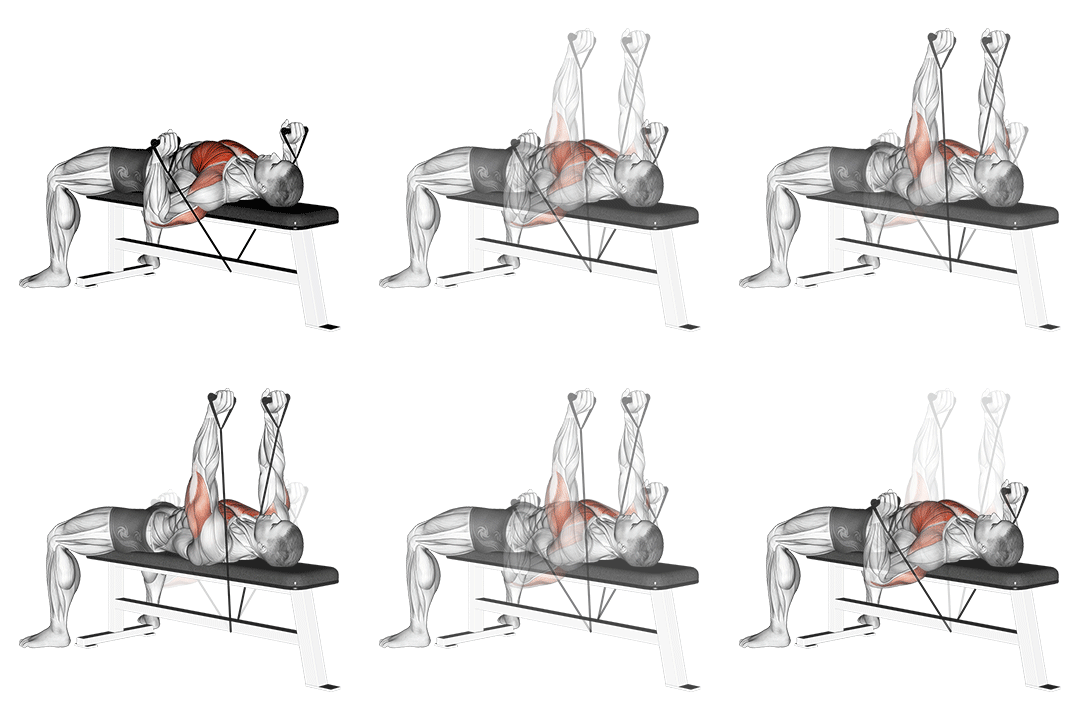
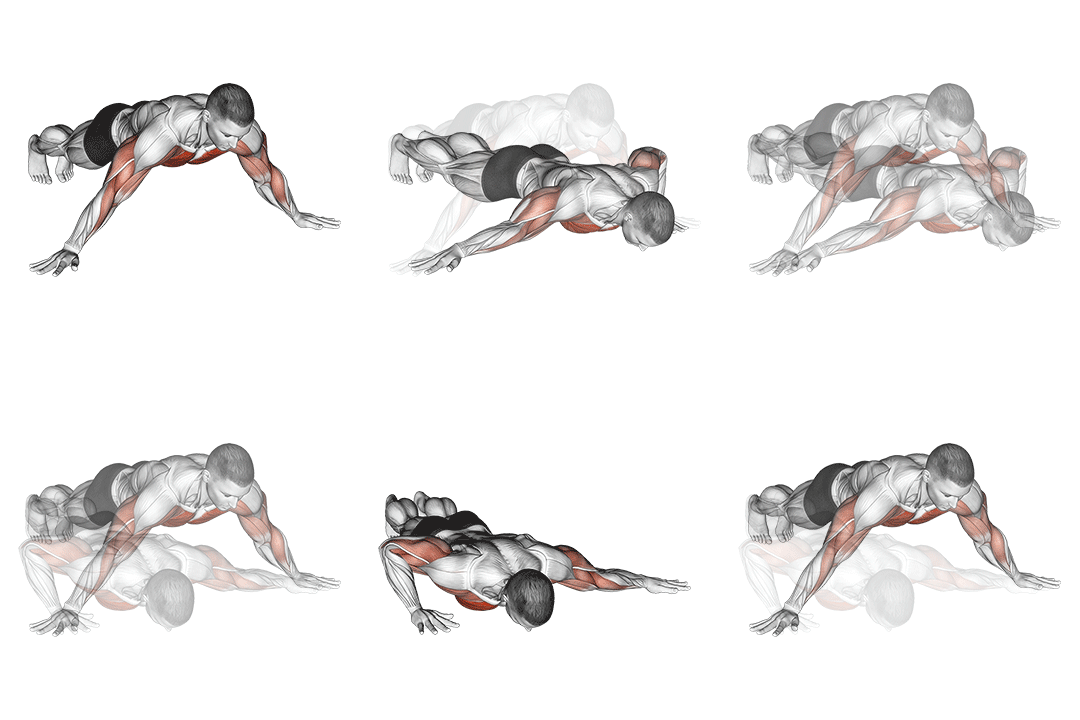
Band Bench Press
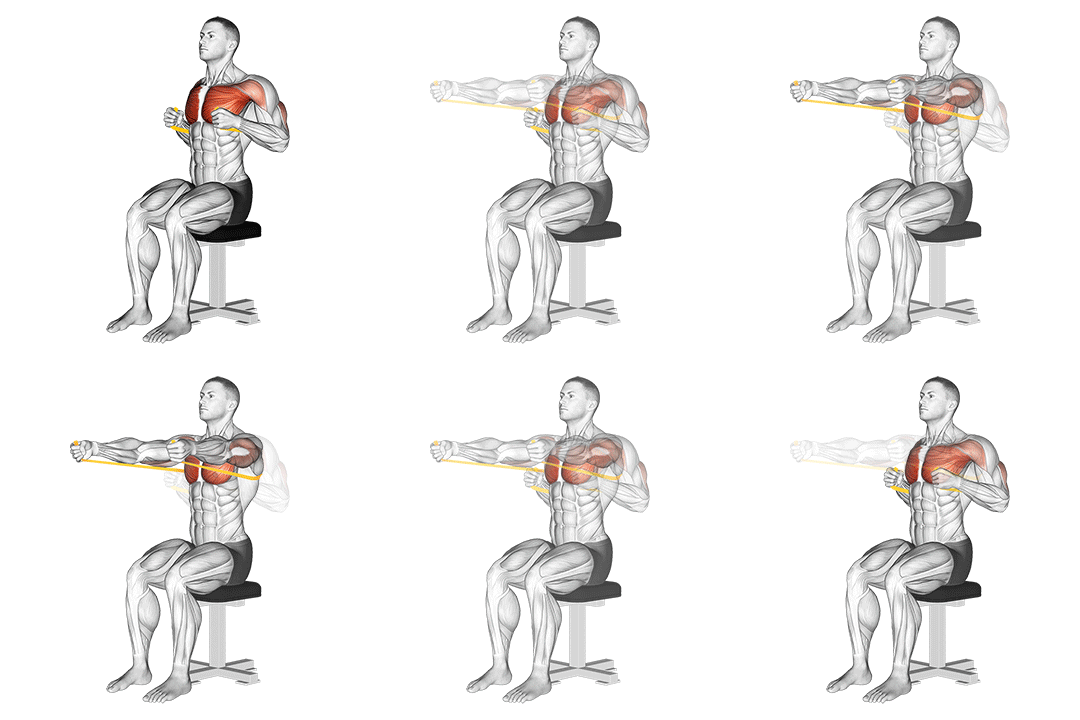
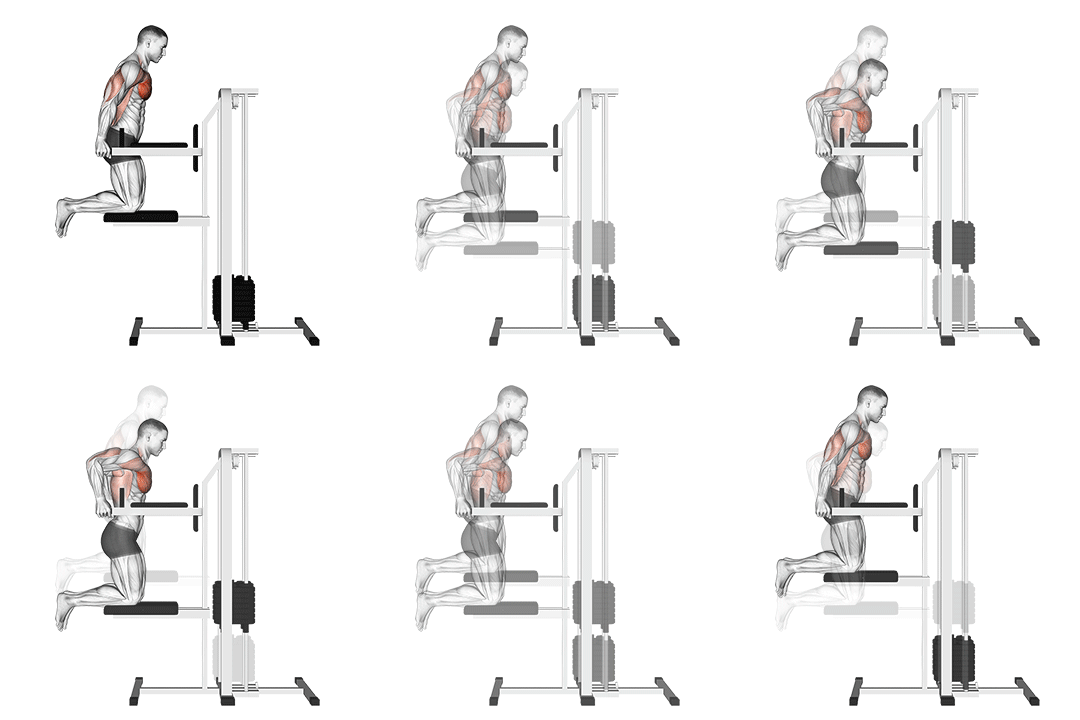
Resistance Band Seated Chest Press
Head-to-Head Comparison
| Attribute | Band Bench Press | Resistance Band Seated Chest Press |
|---|---|---|
| Target Muscle |
Pectorals
|
Pectorals
|
| Body Part |
Chest
|
Chest
|
| Equipment |
Band
|
Band
|
| Difficulty |
Intermediate
|
Intermediate
|
| Movement Type |
Compound
|
Compound
|
| Secondary Muscles |
2
|
2
|
Secondary Muscles Activated
Band Bench Press
Resistance Band Seated Chest Press
Visual Comparison
Overview
Band Bench Press vs Resistance Band Seated Chest Press — if you want a stronger, fuller chest using only bands, you need to pick the right move for your goals. This guide walks you through how each exercise hits the pectorals, how they recruit triceps and shoulders differently, the equipment and setup you’ll need, technique cues to maximize muscle tension, and clear winner scenarios for hypertrophy, strength, beginners, and home workouts. Read on to learn exact rep ranges, joint angles, and biomechanical trade-offs so you can choose the press that matches your training plan.
Key Differences
- Both exercises target the Pectorals using Band. The main differences are in their movement patterns and muscle activation angles.
Pros & Cons
Band Bench Press
+ Pros
- Greater bottom-range stretch for sternal pectoral fibers, enhancing length-tension stimulus
- Ascending resistance curve improves lockout strength and triceps carryover
- Easier to implement hypertrophy techniques like pauses and negatives on a bench
- Better transfer to flat-bar pressing patterns because of similar body position
− Cons
- Requires a bench or sturdy elevated surface and secure band anchoring
- Higher shoulder stress with poor technique or excessive band tension
- More setup complexity and slightly higher learning curve
Resistance Band Seated Chest Press
+ Pros
- Highly accessible — can be done with a chair and door anchor or pole
- More stable upright position reduces spinal loading and is beginner-friendly
- Consistent mid-range tension makes it easy to target steady pectoral activation
- Portable and quick to set up for home or travel workouts
− Cons
- Less bottom-range stretch, which can reduce stretch-mediated hypertrophy stimulus
- Can place more emphasis on anterior deltoids if anchor is too high
- Lower ceiling for absolute horizontal pressing force compared to a bench setup
When Each Exercise Wins
The flat bench position allows a greater stretch at the bottom of the press, increasing length-tension stimulus in the sternal fibers. Use 6–12 reps with controlled 2–3s eccentrics and a band load that reaches near-failure on set 8–12 for best hypertrophy.
Variable resistance matches the natural strength curve and trains lockout power, which helps transfer to heavier horizontal pressing. Perform heavier sets of 3–6 reps with stronger bands and focus on explosive concentric intent.
The seated position reduces spinal and scapular complexity, making scapular retraction and elbow path easier to control. Start with 8–15 reps, light to moderate band tension, and focus on form before increasing resistance.
Requires minimal gear (chair and door anchor) and is quick to set up, making it ideal for small spaces and travel. It lets you maintain consistent volume without needing a bench or heavy anchoring system.
Frequently Asked Questions
Can I do both Band Bench Press and Resistance Band Seated Chest Press in the same workout?
Yes — pair them as a primary/secondary combo. Do the Band Bench Press first for heavy sets (3–8 reps) to target strength and stretch, then use the Seated Chest Press for 2–4 higher-volume sets (8–15 reps) to accumulate fatigue and steady pectoral tension.
Which exercise is better for beginners?
Resistance Band Seated Chest Press is generally better for beginners because the upright position reduces spinal and scapular demands. It lets you learn elbow path and chest contraction before progressing to bench variations.
How do the muscle activation patterns differ?
Band Bench Press produces low tension at the bottom and peak tension at lockout (ascending force curve), emphasizing concentric lockout and stretch at long muscle lengths. Seated Chest Press yields a more uniform mid-range activation with earlier anterior deltoid involvement, due to a different force vector and anchor height.
Can Resistance Band Seated Chest Press replace Band Bench Press?
It can replace bench press for maintenance, conditioning, or when equipment is limited, but it won’t fully replicate the bottom-range stretch and lockout overload the bench provides. For long-term hypertrophy or strength-focused phases, keep bench-style presses in your program when possible.
Expert Verdict
Choose Band Bench Press when your priority is maximizing pectoral stretch, developing lockout strength, and closely mimicking flat-bar pressing mechanics. Aim for 6–12 reps for hypertrophy and 3–6 for strength, controlling the eccentric for 2–3 seconds. Pick Resistance Band Seated Chest Press when you need a safer, more accessible option that reduces spinal load and simplifies setup—perfect for beginners, travel, or high-volume accessory work in the 8–15 rep range. Both moves deserve a place in a program: use seated presses for volume and technique work, and bench presses for focused hypertrophy and strength phases.
Also Compare
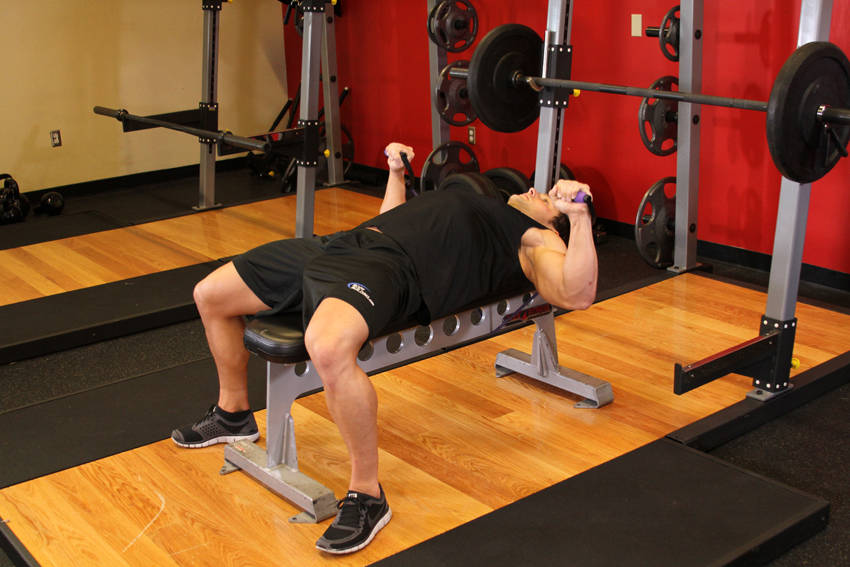
More comparisons with Band Bench Press
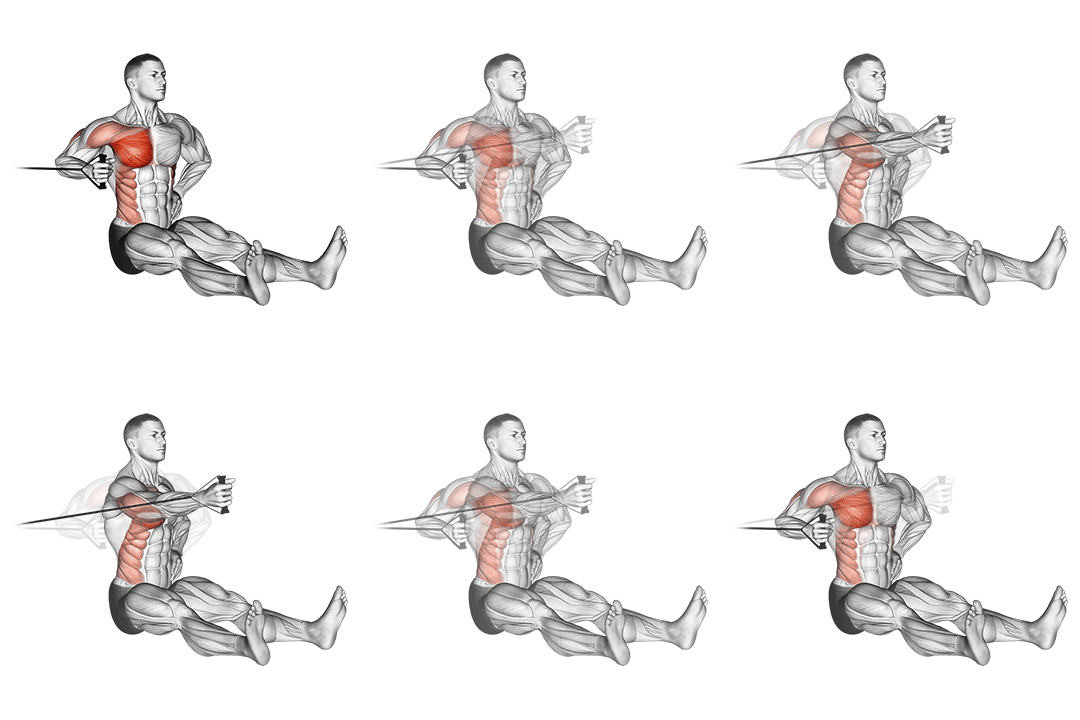
More comparisons with Resistance Band Seated Chest Press

Compare More Exercises
Use our free comparison tool to analyze any two exercises head-to-head.
Compare Exercises