

Band Bicycle Crunch vs Band Horizontal Pallof Press: Complete Comparison Guide
Band Bicycle Crunch vs Band Horizontal Pallof Press — two banded isolation moves that both target your abs but load them very differently. You’ll get clear guidance on how each exercise stresses the rectus abdominis and obliques, the movement and force-vector differences, set and rep recommendations, and technique cues so you perform each safely. Read this to decide which to prioritize for muscle growth, anti-rotation strength, or home workouts, and to learn exactly how to progress each one.
Exercise Comparison
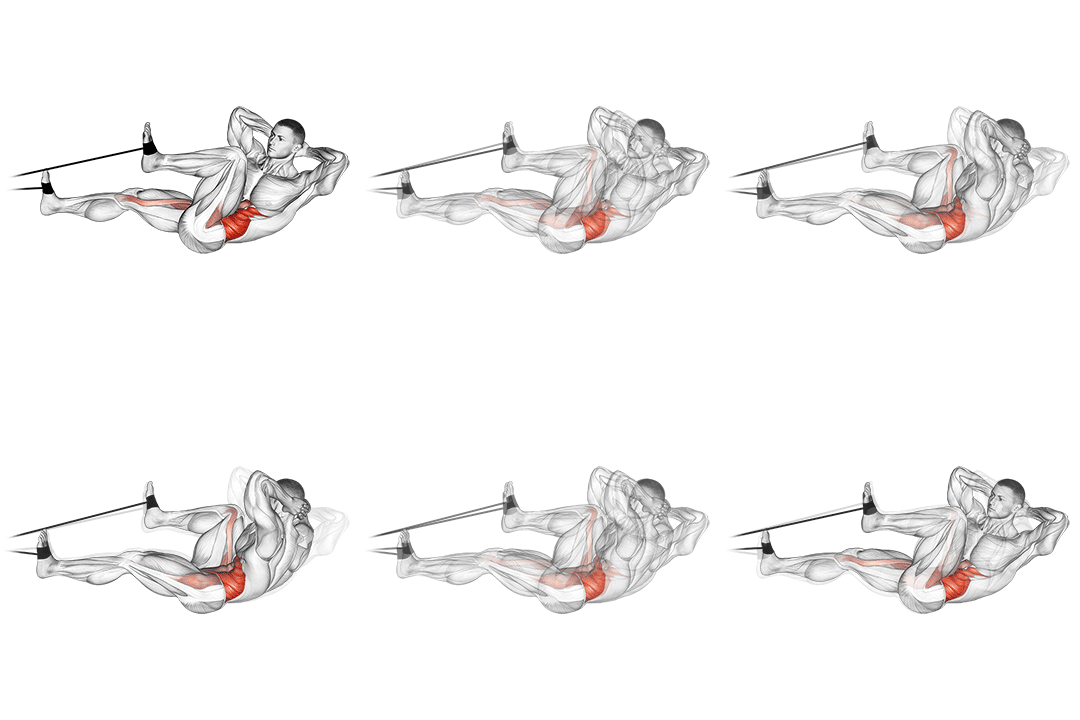
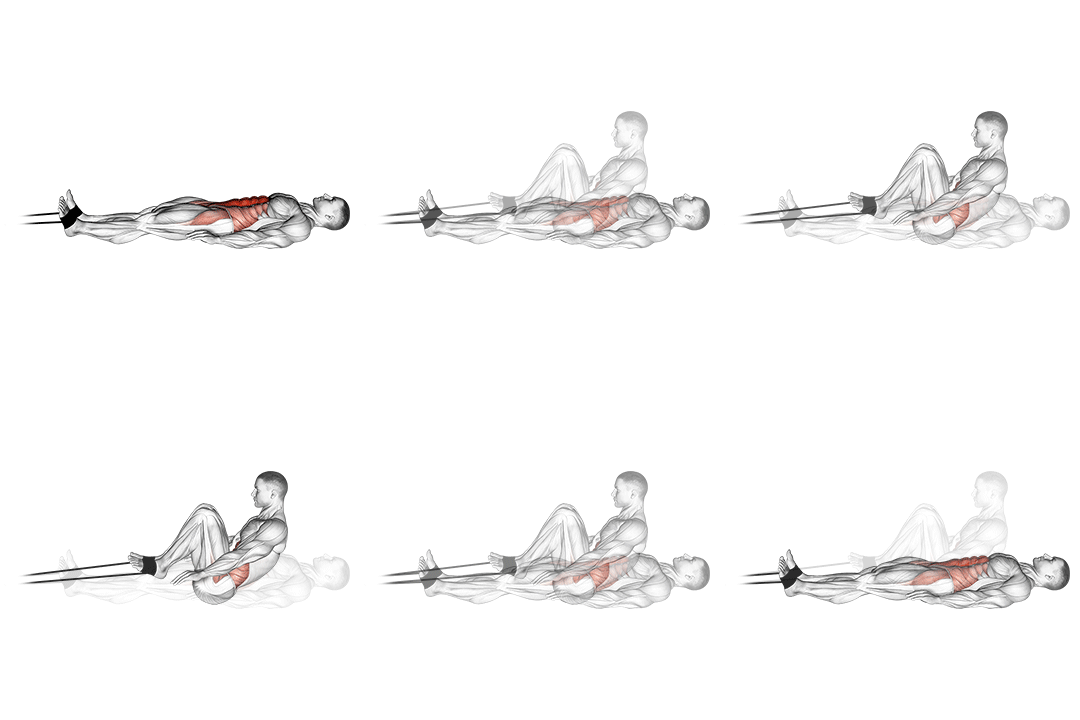
Band Bicycle Crunch
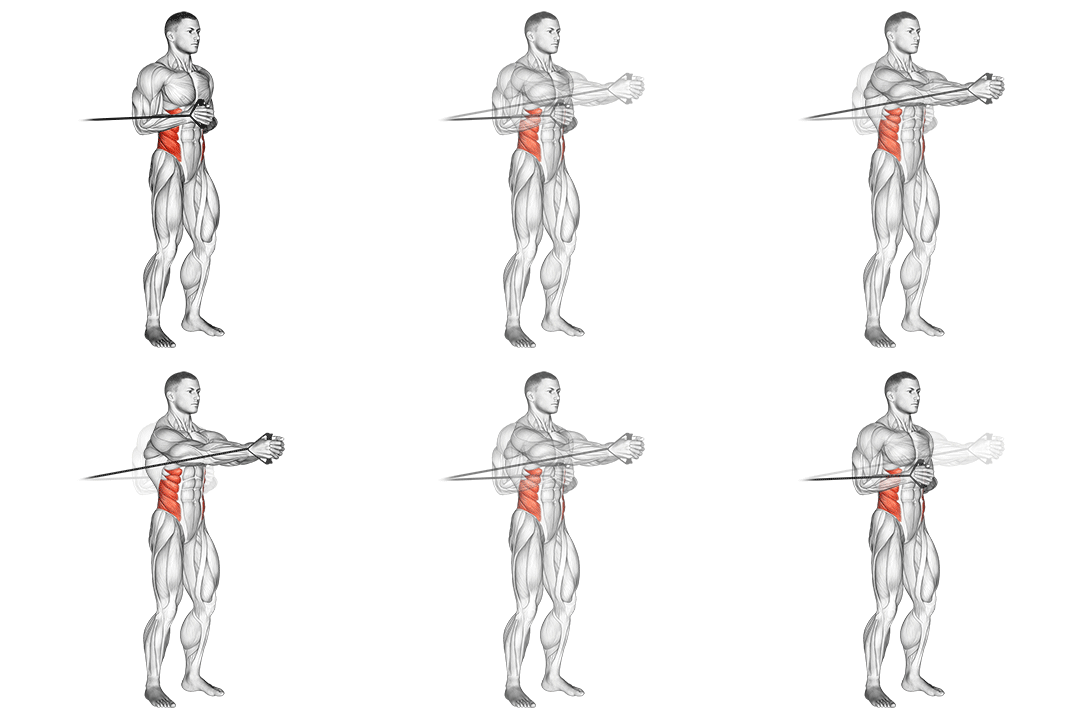
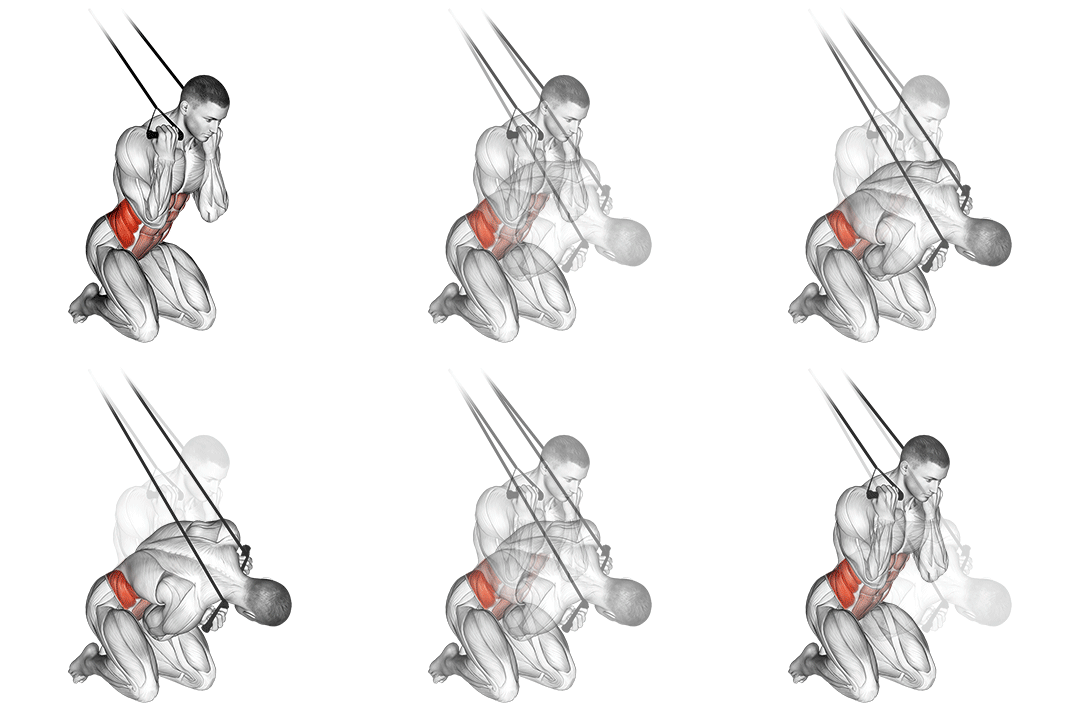
Band Horizontal Pallof Press
Head-to-Head Comparison
| Attribute | Band Bicycle Crunch | Band Horizontal Pallof Press |
|---|---|---|
| Target Muscle |
Abs
|
Abs
|
| Body Part |
Waist
|
Waist
|
| Equipment |
Band
|
Band
|
| Difficulty |
Intermediate
|
Intermediate
|
| Movement Type |
Isolation
|
Isolation
|
| Secondary Muscles |
2
|
2
|
Secondary Muscles Activated
Band Bicycle Crunch
Band Horizontal Pallof Press
Visual Comparison
Overview
Band Bicycle Crunch vs Band Horizontal Pallof Press — two banded isolation moves that both target your abs but load them very differently. You’ll get clear guidance on how each exercise stresses the rectus abdominis and obliques, the movement and force-vector differences, set and rep recommendations, and technique cues so you perform each safely. Read this to decide which to prioritize for muscle growth, anti-rotation strength, or home workouts, and to learn exactly how to progress each one.
Key Differences
- Both exercises target the Abs using Band. The main differences are in their movement patterns and muscle activation angles.
Pros & Cons
Band Bicycle Crunch
+ Pros
- Direct dynamic rectus abdominis work with high concentric-eccentric cycles
- Accessible—no anchor needed, low-equipment setup
- Also trains hip flexors and cross-body oblique engagement for rotational power
- Easy to load via higher rep ranges (8–30) for metabolic stress and hypertrophy
− Cons
- Higher risk of neck pull and lumbar flexion if technique breaks down
- Less effective for anti-rotation strength and bracing endurance
- Can overwork hip flexors if you rely on leg drive instead of core
Band Horizontal Pallof Press
+ Pros
- Excellent anti-rotation stimulus—builds bracing and transverse abdominis control
- Sustained tension ideal for core endurance and spinal stability
- Transfers well to resisting external rotation forces in sport
- Easy to progress with band tension, lever arm, and hold duration
− Cons
- Requires an anchor point and slightly more setup space
- Less dynamic rectus shortening—limited concentric-eccentric hypertrophy stimulus
- Can stress shoulders/scapula if bracing and band path are poor
When Each Exercise Wins
Bicycle Crunches create repeated shortening and lengthening cycles in the rectus abdominis and increase metabolic stress with 8–30 rep ranges, which favors muscle growth more than static holds.
Pallof Press builds anti-rotation strength and high isometric torque under band tension; increasing band load or hold time (10–60s) produces stronger transfer to resisting external forces.
The movement pattern is simpler to learn—lying position reduces balance demands, and you can start with light band tension and slow, controlled reps to learn core contraction.
No anchor is required and it needs minimal floor space; you can get meaningful abdominal work with one loop band and bodyweight setup.
Frequently Asked Questions
Can I do both Band Bicycle Crunch and Band Horizontal Pallof Press in the same workout?
Yes. Do Pallof Presses early as a stability primer (3–5 sets of 10–30s holds) to reinforce bracing, then add Band Bicycle Crunches for volume (3–4 sets of 12–20 reps per side) to tax the rectus through concentric-eccentric cycles.
Which exercise is better for beginners?
Band Bicycle Crunch is generally better for beginners because the lying position lowers balance demands and the pattern is easier to control. Start light, keep a tucked chin and posterior pelvic tilt, and progress band tension as your technique improves.
How do the muscle activation patterns differ?
Bicycle Crunches produce phasic peaks in rectus and oblique activity during each crunch/rotation (favoring concentric-eccentric loading). Pallof Presses create sustained isometric tension in obliques and transverse abdominis to resist a lateral band force vector, emphasizing bracing over repetition.
Can Band Horizontal Pallof Press replace Band Bicycle Crunch?
Not fully—Pallof Presses excel for anti-rotation strength and bracing but provide limited concentric-eccentric overload for rectus hypertrophy. Replace only if your priority is stability; otherwise pair them to cover both structural and hypertrophic goals.
Expert Verdict
Use Band Bicycle Crunch when your goal is dynamic abdominal muscle growth and metabolic conditioning—perform 3–4 sets of 12–20 reps per side, focus on a posterior pelvic tilt and slow 2:1:2 tempo to load the rectus abdominis without neck strain. Choose Band Horizontal Pallof Press when you need anti-rotation strength, core bracing, or sport-specific stability—do 3–5 sets of 8–20 presses or 3–6 sets of 10–40 second holds, increasing band tension or lever arm for progressive overload. Ideally, combine both: Pallof Presses early in the session for stability and Bicycle Crunches later for targeted abdominal volume.
Also Compare
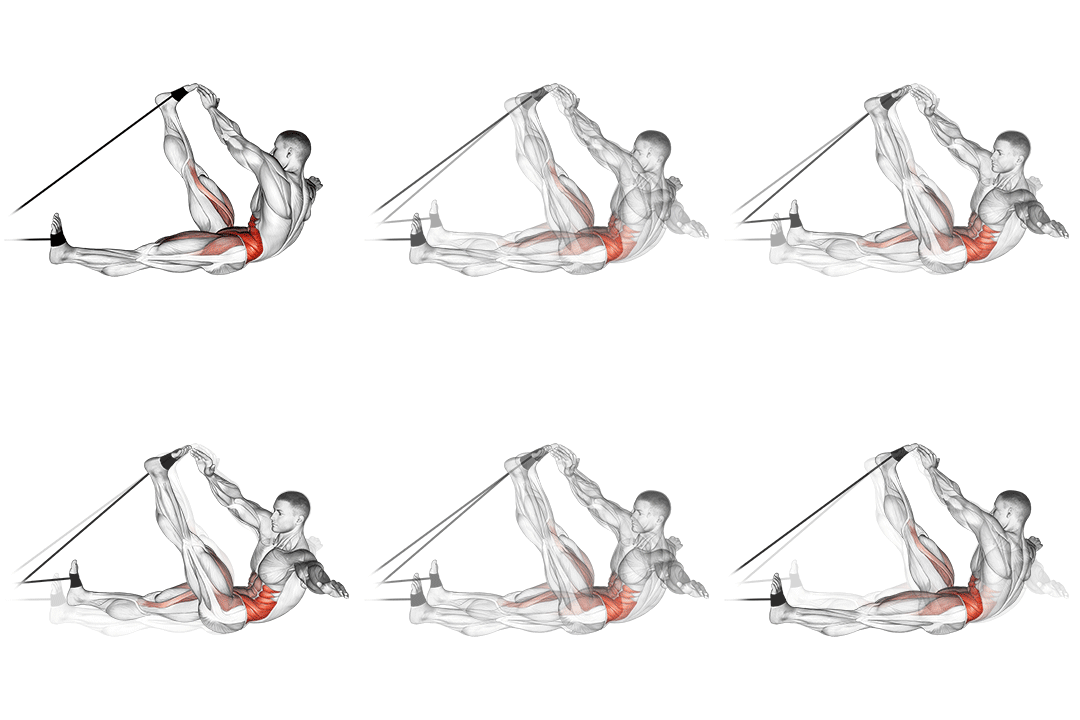
More comparisons with Band Bicycle Crunch
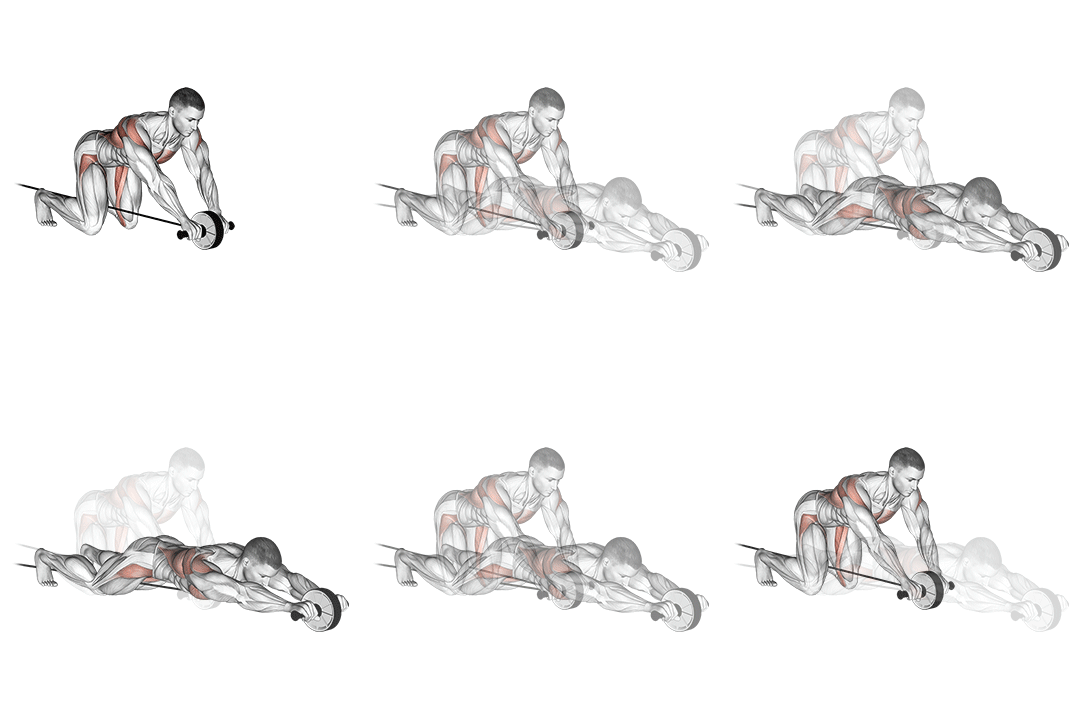
More comparisons with Band Horizontal Pallof Press
Compare More Exercises
Use our free comparison tool to analyze any two exercises head-to-head.
Compare Exercises