Band Bicycle Crunch vs Band Jack Knife Sit-up

Compare target muscles, equipment, difficulty, movement type, and secondary muscles for Band Bicycle Crunch and Band Jack Knife Sit-up.

Change comparison Share

Get comparison link

Select the link and use your device's Copy command.

Comparison overview

AI-generated
Band Bicycle Crunch vs Band Jack Knife Sit-up — if you're deciding which banded ab move to add to your routine, this comparison cuts through the noise. I'll walk you through muscle activation, movement mechanics, equipment needs, difficulty, and progressions so you can pick the right exercise for your goals. Expect clear technique cues (breathing, band placement, trunk angles), specific rep ranges, and biomechanical reasons why one might beat the other for hypertrophy, strength, or accessibility.

Exercise Comparison

Exercise A
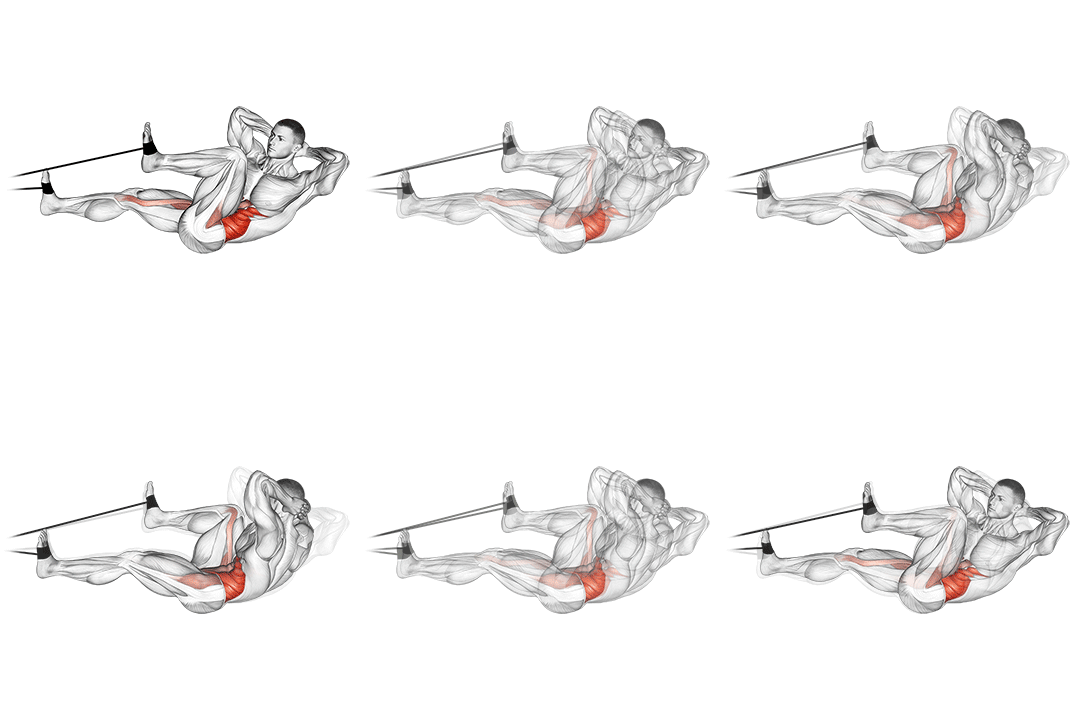
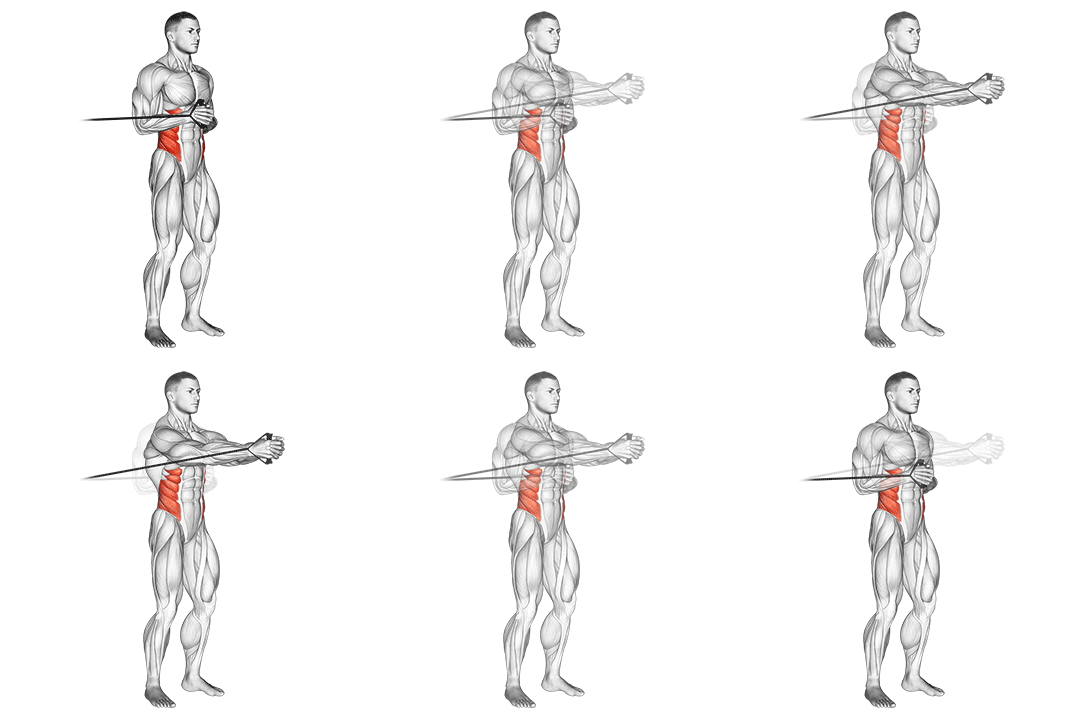
Band Bicycle Crunch demonstration

Band Bicycle Crunch

Target Abs
Equipment Band
Body Part Waist
Difficulty Intermediate
Movement Isolation
Secondary Muscles
Hip Flexors Obliques
VS
Exercise B
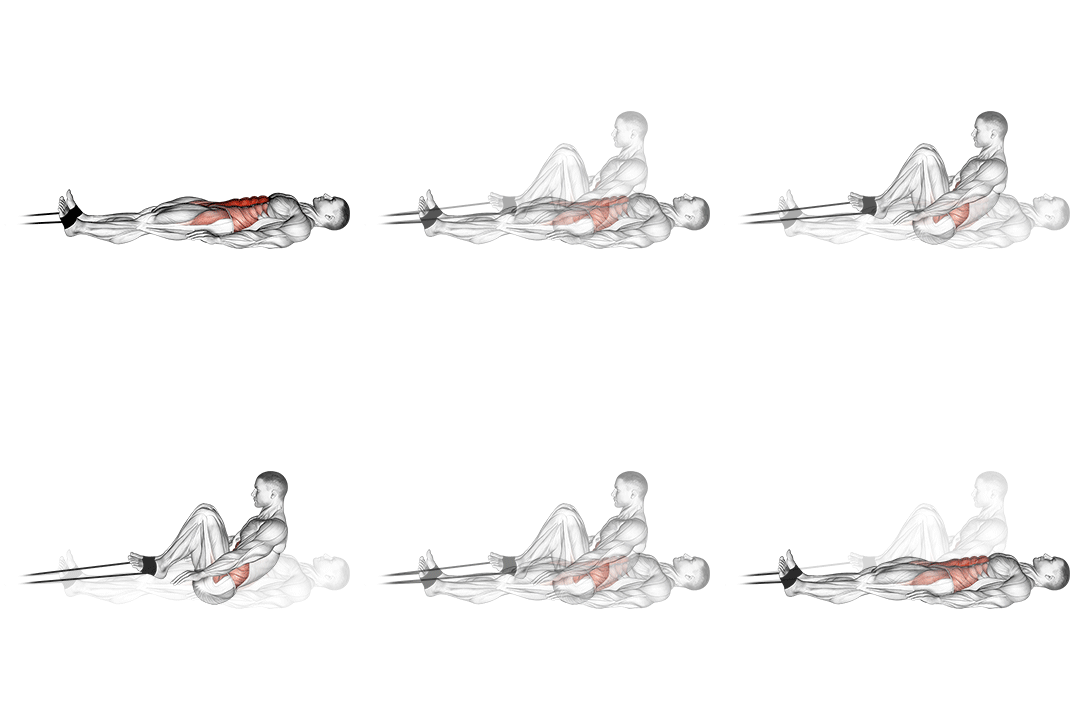
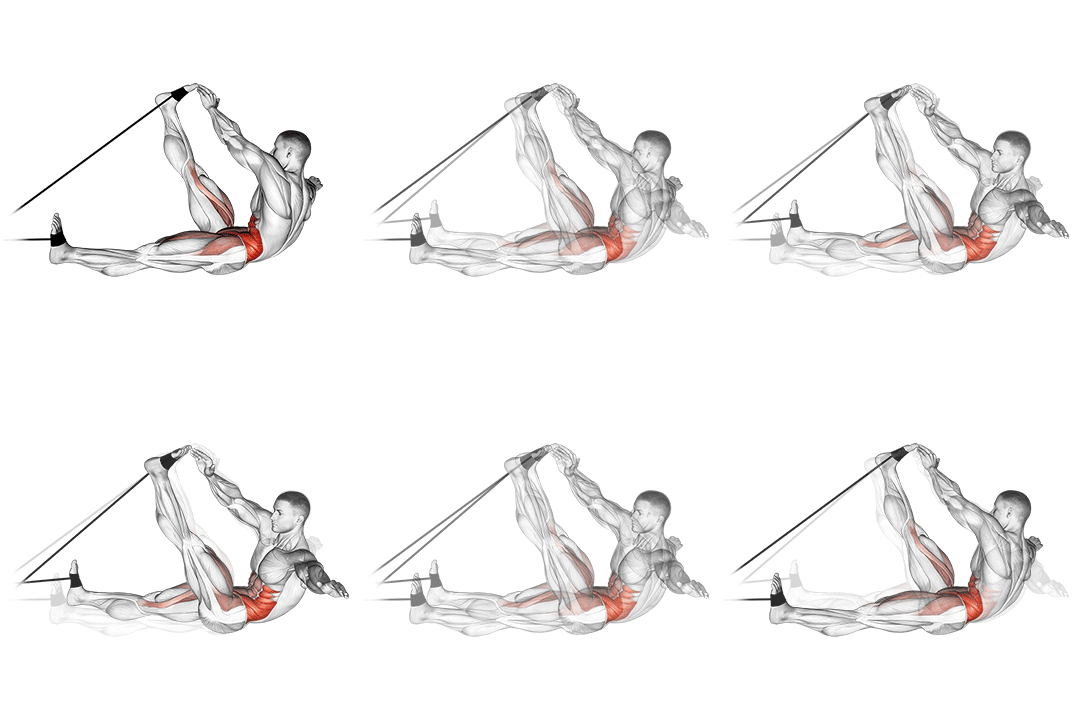
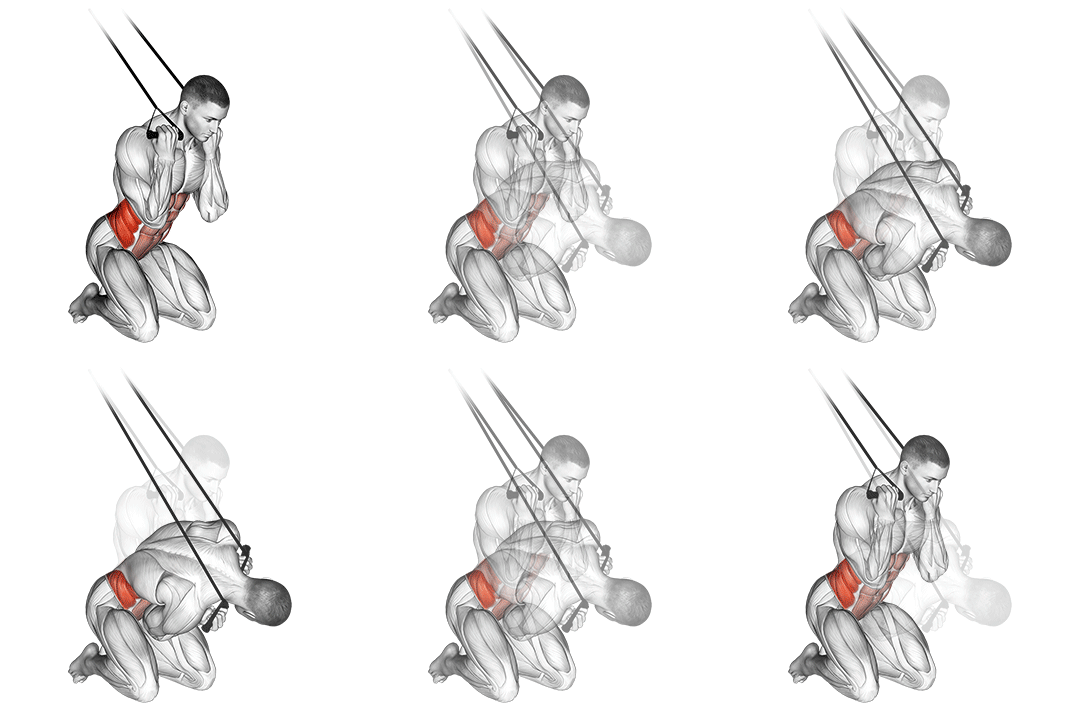
Band Jack Knife Sit-up demonstration

Band Jack Knife Sit-up

Target Abs
Equipment Band
Body Part Waist
Difficulty Advanced
Movement Isolation
Secondary Muscles
Hip Flexors

Head-to-Head Comparison

Different values are marked. These are catalogue attributes, not performance scores.

Muscles used

Listed target and secondary muscles, shown on the body. Locations, not activation or strength scores.

  • Target
  • Secondary
  • Not highlighted

Band Bicycle Crunch

Front
Band Bicycle Crunch: front muscle locationsSolid: listed target. Striped: listed secondary. Grey: not highlighted. Locations, not activation or strength scores. See the muscle names below.
Back
Band Bicycle Crunch: back muscle locationsSolid: listed target. Striped: listed secondary. Grey: not highlighted. Locations, not activation or strength scores. See the muscle names below.
Target
Abs
Secondary
Hip Flexors, Obliques

Not shown on diagram: Hip Flexors. These labels do not identify a precise region on this map.

Band Jack Knife Sit-up

Front
Band Jack Knife Sit-up: front muscle locationsSolid: listed target. Striped: listed secondary. Grey: not highlighted. Locations, not activation or strength scores. See the muscle names below.
Back
Band Jack Knife Sit-up: back muscle locationsSolid: listed target. Striped: listed secondary. Grey: not highlighted. Locations, not activation or strength scores. See the muscle names below.
Target
Abs
Secondary
Hip Flexors

Not shown on diagram: Hip Flexors. These labels do not identify a precise region on this map.

Grey does not mean a muscle is unused. The diagrams show only the mapped catalogue labels.

Attribute Band Bicycle Crunch Band Jack Knife Sit-up
Target Muscle
Abs
Abs
Body Part
Waist
Waist
Equipment
Band
Band
Difficulty Different
Intermediate
Advanced
Movement Type
Isolation
Isolation
Secondary Muscles Different
Hip Flexors, Obliques
Hip Flexors

Visual Comparison

An illustrative 1–10 profile derived from catalog difficulty, equipment, and listed-muscle fields—not measured performance or muscle activation.

Key Differences

  • Difficulty levels differ: Band Bicycle Crunch is intermediate, while Band Jack Knife Sit-up is advanced.
  • Both exercises target the Abs using Band. The catalogue does not establish which exercise is better for an individual goal.

Muscle comparison

Shared target muscles

Both exercises primarily target the rectus abdominis and the anterior core by producing trunk flexion against band resistance. The Bicycle Crunch emphasizes repeated rotational flexion so peak rectus activity occurs at mid-range trunk angles (roughly 20–40° from neutral) while alternating oblique tension. The Jack Knife produces a larger excursion of the rectus as the torso and legs close from near-neutral to full flexion, raising peak rectus load by ~10–30% compared with short-range crunches due to greater muscle length change and tension.

Secondary muscle differences

Band Bicycle Crunch recruits the obliques and hip flexors asymmetrically with each pedal motion, increasing transverse plane torque and rotational shear on the lumbar spine. Band Jack Knife relies more heavily on hip flexors during the leg lift portion and produces bilateral hip flexor tension during combined leg-and-torso closure, so the psoas and iliacus carry more load in the Jack Knife than in the Bicycle.

Muscle involvement analysis

Bicycle Crunch alternates concentric and eccentric oblique contraction with short rectus bursts, producing high-frequency, moderate-amplitude activation. Jack Knife creates a synchronized concentric action of rectus and hip flexors with a longer time-under-tension; rectus activation ramps steadily from 0° to ~70° of trunk flexion, whereas hip flexor EMG-like demand peaks when legs approach 30–45° above the floor.

Equipment and setup

Band Bicycle Crunch: setup

Band Bicycle Crunch needs a medium loop or long band anchored at a low point or held under the back to provide light to moderate resistance. You only need a mat and a band; no stable anchor is mandatory if you hold the band ends.

Band Jack Knife Sit-up: setup

Band Jack Knife Sit-up requires a band anchored behind your head or anchored at your feet to create opposing resistance as you close torso and legs. You may need a stronger band and secure anchor (door anchor or looped around a sturdy post) because the movement generates higher tension through hip flexors and the band.

Access and practicality

Band Bicycle Crunch — easier setup and lower peak loads make it more accessible. You can do it with a single loop band and minimal anchoring, and it scales well for intermediate users without requiring a heavy anchor or maximal core strength.

Learning and progression

Learning the movements

Band Bicycle Crunch is easier to learn because it isolates unilateral rotation with smaller ranges of motion and lower peak hip-flexor demand. Jack Knife has a steeper learning curve; coordinating leg and torso closure against resistance requires solid pelvic control and a stable lumbar spine.

Progression considerations

Band Jack Knife offers greater progression potential for raw core overload: increase band tension, add pauses at peak contraction, or slow eccentric tempo to drive hypertrophy. Bicycle Crunch progresses via increased band tension, tempo manipulation, higher rep density (15–30 reps per side), or added rotation holds.

Limitations and precautions

Jack Knife carries higher injury risk due to greater hip-flexor dominance and higher lumbar flexion forces, which can increase anterior pelvic tilt and compressive load if form breaks down. Bicycle Crunch has lower risk when you cue neutral pelvis and controlled rotation, but excessive range or jerky motion can still stress the lumbar spine.

Pros & Cons

Band Bicycle Crunch

+ Pros

  • Simple band setup; works with a single loop or long band
  • Strong oblique engagement via alternating rotation
  • Lower peak lumbar load due to shorter trunk excursion
  • Easily scaled for higher reps (15–30) for endurance and hypertrophy

− Cons

  • Less absolute rectus overload than full-range sit-ups
  • May underload hip flexors if your goal is integrated trunk-hip strength
  • Rotation can cause shear if done too fast or without pelvic stabilization

Band Jack Knife Sit-up

+ Pros

  • Greater rectus abdominis time-under-tension due to full closure
  • Higher absolute core load when using strong bands
  • Efficient compound pattern that trains coordination between torso and hips
  • Easily progressed with heavier band tension and isometric holds at peak

− Cons

  • Requires secure anchor and stronger band
  • Higher hip-flexor domination can limit pure abdominal development
  • Increased lumbar flexion and compressive forces raise injury risk if form fails

When Each Exercise Wins

1
For muscle hypertrophy: Band Jack Knife Sit-up

The Jack Knife produces greater rectus excursion and longer time-under-tension, which drives hypertrophy when performed with 8–15 controlled reps and 2–3 second eccentrics. Use heavier band tension and pauses at peak contraction to maximize mechanical load.

2
For strength gains: Band Jack Knife Sit-up

Because the Jack Knife creates higher absolute resistance and a true concentric/ eccentric challenge across both torso and hips, it builds raw core strength more effectively when progressed with heavier bands and lower reps (6–12).

3
For beginners: Band Bicycle Crunch

Bicycle Crunches allow smaller ranges of motion, easier pelvic stabilization, and lower peak hip-flexor load. Start with 10–20 reps per side, light band tension, and focus on controlled 45° rotation cues.

4
For home workouts: Band Bicycle Crunch

Bicycle Crunch needs minimal anchoring and lighter bands, making it ideal for limited equipment. It scales via rep density and tempo without requiring a heavy anchor or advanced core strength.

Frequently Asked Questions

Can I do both Band Bicycle Crunch and Band Jack Knife Sit-up in the same workout?

Yes. Pair them by sequencing: start with Bicycle Crunches for 2–3 sets of 12–20 reps per side to warm up rotational control, then do 2–4 sets of Jack Knives at lower reps (6–12) for heavier loading. Monitor fatigue to avoid form breakdown and lumbar rounding.

Which exercise is better for beginners?

Band Bicycle Crunch is better for beginners because it uses smaller trunk excursions and less hip-flexor tension. Focus on controlling pelvic tilt, breathing out on the crunch, and keeping a 45° rotation cue while performing 10–20 reps per side.

How do the muscle activation patterns differ?

Bicycle Crunch alternates unilateral oblique and rectus bursts with moderate amplitude, emphasizing transverse-plane torque and hip flexor assist. Jack Knife synchronizes bilateral rectus shortening with hip-flexor contraction, producing greater rectus time-under-tension and peak hip-flexor activation as legs and torso close.

Can Band Jack Knife Sit-up replace Band Bicycle Crunch?

It can replace the Bicycle Crunch if your goal is higher rectus overload and you have the requisite pelvic control and band anchor. For balanced abdominal development, include both: use Bicycle Crunches for rotational work and Jack Knives for high-load flexion.

Comparison Summary

Choose Band Bicycle Crunch when you need a versatile, accessible core exercise that emphasizes obliques and rotational control with lower lumbar stress. Use it for higher-rep endurance work (15–30 reps per side), refining pelvic tilt, and improving anti-rotation capacity. Choose Band Jack Knife Sit-up when your goal is maximal rectus overload and coordinated hip-torso strength; perform 6–15 reps with a stronger band, slow eccentrics (2–3 seconds), and secure anchoring. If you want both mobility and hypertrophy, cycle them: build stability and control with Bicycle Crunches, then add Jack Knives as a progressed overload once pelvic control and hip-flexor tolerance improve.

Exercise instructions

Steps from the exercise catalogue. Read the full sequence before starting.

Band Bicycle Crunch

  1. Lie flat on your back with your hands behind your head and your knees bent.
  2. Lift your feet off the ground and bring your right knee towards your chest while simultaneously twisting your torso to bring your left elbow towards your right knee.
  3. Straighten your right leg while bringing your left knee towards your chest and twisting your torso to bring your right elbow towards your left knee.
Read remaining steps for Band Bicycle Crunch
  1. Continue alternating the twisting motion, as if you are pedaling a bicycle, while keeping your core engaged throughout the movement.
  2. Repeat for the desired number of repetitions.

Band Jack Knife Sit-up

  1. Lie flat on your back with your legs straight and your arms extended overhead, holding the band.
  2. Engage your abs and lift your legs and upper body simultaneously, bringing your hands towards your feet.
  3. Pause for a moment at the top, then slowly lower your legs and upper body back down to the starting position.
Read remaining steps for Band Jack Knife Sit-up
  1. Repeat for the desired number of repetitions.

Also Compare

Compare another pair

Choose two exercises to see their differences side by side.

Compare Exercises