

Barbell Decline Wide-grip Pullover vs Barbell Reverse Grip Bent Over Row
Compare target muscles, equipment, difficulty, movement type, and secondary muscles for Barbell Decline Wide-grip Pullover and Barbell Reverse Grip Bent Over Row.
Get comparison link
Select the link and use your device's Copy command.
Comparison overview
AI-generatedExercise Comparison
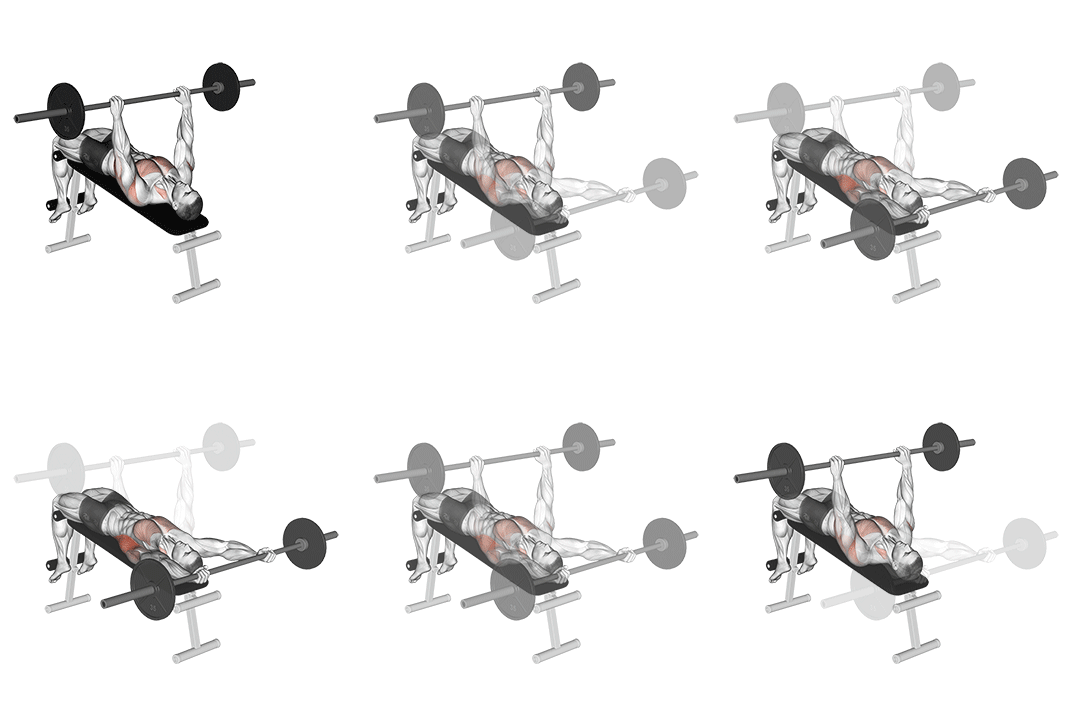
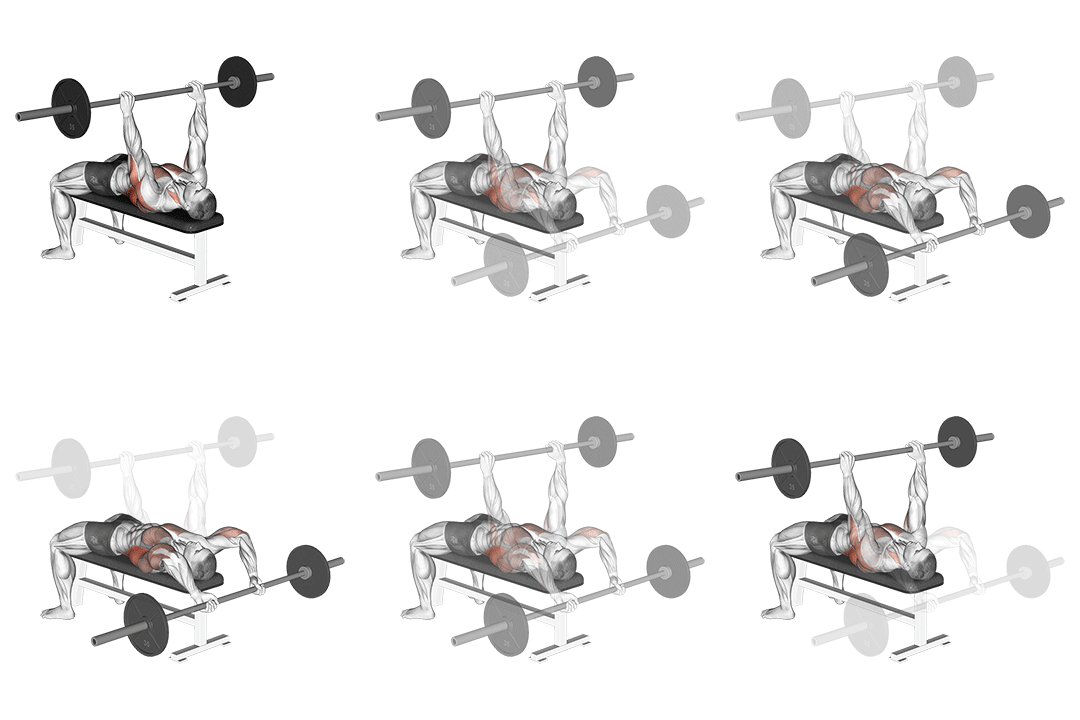
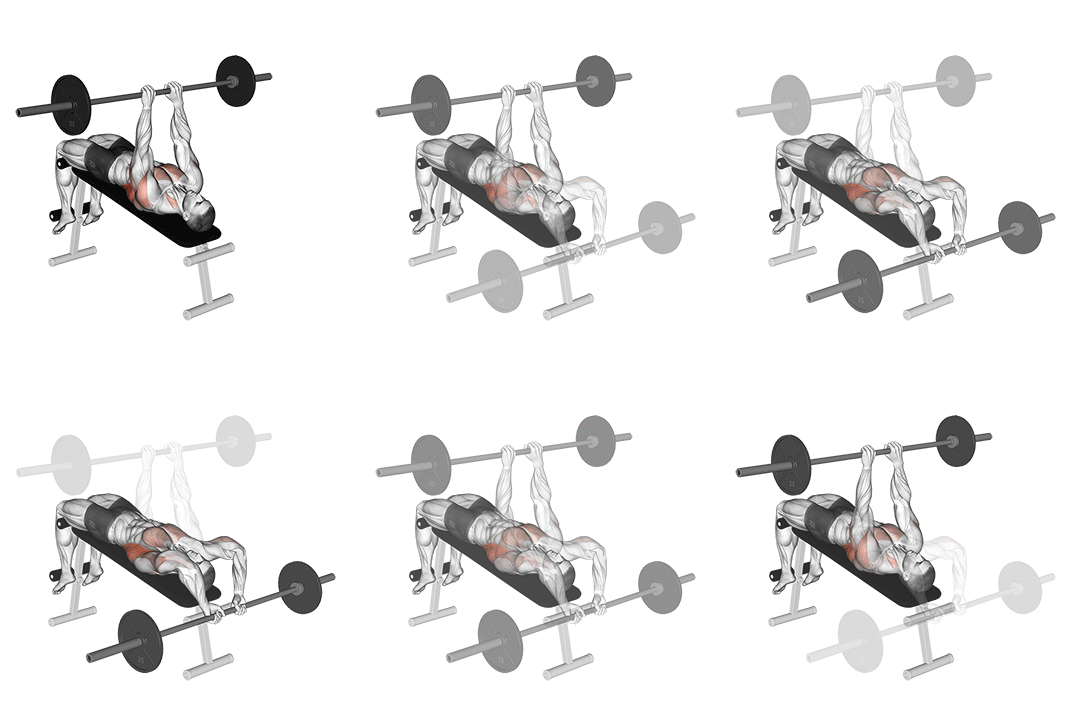
Barbell Decline Wide-grip Pullover
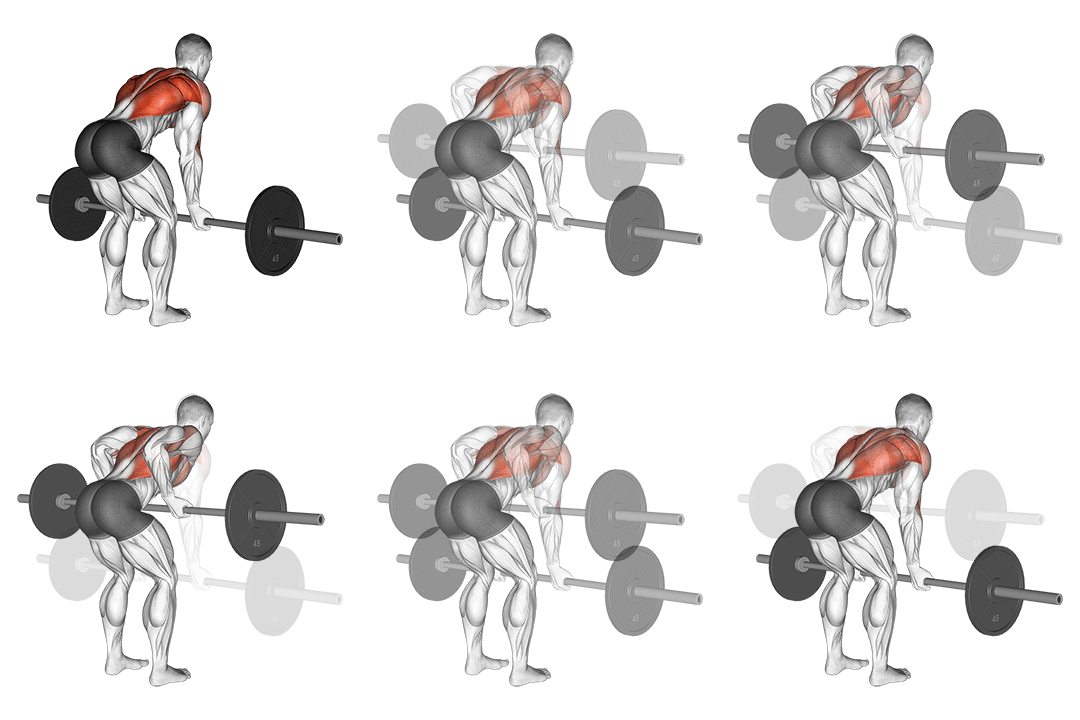
Barbell Reverse Grip Bent Over Row
Head-to-Head Comparison
Different values are marked. These are catalogue attributes, not performance scores.
Muscles used
Listed target and secondary muscles, shown on the body. Locations, not activation or strength scores.
- Target
- Secondary
- Not highlighted
Barbell Decline Wide-grip Pullover
- Target
- Lats
- Secondary
- Triceps, Chest
Barbell Reverse Grip Bent Over Row
- Target
- Lats
- Secondary
- Biceps, Forearms
Grey does not mean a muscle is unused. The diagrams show only the mapped catalogue labels.
| Attribute | Barbell Decline Wide-grip Pullover | Barbell Reverse Grip Bent Over Row |
|---|---|---|
| Target Muscle | Lats |
Lats |
| Body Part | Back |
Back |
| Equipment | Barbell |
Barbell |
| Difficulty | Intermediate |
Intermediate |
| Movement Type Different | Isolation |
Compound |
| Secondary Muscles Different | Triceps, Chest |
Biceps, Forearms |
Visual Comparison
An illustrative 1–10 profile derived from catalog difficulty, equipment, and listed-muscle fields—not measured performance or muscle activation.
Key Differences
- Barbell Decline Wide-grip Pullover is an isolation exercise, while Barbell Reverse Grip Bent Over Row is a compound movement.
- Both exercises target the Lats using Barbell. The catalogue does not establish which exercise is better for an individual goal.
Muscle comparison
Shared target muscles
Secondary muscle differences
Muscle involvement analysis
Equipment and setup
Barbell Decline Wide-grip Pullover: setup
Barbell Reverse Grip Bent Over Row: setup
Access and practicality
Learning and progression
Learning the movements
Progression considerations
Limitations and precautions
Pros & Cons
Barbell Decline Wide-grip Pullover
+ Pros
- Isolates lat length-tension through a long humeral excursion for a distinct stretch stimulus
- Lower compressive load on the lumbar spine compared with heavy bent-over rows
- Good finisher movement to accentuate lat stretch and improve trunk stability on decline bench
- Easy to control tempo and use slow negatives to emphasize eccentric loading
− Cons
- Requires decline bench and adequate shoulder mobility
- Limited progression ceiling due to shoulder tolerance and balance on the bench
- Greater risk of anterior shoulder discomfort or impingement if form is poor
Barbell Reverse Grip Bent Over Row
+ Pros
- Compound movement that allows heavier loads and greater mechanical tension for hypertrophy
- Hits biceps and forearms strongly, improving upper-arm size and grip strength
- Highly versatile for progression (load, tempo, pauses, body angle)
- More accessible for most gyms and home setups (barbell only)
− Cons
- Requires strict hip hinge and lumbar stability to avoid low-back strain
- Less pure isolation of the lats — scapular retractors and biceps share the load
- Reverse grip can be uncomfortable for wrists if mobility or grip is limited
When Each Exercise Wins
Choose the reverse-grip row for hypertrophy because it lets you load the lats with heavier absolute weight and longer sets in the 6–12 rep range, producing higher mechanical tension. Its compound pattern also recruits more muscle mass per rep, which increases systemic anabolic stimulus.
The reverse-grip row transfers better to pulling strength since you can progressively overload with heavier bars and reduce ROM as needed. It trains the hip hinge and posterior chain while still targeting the lats, making it superior for raw pulling strength.
A beginner can scale the row easily with lighter loads and tempo work and learn fundamental hip-hinge mechanics that have broad carryover. The pullover requires more shoulder control and a decline setup that many beginners don’t have or shouldn’t stress early.
Home setups usually lack a decline bench, so the row is the clear choice because you only need a barbell or even dumbbells. It’s easier to load, adapt, and perform with limited equipment while still providing substantial lat stimulus.
Frequently Asked Questions
Can I do both Barbell Decline Wide-grip Pullover and Barbell Reverse Grip Bent Over Row in the same workout?
Which exercise is better for beginners?
How do the muscle activation patterns differ?
Can Barbell Reverse Grip Bent Over Row replace Barbell Decline Wide-grip Pullover?
Comparison Summary
Exercise instructions
Steps from the exercise catalogue. Read the full sequence before starting.
Barbell Decline Wide-grip Pullover
- Lie on a decline bench with your head lower than your hips and your feet secured.
- Hold a barbell with a wide grip and extend your arms straight above your chest.
- Lower the barbell behind your head in a controlled manner, keeping your arms straight.
Read remaining steps for Barbell Decline Wide-grip Pullover
- Pause for a moment, then raise the barbell back to the starting position.
- Repeat for the desired number of repetitions.
Barbell Reverse Grip Bent Over Row
- Stand with your feet shoulder-width apart and knees slightly bent.
- Hold a barbell with an overhand grip, palms facing down, and hands slightly wider than shoulder-width apart.
- Bend forward at the hips, keeping your back straight and chest up, until your torso is almost parallel to the floor.
Read remaining steps for Barbell Reverse Grip Bent Over Row
- Pull the barbell towards your lower chest, squeezing your shoulder blades together.
- Pause for a moment at the top, then slowly lower the barbell back to the starting position.
- Repeat for the desired number of repetitions.
Also Compare
More comparisons with Barbell Decline Wide-grip Pullover
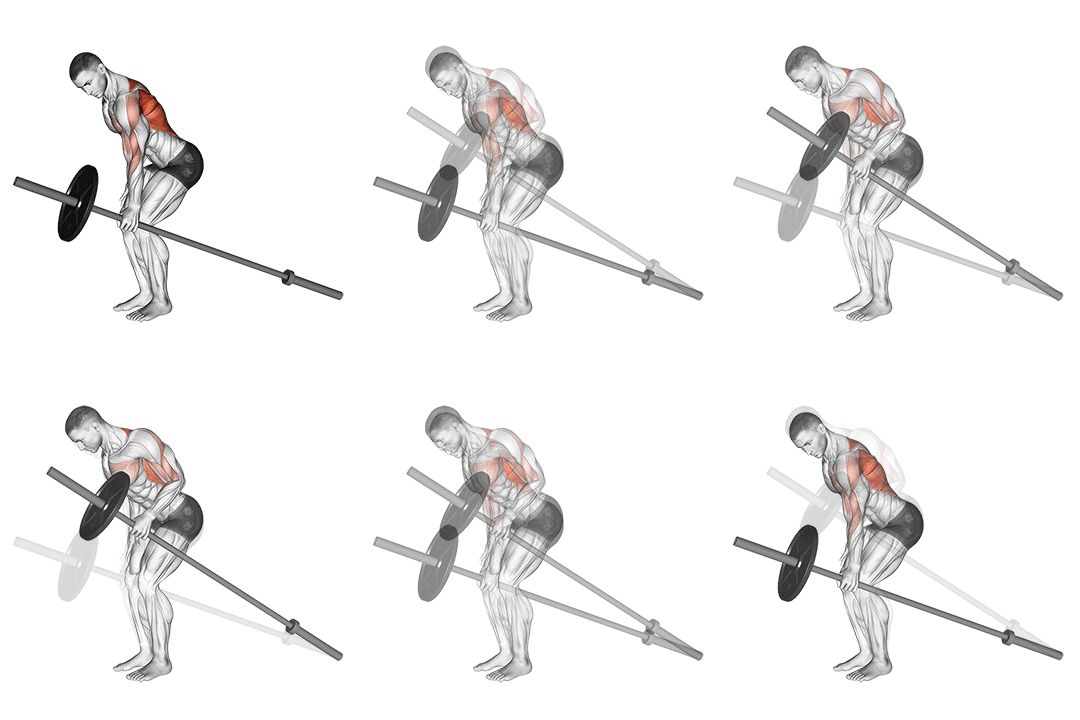


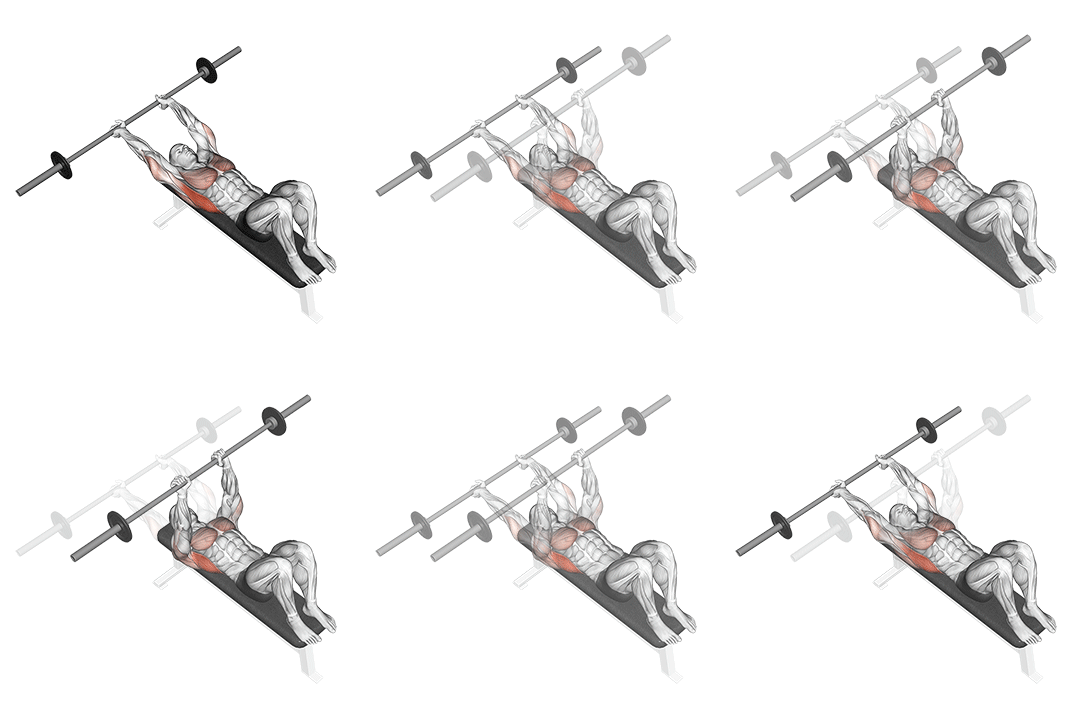
More comparisons with Barbell Reverse Grip Bent Over Row
Compare another pair
Choose two exercises to see their differences side by side.