

Bench Press - With Bands vs Resistance Band Seated Chest Press: Complete Comparison Guide
Bench Press - With Bands vs Resistance Band Seated Chest Press puts two band-based chest builders head-to-head so you can choose the right tool for your goals. You’ll get clear technique cues, biomechanics-based comparisons of muscle activation, equipment needs, progression options, and practical programming advice (rep ranges, set counts, and injury considerations). Read on and you’ll know which movement to prioritize for hypertrophy, strength, beginner safety, or home training.
Exercise Comparison
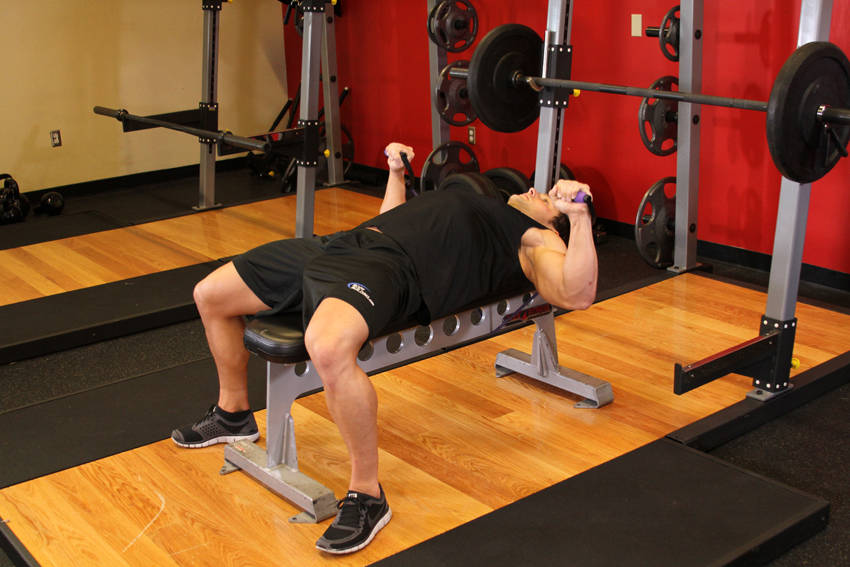
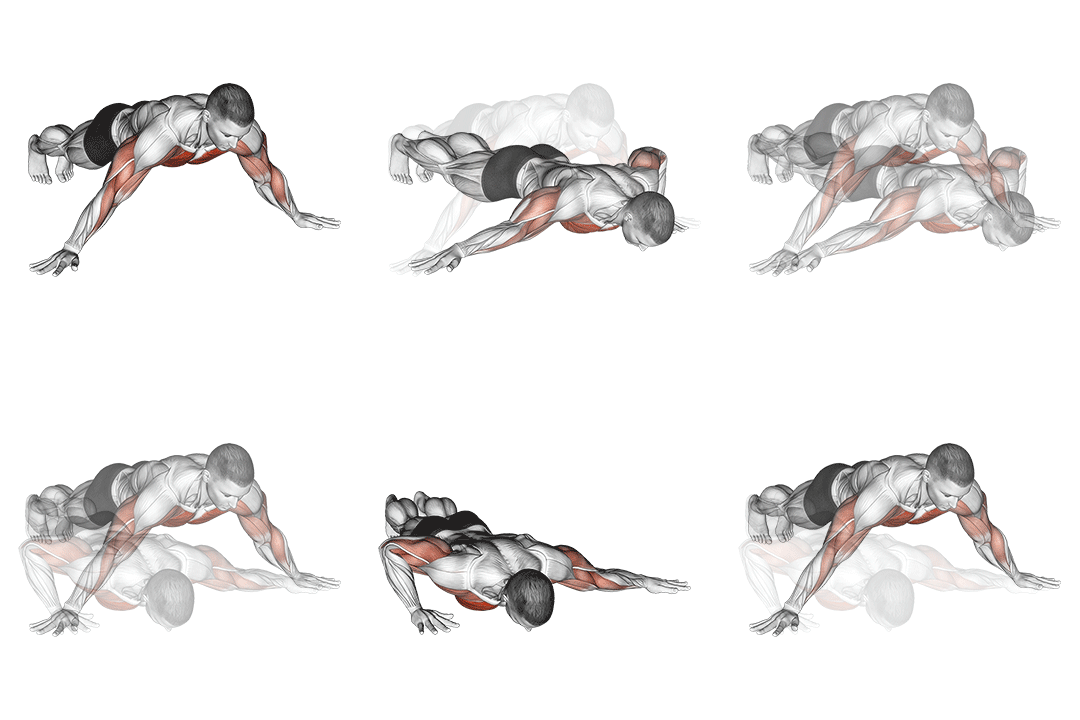
Bench Press - With Bands
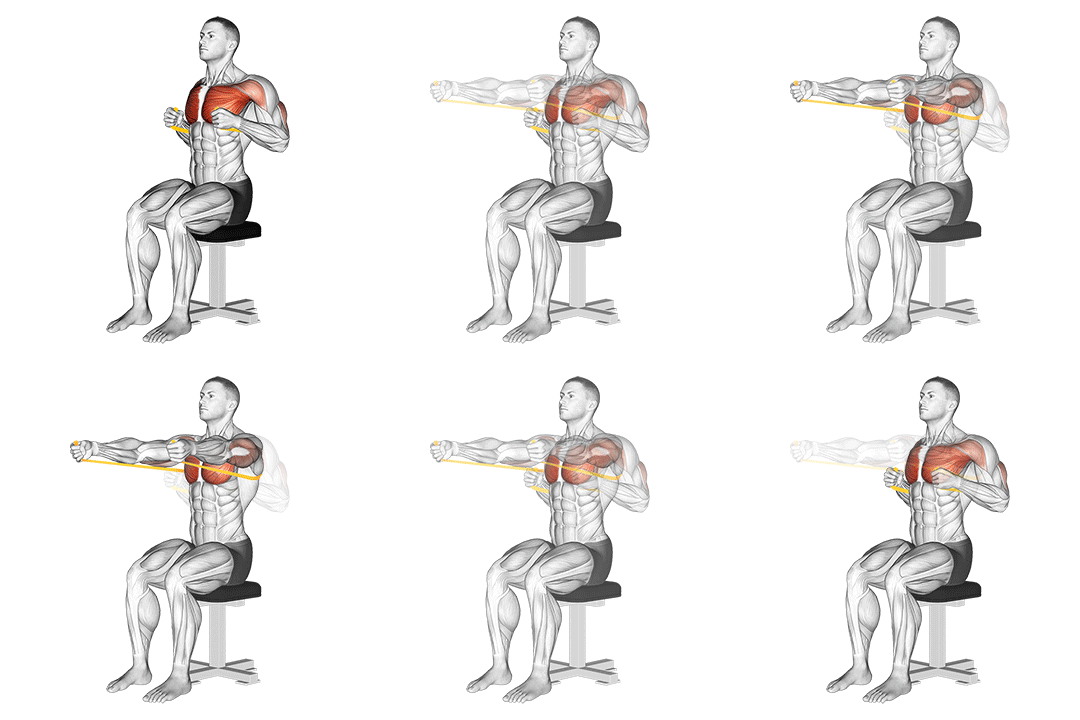
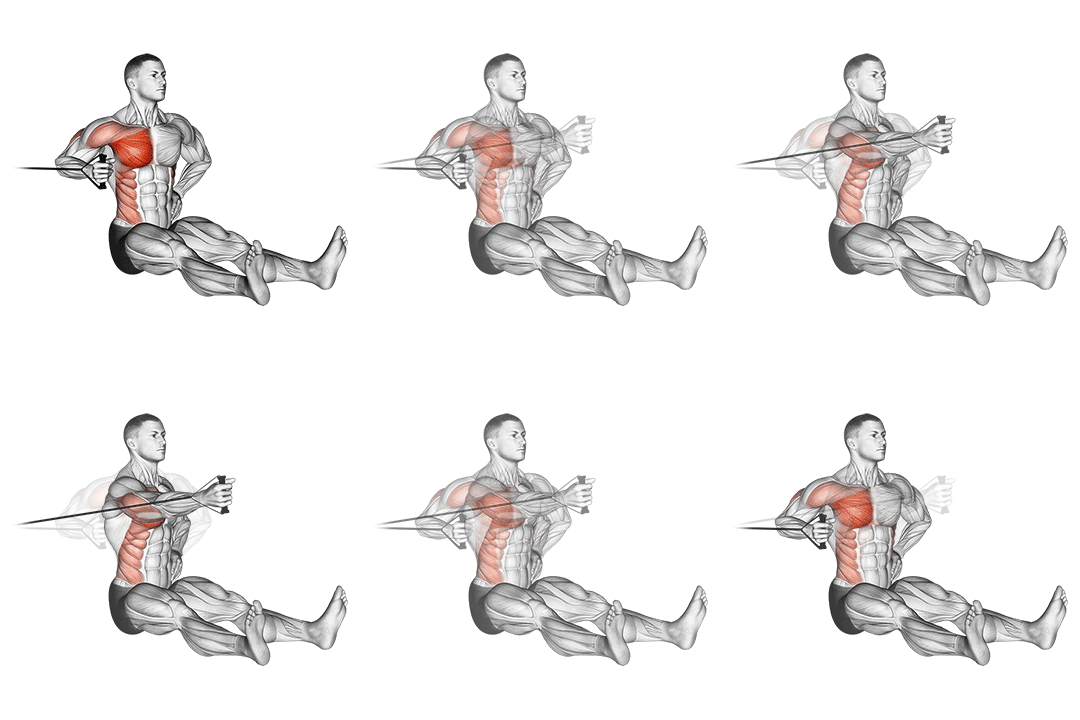
Resistance Band Seated Chest Press
Head-to-Head Comparison
| Attribute | Bench Press - With Bands | Resistance Band Seated Chest Press |
|---|---|---|
| Target Muscle |
Pectorals
|
Pectorals
|
| Body Part |
Chest
|
Chest
|
| Equipment |
Band
|
Band
|
| Difficulty |
Intermediate
|
Intermediate
|
| Movement Type |
Compound
|
Compound
|
| Secondary Muscles |
2
|
2
|
Secondary Muscles Activated
Bench Press - With Bands
Resistance Band Seated Chest Press
Visual Comparison
Overview
Bench Press - With Bands vs Resistance Band Seated Chest Press puts two band-based chest builders head-to-head so you can choose the right tool for your goals. You’ll get clear technique cues, biomechanics-based comparisons of muscle activation, equipment needs, progression options, and practical programming advice (rep ranges, set counts, and injury considerations). Read on and you’ll know which movement to prioritize for hypertrophy, strength, beginner safety, or home training.
Key Differences
- Both exercises target the Pectorals using Band. The main differences are in their movement patterns and muscle activation angles.
Pros & Cons
Bench Press - With Bands
+ Pros
- Allows heavy progressive overload and measurable strength work (3–6 rep ranges possible)
- Provides a large pec stretch at the bottom — favorable for stretch-mediated muscle growth
- Variable resistance increases peak force at lockout, improving torque curve for pressing
- Engages scapular stabilizers and full-body tension (foot drive, core bracing) for carryover to other lifts
− Cons
- Requires bench, secure anchor points, and more setup
- Higher technical demand — must manage scapular position and elbow path
- Greater peak triceps/shoulder stress at lockout, increasing risk if form breaks down
Resistance Band Seated Chest Press
+ Pros
- Highly accessible — minimal equipment and easy setup for home training
- Consistent tension across the range improves time under tension for hypertrophy sets (8–15 reps)
- Lower spinal loading and simpler technique reduce injury risk for beginners
- Easier to control band line and tempo for strict muscle-targeting work
− Cons
- Limited maximal strength carryover compared to bench variations with added external load
- Harder to quantify progressive overload precisely (band tension is less standardized)
- May provide less lower-pec stretch if anchor height or elbow path is suboptimal
When Each Exercise Wins
Bench Press - With Bands gives a larger pec stretch in the bottom position and lets you add both elastic and fixed resistance to incrementally increase mechanical tension. Use 6–12 reps with controlled 2–3 second eccentrics and a 1–2 second pause at the bottom to maximize length-tension stimulus.
The banded bench allows heavy loads and accommodating resistance, which trains force production across the full ROM and improves lockout strength. Program heavy triples (3–5 sets of 3–6 reps) and progressive band tension to raise 1RM-style outputs.
Seated chest presses reduce stability demands and let you focus on scapular retraction and elbow path with lower spinal load. Start with 2–3 sets of 8–12 reps, emphasize a 45° elbow tuck and controlled tempo to learn the pressing pattern.
The seated press requires only a band and an anchor at chest height, so you can reliably train chest without a bench or spotter. It’s simple to progress by increasing reps or swapping to a heavier band.
Frequently Asked Questions
Can I do both Bench Press - With Bands and Resistance Band Seated Chest Press in the same workout?
Yes. Use the seated chest press as a volume or warm-up exercise (2–4 sets of 8–12 reps) to pre-exhaust the pecs, then perform bench press with bands for heavier, lower-rep sets (3–5 sets of 3–6 or 6–10). Sequence the movements so technical bench work gets the freshest condition.
Which exercise is better for beginners?
Resistance Band Seated Chest Press is better for most beginners because it reduces balance and spinal-stability demands and simplifies loading. Focus on proper scapular retraction, a 30–50° elbow tuck, and controlled tempo before progressing to supine banded bench work.
How do the muscle activation patterns differ?
On the banded bench the elastic tension increases with extension, shifting peak activation toward the lockout and boosting triceps contribution, whereas the seated chest press maintains more even pectoral loading across the range. These patterns reflect length-tension relationships and the force-vector change as the band stretches.
Can Resistance Band Seated Chest Press replace Bench Press - With Bands?
It can replace the bench for maintenance or hypertrophy-focused phases, especially at home, but it won’t fully substitute for maximal strength development or the specific lockout overload trainable with a banded bench setup. Choose replacement based on whether your goal is muscle growth/consistency (yes) or increasing maximal pressing strength (no).
Expert Verdict
Use Bench Press - With Bands when your priority is measurable strength progression and maximizing pec stretch under heavy loads; its accommodating resistance makes it ideal for 3–6 rep strength blocks and 6–12 rep hypertrophy phases where you can combine bands with fixed weight. Choose Resistance Band Seated Chest Press when you need accessibility, safer loading, and consistent time under tension — it’s the better pick for beginners, rehab, or limited-space training, using 8–15 reps and strict tempo. Program both across a training cycle: prioritize seated presses for technique and volume weeks, and the banded bench for heavy, low-rep intensity blocks to drive both muscle growth and strength.
Also Compare
More comparisons with Bench Press - With Bands
More comparisons with Resistance Band Seated Chest Press

Compare More Exercises
Use our free comparison tool to analyze any two exercises head-to-head.
Compare Exercises