

Deadlift With Bands vs Deficit Deadlift: Complete Comparison Guide
Deadlift With Bands vs Deficit Deadlift — choose the right deadlift variation for your back and posterior chain work. You’ll learn how each variation stresses the erector spinae, how secondary muscles like glutes, hamstrings and quads respond, what equipment you need, and which fits your goals for strength or muscle growth. I’ll give clear technique cues (hip hinge, neutral spine, bar path), concrete rep ranges (1–5 for strength, 6–12 for hypertrophy), and biomechanical notes (length–tension, force curves, range-of-motion differences) so you can pick and program the variation that addresses your weakest link.
Exercise Comparison
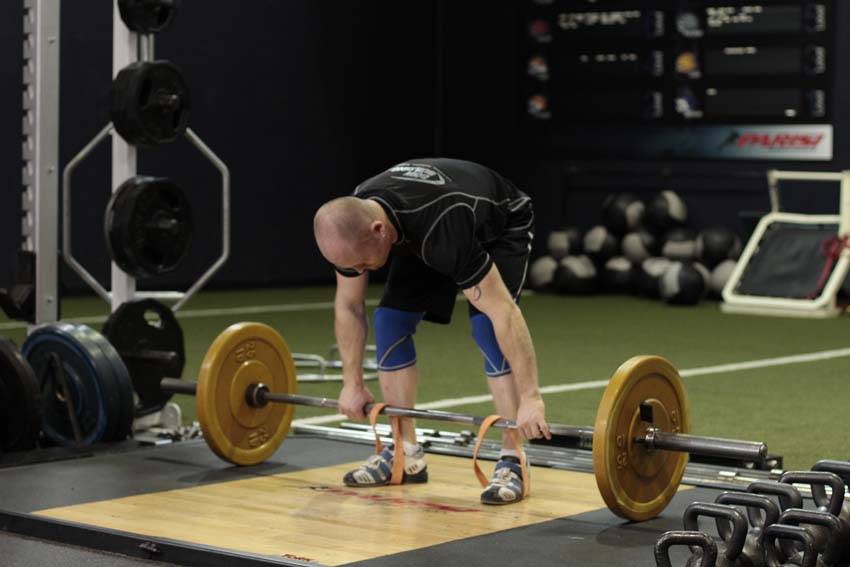
Deadlift With Bands
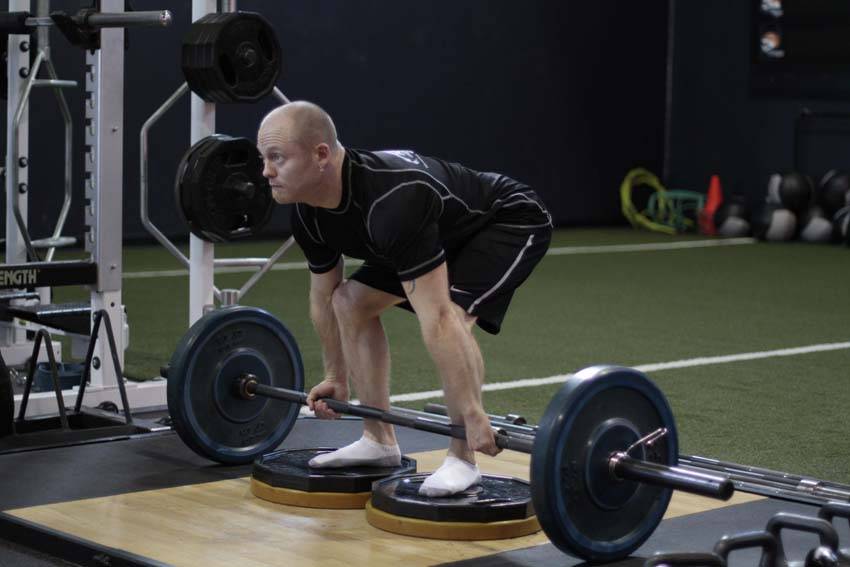
Deficit Deadlift
Head-to-Head Comparison
| Attribute | Deadlift With Bands | Deficit Deadlift |
|---|---|---|
| Target Muscle |
Erector-spinae
|
Erector-spinae
|
| Body Part |
Back
|
Back
|
| Equipment |
Barbell
|
Barbell
|
| Difficulty |
Advanced
|
Advanced
|
| Movement Type |
Compound
|
Compound
|
| Secondary Muscles |
6
|
6
|
Secondary Muscles Activated
Deadlift With Bands
Deficit Deadlift
Visual Comparison
Overview
Deadlift With Bands vs Deficit Deadlift — choose the right deadlift variation for your back and posterior chain work. You’ll learn how each variation stresses the erector spinae, how secondary muscles like glutes, hamstrings and quads respond, what equipment you need, and which fits your goals for strength or muscle growth. I’ll give clear technique cues (hip hinge, neutral spine, bar path), concrete rep ranges (1–5 for strength, 6–12 for hypertrophy), and biomechanical notes (length–tension, force curves, range-of-motion differences) so you can pick and program the variation that addresses your weakest link.
Key Differences
- Both exercises target the Erector-spinae using Barbell. The main differences are in their movement patterns and muscle activation angles.
Pros & Cons
Deadlift With Bands
+ Pros
- Provides accommodating resistance that increases top-end overload (approx. +10–30%).
- Improves lockout strength and bar velocity for 1–5 rep work.
- Portable and easy to adjust tension without extra plates.
- Reduces low-end shear compared with a straight heavy pull, useful for speed work.
− Cons
- Requires correct band setup to avoid uneven loading or snapback.
- Alters bar feel—can be hard to translate to raw 1RM numbers.
- Less bottom-end stimulus for hamstrings and glutes compared to deficit pulls.
Deficit Deadlift
+ Pros
- Increases range-of-motion to emphasize stretch-mediated tension in hamstrings and glutes.
- Builds strength through the entire pull, especially the initial drive off the floor.
- Simple setup with a platform and regular plates—no special gear required.
- Teaches a deeper hip hinge and improved starting posture under load.
− Cons
- Greater lumbar shear and technique demand, increasing injury risk for mobility-limited lifters.
- Harder to overload the lockout specifically without adding chains or bands.
- Platform height changes can complicate consistent technique and programming.
When Each Exercise Wins
Deficit deadlifts increase range of motion and place hamstrings and glutes under greater stretch, boosting length‑tension and time under tension. Use 6–12 rep ranges and 1–4 in (2.5–10 cm) deficits to maximize muscle growth at the posterior chain.
Bands provide accommodating resistance that targets the weak point at lockout and improves rate of force development. Program heavy triples to singles with bands (1–5 reps) to increase top‑end force production and transfer to raw 1RM work.
A controlled deficit pull teaches a stronger hip hinge and consistent bar path using linear loading—easier to coach while learning technique. Start with a small 1 in (2.5 cm) deficit and moderate submaximal loads before increasing depth.
Bands are compact and let you simulate variable resistance without a full plate set or built platform. With a barbell and 2–3 band tensions you can run strength and speed protocols in limited space.
Frequently Asked Questions
Can I do both Deadlift With Bands and Deficit Deadlift in the same workout?
Yes. Pair them intelligently: do one as your primary heavy or speed modality and the other as an accessory. Example: heavy deficit sets (3–5 reps) first to build bottom‑end strength, then banded singles for lockout speed, or vice versa on an alternate week.
Which exercise is better for beginners?
Deficit Deadlift is the better starting point because it uses consistent linear loading and reinforces a deeper hip hinge. Begin with a small deficit (1–2 in / 2.5–5 cm) and submaximal loads to build technique before introducing variable resistance.
How do the muscle activation patterns differ?
Deficits shift peak demand to the bottom of the lift, increasing stretch and activation in hamstrings and glutes; bands shift peak demand toward lockout, increasing erector and trap activation at full extension. In short: deficits emphasize early‑phase torque, bands emphasize late‑phase force.
Can Deficit Deadlift replace Deadlift With Bands?
Not completely. If your goal is improving lockout speed and top‑end force, bands are superior; deficits excel at bottom‑end strength and muscle stretch. Use them as complementary tools to address specific weak points rather than direct substitutes.
Expert Verdict
Use deficit deadlifts when your priority is posterior-chain hypertrophy, improving the initial pull, and teaching a deeper hip hinge; program deficits with 6–12 reps for muscle growth or 3–6 reps for strength work, and start with 1–2 in (2.5–5 cm) if mobility is limited. Choose deadlifts with bands when you need to develop lockout strength, increase bar velocity, or add accommodating resistance during peaking phases; load bands to contribute roughly 10–30% of top-end tension and focus on 1–5 rep ranges for strength. Both are advanced tools; match the variation to the specific biomechanical weakness you want to fix and use progressive overload, controlled tempo (2–4s eccentrics), and strict hip‑hinge technique to protect your spine.
Also Compare
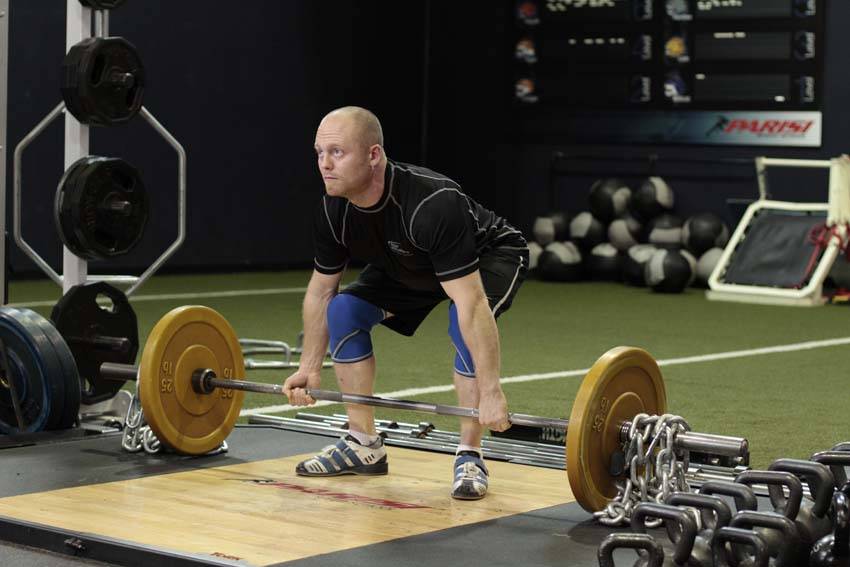
More comparisons with Deadlift With Bands
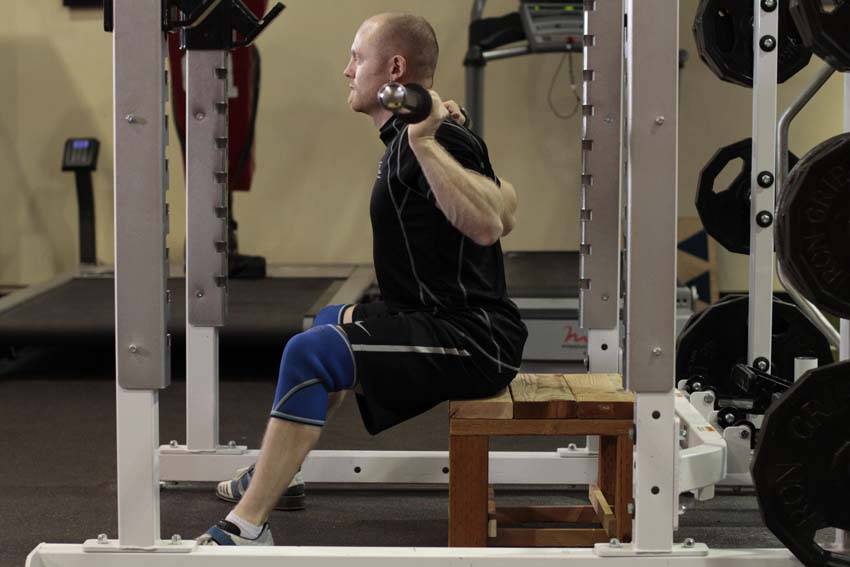
More comparisons with Deficit Deadlift
Compare More Exercises
Use our free comparison tool to analyze any two exercises head-to-head.
Compare Exercises