

Deficit Deadlift vs Seated Good Mornings: Complete Comparison Guide
Deficit Deadlift vs Seated Good Mornings — two advanced barbell moves that hammer the erector spinae but take different mechanical paths. I’ll walk you through muscle activation, joint angles, equipment needs, progression options, injury risk, and when to pick one over the other. You’ll also see {Exercise1} vs {Exercise2} comparisons for hypertrophy and strength with concrete rep ranges (3–6 for maximal strength, 6–12 for hypertrophy) and setup cues so you can apply each safely in your program.
Exercise Comparison
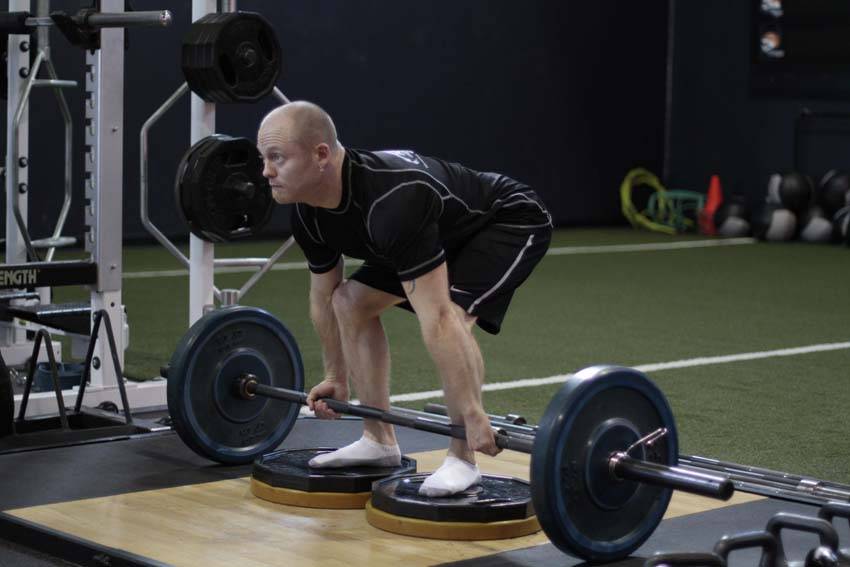
Deficit Deadlift
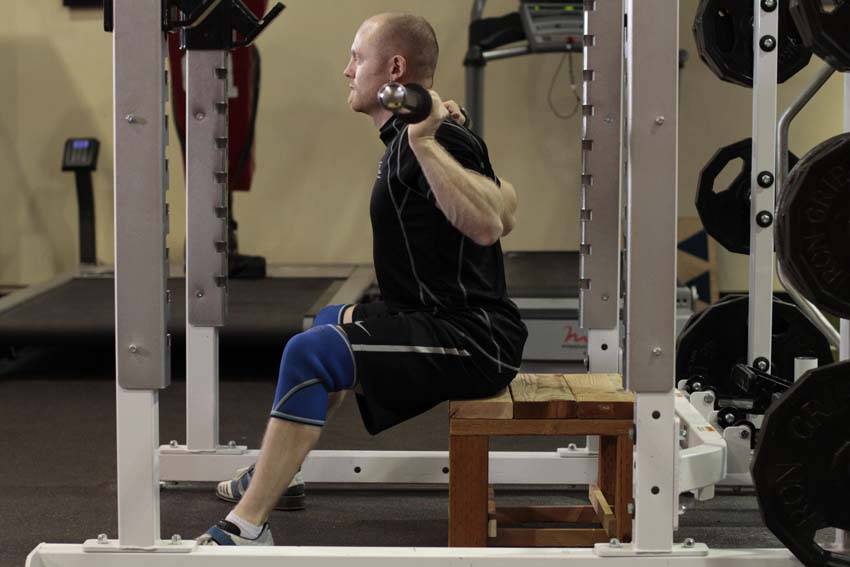
Seated Good Mornings
Head-to-Head Comparison
| Attribute | Deficit Deadlift | Seated Good Mornings |
|---|---|---|
| Target Muscle |
Erector-spinae
|
Erector-spinae
|
| Body Part |
Back
|
Back
|
| Equipment |
Barbell
|
Barbell
|
| Difficulty |
Advanced
|
Advanced
|
| Movement Type |
Compound
|
Compound
|
| Secondary Muscles |
6
|
1
|
Secondary Muscles Activated
Deficit Deadlift
Seated Good Mornings
Visual Comparison
Overview
Deficit Deadlift vs Seated Good Mornings — two advanced barbell moves that hammer the erector spinae but take different mechanical paths. I’ll walk you through muscle activation, joint angles, equipment needs, progression options, injury risk, and when to pick one over the other. You’ll also see {Exercise1} vs {Exercise2} comparisons for hypertrophy and strength with concrete rep ranges (3–6 for maximal strength, 6–12 for hypertrophy) and setup cues so you can apply each safely in your program.
Key Differences
- Both exercises target the Erector-spinae using Barbell. The main differences are in their movement patterns and muscle activation angles.
Pros & Cons
Deficit Deadlift
+ Pros
- Higher total posterior chain recruitment including quads and traps
- Greater loading and progression options for strength (heavy singles, doubles)
- Increased range of motion improves hamstring stretch and hip extension strength
- Direct transfer to conventional deadlift performance
− Cons
- Higher technical demand and coordination required
- More stressful on lumbar spine and hamstrings at heavy loads
- Requires reliable grip strength and more gym equipment for heavy sets
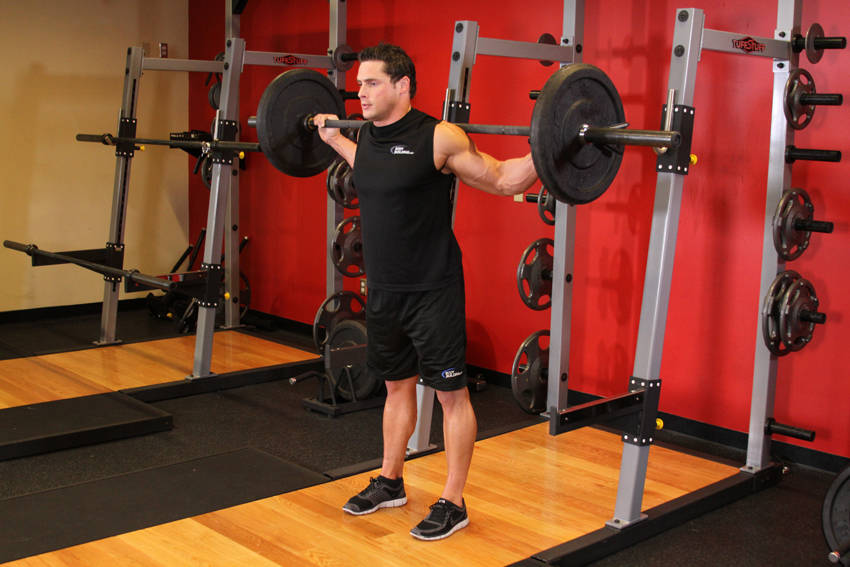
Seated Good Mornings
+ Pros
- Isolates erector spinae and glutes with stable setup
- Easier to teach hip-hinge mechanics without floor pull complexity
- Safer for heavy eccentric spine loading in controlled conditions
- Useful as an accessory for improving posterior chain stiffness and technique
− Cons
- Limited quad and hamstring recruitment compared to deadlifts
- Less transfer to maximal deadlift performance
- Potentially high compressive load on lumbar spine if form deteriorates
When Each Exercise Wins
The deficit deadlift stimulates more muscle groups (quads, hamstrings, glutes, back) and allows higher mechanical tension and progressive overload. Use 6–12 reps with controlled tempo and 60–80% 1RM volume blocks for scanning hypertrophy across the posterior chain.
Deficits let you practice heavier loads and transfer to raw deadlift strength by increasing starting hip flexion and force production off the floor; program 3–6 rep clusters at 85–95% 1RM for maximal strength adaptation.
Seated good mornings remove the complexity of floor-to-hip sequencing so you can learn a rigid neutral spine and hip-hinge pattern safely. Start with light loads and 8–12 reps focusing on tempo and torso bracing.
You can perform seated good mornings with a basic barbell or even a loaded long object and a chair, making them easier to set up at home and useful for targeted erector and glute work with limited space.
Frequently Asked Questions
Can I do both Deficit Deadlift and Seated Good Mornings in the same workout?
Yes. Use deficit deadlifts earlier for heavy sets (3–6 reps) to prioritize strength, then follow with seated good mornings as a lower-load accessory (6–12 reps) to accumulate volume and train spinal endurance and tempo control.
Which exercise is better for beginners?
Seated good mornings are better for beginners because the seated setup removes floor mechanics and lets you focus on a neutral spine and hip hinge. Start light and prioritize tempo and bracing before adding significant load.
How do the muscle activation patterns differ?
Deficit deadlifts create higher peak hamstring and quad activity early in the pull and large erector activation near lockout due to increased hip and knee extension moments. Seated good mornings produce steady, higher relative lumbar extensor activation with less knee torque and reduced hamstring stretch.
Can Seated Good Mornings replace Deficit Deadlift?
Not fully. Seated good mornings can supplement or temporarily replace deficits for targeted erector and glute work, but they lack the knee extension and grip demands that build transfer to maximal deadlift strength and whole-chain hypertrophy.
Expert Verdict
Use deficit deadlifts when your goal is broad posterior chain development or increased deadlift and maximal strength; they create larger hip and knee extension moments, increase ROM by roughly 5–10 cm depending on platform height, and let you overload multiple muscles. Choose seated good mornings when you want to isolate the lumbar extensors and glutes, teach the hip hinge, or manage lower-limb limitations — they reduce knee involvement and let you control eccentric tempo precisely. Program deficits for 3–6 reps or 6–10 for hypertrophy blocks, and seated good mornings for 6–15 controlled reps as accessory work. Rotate both in your mesocycle for balanced spinal and hip resilience.
Also Compare
More comparisons with Deficit Deadlift
More comparisons with Seated Good Mornings
Compare More Exercises
Use our free comparison tool to analyze any two exercises head-to-head.
Compare Exercises