

Lever Chest Press vs Lever Decline Chest Press: Complete Comparison Guide
Lever Chest Press vs Lever Decline Chest Press — if you're deciding which lever press belongs in your program, this guide has your back. I'll walk you through how each variation loads the pectorals, how the force vector and body angle change secondary muscle recruitment, and which movement suits beginners versus intermediate trainees. You'll get clear technique cues, rep ranges for hypertrophy and strength, and practical guidance on equipment and progression so you can pick the most effective press for your goals and avoid common setup mistakes.
Exercise Comparison
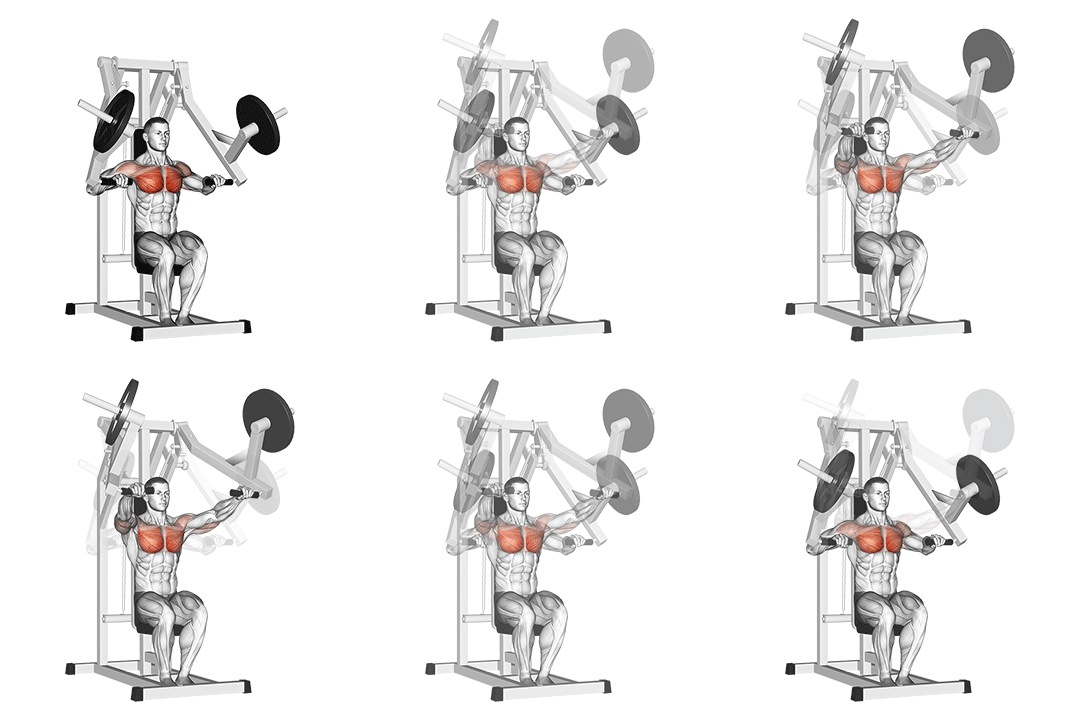
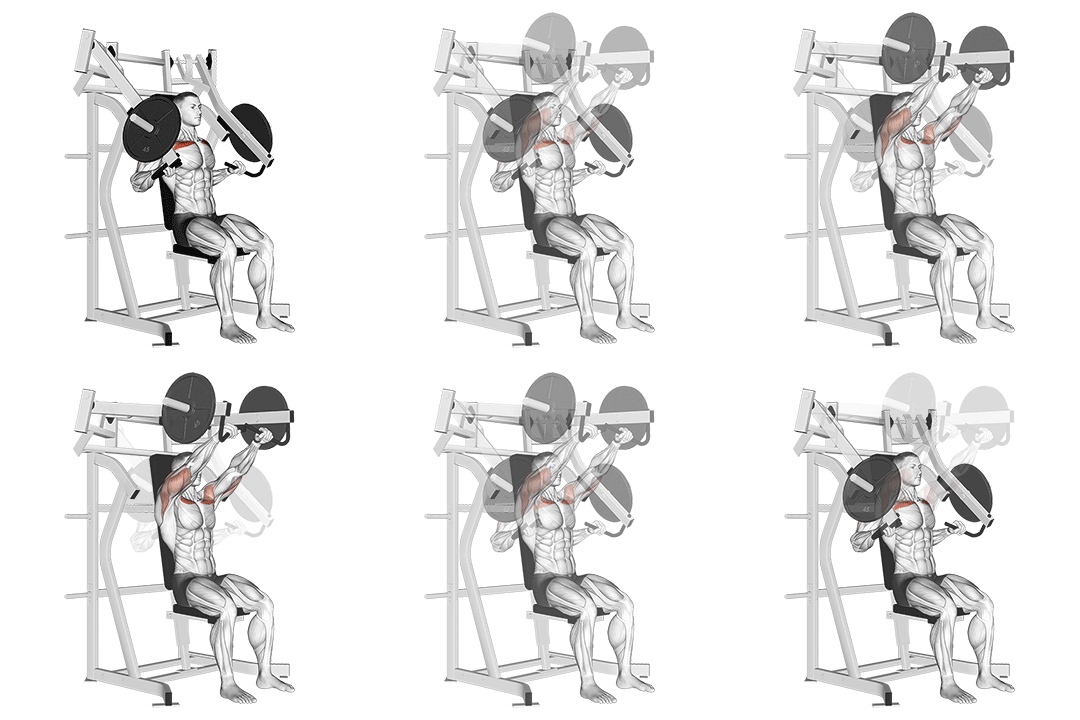
Lever Chest Press
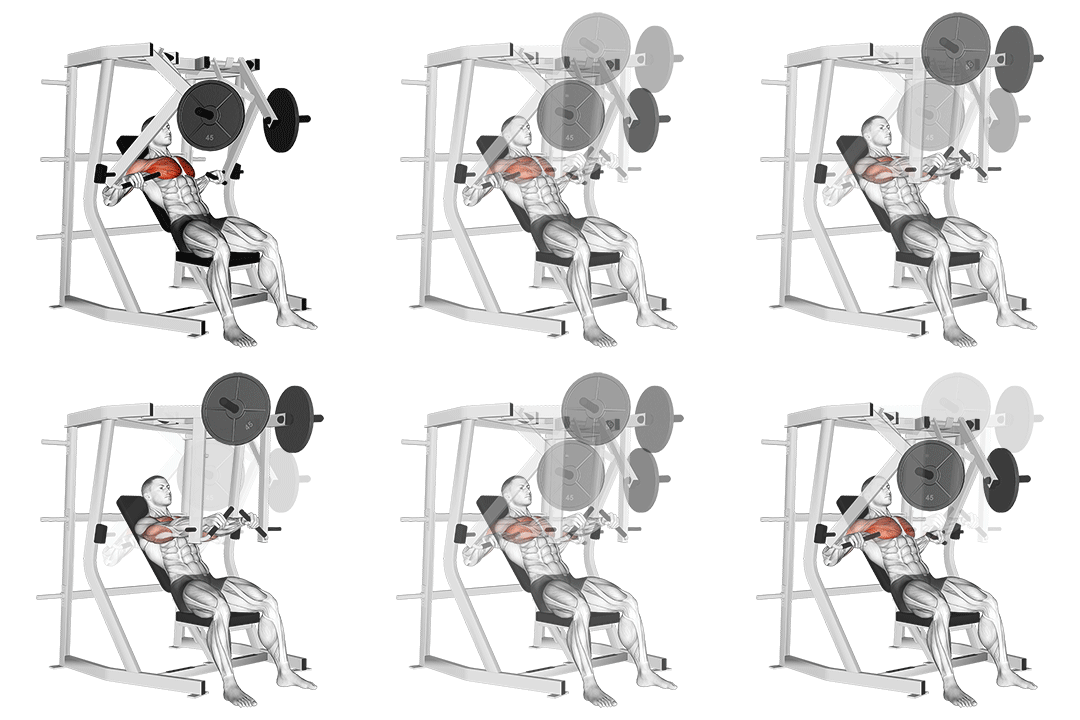
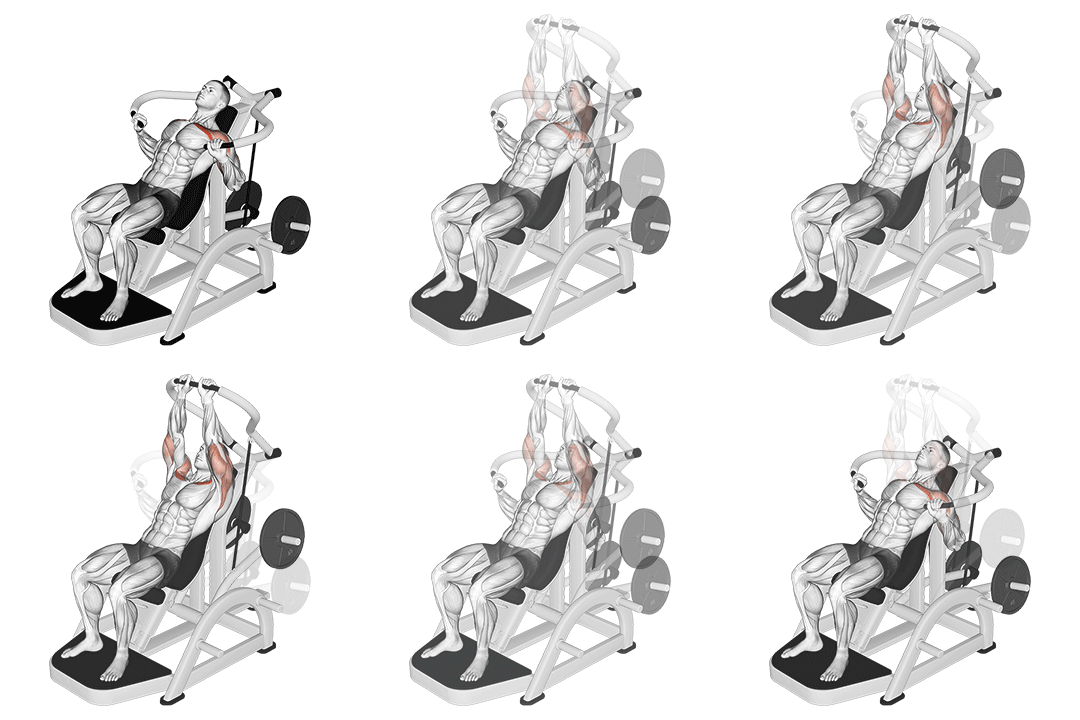
Lever Decline Chest Press
Head-to-Head Comparison
| Attribute | Lever Chest Press | Lever Decline Chest Press |
|---|---|---|
| Target Muscle |
Pectorals
|
Pectorals
|
| Body Part |
Chest
|
Chest
|
| Equipment |
Lever
|
Lever
|
| Difficulty |
Beginner
|
Intermediate
|
| Movement Type |
Compound
|
Compound
|
| Secondary Muscles |
2
|
2
|
Secondary Muscles Activated
Lever Chest Press
Lever Decline Chest Press
Visual Comparison
Overview
Lever Chest Press vs Lever Decline Chest Press — if you're deciding which lever press belongs in your program, this guide has your back. I'll walk you through how each variation loads the pectorals, how the force vector and body angle change secondary muscle recruitment, and which movement suits beginners versus intermediate trainees. You'll get clear technique cues, rep ranges for hypertrophy and strength, and practical guidance on equipment and progression so you can pick the most effective press for your goals and avoid common setup mistakes.
Key Differences
- Difficulty levels differ: Lever Chest Press is beginner, while Lever Decline Chest Press is intermediate.
- Both exercises target the Pectorals using Lever. The main differences are in their movement patterns and muscle activation angles.
Pros & Cons
Lever Chest Press
+ Pros
- Beginner-friendly setup and stable back support
- Even pectoral activation across clavicular and sternal fibers
- Easier to find in commercial gyms
- Lower shoulder shear when performed with proper scapular retraction
− Cons
- Less emphasis on lower pec fibers than decline variations
- Can over-recruit anterior deltoid if elbows flare beyond 45°
- Limited angle variation compared with adjustable decline machines
Lever Decline Chest Press
+ Pros
- Greater emphasis on lower sternal pectorals (often 8–15% higher activation)
- Stronger mechanical advantage for heavy lockouts due to horizontal force vector
- Useful variation for addressing lower-chest lag in physique training
- Allows angle manipulation (15–30°) to fine-tune fiber targeting
− Cons
- Requires more precise setup and often a specific machine
- Higher shoulder and sternum pressure if body position is poor
- Less suitable for true beginners without supervision
When Each Exercise Wins
For overall pectoral size the flat lever press produces balanced load across clavicular and sternal fibers and lets you control volume in the 6–12 rep range efficiently. If you want to target lower pecs specifically, add decline sets as accessory work.
The decline line of pull creates a more horizontal force vector and a favorable mechanical advantage at lockout, allowing heavier loads for 3–6 rep strength phases and improving triceps-driven extension moments.
The flat lever press has a simpler setup, lower coordination demand, and safer shoulder mechanics when you keep elbows ~45° and scapulae retracted, making it ideal for new trainees learning pressing mechanics.
Flat lever stations are more common in compact home gyms and require fewer angle adjustments. The decline lever often needs a dedicated decline bench or adjustable machine that takes more space.
Frequently Asked Questions
Can I do both Lever Chest Press and Lever Decline Chest Press in the same workout?
Yes — pair the flat lever press as your main heavy or volume movement and add 2–4 decline sets as an accessory to target lower-pec fibers. Keep total weekly chest volume in recommended hypertrophy ranges (8–20 sets per muscle) to avoid overtraining.
Which exercise is better for beginners?
Lever Chest Press is better for beginners because it has a simpler setup and safer shoulder mechanics when you maintain scapular retraction and control the eccentric. Start with the flat lever to learn elbow path and breathing before introducing decline angles.
How do the muscle activation patterns differ?
The decline shifts the force vector to emphasize lower sternal pectorals and increases triceps torque at lockout, altering length-tension relationships so lower fibers fire more. The flat lever press produces a more even activation across clavicular and sternal regions and involves the anterior deltoid to a greater degree.
Can Lever Decline Chest Press replace Lever Chest Press?
Only if your goal is primarily lower-chest development or strength at specific joint angles; decline can’t fully replace the flat press for balanced pectoral development. For comprehensive chest progress, keep the flat lever as a primary movement and use decline to address targeted weaknesses.
Expert Verdict
Choose the Lever Chest Press as your foundational chest movement: it’s easier to learn, widely available, and gives balanced pectoral activation for steady muscle growth in the 6–12 rep range. Use precise cues — scapular retraction, feet planted, elbows about 45° to the torso, and a controlled 2–3 second eccentric — to maximize safety and hypertrophy. Add the Lever Decline Chest Press when you need extra lower-pec emphasis or a strength-focused block (3–6 reps) because the decline angle shifts the force vector and increases lower-sternal activation. Rotate both across microcycles for balanced development and to target weak points.
Also Compare
More comparisons with Lever Chest Press
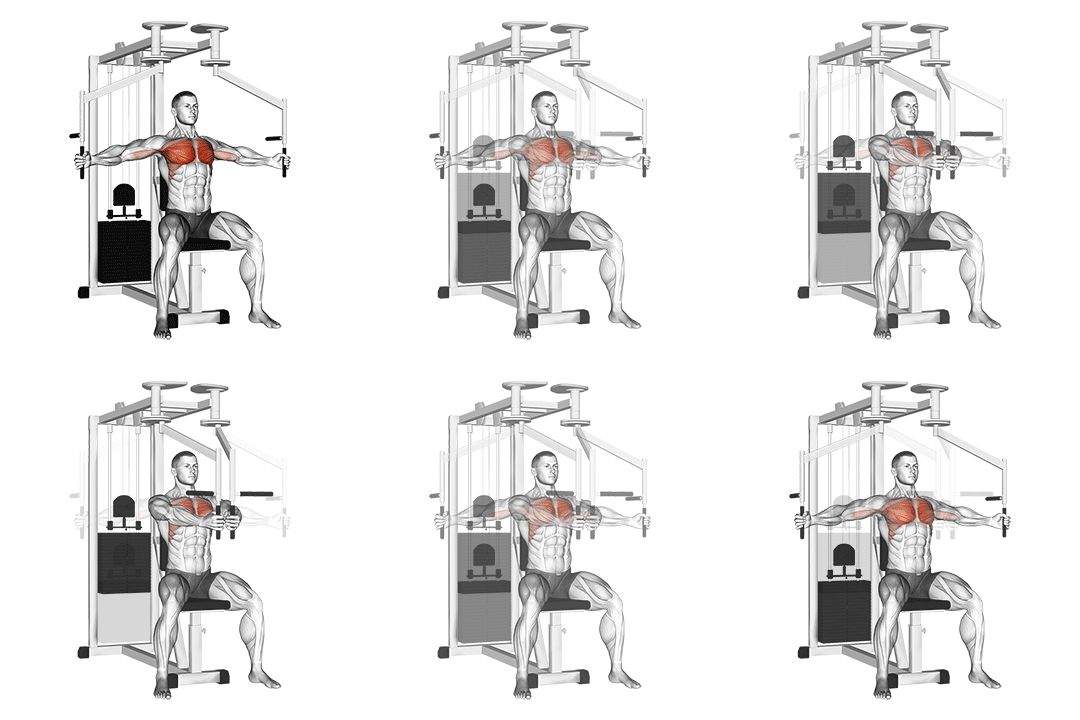
More comparisons with Lever Decline Chest Press
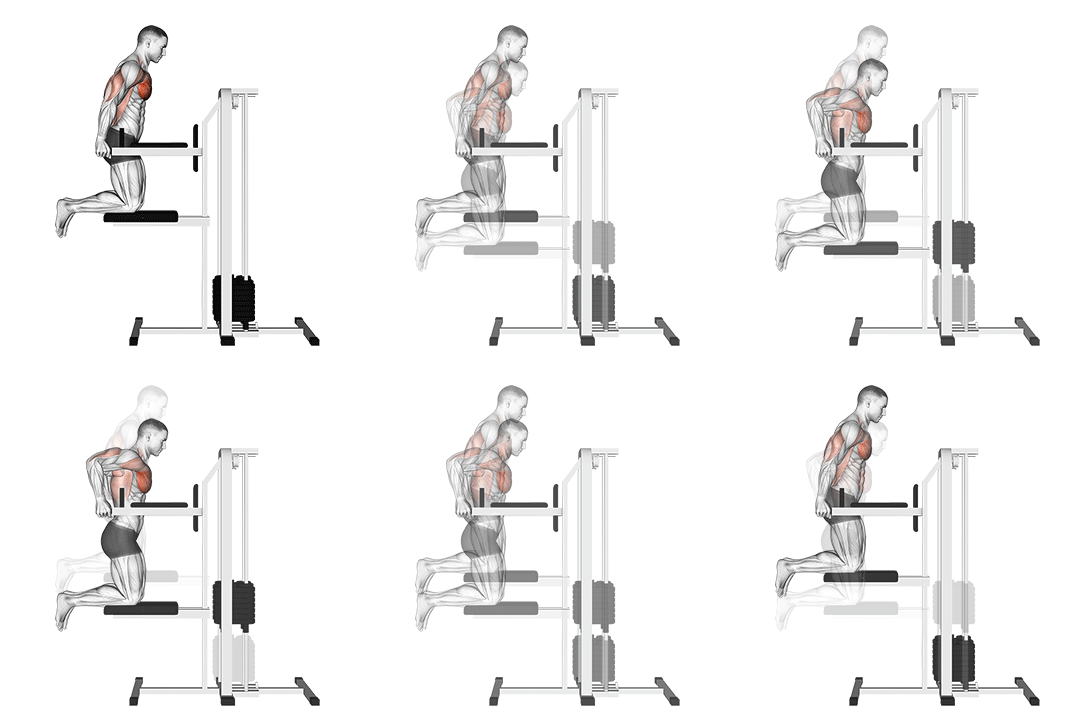
Compare More Exercises
Use our free comparison tool to analyze any two exercises head-to-head.
Compare Exercises