

Lever Chest Press vs Lever Seated Fly: Complete Comparison Guide
Lever Chest Press vs Lever Seated Fly — you’re comparing two lever-machine staples for chest development. I’ll walk you through primary muscle targets, secondary recruitment, biomechanics (force vectors, length-tension), technique cues, and which to pick for hypertrophy, strength, or beginner programming. You’ll get rep ranges (6–12 for hypertrophy, 3–6 for strength), joint angle targets, tempo suggestions, progression tips, and simple waypoints to reduce injury risk. Read the quick comparisons and clear recommendations so you can choose the movement that fits your training block and equipment access.
Exercise Comparison
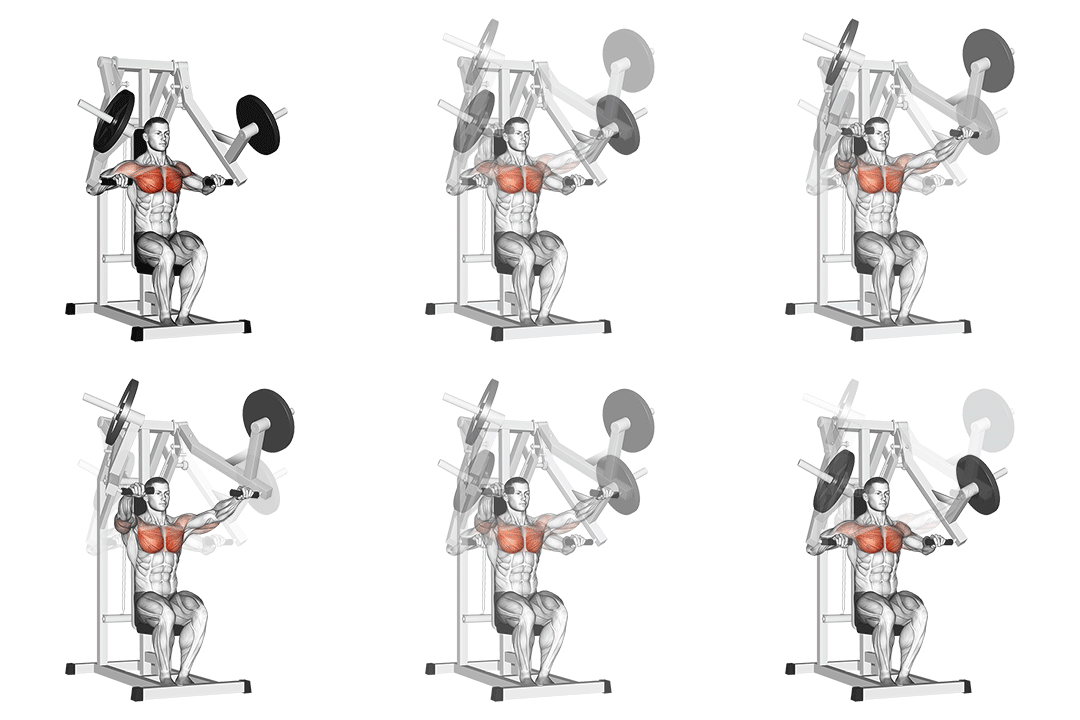
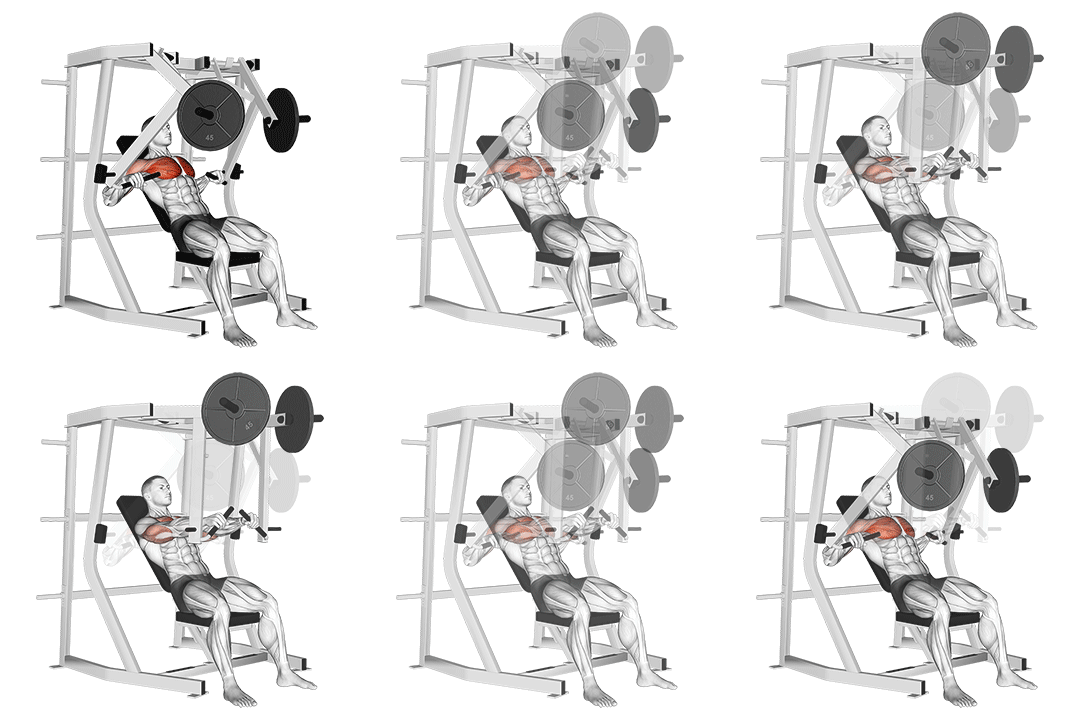
Lever Chest Press
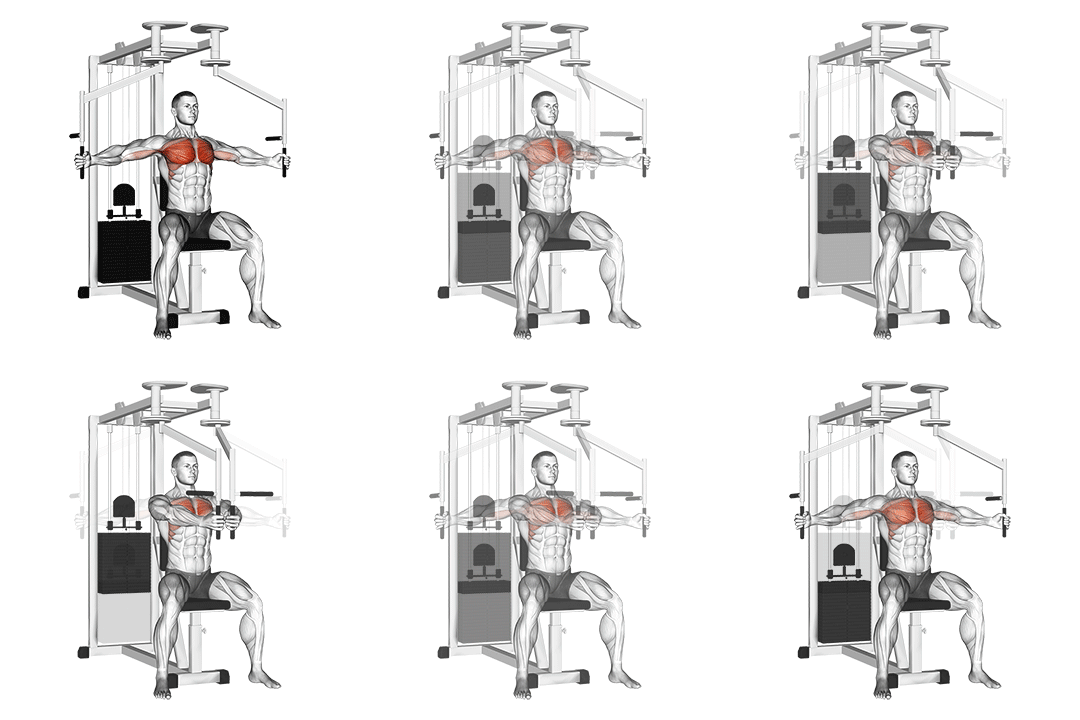
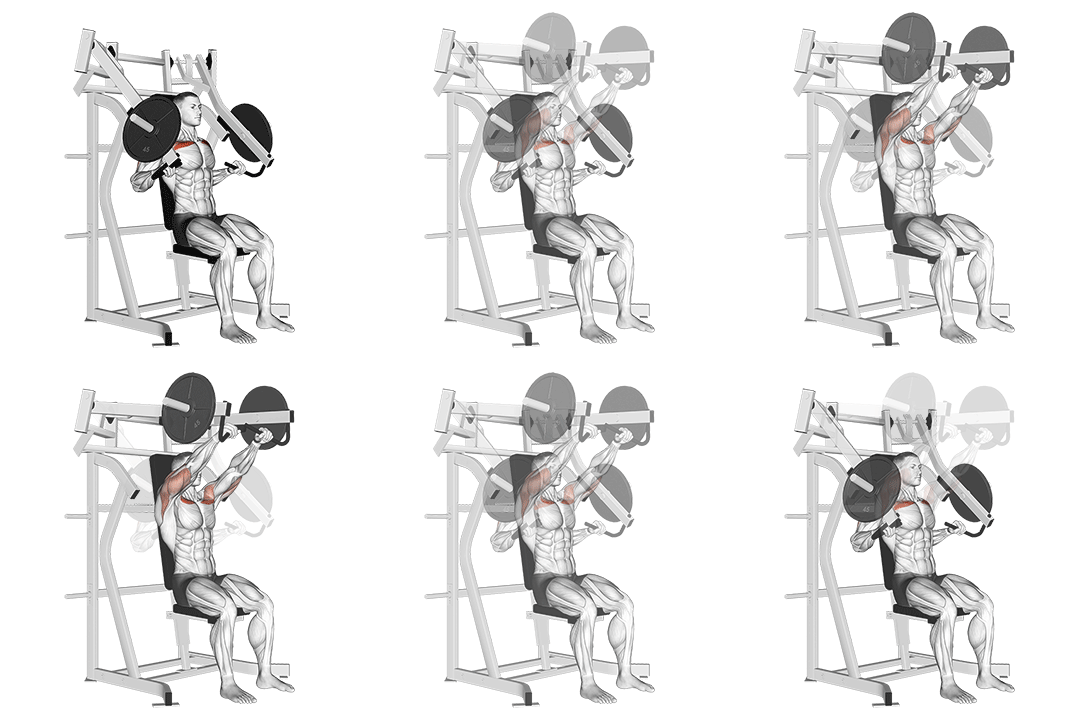
Lever Seated Fly
Head-to-Head Comparison
| Attribute | Lever Chest Press | Lever Seated Fly |
|---|---|---|
| Target Muscle |
Pectorals
|
Pectorals
|
| Body Part |
Chest
|
Chest
|
| Equipment |
Lever
|
Lever
|
| Difficulty |
Beginner
|
Beginner
|
| Movement Type |
Compound
|
Isolation
|
| Secondary Muscles |
2
|
2
|
Secondary Muscles Activated
Lever Chest Press
Lever Seated Fly
Visual Comparison
Overview
Lever Chest Press vs Lever Seated Fly — you’re comparing two lever-machine staples for chest development. I’ll walk you through primary muscle targets, secondary recruitment, biomechanics (force vectors, length-tension), technique cues, and which to pick for hypertrophy, strength, or beginner programming. You’ll get rep ranges (6–12 for hypertrophy, 3–6 for strength), joint angle targets, tempo suggestions, progression tips, and simple waypoints to reduce injury risk. Read the quick comparisons and clear recommendations so you can choose the movement that fits your training block and equipment access.
Key Differences
- Lever Chest Press is a compound movement, while Lever Seated Fly is an isolation exercise.
- Both exercises target the Pectorals using Lever. The main differences are in their movement patterns and muscle activation angles.
Pros & Cons
Lever Chest Press
+ Pros
- Allows higher external load for greater mechanical tension
- Simple seat and handle set-up — quick to learn for beginners
- Recruits triceps and deltoids for compound strength transfer
- Clear progression path with measurable weight increases
− Cons
- Less isolation of pec peak contraction compared to fly
- If seat is misaligned, can stress shoulder joint
- Can mask weak chest activation if triceps dominate the lockout
Lever Seated Fly
+ Pros
- Maximizes mid-range pec peak contraction and stretch
- Lower triceps involvement — better for isolating chest
- Easy to control tempo and time under tension
- Great finisher to accentuate chest hypertrophy and shape
− Cons
- Lower absolute loading limits — less for heavy strength work
- Requires good scapular stability to avoid shoulder strain
- Fewer straightforward progression increments for load
When Each Exercise Wins
The Lever Chest Press allows higher external loads and combines mechanical tension with sufficient time under tension; use 6–12 reps with 1–2 second pauses at mid-range to drive hypertrophy across the pecs and triceps.
Its compound nature and ability to progressively overload in 3–6 rep ranges makes the chest press better for increasing pressing strength and force production transferred to free-weight presses.
Guided path, simple seat alignment cues, and a natural press pattern make the chest press the easier entry point; beginners can learn scapular retraction and breathing while safely handling load.
While both require a lever machine, the press movement transfers directly to push-ups or dumbbell presses you can do at home, making the chest-press pattern more practical if you lack machine access.
Frequently Asked Questions
What is the difference between Lever Chest Press and Lever Seated Fly?
Lever Chest Press primarily targets the Pectorals, while Lever Seated Fly focuses on the Pectorals. They also differ in equipment requirements: Lever Chest Press uses Lever, while Lever Seated Fly requires Lever.
Which is better: Lever Chest Press or Lever Seated Fly?
Neither exercise is universally better - it depends on your goals. Choose Lever Chest Press to emphasize the Pectorals. Choose Lever Seated Fly for focus on the Pectorals. Many training programs include both for balanced development.
Can I do Lever Chest Press and Lever Seated Fly in the same workout?
Yes, you can perform both exercises in the same workout. Since they target the same muscle group (Pectorals), consider spacing them apart or doing them on different days for optimal recovery.
Which exercise is harder: Lever Chest Press or Lever Seated Fly?
Lever Chest Press is rated as beginner difficulty, while Lever Seated Fly is beginner. Both exercises have similar difficulty levels.
Expert Verdict
Use the Lever Chest Press as your primary heavy chest movement when you want measurable progression, compound strength, and the ability to overload the pecs while also training triceps and anterior deltoids. Program it for 3–6 reps for strength blocks and 6–12 reps for hypertrophy with controlled 2-0-2 tempo. Add the Lever Seated Fly as an isolation finisher or in higher-rep blocks to emphasize peak pec contraction, stretch, and time under tension — keep elbows slightly bent (10°–20°) and stop short of full extension to protect the shoulder. For most lifters, the press is the foundational choice; use the fly to refine chest shape and fatigue specific fibers.
Also Compare
More comparisons with Lever Chest Press
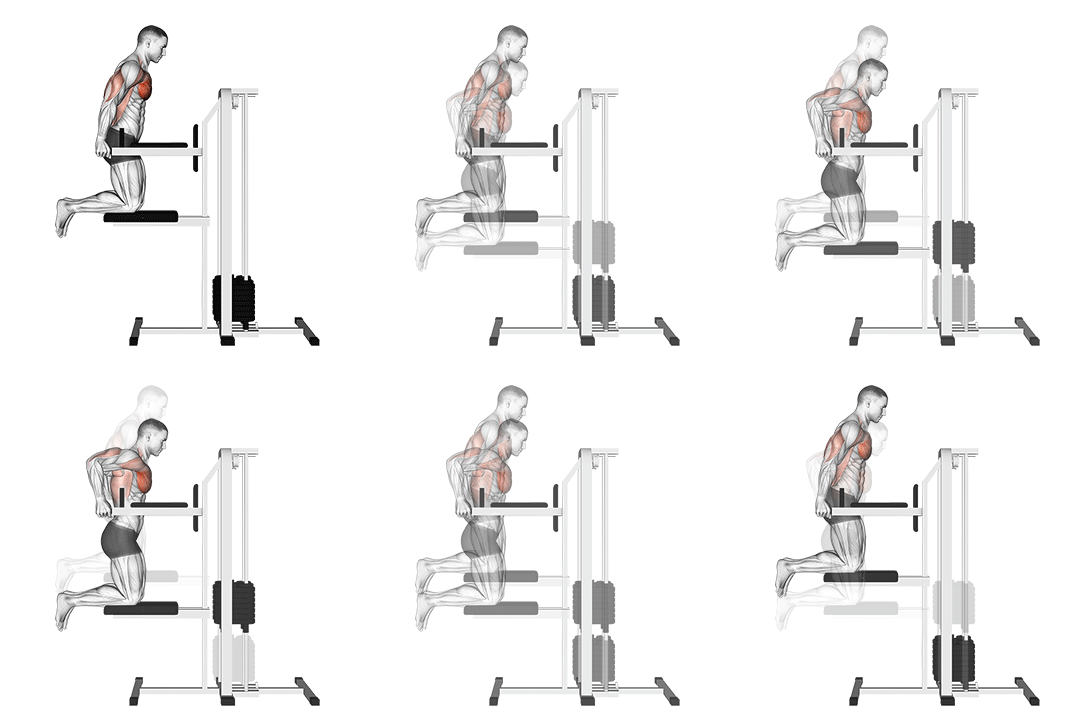
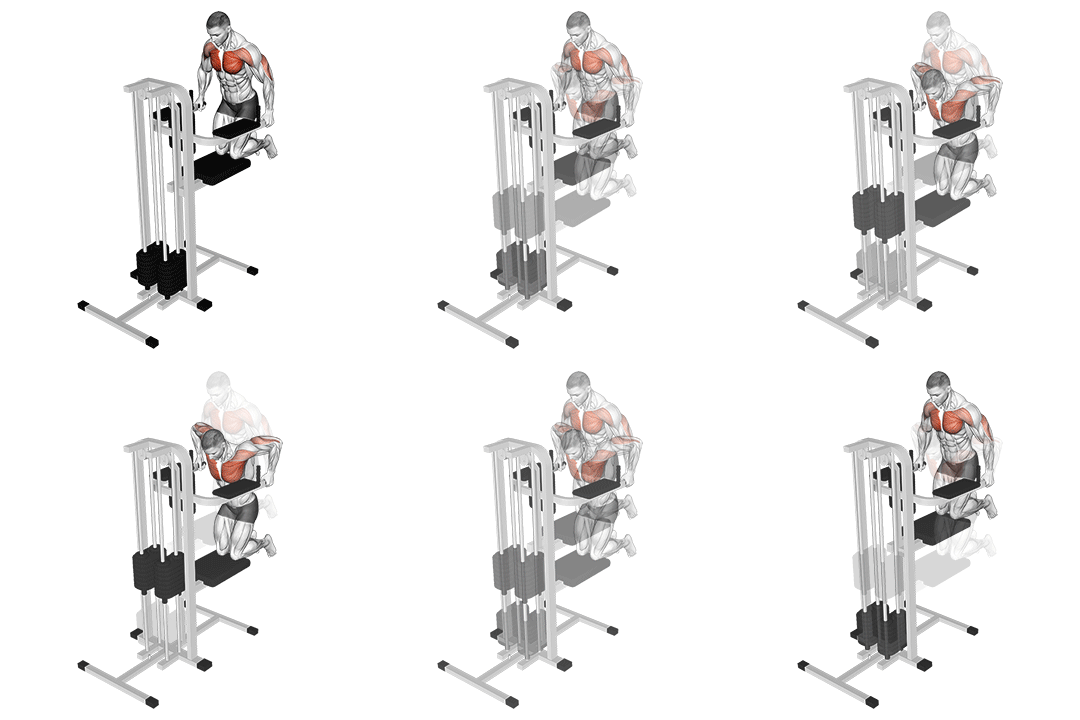
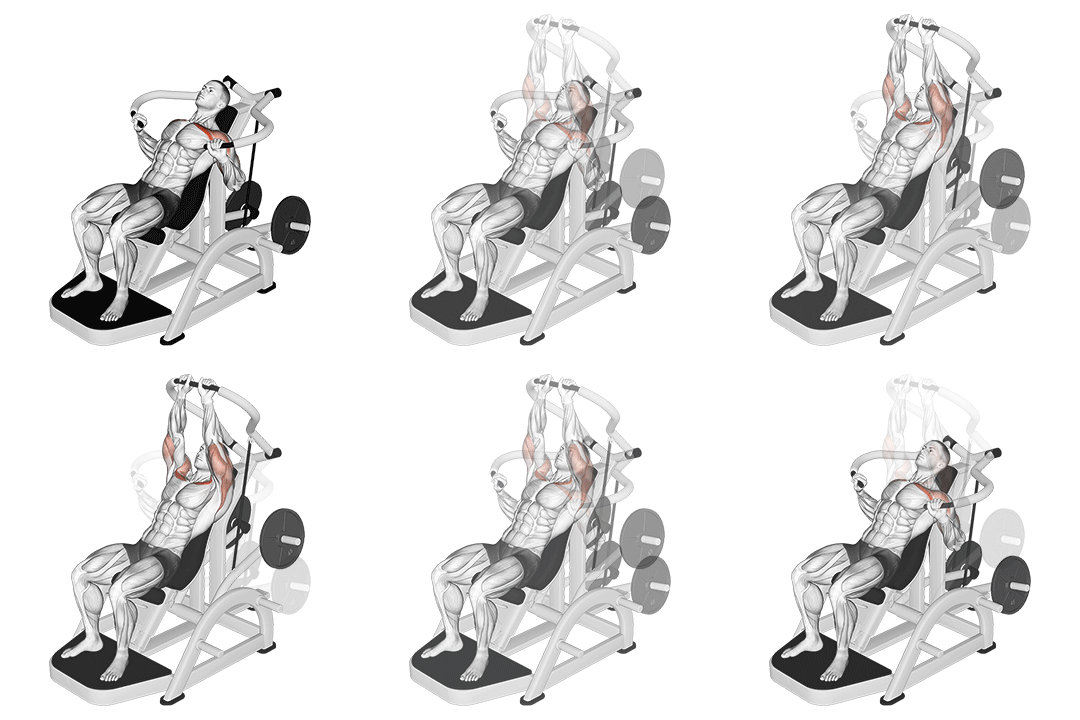
More comparisons with Lever Seated Fly
Compare More Exercises
Use our free comparison tool to analyze any two exercises head-to-head.
Compare Exercises