

Lever Decline Chest Press vs Lever Seated Fly: Complete Comparison Guide
Lever Decline Chest Press vs Lever Seated Fly — both hit the chest, but they do it differently. You’ll get a clear, practical comparison so you can pick the right move for muscle growth, strength, or rehab. I’ll cover which muscles each emphasizes, how the force vectors and joint angles change activation, equipment needs, learning curve, and rep ranges to use. Read on for specific technique cues, the best progression options, and quick scenarios that tell you when to choose the decline press or the seated fly.
Exercise Comparison
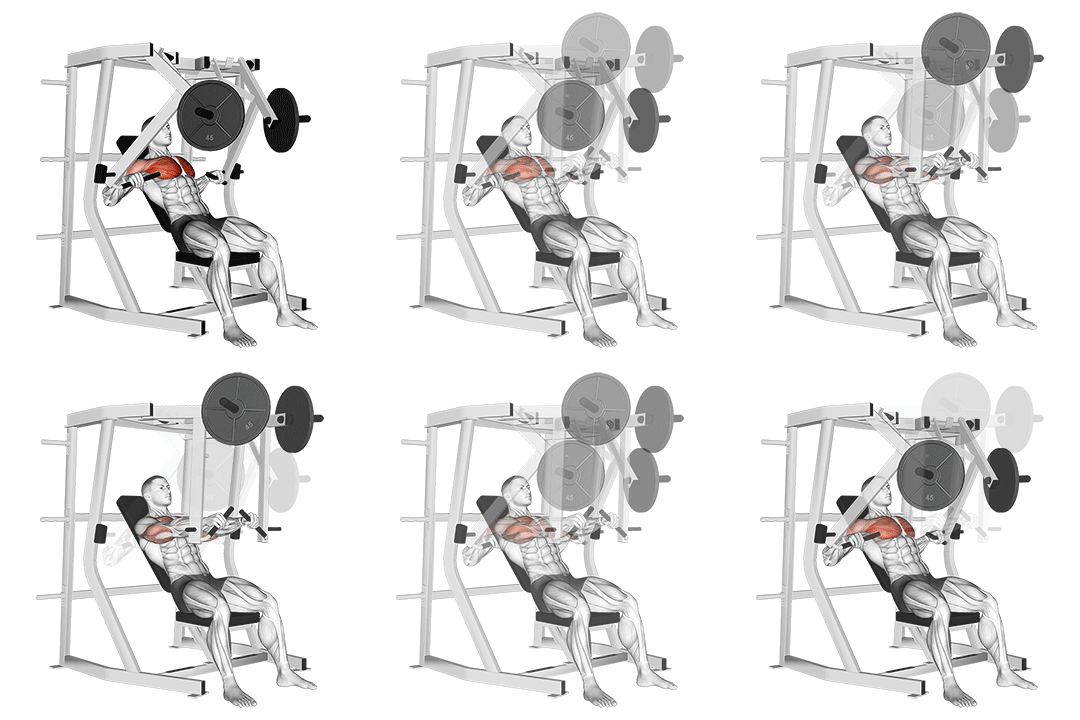
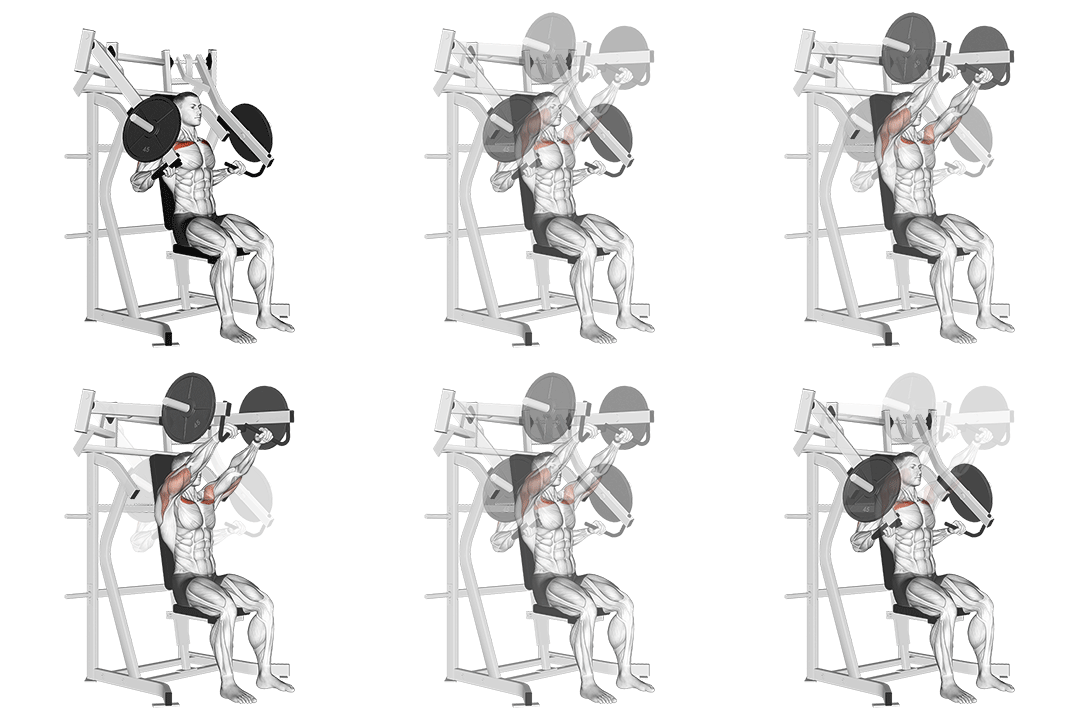
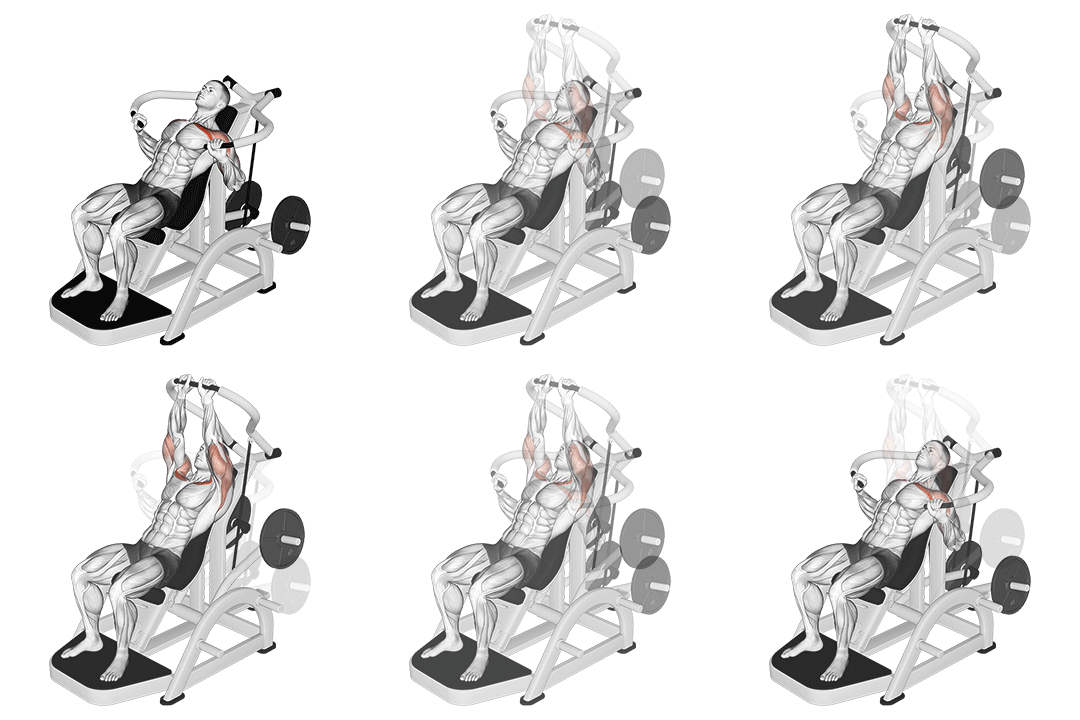
Lever Decline Chest Press
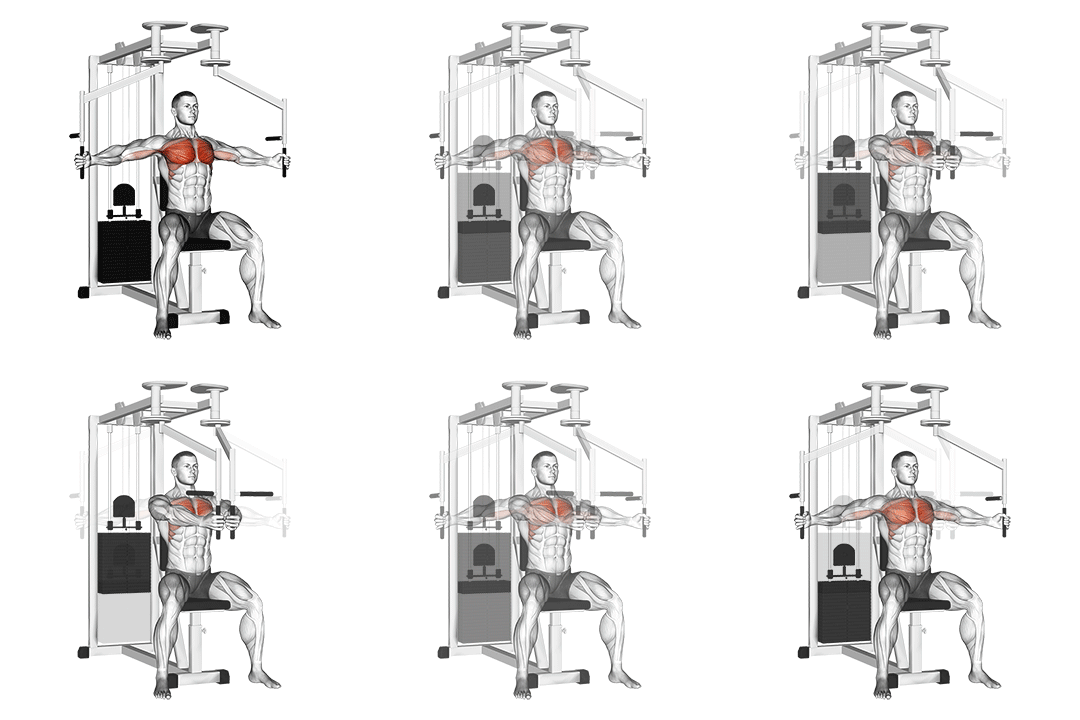
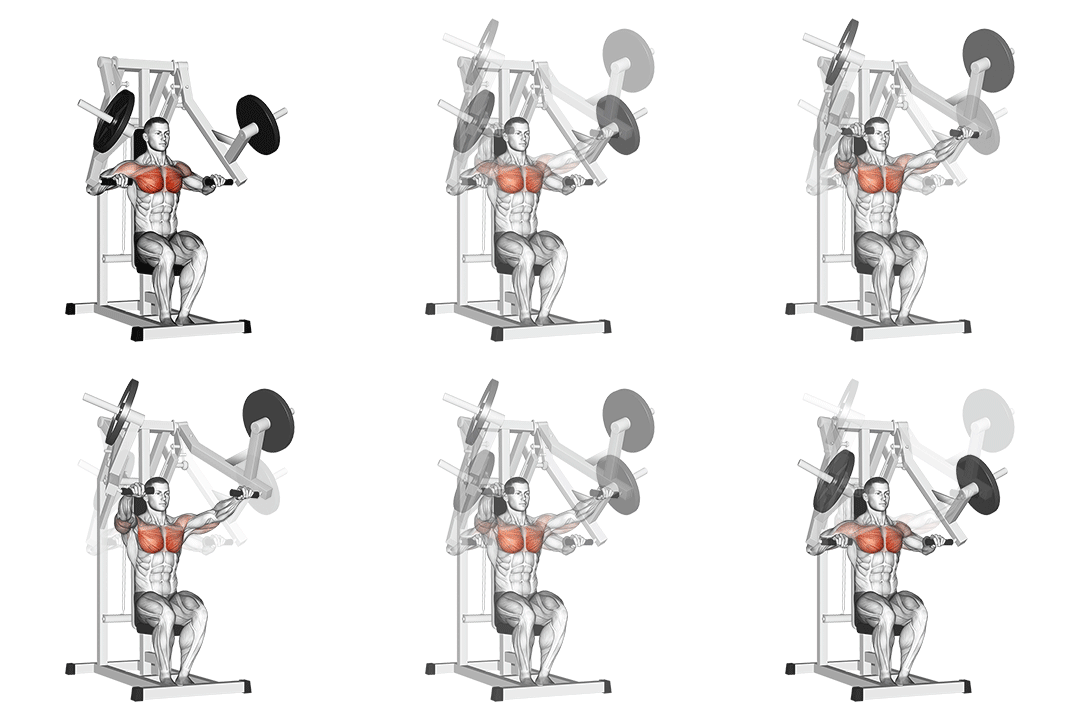
Lever Seated Fly
Head-to-Head Comparison
| Attribute | Lever Decline Chest Press | Lever Seated Fly |
|---|---|---|
| Target Muscle |
Pectorals
|
Pectorals
|
| Body Part |
Chest
|
Chest
|
| Equipment |
Lever
|
Lever
|
| Difficulty |
Intermediate
|
Beginner
|
| Movement Type |
Compound
|
Isolation
|
| Secondary Muscles |
2
|
2
|
Secondary Muscles Activated
Lever Decline Chest Press
Lever Seated Fly
Visual Comparison
Overview
Lever Decline Chest Press vs Lever Seated Fly — both hit the chest, but they do it differently. You’ll get a clear, practical comparison so you can pick the right move for muscle growth, strength, or rehab. I’ll cover which muscles each emphasizes, how the force vectors and joint angles change activation, equipment needs, learning curve, and rep ranges to use. Read on for specific technique cues, the best progression options, and quick scenarios that tell you when to choose the decline press or the seated fly.
Key Differences
- Lever Decline Chest Press is a compound movement, while Lever Seated Fly is an isolation exercise.
- Difficulty levels differ: Lever Decline Chest Press is intermediate, while Lever Seated Fly is beginner.
- Both exercises target the Pectorals using Lever. The main differences are in their movement patterns and muscle activation angles.
Pros & Cons
Lever Decline Chest Press
+ Pros
- Loads the chest with higher absolute resistance, supporting strength and hypertrophy.
- Trains triceps and anterior deltoids as secondary movers for compound strength carryover.
- Decline angle reduces shoulder flexion, often easing anterior shoulder strain for some lifters.
- Better for low-rep strength phases (3–6 reps) and heavy 6–12 rep hypertrophy sets.
− Cons
- Requires more coordination and setup; higher technical demand than a fly.
- Greater injury risk if elbows flare or scapulae are not stabilized.
- Less isolation of the pecs—harder to target mid-chest detail without other exercises.
Lever Seated Fly
+ Pros
- Provides clean isolation of the pectorals for focused hypertrophy.
- Simple setup and movement path—great for beginners and finishers.
- Places pecs under a long eccentric stretch, useful for sarcomere stimulus and TUT (time under tension).
- Lower compressive load on elbows and spine compared to heavy presses.
− Cons
- Limited absolute loading—less carryover to pressing strength.
- Can overstress the anterior shoulder capsule if range goes too far.
- Fewer clear progression steps for strength other than tempo and reps.
When Each Exercise Wins
Use the decline press for heavy mechanical tension (6–12 reps) and the seated fly to add volume and stretch stimuli (8–15 reps). Combining both—compound first, isolation second—maximizes hypertrophy by adding load and time under tension.
The decline press allows heavier absolute loads and better overload progression (3–6 rep ranges). Its compound pattern recruits triceps and deltoids, improving pressing strength and transfer to other presses.
Seated fly has a simple single-joint path and easier setup, so beginners learn muscle-mind connection quicker and can build chest activation before advancing to compound decline pressing.
Home setups that mimic a lever fly are more compact and require less heavy loading. If you have limited space or no heavy plates, fly-style isolation offers effective hypertrophy with lighter, higher-rep work.
Frequently Asked Questions
Can I do both Lever Decline Chest Press and Lever Seated Fly in the same workout?
Yes. A common strategy is compound first (decline press for 3–12 reps) to tax strength, then seated fly for 2–4 sets of 8–15 reps to increase time under tension and detail the pecs. Keep total volume in check to avoid overtraining the pecs.
Which exercise is better for beginners?
The Lever Seated Fly is better for beginners because it’s an isolation movement with a simple path and lower technical demand. It helps build mind-muscle connection before progressing to heavier, multi-joint presses.
How do the muscle activation patterns differ?
Decline pressing produces high concentric force through the shoulder and elbow extensors with peak load at mid-range due to its pressing vector. The seated fly emphasizes horizontal adduction and an eccentric stretch of pec fibers, peaking near full adduction and increasing passive tension at long muscle lengths.
Can Lever Seated Fly replace Lever Decline Chest Press?
Not entirely. The seated fly can replace a decline press when your priority is isolation or space limits, but it won’t match the decline press for absolute load and compound strength. Use the fly for volume and detail, and the press for heavy overload.
Expert Verdict
Choose the Lever Decline Chest Press when your goal is to increase pressing strength and load the chest with heavier weights—use a 15–30° decline, focus on scapular retraction, and push in the 3–6 rep range for strength or 6–12 for hypertrophy. Choose the Lever Seated Fly when you want precise pec isolation, controlled eccentric stretch, or a safer beginner option—use 8–15 reps with a 2–3 second eccentric to increase time under tension. For best results, pair them: start sessions with decline presses for mechanical overload, then finish with seated flies to pump the pecs and reinforce activation patterns.
Also Compare
More comparisons with Lever Decline Chest Press
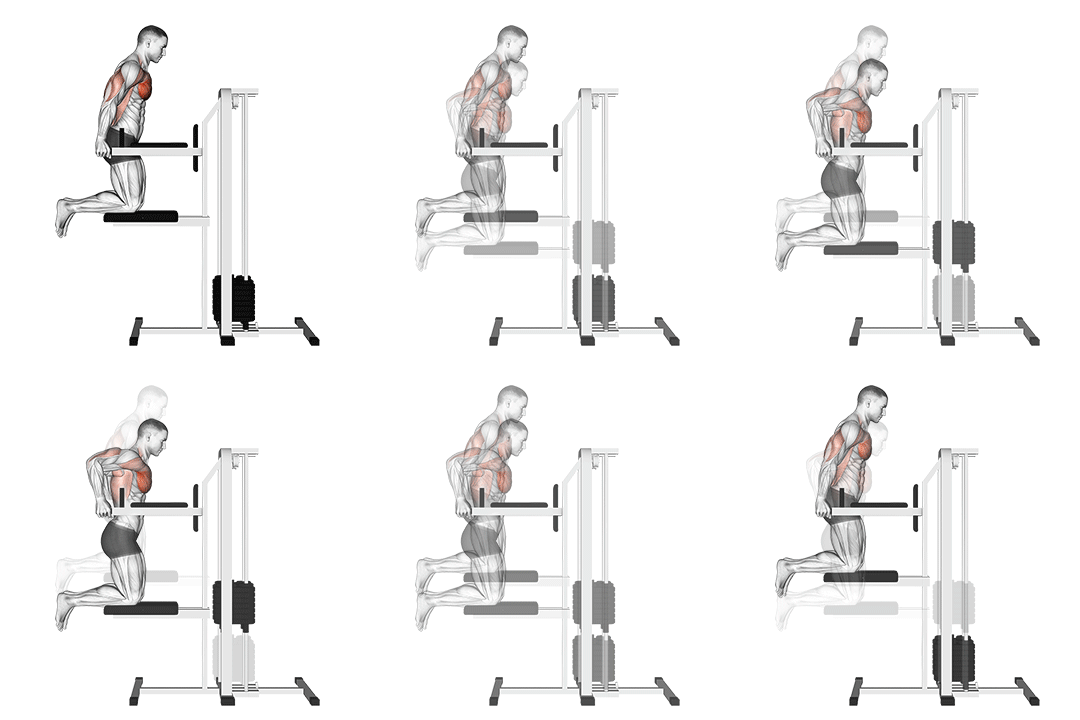
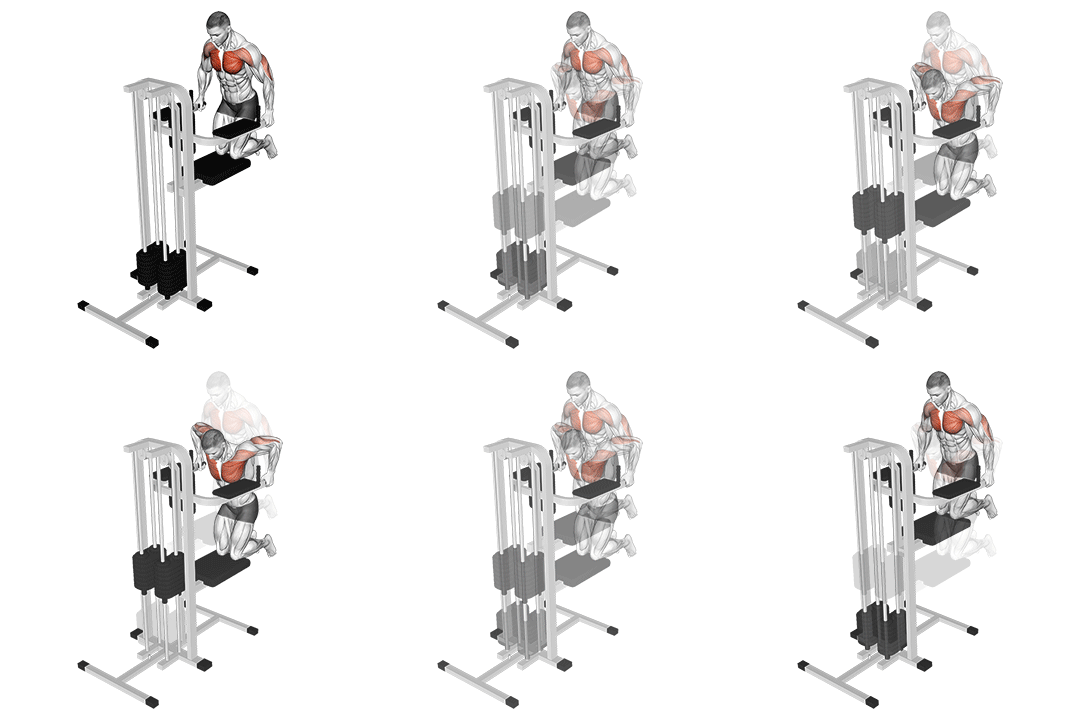
More comparisons with Lever Seated Fly
Compare More Exercises
Use our free comparison tool to analyze any two exercises head-to-head.
Compare Exercises