

Lever Incline Chest Press vs Lever Incline Chest Press V. 2: Complete Comparison Guide
Lever Incline Chest Press vs Lever Incline Chest Press V. 2 — you’re choosing between two lever-based incline presses that both target the pectorals while loading the shoulders and triceps. In this guide I’ll break down how each one stresses the chest differently, which recruits more secondary muscles, the equipment and setup differences, and which to pick for hypertrophy, strength, or beginners. You’ll get technique cues, biomechanical explanations (angles, force vectors, length-tension), and practical rep ranges so you can pick the right movement for your program.
Exercise Comparison
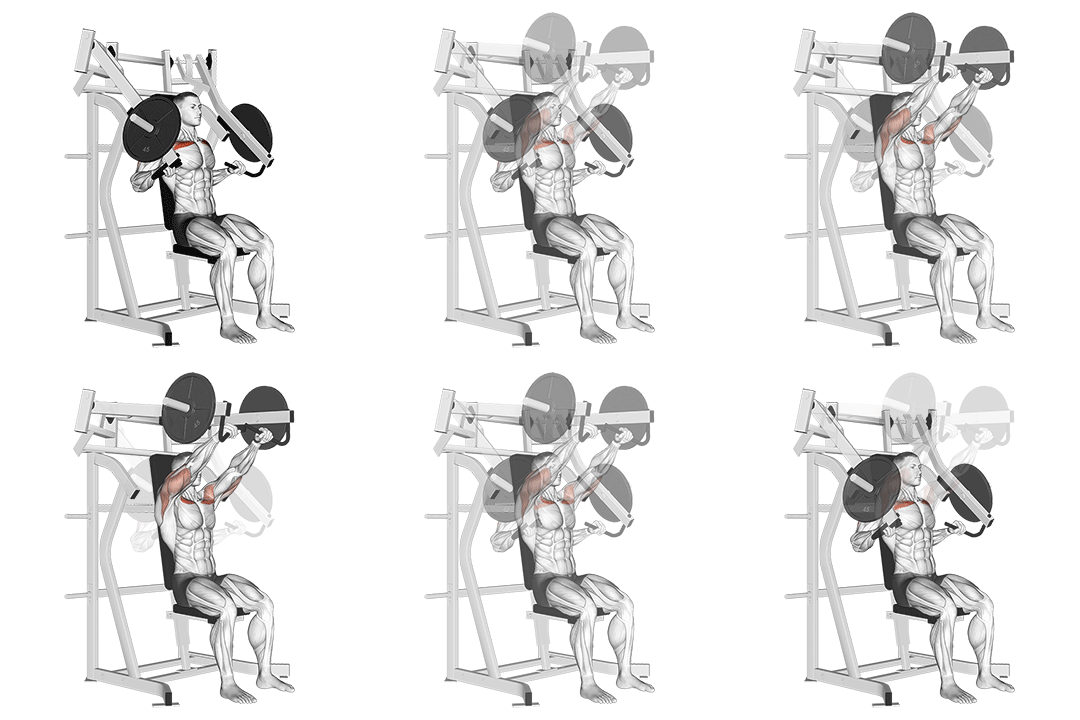
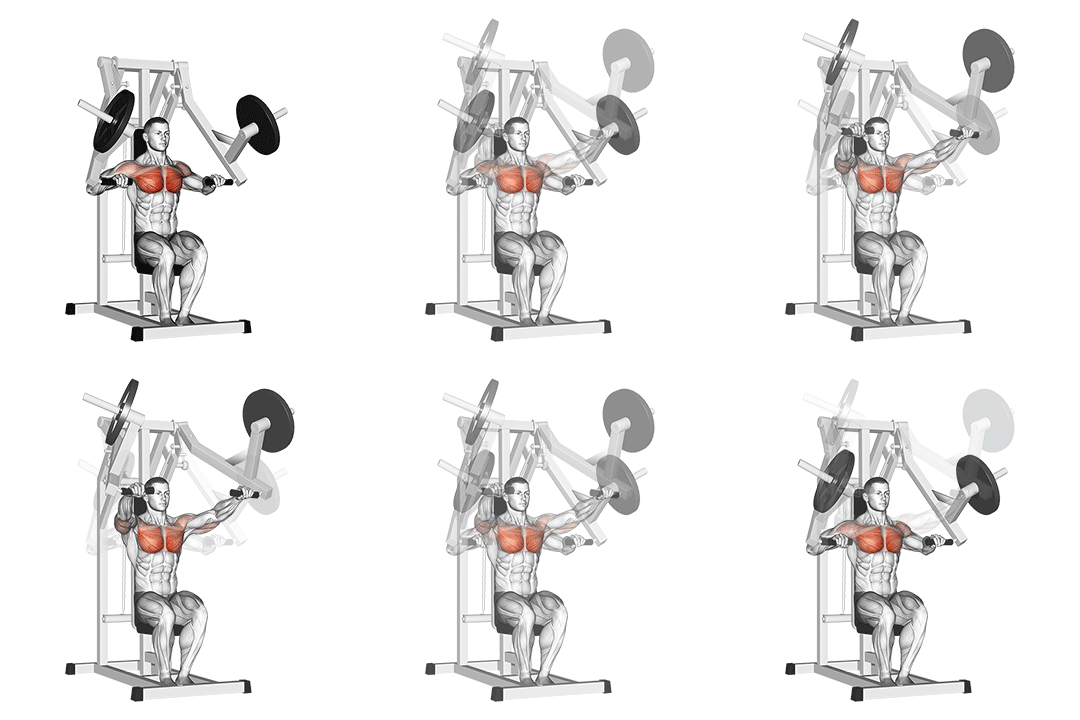
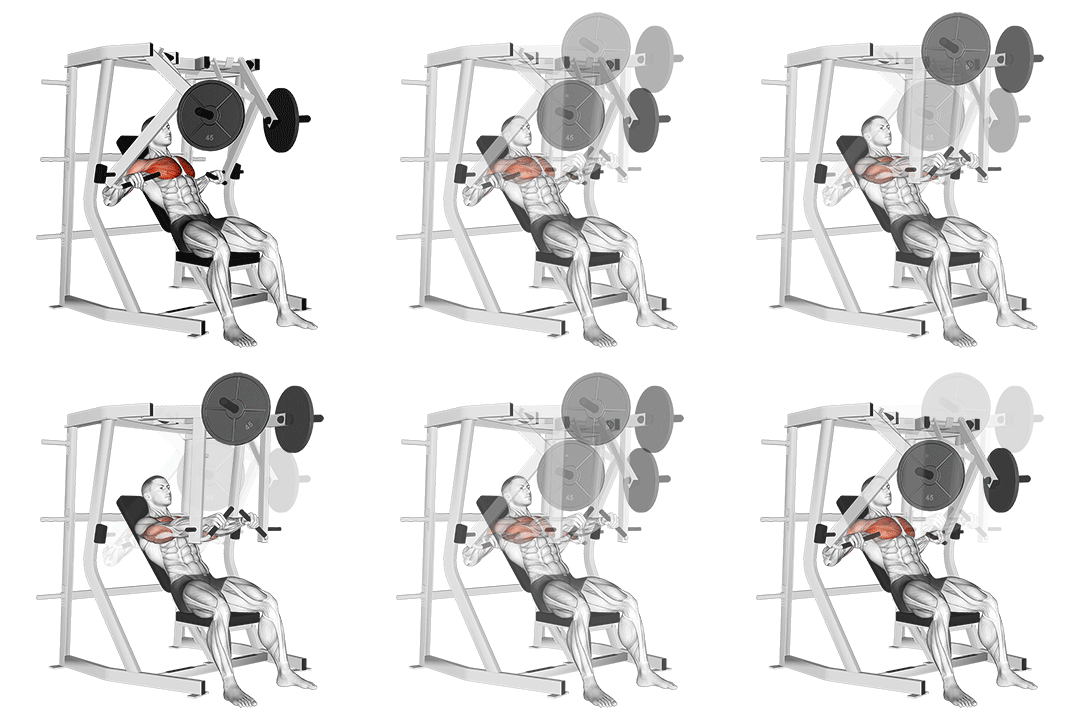
Lever Incline Chest Press
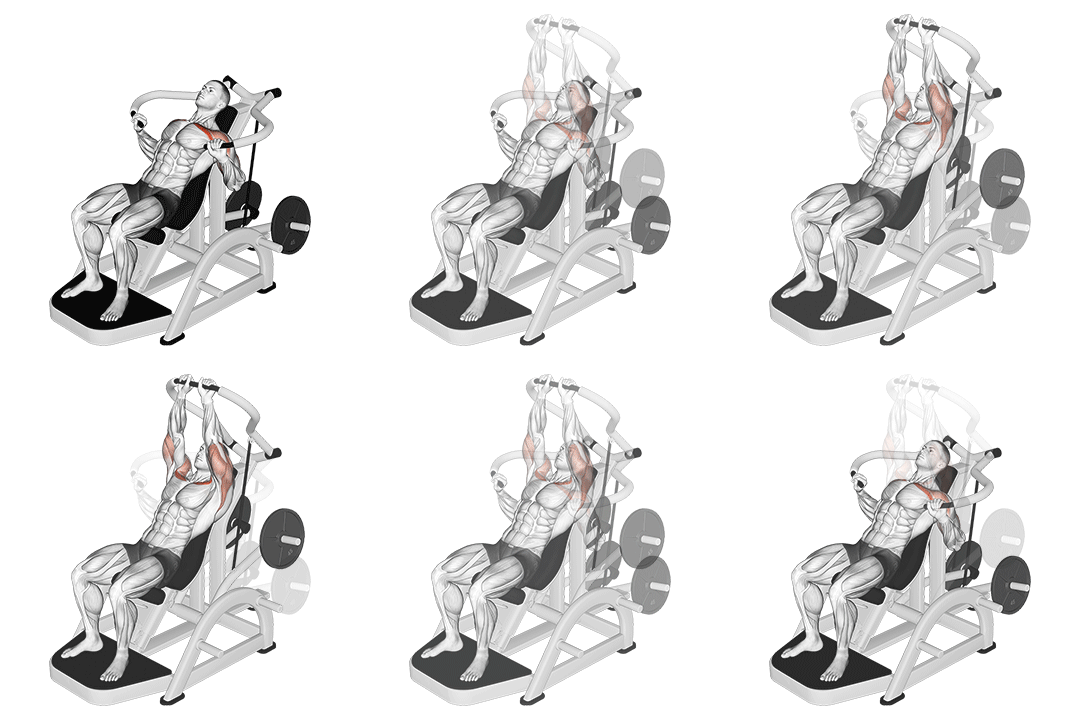
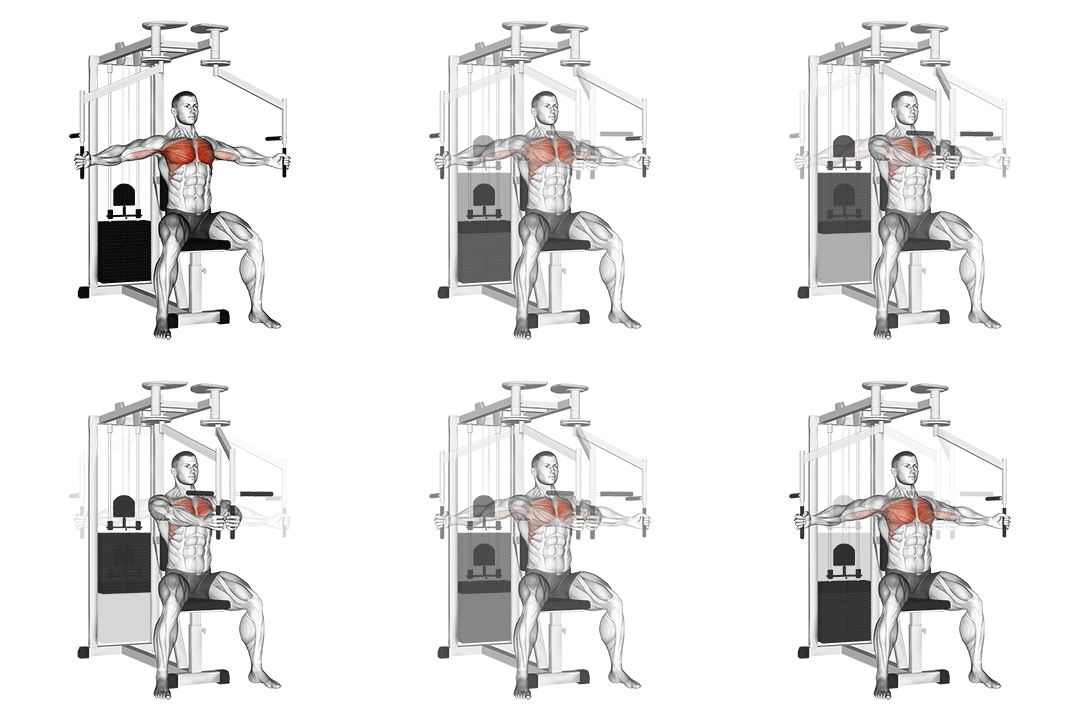
Lever Incline Chest Press V. 2
Head-to-Head Comparison
| Attribute | Lever Incline Chest Press | Lever Incline Chest Press V. 2 |
|---|---|---|
| Target Muscle |
Pectorals
|
Pectorals
|
| Body Part |
Chest
|
Chest
|
| Equipment |
Lever
|
Lever
|
| Difficulty |
Intermediate
|
Intermediate
|
| Movement Type |
Compound
|
Compound
|
| Secondary Muscles |
2
|
2
|
Secondary Muscles Activated
Lever Incline Chest Press
Lever Incline Chest Press V. 2
Visual Comparison
Overview
Lever Incline Chest Press vs Lever Incline Chest Press V. 2 — you’re choosing between two lever-based incline presses that both target the pectorals while loading the shoulders and triceps. In this guide I’ll break down how each one stresses the chest differently, which recruits more secondary muscles, the equipment and setup differences, and which to pick for hypertrophy, strength, or beginners. You’ll get technique cues, biomechanical explanations (angles, force vectors, length-tension), and practical rep ranges so you can pick the right movement for your program.
Key Differences
- Both exercises target the Pectorals using Lever. The main differences are in their movement patterns and muscle activation angles.
Pros & Cons
Lever Incline Chest Press
+ Pros
- Widely available in commercial gyms and easy to program
- Fixed path reduces stabilization demands and technique errors
- Excellent for consistent progressive overload and heavy sets (3–6 reps)
- Simple setup: adjust back angle to 30–45° and press
− Cons
- Can put more load on anterior delts if incline is too steep
- Less useful for unilateral imbalance correction
- Fixed path can force suboptimal wrist/elbow alignment for some lifters
Lever Incline Chest Press V. 2
+ Pros
- Often allows independent-arm movement or converging path for fuller pec contraction
- Better for addressing left-right imbalances and asymmetries
- Can keep pec fibers at better length-tension across the ROM
- Offers more variety in handle positions and arc paths
− Cons
- Less common in gyms—lower accessibility
- Requires more coordination and can expose weak stabilizers
- Setup variability can lead to inconsistent loading between sessions
When Each Exercise Wins
V. 2’s potential for converging arcs or independent arms keeps pec fibers under tension through a larger portion of the ROM, which supports 6–12 rep hypertrophy sets and better targets the upper pecs via optimal length-tension relationships.
The standard lever’s fixed path lets you handle heavier loads safely and apply progressive overload (3–6 rep ranges) with stable mechanics, making it better for raw pressing strength.
Its guided motion and simpler setup reduce technical demands. You can teach scapular retraction, elbow positioning, and breathing patterns without forcing high stabilization, which accelerates learning.
Standard lever machines or plate-loaded incline levers are more commonly available in garage gyms and take up less specialized floor space than some V. 2 variants, making Exercise A the more practical home option.
Frequently Asked Questions
Can I do both Lever Incline Chest Press and Lever Incline Chest Press V. 2 in the same workout?
Yes. Use one as your heavy compound (3–6 reps) and the other as a volume or secondary stimulus (8–12 reps). Sequence heavy sets first to avoid fatigue that would wreck technique on maximal lifts.
Which exercise is better for beginners?
The standard Lever Incline Chest Press is better for beginners because its fixed path simplifies motor control. Start with 8–12 reps focusing on scapular retraction, controlled eccentrics, and a 30–45° bench angle.
How do the muscle activation patterns differ?
Differences come from force vectors and ROM: a fixed-path lever often increases anterior delt moment arm early, while a converging/independent-arm V. 2 maintains horizontal adduction longer, increasing pec tension in the top half. That shift alters length-tension exposure and relative triceps versus delt contribution.
Can Lever Incline Chest Press V. 2 replace Lever Incline Chest Press?
Yes, for hypertrophy and imbalance correction V. 2 can replace the standard press. For maximum overload and consistent heavy loading, keep the standard lever in your program as your primary strength tool.
Expert Verdict
If you want straightforward strength and consistency, pick the Lever Incline Chest Press: it’s common, easy to load heavy, and teaches solid pressing mechanics at a 30–45° incline. Choose Lever Incline Chest Press V. 2 when your goal is upper-pec hypertrophy, muscle symmetry, or when you need a handle path that keeps pec fibers under tension longer; use 6–12 rep ranges and slow eccentric tempos. Both are intermediate lifts—use A for raw overload and beginners stepping into intermediate work, and use V. 2 when you need unilateral options or to emphasize peak pec contraction.
Also Compare
More comparisons with Lever Incline Chest Press
More comparisons with Lever Incline Chest Press V. 2
Compare More Exercises
Use our free comparison tool to analyze any two exercises head-to-head.
Compare Exercises