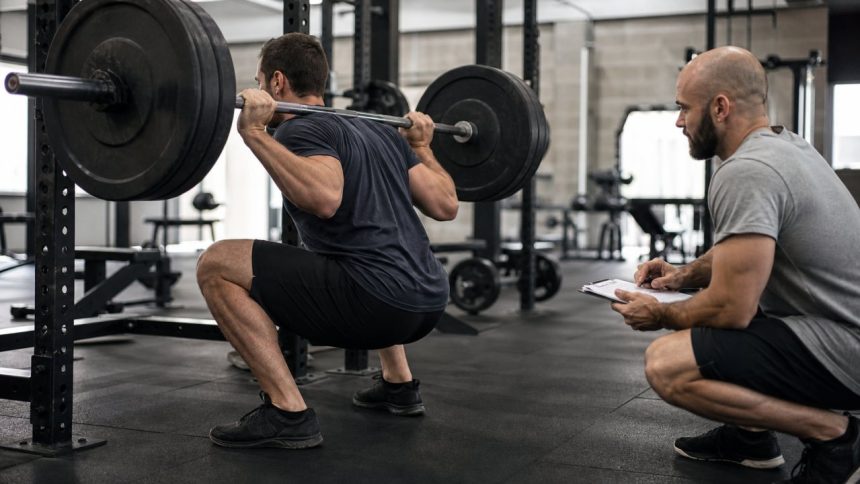
The squat looks simple from across the gym: bend the knees, sit down, stand back up. Under the bar, it is a full-body coordination problem. Your feet create the base, your ankles allow the knees to travel, your hips decide how much torso lean you need, your trunk turns loose joints into one strong column, and the bar path tells you whether the whole system is balanced.
The old version of this article was a useful start, but modern lifters need a clearer rule: a good squat is not one stance, one depth, or one internet cue. It is the version you can repeat under load while keeping pressure through the whole foot, knees tracking with the toes, hips moving with control, and the bar staying over your midfoot. That is the squat worth building.
What is squat biomechanics?
Squat biomechanics describes how the ankles, knees, hips, spine, trunk, and barbell share force during the lift. In practical terms, it explains why two strong lifters can squat with different stances and still be correct. Limb lengths, hip structure, ankle mobility, bar position, goal, and injury history all change the best-looking squat.
Schoenfeld’s review of squat kinematics and kinetics emphasized that the squat is complex enough to require context-specific coaching. That is why the cue “knees out” can help one lifter and overcorrect another. The useful question is not whether the squat matches a screenshot. The useful question is whether the lifter owns the position and can progress it without pain or compensation.
Which muscles work hardest in the squat?
The squat trains the quadriceps, glutes, adductors, hamstrings, calves, spinal erectors, abdominal wall, and upper back. The exact emphasis changes with depth, stance, bar position, torso angle, and load. A more upright high-bar or front squat usually asks more from the knees and quads, while a lower-bar squat often shifts more work toward the hips and back.
That does not make one version automatically better. A bodybuilder chasing quad stimulus, a powerlifter chasing total load, and a new lifter learning control may need different squat variations. Our guide to squat variations is useful once you understand what each version changes.
How should your feet and stance be set?
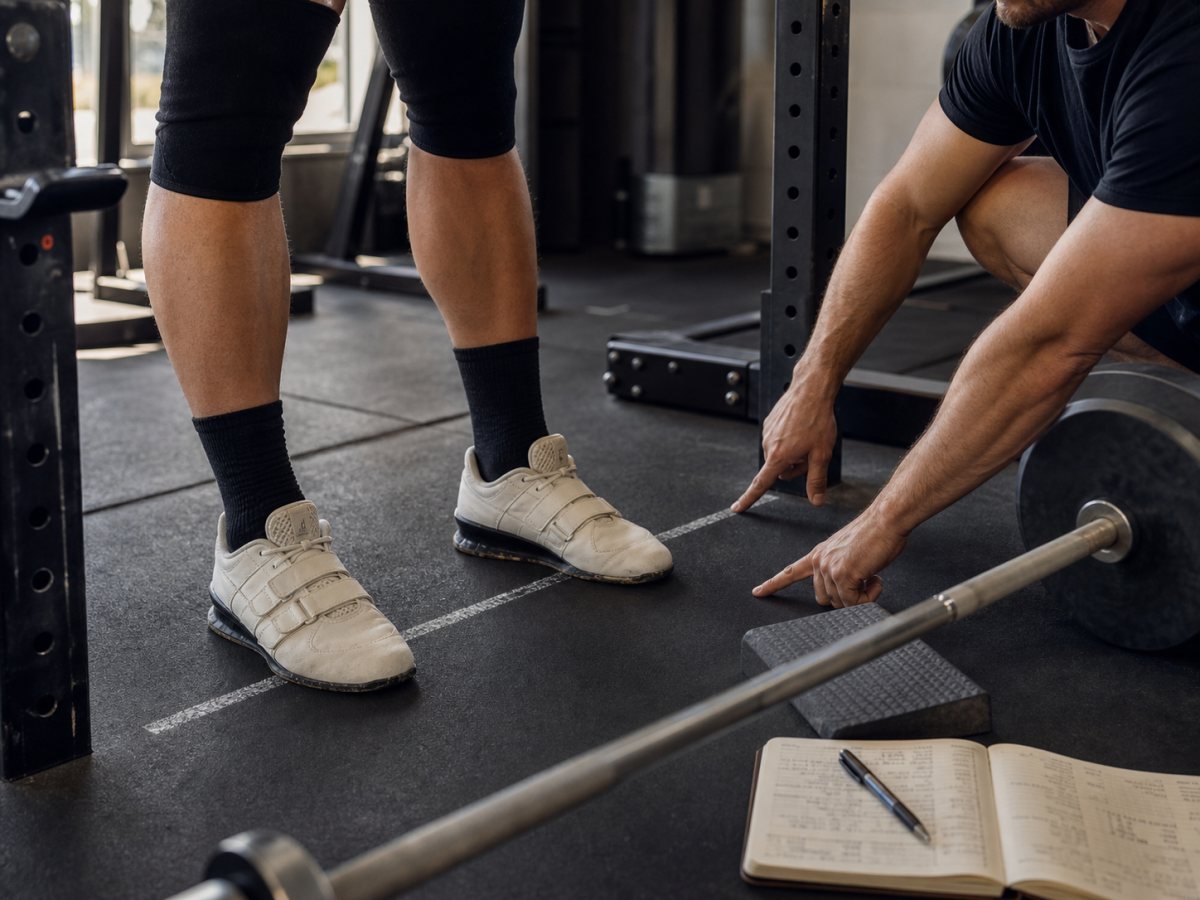
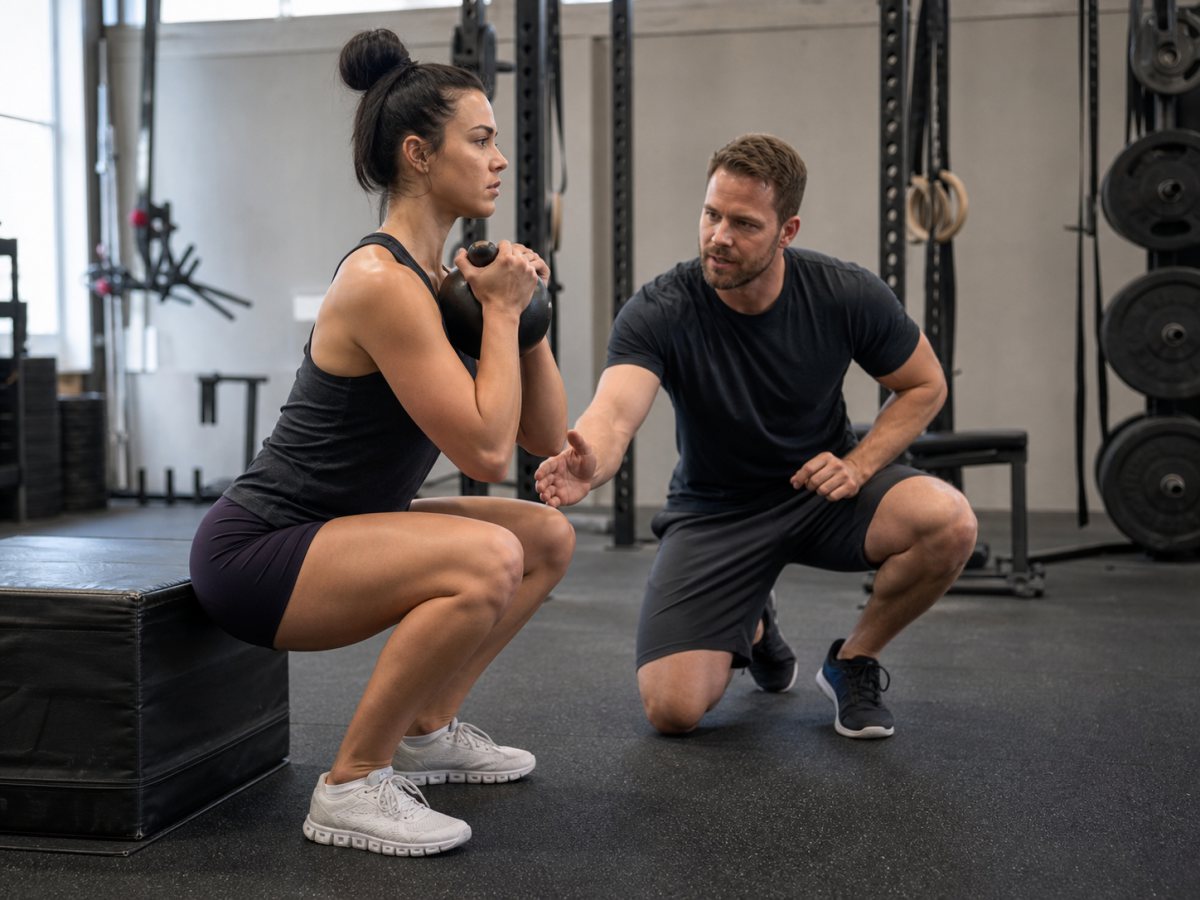
Start with a stance that lets your feet stay planted and your knees track in the same general direction as your toes. Most lifters do well around shoulder width with the toes turned out slightly, then adjust from there. If your heels rise, your arches collapse, or your hips pinch, the stance is giving you feedback.
Use this quick stance check before adding load:
| Check | What You Want | What It Usually Means If It Fails |
|---|---|---|
| Foot pressure | Big toe, little toe, and heel stay grounded | Balance, shoe, or stance issue |
| Knee path | Knees track with toes | Weak control, poor setup, or excessive load |
| Hip comfort | No sharp pinch at the bottom | Stance or depth may need adjusting |
| Bar path | Bar stays close to midfoot | Bracing, torso angle, or load error |
What should your torso and bar path do?
The bar should travel close to a vertical line over the midfoot. Your torso angle is whatever lets that happen while the spine stays braced and the hips and knees share work. A long-femured lifter may lean more than a short-femured lifter. A front squat will look more upright than a low-bar back squat.
Do not chase a perfectly vertical torso if your build does not allow it. Also do not fold forward so aggressively that the squat becomes a good morning. Film from the side, pause the video at the bottom, and check whether the bar, midfoot, and trunk position tell the same story.
What are the most common squat mistakes?
The most common squat mistakes are losing foot pressure, relaxing the brace before the descent, letting the knees collapse inward, rushing depth, changing stance every week, and adding load before the same rep can be repeated. These are boring errors, which is why they survive. They are also fixable.
Use this correction map:
| Problem | First Fix | Do Not Start With |
|---|---|---|
| Heels lift | Check shoes, ankle range, and stance | Adding more forward lean |
| Knees cave | Reduce load and own tempo reps | Maxing out with a band around the knees |
| Good morning squat | Brace harder and adjust load or bar position | Forcing a deeper rep |
| Hip pinch | Try stance width and toe angle changes | Pushing through sharp pain |
How do you program squats?
Program squats according to the adaptation you want. Heavy triples and fives build strength. Moderate sets of 6 to 12 build a lot of muscle for many lifters. Higher-rep goblet, split, and front squat work can build skill and volume with less load. The plan should fit your recovery, not just your ambition.
Use progressive overload, but treat it as a repeatable progression system. Add reps, load, sets, range, or control only when the previous work was stable. If every squat session needs a motivational speech and three form compromises, the program is moving faster than your body.
When should you change squat variation?
Change squat variation when the current version no longer fits the goal, causes repeated pain despite reasonable fixes, or fails to train the intended muscles. Front squats, safety-bar squats, goblet squats, box squats, split squats, and leg presses all have a place. They are tools, not admissions of failure.
For a complete plan, pair this guide with our article on building a training program and our list of common workout mistakes.
FitnessVolt squat rule of thumb
The best squat for you is the version that trains the intended muscles, lets you repeat strong positions, and progresses without turning discomfort into a personality trait. Film your reps, keep a log, and change one variable at a time. If your squat improves while your joints feel better, the mechanics are probably moving in the right direction.
A squat is not safe because it looks like someone else’s squat. It is safe because your range, load, control, and recovery all match the job you are asking it to do.
How do body proportions change your squat?
Body proportions change the squat more than many lifters expect. A lifter with long femurs usually needs more forward torso lean or a wider stance to keep the bar balanced over the midfoot. A lifter with shorter femurs and better ankle mobility may look more upright without trying. Neither lifter is automatically right or wrong. They are solving the same balance problem with different levers.
This is why copying someone else’s stance can backfire. A cue that helps a short-torso, short-femur lifter may make a long-femur lifter feel folded in half. Use your own video, foot pressure, joint comfort, and bar path as the feedback loop. The best squat form is not the one that photographs cleanest. It is the one that lets your anatomy produce force without repeated pain.
What should you feel during a good squat?
A productive squat should feel like controlled pressure through the legs and trunk, not like one joint is taking the whole job. Most lifters should feel the quads, glutes, adductors, trunk, and upper back working together. A little muscle burn is normal. Sharp knee pain, hip pinching, numbness, or back pain that changes your movement is not a training badge.
Use a three-rep diagnostic set with a moderate load. Rep one should look like rep three. If the feet shift, the knees collapse, or the torso angle changes dramatically, you have found the limiting factor for that day. Fix that before adding another plate.
How do you know when to add weight?
Add weight only when your current load meets three standards: the same depth every rep, the same bar path every rep, and no pain signal that gets louder set to set. A five-pound increase is not conservative if it turns clean reps into survival reps. It is too much for that day.
A simple progression works well for most lifters. Pick a rep range, such as 6 to 8. When all work sets hit the top of the range with stable technique, add a small amount of weight next time. If technique breaks, keep the load the same or reduce volume. Strong squatters do not rush the boring weeks. They build them.
What is the fastest way to audit your squat?
The fastest squat audit is a three-angle video check: front, side, and rear oblique. From the side, check whether the bar stays over the midfoot and whether your hips shoot back faster than your knees bend. From the front, check whether the knees track with the toes and whether one foot collapses more than the other. From the rear oblique, check whether the hips shift sideways as fatigue rises.
Do this with a weight you can control for five reps, not with a near-max single. Heavy attempts hide patterns because the only goal becomes survival. Moderate sets show the real problem. If rep one and rep five look different, your next training block should fix repeatability before chasing load.
How should lifters warm up for squats?
A good squat warm-up should move from general temperature to specific positions. Five minutes of easy cycling, walking, or light sled work can raise temperature. Then use bodyweight squats, goblet squats, ankle rocks, hip airplanes, or split squats only if they improve your actual squat pattern. Warm-ups should earn their place.
Finish with ramp-up sets that mirror the work sets. Empty bar, light load, moderate load, then work weight. If the empty bar feels worse than normal, listen. The warm-up is a readiness screen, not just a ritual before the real training starts.
Sources
- Schoenfeld, B. J. (2010). Squatting kinematics and kinetics and their application to exercise performance. Journal of Strength and Conditioning Research. doi:10.1519/JSC.0b013e3181bac2d7.
- Escamilla, R. F. (2001). Knee biomechanics of the dynamic squat exercise. Medicine and Science in Sports and Exercise. doi:10.1097/00005768-200101000-00020.
- Cotter, J. A., Chaudhari, A. M., Jamison, S. T., & Devor, S. T. (2013). Knee joint kinetics in relation to commonly prescribed squat loads and depths. Journal of Strength and Conditioning Research. doi:10.1519/JSC.0b013e3182773319.
- American College of Sports Medicine. (2009). Progression models in resistance training for healthy adults. Medicine and Science in Sports and Exercise. doi:10.1249/MSS.0b013e3181915670.