

10 Best Barbell Bench Press Alternatives for When You Can't Use a Barbell
What can I do instead of barbell bench press? Use dumbbell bench press, dumbbell incline press, machine chest press, cable chest press, or progressive push-ups. These options preserve horizontal pressing and pec activation while varying stability, range of motion, and joint stress. Pick based on equipment, shoulder health, and training goals.
Original Exercise: Barbell Bench Press
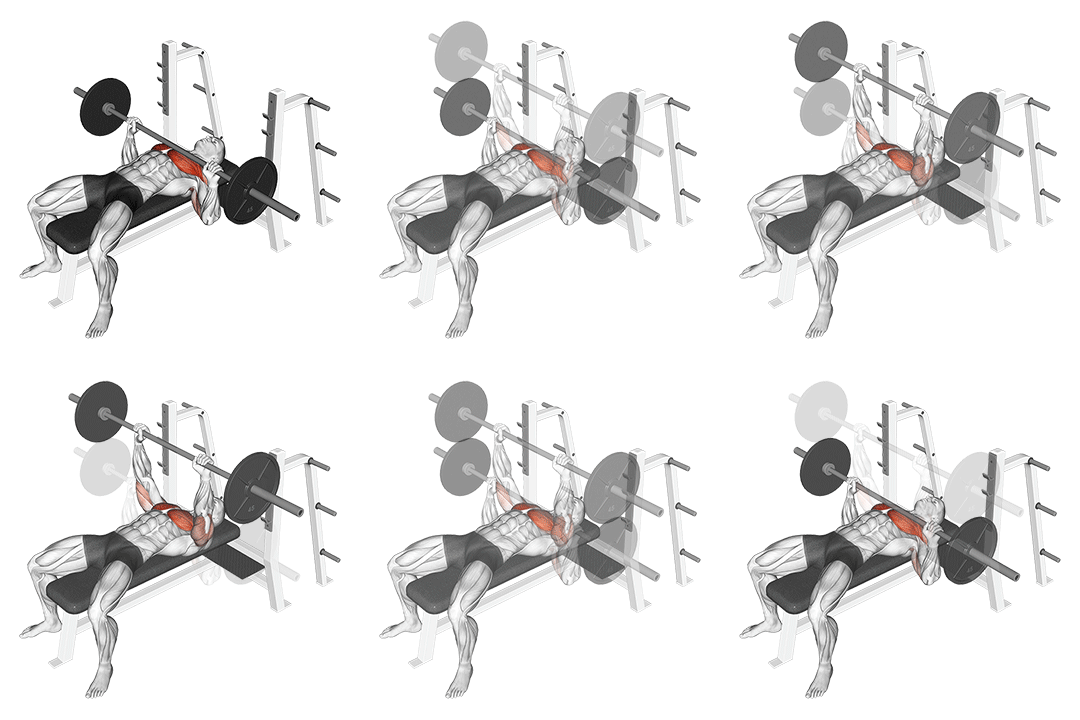
How to Perform Barbell Bench Press
- Lie flat on a bench with your feet flat on the ground and your back pressed against the bench.
- Grasp the barbell with an overhand grip slightly wider than shoulder-width apart.
- Lift the barbell off the rack and hold it directly above your chest with your arms fully extended.
- Lower the barbell slowly towards your chest, keeping your elbows tucked in.
- Pause for a moment when the barbell touches your chest.
- Push the barbell back up to the starting position by extending your arms.
- Repeat for the desired number of repetitions.
Ranked Barbell Bench Press Alternatives
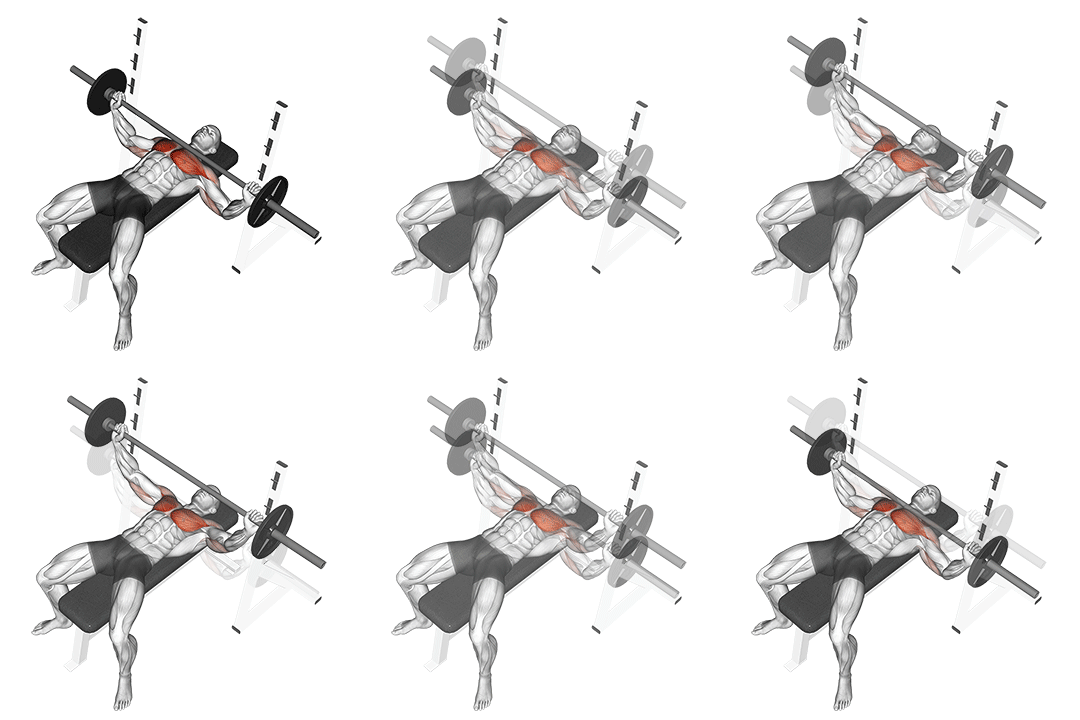
1. Barbell Wide Bench Press
99.9% MatchHow to perform this exercise
- Lie flat on a bench with your feet flat on the ground and your back pressed against the bench.
- Grasp the barbell with a wide grip, slightly wider than shoulder-width apart.
- Lift the barbell off the rack and hold it directly above your chest with your arms fully extended.
- Lower the barbell slowly towards your chest, keeping your elbows slightly flared out.
- Pause for a moment when the barbell touches your chest, then push it back up to the starting position.
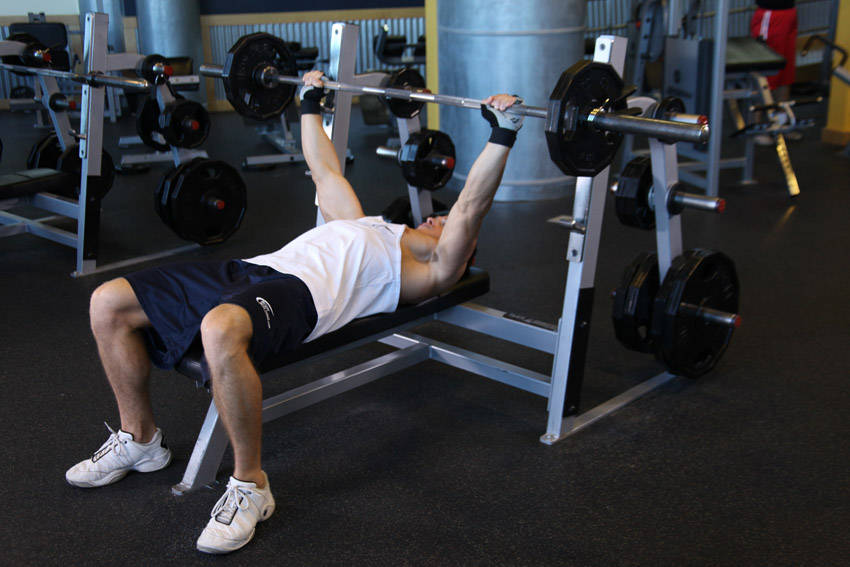
2. Wide-Grip Barbell Bench Press
99.2% MatchHow to perform this exercise
- Lie back on a flat bench with feet firm on the floor. Using a wide, pronated (palms forward) grip that is around 3 inches away from shoulder width (for each hand), lift the bar from the rack and hold it straight over you with your arms locked. The bar will be perpendicular to the torso and the floor. This will be your starting position.
- As you breathe in, come down slowly until you feel the bar on your middle chest.
- After a second pause, bring the bar back to the starting position as you breathe out and push the bar using your chest muscles. Lock your arms and squeeze your chest in the contracted position, hold for a second and then start coming down slowly again. Tip: It should take at least twice as long to go down than to come up.
- Repeat the movement for the prescribed amount of repetitions.
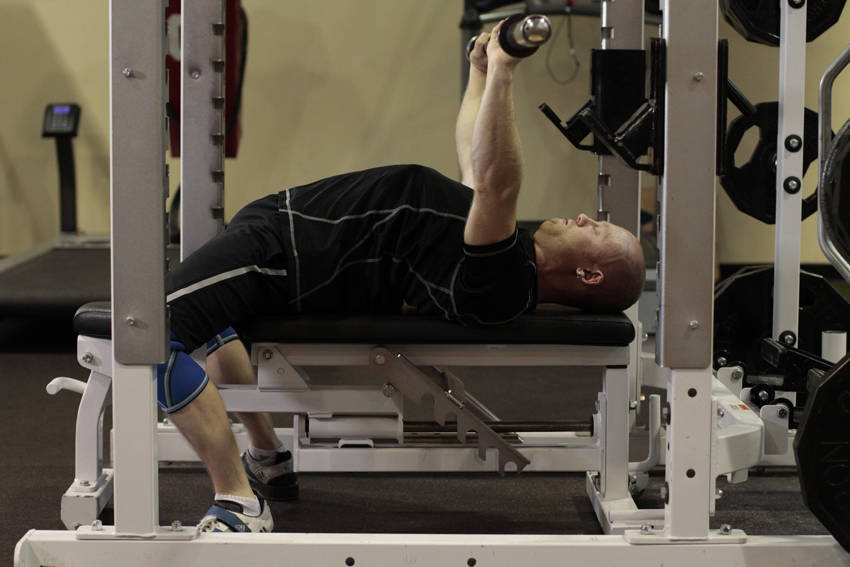
3. Bench Press - Powerlifting
98% MatchHow to perform this exercise
- Begin by lying on the bench, getting your head beyond the bar if possible. Tuck your feet underneath you and arch your back. Using the bar to help support your weight, lift your shoulder off the bench and retract them, squeezing the shoulder blades together. Use your feet to drive your traps into the bench. Maintain this tight body position throughout the movement.
- However wide your grip, it should cover the ring on the bar. Pull the bar out of the rack without protracting your shoulders. Focus on squeezing the bar and trying to pull it apart.
- Lower the bar to your lower chest or upper stomach. The bar, wrist, and elbow should stay in line at all times.
- Pause when the barbell touches your torso, and then drive the bar up with as much force as possible. The elbows should be tucked in until lockout.
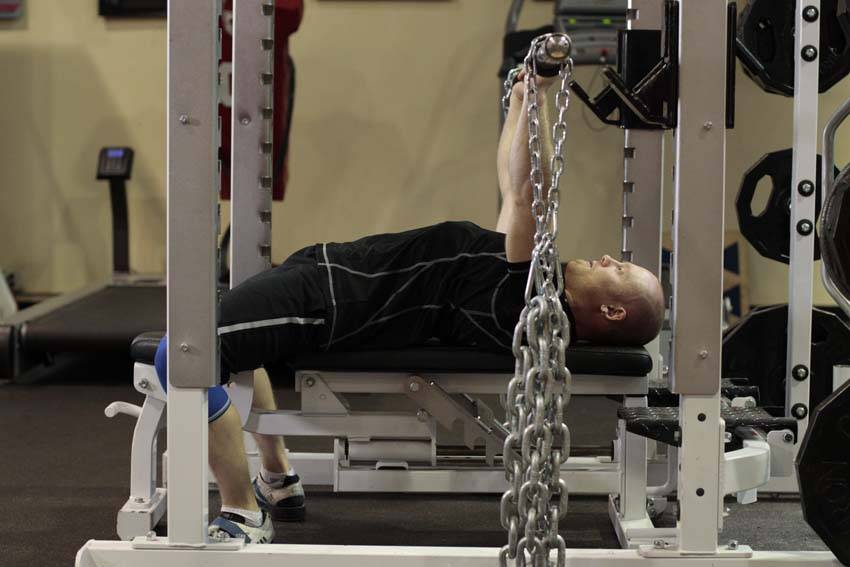
4. Bench Press With Chains
97.6% MatchHow to perform this exercise
- Adjust the leader chain, shortening it to the desired length.Place the chains on the sleeves of the bar.
- Lying on the bench, get your head beyond the bar if possible. Tuck your feet underneath you and arch your back. Using the bar to help support your weight, lift your shoulder off the bench and retract them, squeezing the shoulder blades together. Use your feet to drive your traps into the bench. Maintain this tight body position throughout the movement. However wide your grip, it should cover the ring on the bar.
- Pull the bar out of the rack without protracting your shoulders. Focus on squeezing the bar and trying to pull it apart. Lower the bar to your lower chest or upper stomach. The bar, wrist, and elbow should stay in line at all times.
- Pause when the barbell touches your torso, and then drive the bar up with as much force as possible. The elbows should be tucked in until lockout.
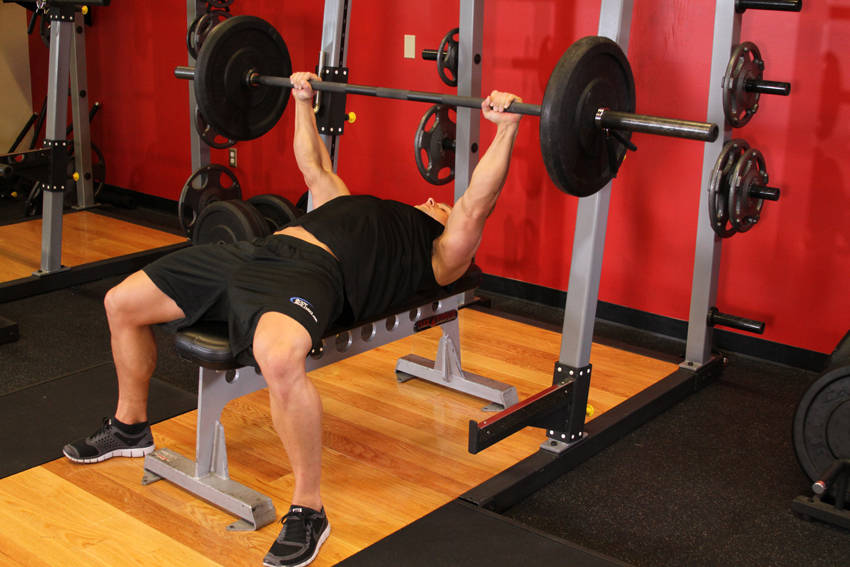
5. Barbell Bench Press - Medium Grip
97.2% MatchHow to perform this exercise
- Lie back on a flat bench. Using a medium width grip (a grip that creates a 90-degree angle in the middle of the movement between the forearms and the upper arms), lift the bar from the rack and hold it straight over you with your arms locked. This will be your starting position.
- From the starting position, breathe in and begin coming down slowly until the bar touches your middle chest.
- After a brief pause, push the bar back to the starting position as you breathe out. Focus on pushing the bar using your chest muscles. Lock your arms and squeeze your chest in the contracted position at the top of the motion, hold for a second and then start coming down slowly again. Tip: Ideally, lowering the weight should take about twice as long as raising it.
- Repeat the movement for the prescribed amount of repetitions.
- When you are done, place the bar back in the rack.
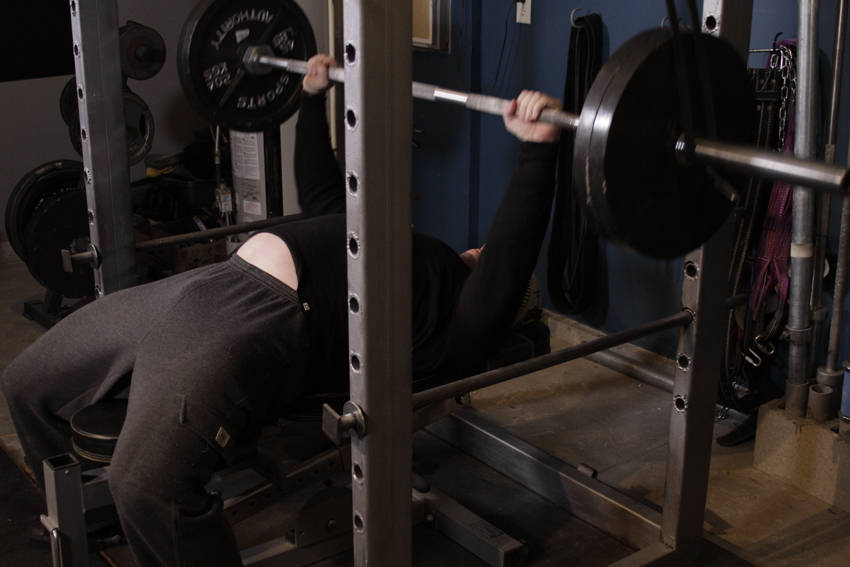
6. Reverse Band Bench Press
96.7% MatchHow to perform this exercise
- Position a bench inside a power rack, with the bar set to the correct height. Begin by anchoring bands either to band pegs or to the top of the rack. Ensure that you will be position properly under the bands. Attach the other end to the barbell.
- Lie on the bench, tuck your feet underneath you and arch your back. Using the bar to help support your weight, lift your shoulder off the bench and retract them, squeezing the shoulder blades together. Use your feet to drive your traps into the bench. Maintain this tight body position throughout the movement. However wide your grip, it should cover the ring on the bar.
- Pull the bar out of the rack without protracting your shoulders. Focus on squeezing the bar and trying to pull it apart. Lower the bar to your lower chest or upper stomach. The bar, wrist, and elbow should stay in line at all times.
- Pause when the barbell touches your torso, and then drive the bar up with as much force as possible. The elbows should be tucked in until lockout.
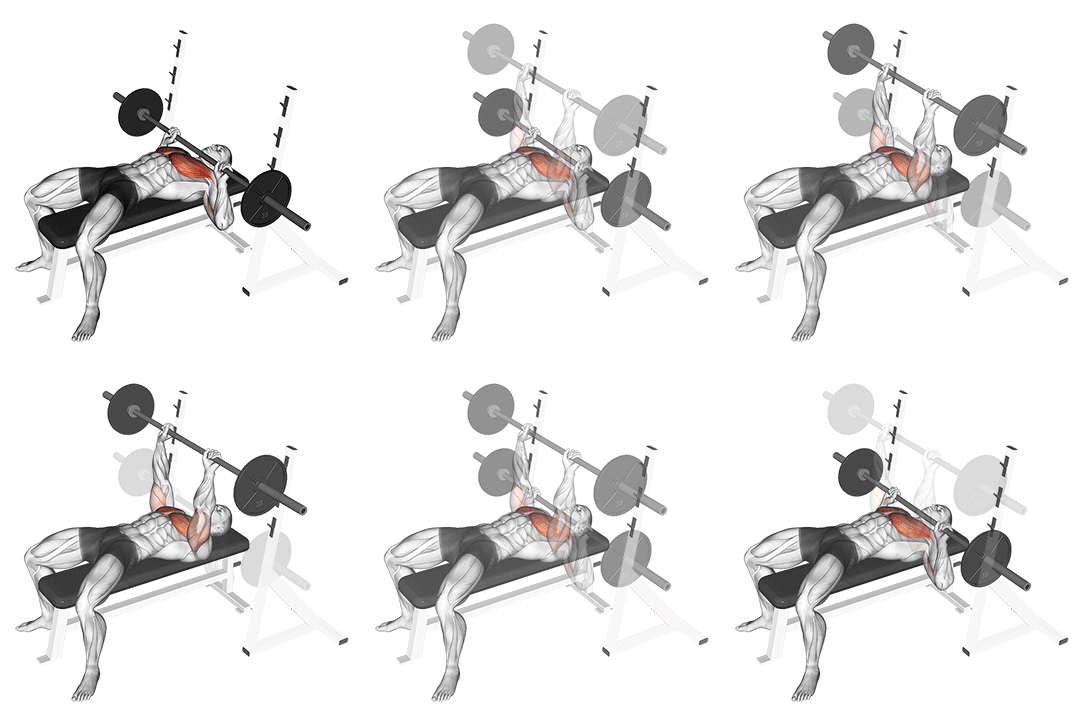
7. Barbell Guillotine Bench Press
94.7% MatchHow to perform this exercise
- Lie flat on a bench with your feet flat on the ground and your back pressed against the bench.
- Grasp the barbell with an overhand grip, slightly wider than shoulder-width apart.
- Lower the barbell slowly towards your neck, keeping your elbows pointed outwards.
- Pause for a moment when the barbell is just above your neck.
- Push the barbell back up to the starting position, fully extending your arms.
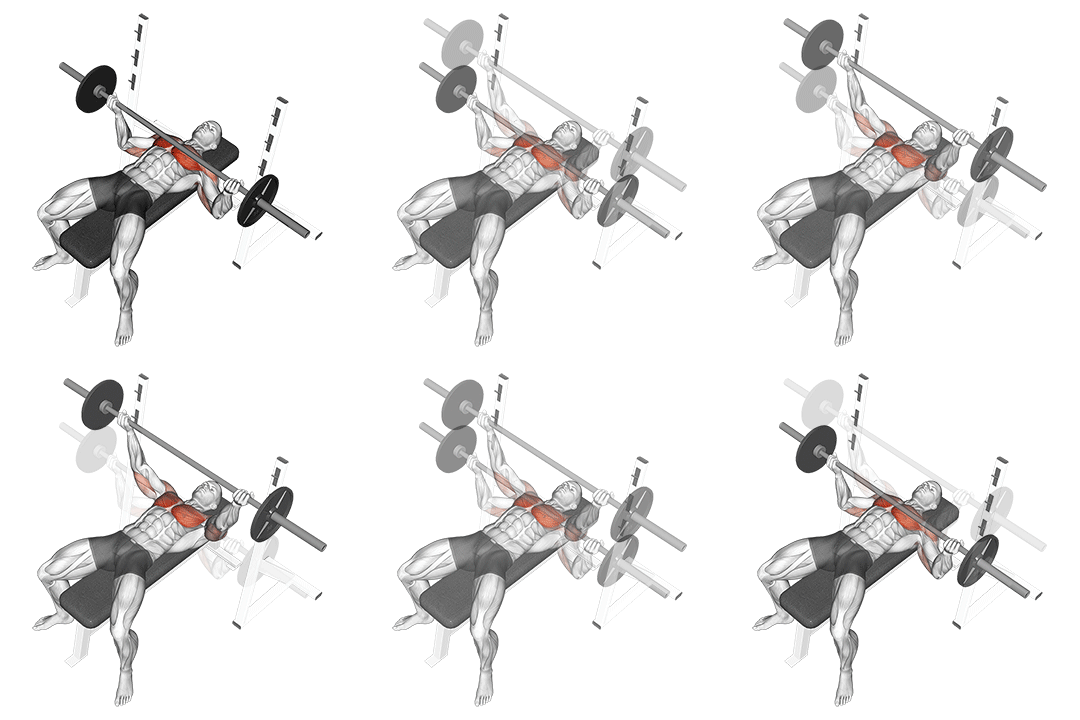
8. Barbell Wide Reverse Grip Bench Press
94.7% MatchHow to perform this exercise
- Lie flat on a bench with your feet flat on the ground and your back pressed against the bench.
- Grasp the barbell with a wide reverse grip, slightly wider than shoulder-width apart.
- Lift the barbell off the rack and hold it directly above your chest with your arms fully extended.
- Lower the barbell slowly towards your chest, keeping your elbows tucked in and your wrists straight.
- Pause for a moment when the barbell touches your chest, then push it back up to the starting position.
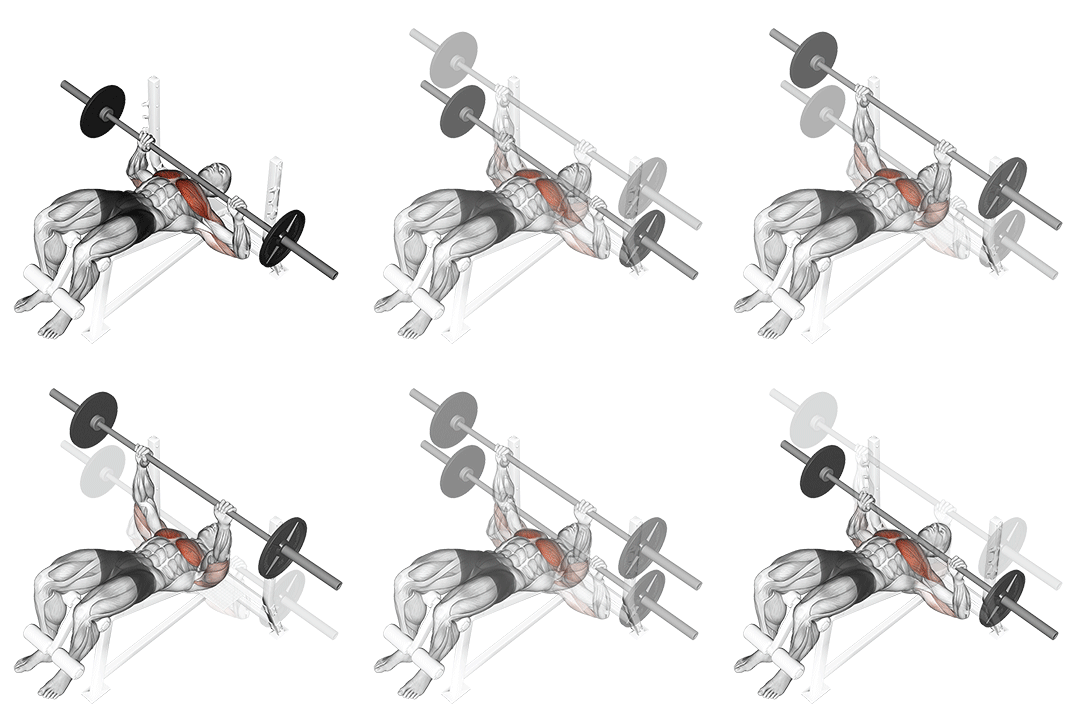
9. Barbell Decline Bench Press
90% MatchHow to perform this exercise
- Lie on a decline bench with your feet secured and your head lower than your hips.
- Grasp the barbell with an overhand grip slightly wider than shoulder-width apart.
- Unrack the barbell and lower it slowly towards your chest, keeping your elbows tucked in.
- Pause for a moment at the bottom, then push the barbell back up to the starting position.
- Repeat for the desired number of repetitions.
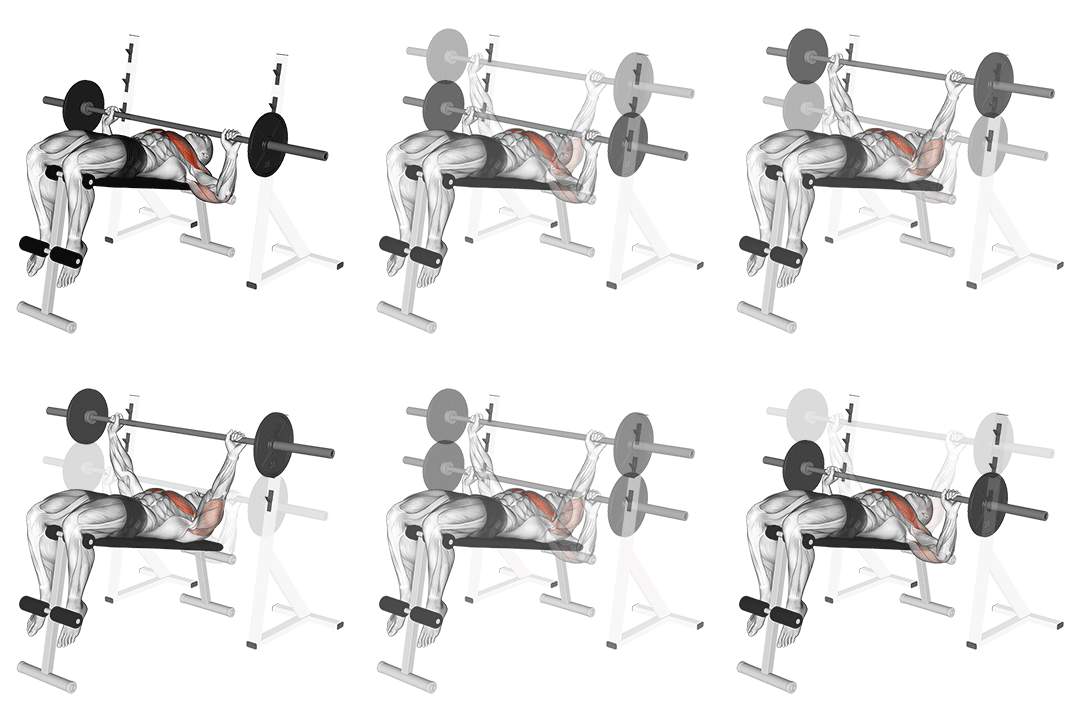
10. Barbell Decline Wide-grip Press
90% MatchHow to perform this exercise
- Lie on a decline bench with your feet secured and your head lower than your hips.
- Grasp the barbell with a wide grip, slightly wider than shoulder-width apart.
- Lower the barbell to your chest, keeping your elbows out to the sides.
- Push the barbell back up to the starting position, fully extending your arms.
- Repeat for the desired number of repetitions.
Why You Might Need a Barbell Bench Press Alternative
You might substitute the barbell bench press for shoulder pain, lack of equipment or spotter, or to correct bilateral imbalances. The barbell enforces a fixed bar path and large bilateral load that increases humeral extension and joint torque; alternatives let you control ROM, reduce anterior capsule stress, or increase unilateral work to fix asymmetry. Machines and cables lower stabilization demand and isolate the pectorals, while dumbbells raise stabilizer activation and permit independent arm loading. Floor presses and inclined variants limit stretch at the bottom to protect the joint. Choosing alternatives preserves progressive overload while adapting movement patterns to injury status and training context.
How to Choose the Right Substitute
Evaluate equipment access, joint health, and your training objective before selecting a substitute. If you need similar loading and eccentric control, use heavy dumbbell presses with controlled tempo. For shoulder issues or limited ROM choose floor presses or machine chest presses to cut humeral extension and scapular strain. Use unilateral dumbbell or single-arm cable presses to correct imbalances and progress via load, reps, or tempo. For hypertrophy with minimal stabilization, favor cables or machines and add flyes to increase horizontal adduction. Always cue scapular retraction, ribcage bracing, and select set/rep schemes aligned to strength (3–6), hypertrophy (6–15), or endurance (>15).
Frequently Asked Questions
What muscles does barbell bench press work?
The barbell bench press primarily targets the pectoralis major (sternal and clavicular heads) while heavily recruiting the anterior deltoids and triceps brachii. It also requires scapular stabilizers and core/bracing muscles to maintain a stable pressing platform.
What is the best bodyweight alternative to barbell bench press?
Weighted push-ups (vest or plates) are the most direct bodyweight substitute because they preserve the horizontal pressing pattern while allowing progressive overload. If you lack external load, advanced variations like archer or one-arm push-ups increase unilateral demand and build comparable pec and triceps strength.
Can I build muscle without doing barbell bench press?
Yes. You can achieve hypertrophy using dumbbells, machines, cables, and progressive push-up variations as long as you apply progressive overload, adequate volume, and proper tempo. Prioritize exercise selection that targets horizontal adduction and incrementally increase load, reps, or time under tension.
More Exercise Alternatives
Find Alternatives for Any Exercise
Use the exercise substitution finder to compare ranked alternatives for your available equipment and training preference.
Try the Exercise Substitution Finder →