

10 Best Cable Seated Lateral Raise Alternatives for Delt Size
If you train at home or your gym only has one cable station free, the Cable Seated Lateral Raise is often the first thing you have to swap out. The Front Cable Raise is the closest swap because it only needs one low pulley instead of the two the seated version ties up, raising one arm at a time to the front rather than out to the side. Without a cable machine at all, the Seated Side Lateral Raise keeps you seated and swaps the pulley for a pair of dumbbells.
Original Exercise: Cable Seated Lateral Raise
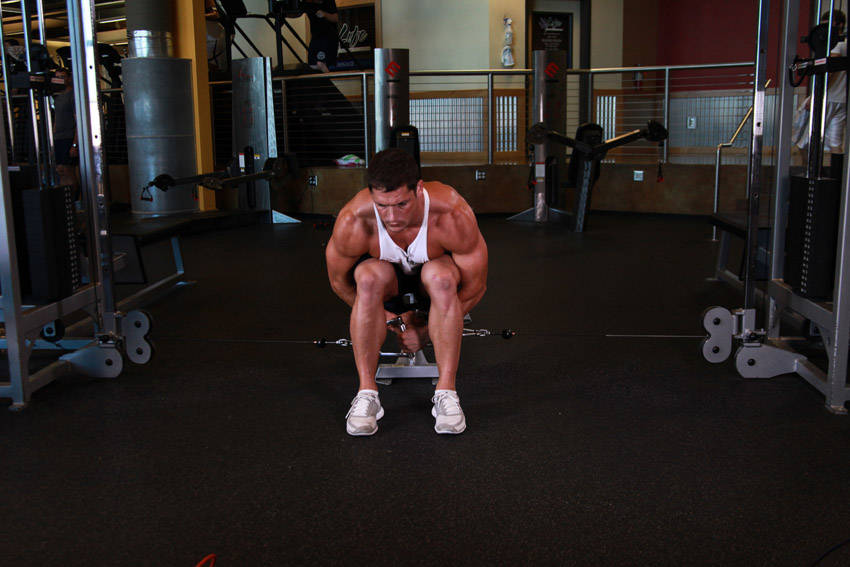
How to Perform Cable Seated Lateral Raise
- Stand in the middle of two low pulleys that are opposite to each other and place a flat bench right behind you (in perpendicular fashion to you; the narrow edge of the bench should be the one behind you). Select the weight to be used on each pulley.
- Now sit at the edge of the flat bench behind you with your feet placed in front of your knees.
- Bend forward while keeping your back flat and rest your torso on the thighs.
- Have someone give you the single handles attached to the pulleys. Grasp the left pulley with the right hand and the right pulley with the left after you select your weight. The pulleys should run under your knees and your arms will be extended with palms facing each other and a slight bend at the elbows. This will be the starting position.
- While keeping the arms stationary, raise the upper arms to the sides until they are parallel to the floor and at shoulder height. Exhale during the execution of this movement and hold the contraction for a second.
- Slowly lower your arms to the starting position as you inhale.
- Repeat for the recommended amount of repetitions. Tip: Maintain upper arms perpendicular to torso and a fixed elbow position (10 degree to 30 degree angle) throughout exercise.
Pro Tips
- Category: Strength
- Force: Pull
- Movement type: Isolation
Ranked Cable Seated Lateral Raise Alternatives
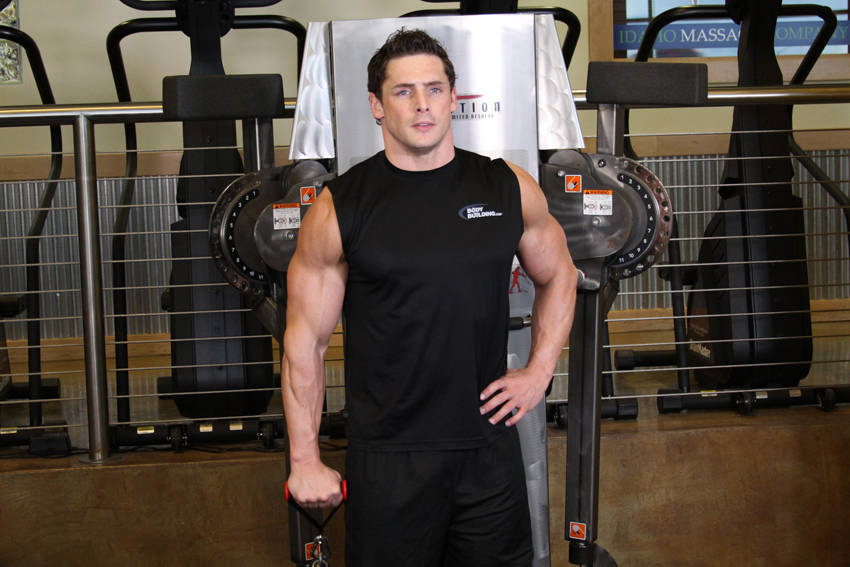
1. Front Cable Raise
88% MatchHow to perform this exercise
- Select the weight on a low pulley machine and grasp the single hand cable attachment that is attached to the low pulley with your left hand.
- Face away from the pulley and put your arm straight down with the hand cable attachment in front of your thighs at arms' length with the palms of the hand facing your thighs. This will be your starting position.
- While maintaining the torso stationary (no swinging), lift the left arm to the front with a slight bend on the elbow and the palms of the hand always faces down. Continue to go up until you arm is slightly above parallel to the floor. Exhale as you execute this portion of the movement and pause for a second at the top.
- Now as you inhale lower the arm back down slowly to the starting position.
- Once all of the recommended amount of repetitions have been performed for this arm, switch arms and perform the exercise with the right one.
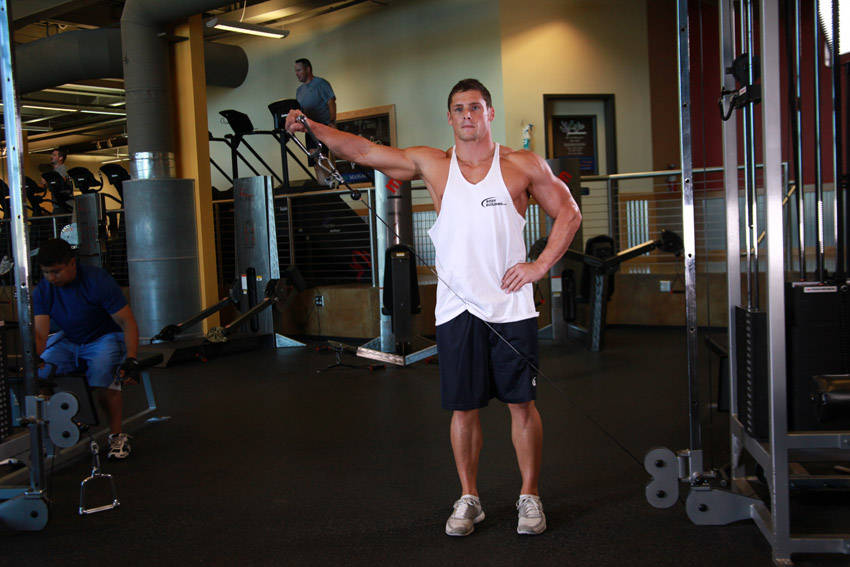
2. Standing Low-Pulley Deltoid Raise
84.2% MatchHow to perform this exercise
- Start by standing to the right side of a low pulley row. Use your left hand to come across the body and grab a single handle attached to the low pulley with a pronated grip (palms facing down). Rest your arm in front of you. Your right hand should grab the machine for better support and balance.
- Make sure that your back is erect and your feet are shoulder width apart from each other. This is the starting position.
- Begin to use the left hand and come across your body out until it is elevated to shoulder height while exhaling.
- Feel the contraction at the top for a second and begin to slowly lower the handle back down to the original starting position while inhaling.
- Repeat for the recommended amount of repetitions.
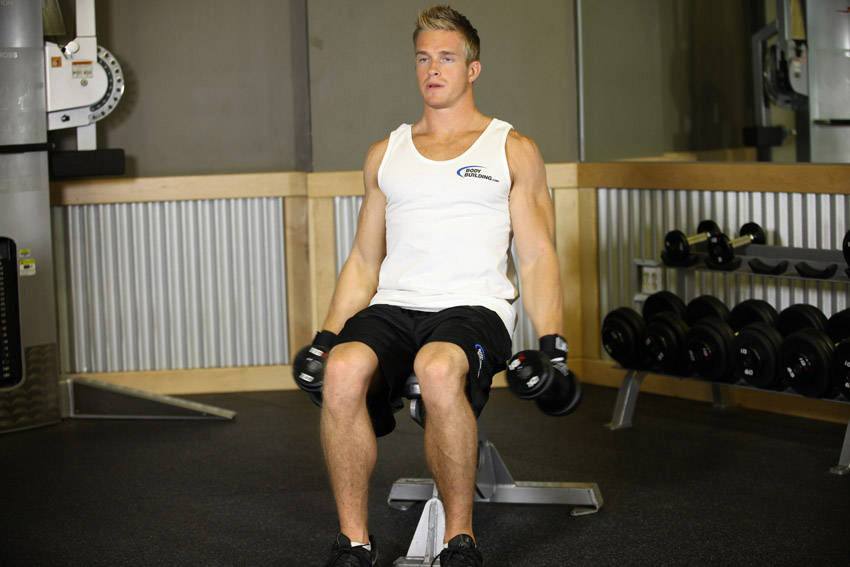
3. Seated Side Lateral Raise
83.5% MatchHow to perform this exercise
- Pick a couple of dumbbells and sit at the end of a flat bench with your feet firmly on the floor. Hold the dumbbells with your palms facing in and your arms straight down at your sides at arms' length. This will be your starting position.
- While maintaining the torso stationary (no swinging), lift the dumbbells to your side with a slight bend on the elbow and the hands slightly tilted forward as if pouring water in a glass. Continue to go up until you arms are parallel to the floor. Exhale as you execute this movement and pause for a second at the top.
- Lower the dumbbells back down slowly to the starting position as you inhale.
- Repeat for the recommended amount of repetitions.
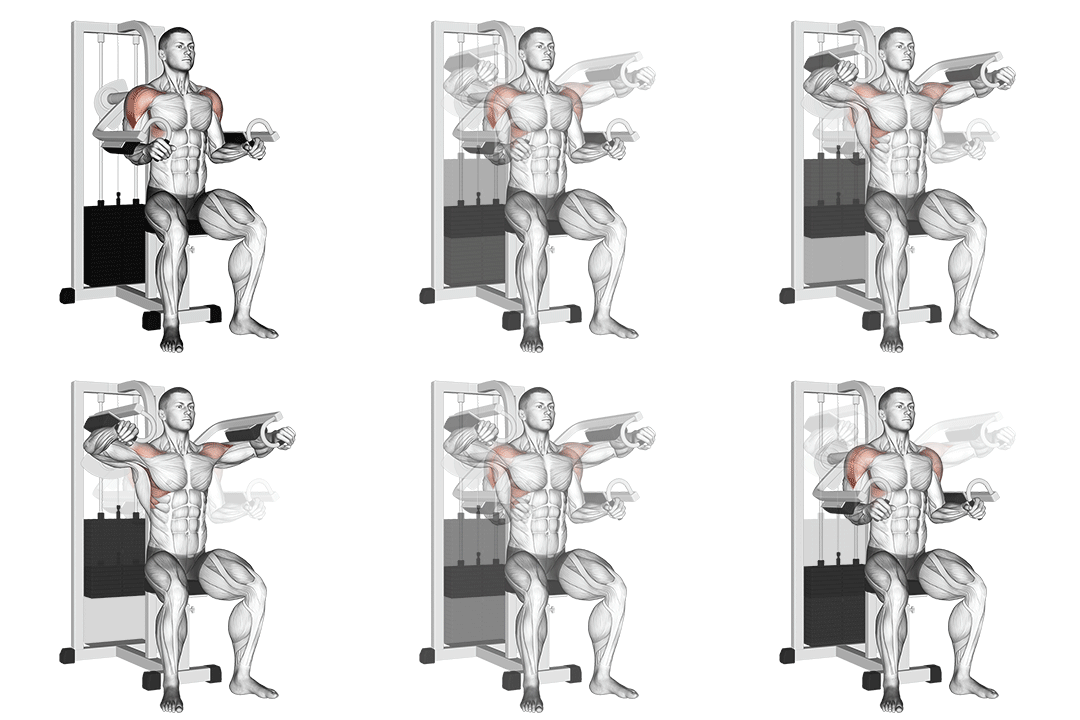
4. Lever Lateral Raise
81.4% MatchHow to perform this exercise
- Adjust the seat height and position yourself on the machine with your back against the pad.
- Grasp the handles with an overhand grip and keep your arms straight.
- Exhale and raise your arms out to the sides until they are parallel to the floor.
- Pause for a moment at the top, then inhale and slowly lower your arms back to the starting position.
- Repeat for the desired number of repetitions.
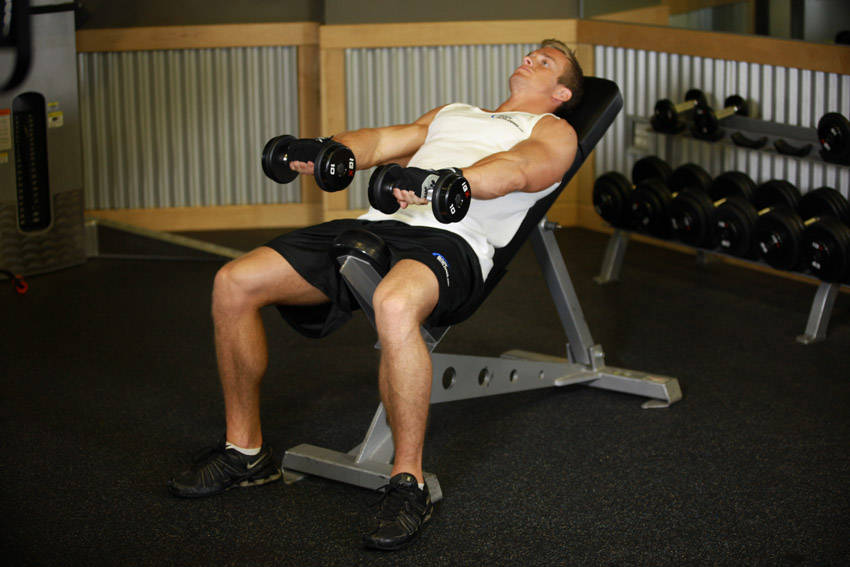
5. Front Incline Dumbbell Raise
80.4% MatchHow to perform this exercise
- Sit down on an incline bench with the incline set anywhere between 30 to 60 degrees while holding a dumbbell on each hand. Tip: You can change the angle to hit the muscle a little differently each time.
- Extend your arms straight in front of you and have your palms facing down with the dumbbells raised about 1 inch above your thighs. This will be your starting position.
- Slowly raise the dumbbells straight up until they are slightly above your shoulders, while keeping your elbows locked. Squeeze at the top for a second and make sure you breathe out during this portion of the movement. Tip: Keep your head resting down against the bench and your legs on the floor at all times.
- Lower the arms back to the starting position as you inhale.
- Repeat for the recommended amount of repetitions.
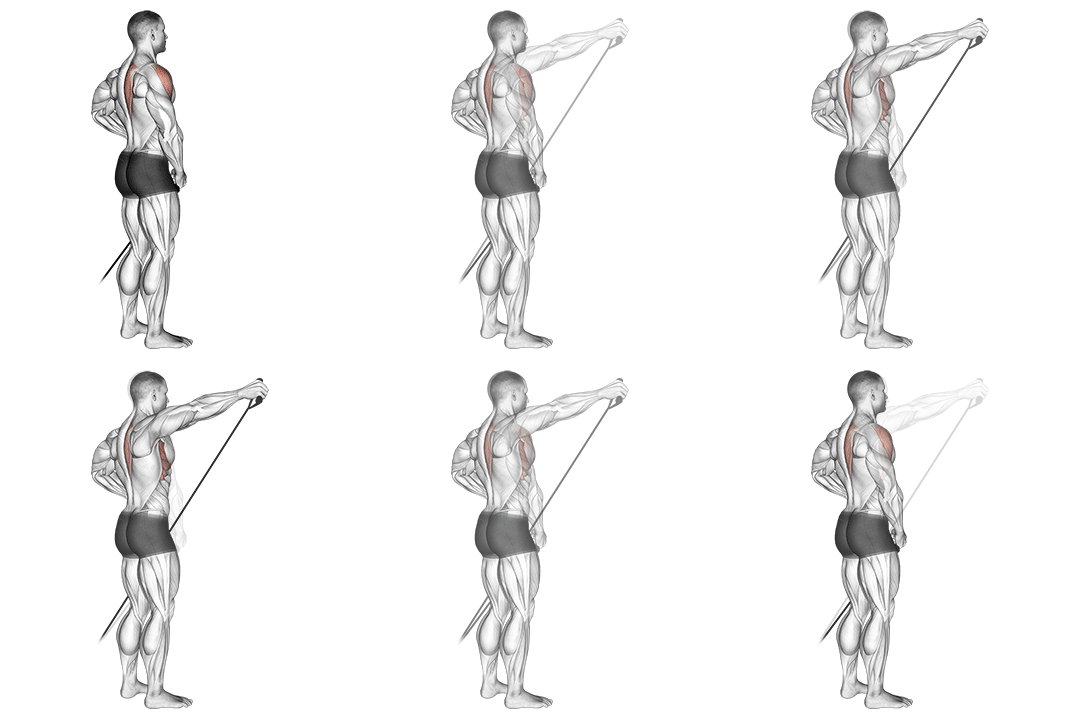
6. Band Front Lateral Raise
76.4% MatchHow to perform this exercise
- Stand with your feet shoulder-width apart and hold the band in front of your thighs with your palms facing down.
- Keep your arms straight and lift the band up in front of you until your arms are parallel to the ground.
- Pause for a moment at the top, then slowly lower the band back down to the starting position.
- Repeat for the desired number of repetitions.
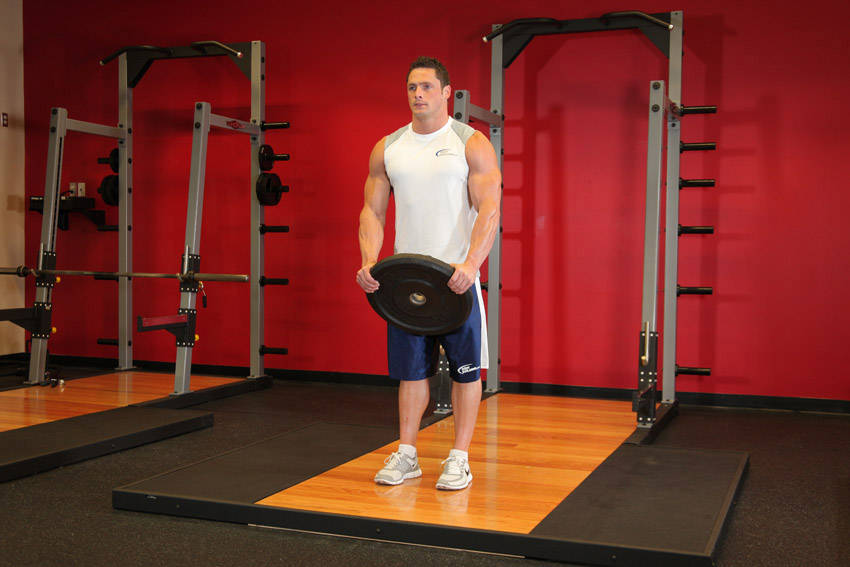
7. Front Plate Raise
76.4% MatchHow to perform this exercise
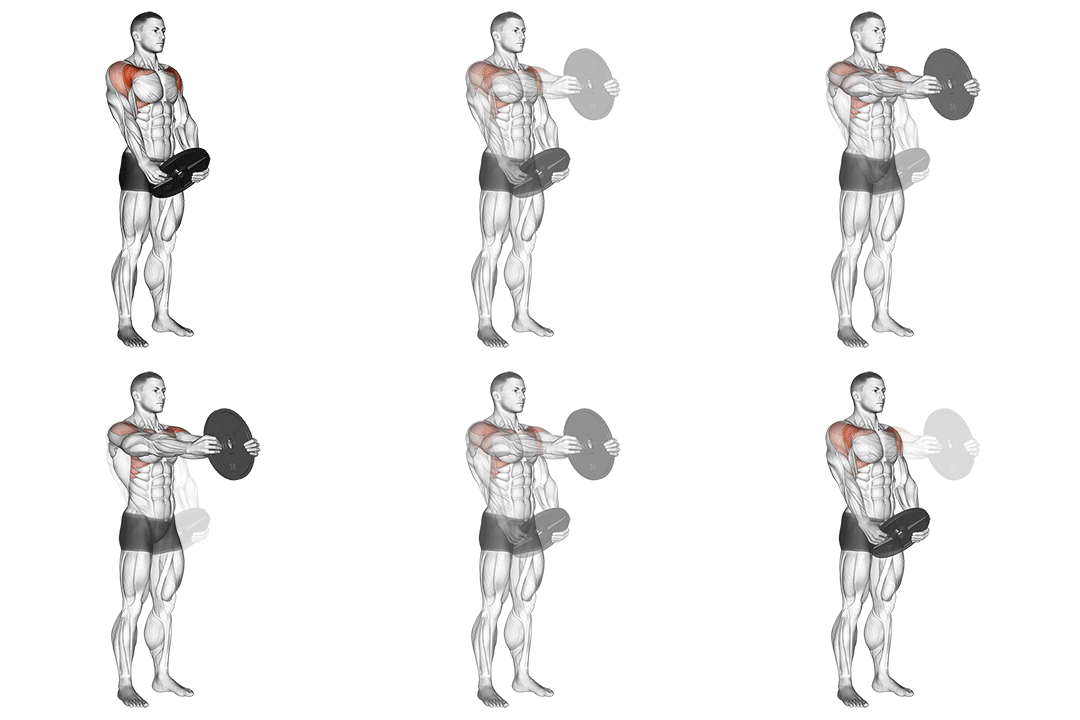
- While standing straight, hold a barbell plate in both hands at the 3 and 9 o'clock positions. Your palms should be facing each other and your arms should be extended and locked with a slight bend at the elbows and the plate should be down near your waist in front of you as far as you can go. Tip: The arms will remain in this position throughout the exercise. This will be your starting position.
- Slowly raise the plate as you exhale until it is a little above shoulder level. Hold the contraction for a second. Tip: make sure that you do not swing the weight or bend at the elbows. Your torso should remain stationary throughout the movement as well.
- As you inhale, slowly lower the plate back down to the starting position.
- Repeat for the recommended amount of repetitions.
8. Side Lateral Raise
76.4% MatchHow to perform this exercise
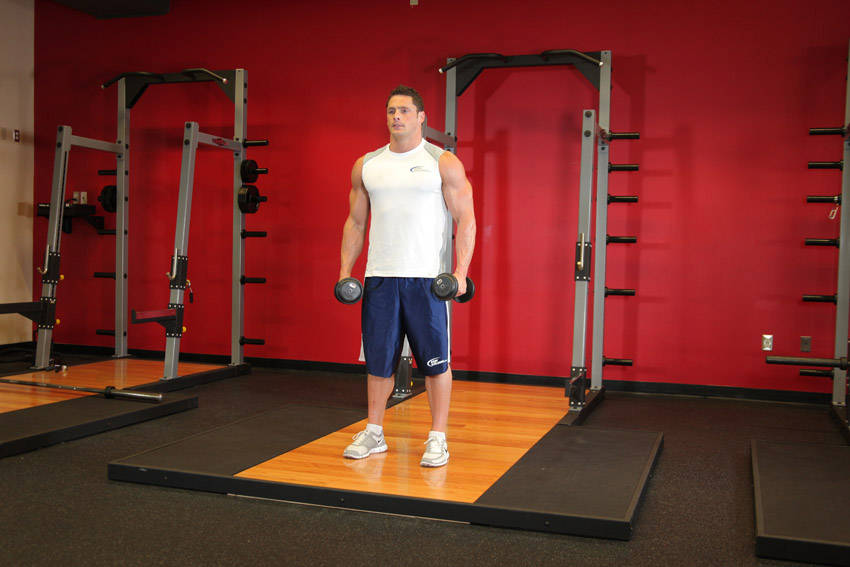
- Pick a couple of dumbbells and stand with a straight torso and the dumbbells by your side at arms length with the palms of the hand facing you. This will be your starting position.
- While maintaining the torso in a stationary position (no swinging), lift the dumbbells to your side with a slight bend on the elbow and the hands slightly tilted forward as if pouring water in a glass. Continue to go up until you arms are parallel to the floor. Exhale as you execute this movement and pause for a second at the top.
- Lower the dumbbells back down slowly to the starting position as you inhale.
- Repeat for the recommended amount of repetitions.
9. Weighted Front Raise
76.4% MatchHow to perform this exercise
- Stand with your feet shoulder-width apart, holding a dumbbell in each hand with your palms facing your thighs.
- Keeping your arms straight, exhale and lift the dumbbells in front of you until they are at shoulder level.
- Pause for a moment at the top, then inhale and slowly lower the dumbbells back down to the starting position.
- Repeat for the desired number of repetitions.
10. One-Arm Incline Lateral Raise
76.1% MatchHow to perform this exercise
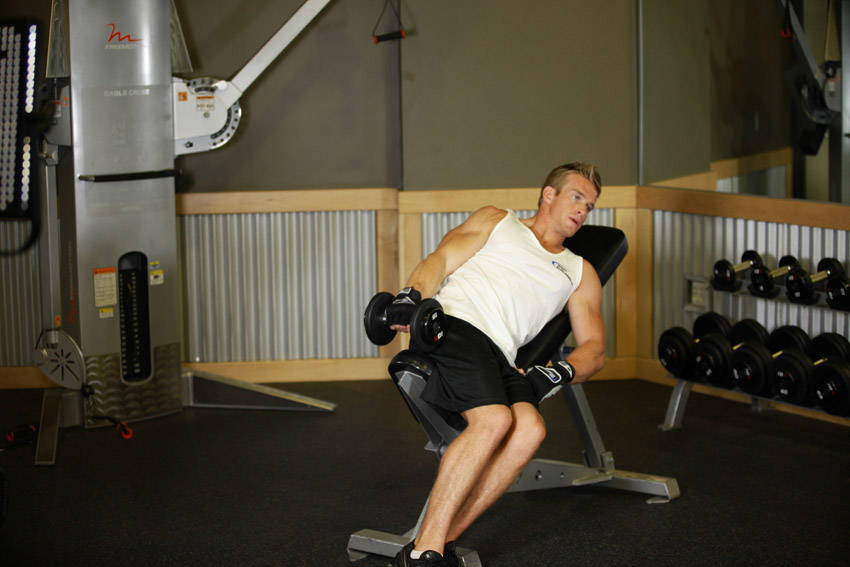
- Lie down sideways on an incline bench press with a dumbbell in the hand. Make sure the shoulder is pressing against the incline bench and the arm is lying across your body with the palm around your navel.
- Hold a dumbbell in your uppermost arm while keeping it extended in front of you parallel to the floor. This is your starting position.
- While keeping the dumbbell parallel to the floor at all times, perform a lateral raise. Your arm should travel straight up until it is pointing at the ceiling. Tip: Exhale as you perform this movement. Hold the dumbbell in the position and feel the contraction in the shoulders for a second.
- While inhaling lower the weight across your body back into the starting position.
- Repeat the movement for the prescribed amount of repetitions.
Why You Might Need a Cable Seated Lateral Raise Alternative
There are ordinary reasons to leave the Cable Seated Lateral Raise behind. It ties up two low pulleys and a flat bench at the same time, so a busy gym floor often forces the swap on its own. Some gyms have a cable stack but nowhere to sit between two opposing pulleys, and most home setups have no cable machine at all. Every alternative keeps the delts doing the work, whether from a single low pulley, a lever machine or a pair of dumbbells. The Front Cable Raise and the Standing Low-pulley Deltoid Raise both work from one low pulley at a time instead of two, the Lever Lateral Raise swaps in a fixed machine arm, and the dumbbell versions move the whole exercise to a bench at home.
How to Choose the Right Substitute
If another low pulley is free, take the Front Cable Raise: it works one arm at a time and raises it to the front rather than out to the side. The Standing Low-pulley Deltoid Raise also uses one low pulley: you stand beside it, reach across your body for the handle and bring it out to shoulder height, holding the machine with your free hand for balance. With no cable stack at all, the Lever Lateral Raise keeps a fixed machine arm on the same delts, or the Seated Side Lateral Raise does the job seated with a pair of dumbbells. That dumbbell version needs nothing but a bench and two dumbbells, which makes it the easiest place to start if you train at home.
Frequently Asked Questions
Can I do the Cable Seated Lateral Raise at home?
Yes, with a pair of dumbbells and a bench. The Seated Side Lateral Raise has you sit upright on the end of a flat bench and raise the dumbbells out to the side, not folded over your thighs between two pulleys. The Front Incline Dumbbell Raise and the One-arm Incline Lateral Raise both need an incline bench instead, one seated with a dumbbell in each hand and the other lying sideways with a single dumbbell.
What if my gym has no cable machine at all?
Reach for the Lever Lateral Raise if the gym has a lever machine, since it keeps a fixed arm working the same delts. Otherwise the Seated Side Lateral Raise or the Front Incline Dumbbell Raise both do the job with a pair of dumbbells and a bench, no pulleys needed.
Which alternative suits someone new to lateral raises?
The Seated Side Lateral Raise. You still sit on the end of a flat bench, but upright rather than folded over your thighs, with a light dumbbell in each hand and your arms at your sides, so there is no two-pulley setup to sort out before the first rep.
Can I train this with just a resistance band?
Yes. The Band Front Lateral Raise has you stand with the band in front of your thighs, palms down, and lift it with straight arms until they are parallel to the ground. It raises to the front rather than out to the side like the Cable Seated Lateral Raise, but it needs no pulleys or bench.
More Exercise Alternatives
Find Alternatives for Any Exercise
Use the exercise substitution finder to compare ranked alternatives for your available equipment and training preference.
Try the Exercise Substitution Finder →