

10 Best Cable Shoulder Press Alternatives for Shoulder Strength
The Cable Shoulder Press presses overhead against a steady pull from the machine, elbows bent and pointed out before your arms lock straight above your head. The Cable Alternate Shoulder Press is the closest overhead press to fall back on: same cable, same press, just one arm at a time. Without a cable station free, the Dumbbell Standing Overhead Press moves that same press onto a pair of dumbbells instead.
Original Exercise: Cable Shoulder Press
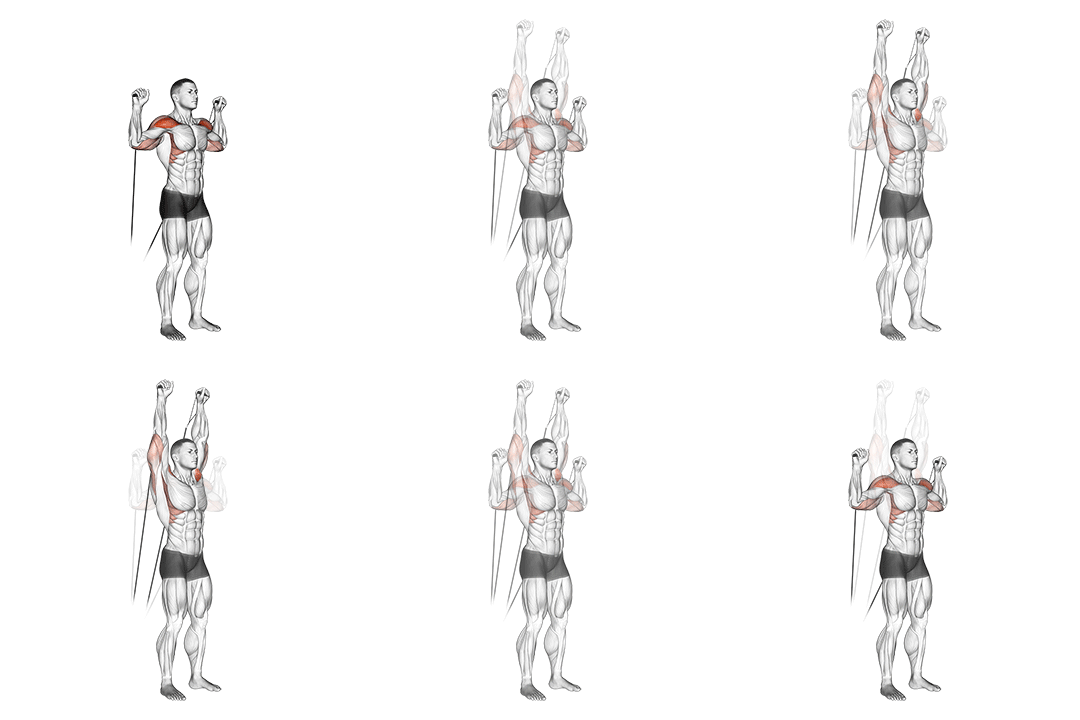
How to Perform Cable Shoulder Press
- Adjust the cable machine so that the handles are at shoulder height.
- Stand facing away from the machine with your feet shoulder-width apart.
- Grasp the handles with an overhand grip and bring them up to shoulder level, with your elbows bent and pointing outwards.
- Press the handles upwards until your arms are fully extended overhead.
- Pause for a moment at the top, then slowly lower the handles back down to shoulder level.
- Repeat for the desired number of repetitions.
Ranked Cable Shoulder Press Alternatives
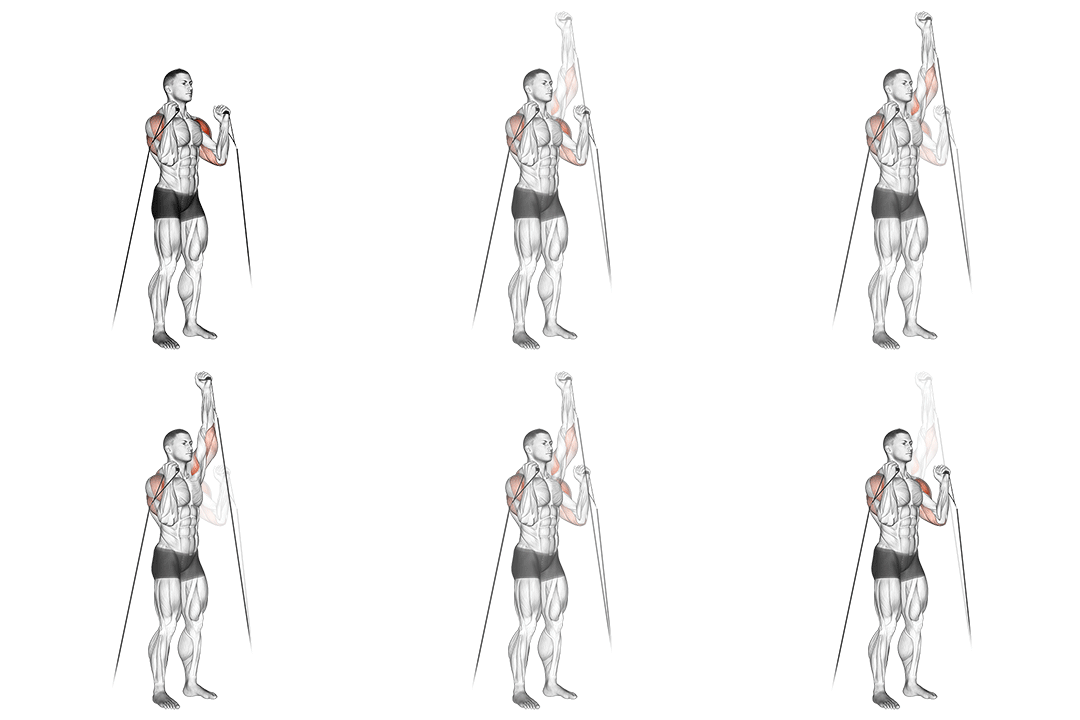
1. Cable Alternate Shoulder Press
87.4% MatchHow to perform this exercise
- Stand with your feet shoulder-width apart and grasp the handles of the cable machine with an overhand grip.
- Position your hands at shoulder height, with your palms facing forward.
- Keep your core engaged and your back straight.
- Press one handle up and forward until your arm is fully extended.
- Pause for a moment at the top, then slowly lower the handle back to the starting position.
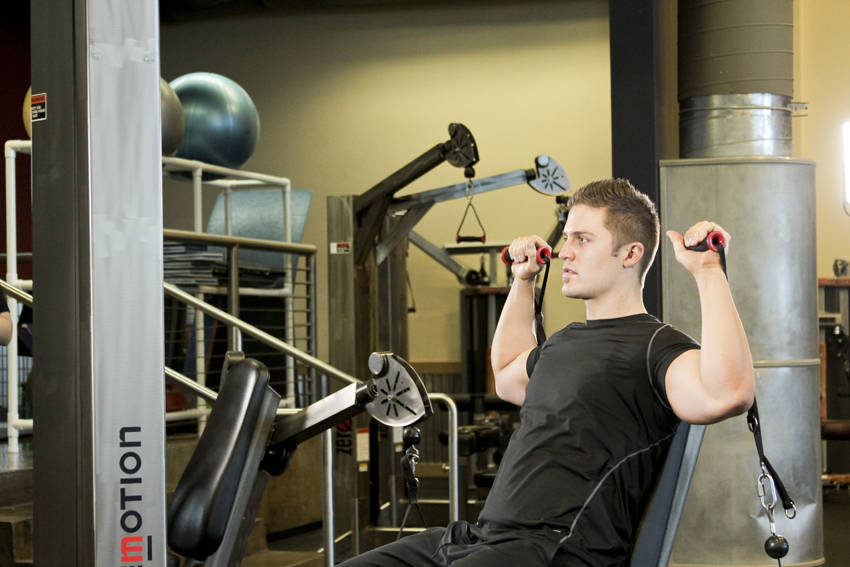
2. Seated Cable Shoulder Press
85.7% MatchHow to perform this exercise
- Adjust the weight to an appropriate amount and be seated, grasping the handles. Your upper arms should be about 90 degrees to the body, with your head and chest up. The elbows should also be bent to about 90 degrees. This will be your starting position.
- Begin by extending through the elbow, pressing the handles together above your head.
- After pausing at the top, return the handles to the starting position. Ensure that you maintain tension on the cables.
- You can also execute this movement with your back off the pad and alternate hands.
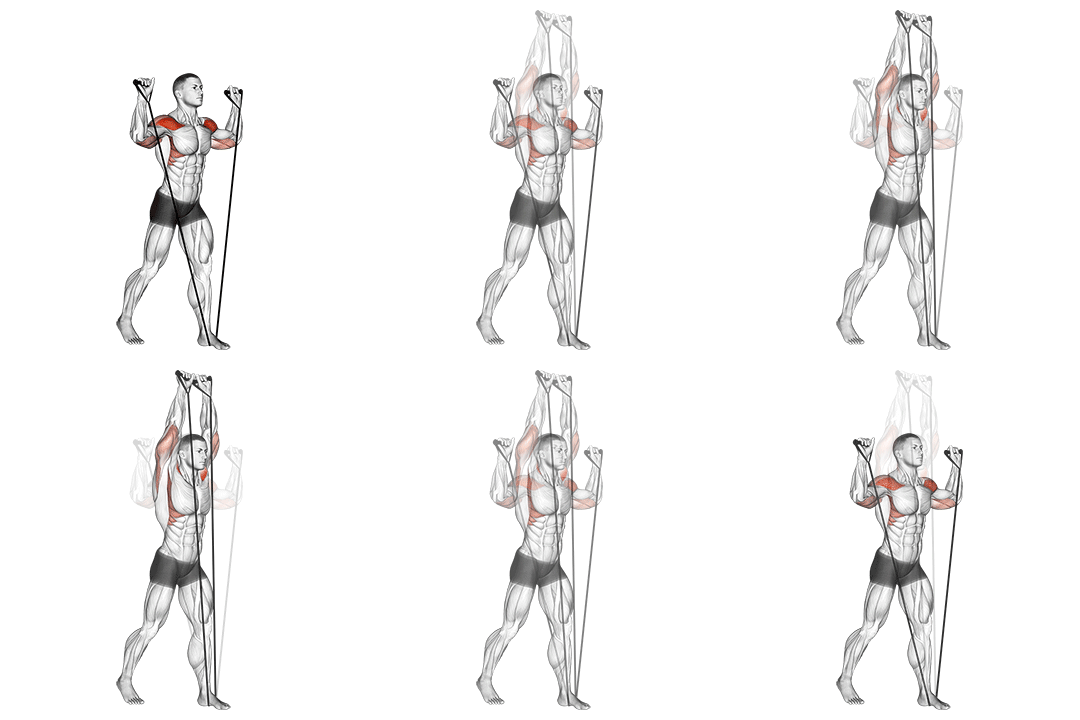
3. Band Shoulder Press
85% MatchHow to perform this exercise
- Stand with your feet shoulder-width apart and place the band under your feet.
- Hold the band with your palms facing forward and raise your hands to shoulder height, elbows bent.
- Press the band overhead, fully extending your arms.
- Pause for a moment at the top, then slowly lower the band back to shoulder height.
- Repeat for the desired number of repetitions.
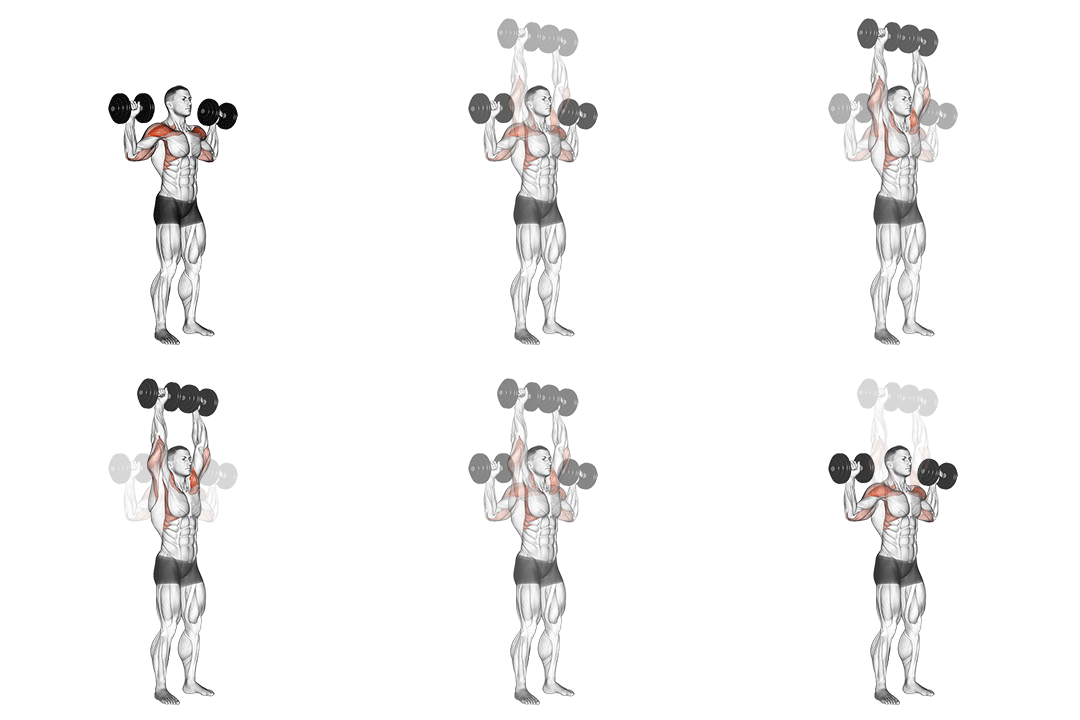
4. Dumbbell Standing Overhead Press
84.2% MatchHow to perform this exercise
- Stand with your feet shoulder-width apart, holding a dumbbell in each hand at shoulder level with your palms facing forward.
- Press the dumbbells upward until your arms are fully extended overhead.
- Pause for a moment at the top, then slowly lower the dumbbells back down to shoulder level.
- Repeat for the desired number of repetitions.
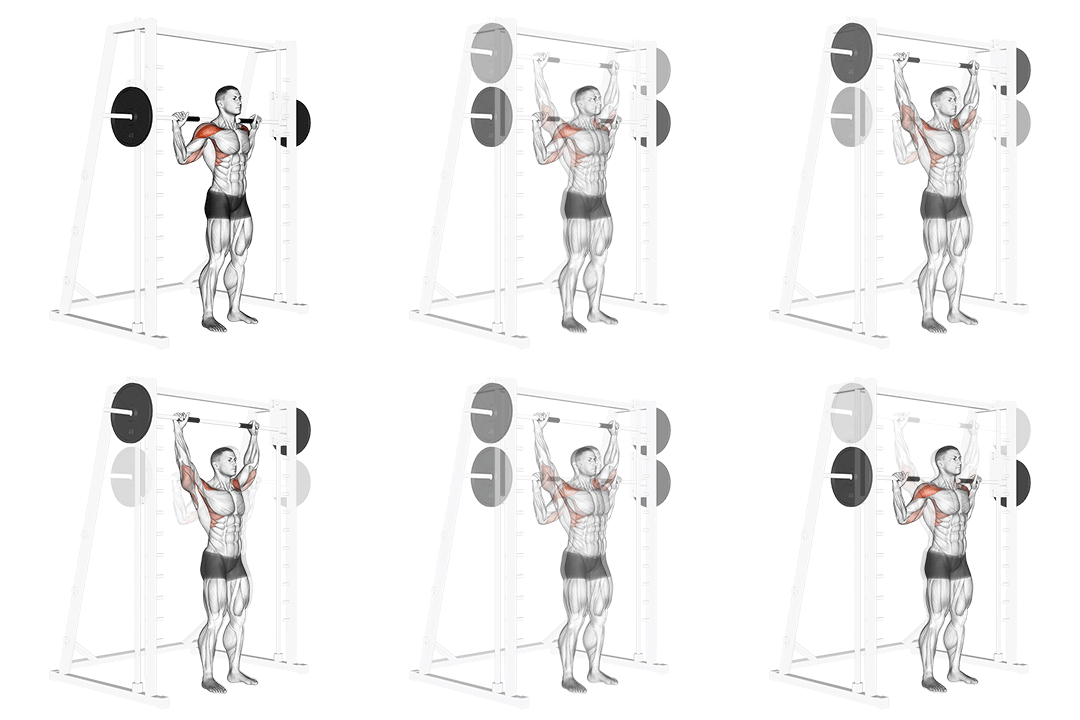
5. Smith Standing Behind Head Military Press
84.2% MatchHow to perform this exercise
- Adjust the seat height of the smith machine so that the bar is at shoulder level.
- Stand with your feet shoulder-width apart and your knees slightly bent.
- Grasp the bar with an overhand grip, slightly wider than shoulder-width apart.
- Lift the bar off the rack and step back, maintaining a stable stance.
- Position the bar behind your head, resting on your upper traps.
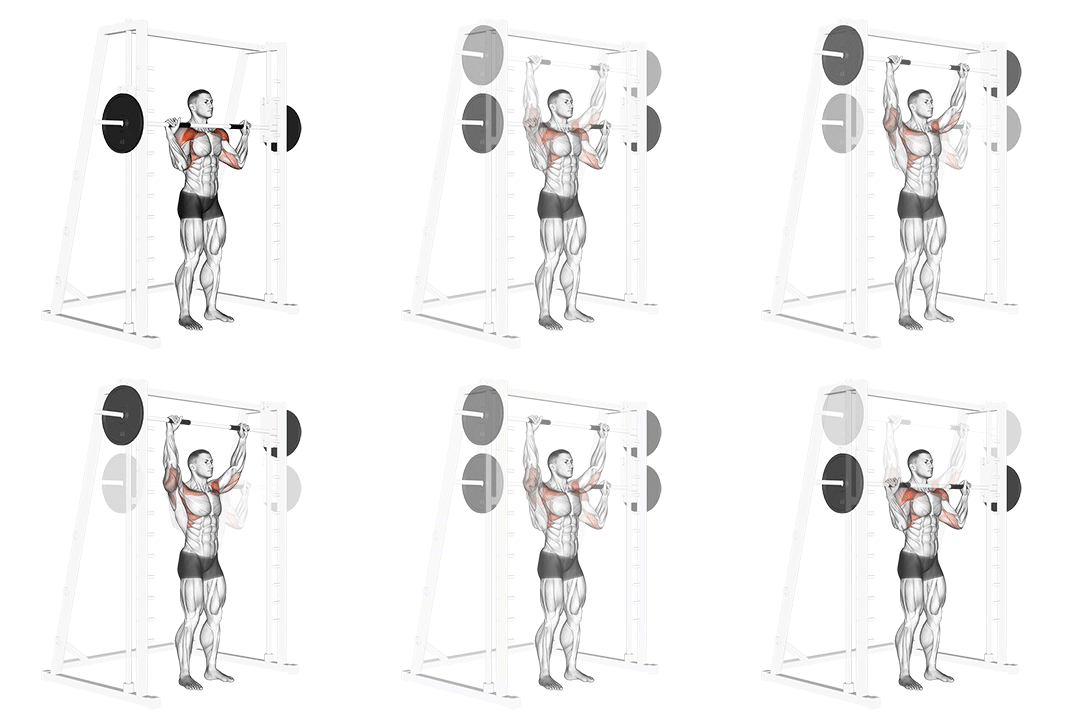
6. Smith Standing Military Press
84.2% MatchHow to perform this exercise
- Stand with your feet shoulder-width apart and your knees slightly bent.
- Grasp the barbell with an overhand grip, slightly wider than shoulder-width apart.
- Lift the barbell off the rack and bring it down to shoulder level, with your palms facing forward.
- Press the barbell upward until your arms are fully extended overhead.
- Pause for a moment at the top, then slowly lower the barbell back down to shoulder level.
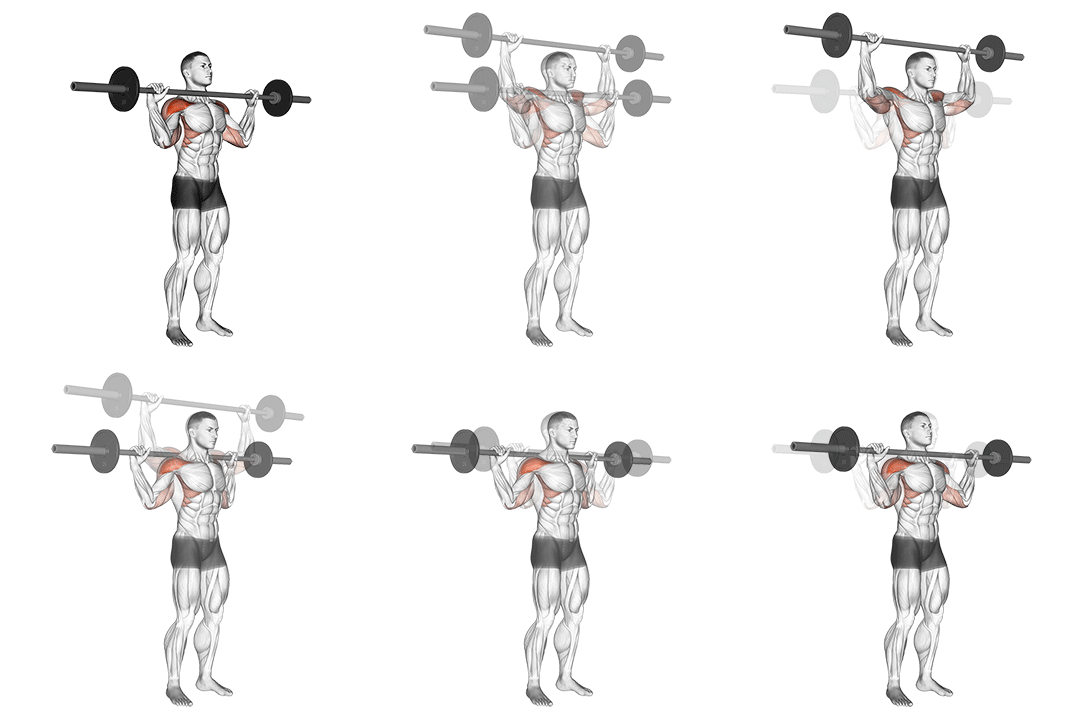
7. Barbell Standing Bradford Press
84.1% MatchHow to perform this exercise
- Stand with your feet shoulder-width apart and hold the barbell in front of your shoulders with an overhand grip.
- Press the barbell overhead, fully extending your arms.
- Lower the barbell back down to the starting position.
- Repeat for the desired number of repetitions.
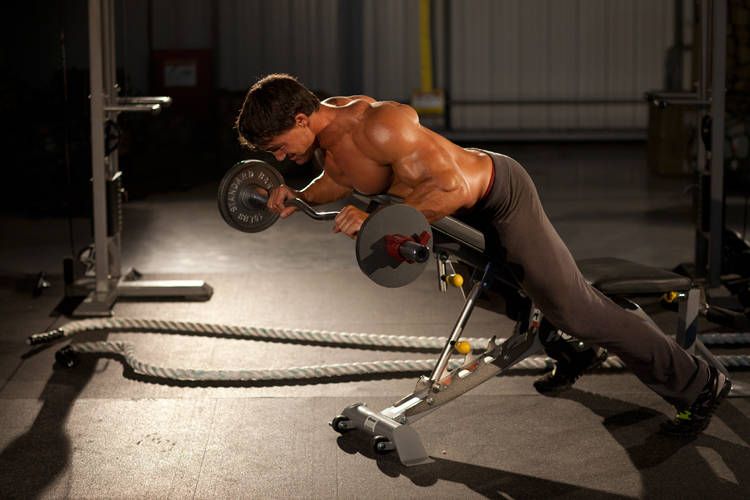
8. Anti-Gravity Press
83.7% MatchHow to perform this exercise
- Place a bar on the ground behind the head of an incline bench.
- Lay on the bench face down. With a pronated grip, pick the barbell up from the floor. Flex the elbows, performing a reverse curl to bring the bar near your chest. This will be your starting position.
- To begin, press the barbell out in front of your head by extending your elbows. Keep your arms parallel to the ground throughout the movement.
- Return to the starting position and repeat to complete the set.
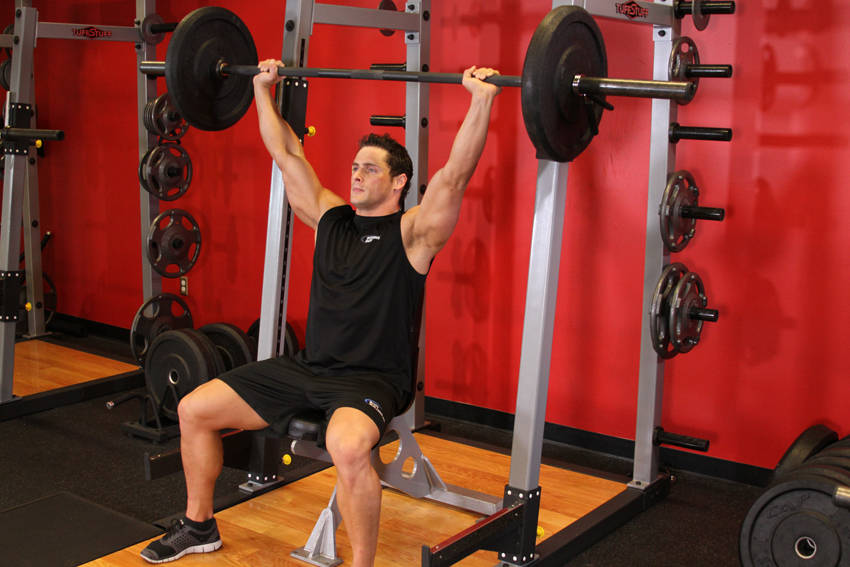
9. Barbell Shoulder Press
83.7% MatchHow to perform this exercise
- Sit on a bench with back support in a squat rack. Position a barbell at a height that is just above your head. Grab the barbell with a pronated grip (palms facing forward).
- Once you pick up the barbell with the correct grip width, lift the bar up over your head by locking your arms. Hold at about shoulder level and slightly in front of your head. This is your starting position.
- Lower the bar down to the shoulders slowly as you inhale.
- Lift the bar back up to the starting position as you exhale.
- Repeat for the recommended amount of repetitions.
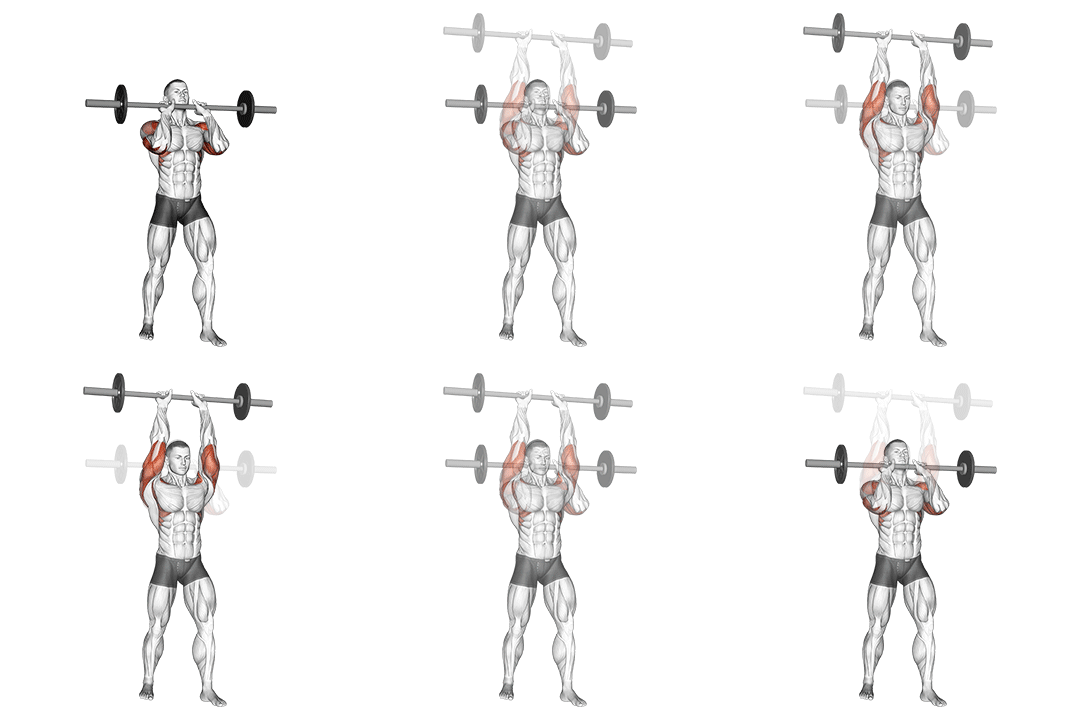
10. Barbell Standing Close Grip Military Press
83.7% MatchHow to perform this exercise
- Stand with your feet shoulder-width apart and hold the barbell with an overhand grip, hands slightly closer than shoulder-width apart.
- Lift the barbell to shoulder height, keeping your elbows close to your body.
- Press the barbell overhead, extending your arms fully.
- Lower the barbell back to shoulder height.
- Repeat for the desired number of repetitions.
Why You Might Need a Cable Shoulder Press Alternative
You reach for a substitute when the cable station is taken, when your gym has no cable tower at all, or when you train at home with a band or a pair of dumbbells. The Cable Shoulder Press depends on that machine, and the steady pull it gives you is exactly what changes once you swap the equipment. Every alternative lifts from shoulder height until your arms lock out overhead, but changes what you push against: some still pull from a cable, some load a band or a dumbbell instead, and a few move the press onto a barbell or a Smith machine bar, with two of them done seated rather than standing. Match your swap to what is actually free in your gym today.
How to Choose the Right Substitute
If you still have a cable station and want to work one side at a time, the Cable Alternate Shoulder Press keeps the same machine and presses one handle up and forward while the other waits at shoulder height. Stuck at home, the Band Shoulder Press keeps the standing press against a band anchored under your feet, and the Dumbbell Standing Overhead Press does the same job with a pair of dumbbells, letting each arm move on its own path. If you want a barbell instead, the Barbell Shoulder Press moves the press onto a bench with back support in a squat rack, while the Barbell Standing Bradford Press stays standing, the Barbell Standing Close Grip Military Press narrows your hand spacing, and the Standing Behind Neck Press lowers the bar behind your head.
Frequently Asked Questions
Which alternative works one arm at a time?
The Cable Alternate Shoulder Press. It uses the same cable machine and the same standing press as the original, but you work one arm at a time instead of both together. That change means each side has to press on its own, which helps if one shoulder is stronger than the other; the one difference is that each handle travels up and forward rather than straight overhead.
Which swaps need no machine at all?
The Band Shoulder Press, the Dumbbell Standing Overhead Press, and the four barbell presses, including the Barbell Shoulder Press and the Barbell Standing Bradford Press, all work without a cable machine or a Smith machine. Pick the band or dumbbell version for home training, or a barbell version if your gym has a bar free but no cable tower.
Which alternative lets me sit down instead of standing?
The Seated Cable Shoulder Press. It uses the same cable stack as the Cable Shoulder Press, but you sit with your upper arms out at about 90 degrees to your body and your elbows bent to about 90 degrees, then press the handles together above your head. The seated steps also let you take your back off the pad and press one hand at a time if you want a harder version of the same swap.
Can I do the Cable Shoulder Press at home?
Not the exact cable version, but the same standing press works at home two ways. The Band Shoulder Press anchors the band under your feet and presses it overhead, and the Dumbbell Standing Overhead Press uses a plain pair of dumbbells instead. Both press straight overhead through the same range as the cable version, so either one is a fair swap when you train at home.
More Exercise Alternatives
Find Alternatives for Any Exercise
Use the exercise substitution finder to compare ranked alternatives for your available equipment and training preference.
Try the Exercise Substitution Finder →