

10 Best Cable Squatting Curl Alternatives for Limited Equipment
What can I do instead of Cable Squatting Curl? Use exercises that maintain constant tension and strict elbow flexion: standing cable curl, EZ-bar curl, incline dumbbell curl, chin-up with supinated grip, or concentration curl. Cue: pin your elbows to your sides, control the eccentric for 2–3 seconds, and fully supinate to maximize biceps brachii activation and peak contraction.
Original Exercise: Cable Squatting Curl
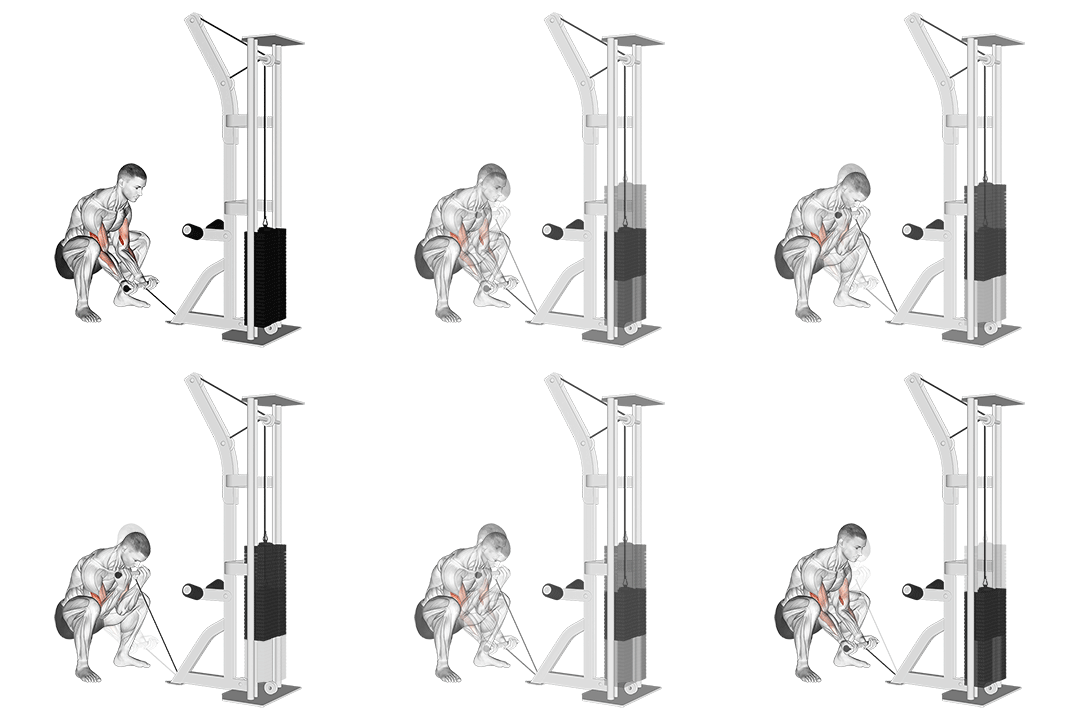
How to Perform Cable Squatting Curl
- Attach a cable handle to the lowest setting on a cable machine.
- Stand facing the machine with your feet shoulder-width apart.
- Hold the cable handle with an underhand grip, palms facing up, and arms fully extended.
- Lower your body into a squat position, keeping your back straight and knees behind your toes.
- As you squat down, curl the cable handle towards your shoulders, keeping your elbows close to your sides.
- Pause for a moment at the top of the curl, squeezing your biceps.
- Slowly lower the cable handle back to the starting position, fully extending your arms.
- Repeat for the desired number of repetitions.
Ranked Cable Squatting Curl Alternatives
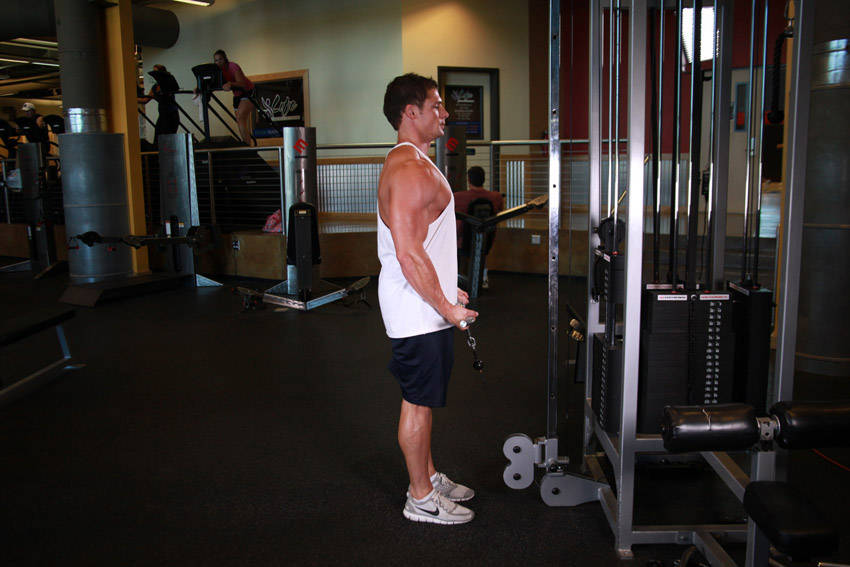
1. Standing Biceps Cable Curl
81.8% MatchHow to perform this exercise
- Stand up with your torso upright while holding a cable curl bar that is attached to a low pulley. Grab the cable bar at shoulder width and keep the elbows close to the torso. The palm of your hands should be facing up (supinated grip). This will be your starting position.
- While holding the upper arms stationary, curl the weights while contracting the biceps as you breathe out. Only the forearms should move. Continue the movement until your biceps are fully contracted and the bar is at shoulder level. Hold the contracted position for a second as you squeeze the muscle.
- Slowly begin to bring the curl bar back to starting position as your breathe in.
- Repeat for the recommended amount of repetitions.
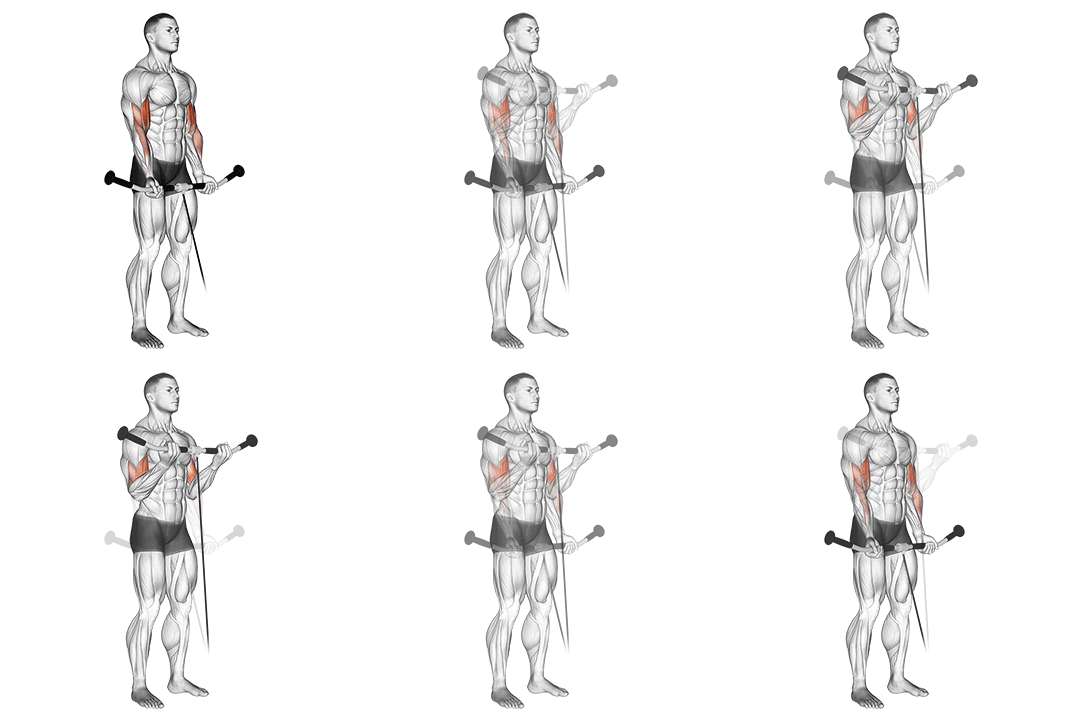
2. Cable Curl
81.6% MatchHow to perform this exercise
- Stand facing the cable machine with your feet shoulder-width apart.
- Grasp the cable attachment with an underhand grip, palms facing up.
- Keep your elbows close to your sides and your upper arms stationary.
- Exhale and curl the cable attachment towards your shoulders, contracting your biceps.
- Pause for a moment at the top of the movement, squeezing your biceps.
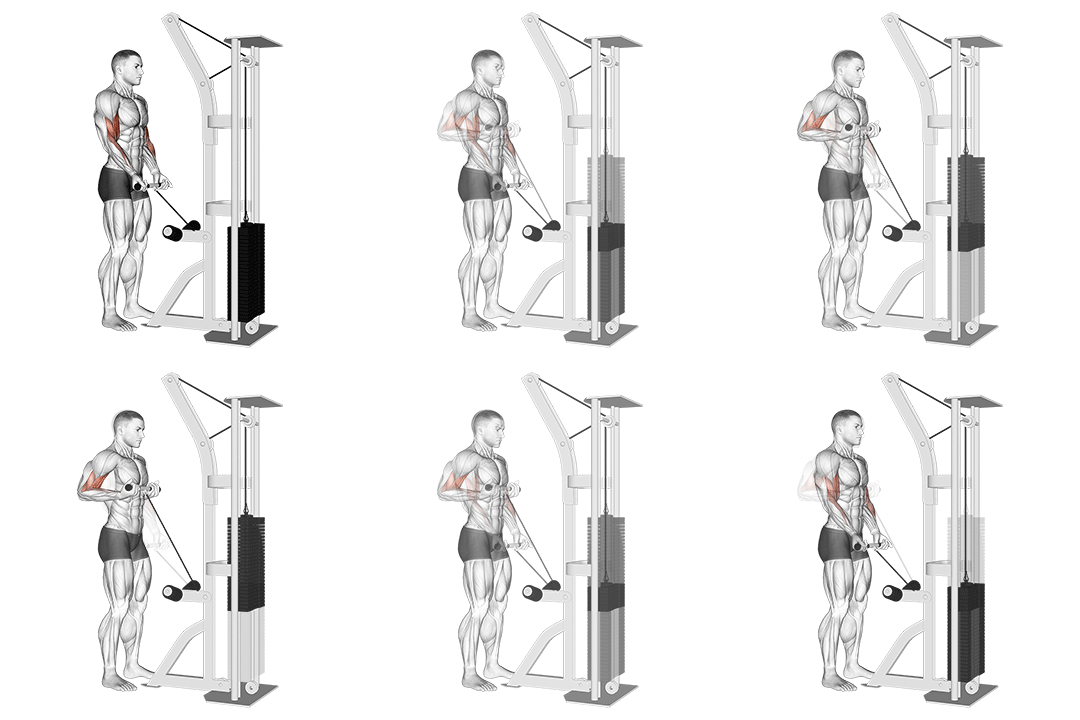
3. Cable Drag Curl
81.6% MatchHow to perform this exercise
- Stand facing a cable machine with your feet shoulder-width apart.
- Grasp the cable attachment with an underhand grip, palms facing up, and arms fully extended.
- Keeping your upper arms stationary, exhale and curl the cable attachment towards your shoulders by contracting your biceps.
- Pause for a moment at the top of the movement, squeezing your biceps.
- Inhale and slowly lower the cable attachment back to the starting position, fully extending your arms.
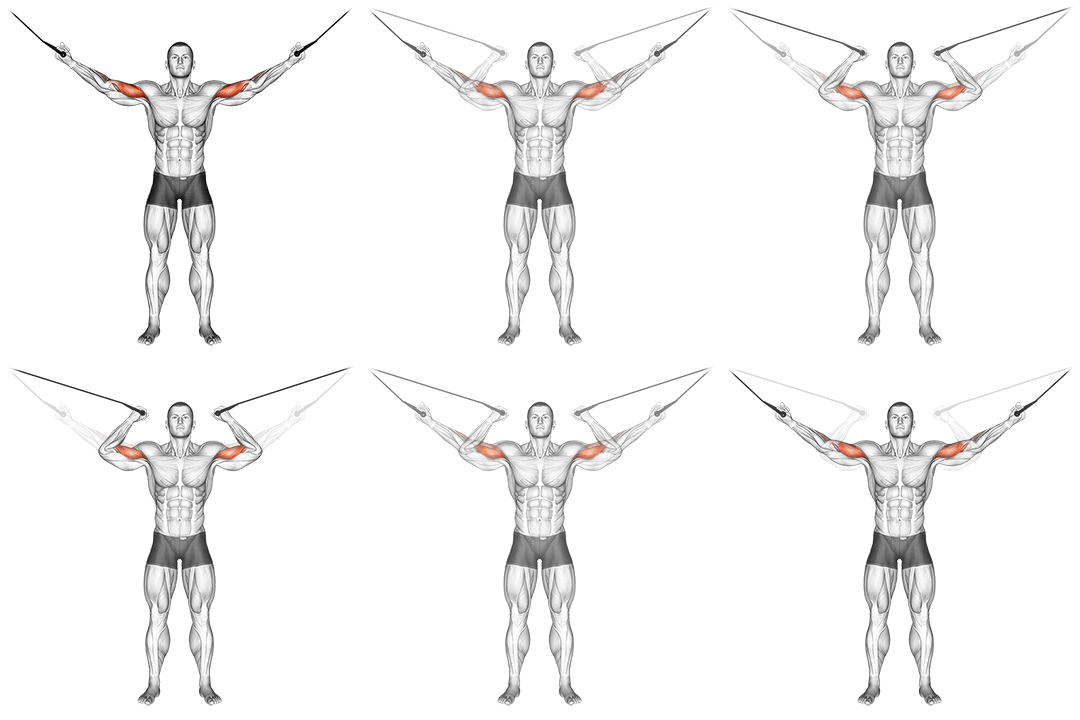
4. Cable Overhead Curl
81.6% MatchHow to perform this exercise
- Attach a straight bar to a high pulley cable machine.
- Stand facing the machine with your feet shoulder-width apart.
- Grasp the bar with an underhand grip, hands shoulder-width apart.
- Keep your elbows close to your sides and your upper arms stationary.
- Exhale and curl the bar down towards your forehead, keeping your upper arms stationary.
5. High Cable Curls
81% MatchHow to perform this exercise
- Stand between a couple of high pulleys and grab a handle in each arm. Position your upper arms in a way that they are parallel to the floor with the palms of your hands facing you. This will be your starting position.
- Curl the handles towards you until they are next to your ears. Make sure that as you do so you flex your biceps and exhale. The upper arms should remain stationary and only the forearms should move. Hold for a second in the contracted position as you squeeze the biceps.
- Slowly bring back the arms to the starting position.
- Repeat for the recommended amount of repetitions.
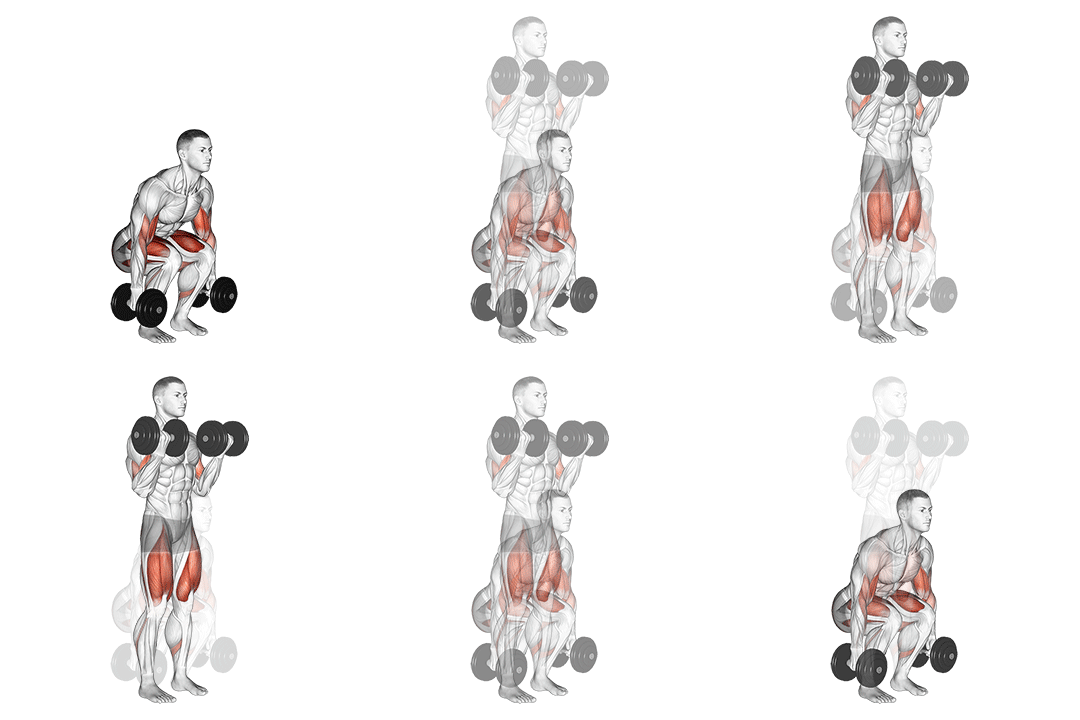
6. Dumbbell Biceps Curl Squat
80.8% MatchHow to perform this exercise
- Stand with your feet shoulder-width apart, holding a dumbbell in each hand with your palms facing forward.
- Keeping your back straight and your elbows close to your sides, exhale and curl the dumbbells up towards your shoulders.
- Pause for a moment at the top, squeezing your biceps.
- Inhale and slowly lower the dumbbells back down to the starting position.
- Repeat for the desired number of repetitions.
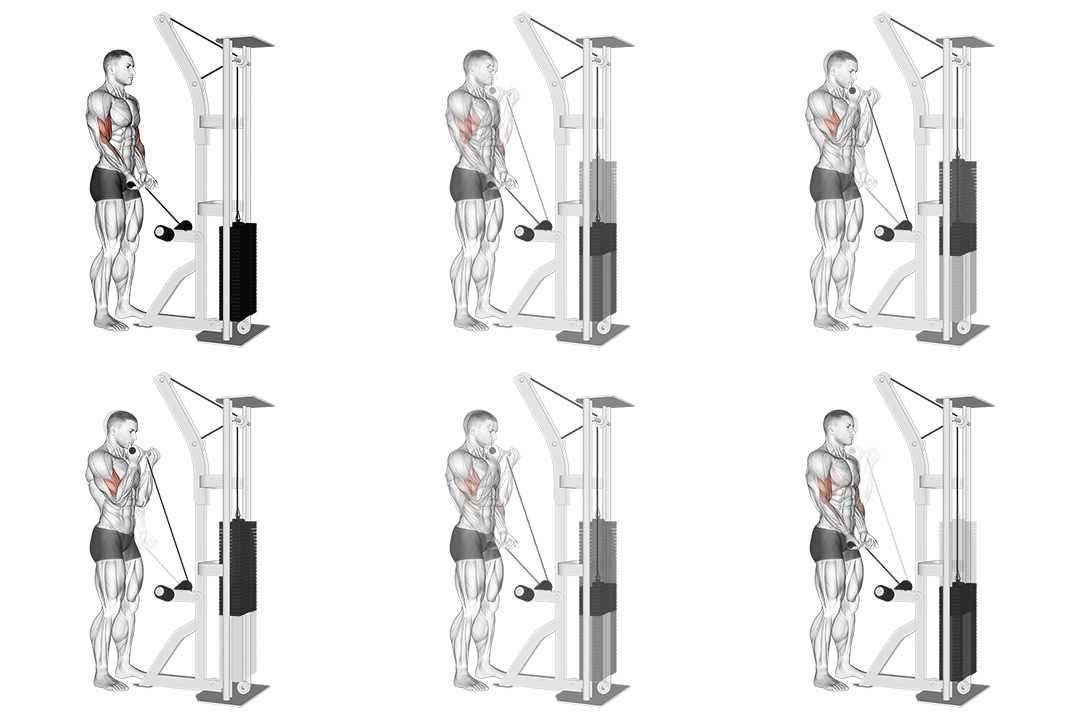
7. Cable Close Grip Curl
79% MatchHow to perform this exercise
- Attach a straight bar to a low pulley cable machine.
- Stand facing the machine with your feet shoulder-width apart and your knees slightly bent.
- Grasp the bar with an underhand grip, hands shoulder-width apart.
- Keep your elbows close to your sides and your upper arms stationary throughout the exercise.
- Exhale and curl the bar up towards your shoulders, contracting your biceps.
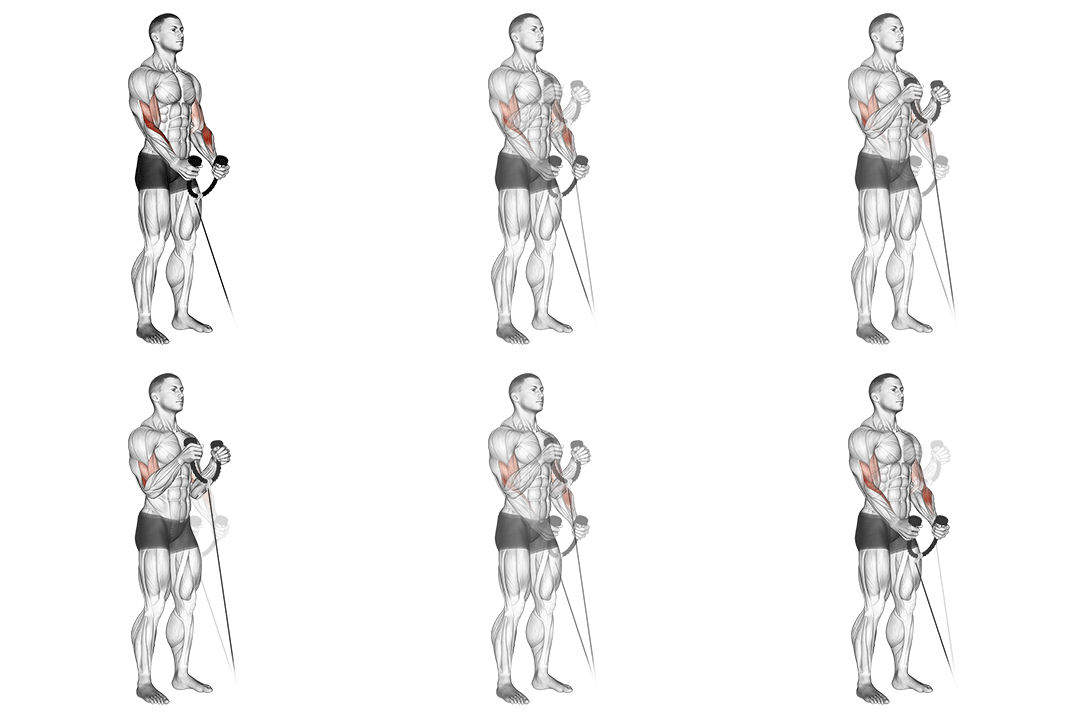
8. Cable Hammer Curl (with Rope)
78.6% MatchHow to perform this exercise
- Stand upright with your feet shoulder-width apart and a slight bend in your knees.
- Hold the cable rope attachment with an underhand grip, palms facing each other, and your arms fully extended.
- Keeping your upper arms stationary, exhale and curl the weights while contracting your biceps.
- Continue to raise the cable rope attachment until your biceps are fully contracted and the rope is at shoulder level.
- Hold the contracted position for a brief pause as you squeeze your biceps.
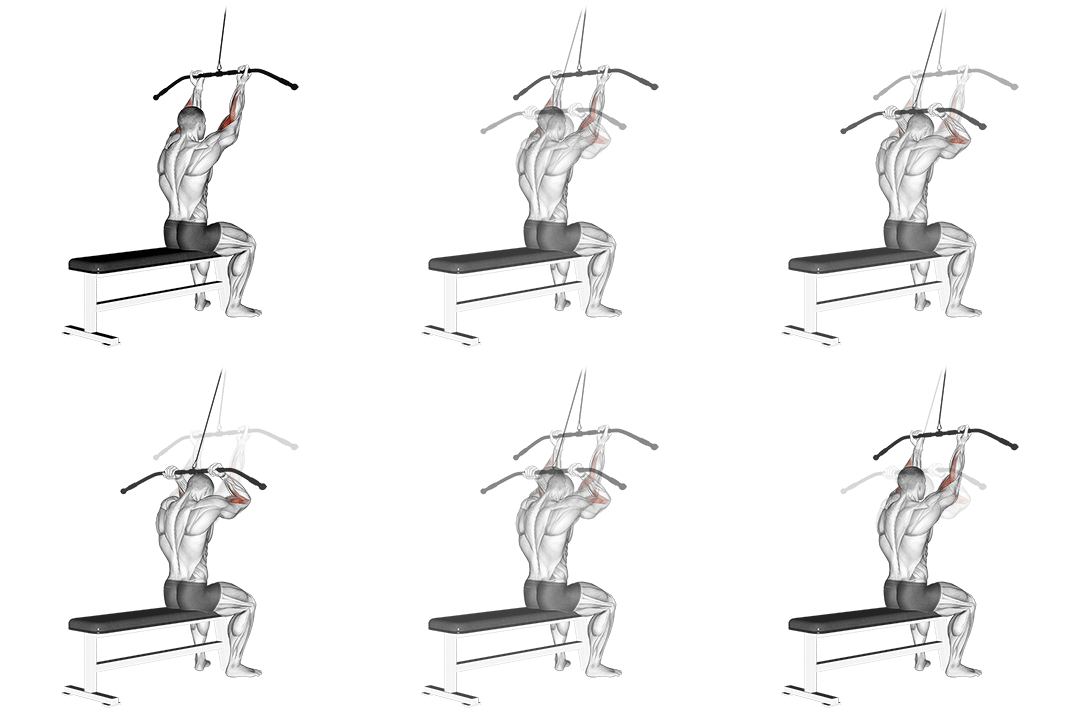
9. Cable Pulldown Bicep Curl
78.6% MatchHow to perform this exercise
- Attach a straight bar to the cable machine at the highest setting.
- Stand facing the machine with your feet shoulder-width apart.
- Grasp the bar with an underhand grip, hands shoulder-width apart.
- Keep your elbows close to your sides and your upper arms stationary.
- Exhale and slowly curl the bar down towards your thighs, keeping your wrists straight.
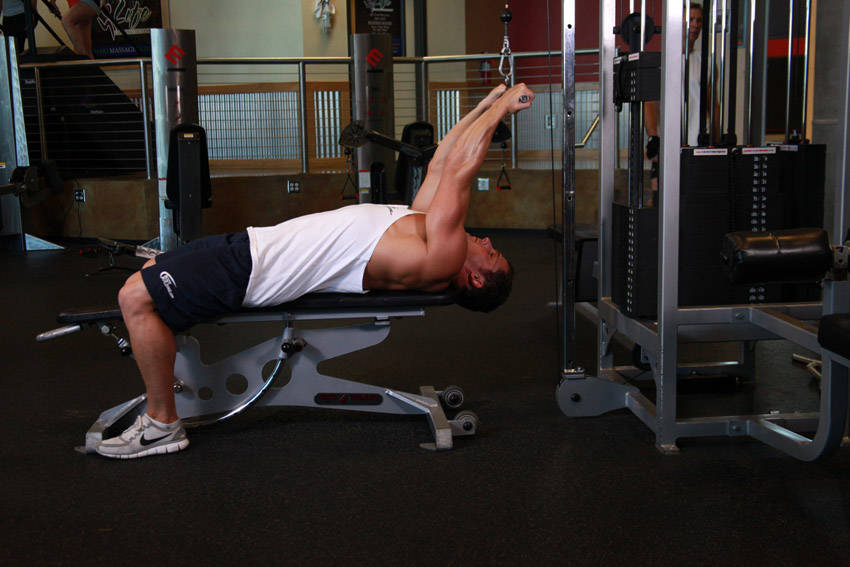
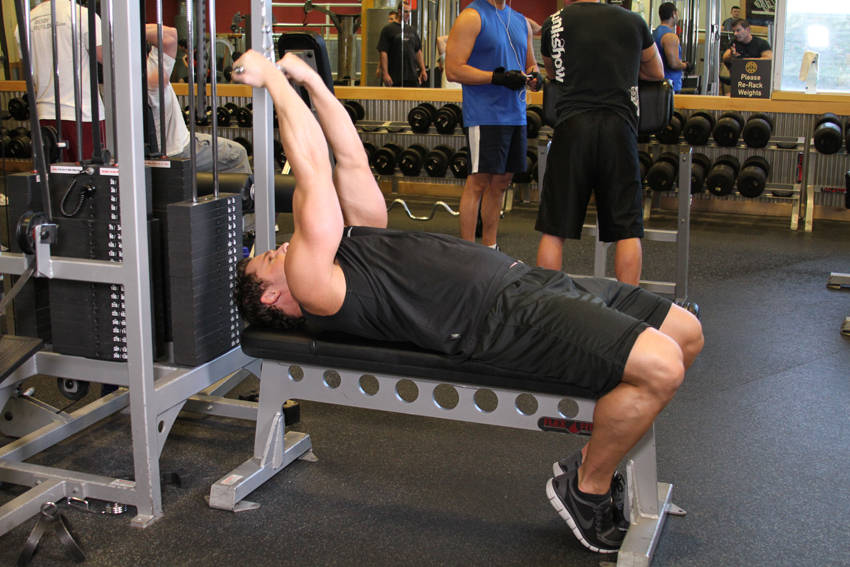
10. Lying Close-Grip Bar Curl On High Pulley
78% MatchHow to perform this exercise
- Place a flat bench in front of a high pulley or lat pulldown machine.
- Hold the straight bar attachment using an underhand grip (palms up) that is about shoulder width.
- Lie on your back with your head over the end of the bench.
- Now extend your arms straight above your shoulders. Your torso and your arms should make a 90-degree angle and the elbows should be in. This will be your starting position.
- As you breathe out, curl the bar down in a semicircular motion until it touches your chin. Squeeze the biceps for a second at the top contracted position. Tip: As you execute this motion only the forearms should move. At no time should the upper arms be moving at all. They are to remain perpendicular throughout the movement.
Why You Might Need a Cable Squatting Curl Alternative
You might substitute Cable Squatting Curl because of machine availability, wrist or knee irritation from the squat stance, or to change stimulus for hypertrophy. Alternatives let you alter load curve, unilateral bias, or range of motion to target the biceps brachii and brachialis differently. For example, incline dumbbell curls lengthen the long head via shoulder extension, while concentration curls increase peak contraction by restricting scapular movement. Cue: keep the shoulder stable and avoid shrugging so the elbow remains the primary joint producing force, which improves isolated elbow flexor recruitment and reduces compensatory upper-trap activity.
How to Choose the Right Substitute
Select a substitute based on equipment, joint tolerance, and training goal. If you want constant tension similar to cable work, choose standing cable or band curls and cue a slow eccentric to emphasize time under tension. For unilateral strength and correcting imbalances, pick single-arm dumbbell or concentration curls and focus on full elbow extension and supination at the top. If you have shoulder or wrist limits, prioritize neutral-grip hammer curls to shift load to the brachialis and brachioradialis while reducing forearm supinator strain. Always match range of motion and tempo to your hypertrophy or strength targets.
Frequently Asked Questions
What muscles does Cable Squatting Curl work?
Cable Squatting Curl primarily targets the biceps brachii (both long and short heads) and the brachialis. It also recruits the brachioradialis and wrist supinators; cue: keep the elbow fixed and supinate at the top to maximize biceps peak contraction.
What is the best bodyweight alternative to Cable Squatting Curl?
A supinated-grip chin-up is the best bodyweight alternative because it demands powerful elbow flexion under load and engages the biceps through full range. Cue: pull through the elbow, avoid excessive torso swing, and lower with a controlled eccentric to maintain biceps tension.
Can I build muscle without doing Cable Squatting Curl?
Yes, you can build biceps mass with many other movements by applying progressive overload, volume, and strict technique. Use exercises like EZ-bar curls, incline dumbbell curls, and chin-ups, and cue full ROM and controlled tempo to ensure proper biceps activation and growth.
More Exercise Alternatives
Find Alternatives for Any Exercise
Use the exercise substitution finder to compare ranked alternatives for your available equipment and training preference.
Try the Exercise Substitution Finder →