

10 Best Jump Squat Alternatives for Low-Impact Training
The Jump Squat is done standing. Ranked closest by our scoring: the Box Jump (Multiple Response), the Bodyweight Drop Jump Squat and the Potty Squat With Support.
Updated Ranked by our 12-factor similarity model How it works
Original Exercise: Jump Squat
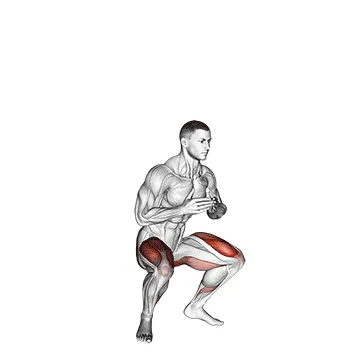
- Primary muscle
- Glutes
- Equipment
- Bodyweight
- Difficulty
- Intermediate
- Type
- Compound
Secondary muscles: Quadriceps, Hamstrings, Calves
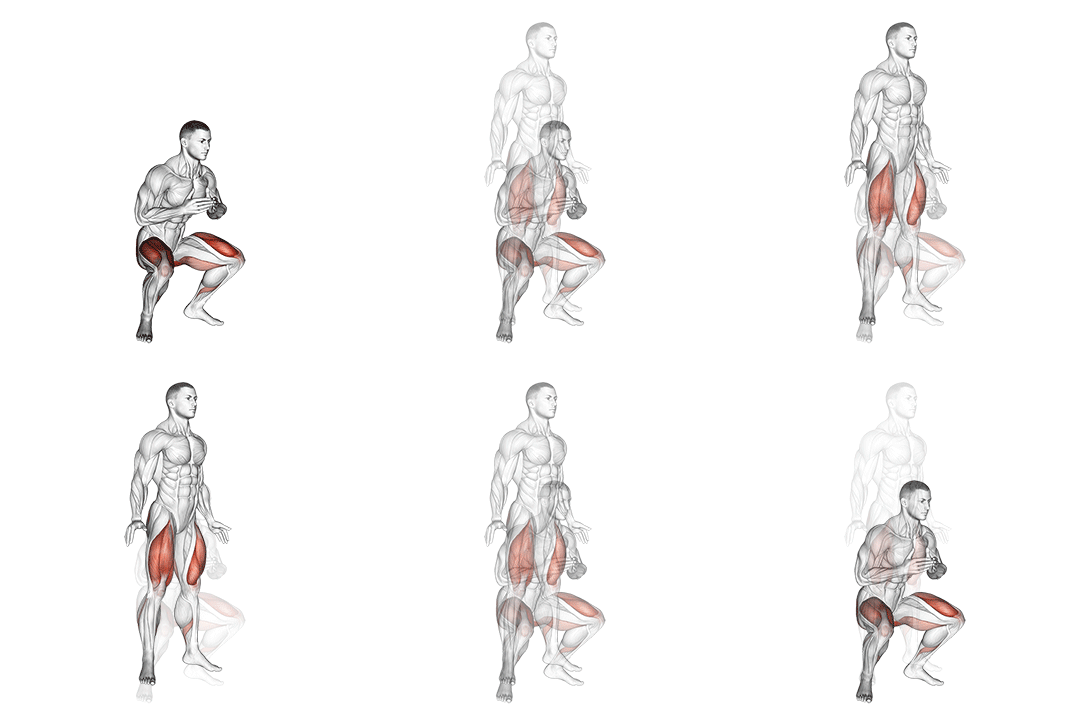
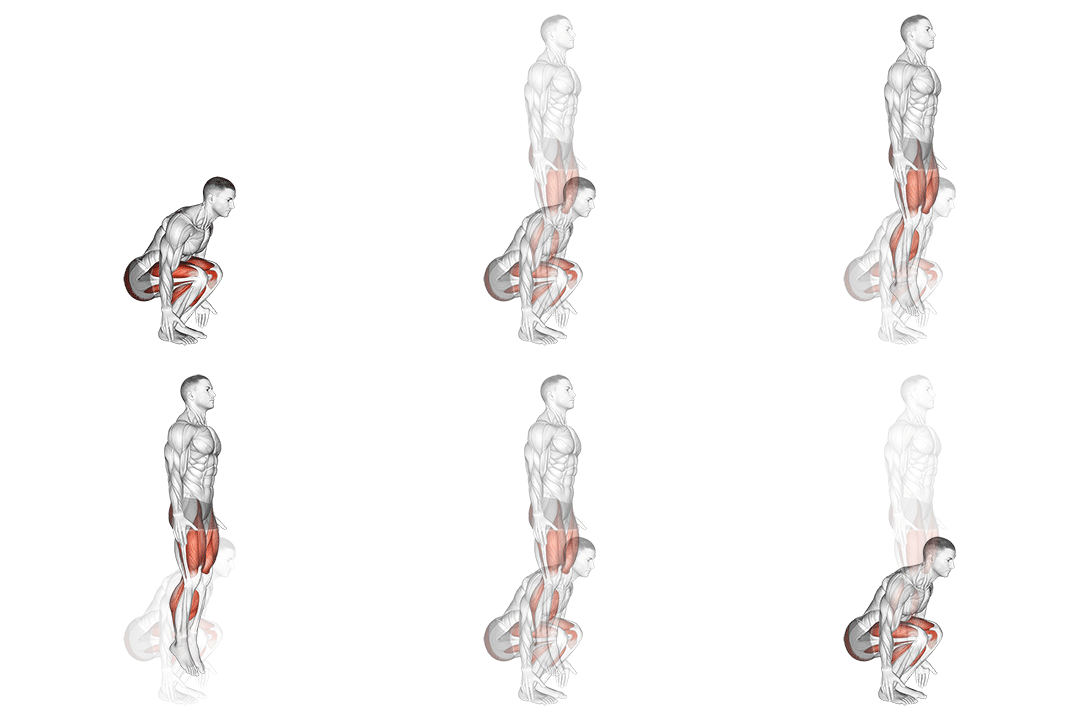
How to perform Jump Squat
- Stand with your feet shoulder-width apart.
- Lower your body into a squat position by bending your knees and pushing your hips back.
- Jump explosively off the ground, extending your hips, knees, and ankles.
- While in mid-air, quickly bring your arms forward for balance.
- Land softly on the balls of your feet and immediately go into the next repetition.
- Repeat for the desired number of repetitions.
Ranked Jump Squat Alternatives
10 substitutes, ranked by how closely each one matches the Jump Squat on movement pattern, muscles worked, equipment and body position. The higher the score, the less you change. Open "How to perform this exercise" on a card for the steps; every card title links to that exercise's own alternatives page.
Best match 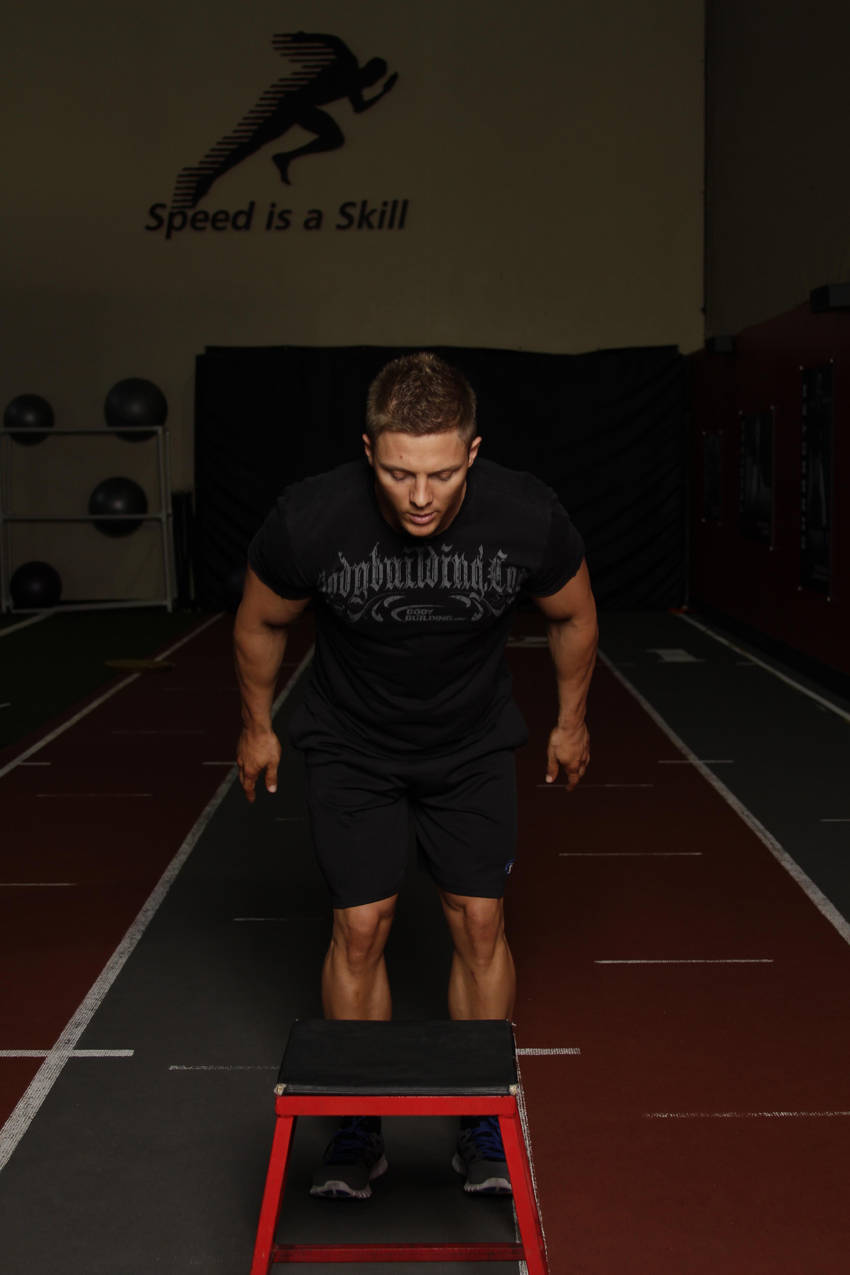
1. Box Jump (Multiple Response)
94% match- Glutes
- Other
- Intermediate
- Compound
A straight swap when you want to keep working the glutes.
How to perform this exercise
- Assume a relaxed stance facing the box or platform approximately an arm's length away. Arms should be down at the sides and legs slightly bent.
- Using the arms to aid in the initial burst, jump upward and forward, landing with feet simultaneously on top of the box or platform.
- Immediately drop or jump back down to the original starting place; then repeat the sequence.
Sets and reps: 3 or 4 sets of 6 to 10 reps.
Why this matches
- Primary muscle: glutes, the same as the Jump Squat
- Equipment: bodyweight only, the same as the Jump Squat
- Body position: standing, the same as the Jump Squat
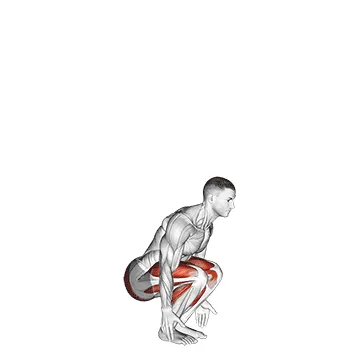
2. Bodyweight Drop Jump Squat
94% match- Glutes
- Bodyweight
- Intermediate
- Compound
It uses the same equipment and still works the glutes.
How to perform this exercise
- Stand with your feet shoulder-width apart.
- Lower your body into a squat position by bending your knees and pushing your hips back.
- Jump up explosively, extending your hips, knees, and ankles.
- While in mid-air, quickly bring your feet together.
- Land softly on the balls of your feet and immediately drop back into a squat position.
- Repeat for the desired number of repetitions.
Sets and reps: 3 or 4 sets of 6 to 10 reps.
Why this matches
- Movement: two-legged squat, the same as the Jump Squat
- Primary muscle: glutes, the same as the Jump Squat
- Equipment: bodyweight only, the same as the Jump Squat
- Body position: standing, the same as the Jump Squat
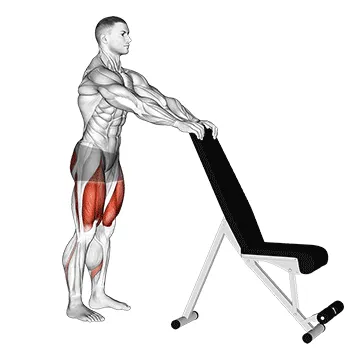
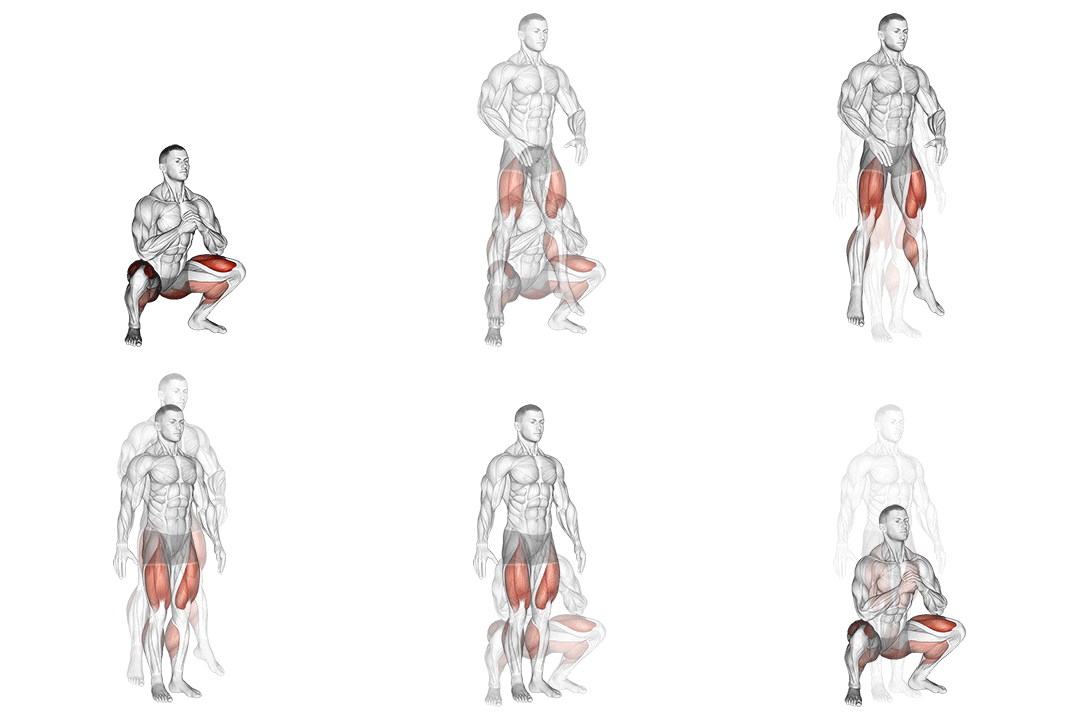
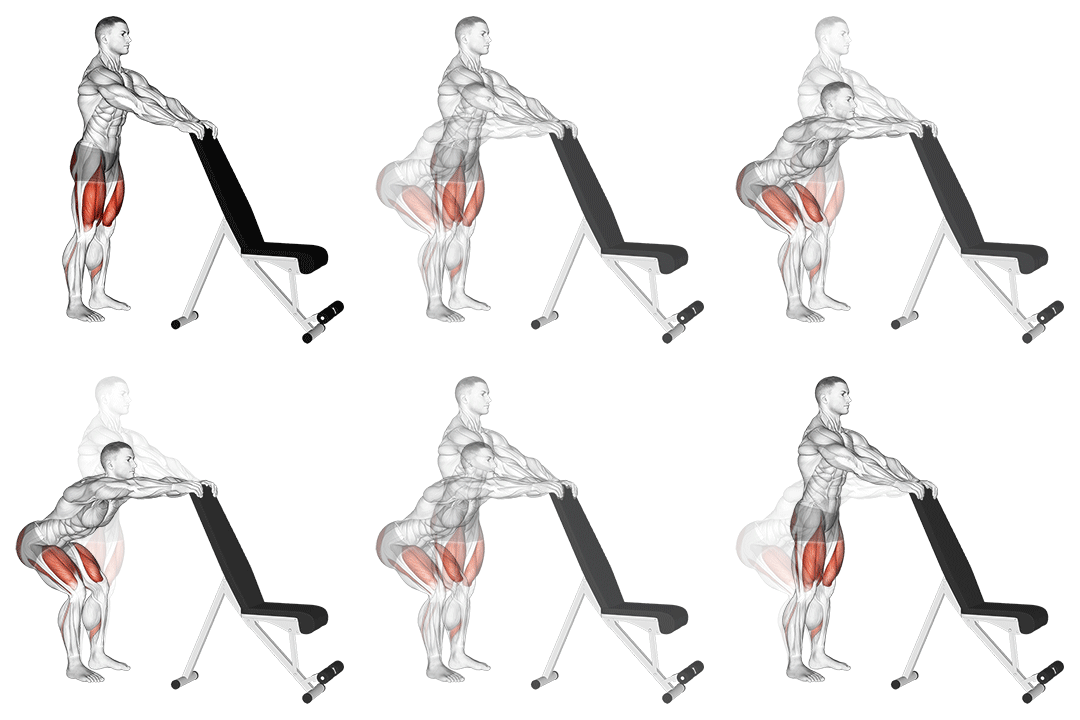
3. Potty Squat With Support
91% match- Glutes
- Bodyweight
- Beginner
- Compound
Pick this when you want an easier version that still works the glutes.
How to perform this exercise
- Stand with your feet shoulder-width apart, toes pointing slightly outward.
- Hold onto a stable support, such as a chair or wall, for balance.
- Lower your body down into a squat position by bending your knees and pushing your hips back.
- Keep your chest up and your back straight throughout the movement.
- Pause for a moment at the bottom, then push through your heels to return to the starting position.
- Repeat for the desired number of repetitions.
Sets and reps: 3 sets of 8 to 12 reps, and add reps before you add load.
Why this matches
- Movement: two-legged squat, the same as the Jump Squat
- Primary muscle: glutes, the same as the Jump Squat
- Equipment: bodyweight only, the same as the Jump Squat
- Body position: standing, the same as the Jump Squat
- Balance: easier to stay steady on than the Jump Squat
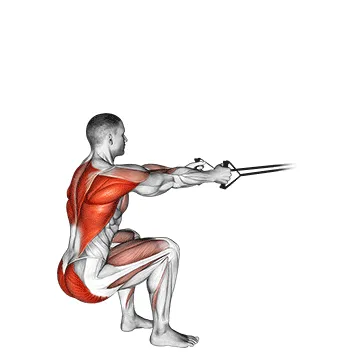
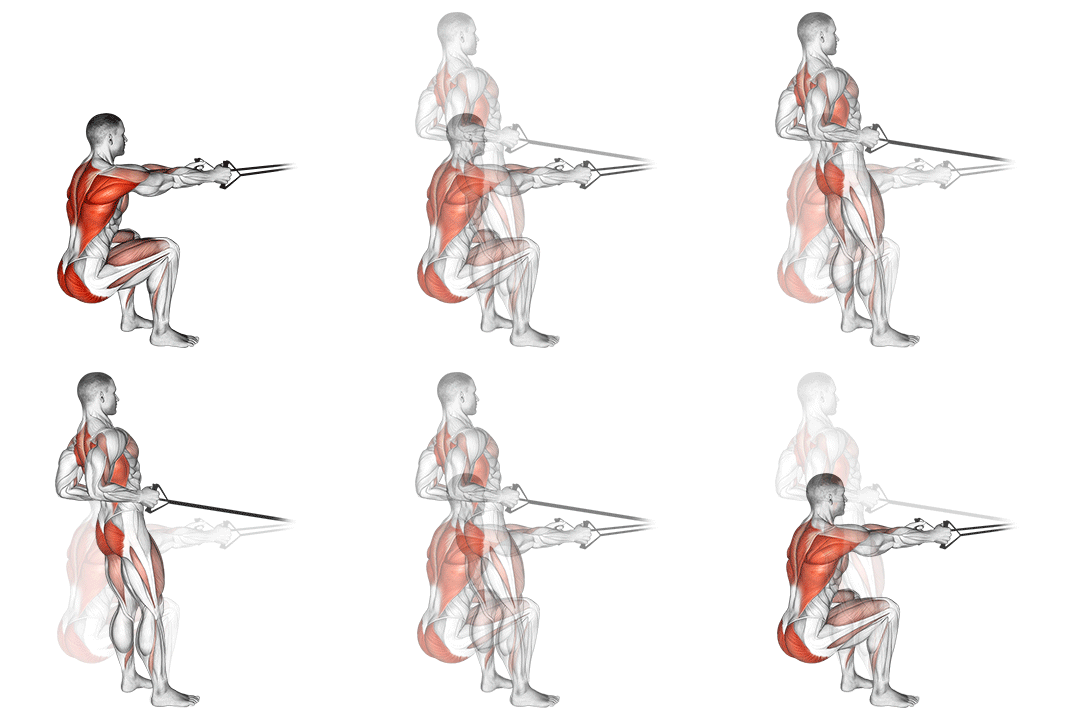
4. Band Squat Row
85% match- Glutes
- Band
- Intermediate
- Compound
A good swap when you have a band to work with, and it still works the glutes.
How to perform this exercise
- Attach the band to a sturdy anchor point at waist height.
- Stand facing the anchor point with your feet shoulder-width apart.
- Hold the band handles with your palms facing each other and your arms extended in front of you.
- Bend your knees and lower into a squat position, keeping your back straight and chest lifted.
- From the squat position, pull the band handles towards your body, squeezing your shoulder blades together.
- Pause for a moment at the top, then slowly release the tension and return to the starting position.
- Repeat for the desired number of repetitions.
Sets and reps: 3 or 4 sets of 6 to 10 reps.
Why this matches
- Movement: two-legged squat, the same as the Jump Squat
- Primary muscle: glutes, the same as the Jump Squat
- Equipment: a band, not bodyweight only
- Body position: standing, the same as the Jump Squat
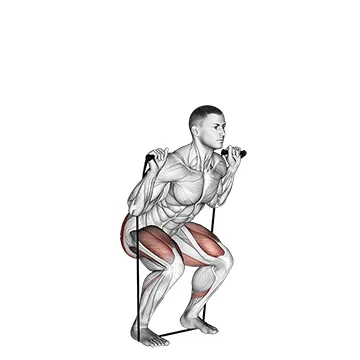
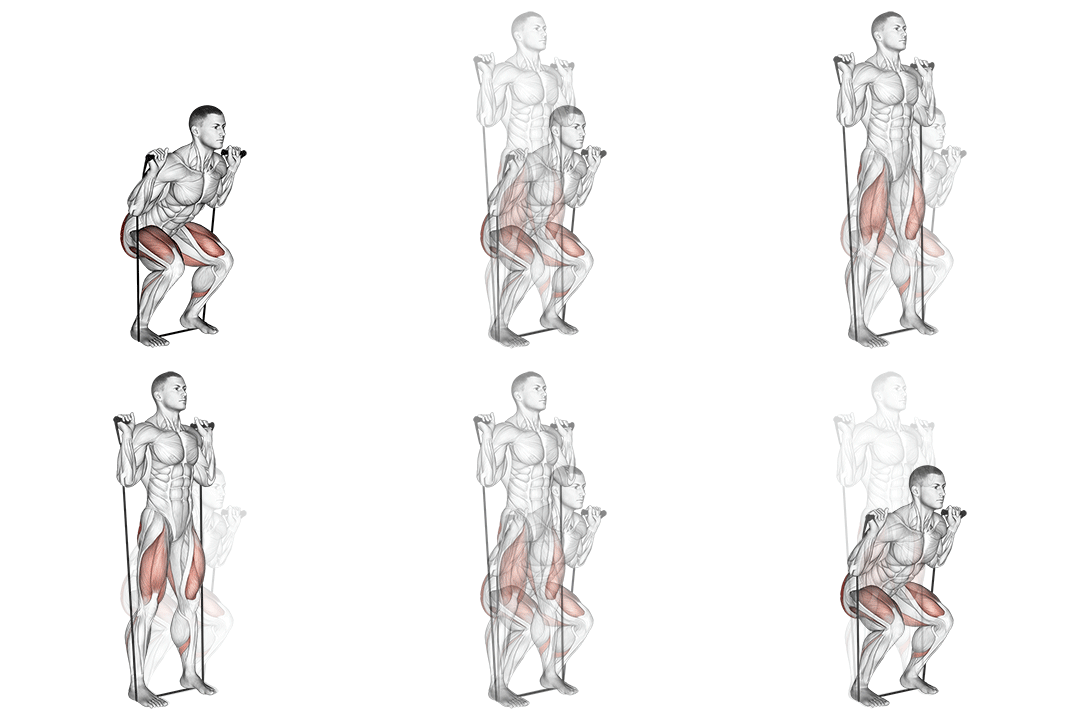
5. Band Squat
84% match- Glutes
- Band
- Intermediate
- Compound
How to perform this exercise
- Stand with your feet shoulder-width apart, with the band placed just above your knees.
- Keeping your chest up and core engaged, push your hips back and bend your knees to lower into a squat position.
- Make sure your knees are tracking over your toes and your weight is in your heels.
- Pause for a moment at the bottom, then push through your heels to return to the starting position.
- Repeat for the desired number of repetitions.
Sets and reps: 3 or 4 sets of 6 to 10 reps.
Why this matches
- Movement: two-legged squat, the same as the Jump Squat
- Primary muscle: glutes, the same as the Jump Squat
- Equipment: a band, not bodyweight only
- Body position: standing, the same as the Jump Squat
- Balance: easier to stay steady on than the Jump Squat
6. Semi Squat Jump
84% match- Quads
- Bodyweight
- Intermediate
- Compound
A looser match: it uses the same equipment, but it works the quads rather than the glutes.
How to perform this exercise
- Stand with your feet shoulder-width apart.
- Bend your knees and lower your body into a squat position.
- Jump explosively, extending your hips and knees while swinging your arms for momentum.
- Land softly on the balls of your feet and immediately go into the next repetition.
- Repeat for the desired number of repetitions.
Sets and reps: 3 or 4 sets of 6 to 10 reps.
Why this matches
- Movement: two-legged squat, the same as the Jump Squat
- Primary muscle: quads, not glutes
- Equipment: bodyweight only, the same as the Jump Squat
- Body position: standing, the same as the Jump Squat
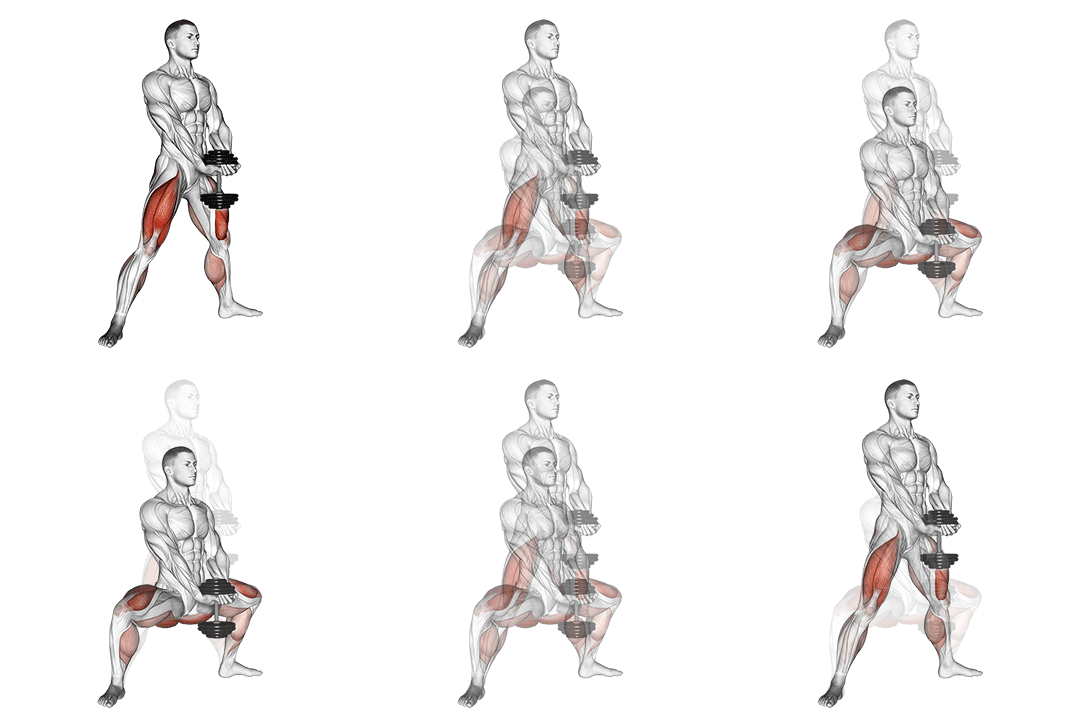
7. Dumbbell Plyo Squat
84% match- Glutes
- Dumbbell
- Advanced
- Compound
A good swap when you have dumbbells to work with, and it still works the glutes.
How to perform this exercise
- Stand with your feet shoulder-width apart, holding a dumbbell in each hand at your sides.
- Lower your body into a squat position by bending your knees and pushing your hips back.
- As you reach the bottom of the squat, explode upward, jumping off the ground.
- While in the air, quickly switch the position of your feet, landing with your opposite foot forward.
- Immediately lower your body back into a squat position and repeat the jump, switching your feet again.
- Continue alternating the position of your feet with each jump for the desired number of repetitions.
Sets and reps: 3 to 5 sets of 5 to 8 reps.
Why this matches
- Movement: two-legged squat, the same as the Jump Squat
- Primary muscle: glutes, the same as the Jump Squat
- Equipment: free weights, not bodyweight only
- Body position: standing, the same as the Jump Squat
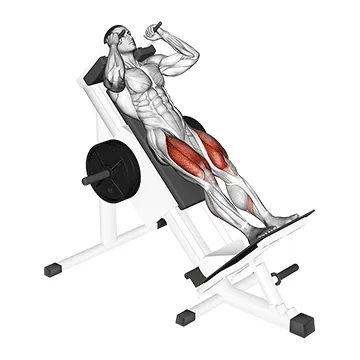
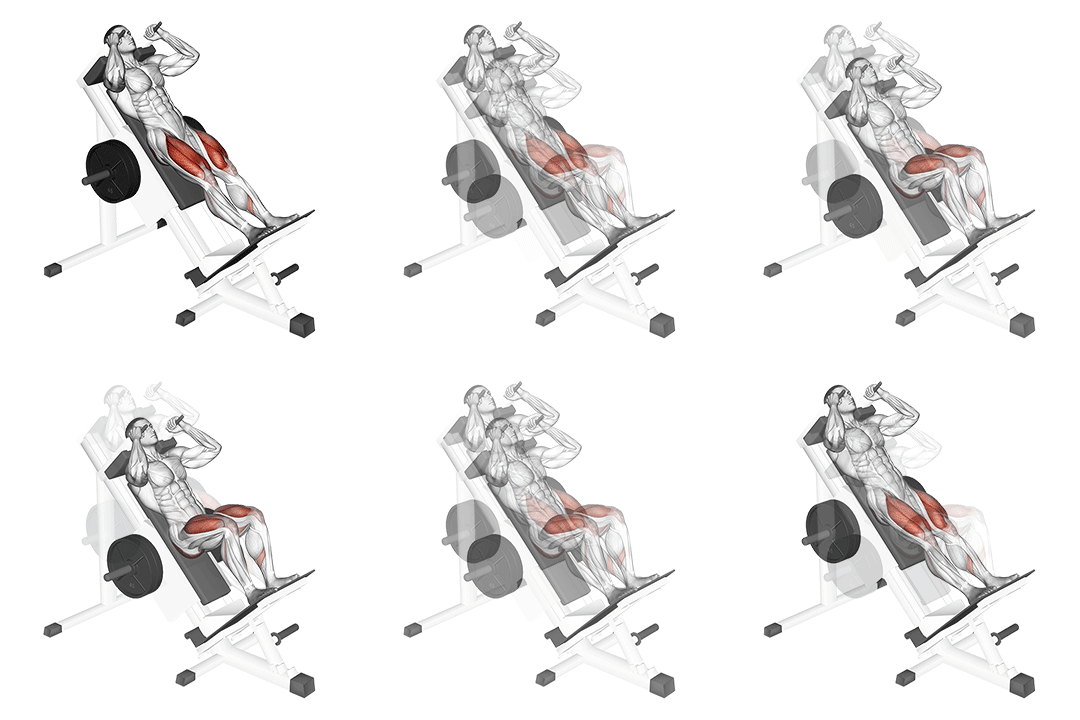
8. Sled Hack Squat
82% match- Glutes
- Sled
- Intermediate
- Compound
How to perform this exercise
- Adjust the sled machine to a comfortable position for your height.
- Stand with your feet shoulder-width apart on the platform, toes slightly pointed outwards.
- Hold onto the handles or bars for stability.
- Lower your body by bending your knees and hips, keeping your back straight and chest up.
- Continue lowering until your thighs are parallel to the ground or slightly below.
- Pause for a moment, then push through your heels to raise your body back up to the starting position.
- Repeat for the desired number of repetitions.
Sets and reps: 3 or 4 sets of 6 to 10 reps.
Why this matches
- Movement: two-legged squat, the same as the Jump Squat
- Primary muscle: glutes, the same as the Jump Squat
- Equipment: a machine, not bodyweight only
- Body position: standing, the same as the Jump Squat
- Balance: easier to stay steady on than the Jump Squat
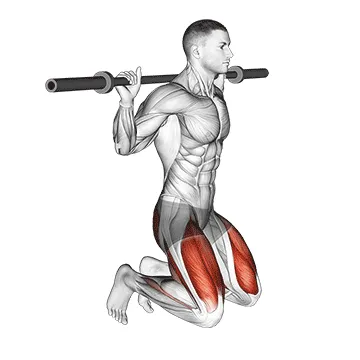
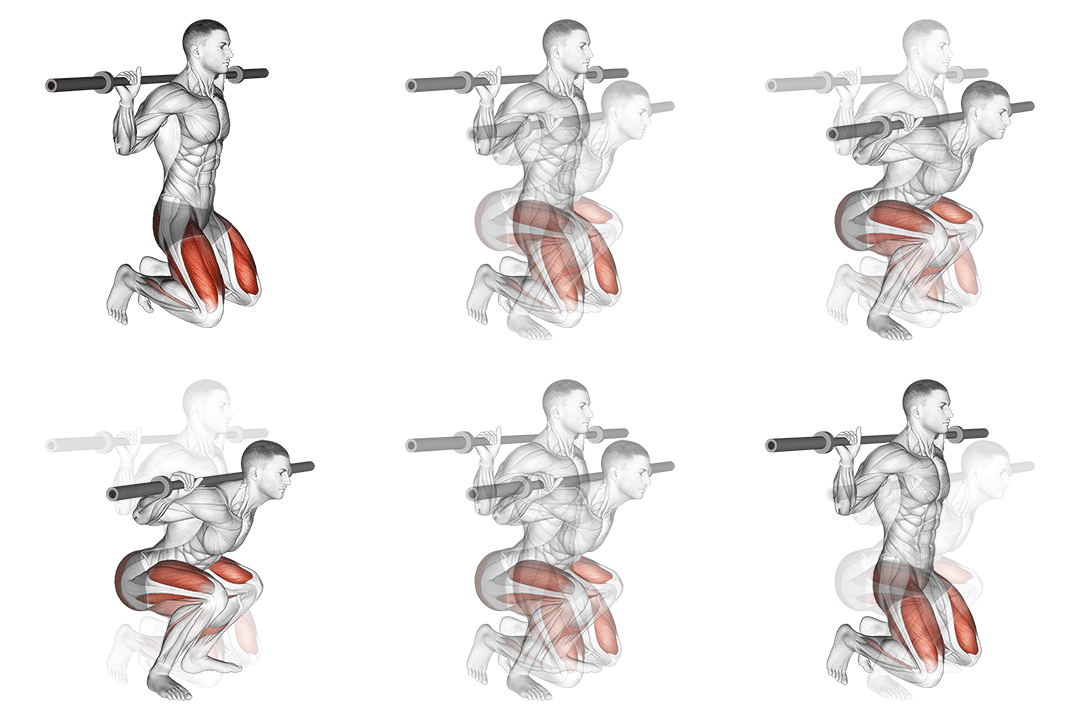
9. Kneeling Jump Squat
81% match- Glutes
- Barbell
- Advanced
- Compound
How to perform this exercise
- Start by kneeling on the ground with your feet hip-width apart and your toes pointing forward.
- Hold a barbell across your upper back, resting it on your shoulders.
- Engage your core and glutes, then explosively jump up into the air, extending your hips and knees.
- As you jump, push through your toes and fully extend your ankles, knees, and hips.
- Land softly back on the ground, bending your knees to absorb the impact.
- Immediately go into the next repetition, repeating the jump squat motion.
Sets and reps: 3 to 5 sets of 5 to 8 reps.
Why this matches
- Movement: two-legged squat, the same as the Jump Squat
- Primary muscle: glutes, the same as the Jump Squat
- Equipment: free weights, not bodyweight only
- Body position: kneeling, not standing
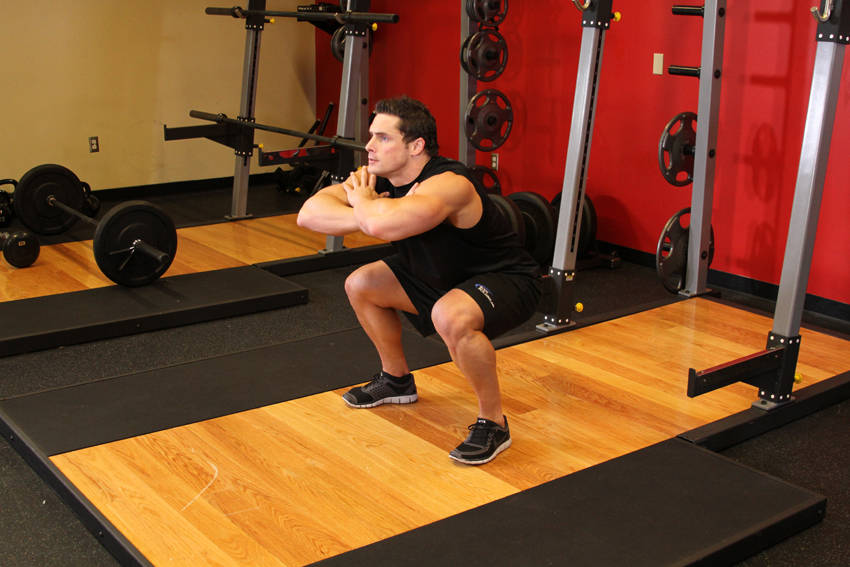
10. Freehand Jump Squat
81% match- Quads
- Bodyweight
- Intermediate
- Compound
How to perform this exercise
- Cross your arms over your chest.
- With your head up and your back straight, position your feet at shoulder width.
- Keeping your back straight and chest up, squat down as you inhale until your upper thighs are parallel, or lower, to the floor.
- Now pressing mainly with the ball of your feet, jump straight up in the air as high as possible, using the thighs like springs. Exhale during this portion of the movement.
- When you touch the floor again, immediately squat down and jump again.
- Repeat for the recommended amount of repetitions.
Sets and reps: 3 or 4 sets of 6 to 10 reps.
Why this matches
- Movement: two-legged squat, the same as the Jump Squat
- Primary muscle: quads, not glutes
- Equipment: bodyweight only, the same as the Jump Squat
- Body position: standing, the same as the Jump Squat
- Balance: easier to stay steady on than the Jump Squat
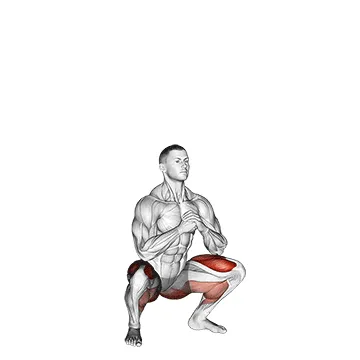
Jump Squat FAQ
What muscles does Jump Squat work?
The jump squat primarily targets the gluteus maximus, quadriceps, hamstrings, and calves while recruiting the core for stabilization. Cue: explode through hip extension and land with a soft knee bend to absorb force and maintain eccentric control.
What is the best bodyweight alternative to Jump Squat?
The Bulgarian split squat is the best bodyweight alternative for glute and upper-leg development because it loads one leg at a time and forces hip extension. Cue: rest your rear foot on a bench, lower until the front thigh is parallel, and drive through the front heel to maximize glute activation.
Can I build muscle without doing Jump Squat?
Yes, you can build glute and quad muscle with non-jumping strategies: increase volume, add tempo, and use unilateral work to create progressive overload. Cue: slow the eccentric phase (3–4 seconds) and squeeze at the top to increase time under tension and stimulate hypertrophy.
Find Alternatives for Any Exercise
Search the exercise database and filter the ranked substitutes by the equipment you own.
Similarity scores compare exercise metadata such as movement pattern, muscles, equipment and body position. They are not a safety rating or a check that you own the equipment. Learn about our methodology